In Berlin, the designers behind Berghain reimagine the house as a club
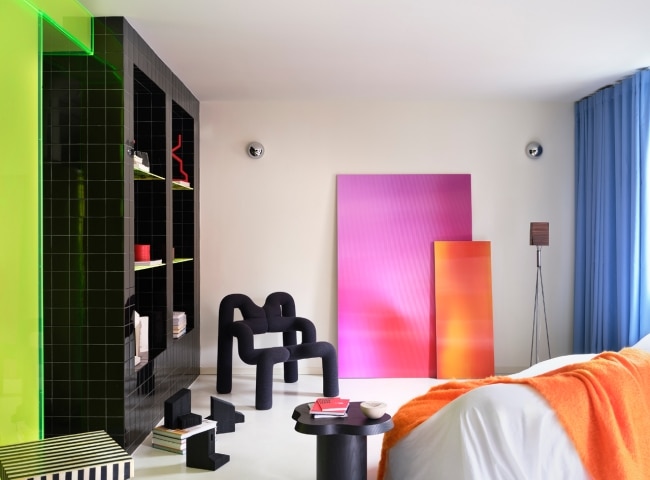
In Kreuzberg, a large apartment born as a tribute to an entire culture makes visible the aesthetic of a club that has always hidden from view.
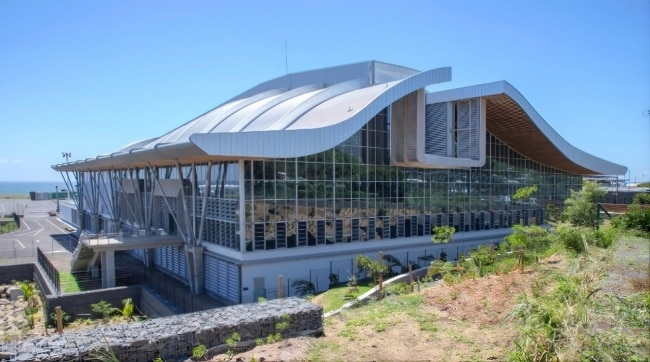
Designed by 3XN and BVN Architecture, the Sydney Fish Market reveals the harbour’s daily choreography, where working infrastructure and public routes intertwine. Domus spoke with the architects behind the project.
Designed by Stanaćev Granados, this pavilion on the Chilean coast revisits local tradition through an architecture that blends into the landscape without disappearing into it.
“Adapt to the land, not the other way around.” Milan–Cortina 2026 presented itself as the most sustainable Olympics ever. Whether it has actually lived up to that claim is another matter.
You can share your work through the function by Domus where you can upload your architecture, design, interior, graphics, illustration, photography and art projects.
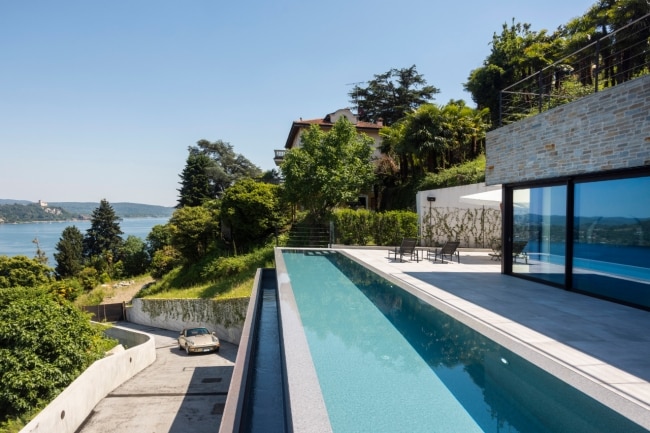
This renovation rethinks the limits of domestic space, emphasizing its compactness as the key value of a new design concept and connecting the two levels through material continuity and hybrid furnishings.
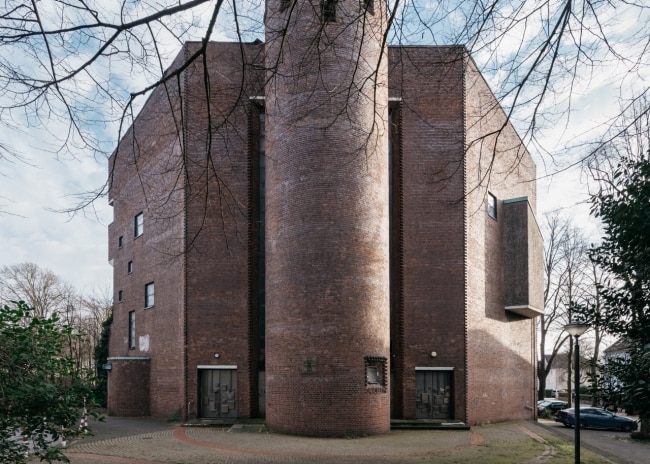
From Milan’s Chiesa Rossa to Hamburg’s Elbphilharmonie, an increasing number of performances are choosing iconic buildings and brutalist spaces to transform listening into a physical, immersive and non-standardised experience.
A 1:12 scale home, fully furnished like a real apartment, becomes the storytelling device through which the British company reveals its obsession with prototyping and engineering precision.
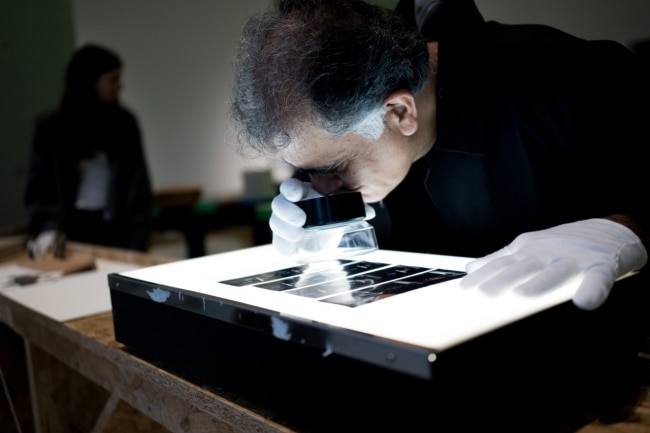
For twenty years, from 1987 to 2007, Gabriele Basilico photographed the buildings of the Milanese architect. A new volume published by Humboldt Books recounts the relationship between the photographer and the architect, which began with an assignment for Domus.
From Achille Castiglioni’s tool-inspired objects to contemporary collectible design, the 19.96-kilogram granite stone embodies a century of industrial precision, ergonomic thinking and radical formal consistency.
A small panel marking the beginning of the most radical investigation into the face of suffering in the Renaissance: Antonello da Messina’s Ecce Homo, long held in private collections, has now been acquired by the Italian state for $14.9 million.
As Bangladesh prepares for crucial national elections, Louis Kahn’s Jatiyo Sangsad Bhaban stands as a monumental fusion of brutalism, light, and post-independence identity.
Brutalism is everywhere—and now it’s part of K-pop history. The Rozzol Melara complex, previously featured in Tuta Gold, takes center stage in the latest video by South Korean girl group Ive.
Widely criticized as nostalgic and out of scale, 270 Park is in fact a radical reinvention of the skyscraper: a mega-structure that condenses Manhattan’s history while declaring a new era of density.
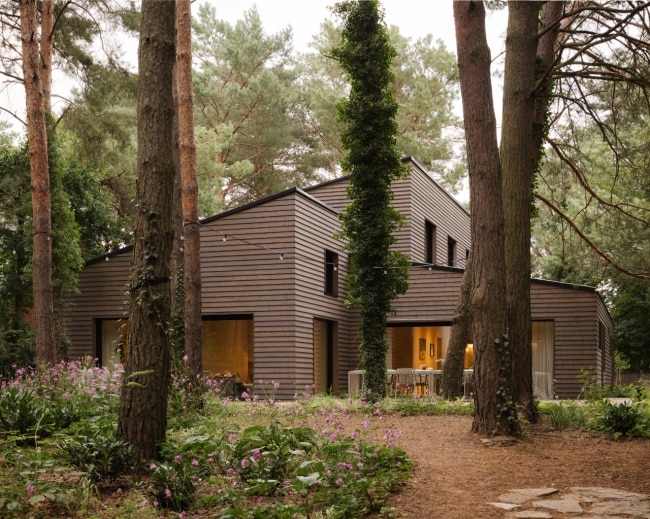
A boldly contemporary new layer joins the natural process of historical stratification in a woodland building in the Czech Republic, introducing new living spaces while establishing an unprecedented relationship with the surrounding landscape.
The Trong Dong Stadium, which will host 135,000 people, is a mix of aesthetics, symbolism, and innovation. It tells the story of an ambitious nation moving beyond the margins of global sport to establish itself as a leading international player.
Five times larger than Central Park and forty times larger than Parco Sempione, King Salman Park will be a vast expanse of greenery and architecture.
Designed in the 1950s by the founder of Domus, this chair weighs under two kilograms and remains, to this day, a manifesto of lightness.
Sex Tape is not the usual coffee table, but a provocative product that Batten and Kamp designed to interrogate design, its significance and its limits.
From ACG to the Milano Jacket, we spoke with Chief Design Officer Martin Lotti about how Air is moving beyond the sole to become architecture for apparel, starting with the remarkable capsule created with the Italian tennis champion.
We rediscovered a monumental feat of engineering, built during the First World War in the countryside near Syracuse. After decades of neglect, the structure is now closed to the public for safety reasons.
Triennale di Milano, Casa degli Artisti, Villa Necchi Campiglio, and then pavilions in public squares: the 2026 Olympics are setting up in places that have for years symbolized the Fuorisalone. And of course, there is a huge amount of Italian design.
With the recently announced “New Churches Program” promoted by the Diocese and the CEI, the city will gain five new places of worship: they will be located in the outskirts and designed with sustainability in mind.
@gaude.ai imagines the Duomo of Milan transformed into an arena for ice sports and Torre Velasca turned into a high-altitude ski slope.
His Instagram profile reveals something about how architectural criticism is changing — and about the Olympics that await us.
A simple Italian chair became a small detail that evoked the feeling of home in this weekend’s Super Bowl halftime performance. Its history, however, reaches far beyond Puerto Rico, leading back to Italian design and to Gio Ponti, founder of Domus.
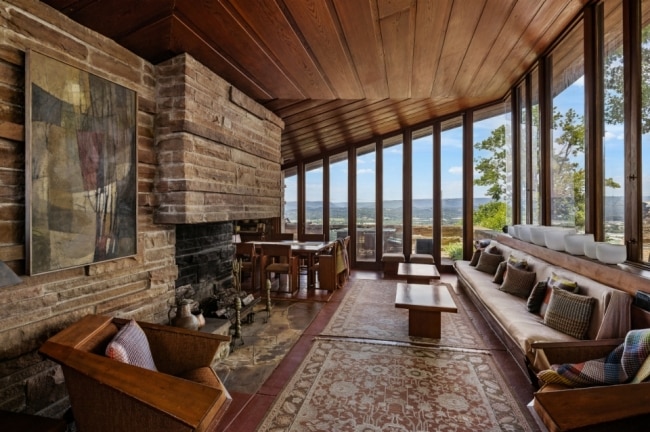
The Spring House is a landmark project that captures the evolution of the American architect’s design thinking and stands as a manifesto of the final phase of his career.
The Ferrari Luce is Maranello's first EV. Jony Ive and Marc Newson's LoveFrom shaped the cabin, with a look and feel that reminds of past Apple designs.
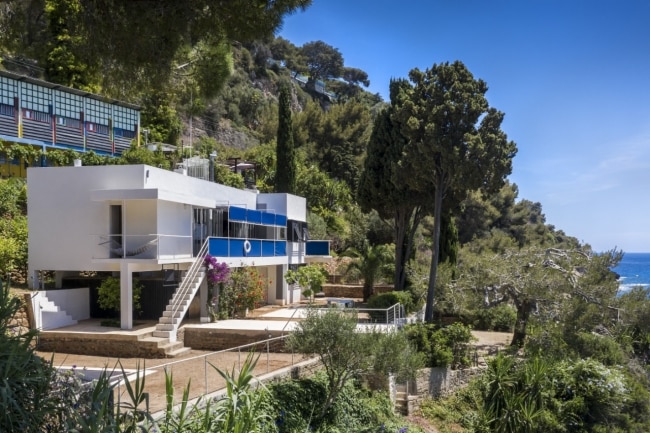
In 1975, Emilio Ambasz envisioned an almost unreal villa—roofless and nearly wall-less—already anticipating sustainability. Fifty years later, the Casa de Retiro Espiritual shows how a functional dwelling can also be spiritual.
After more than a decade since the initial competition, Stockholm is set to welcome the new headquarters of the Nobel Foundation, a striking building designed as a tribute to the cultural identity of the Swedish capital.
Active users — and above all the time spent on the platforms that have dominated the past two decades — are declining. Is AI slop and toxic content to blame, or have we simply grown tired?
An exhibition traces the city before and after the Nazi bombing, showing how it transformed into a symbol of contemporary architecture through postwar reconstruction, experimentation, and urban innovation.
Born in 1946 to help a country rebuild after the war, the Vespa went on to shape cinema, youth culture, advertising, and urban life. This is the story of an italian scooter that changed the way we move — and the way we stay close.
The Caribbean nation’s new uniform was hand-painted in Italy and tells the story of the country’s resistance.