



As is tradition, the December issue of Domus brings the debate from the world to Italy. This year, the focus is on the care of heritage, which, in the pages of Domus issue 1107, becomes a true political and cultural strategy, in which architecture becomes an indispensable tool for regeneration and vision.
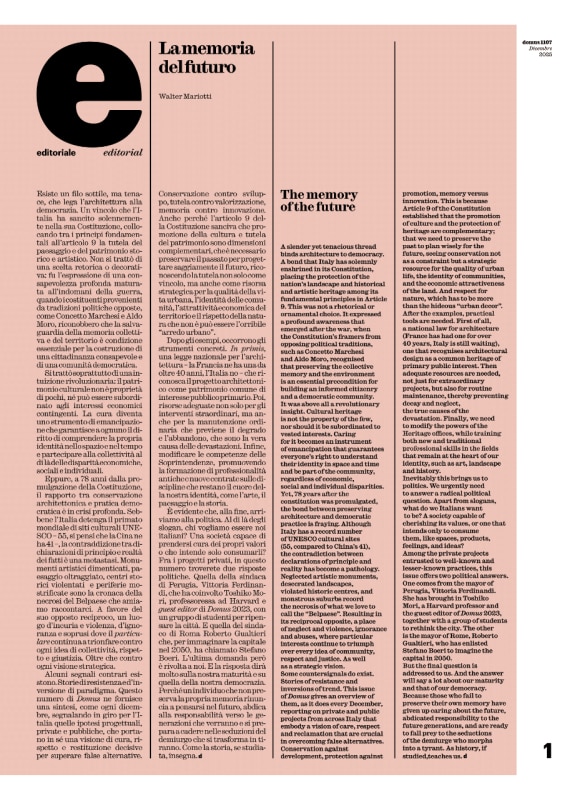
In his introductory editorial, editor Walter Mariotti reiterates this: architecture is a bond of democracy (ex Article 9 of the Constitution), and the care of heritage is not philology but the strategic resource to stem the “necrosis of the Belpaese (Beautiful Country).”
Architecture, in short, is a political, ethical, and cultural gesture that weaves the threads between memory and future. As usual in December, Domus tours Italy, selecting several projects—in this case, acts of care, respect, and restitution—ranging from the scale of the architectural detail to grand urban visions. Or, rather, more than architectural projects, they are true acts of collective intelligence and imagination.
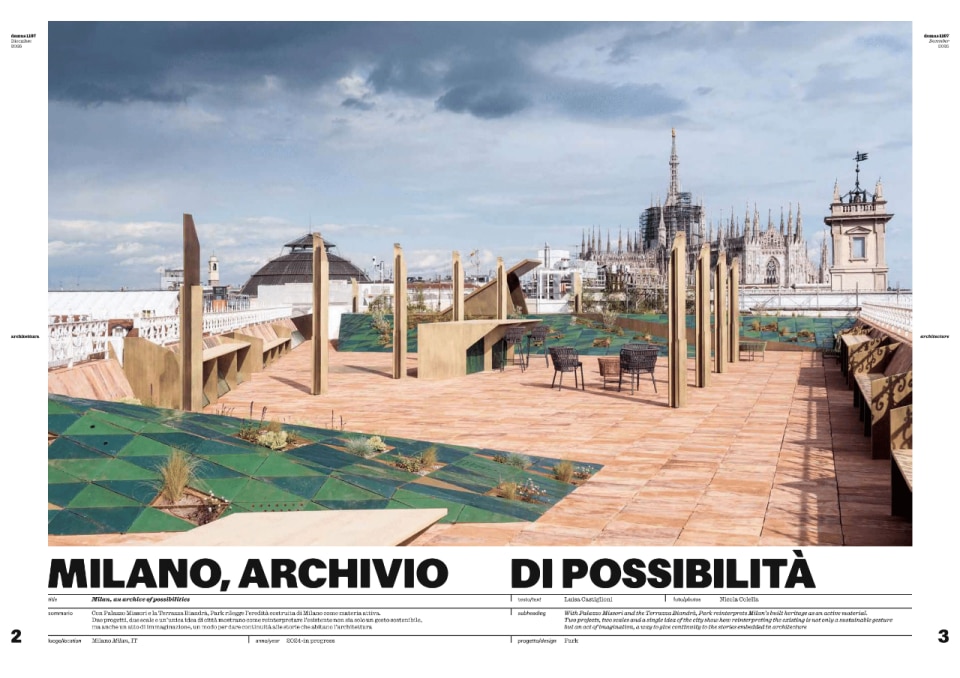
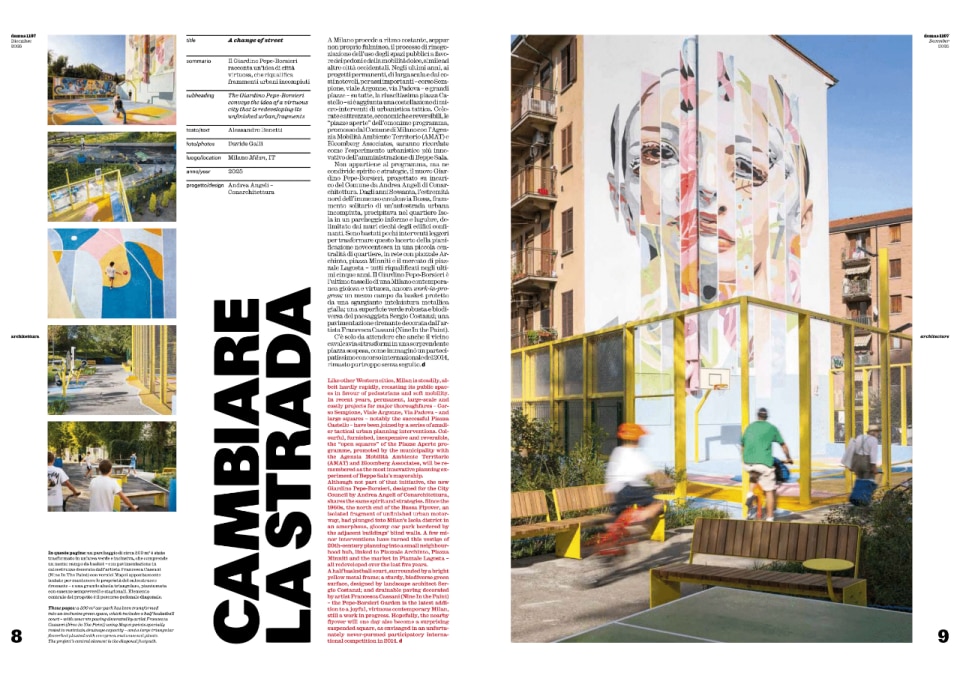
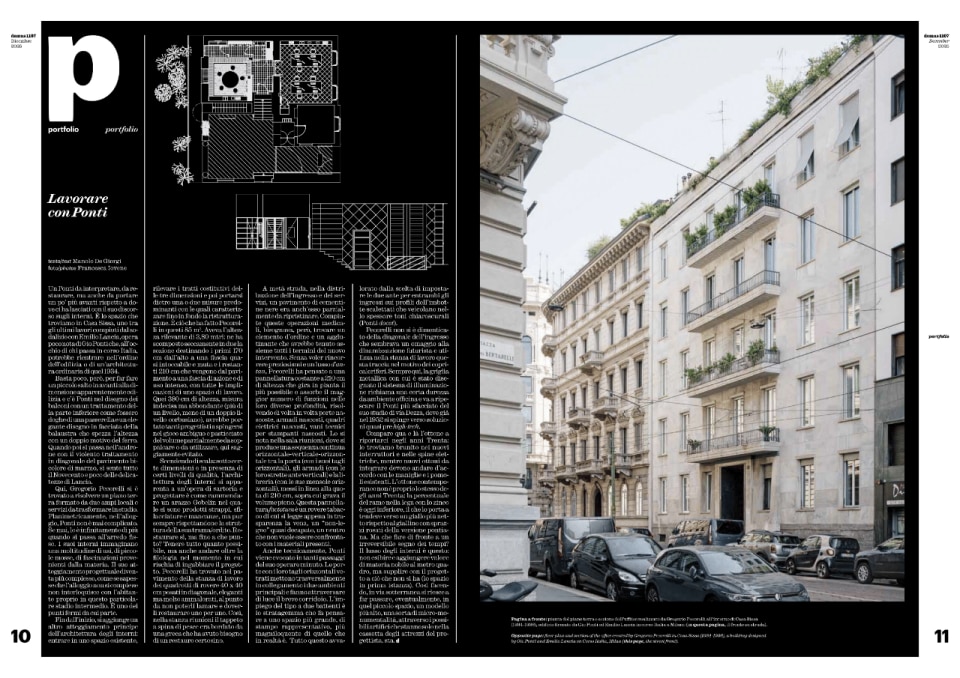
It starts in Milan with an idea by Park Associati which, as Luisa Castiglioni recounts, demonstrates how the city is not an entity to be replaced but an “archive of possibilities” to be regenerated through stratification (Palazzo Missori and Terrazza Biandrà). Still in the Lombard capital, Alessandro Benetti presents the project by Andrea Angeli – Conarchitettura – which transforms an unfinished urban fragment, like a former parking lot, into the virtuous Giardino Pepe-Borsieri. Also in Milan, care extends to the liturgy of the author's detail: Gregorio Pecorelli addresses the tailored restoration of an interior in Gio Ponti's Casa Sissa, working with a skillful “micro-monumentality,” a text curated by Manolo De Giorgi.
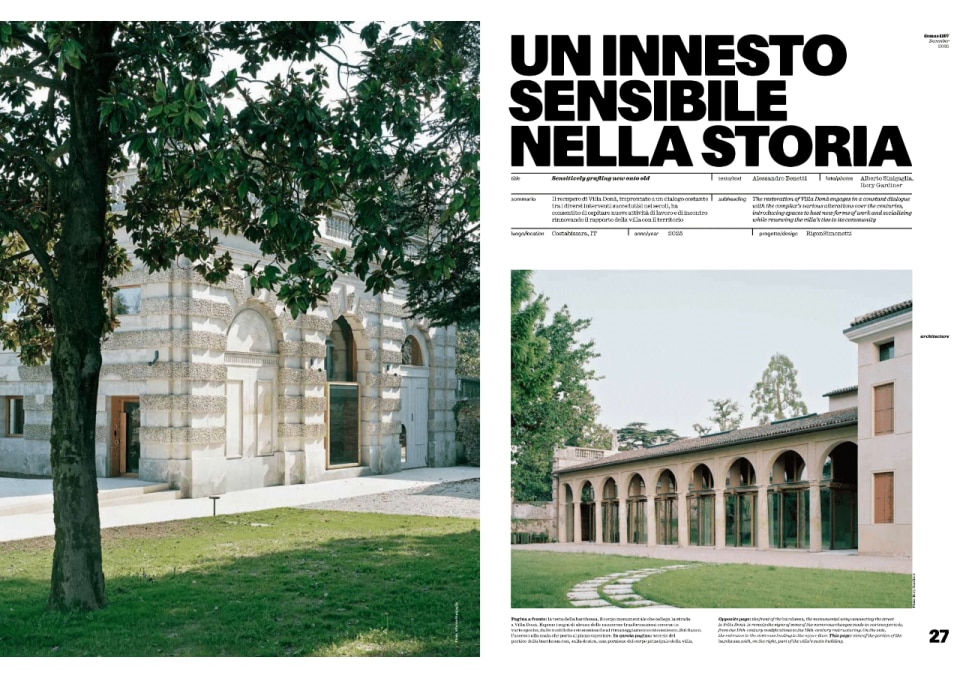
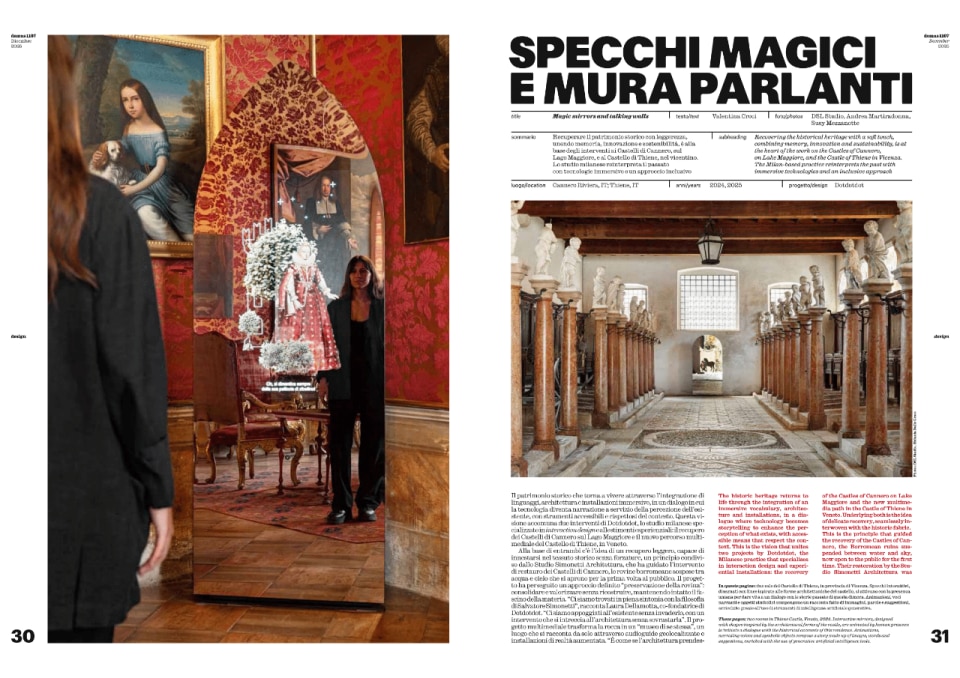
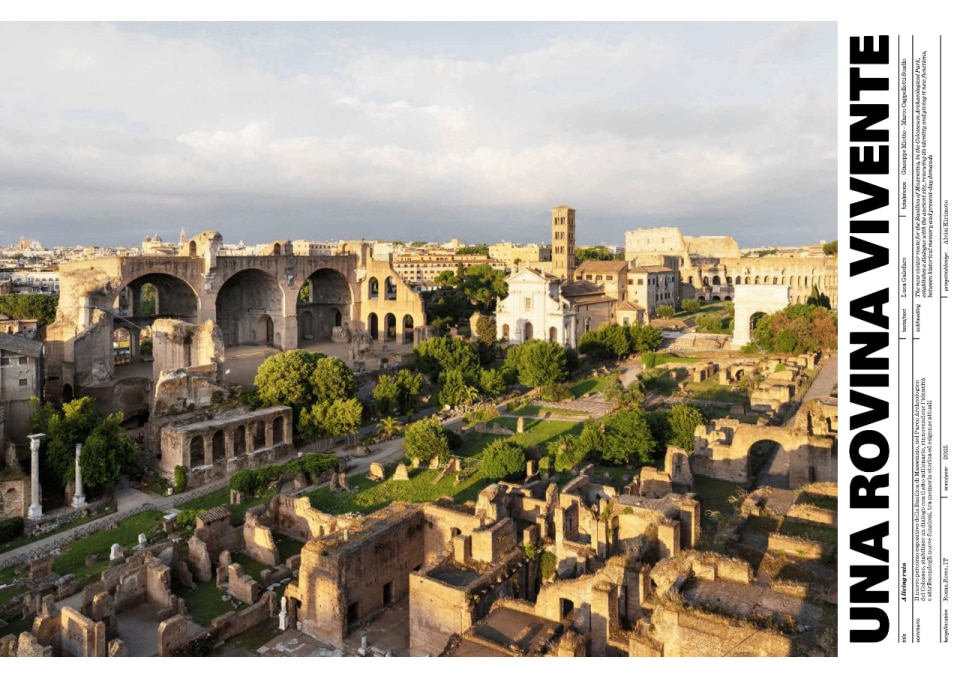
Benetti then takes us to Costabissara, where RigonSimonetti embeds new functions for work and hospitality into the seventeenth-century Villa Donà. In Rome, Luca Galofaro tells how Alvisi Kirimoto, with measured gestures, restored the Basilica of Maxentius to its function as a public space, transforming it into a solemn “living ruin.” Even technology becomes narrative: Dotdotdot uses magic mirrors and augmented reality to animate the Castelli di Cannero and the Castello di Thiene.
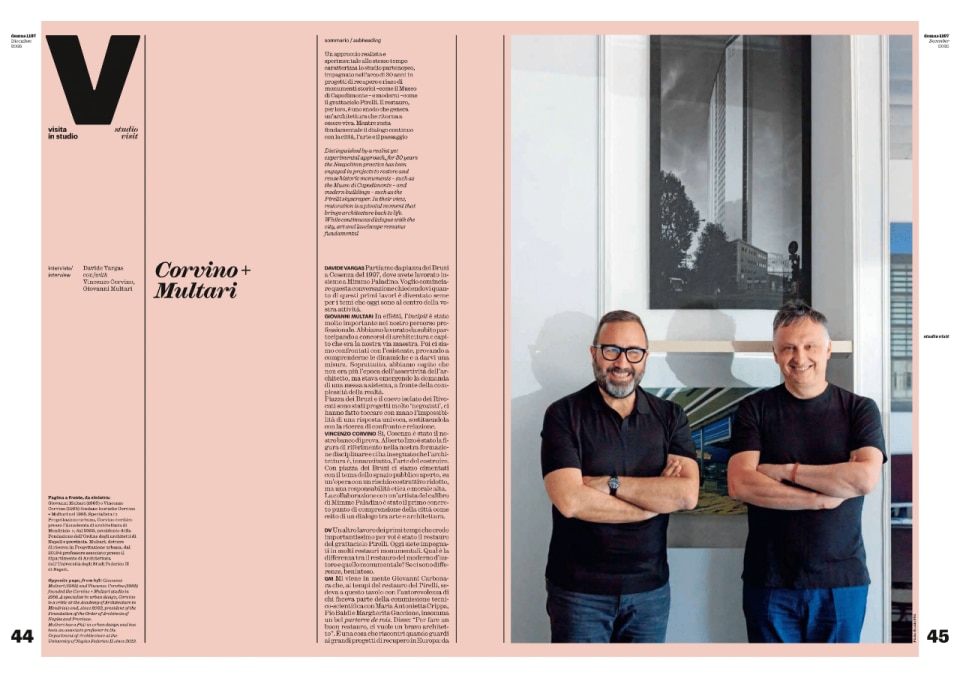
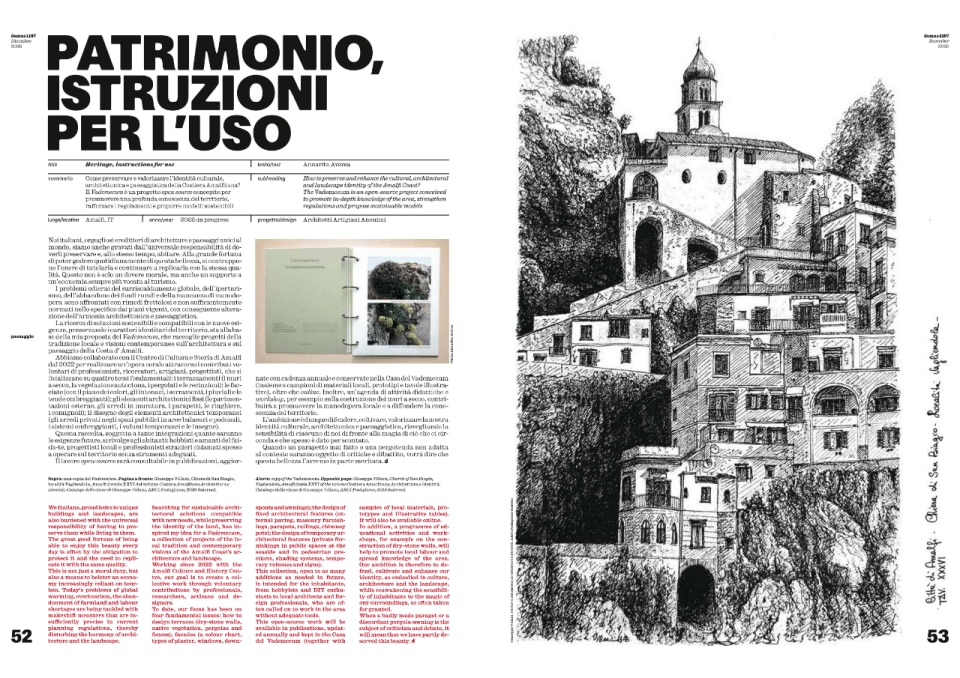
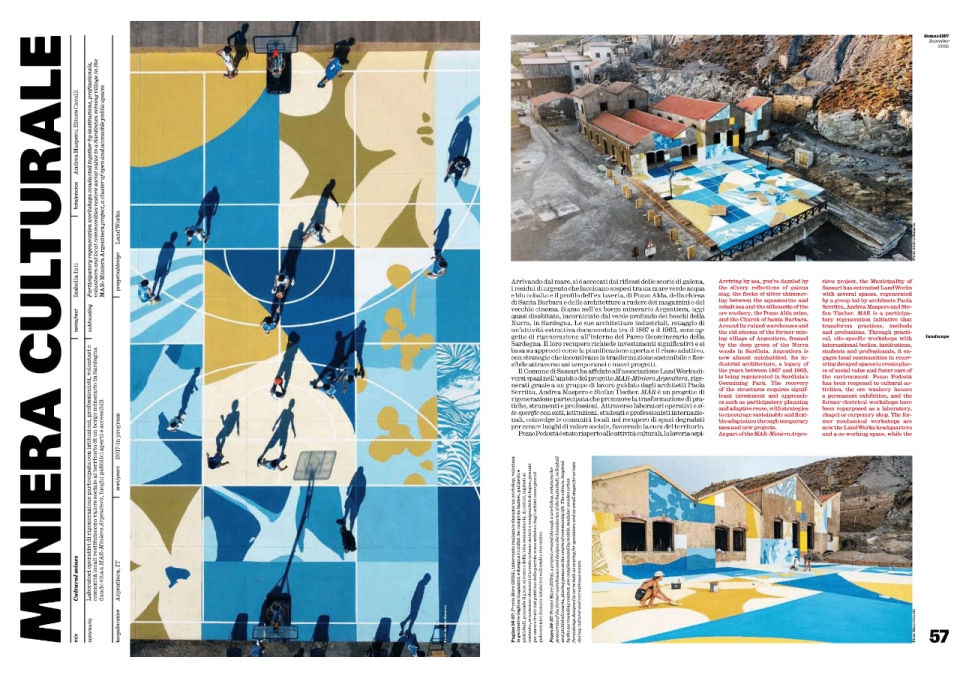
Culture becomes a driver of social cohesion: the Architetti Artigiani Anonimi association, in a text curated by Annarita Aversa, produces an open-source Vademecum for the care of the Amalfi Coast landscape, while Isabella Inti accompanies us to Sardinia, where LandWorks regenerates the mining village of Argentiera. Davide Vargas presents the lesson of Corvino + Multari. The two architects work on the adequate and the possible, and the city is their true client.
This year, the focus is on the care of heritage, which, in the pages of Domus issue 1107, becomes a true political and cultural strategy, in which architecture becomes an indispensable tool for regeneration and vision.
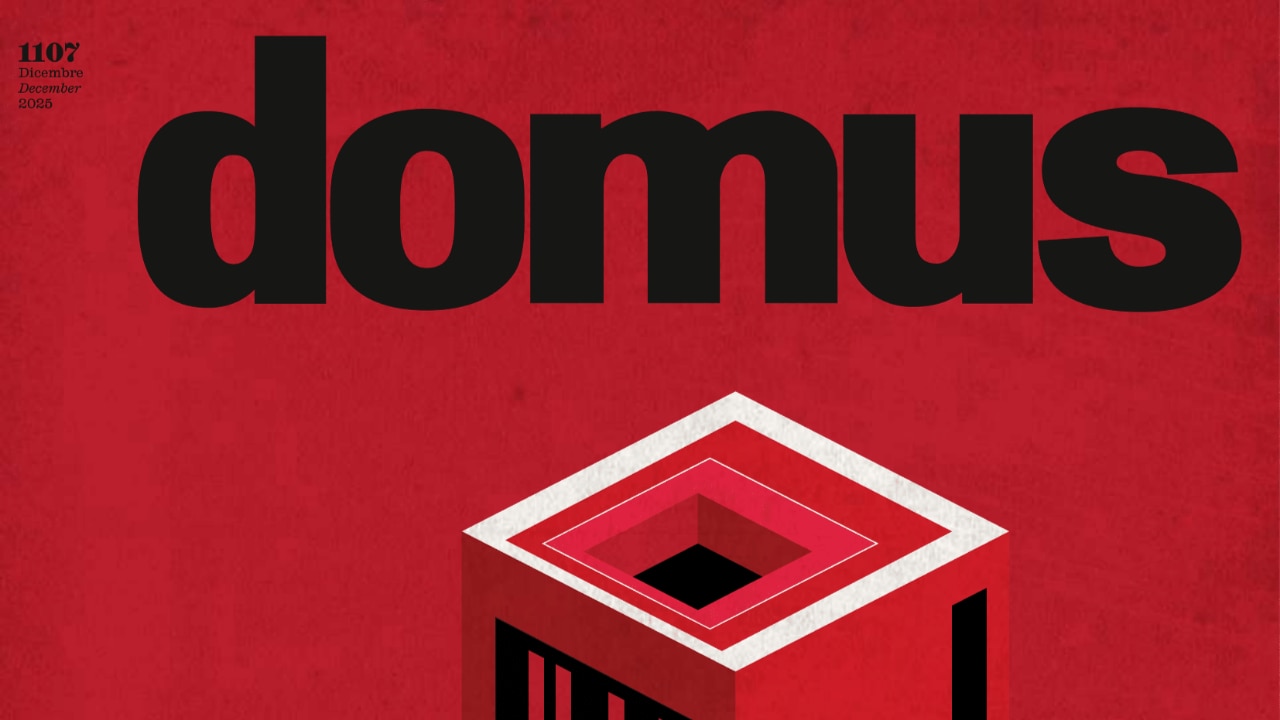
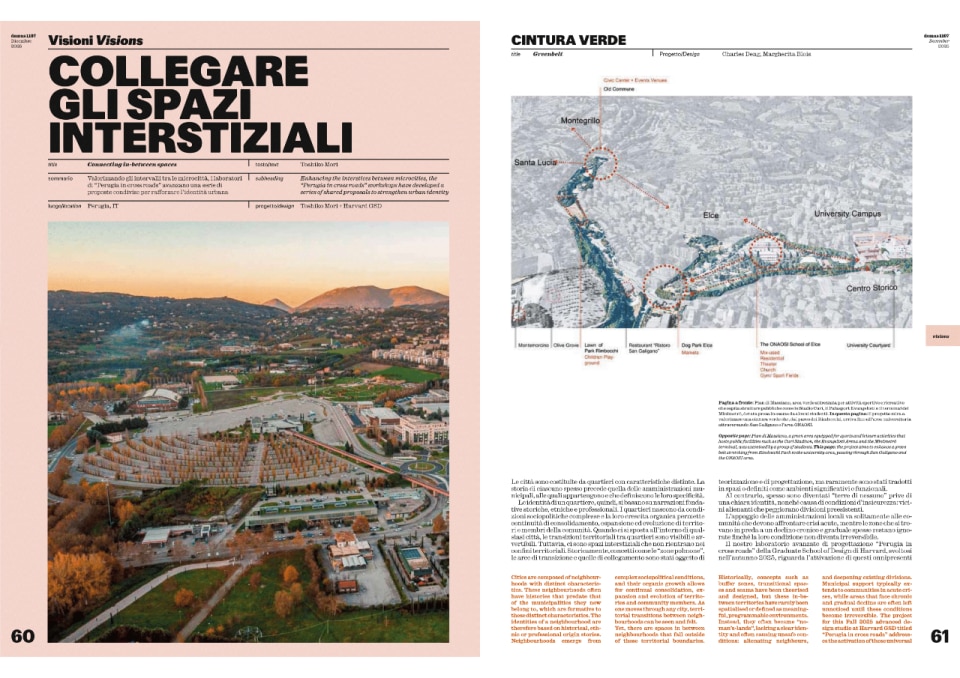
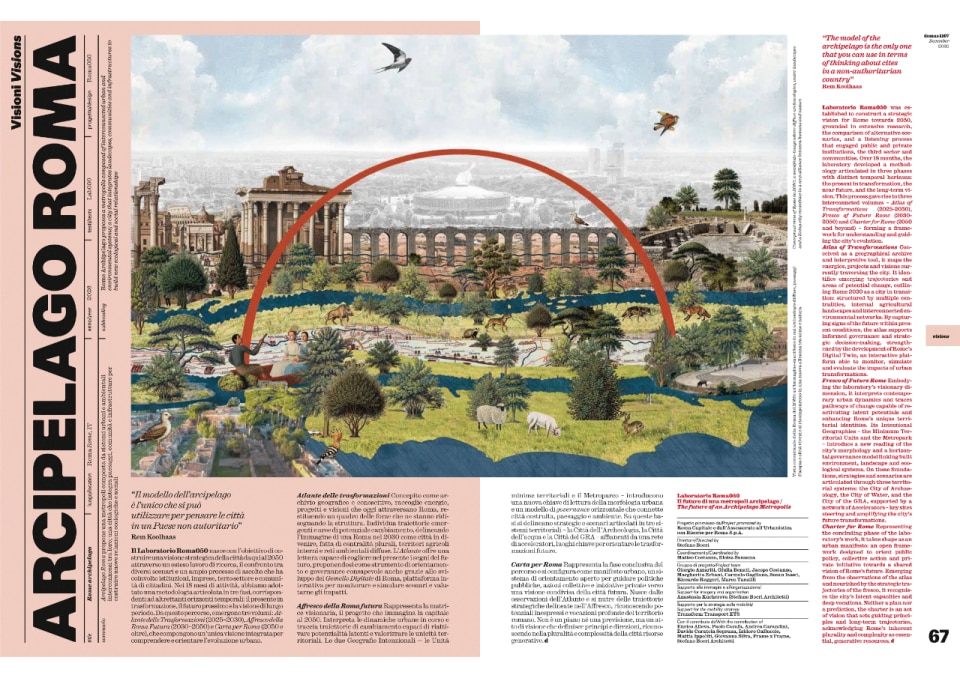
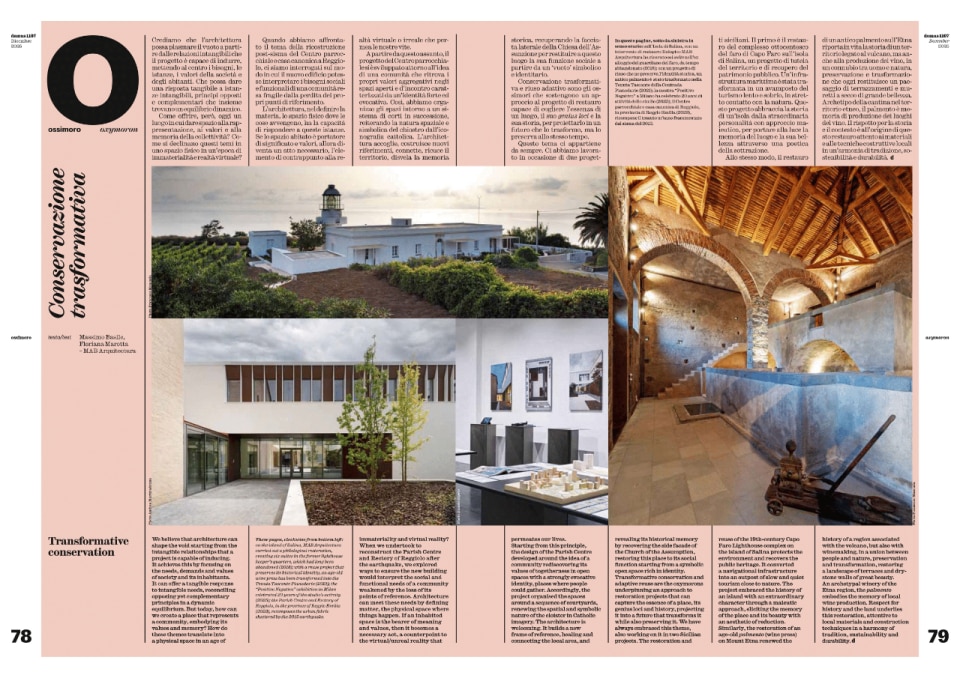
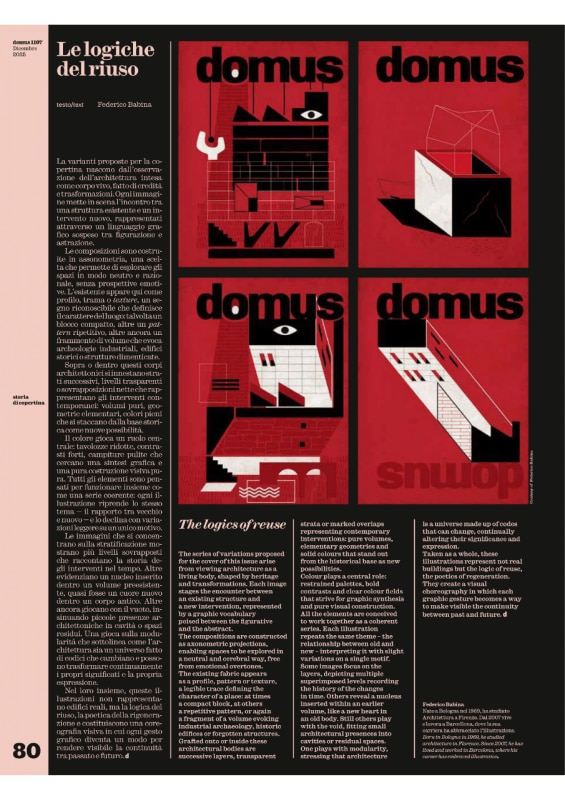
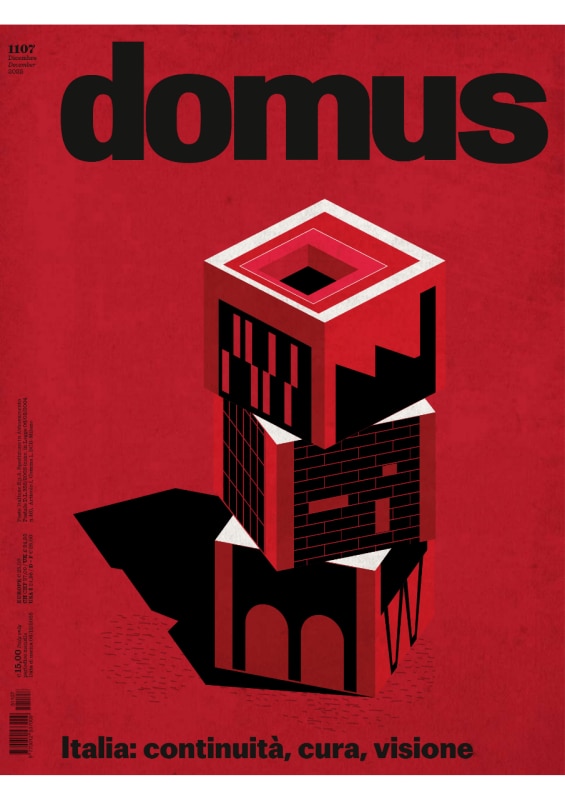
The issue culminates with great strategic visions for Italy. Toshiko Mori, a professor at Harvard and Guest Editor of Domus in 2023, addresses the challenge of connecting the interstitial spaces between the more than 60 micro-cities of Perugia. In Rome, the Lab050 Roma050 by Stefano Boeri designs the metropolis of 2050 as ArcipelagoRoma, an integrated system that involves the political act of freeing up 2 million m2 of government properties for the repopulation of the historic center. The final page of the magazine, an oxymoron defined, is dedicated to a project by MAB Arquitectura that defines transformative conservation. In the Domus tradition, the cover is a project in itself, and this time the author is Federico Babina, an architect-artist who visualizes the logic of reuse, reiterating how architecture is the initial and final act to guarantee a Memory of the Future.
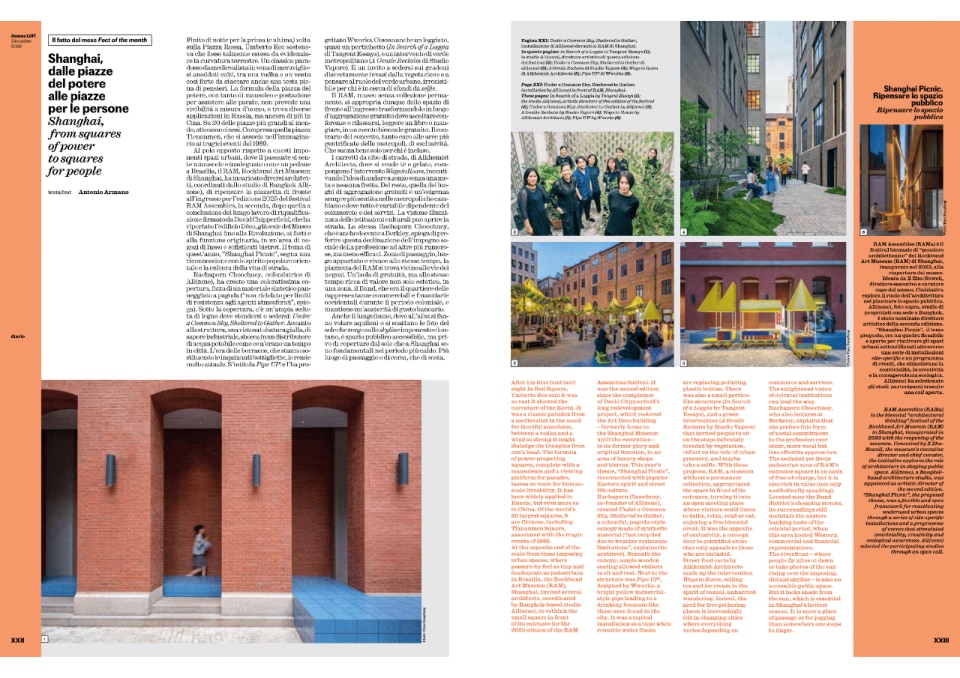
Like every issue of Domus, December—which acts as a watershed between one Guest Editor and the next—contains pages dedicated to the most current affairs. These are found in the opening section, Diario (Diary), which begins with an article by Antonio Armano taking us to Shanghai for the RAM's “Shanghai Picnic” festival: here, architecture must give way to conviviality, a gesture that stands at the antipodes of the monumental “squares of power” in the East.
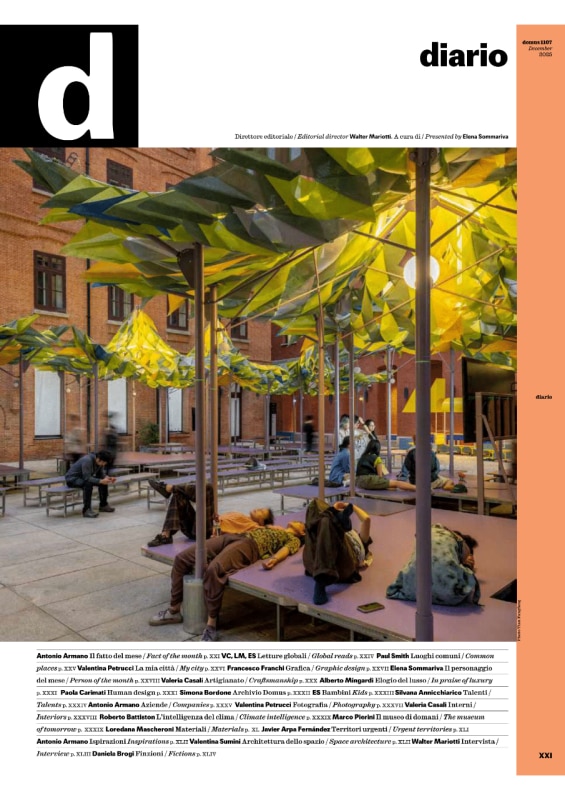
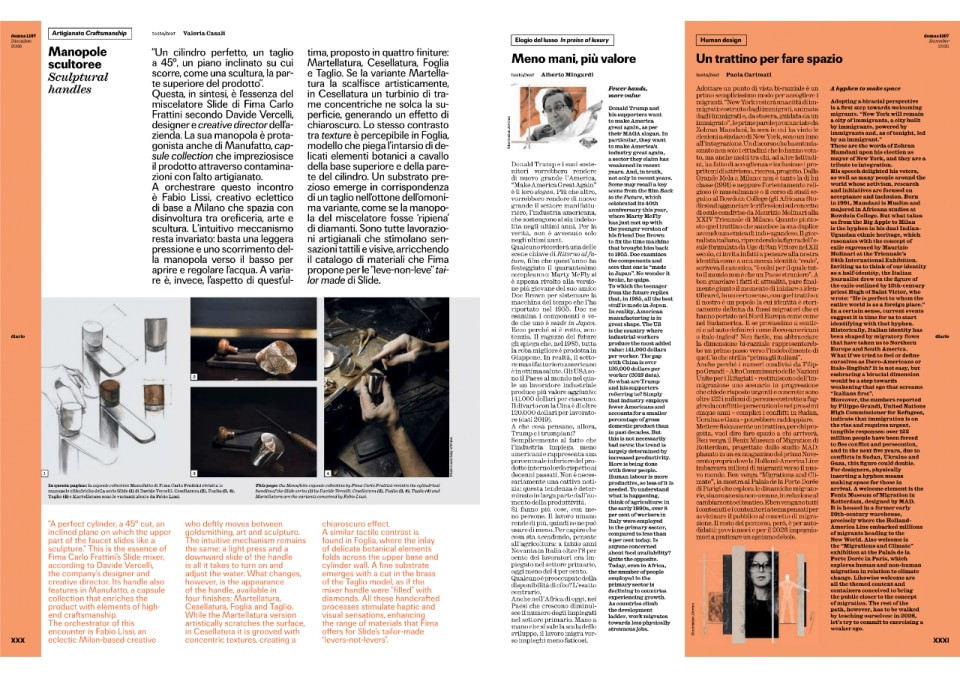
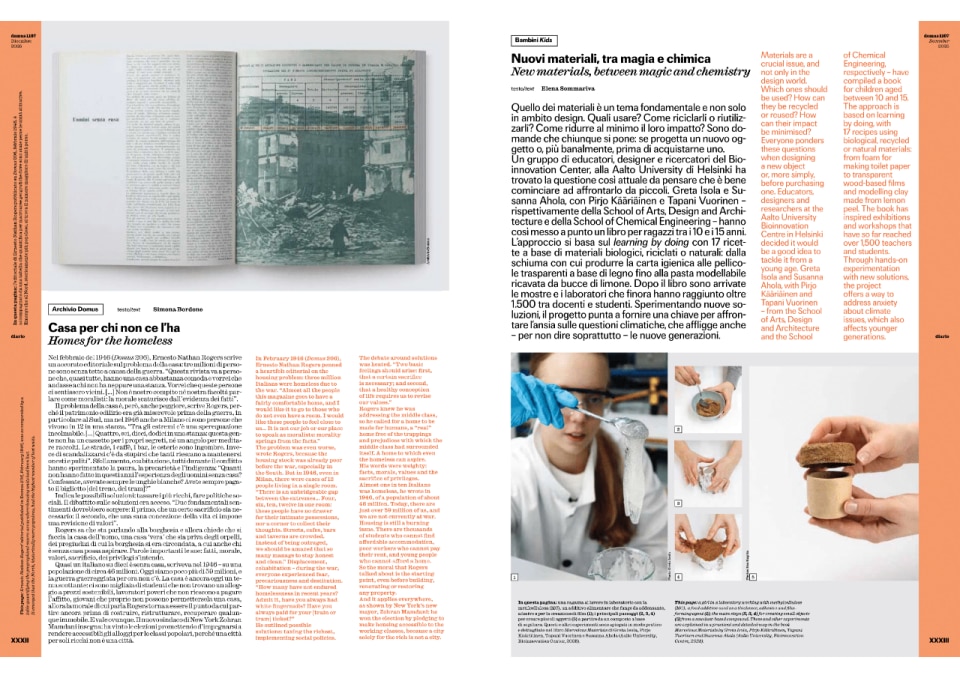
This imperative is reflected in Francesco Franchi's analysis of the new political aesthetics of New York's newly elected mayor Zohran Mamdani's campaign and in Paola Carimati's reflection on human design and inclusion. The vision of the future, however, cannot disregard the memory of the past. Simona Bordone reminds us of this by reopening the Archive with Ernesto Nathan Rogers' 1946 editorial on the post-war housing crisis, which already raised the problem of morality.
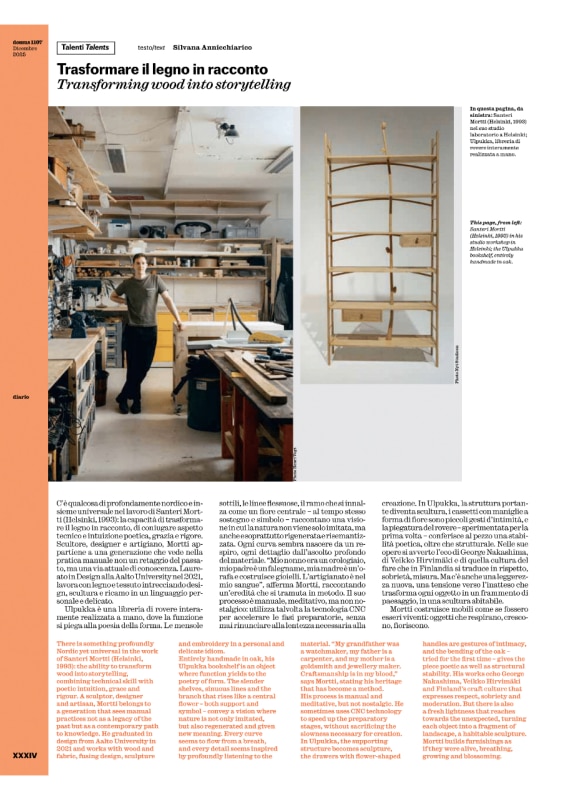
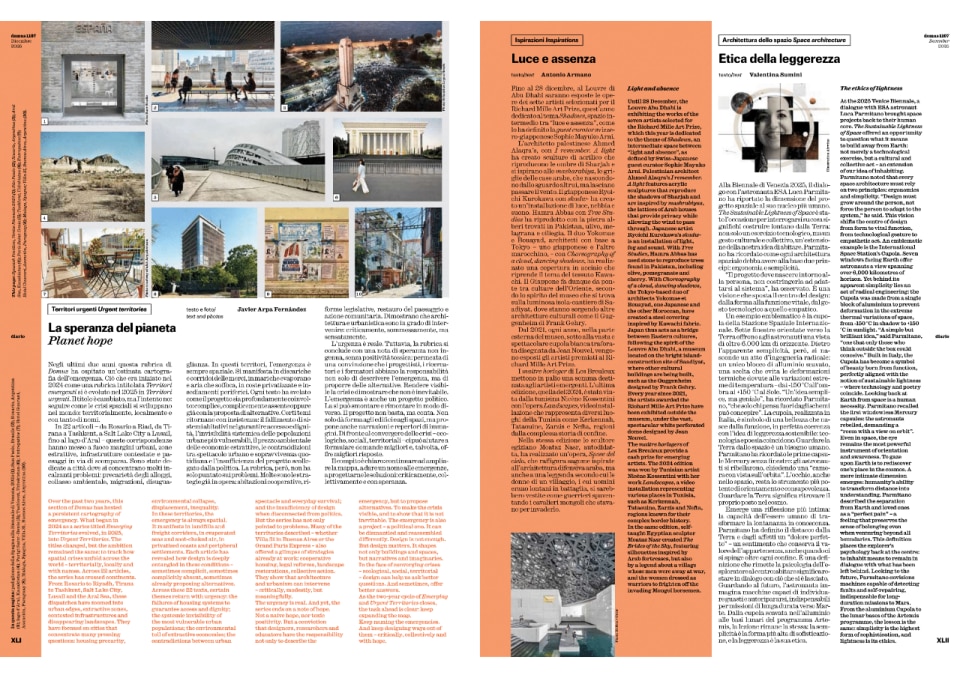
For her part, Artek director Marianne Goebl, in an interview with Elena Sommariva, shifts the focus of sustainability to quality, calling for a new aesthetic that accepts irregularity. This search is reflected in the work of Domenico Orefice and Fornace Curti on Lombard terracotta. Marco Pierini, an art historian, invites us to consider culture as an imperative for psychological and physical well-being, and Carla Morogallo, General Director of Triennale Milano, testifies to a turning point with the institution having become a true “creative enterprise.” Finally, physicist Roberto Battiston reminds us that heat is the “tax” we pay for work, and Javier Arpa Fernández highlights the need to name the planet's Urgent Territoriesso as not to resign ourselves to an inevitable emergency.
Architecture, in short, is a political, ethical, and cultural gesture that weaves the threads between memory and future.
Although the focus of Domus December is centered on Italy, the global stage of architecture is renewed, and the search for the frontier of architecture leads to Beijing through the monograph attached to the issue by the new Guest Editor. Indeed, after eight years of fruitful dialogues with the most brilliant minds in architecture (Michele De Lucchi, Winy Maas, David Chipperfield, Tadao Ando, Jean Nouvel, Steven Holl, Toshiko Mori, Norman Foster and Bjarke Ingels), Domus inaugurates its ninth cycle by welcoming Ma Yansong as the new Guest Editor. Chinese, visionary, a tireless weaver of dreams in concrete and glass, Ma Yansong embodies a stylistic signature that is both conceptual audacity and profound reverence for the landscape.
Ma's work is not mere construction but a vast program of poetic regeneration that extends, as critic Aaron Betsky notes, from utopian urbanism to the creation of curves. While awaiting his most visible masterpiece, the Lucas Museum of Narrative Art in Los Angeles, Betsky has already glimpsed an even more explosive beauty in the Fenix Museum of Migration in Rotterdam. Shedding light on Ma's narrative vocation is the director and producer George Lucas, his client and friend: Lucas wanted an unmistakable building that did not focus on function or technology but on how light and space could arouse the public's curiosity — a deeply emotional matter.
We can only wish you happy reading, with the awareness that the questions have been posed and the conceptual construction sites are open. We look forward to seeing you in January 2026, when Ma Yansong’s vision — expressed in his Manifesto attached to the December issue — will unfold in the January issue, calling us to measure ourselves against the next, inescapable transformation of Domus.