



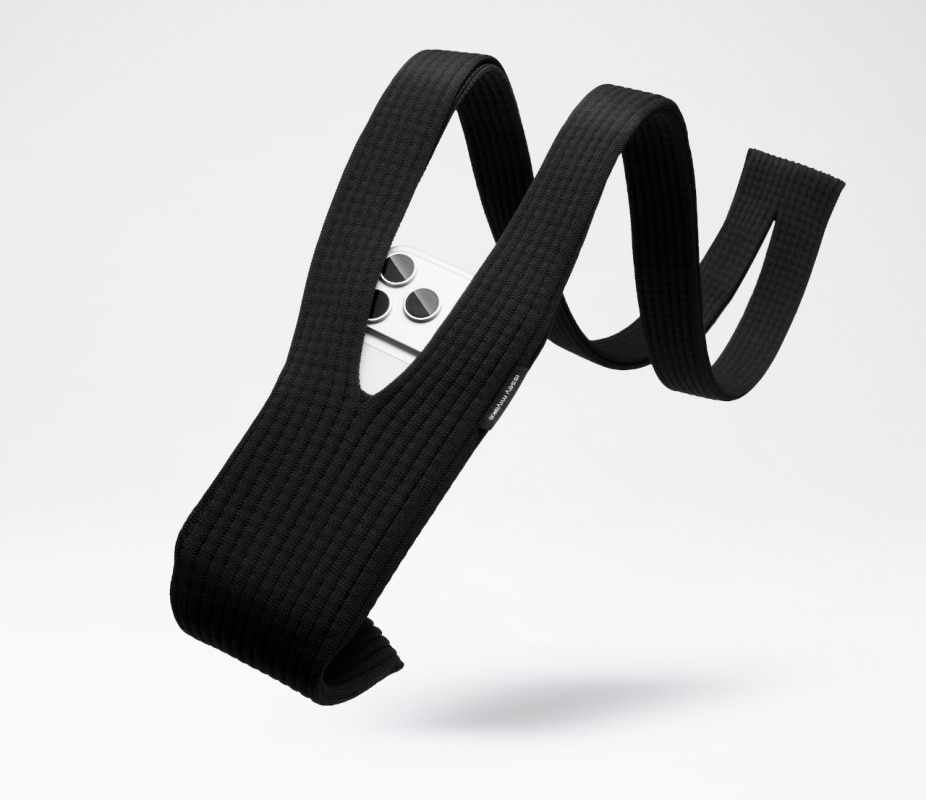
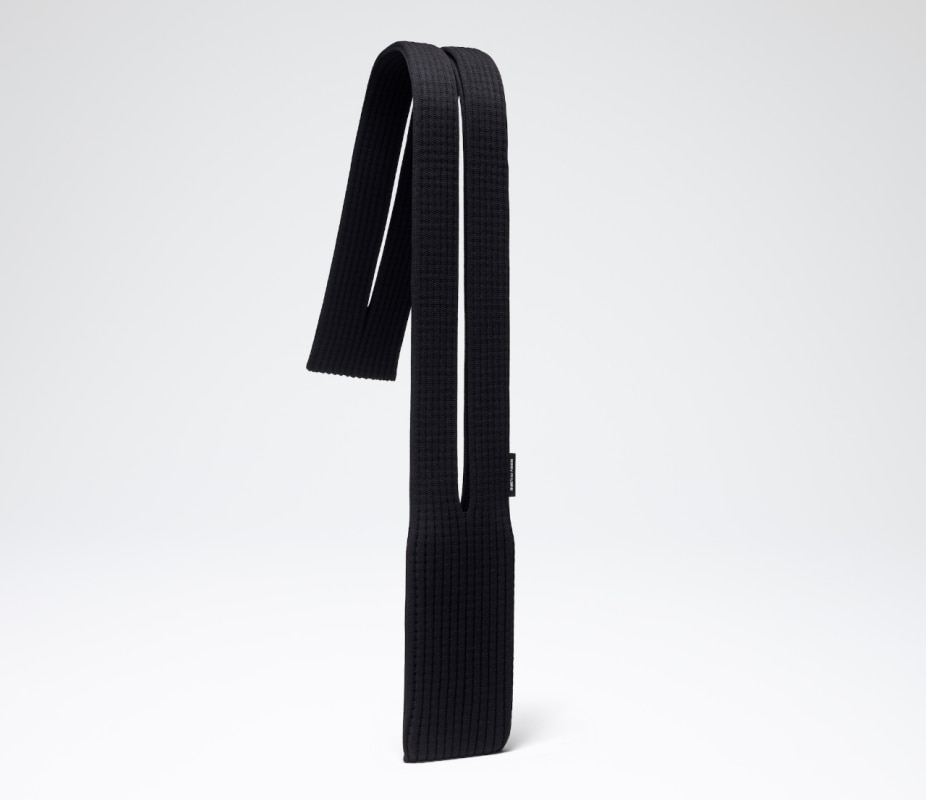
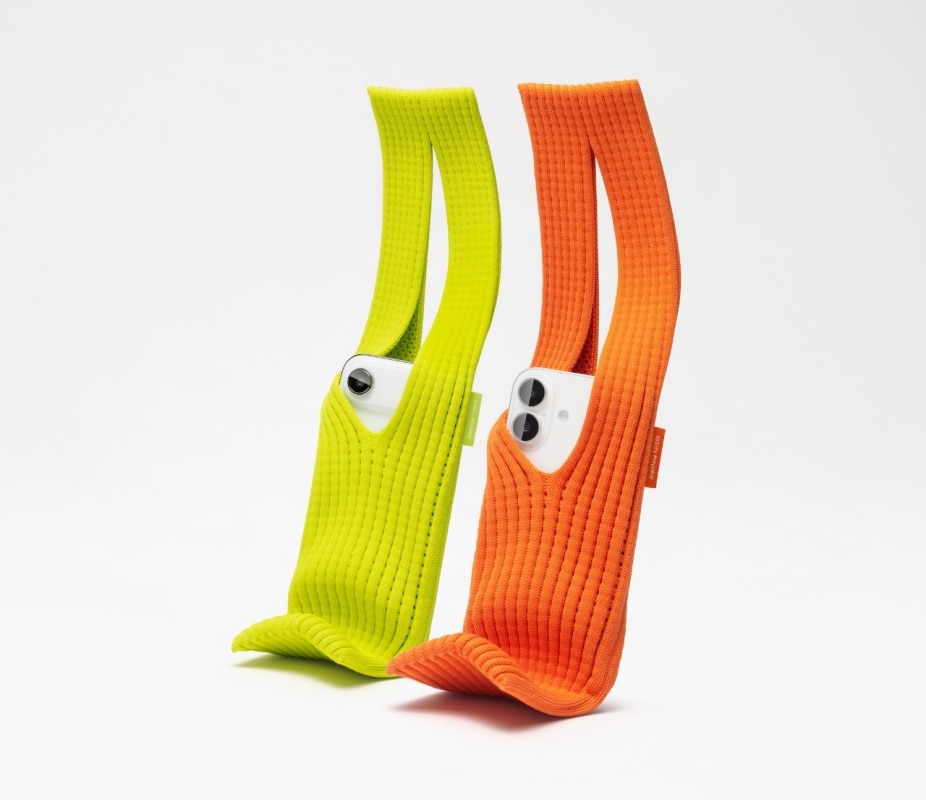

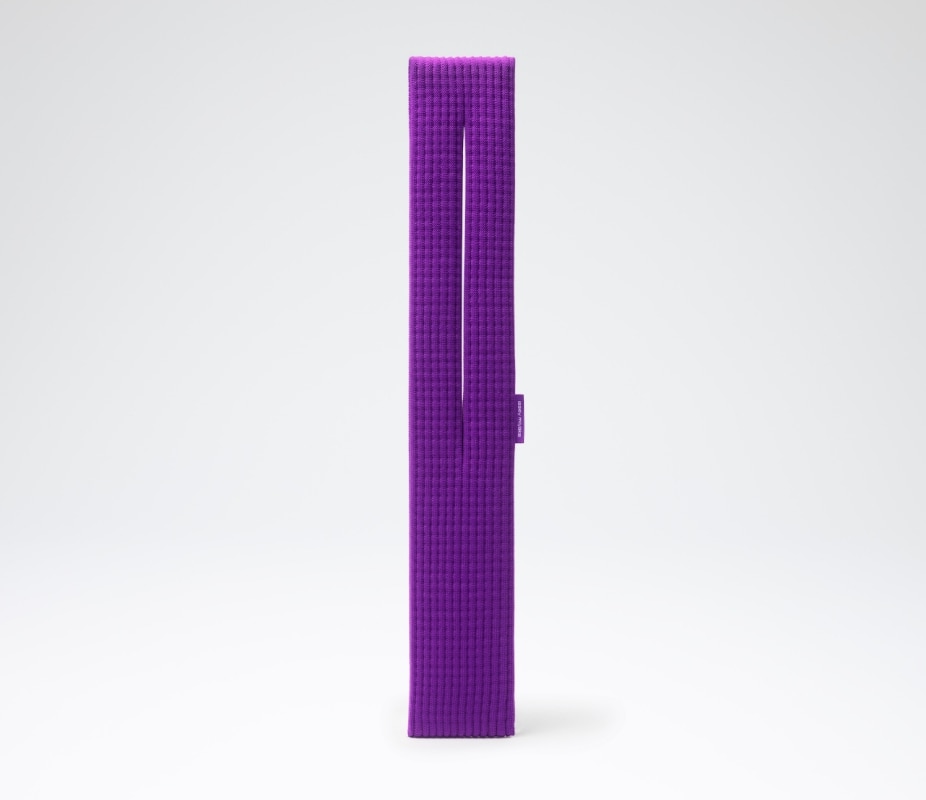
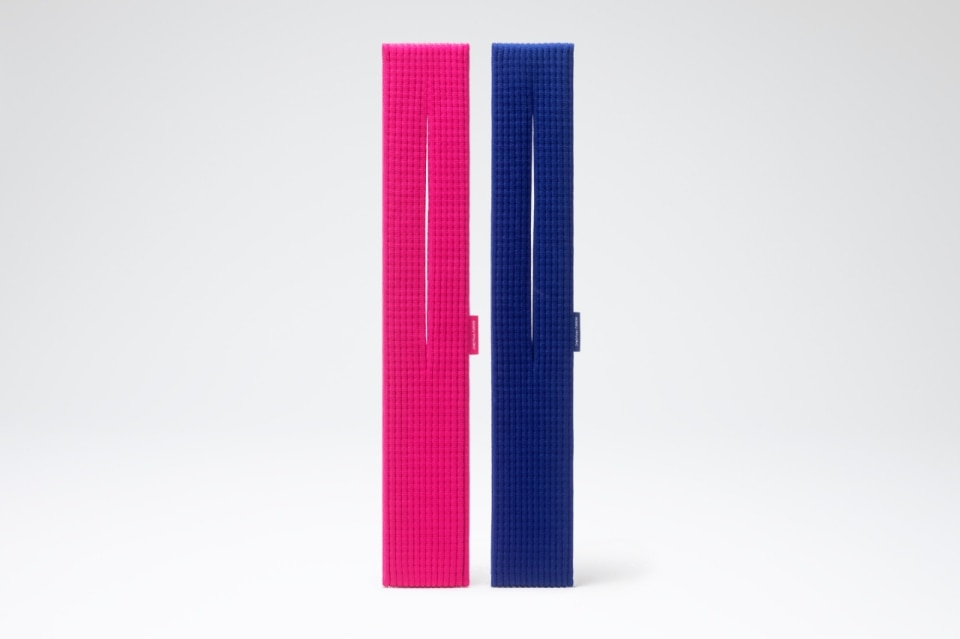
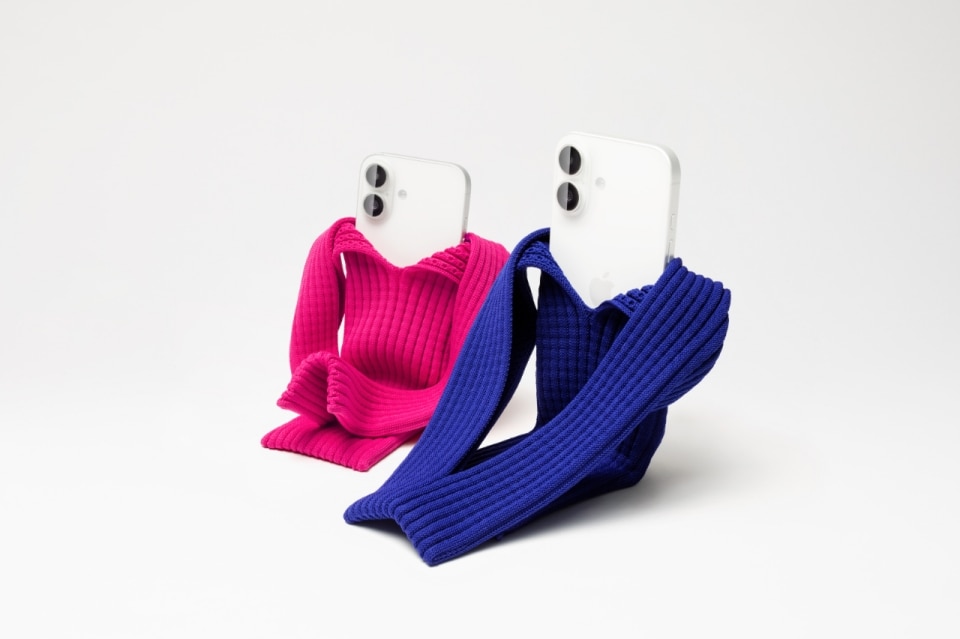
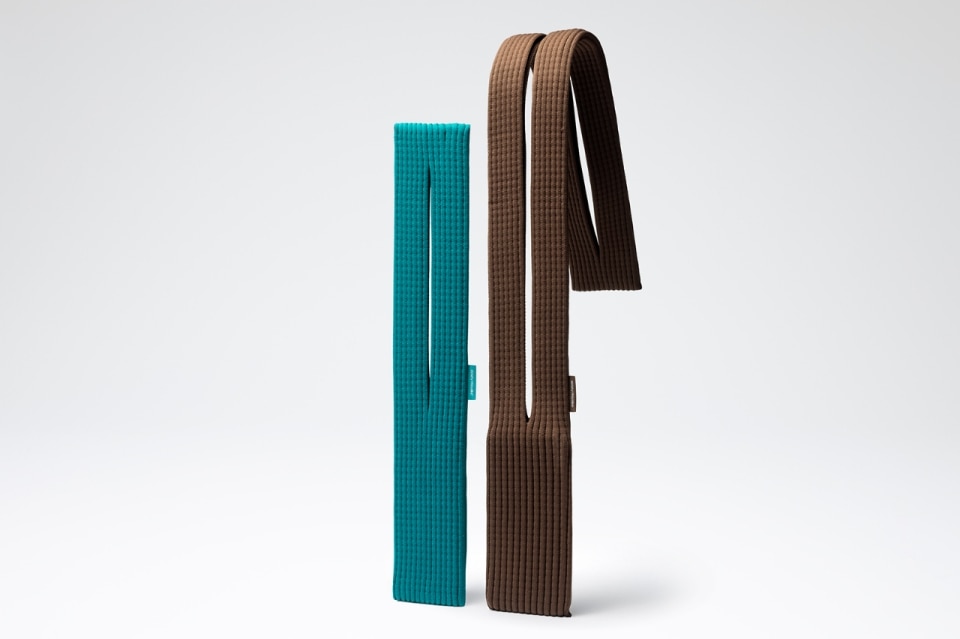
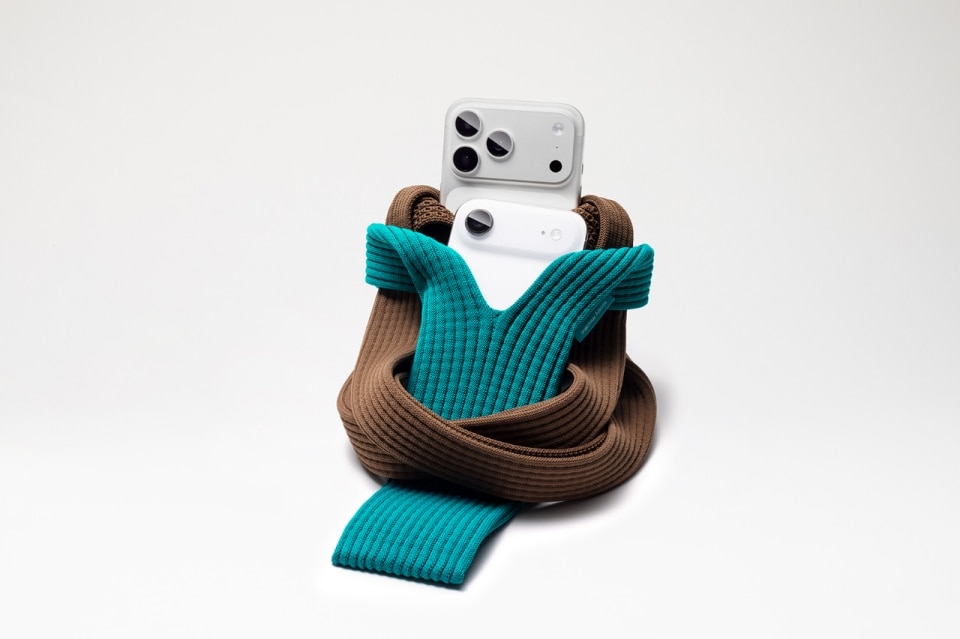
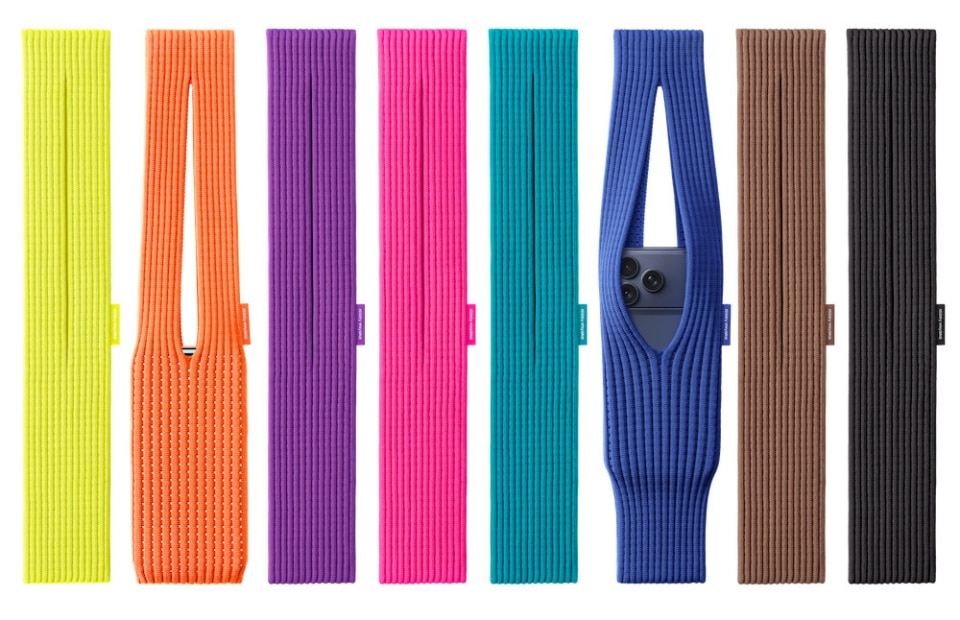
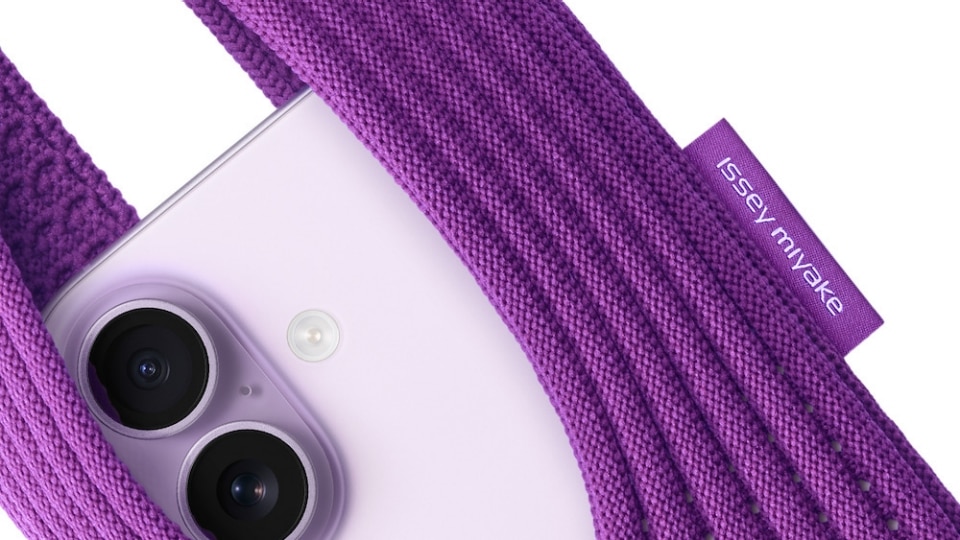
A loop of knitted fabric, open at the centre and hiding a pocket at one end, where the iPhone slips in while you wear it on your shoulder, on your wrist, or hooked to a bag. That, in the briefest possible definition, is the iPhone Pocket: the accessory created jointly by Issey Miyake and Apple to carry a smartphone. Or rather, to wear it — an ambition that increasingly sits at the core of Apple’s strategy, especially just a few months after the debut of the Crossbody Strap. After years spent deforming our trouser pockets or disappearing into the unreachable depths of bags, backpacks and totes, the iPhone re-emerges as something to display — almost a stylistic flourish.
Launched a few weeks ago with the same surprise effect as a Kendrick Lamar album dropped minutes before appearing on Spotify, images of the iPhone Pocket instantly travelled across global front pages and took over Instagram (including Domus, naturally). But seeing something is one thing; using it is another.
An object that slips into daily life
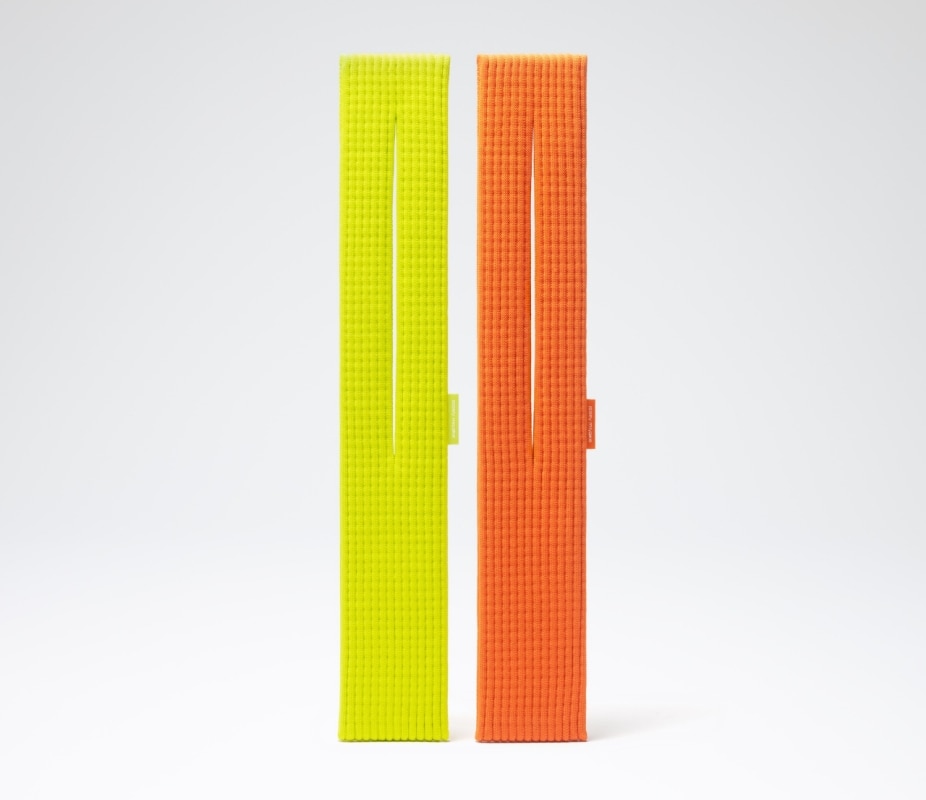
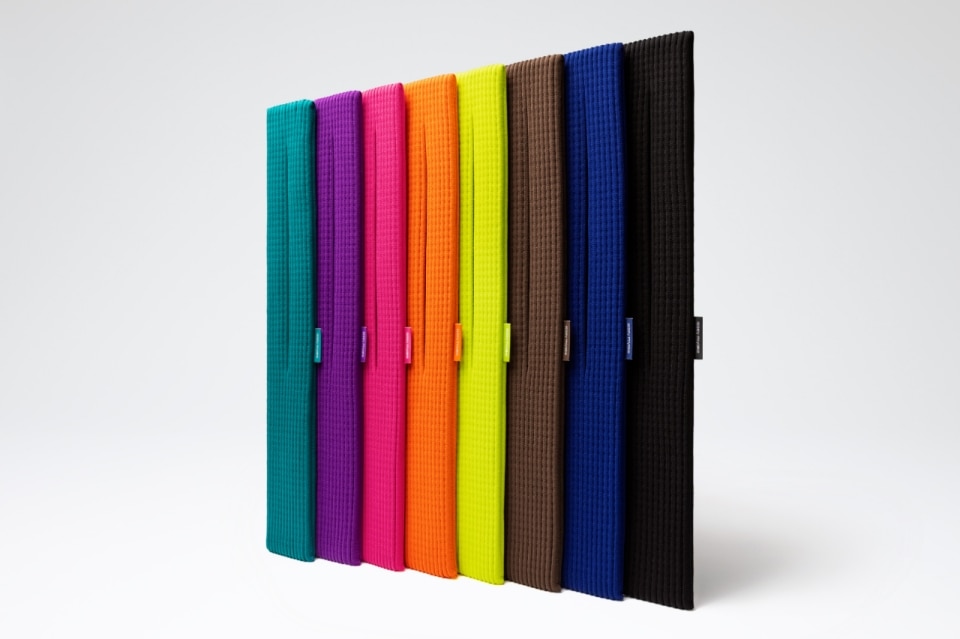
For the past few weeks, the iPhone Pocket has been part of my everyday routine. Of the two models — the shorter one to hang on a bag or wear on the wrist, and the longer one (around eighty centimetres) worn on the shoulder — I gravitated toward the latter. Mine is in standard black, though sapphire and cinnamon are also available. The shorter model comes in brighter tones: lemon yellow, rose, peacock blue, mandarin. Sold online through Apple and in a tiny selection of stores, the iPhone Pocket sold out almost instantly in every length and colour. I was stopped several times in Milan by people asking where I had found it. Even by those who weren’t entirely sure who Miyake was: “It’s that thing Apple made with the Japanese designer, right?”
An elastic sculpture that expands and adapts: the iPhone Pocket slips into daily life and changes the very gesture of carrying technology.
Indeed: Miyake. New Balance sneakers — before they came back into fashion, and long before they became a strange kind of Trump-era style statement — Levi’s jeans, and the signature Issey Miyake turtleneck. That was the uniform Steve Jobs adopted for his “second life” at Apple. The era of the technology that reshaped our lives: the iMac, the iPod, and of course the iPhone. Jobs is gone, Miyake too, and the iPhone Pocket — intentionally or not — carries traces of that shared legacy. It also seals a long-standing mutual admiration that had never taken shape as an actual collaboration. And it echoes those “foolish” and genuinely innovative years when technology still surprised us — something we may have lost, and that projects like this try, in their own way, to restore.
A small shift in behaviour
Wearing the iPhone Pocket outside the house, more than the Crossbody Strap, feels slightly unusual at first. We’ve been trained for years to hide our phones the moment we enter a crowd, to avoid giving pickpockets any opportunity. Moving the device out of a pocket or a bag is, in a way, a behavioural shift — especially in Western cities or on public transport, where petty theft is still common.
But worn under a coat on a cold late-autumn day in Milan, or on a bike ride with the iPhone hanging from the shoulder like Bill Cunningham’s Nikon cameras, the problem evaporates. And the device becomes more accessible than ever — even if, contrary to what some reviewers have claimed, I was not able to read the screen through the elastic knit.
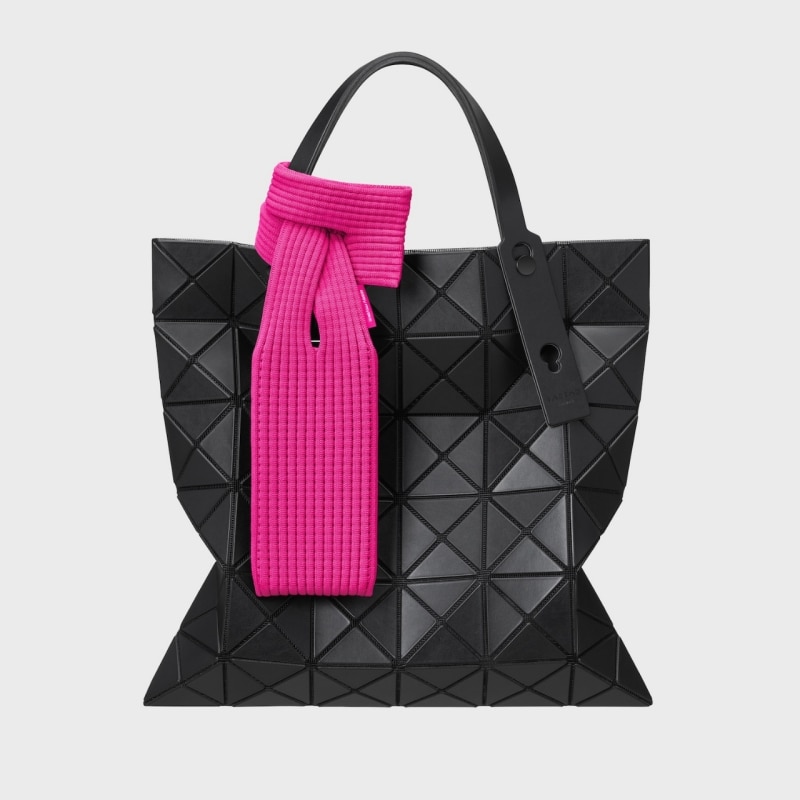
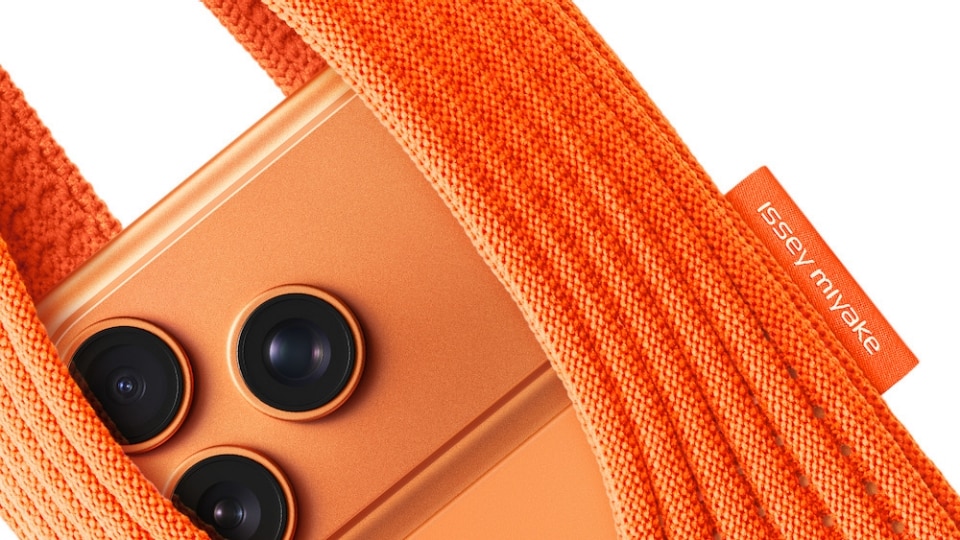
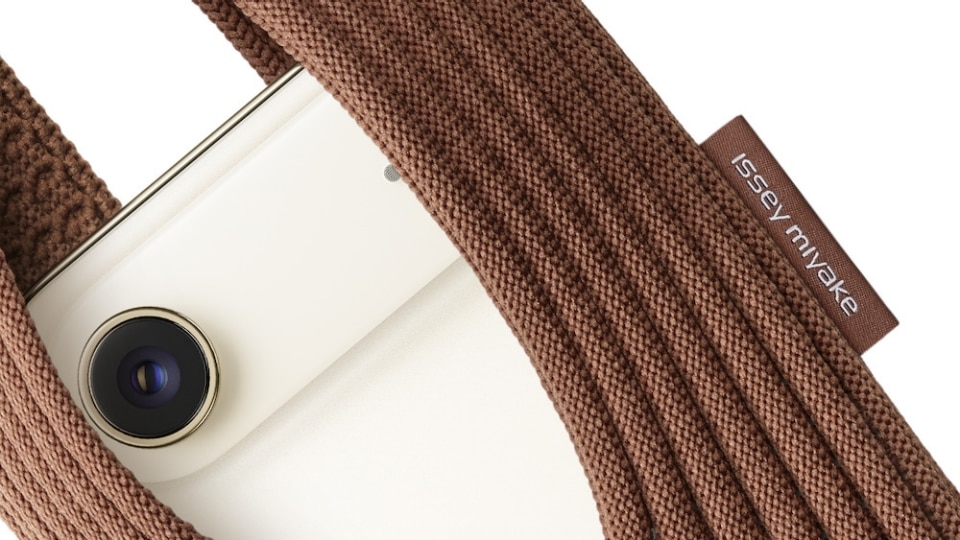
The iPhone Pocket is a beautiful, extremely refined object: an elastic 3D-knitted sculpture that expands and adapts to whatever it holds — practically every iPhone model, but also, in a pinch, a compact camera, a wallet, or even an Apple Watch left to recharge in peace, as happened to me recently. It’s a tool that contains technology and also owes a great deal to technology in its design and fabrication, even though it is not, strictly speaking, a tech gadget. This has confused parts of the tech-journalism community, whose reviews on The Verge and CNET oscillated between curiosity and bemusement: finding the Apple logo on something so “non-technological” was unexpected. Fashion writers, however — Vogue included — loved it.
Form as language
The iPhone Pocket perfectly embodies Miyake’s philosophy and the minimal garments of his brand, which adapt to the wearer. His iconic Pleats Please line is the apex of this idea: pleats designed to reshape themselves intelligently around the body. “We wanted it to feel like a single piece of fabric that expands with what you put inside,” explains Yoshiyuki Miyamae, creative director of Issey Miyake. The iPhone Pocket is not rigid; it is pure textile, its form instantly recognisable as part of the Japanese brand’s world.
The iPhone stops being a neutral object and becomes visible again — declared, almost like a piece of jewellery.
And its flexibility — adjusting to its contents and to how it’s worn — becomes a metaphor for something that has been in plain sight for years. A sign that the smartphone is no longer a neutral object: it is returning to being visible, declared, almost a piece of jewellery. But also something familiar, practical, an obvious part of daily life. Meant to be worn, always. Without losing a trace of wonder. It reassures us, while also reflecting Apple’s evolution since the debut of the Apple Watch — a shift toward becoming not just a tech giant, but a leading actor in the aesthetics and creativity of our time.
All images: iPhone Pocket by Issey Miyake ÔÇö ┬® Miyake Design Studio