

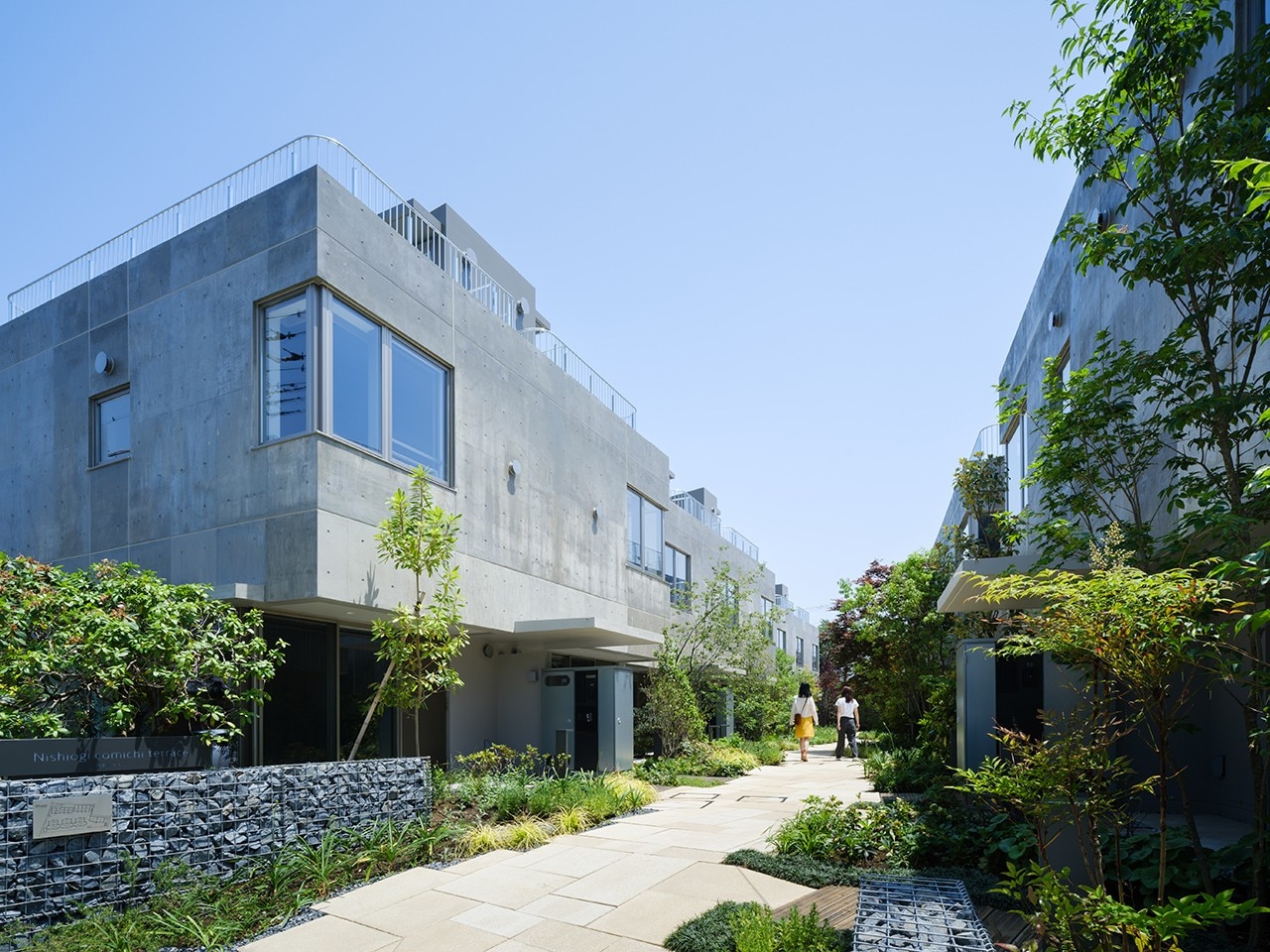

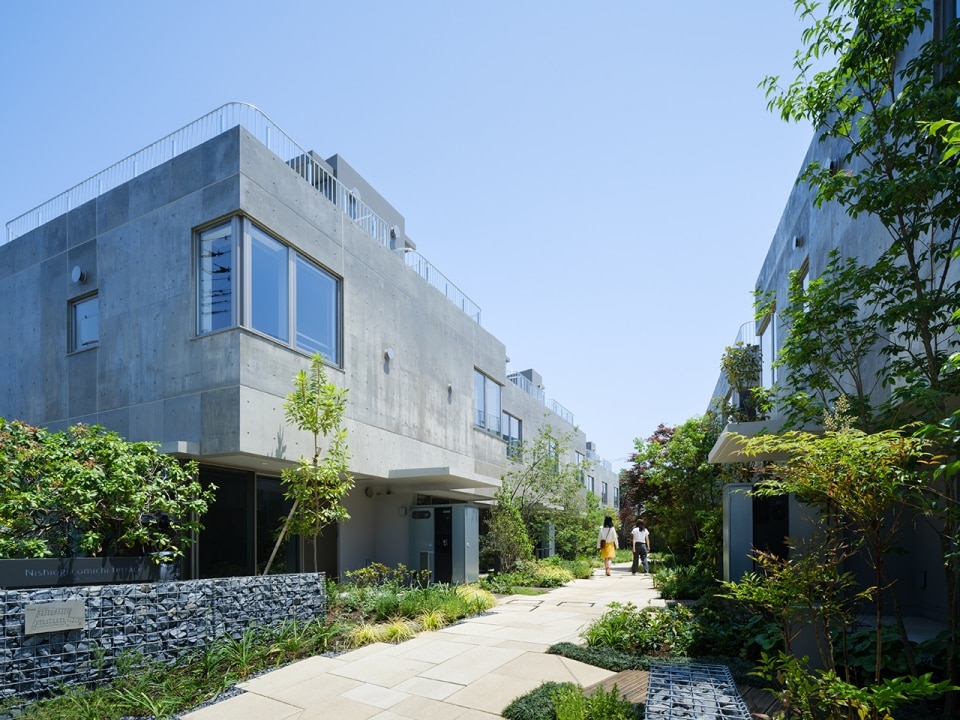
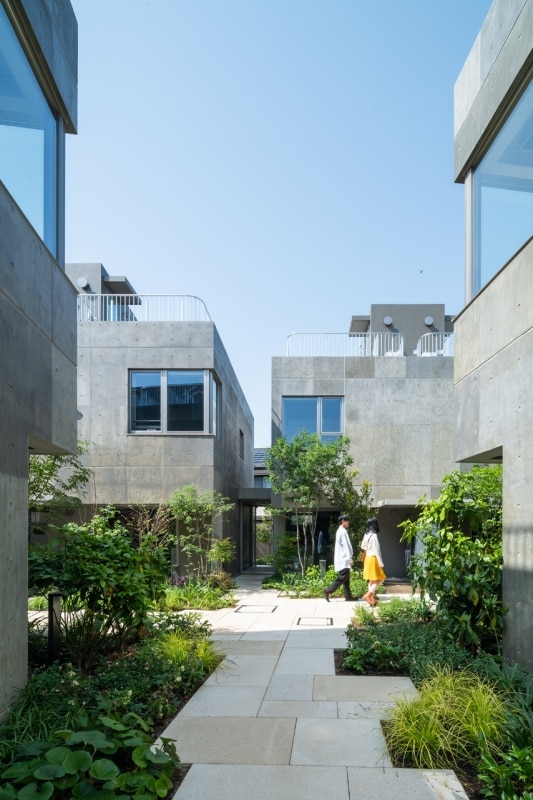
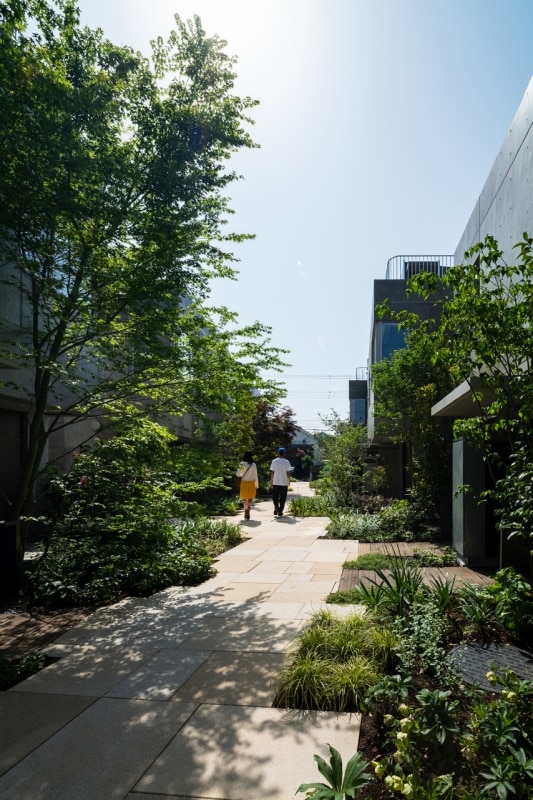
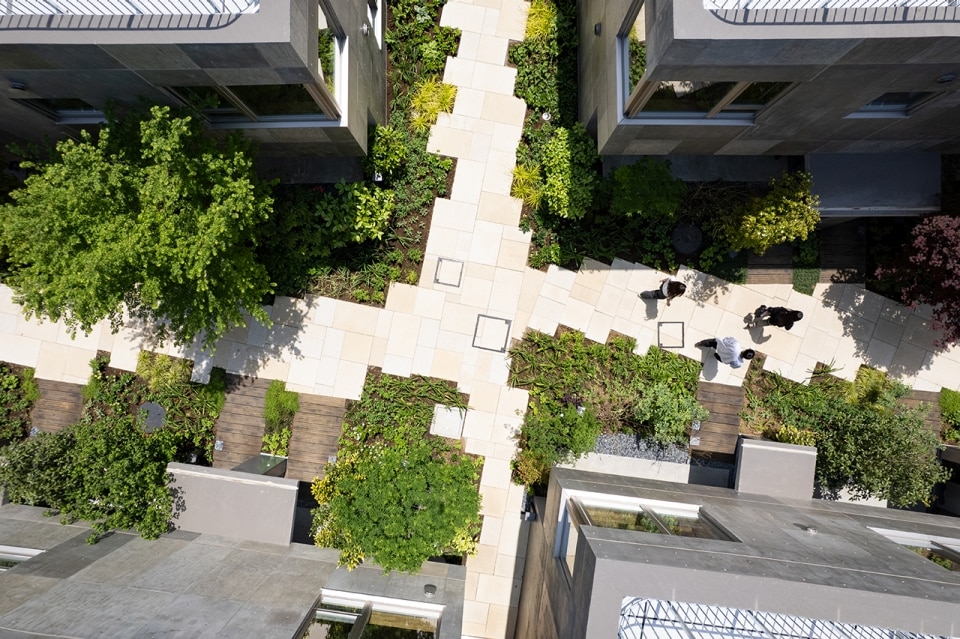
In the residential district of Suginami in Tokyo stands a cluster of terraced houses, all organized around a pathway designed as a true connective and permeable fabric.
Naruse Inokuma Architects’ project distributes 23 residential units over an area of 1,600 square meters, countering the idea of a high-density settlement.
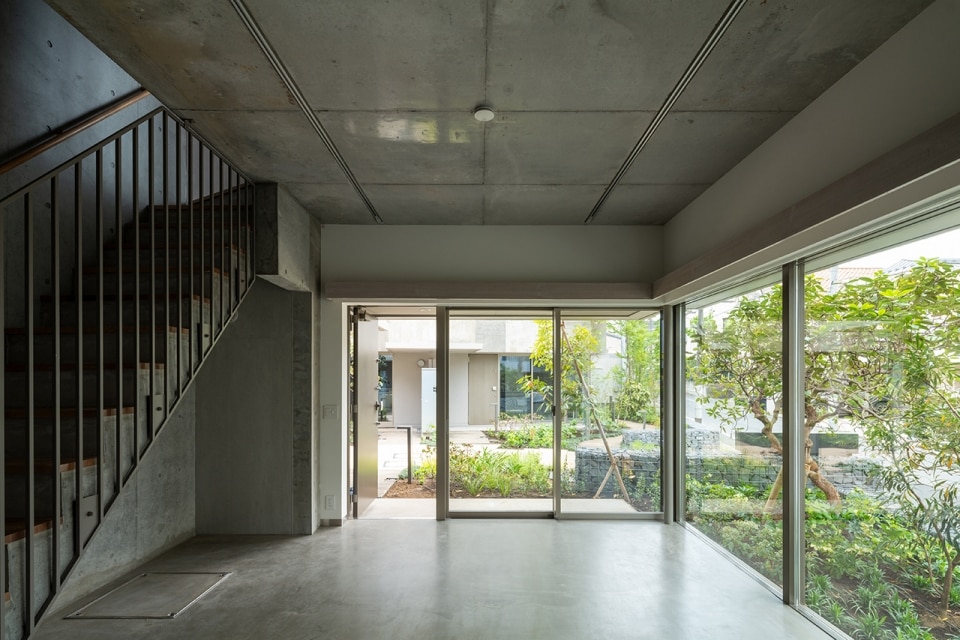
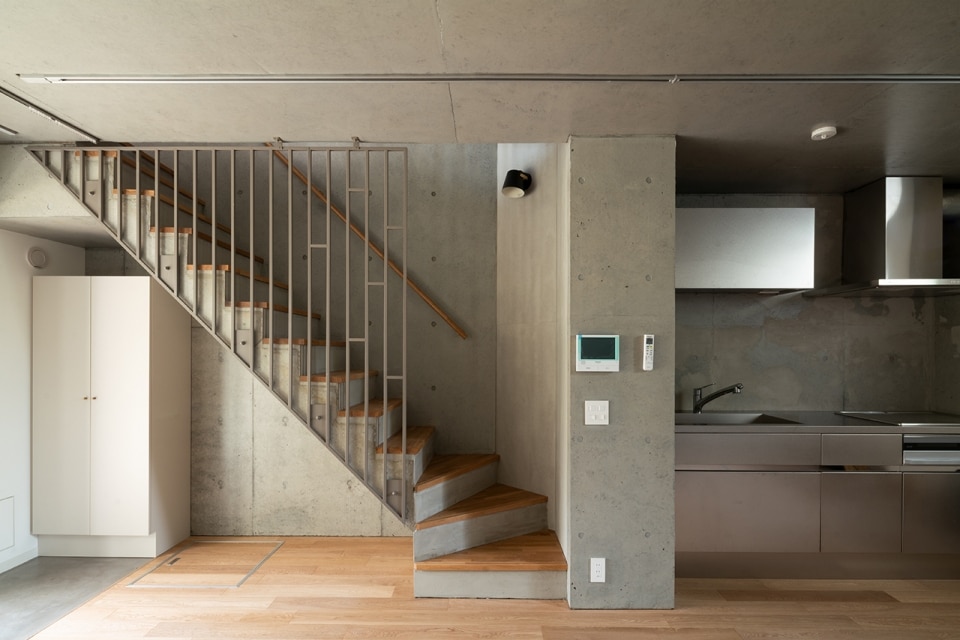
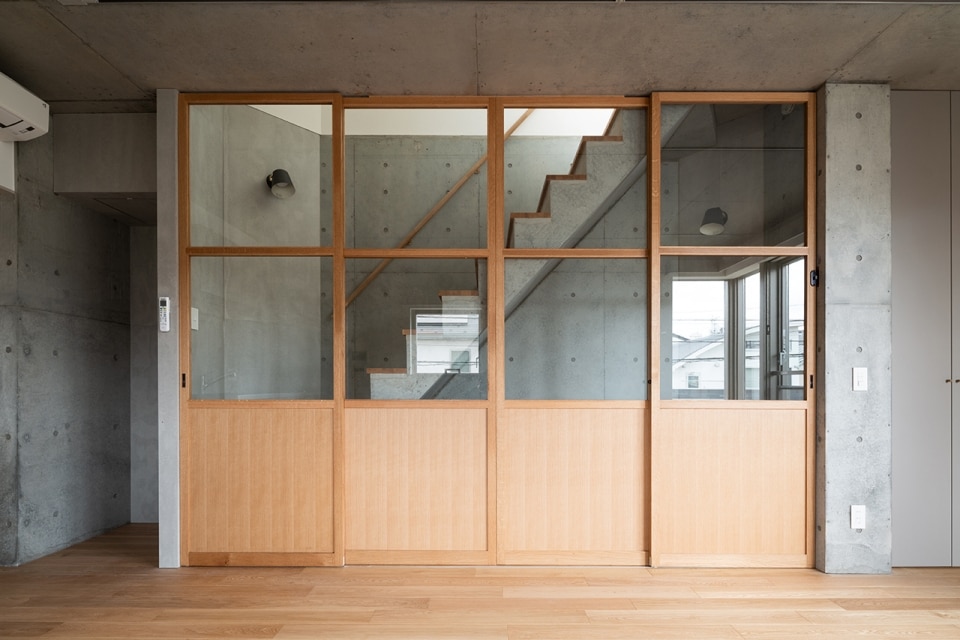
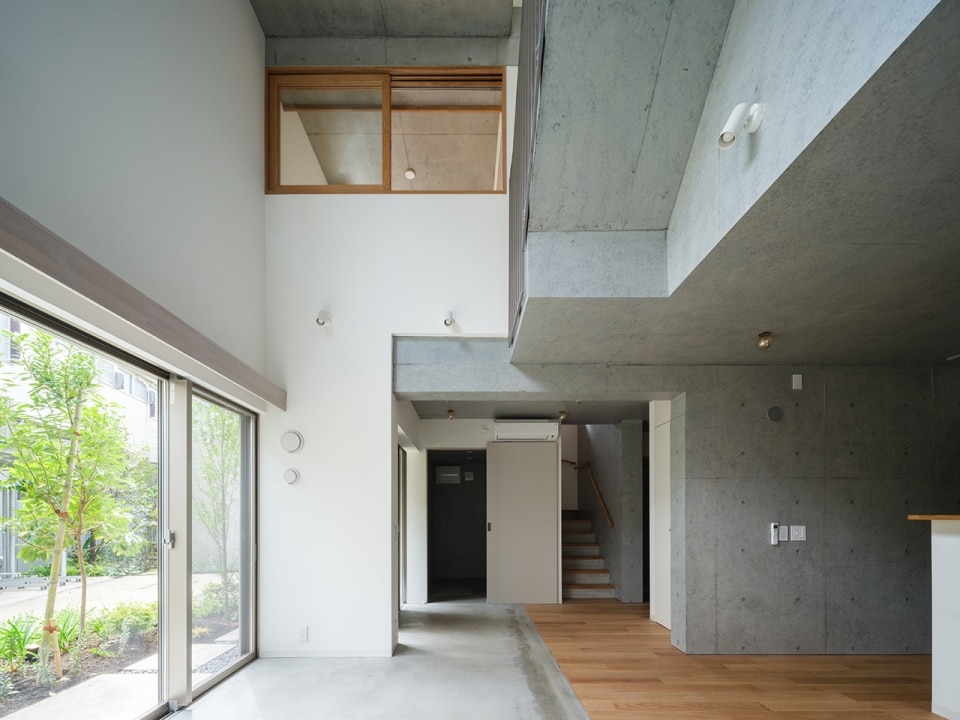
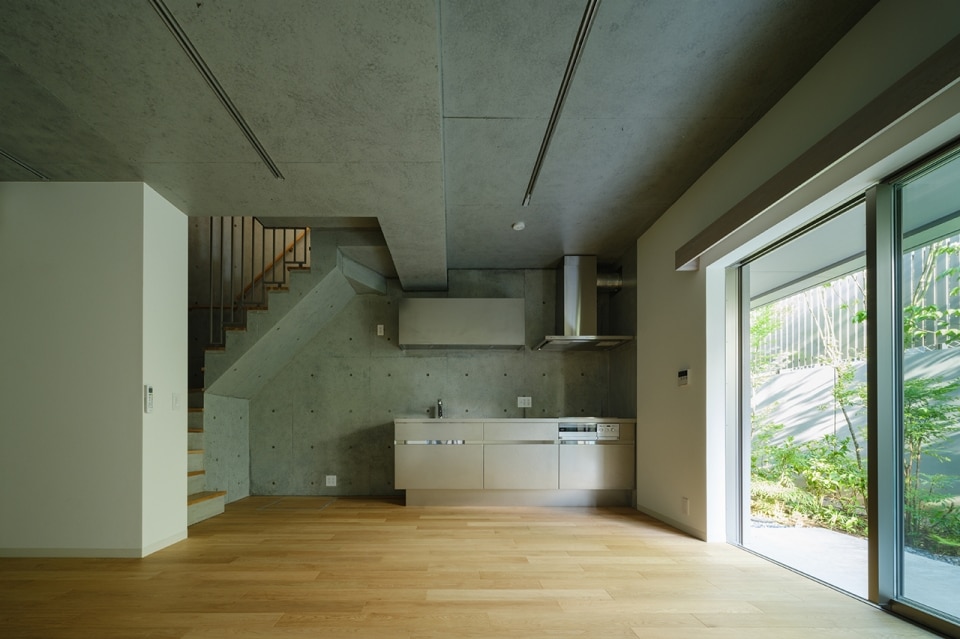
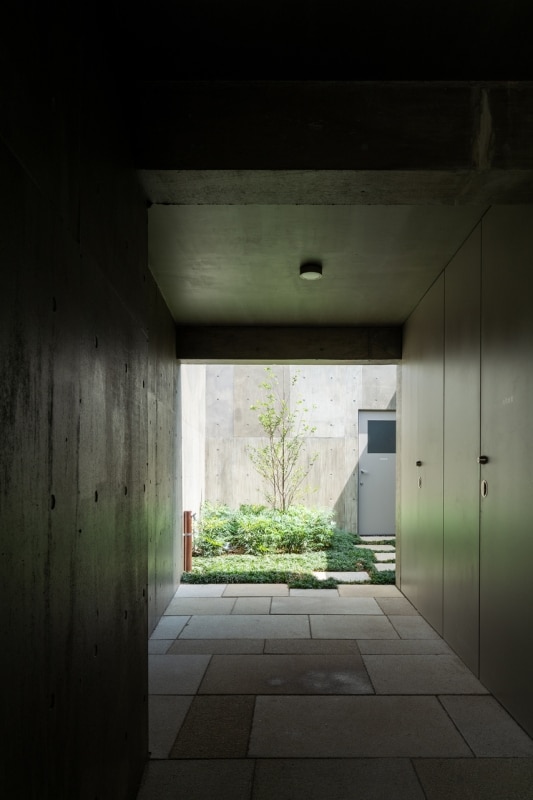
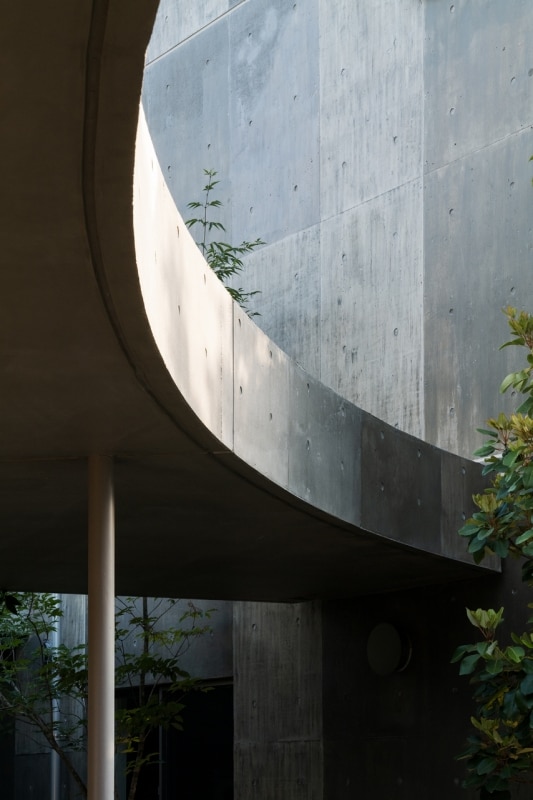
The reference to Tadao Ando’s Japanese architecture is impossible to miss. It is evident in the treatment of the buildings, the choice of materials, and the essential composition of the volumes, as well as in the bare and austere feel of the interiors. The explicit recall is to Ando’s early houses from the 1970s, such as the Azuma House and the Manabe House in Osaka (1975–77), or to the later versions from the 1980s, where Ando adds the curved elements characteristic of the Kidosaki House (1982–86) and the Ito House in Tokyo (1988–90) to the orthogonal layouts. Ando’s influence is clear in the facades—hermetically sealed with severe exposed reinforced concrete panels—and in the treatment of interior spaces of daily domestic life, where comfort and intimacy still give way to the quiet rigidity of concrete, glass, and, in rare cases, wood.
The reference to Tadao Ando’s Japanese architecture is impossible to miss. It is evident in the treatment of the buildings, the choice of materials, and the essential composition of the volumes, as well as in the bare and austere feel of the interiors.
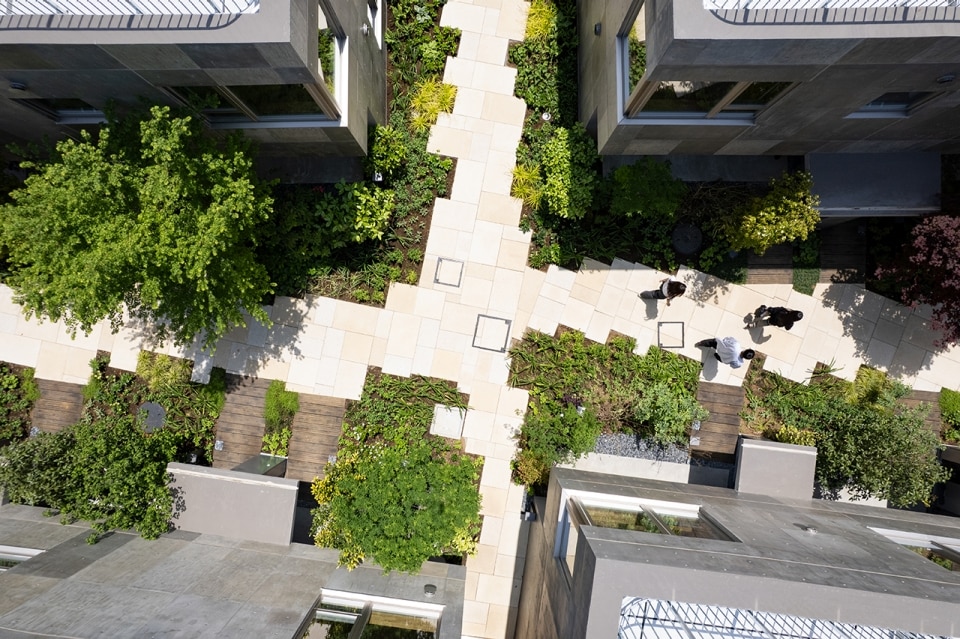
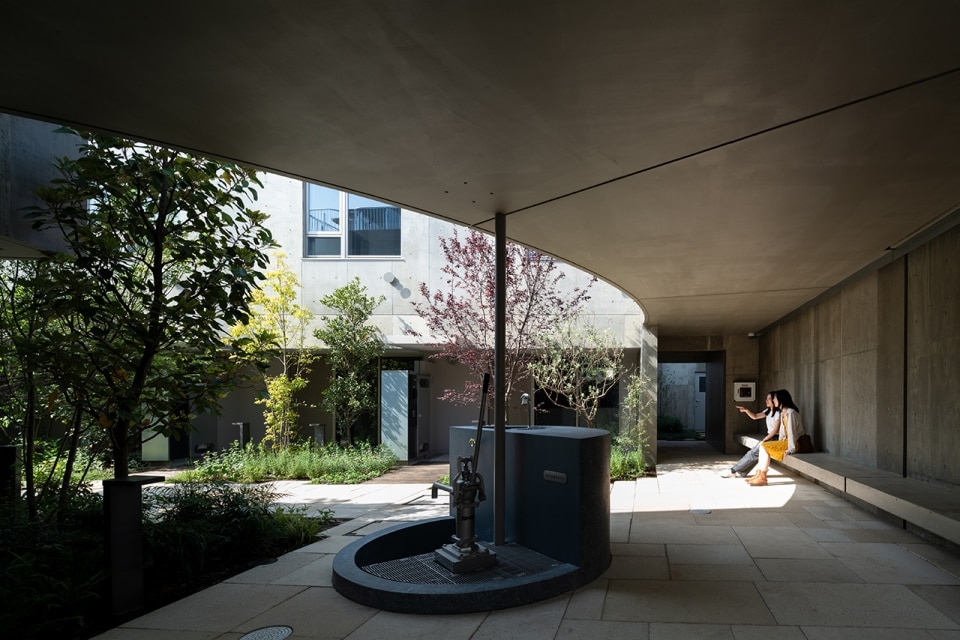
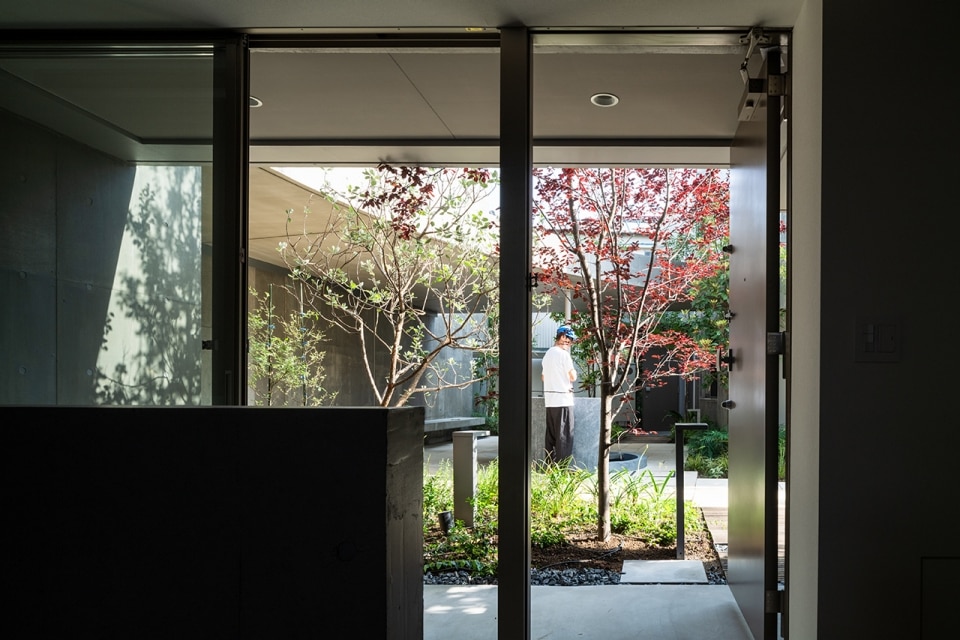
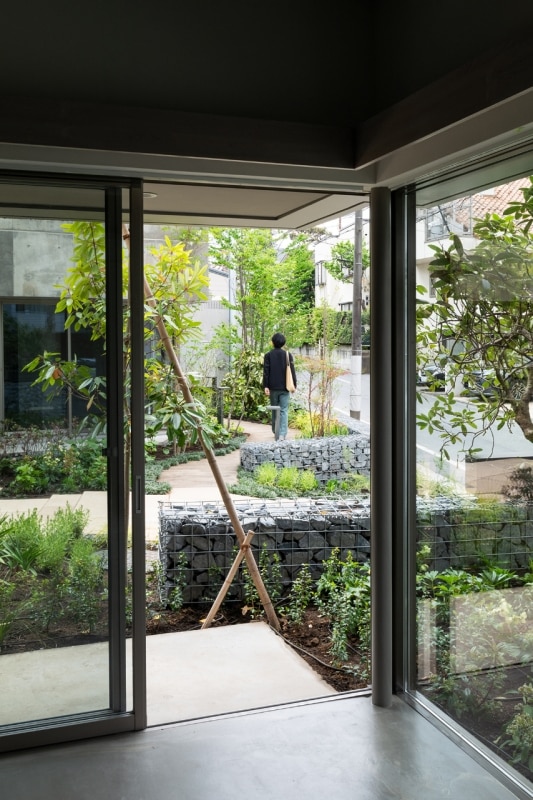
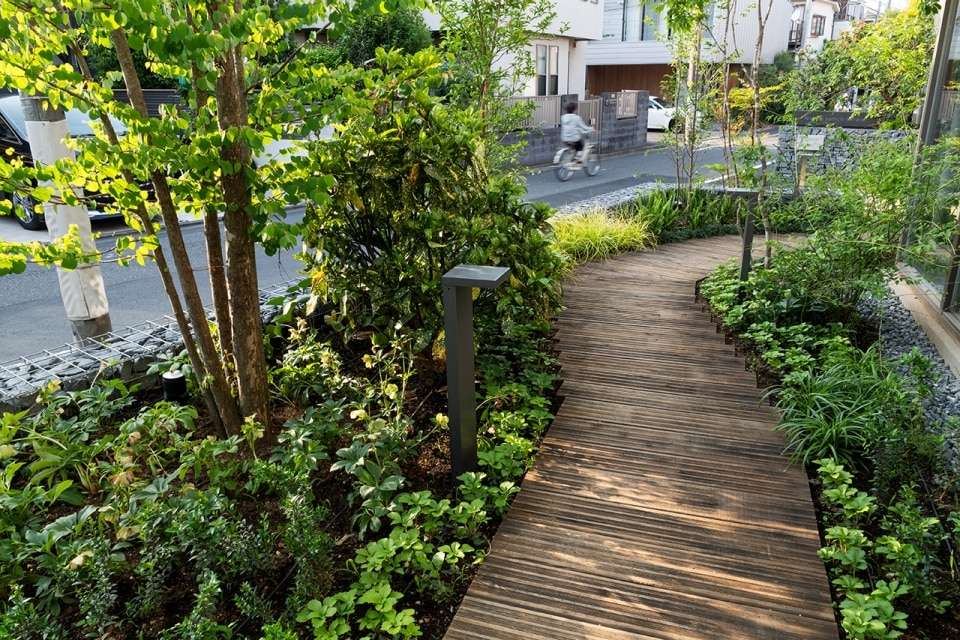
On the ground floor, each apartment hosts the living areas and is conceived in visual continuity with the shared walkway, ensuring direct access to the outside and creating filtered transitions between domestic life and collective space. The use of substantial vegetation bands and a varied, composite paving—made of different materials strategically chosen to identify specific functions—helps create an intimate and familiar atmosphere. Wood marks the access paths to the apartments, while the main walkway crossing the entire complex is paved with tiles cut into ever-changing dimensions.
It is precisely the attention to the design of threshold spaces, combined with the material rigor that dominates the entire complex, that makes the dialogue with Ando’s tradition even more evident, leaving open the question of how much the Japanese master’s language has influenced the architecture of his followers.