


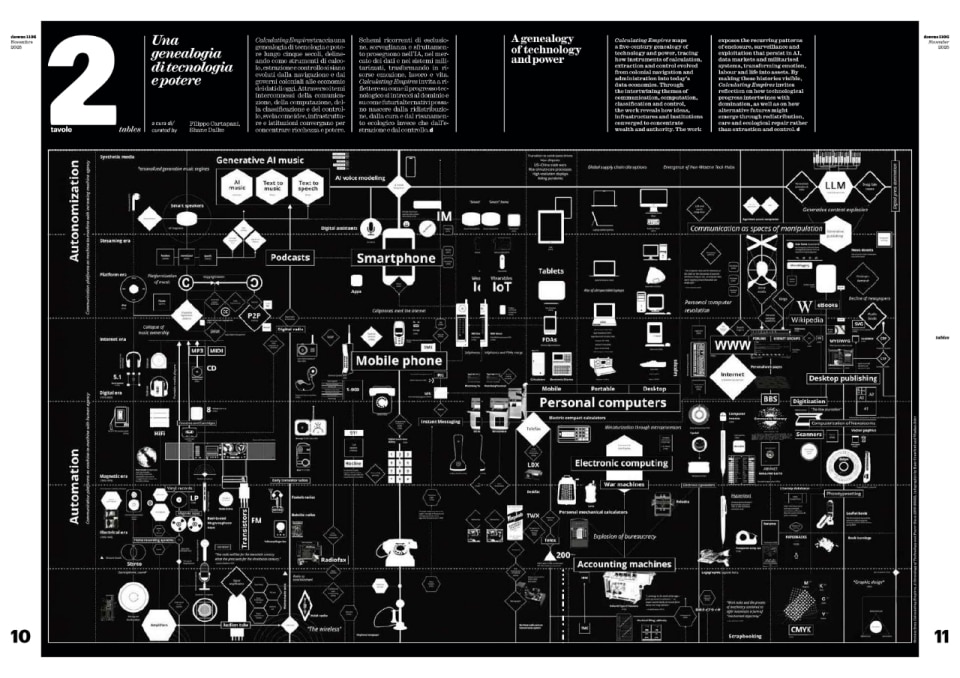
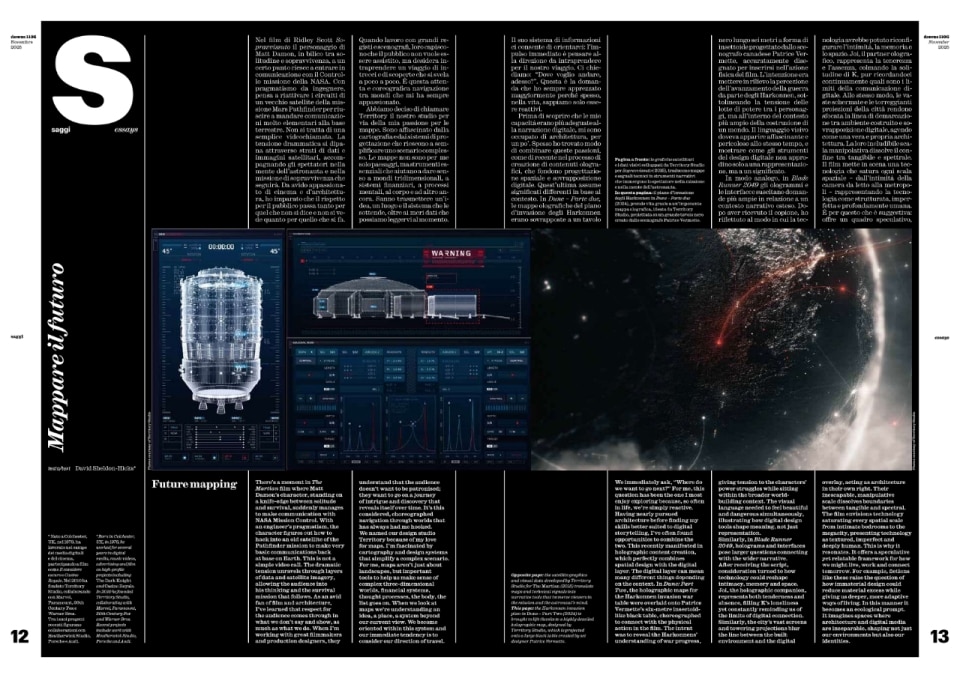
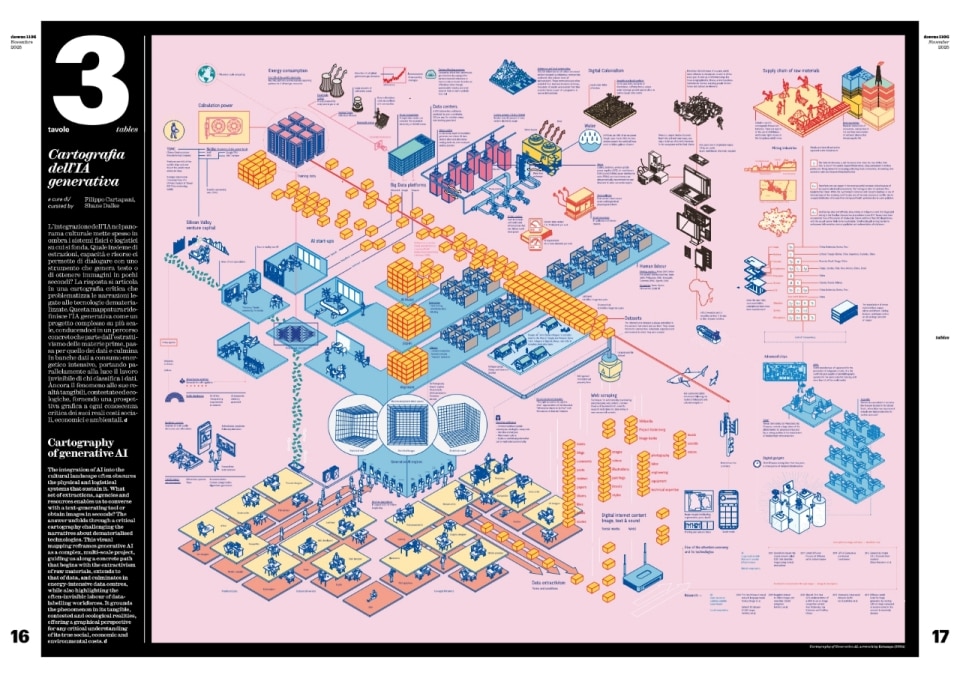
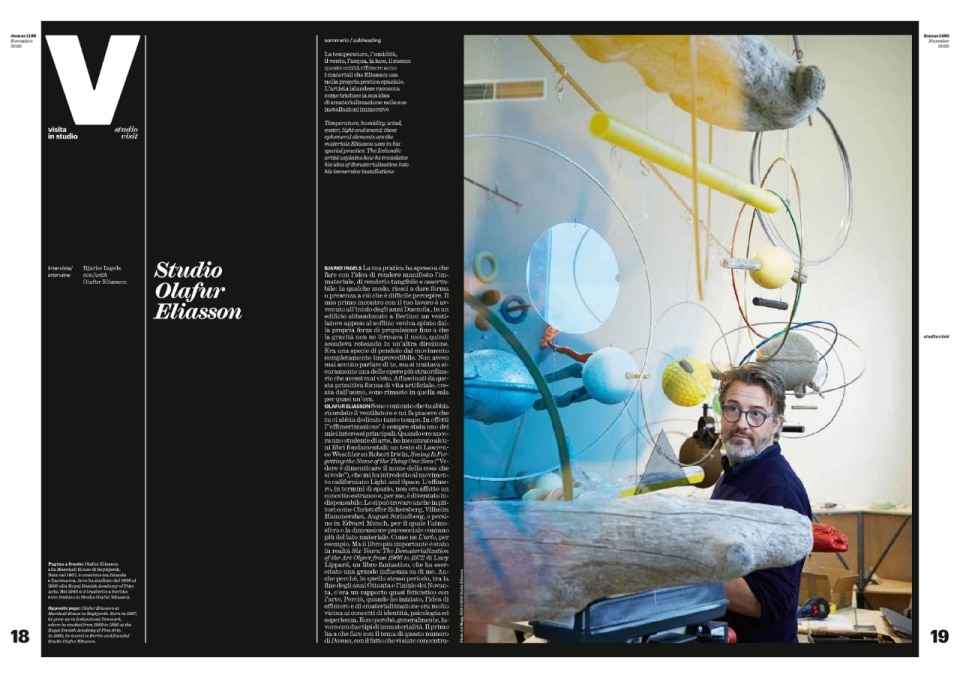
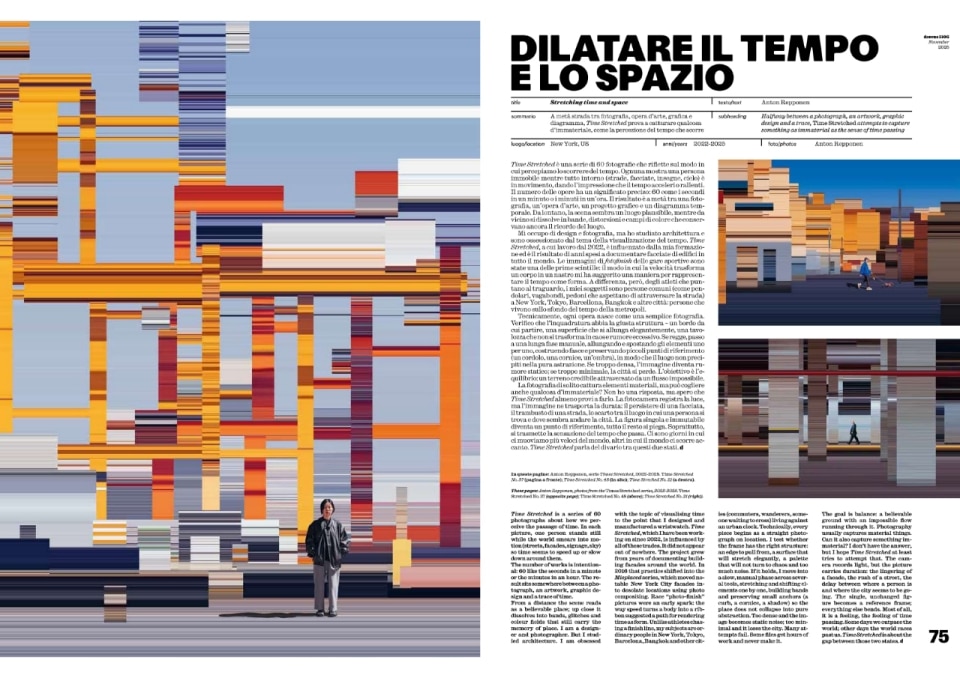
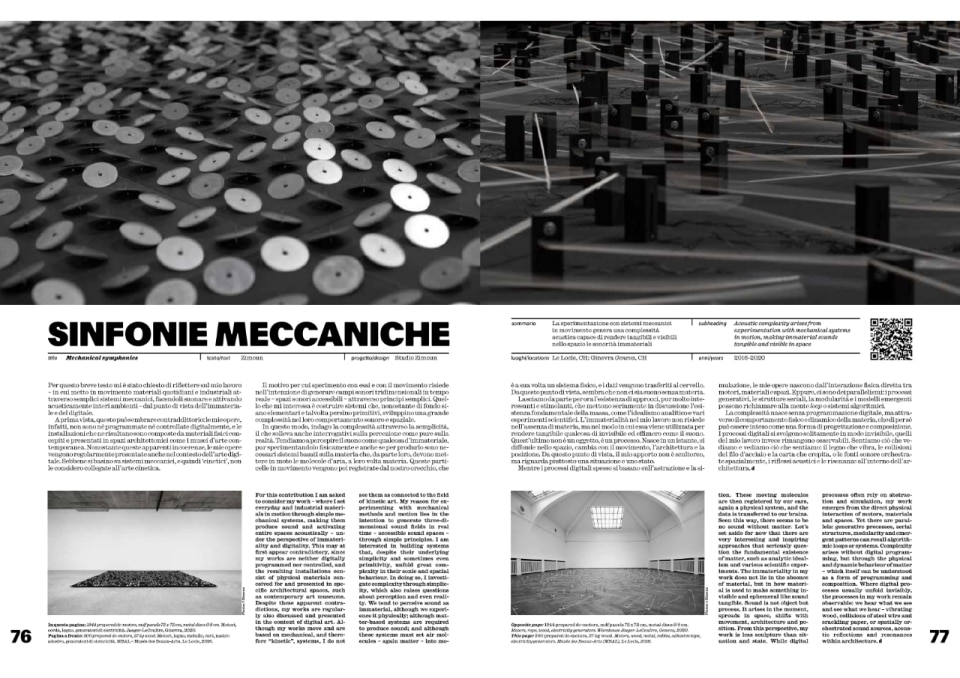
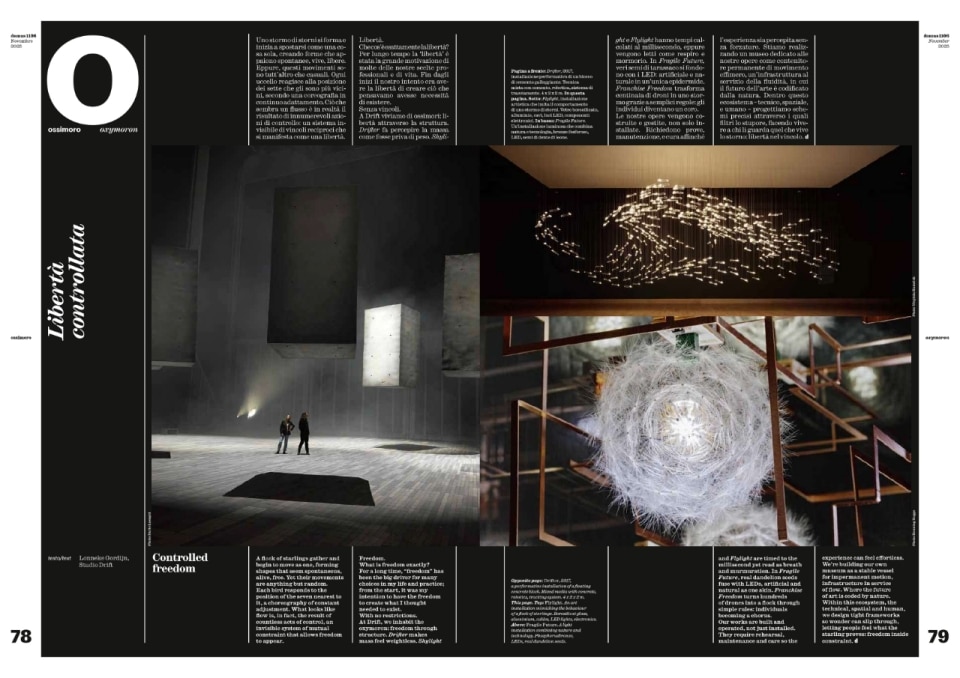
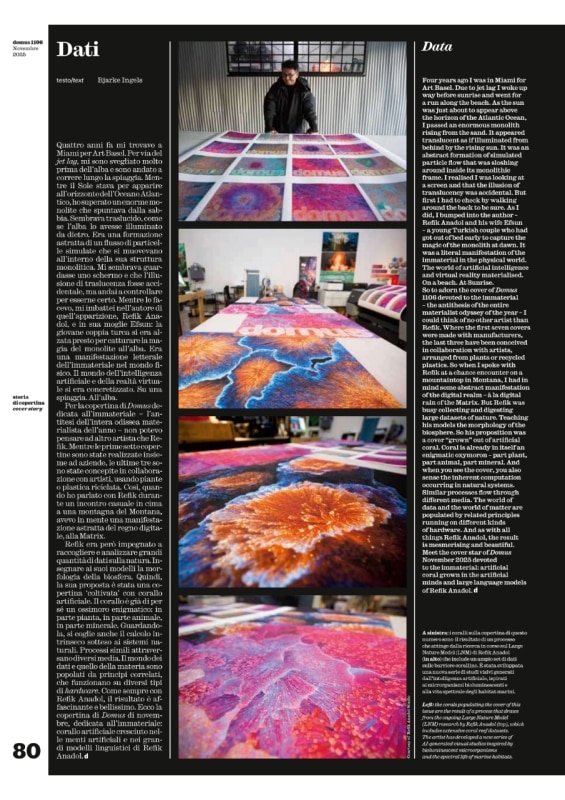
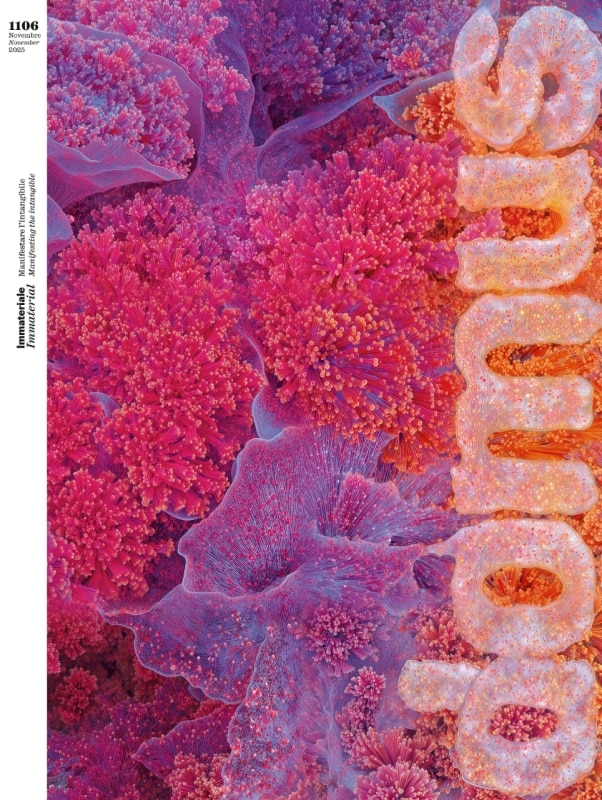
After an entire year dedicated to exploring matter, from earth to textile, from metal to recycling, this final issue of Domus for the year brings our materialist odyssey to a close with its precise opposite: The Immaterial. Far from a mere denial, it represents a new frontier where design, architecture, and art confront the invisible forces that ultimately shape our world: data, light, consciousness, and time. This November issue of Domus is a bold challenge to conceptual gravity.
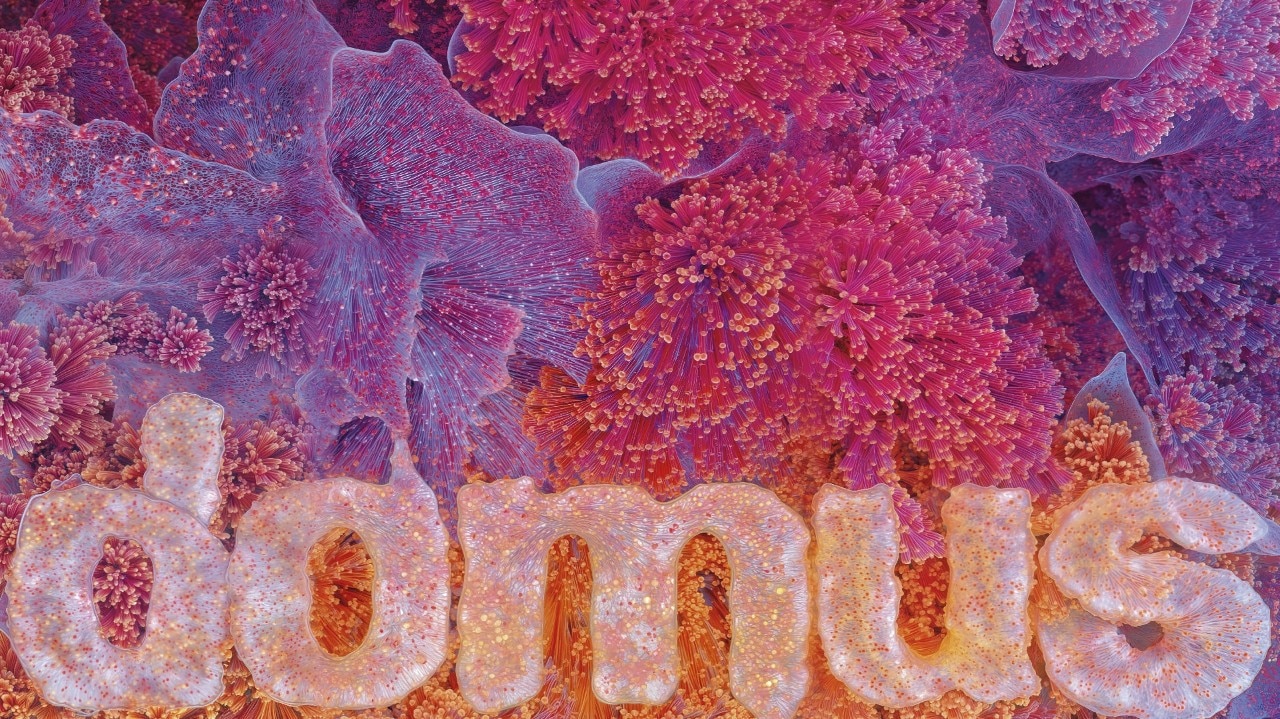
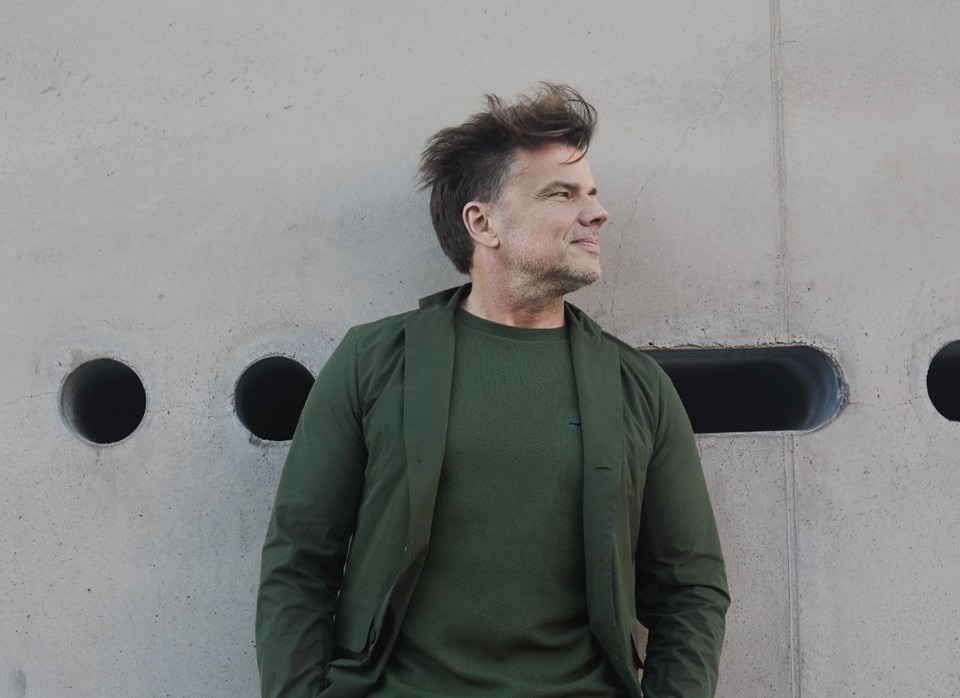
In the guest editor Bjarke Ingels' editorial, he recounts the pivotal encounter that inspired this month's cover. On a beach, Ingels discovered the art of Refik Anadol, who makes the digital tangible: a monolith simulating particle flows. It is Anadol, utilizing his Large Language Models, who "cultivated" our cover with artificial coral, illustrating that computation is not just a function of hardware but is intrinsic to natural systems—an oxymoron uniting the algorithmic and the organic.
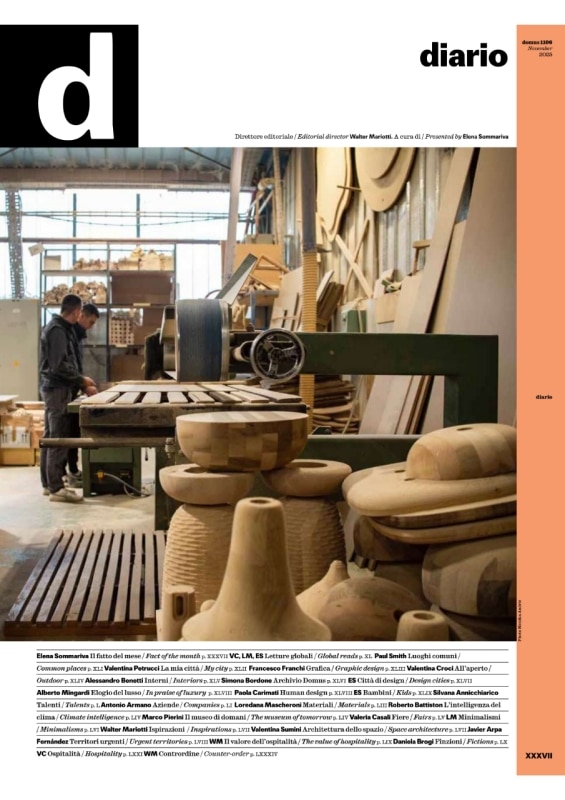
The journey continues in Bosnia, where Elena Sommariva takes us to Konjic to celebrate the tenth anniversary of Zanat, a brand championing the intangible heritage of wood carving (a UNESCO recognition). Featuring voices like Michele De Lucchi and Yves Béhar, we explore how craftsmanship is not a relic of the past but a vibrant tool for social cohesion and local development, a value echoed by Renzo Piano’s forthcoming Ars Aevi museum in Sarajevo. Sommariva also reviews Jasper Morrison's new volume, A Book of Things, praising its "complex simplicity" in marrying proportion with function, and introduces Il design e il suo doppio (Design and its Double), edited by Marco Petroni and Giovanni Innella, which investigates the archetype of the "double" in critical design.
In the Global Readings section, Loredana Mascheroni offers an analysis of the relationship between art and design in the monograph on Boris Berlin. Meanwhile, Paul Smith, in Parchi-giochi (Playgrounds), contrasts traditional play areas with the new, futuristic structures by Xisui Design in China, interpreting them as a necessary response to urbanization that strives to instill a sense of space and freedom. Valentina Croci presents the book Crossed Histories on Aulenti, Huxtable, and Lambert, examining their professional paths through comparative historiography.
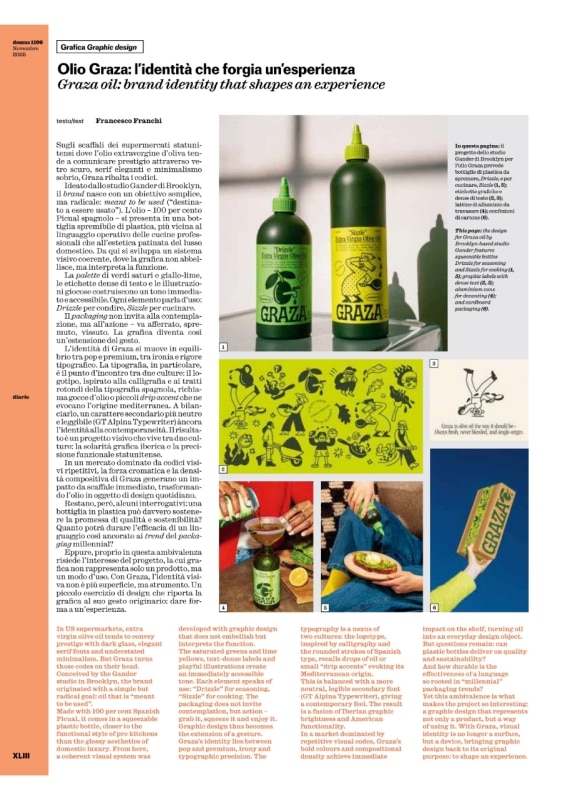
Philosopher and neuroscientist Matteo Motterlini, interviewed by Valentina Petrucci for the "My City" feature, describes Milan as an "urban synapse" that both challenges and stimulates him, celebrating art for "interrupting the artificial dopamine stimulation" to deliver authentic emotion. The Graphics section features Francesco Franchianalyzing the visual identity of Graza olive oil by Studio Gander, which subverts luxury conventions, with graphics becoming an extension of the physical gesture. Valentina Croci reports from Oslo's The Well, detailing how lighting by Luce&Light transforms the pine forest into a contemplative sculpture garden. In Kyiv, Alessandro Benetti explores the Marsala showroom by Zagrai Studio, a project focused on the concept of thresholds, where footwear is displayed as sculpture.
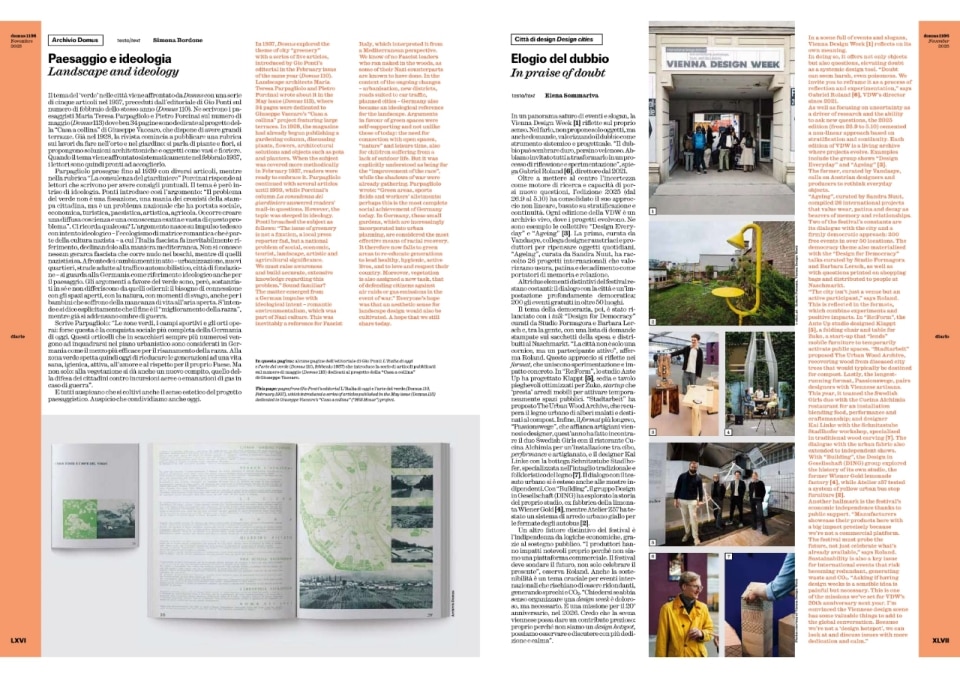
History resurfaces with Simona Bordone, who in Paesaggio e ideologia (Landscape and Ideology) revisits the 1937 Domus debates on "greenery," connecting them to ideologically-driven environmentalism and the concept of "racial improvement." From Vienna, Elena Sommariva celebrates the Design Week 2025 theme, Elogio del dubbio (In Praise of Doubt), as a crucial design tool. Alberto Mingardi, in Salute e disuguaglianza (Health and Inequality), offers an unconventional interpretation of luxury, seeing the standardization of McDonald's as a "true luxury" of safety and predictability for low-income families. Sociologist Paola Carimati interviews Fabrizio C. on the creative subversion of social centers as vital "social laboratories." Finally, Elena Sommariva visits the Triennale di Milano to explore Gioco, the Smarin space for children—an invitation to build worlds, not merely objects.
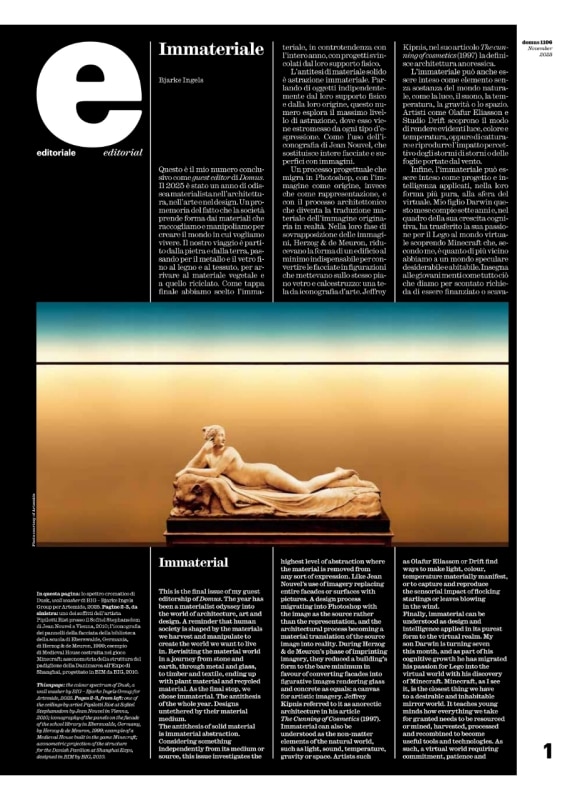
This issue of Domus closes our materialist odyssey with its exact antithesis: the Immaterial (...) Not a negation, but a new frontier, where design, architecture and art confront the invisible flow that shapes our world.
In Talents, Silvana Annicchiarico showcases Marco Ciacci and his ACE hearing aid collection, a project that combats stigma by transforming the medical device into an object of ethical and aesthetic desire.
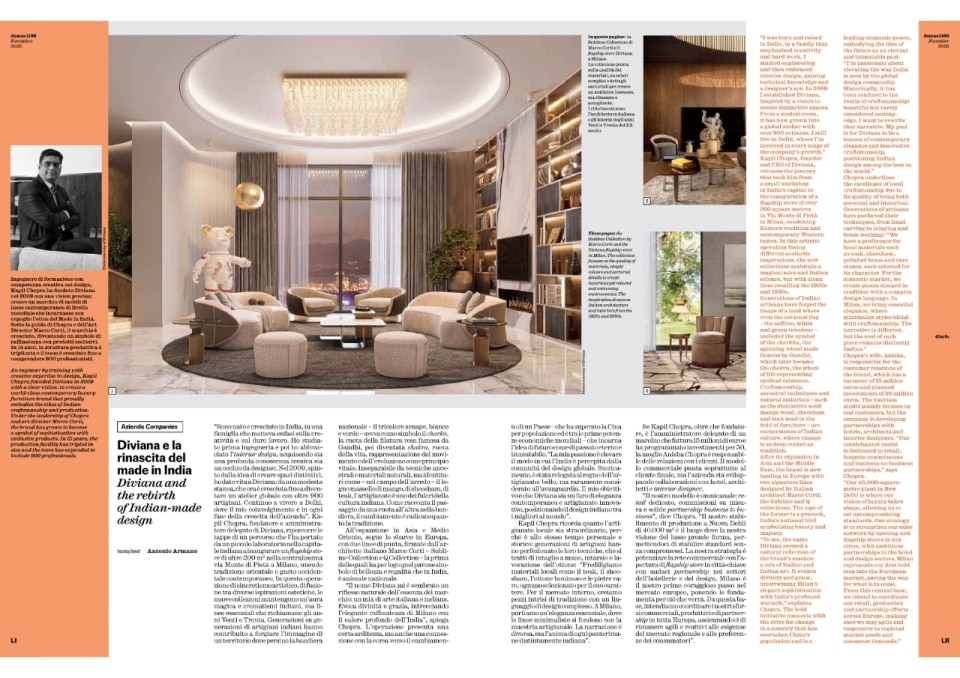
In the specialist columns, Antonio Armano chronicles the rise of Diviana, Kapil Chopra's luxury brand that aims to revitalize Made in India design globally, merging ancient craftsmanship with contemporary aesthetics. Loredana Mascheroni (LM) analyzes Patrick Jouin’s Ta.Tamu, a 3D-printed chair that serves as a manifesto for the algorithm as a co-author, and in Minimalismi describes Gio Tirotto's GT02 lampshade, blending 3D technology with an "analog click."
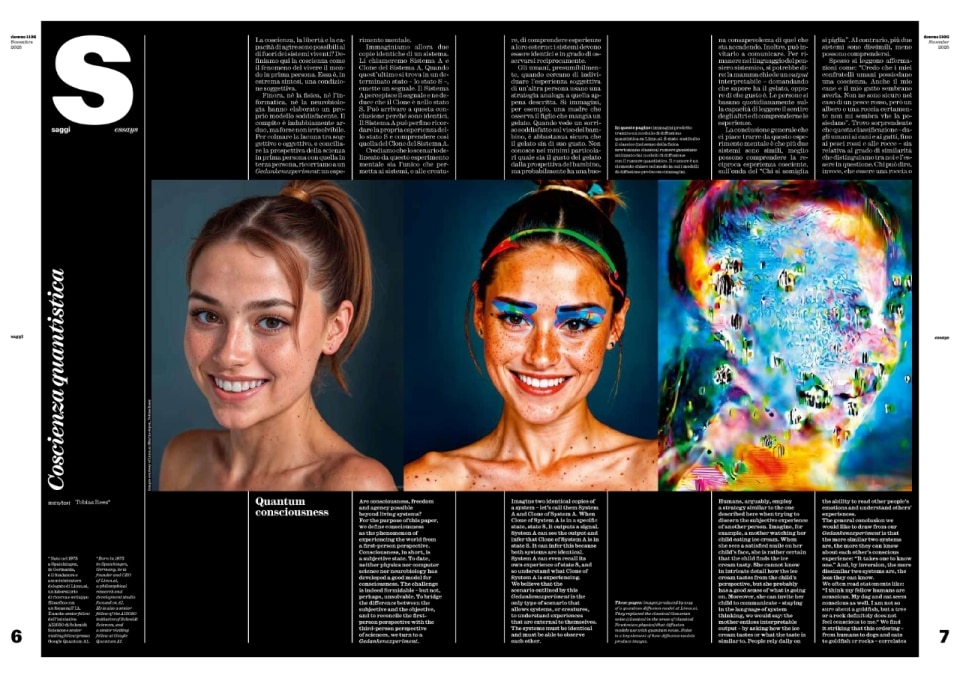
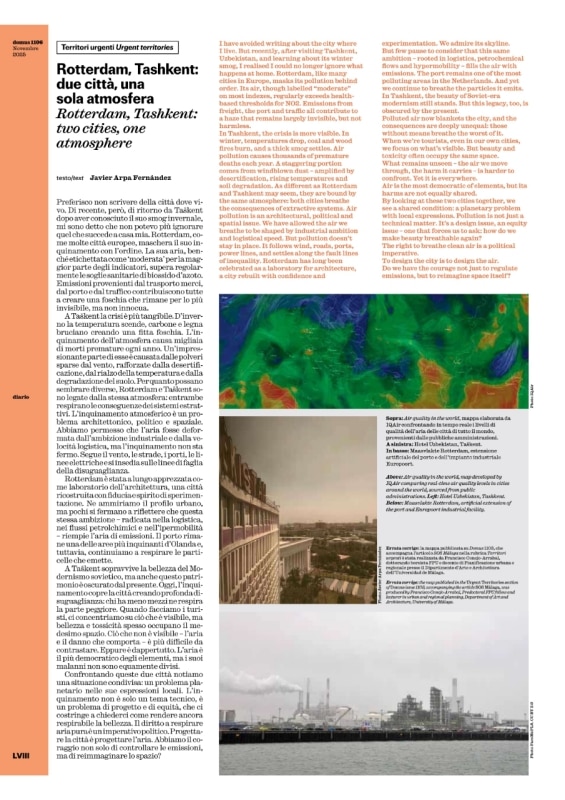
Physicist Roberto Battiston, in Energia e coscienza (Energy and Consciousness), pushes the boundaries of knowledge with the panpsychism hypothesis, suggesting that consciousness might emerge from the "wave function collapse" in quantum systems. In Space Architecture, Valentina Sumini explores Intelligenze condivise (Shared Intelligences), positioning AI as a co-author of spatial habitats and generative biology as the next frontier. Javier Arpa Fernández, in Rotterdam, Tashkent: due città, una sola atmosfera (Rotterdam, Tashkent: Two Cities, One Atmosphere), makes a political statement: that designing a city means designing its air, condemning the inequality inherent in invisible pollution.
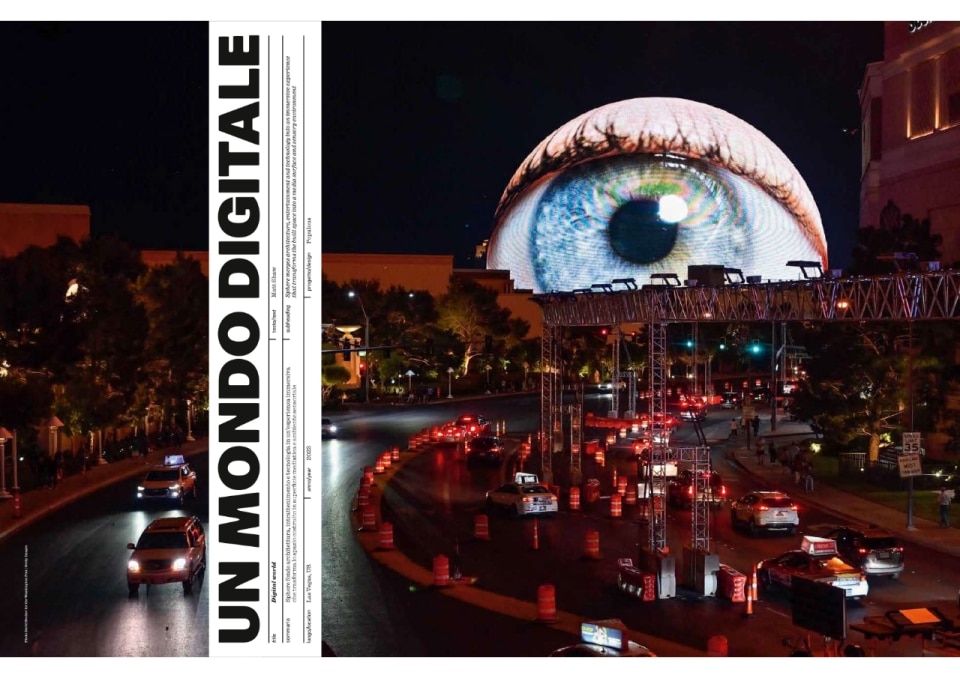
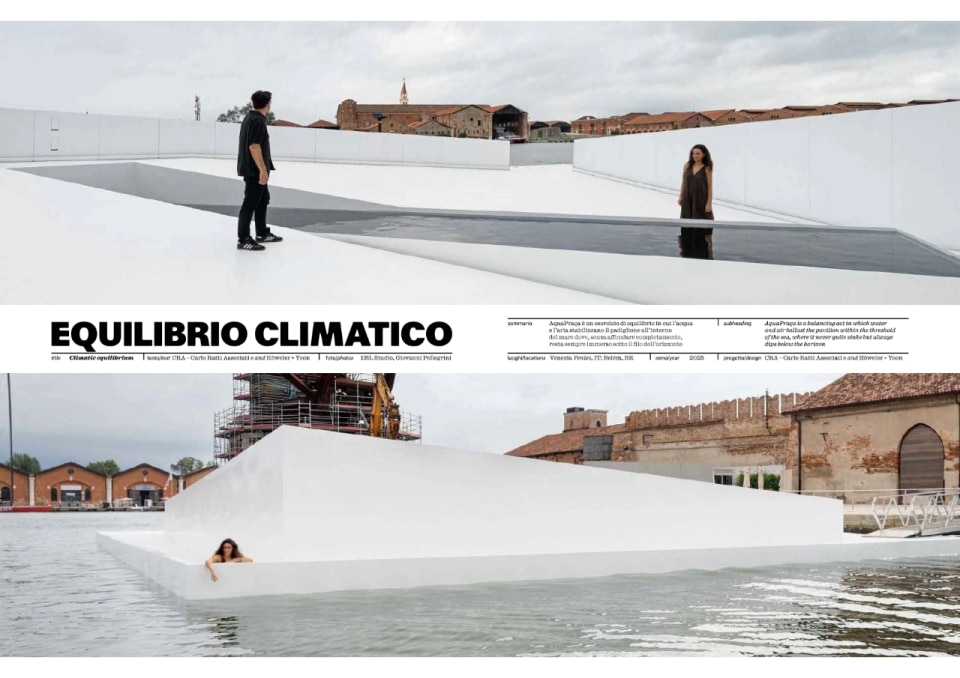
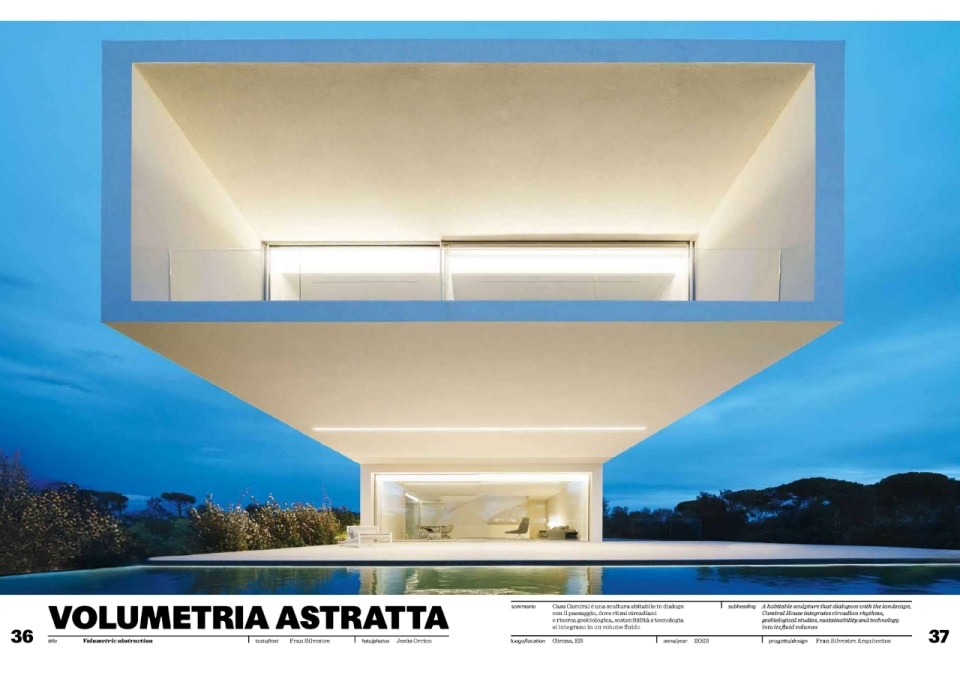
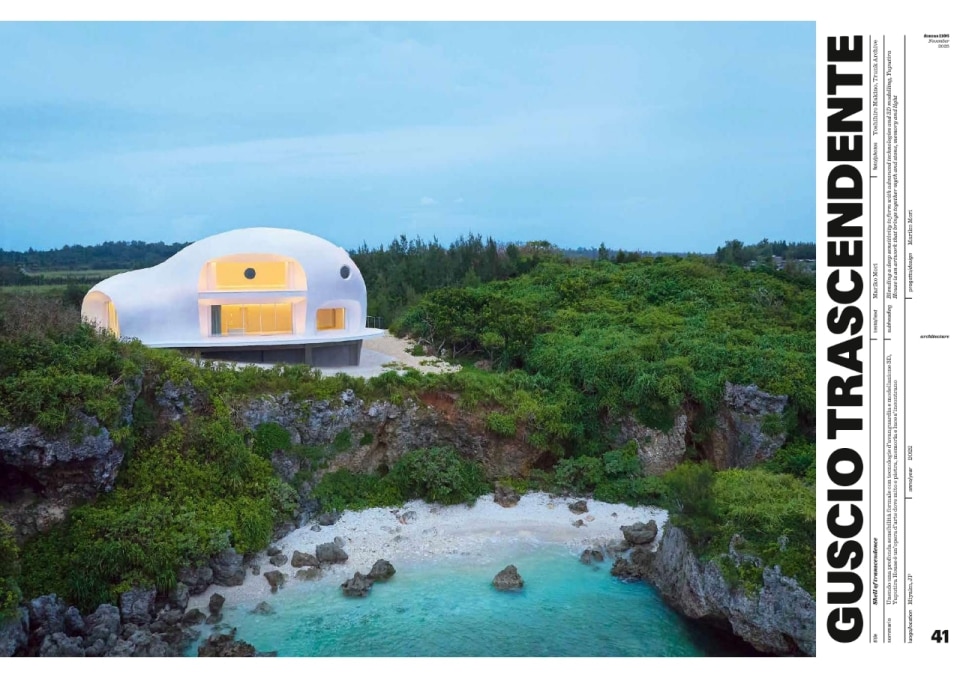
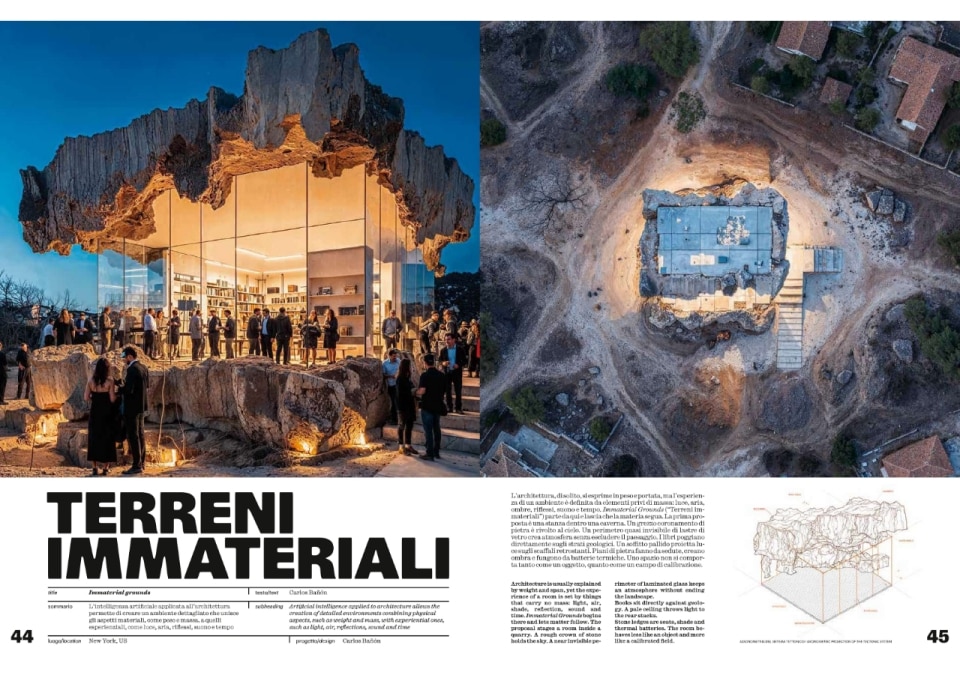
Art and architecture venture into the sublime. Matt Shaw describes Sphere in Las Vegas, a Populous design where architecture dissolves into a field of digital transmission. CRA – Carlo Ratti Associati and Höweler + Yoon, with AquaPraça, materialize the intangibility of rising sea levels with a floating plaza—an exercise in equilibrium. Fran Silvestre Arquitectos with Casa Camiral creates an anti-tectonic habitable sculpture that integrates circadian rhythms. Mariko Mori’s Yuputira House fuses 3D modeling and myth, resulting in a transcendent, coral-shaped shell of white concrete. Carlos Bañón in Terreni immateriali (Immaterial Lands) uses generative AI to design environments where massless elements—light, air, and reflections—are paramount. Daeho Lee in Architettura generativa (Generative Architecture) explains how AI expands the scope of architectural conception.
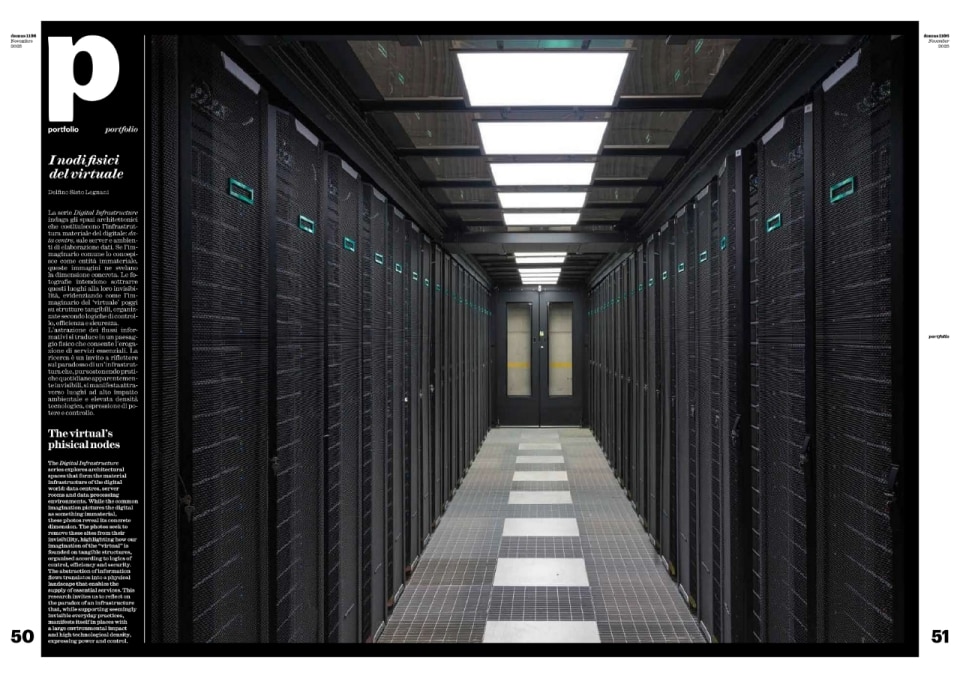
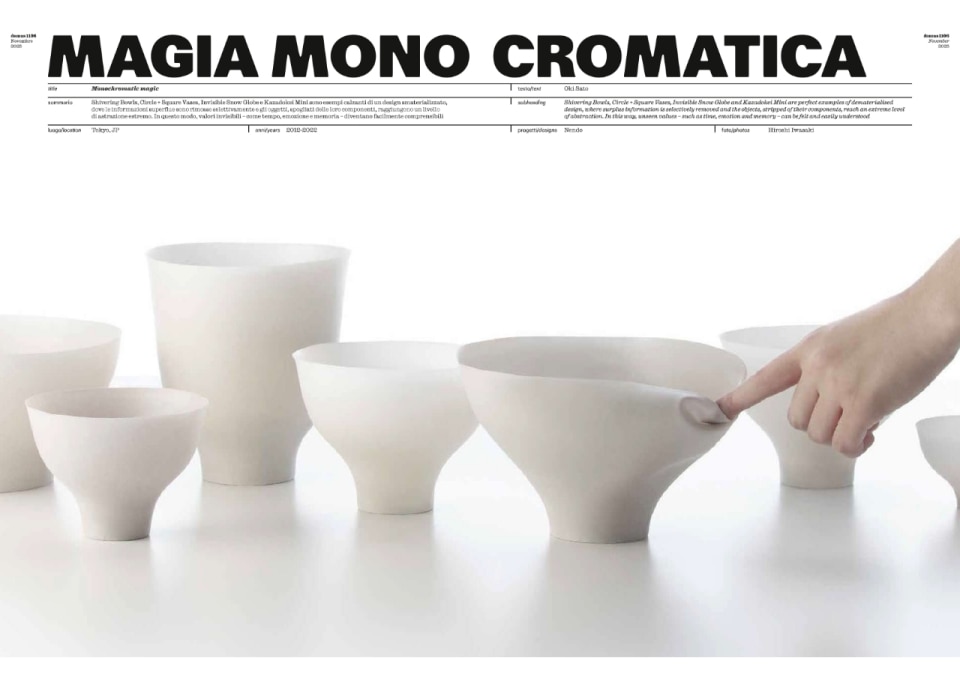
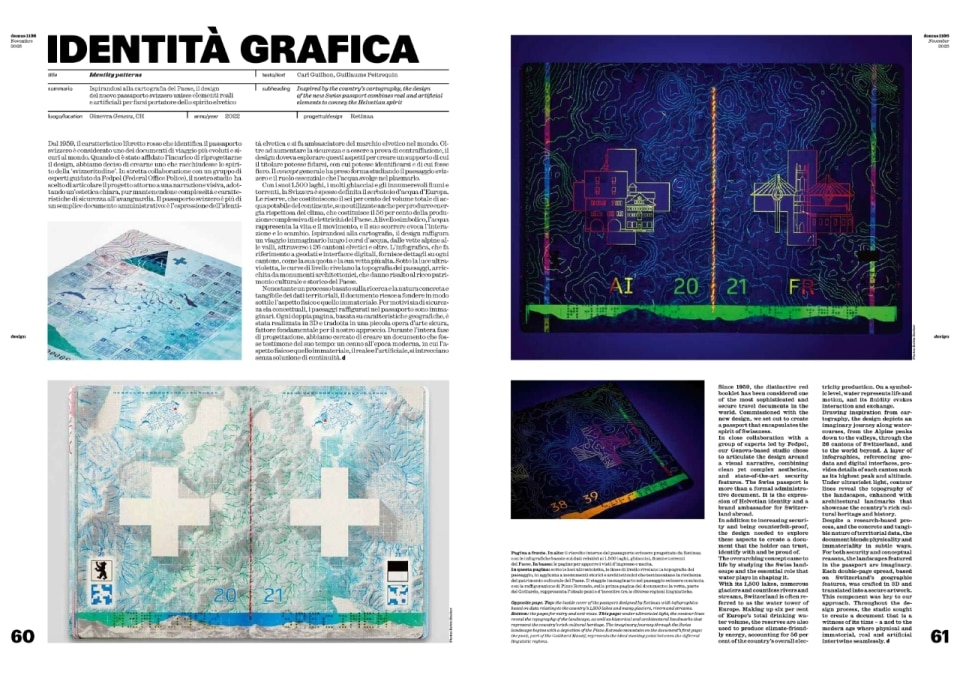
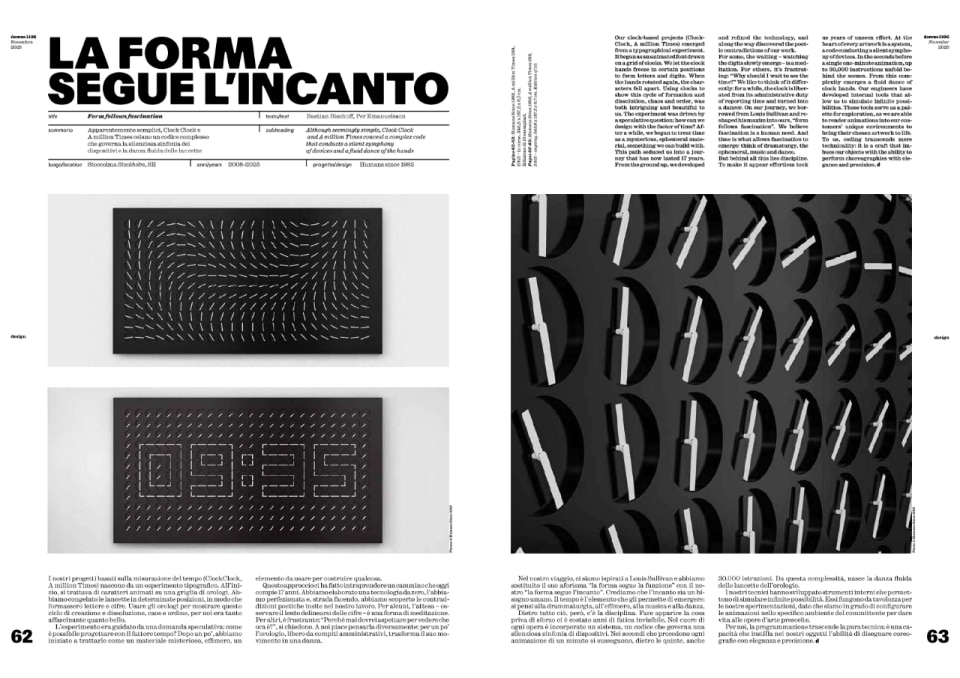
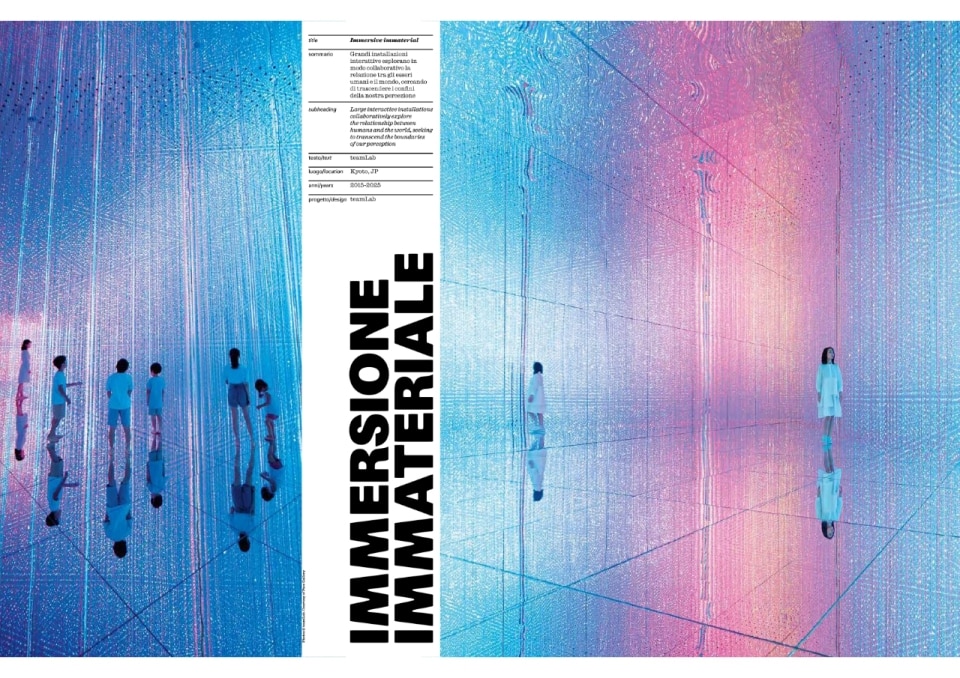
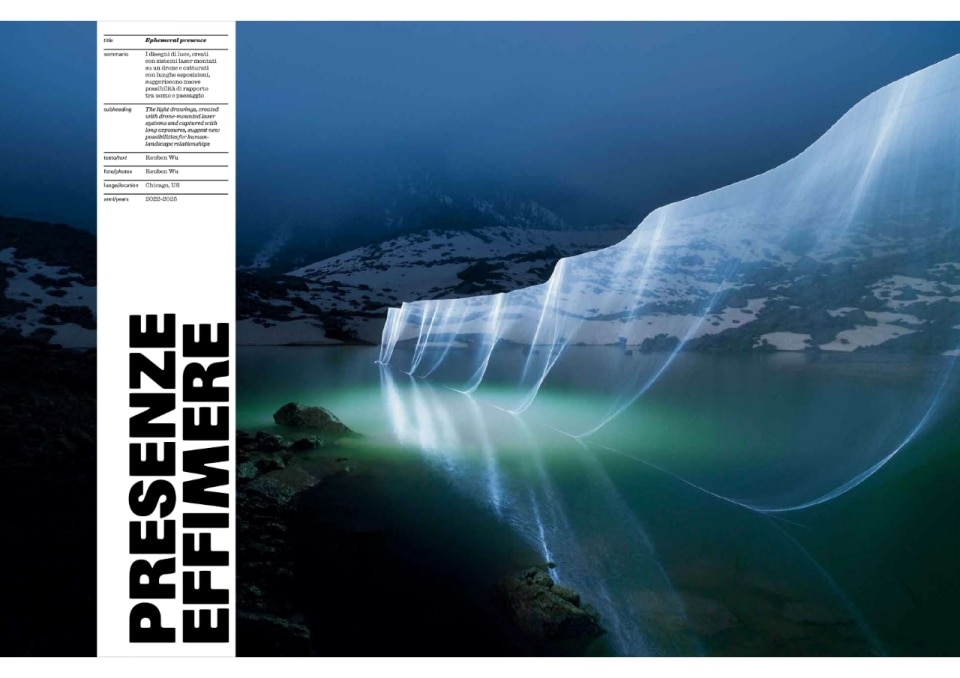
Delfino Sisto Legnani's portfolio reveals the physical nodes of the virtual: data center architectures, exposing the materiality and logistics that sustain digital abstraction. Oki Sato (Nendo), with his Magia monocromatica(Monochromatic Magic), invites us to perceive invisible values by eliminating redundant information. Retinaa, with the new Swiss passport, forges a graphic identity that combines real and artificial elements through imagined cartography. Humans since 1982 (Bastian Bischoff, Per Emanuelsson), through their kinetic clocks, transform time into a mechanical symphony where "form follows enchantment." TeamLab’s interactive installations pursue immaterial immersion, dissolving the boundaries between artwork and viewer. Finally, Reuben Wu's drones draw Presenze effimere(Ephemeral Presences) of light across the landscape.
In the concluding Oxymoron, Lonneke Gordijn of Studio Drift reflects on Libertà controllata (Controlled Freedom), seeing the necessary discipline for the sublime to emerge in her drones that mimic starling murmurations. Daniela Brogiin Finzioni (Fictions) analyzes Del Toro’s Frankenstein film as an anthem to the right to imperfection against colonial discourse. The Editorial Director's "Inspirations" feature the Doshi Retreat by Balkrishna Doshi, a contemplative space that employs sound for inner journeys. Walter Mariotti also narrates the Planeta model, where an ancient Sicilian history finds its deepest roots in a hospitality system that is pure territorial design.
The immaterial is not an absence, but the maximum density of meaning. It is the space of possibilities—the place where consciousness, data, and design finally converge. A grand finale for the Domus 2025 journey with Bjarke Ingels. Happy reading.