

On the large Merab Kostava Avenue, in the center of Tbilisi, stands a massive building with a concrete checkered façade, partly covered by climbing plants. It looks somehow alien compared to the rest of the landscape. In a neighborhood that over time has become residential and later tourist-oriented, what makes it stand out from the newer buildings is precisely its original function. What is now the Stamba Hotel, opened in 2018 after a renovation by Adjara Group, was in Soviet times the enormous headquarters of a printing house.
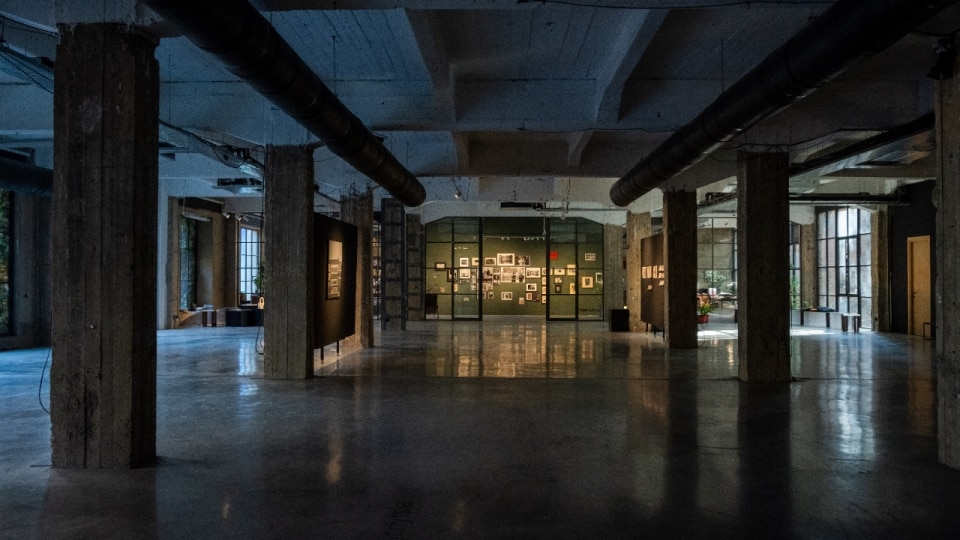
To reach the Tbilisi Photography and Multimedia Museum, one must venture into the building, passing through two restaurants, a bar, and a wine bar to access the wide central courtyard, and then climb the tall staircase that serves as a meeting space. Only after climbing the steps does one enter the free exhibition area which, like all the other spaces, has preserved the style of the original building in every detail. It is here that, until February 4, one can visit “Ascending,” the exhibition of the great Georgian photographer Guram Tsibakhashvili.
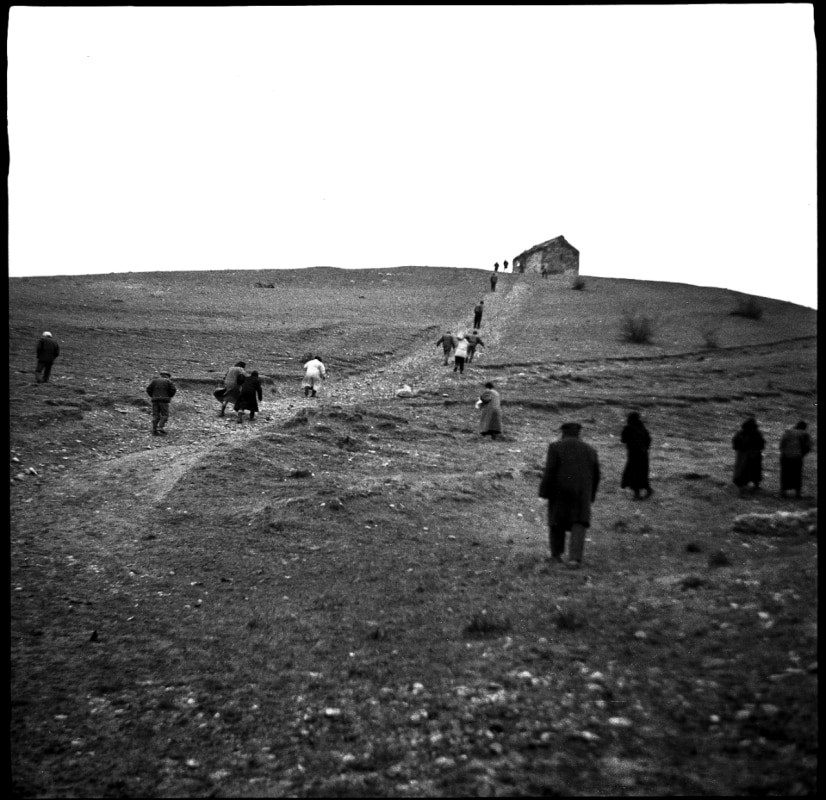
From references to Joyce’s Ulysses to connections between signifier and signified that transcend time and space, “Ascending” is a visual narrative of the country’s history from 1988 to 2016. It is a particularly significant period for Georgia, from the collapse of the Soviet Union in 1991 to the immediately following independence in 1992, up to the emergence of ideas for a new and different future, full of prospects and change.
All the images are in black and white, and thus the entire space seems to transform into a single snapshot which, instead of capturing only one moment, becomes a portrait of the last three decades. Among the large photographs projected floor-to-ceiling are the demolitions of Soviet statues after independence and everyday scenes marked by poverty and civil war in the early 1990s. Above all, there are the squares full of people in the same period—almost identical to those seen every evening in the city for more than a year now, just steps away from the Museum.
In a city that is rising, images too become a way to stay upright.
Tsibakhashvili’s images, as stated in the presentation of the works, “often transcend time, speaking of a past he has not seen, and of a future that has not yet arrived.” In the series Autobiography before birth, for example, the photographer tries to come to terms with a complex and painful past, in the time span that goes from the end of the Second World War to the death of Stalin, who was born in Georgia in December 1878.
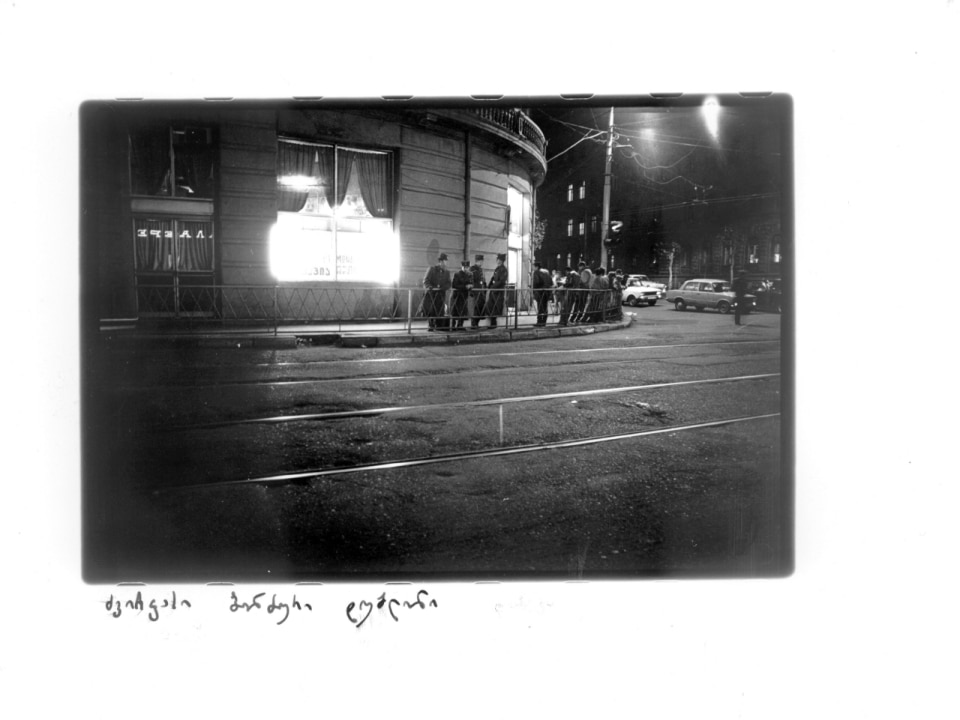
In Ulysses (1988–1989) Tsibakhashvili imagines seeing Joyce’s characters in the people on the street, making Tbilisi his own Dublin: “in an atmosphere of change, the sense of imminent transformation was already everywhere,” and in the complex sentences of Joyce’s novel, which Tsibakhashvili was reading at that moment, the photographer found a familiar sense of the same ferment that animated the Caucasian capital.
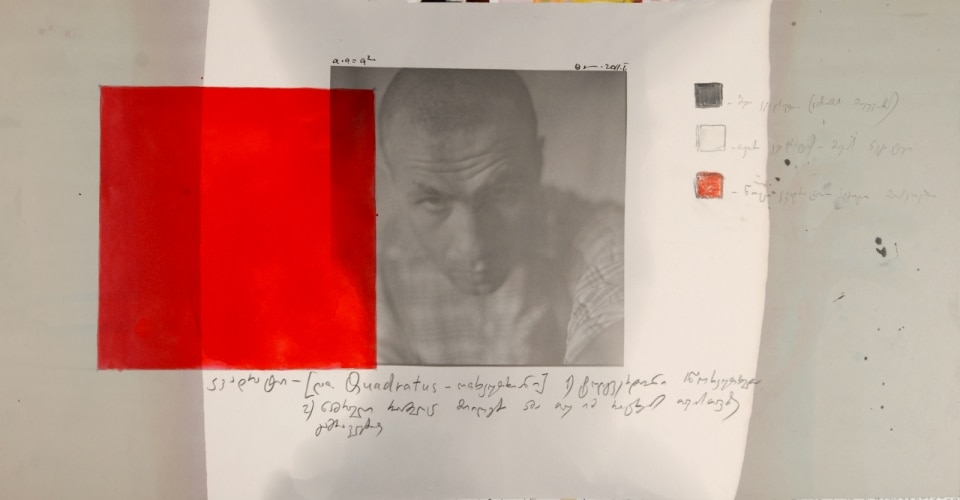
In the series Definitions, begun in 1997, images and apparently simple meanings are associated instead: each photograph is printed in a darkroom leaving a wide margin of white photographic paper, on which the photographer draws images with a red marker and writes in pencil a definition taken from the dictionary, such as “Nostalgia” (from Greek “Nostos” – return home; “Algos” – suffering, pain) – “pain caused by the impossibility of returning to one’s homeland.” Thus each work ends up questioning how we assign meaning to terms and ideas such as “human being,” “freedom,” “love,” “prison.”
The exhibition itself is a puzzle of free associations, which each visitor can piece together as they wish, or as instinct suggests, to discover their own perspective on a history they have—or have not—lived. “Ascension – movement from the bottom upward,” reads a wall text. And immediately after: “Movement: a necessary condition for survival.” In a city that is rising, images too become a way to stay upright.
Opening image: Guram Tsibakhashvili, Ascending, 1995.
All images: Courtesy Tbilisi Photography and Multimedia Museum
- Show:
- "Ascending. Guram Tsibakhashvili."
- Where:
- Tbilisi Photography and Multimedia Museum, Tbilisi, Georgia
- Dates:
- November 4, 2025 - February 4, 2026