OK
Domus Domus
newsstand
SUBSCRIBE
  • Magazine
  • Digital Edition
  • Digital Archive
LANGUAGE
  • it
  • en
Hi Logout
Sign up / Log in
  • News
  • Architecture
  • Interiors
  • Design
  • Art
  • Archive
  • Products
  • Design Essentials
  • Design Stories
  • Submit your project
Sections
  • News
  • Architecture
  • Interiors
  • Design
  • Art
  • Archive
  • Products
  • Covers
  • Biographies
  • Architecture Firms
  • Sustainable Cities
  • Gallery
  • Design Stories
  • Domus for Design
Magazine
  • Subscriptions
  • Digital Edition
  • Current Issue
  • Guest Editor
  • Digital Archive
  • Nordic Design
Specials
  • Design Essentials
  • Modern Work
  • DomusAir
  • Milano Design Week
  • Worldesign
Current Issue

Domus 1107 hits the shelves

Follow us
LANGUAGE
  • it
  • en
Hi Logout
Sign up / Log in
newsletter Icon
results No results Please enter a long search term

      The essentials: 20 designer wall and table clocks

      The essentials: 20 designer wall and table clocks

      Next gallery

      Rattan structures intertwine like ribbons in a yoga center in Bangkok

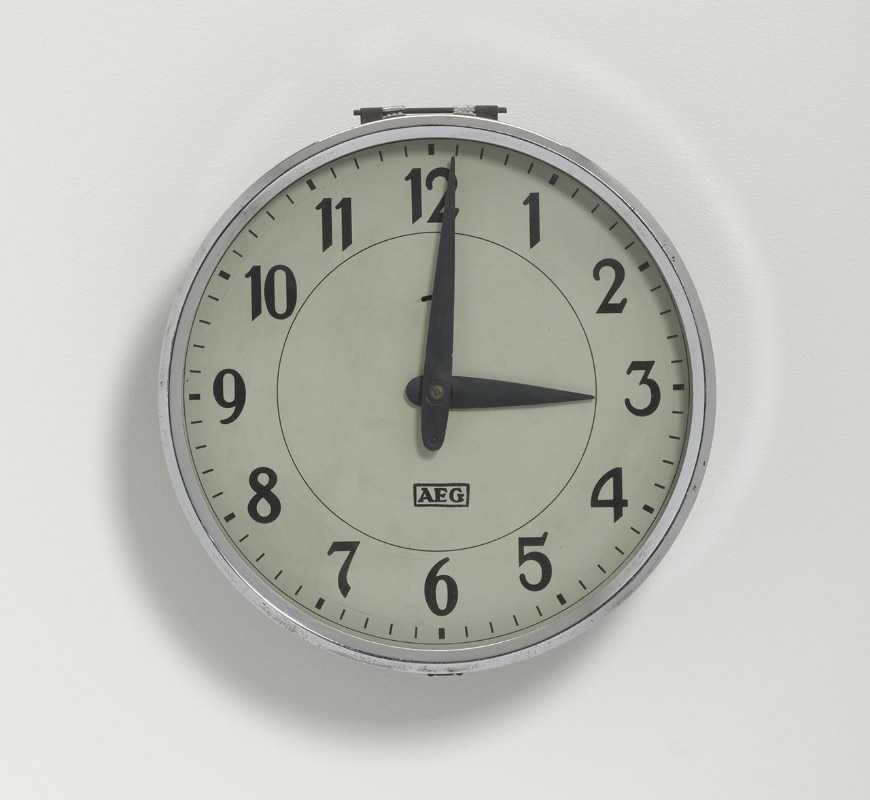
      Synchronous Electric Clock, Peter Behrens, AEG, 1910

      Among the most popular projects carried out by AEG under Behrens' artistic direction is this wall clock, a synchronous electric supply clock for alternating current, which combines the standardization of its components with a clean design finally freed from all the Mannerist currents of the past.

      Brass, enamel and glass (8.9 x 30.5 cm)

      View article
      View article
      • SHARE
      • PIN IT

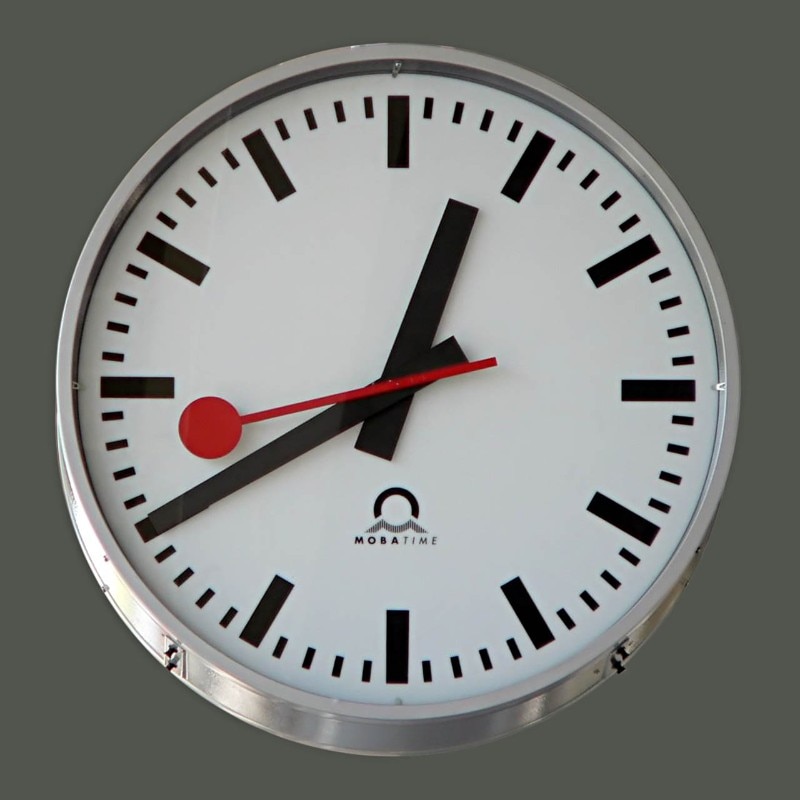
      Swiss railway clock, Hans Hilfiker, Moser-Baer, 1994

      Designed in 1944 by Hans Hilfiker in collaboration with Moser-Baer, a manufacturer of industrial watches, this clock was widely used in railway stations in Switzerland and became a national icon. In 1952, Hilfiker added the hand of the seconds, in the shape of the baton used by train dispatch staff. The watch is also characterized by the fact that the clock pauses briefly when the seconds hand reaches the top of the clock: the hands are powered by two different motors, but the seconds hand starts a new rotation as soon as it receives the next minute impulse from the master clock, losing approximately one and a half seconds. This clock is also available in a wall version for domestic use.


      Powder-coated steel case, hardened mineral crystal. Diameter: 40 cm.

      View article
      View article
      • SHARE
      • PIN IT

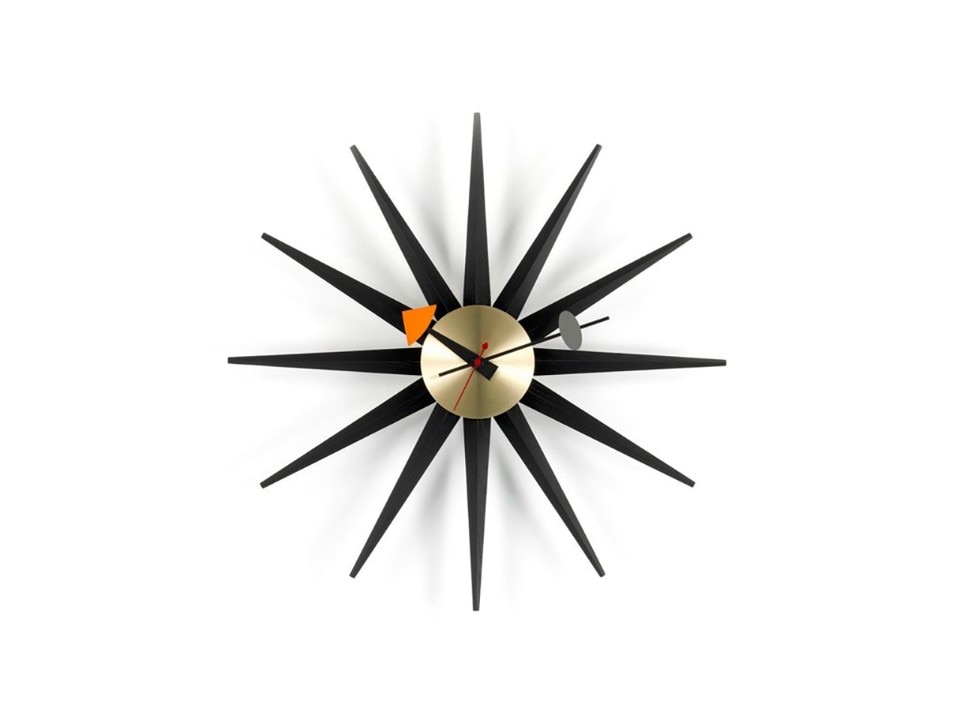
      Wall Clock Collection, George Nelson, Vitra, 1948-1960

      In 1947, George Nelson concluded that people do not "read" the time, but rather perceive it intuitively by discerning the relative position of the hands. So, he started designing a wide range of wall clocks that were transformed into decorative elements, all different in terms of shape and materials, but all accumulated by the absence of the numbers. In the following 35 years, Nelson designed over one hundred models, a selection of which Vitra began to reissue in 1999.

      View article
      View article
      • SHARE
      • PIN IT

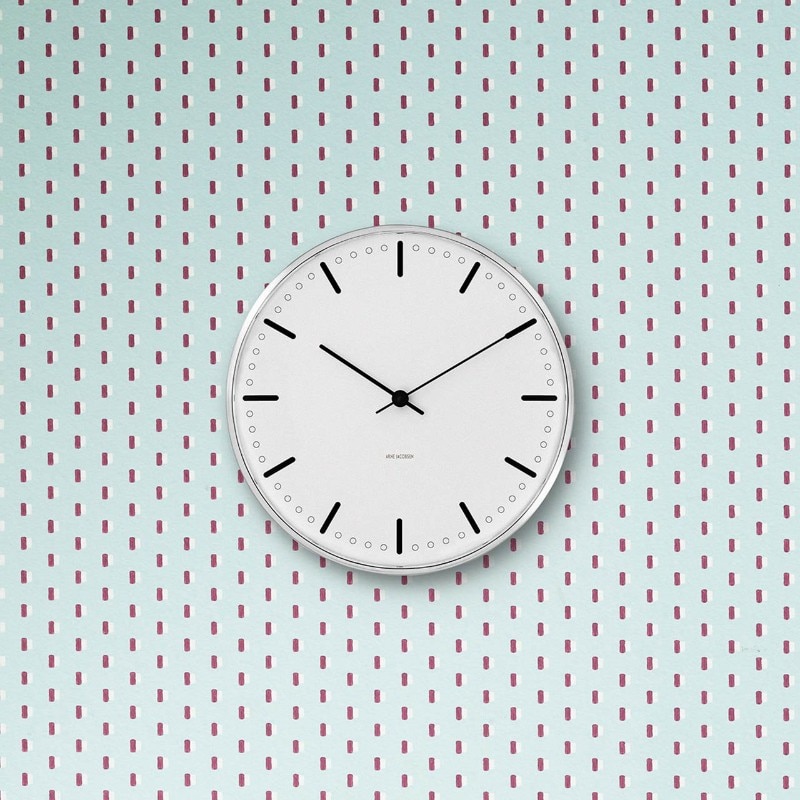
      City Hall, Arne Jacobsen, Rosendhal, 1956

      City Hall wall clock was originally designed in 1956 for the Rødovre Town Hall. It was later redesigned, and since 2009 the clock has been manufactured by Rosendahl. The arched glass front protecting the face gives the clock an appearance of hovering on the wall, while the sober design indicating the passage of time relies on a succession of lines and circumferences.

      Aluminium, glass. 16x21x29 cm.

      View article
      View article
      • SHARE
      • PIN IT

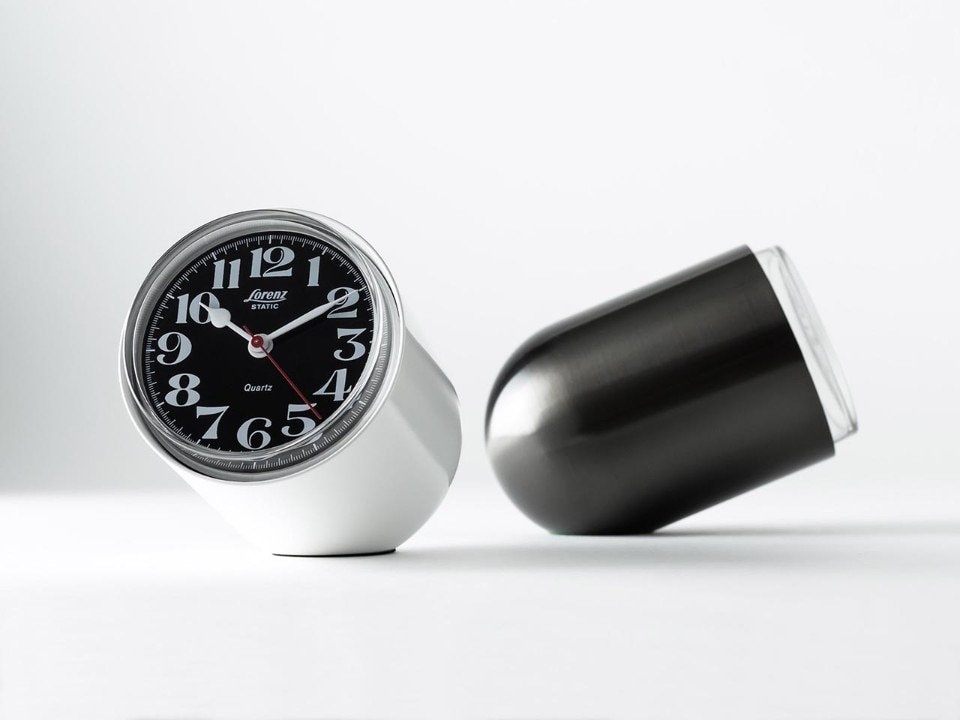
      Static, Richard Sapper, Lorenz, 1960

      Created as a pretext to reuse some components of military torpedoes from the Second World War, Static hides the clock mechanism and battery in a cylindrical metal body that, thanks to a small flat area cut into the volume, can easily rest on a surface. The typeface design for the clock’s face is inspired by an old fighter plane clock he found in a marketplace. With Static, Sapper won his first Compasso d'Oro.

      Brass, nickel. 10.5 x 6.3 cm.

      View article
      View article
      • SHARE
      • PIN IT

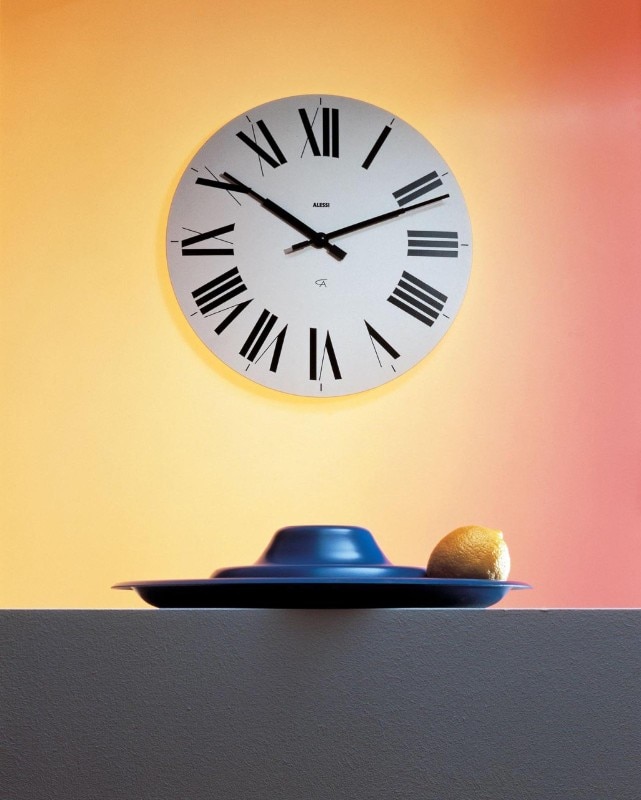
      Firenze, Achille and Pier Giacomo Castiglioni, Alessi, 1965

      Florence is an iconic redesign of the classic wall clock. It is characterized by black Roman numerals, which are extremely easy to read but at the same time transformed into a decorative element. The production techniques are conceived to ensure a low production cost: while ABS plastics allows to silk-screen print in just one pass, the light weight of the plastic hands also allows to use a more traditional quartz clockwork. And the absence of a glass cover makes the clock even more essential. The clock takes its name from the city that hosted the presentation of the first prototype, presented at the exhibition "La casa abitata" at Palazzo Strozzi.

      Wall clock in ABS, white and red. Diameter 36 cm.

      View article
      View article
      • SHARE
      • PIN IT

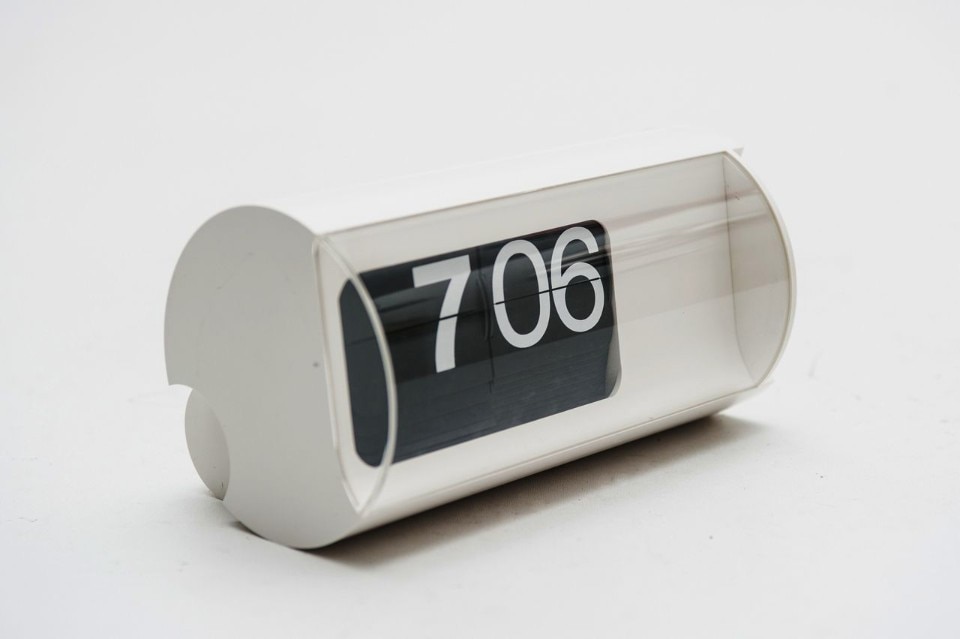
      Cifra 3, Gino Valle, Solari, 1967

      Based on the previous Cifra 5, the Cifra 3 table clock designed by Gino Valle introduced the mechanical flip display system which was patented in 1966 by Remigio Solari and soon became the flagship of the historic Friulian company Solari. With its cylindrical shape, the body of the clock contains the rollers and a battery-powered motor, which acts as a support for the entire clock. The horizontal leaves bring to your home a specific sound, never heard before, which turns the Cifra 3 into a sophisticated metronome of the daily life.

      Polyester, ABS, PVC.

      View article
      View article
      • SHARE
      • PIN IT

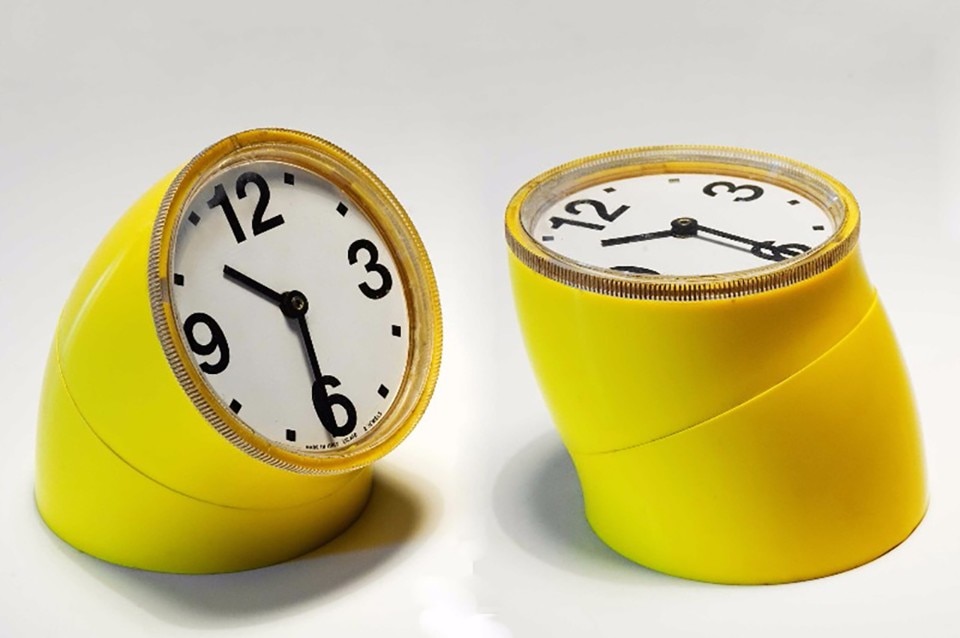
      Cronotime, Pio Manzù, Ritz Italora, 1969

      Composed of three rotating and adjustable parts, which allow it to take on different shapes, Cronotime is the first Italian transistor watch. Originally designed for Fiat as a gift item, it later became a great commercial success with Ritz-Italora, and it has recently joined the Alessi catalogue.

      ABS. Diameter 7cm, height 9 cm

      View article
      View article
      • SHARE
      • PIN IT

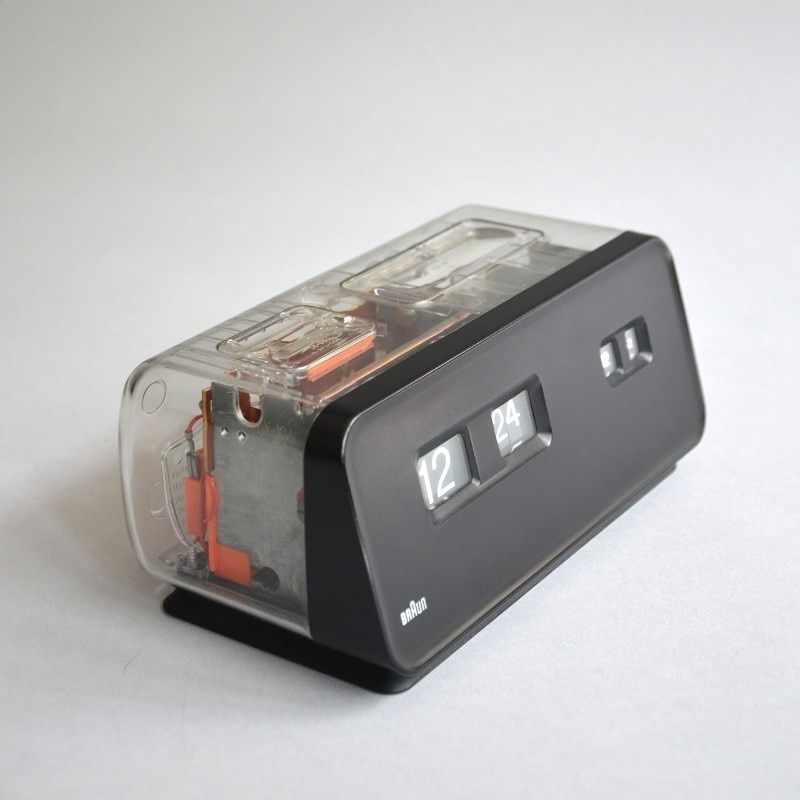
      Phase 1, Dieter Rams, Dietrich Lubs, 1971

      The Phase 1 clock marks the beginning of a historic collaboration that involved Dieter Rams and Dietrich Lubs as art director and product designer for Braun. Over the course of twenty years, the two designed many table, wall and wristwatch clocks, all characterized by a sober, essential and intelligible design, which contributed to making Braun a symbol of modernist design. Phase 1, the first result of this collaboration, is characterized by a flip-clock mechanism, which was soon to be abandoned in later models. One version features a transparent case, which leaves the mechanisms and battery visible.


      Plastic, acrylic. 18×10×8 cm.

      View article
      View article
      • SHARE
      • PIN IT

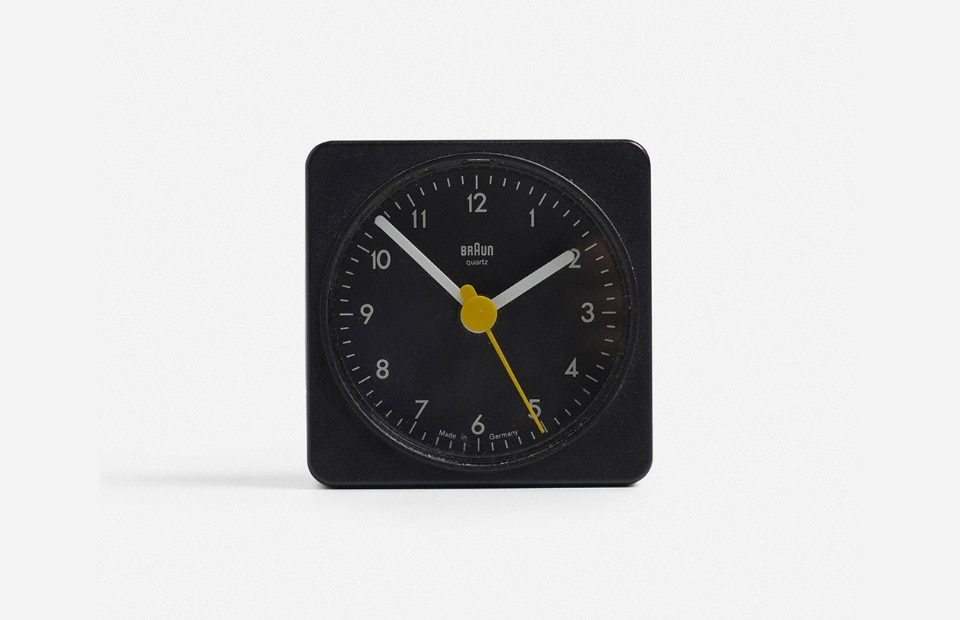
      AB1, Dieter Rams, Dietrich Lubs, 1971

      An icon of everyday life, the AB1 travel alarm clock can be considered one of the highest expressions of the work done by Rams and Lubs at Braun. It is an excellent example of good design for the synthesis between usefulness, formal coherence and rejection of any accessory device - "as little design as possible" as Rams used to say during the course of his professional activity - AB1 is one of the German brand's products that have stood out most for their popularity and durability. Its last production dates back to 2009.

      6.5x6.5x3.5 cm.

      View article
      View article
      • SHARE
      • PIN IT

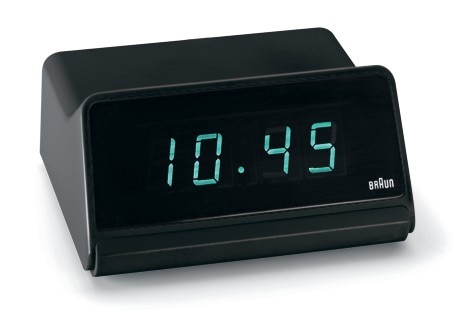
      DN40, Dieter Rams, Dietrich Lubs, 1975

      DN40 is the second digital clock designed by Rams and Lubs at Braun after Phase 3, and it is the first to use a vacuum fluorescent display. The clock has a softer form than previous products, and the small dimensions make it ideal for travelling. The alarm can be turned off by grabbing the clock and tilting it.

      10.5x5.5 x5.5 cm.

      View article
      View article
      • SHARE
      • PIN IT

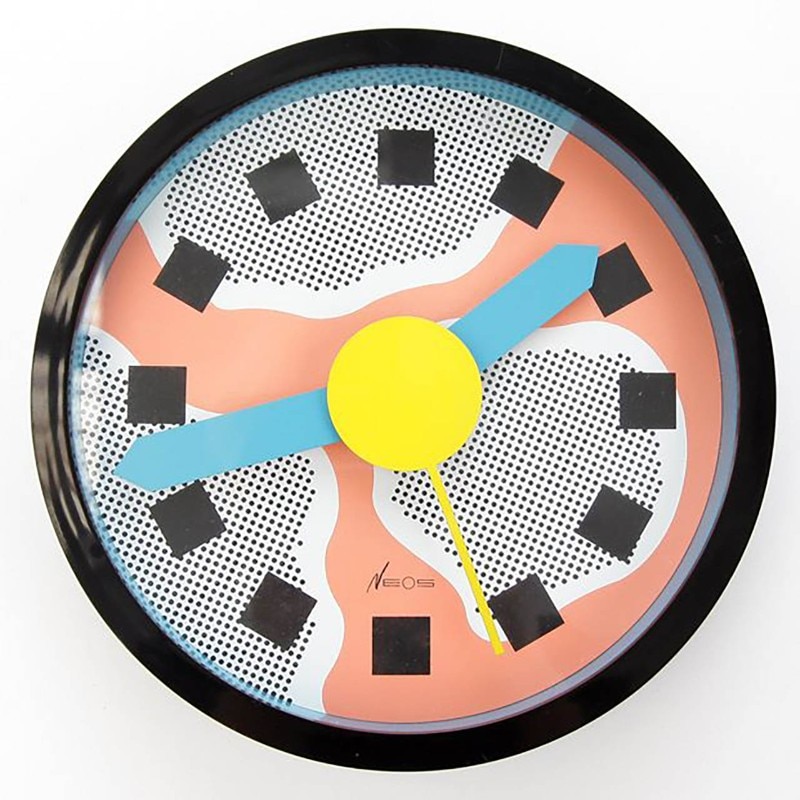
      Wall and table clocks, Nathalie Du Pasquier & George Sowden, Neos, ‘80

      Du Pasquier and Sowden, couple and cofounders of Memphis, experimented with the application of their colorful and hypergraphic patterns to a series of clocks produced by Neos. In addition to the face, also the frame of the clock is subject to the couple's decorative flair, with unexpected finishes and shapes, straddling totemic presence and happy escapes into an imaginary world.

      View article
      View article
      • SHARE
      • PIN IT

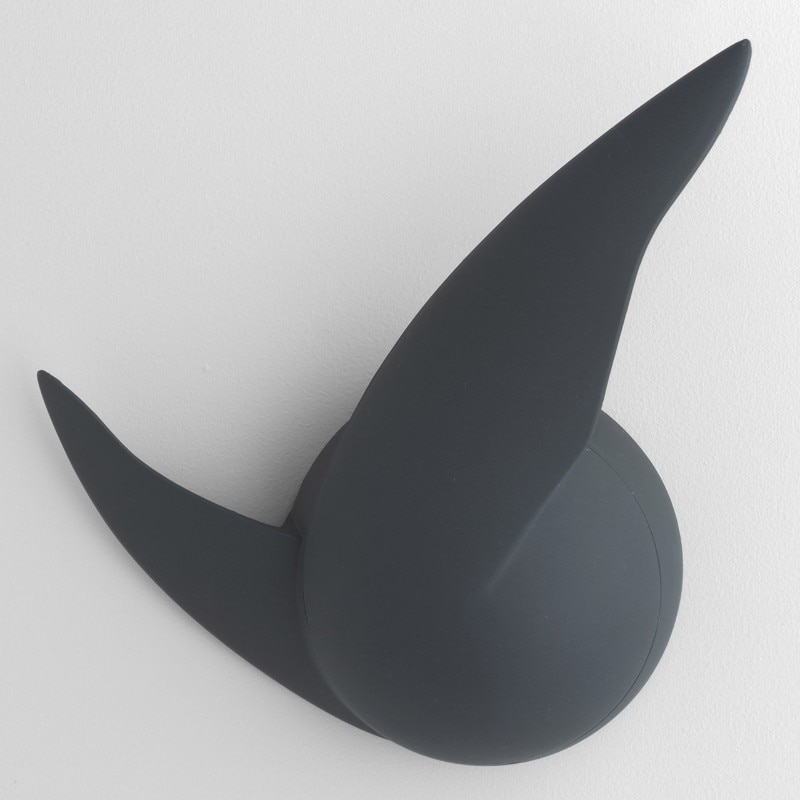
      Wayle, Philippe Starck, Alessi, 1992

      Wayle is a typological reinterpretation of the wall clock that gets rid of all the superfluous components in order to focus on the only essential elements for determining the exact time: the two hands. Sinuously polished, they move like compasses, and open up to various interpretations: some see a woman's legs, others a pair of swallow wings.

      ABS. Diameter 25 cm.

      View article
      View article
      • SHARE
      • PIN IT

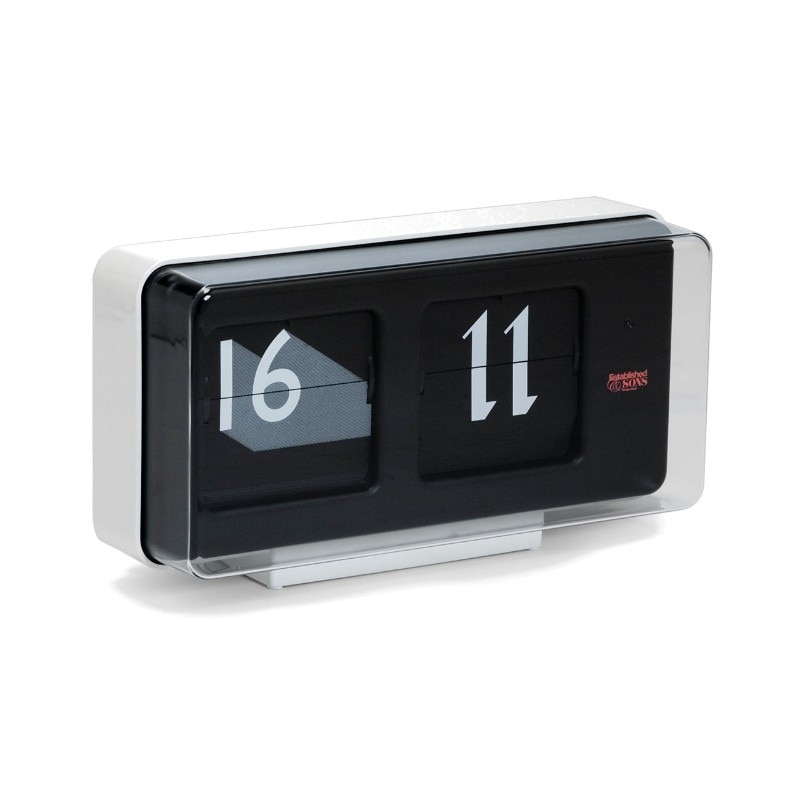
      Font Clock, Sebastian Wrong, Established & Sons, 2007

      Inspired by the old mechanical clocks, Font Clock turns the unexpected juxtaposition of different typeface designs into its distinctive feature. Twelve different typefaces - including re-editions of classic font families such as Bodoni, Franklin Gothic and Helvetica - follow one another randomly, producing ever-changing combinations, while the mechanical component and the horizontal leaves recall a necessarily retro universe.

      ABS, clear-view perspex glass. 29x11x14 cm.

      View article
      View article
      • SHARE
      • PIN IT

      Blank Clock, Marti Guixé, Alessi, 2010

      Inspired by the idea that objects help us to communicate as well as to perform actions, Spanish designer Marti Guizé designs a clock for Alessi on which it is possible to write with a marker. The surface of the face allows to write down the words and sentences that tell the stories of our day-to-day lives and their evolution. 

      White aluminium. Diameter 40 cm.

      View article
      View article
      • SHARE
      • PIN IT

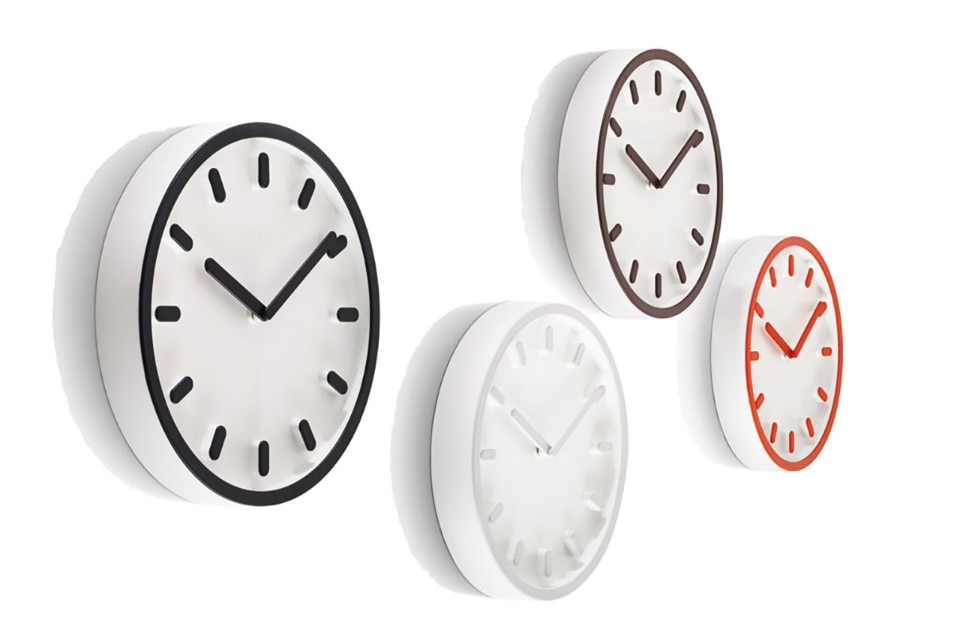
      Tempo, Naoto Fukasawa, Magis, 2011

      Minimalist yet bold, Naoto Fukasawa's Tempo clock brings the markings on the face down to the essentials and then thickens the hands, giving it the ironic effect of a work of pop art. 

      ABS, 30x30x4 cm. 

      View article
      View article
      • SHARE
      • PIN IT

      Eclipse, Costance Guisset, Petite Friture, 2013

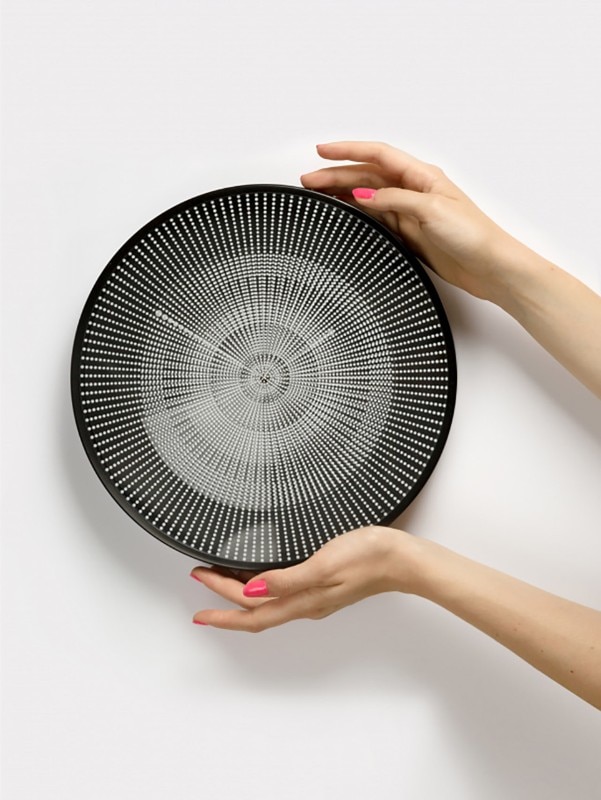
      The face of Eclipse transforms as time changes, creating an optical illusion that blurs into a pattern of moving lines, while the white hands always remain clearly visible, outlining a sequence of white dots that move away to find each other.

      Aluminium, glass, plexiglass. Diameter 30 cm.

      View article
      View article
      • SHARE
      • PIN IT

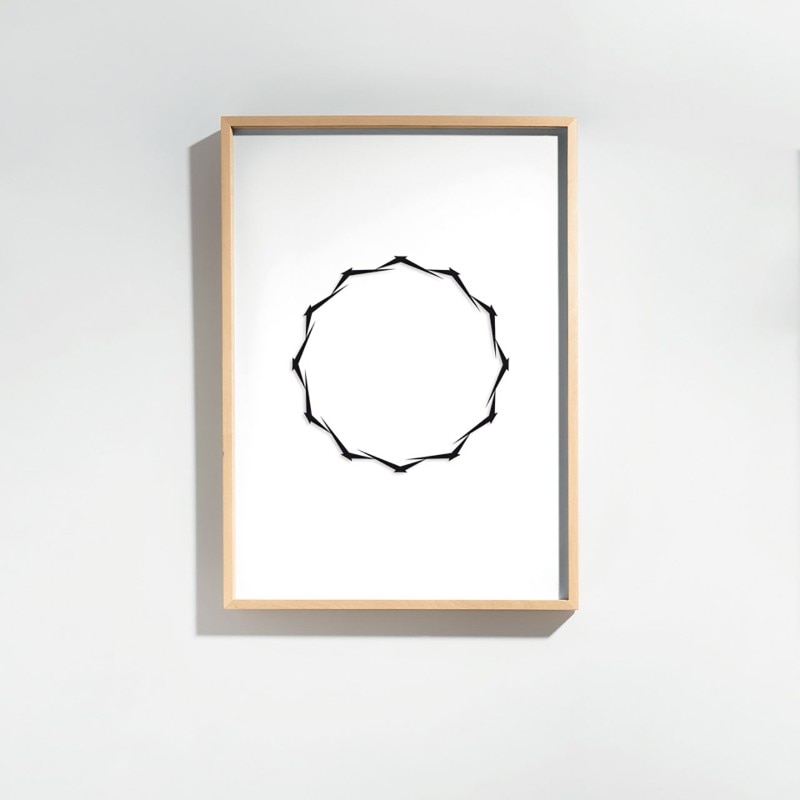
      Drawing n.14, Ron Gilad, Danese, 2013

      The Drawing n.14 wall clock introduces a further level of complexity in the representation of time, thus testifying to its multiple and unintelligible nature. A clock of twelve clocks, it shows the exact time exclusively with the two hands placed above 6 o'clock. The other eleven hands move according to their own time, unhinged by the present, staging a kinetic waltz that reminds us of the inevitable impossibility of controlling time. The wooden frame hides, in the designer's intentions, a device that wants to underline the incomprehension of eternity.

      Cardboard, lime wood, steel hands, glass. Dimensions 50x70 cm

      View article
      View article
      • SHARE
      • PIN IT

      Cubic Clock, Nendo, The Hour Glass, 2019

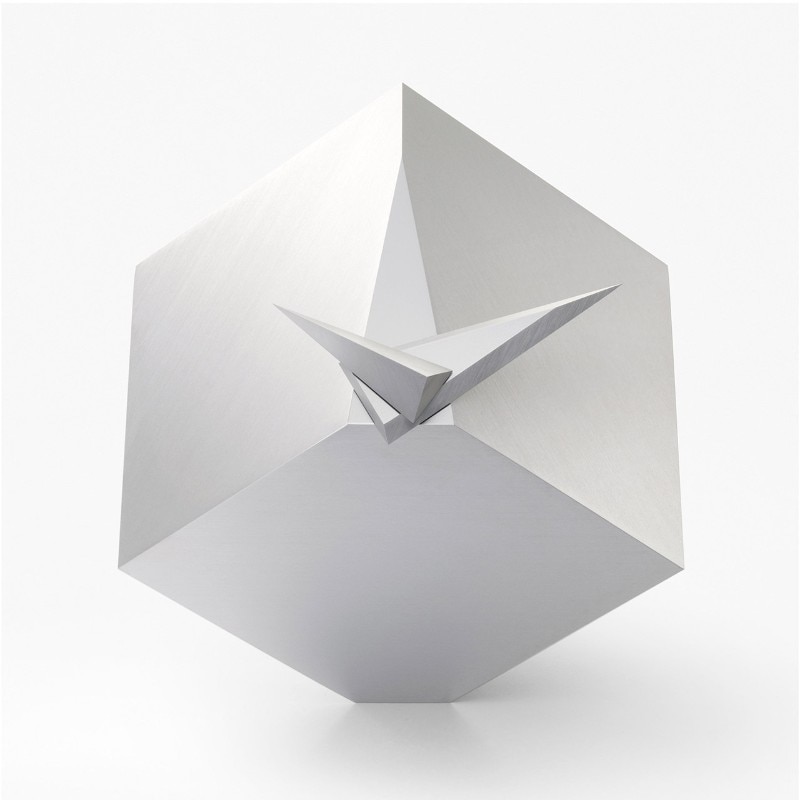
      The Japanese studio Nendo has designed a cubic clock which has been tilted to stand on its vertex, and whose hands are not an additional component mounted on the body of the clock, but they look as if they had been sliced from one of the corners of the cube. The hands overlap on top of each other 22 times over the course of the day, but only at noon and midnight do they return to the top, recreating the shape of a cube. The Cubic Clock was designed to celebrate the 40th anniversary of The Hour Glass luxury watch retail group.

      Brushed aluminum.

      View article
      View article
      • SHARE
      • PIN IT

      The essentials: 20 designer wall and table clocks

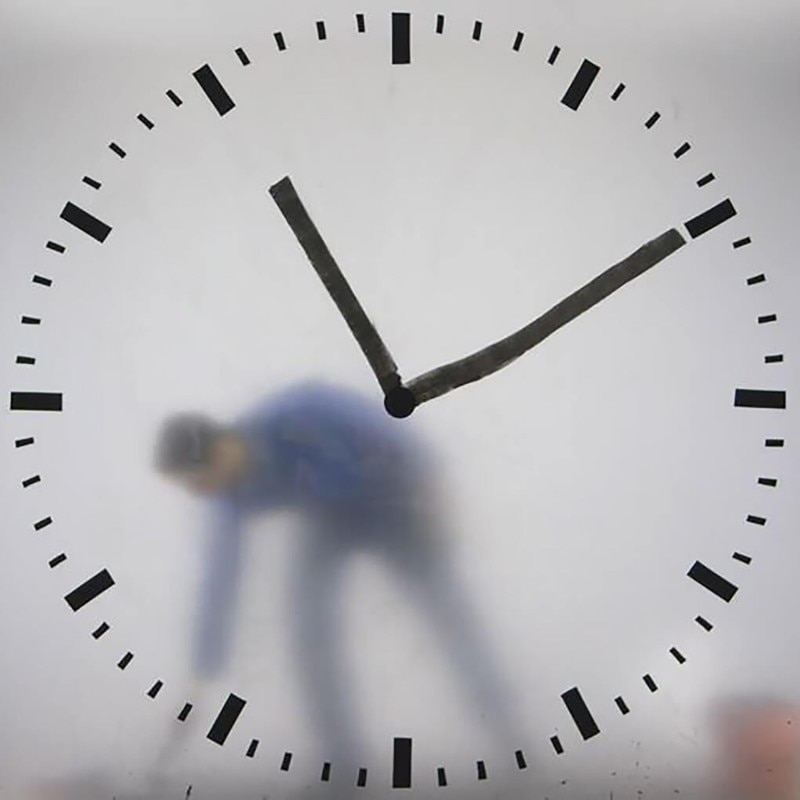
      Dutch designer Maarten Baas is among those who have used irony to break the conventional representation of time, turning it into a real performance. In the Real Time series, some 12-hour films frame a large clock where the succession of minutes is not indicated by the passing of a hand, but by the movement of real objects or drawn icons. In the Schiphol's Clock video, shot for the occasion at Amsterdam International Airport, a real-life operator draws the passage of time, while in Sweeper's Clock, two men push waste material around for twelve hours with a broom, mimicking the movement of a clock hand.


      Video.

      View article
      View article
      • SHARE
      • PIN IT

      View article
      View article
      • SHARE
      • PIN IT
      Loading
      Share
      • Sections
        • Design
        • Design essentials
      • Keywords
      • News
      • Architecture
      • Design
      • Art
      • Opinion
      • Archive
      • Products
      • Foreign Editions
      • Biographies
      • Architectural movements
      • Buildings
      • Architecture Firms
      • Design Essentials
      • Urban stories
      • Gio Ponti
      • Contacts & Editorial Team

      • Follow us
      Legal Note

      Editorial DomusEditoriale Domus Spa
      Via G. Mazzocchi, 1/3
      20089 Rozzano (Mi) -
      Codice fiscale, partita IVA e iscrizione al Registro delle Imprese di Milano
      n. 07835550158
      R.E.A. di Milano n. 1186124
      Capitale sociale versato € 5.000.000,00 - All rights reserved - Privacy - Informativa cookie completa - Gestione Cookies

      China Germany India Mexico, Central America and Caribbean Sri Lanka Korea icon-camera close icon-comments icon-down-sm icon-download icon-facebook icon-heart icon-heart icon--mobile-logo icon-next-sm icon-next icon-pinterest icon-play icon-plus icon-prev-sm icon-prev Search icon-twitter icon-views icon-instagram