



This is the summer issue, and it arrives with a question that burns hotter than the midday sun: what do we leave behind for those who come after us?
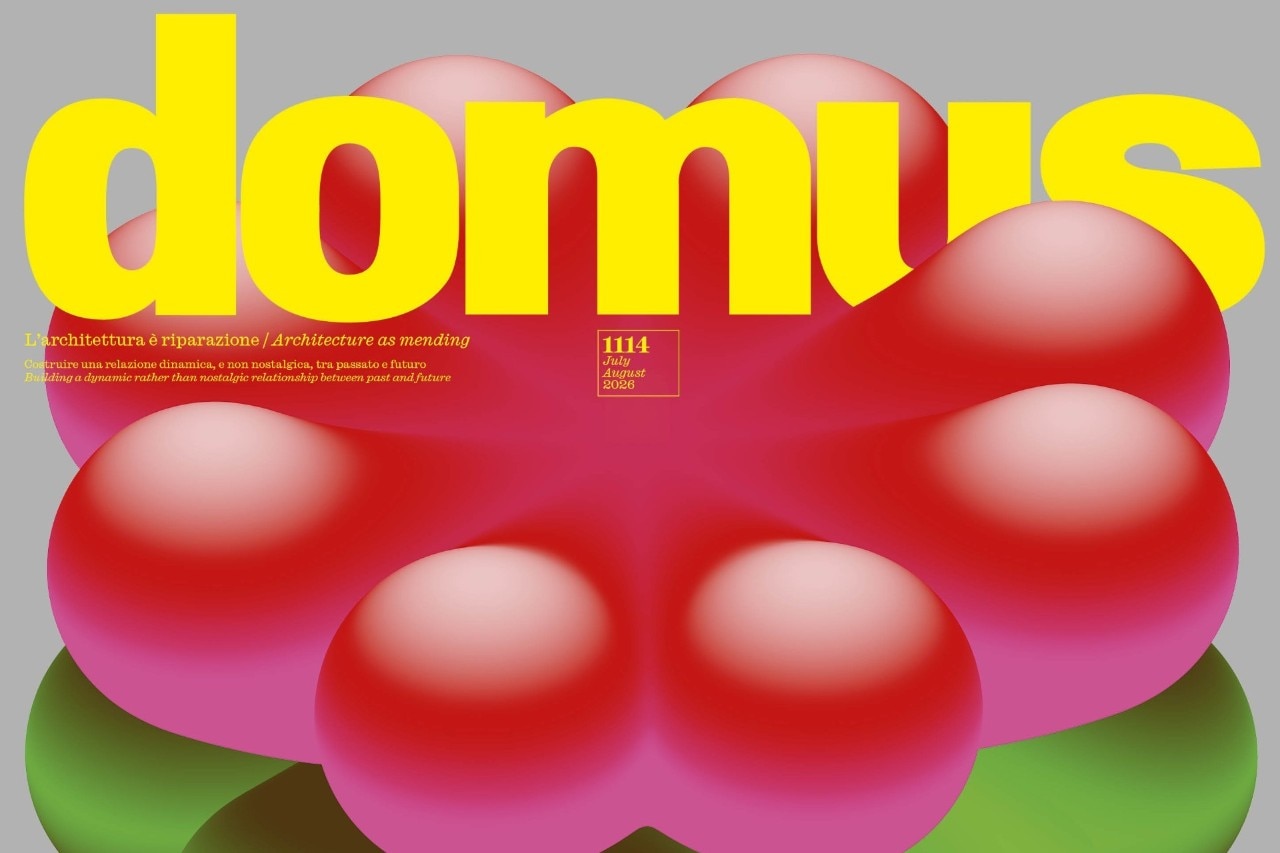
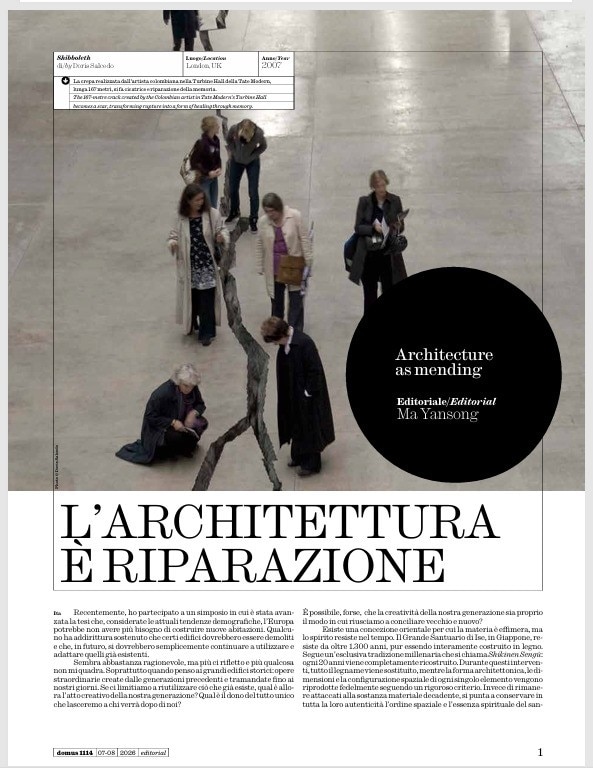
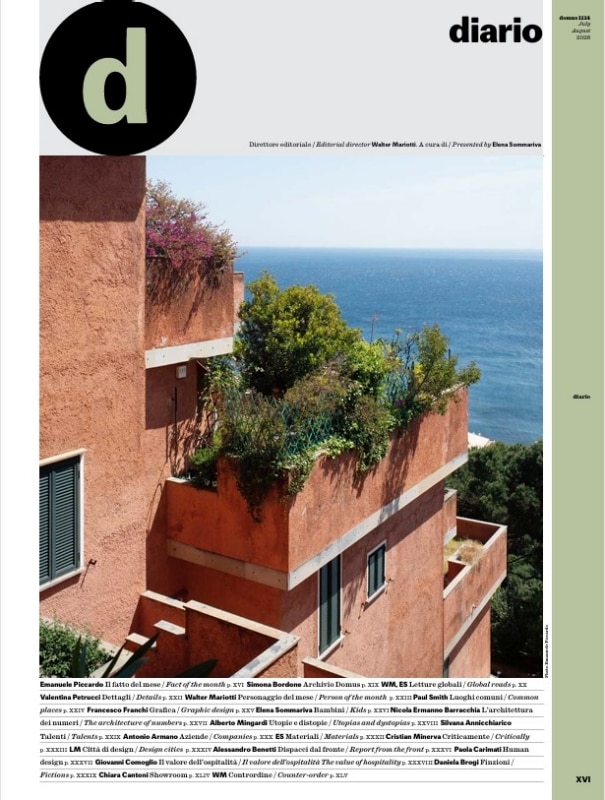
Guest editor Ma Yansong opens the editorial with the quiet force of someone who once suspended an ark over an old Shanghai factory, and from there reflects on repair, memory, and the future. To repair is not to restore: it’s a creative act that breathes new life into tradition without bowing to it, that acknowledges time rather than worshipping the past. Think of Confucius, standing on the riverbank: everything flows, and every present moment counts as much as any other. The cover is by Marta Cerdà Alimbau, Living Matter, 2026 – organic spheres sprouting in layered color, like geological strata growing upward. A perfect visual metaphor for an issue about buildings that never truly finish.
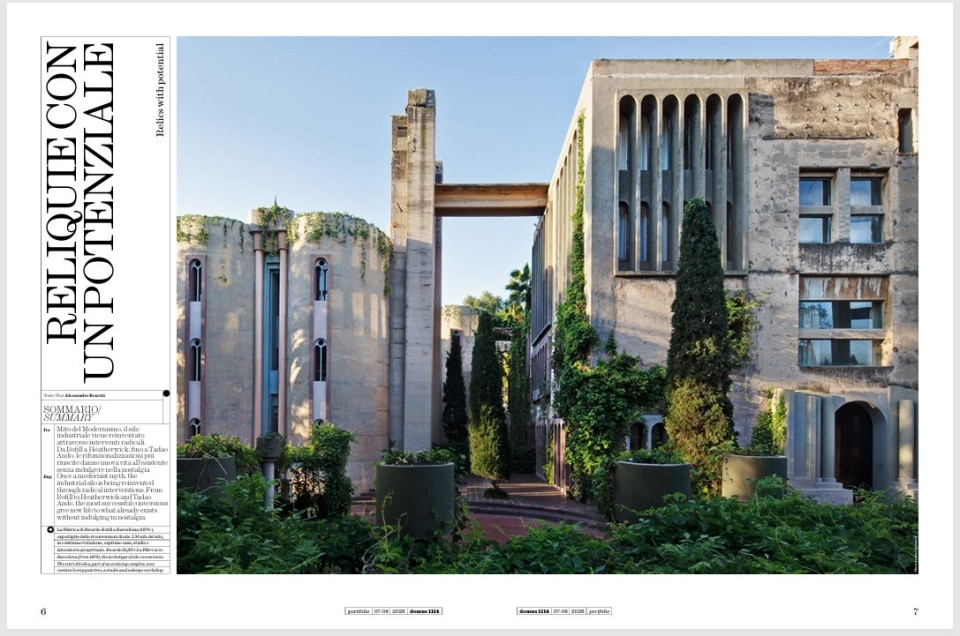
The theme runs through every page. Alessandro Benetti opens with a portfolio on repurposed industrial silos, described as “relics with potential” – objects to be hollowed out and walked through rather than restored to the letter. The journey starts with the historic forerunner, Ricardo Bofill’s La Fábrica in Barcelona (1973), and moves on to Stéphane Beel’s Silos-Kanaal in Antwerp (2016) and the Kunstsilo by Mestres Wåge Arquitectes in Kristiansand (2024).
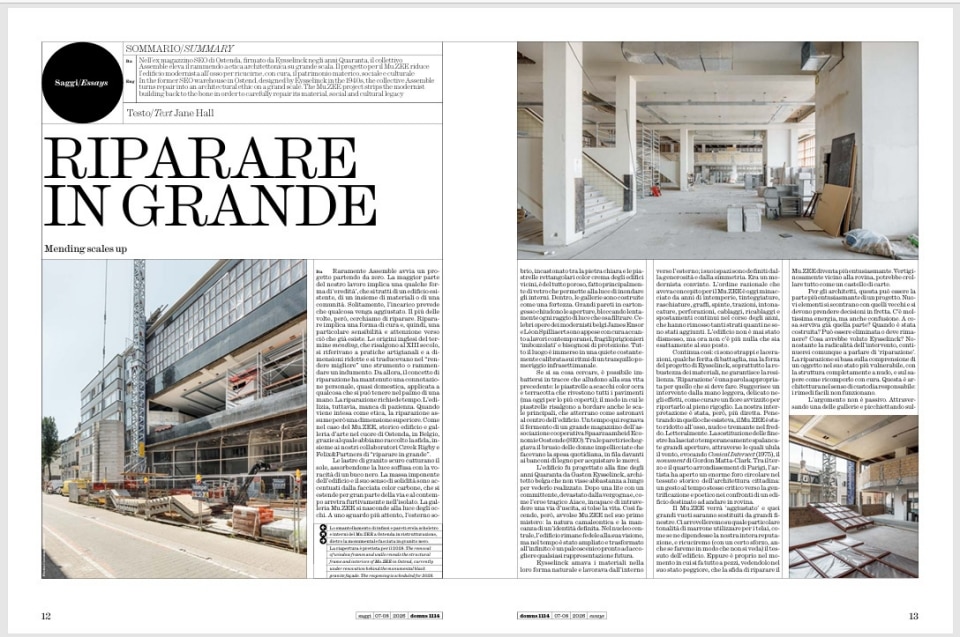
A highlight is Thomas Heatherwick’s Zeitz MOCAA in Cape Town (2017), its central atrium carved out with a parametric geometry that recalls Gordon Matta-Clark, all the way to Tadao Ando’s eighteen cylinders in Pudong, still under construction. Jane Hall of the collective Assemble then tells the story of Mu.ZEE in Ostend, a former SEO warehouse designed by Gaston Eysselinck. Stripped down to its bones by the removal of its façades, the building becomes a manifesto for a deeper philosophy: repairing is like darning a sock or mending a broken heart – an exercise that comes to appreciate wear and tear, ahead of its planned reopening in 2028.
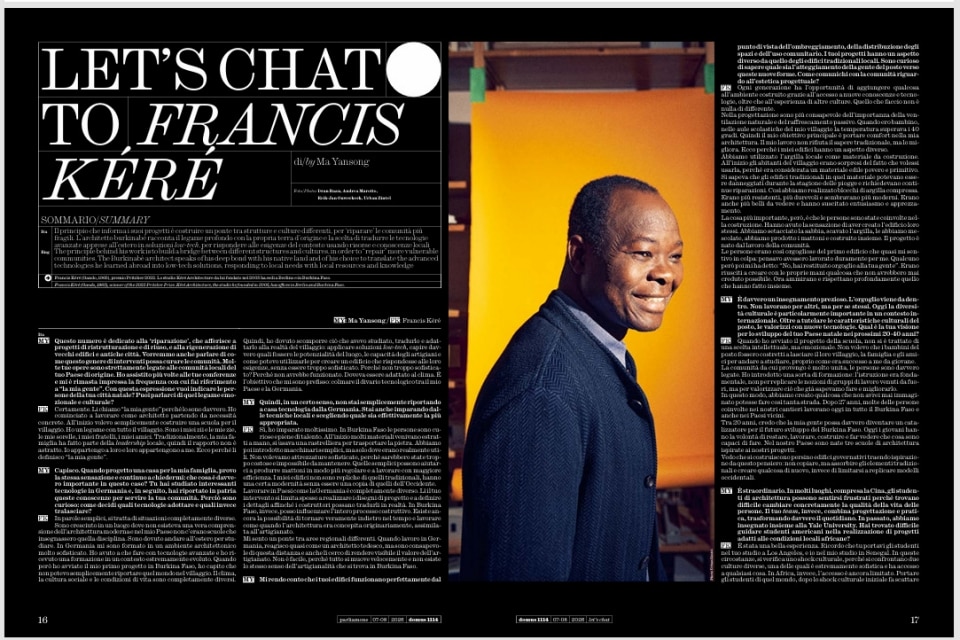
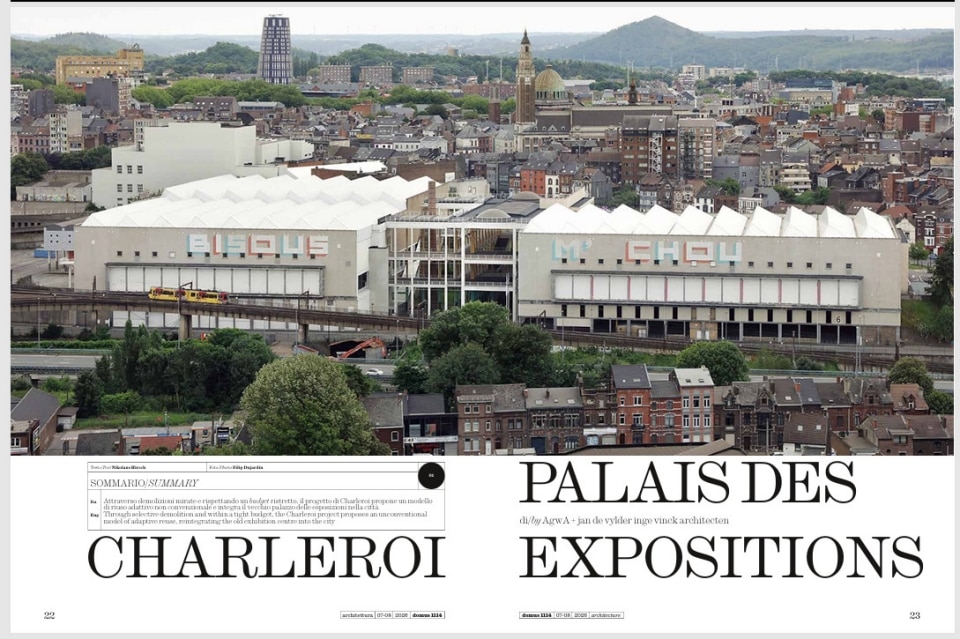
The conversation between Ma Yansong and Francis Kéré, winner of the 2022 Pritzker Prize, shifts the focus to architecture at its most elemental. Kéré explains how building starts with community and local materials, rejecting sophistication that can’t be sustained. His school in Gando, raised brick by brick from compressed clay, shows how the simple act of building can restore pride and identity to an entire people. On the European front, Nikolaus Hirsch examines the Palais des Expositions in Charleroi, a project by AgwA and jan de vylder inge vinck that won the 2026 EUmies Awards.
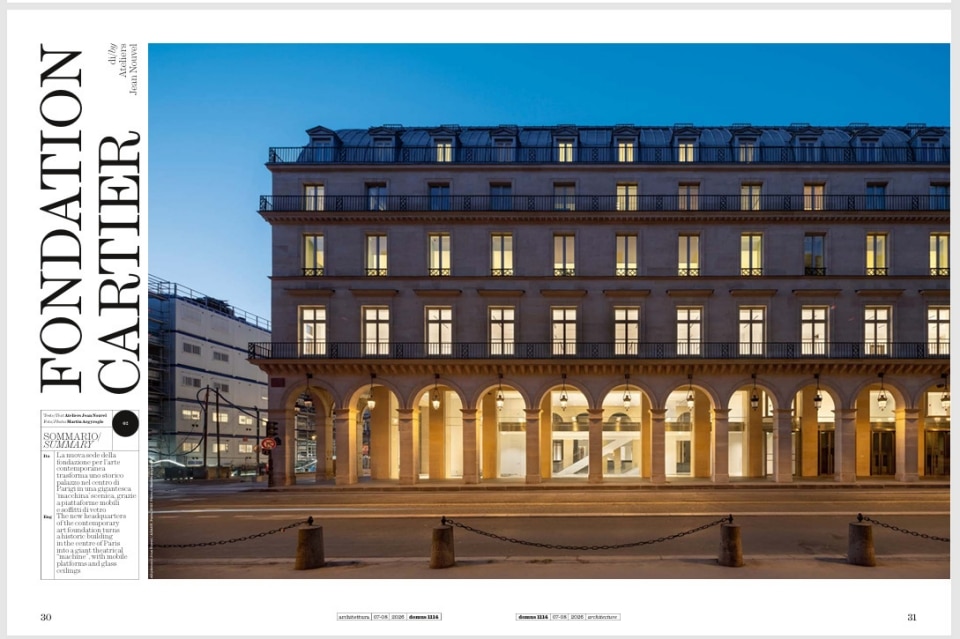
The architects rewrote an impossible brief: no new volumes, no underground parking, but the wholesale rescue of 50,000 square meters, turning the atrium into a visual window linking the upper city to the lower city and the industrial landscape beyond. In Paris, Ateliers Jean Nouvel answers with the new Fondation Cartier: five mobile steel platforms floating beneath glass ceilings, slipping an invisible theatrical machine inside the historic shell of the Grands Magasins du Louvre.
Repairing is not the same as restoring: it is a creative act that breathes new life into tradition without bowing to it, that acknowledges the passage of time rather than venerating the past.
Ma Yansong, guest editor Domus 2026
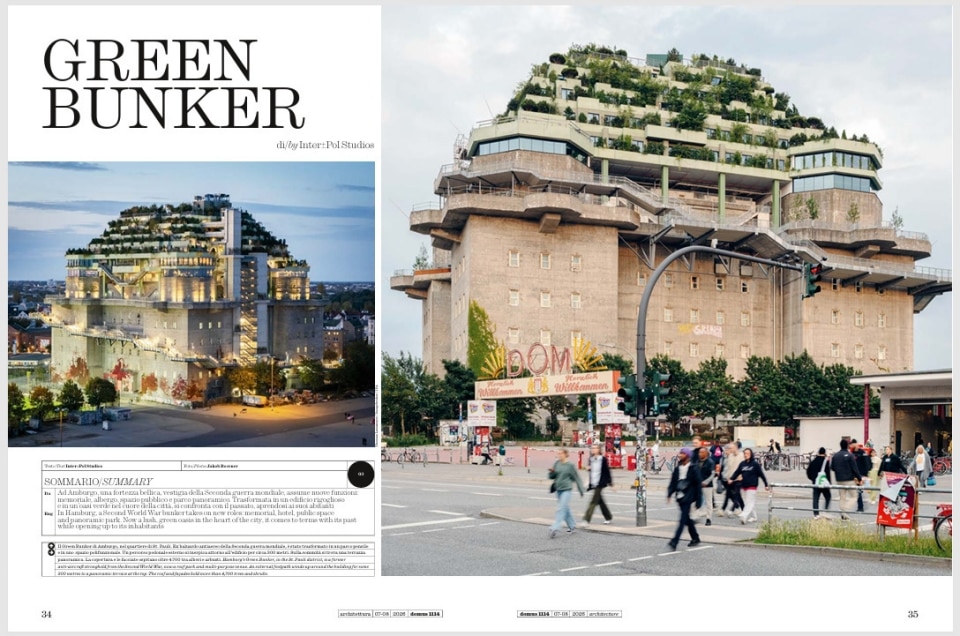
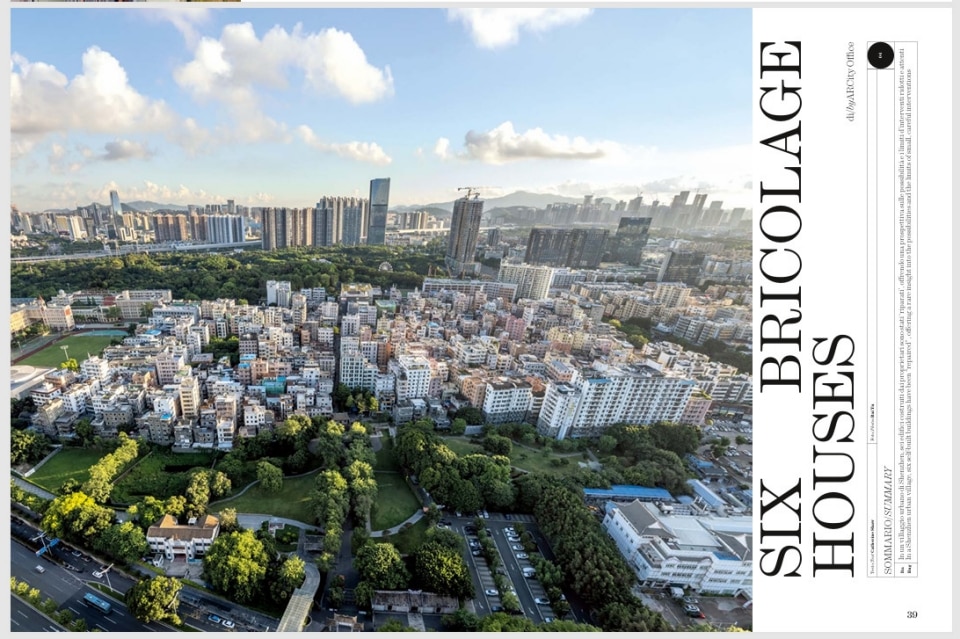
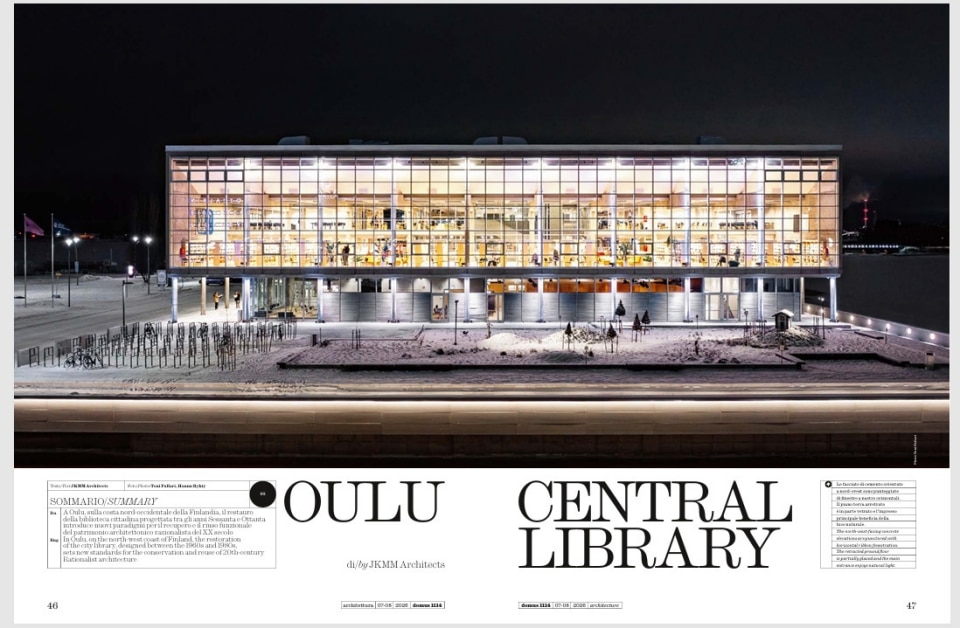
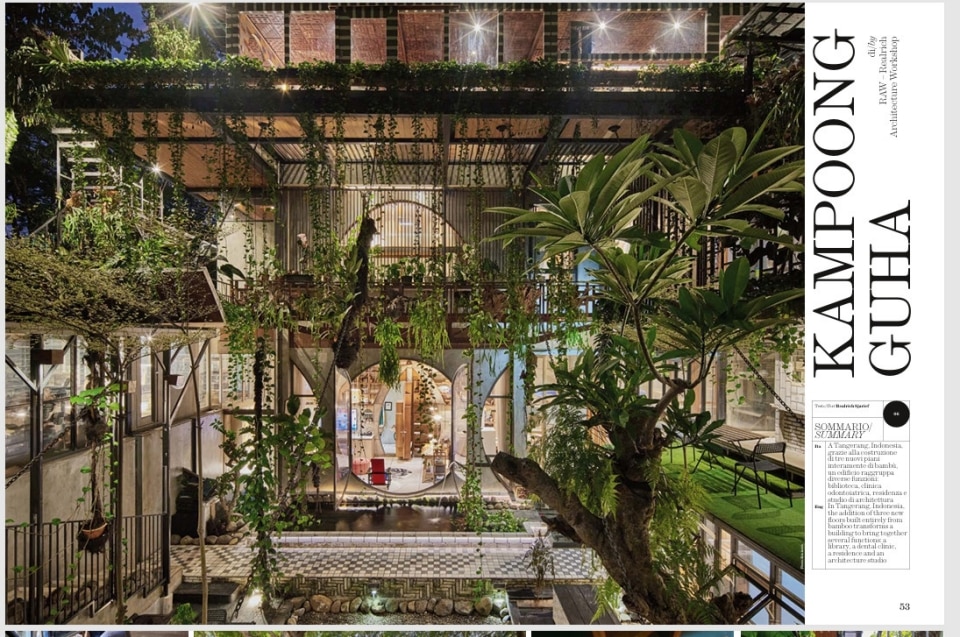
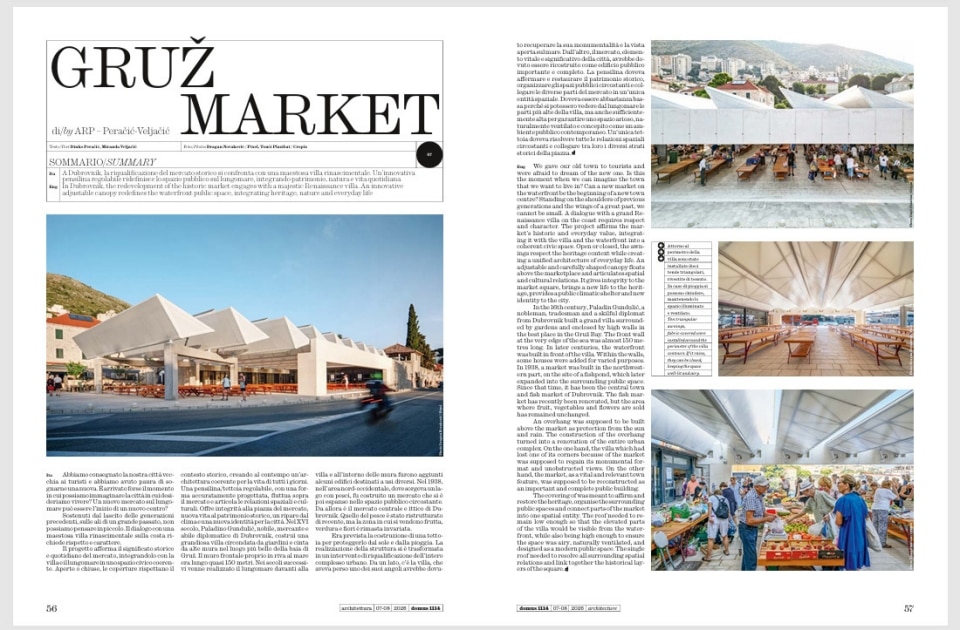
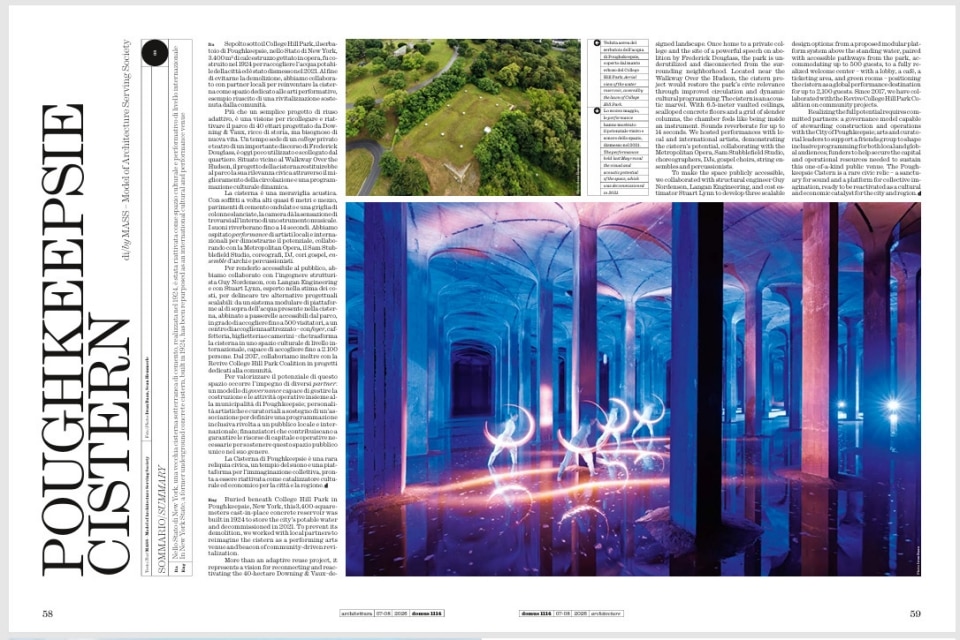
The geography of recovery also touches on historical memory and the fabric of informal building. In Hamburg, Inter±Pol Studios transforms a Nazi anti-aircraft bunker in St. Pauli into an elevated park and memorial, standing up to the regime’s monumentality with a 300-meter ramp and over 4,700 trees. In Shenzhen, in the urban village of Nantou, ARCity Office repairs six buildings through bricolage and local materials – a project Catherine Shaw describes as succeeding precisely because neighbors have started spontaneously copying it. The issue goes on to map a series of targeted interventions: JKMM Architects restore Oulu’s Central Library without disturbing Studio Nurmesniemi’s original signature; RAW Architecture Workshop raises three floors of bamboo in Tangerang, creating a hybrid tropical organism; ARP–Peračić-Veljačić floats a mobile canopy over Dubrovnik’s historic Gruž market, in dialogue with the sixteenth-century Gundulić villa; the MASS collective proposes turning the Poughkeepsie Cistern – a 1924 reservoir famous for its 14-second reverb – into a cultural space.
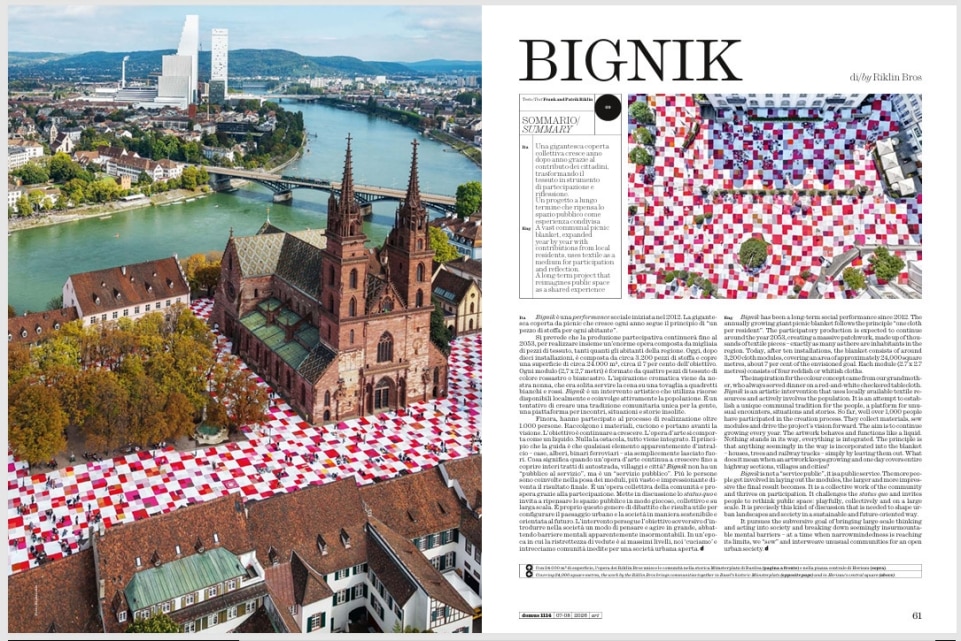
The section closes with the liquid utopia of Frank and Patrik Riklin’s Bignik, the giant collective picnic blanket that has been growing since 2012 and aims to include every resident of Basel by 2053, spreading across the territory heedless of whatever infrastructure gets in its way.
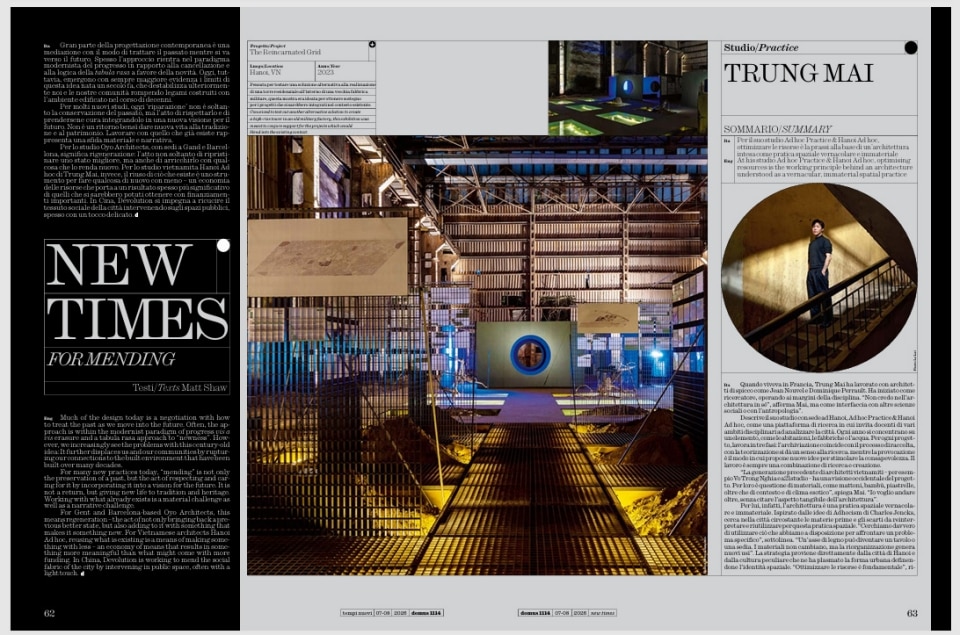
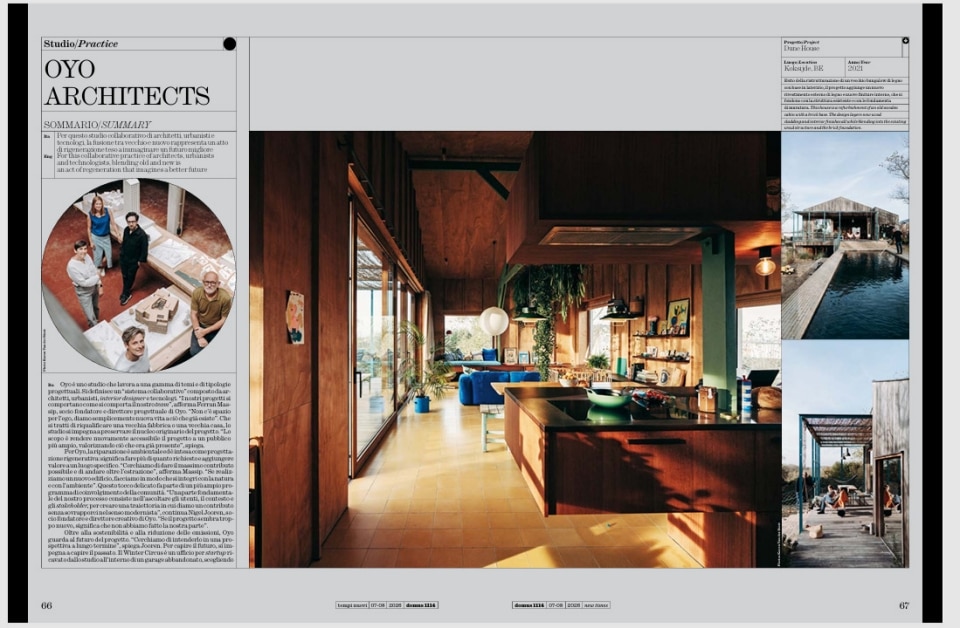
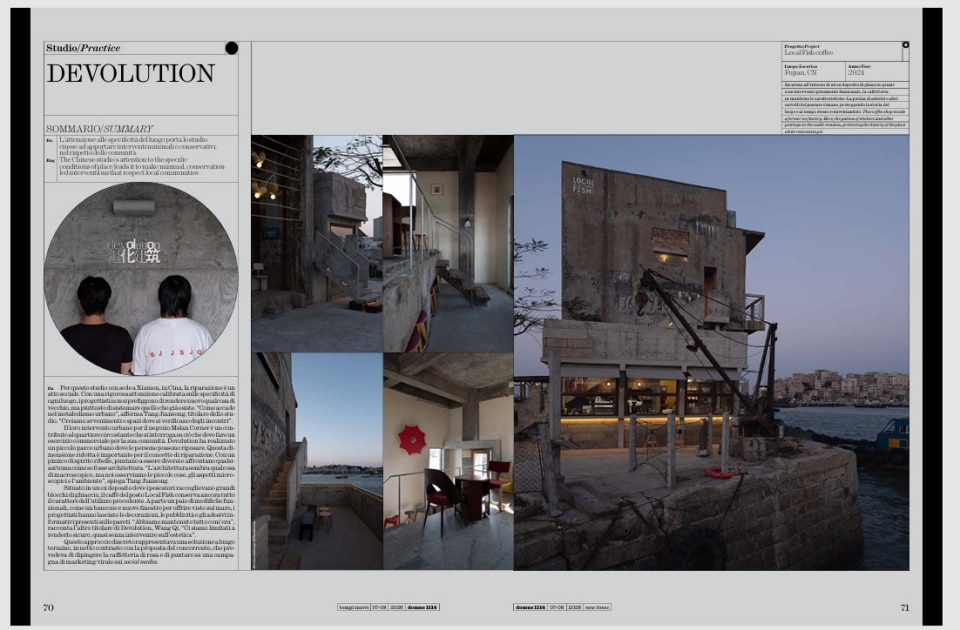
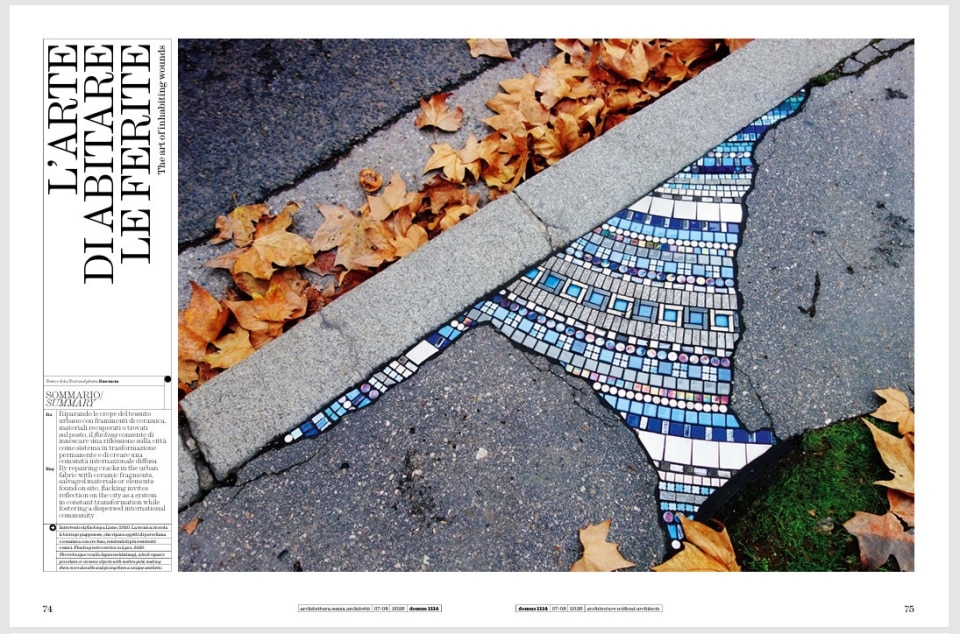
In Tempi Nuovi, Matt Shaw introduces three emblematic practices: Vietnam’s Trung Mai (Ad hoc Practice), who treats waste materials as a primary resource; Oyo Architects, for whom a regenerative project succeeds precisely by not flaunting its own novelty; and Xiamen’s Devolution, which preserves the traces and stickers of the past against the logic of viral gentrification. This same aesthetic of minimal amends belongs to Ememem’s “flacking,” the artist who has been patching street cracks from Lyon to New York with fragments of colored ceramic, working directly inside the city’s wounds. It all confirms Ma Yansong’s thesis: there’s no need to worship the past if we can’t recognize ourselves in the present enough to design the future.
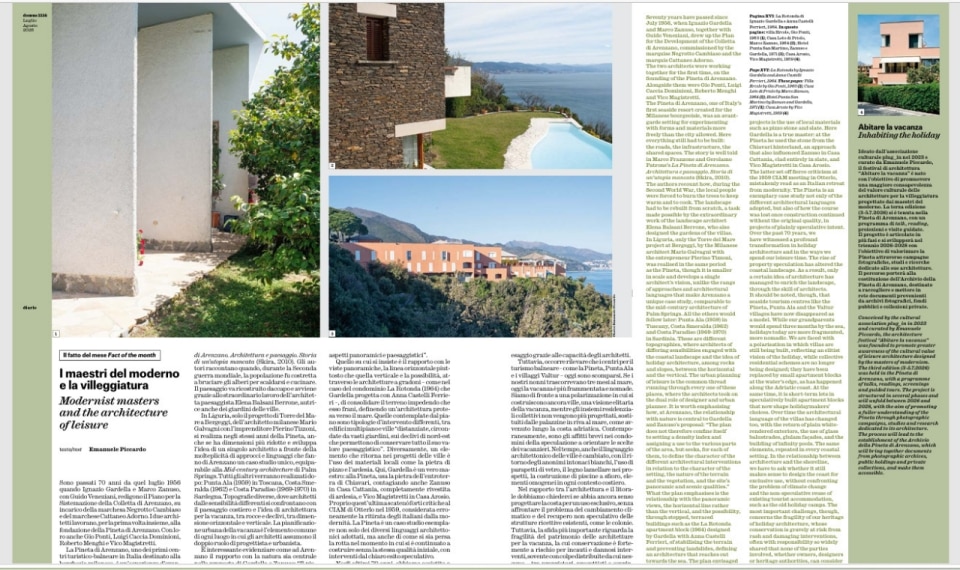
The Diario section turns its attention to the political and social dimension of space. Emanuele Piccardo traces the story of the Pineta di Arenzano, founded seventy years ago by masters like Gardella, Zanuso, and Ponti, later wounded by speculative development. The festival “Abitare la vacanza” is now attempting a difficult critical recovery of that memory by building a historical archive. In the Domus Archive, Simona Bordone rediscovers the Egyptian architect Abdel Wahed El-Wakil, a student of Hassan Fathy, and his staunch defense of vernacular building against Western colonial homogenization. Letture globali features three essential books: Marco Mulazzani’s monograph on Andrea Milani (Electa), Lytle Shaw’s Mysteries of a Communist Cave (Park Books, 2026) on Niemeyer’s PCF headquarters, and Ostinazioni (Corraini, 2026), edited by Alberto Coretti, which unpacks Massimo Osti’s design method.
The country’s true wealth lies in its communities and its collective memory: once depleted, no economic metric will be able to restore it.
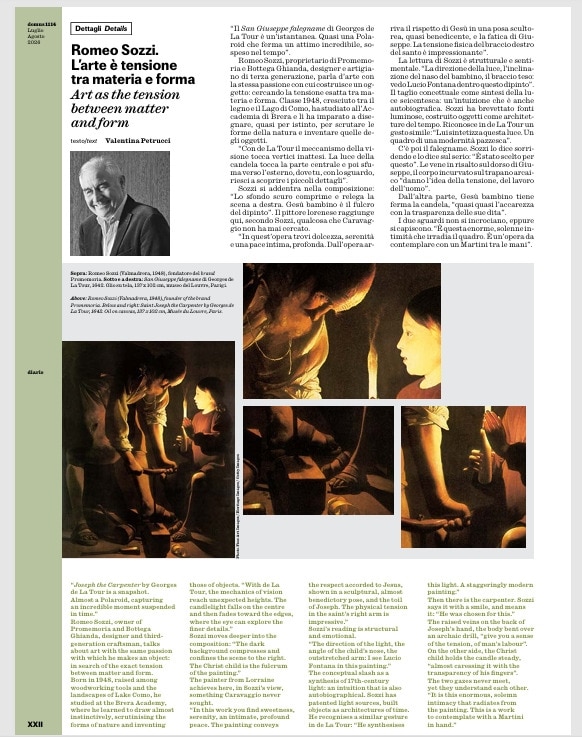
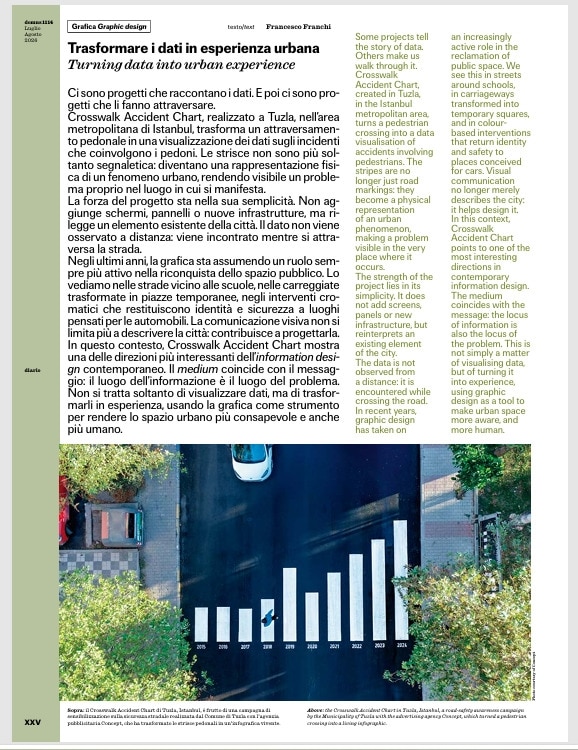
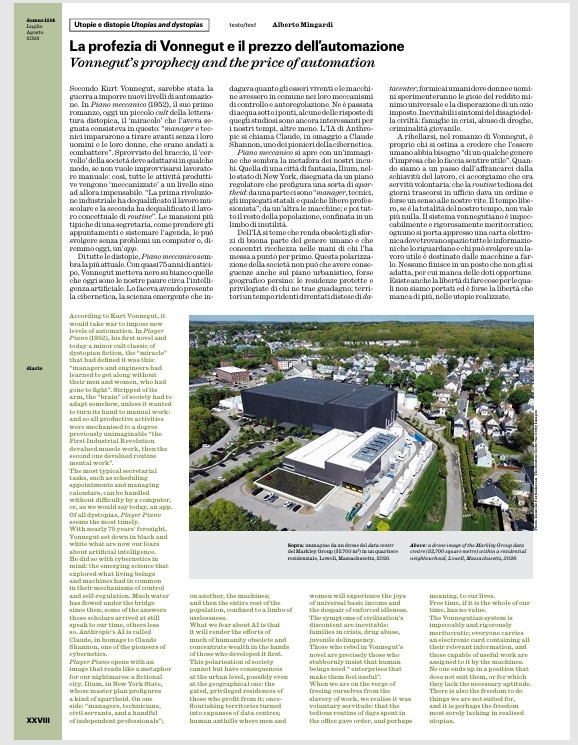
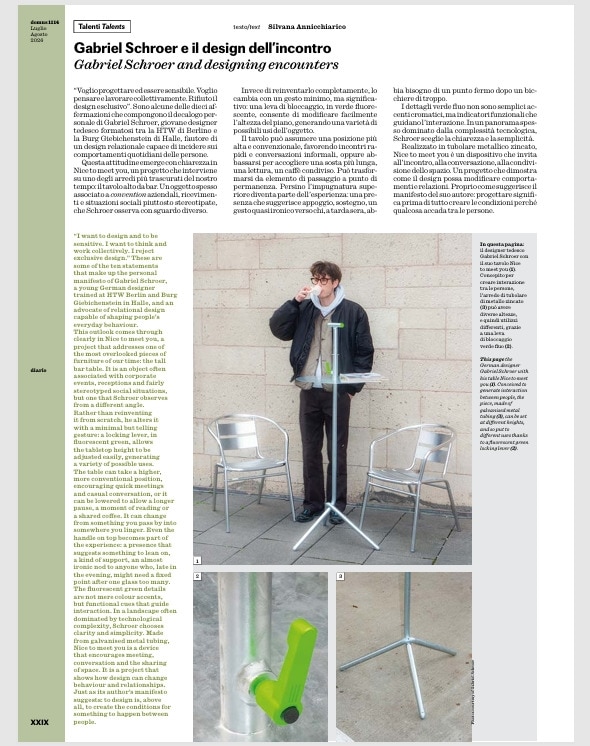
The Dettagli section offers a mosaic of perspectives: Valentina Petrucci talks to Romeo Sozzi, who reads echoes of Lucio Fontana into de La Tour’s Saint Joseph the Carpenter; environmental scientist Kaveh Madani, whom Mariotti met at “Venice Climate Week”, calls for intellectual moderation and for moving past the forced Westernization of ecological models; Paul Smith recounts the enduring quality of northern light in London’s Talgarth Road artist studios; Francesco Franchi walks us through Tuzla’s Crosswalk Accident Chart, where road signage turns into an infographic of trauma; and Elena Sommariva documents the participatory school in Pacentro alongside Isa Glink’s three-dimensional textile research for Kvadrat. Elsewhere, Alberto Mingardi finds in Vonnegut’s Player Piano a prophecy of today’s artificial intelligence, Silvana Annicchiarico isolates the minimal gesture of Gabriel Schroer’s table, and Antonio Armano celebrates the acoustic insulation of Cartoceto’s window frames.
The Criticamente section carries Cristian Minerva’s sharp piece on the risks of digitizing design and on the rhetorical abuse of Carlo Scarpa’s name as a stamp of authenticity. In counterpoint, Loredana Mascheroni looks at the success of Copenhagen’s “3daysofdesign”, built on proximity and slowness, while Alessandro Benetti presents AMAA studio’s nursery school in Noventa Vicentina, rooted in the exposed concrete of Veneto’s urban sprawl. Paola Carimati draws a thread between the feminist reflections of Chiara Alessi, Serena Dandini, and Cathy La Torre on systems of control in design and the historic erasure of female genius. Giovanni Comoglio describes the spaces of RH Milan on corso Venezia, while Daniela Brogi rediscovers the meta-cinematic Milan of director and architect Maurizio Nichetti.
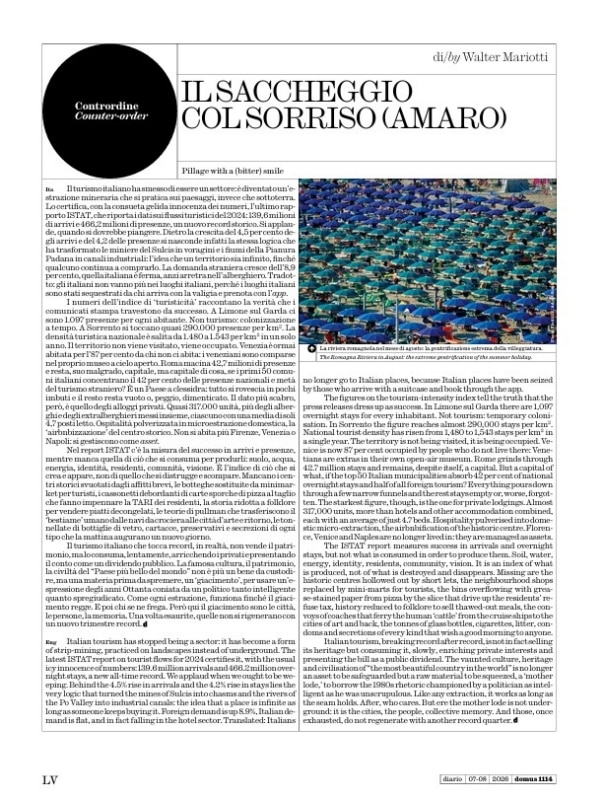
In his regular Contrordine column, editorial director Walter Mariotti delivers a severe verdict on mass tourism in Italy, reduced to a purely extractive activity practiced on the landscape itself. The 2024 ISTAT figures – 139.6 million arrivals and 466.2 million overnight stays – are no cause for celebration but a civic alarm bell. The numbers from Limone sul Garda, with over a thousand overnight stays per resident, the suffocating density of Sorrento, and the depopulation of Venice, now an ecosystem built for non-residents, all point to the same thing: the collapse of urban social fabric. The spread of private micro-hospitality reduces the very idea of dwelling to a financial asset. The country’s real resource is its communities and its memory – and once that’s exhausted, no economic metric will ever bring it back.
All that’s left is to wish you a good summer, and good reading.