


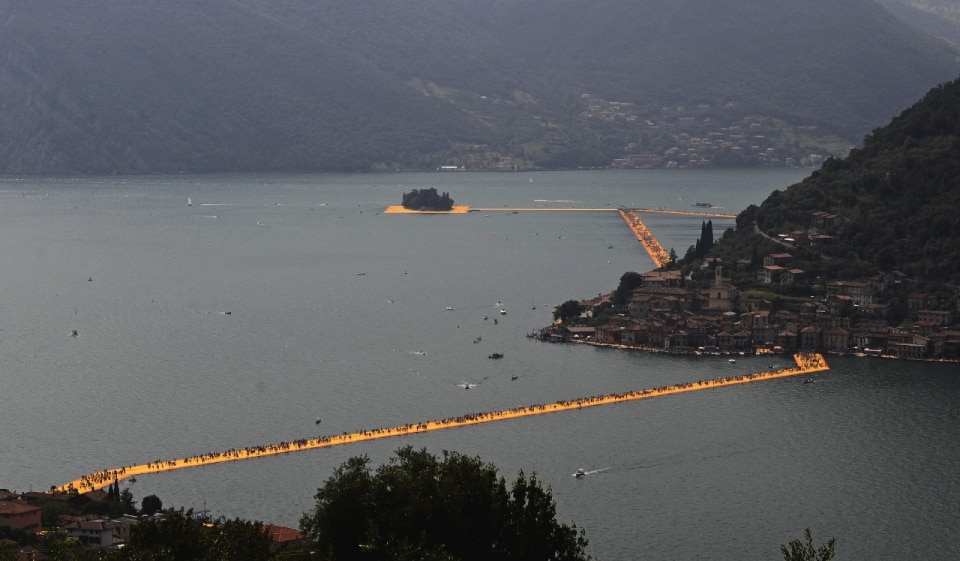
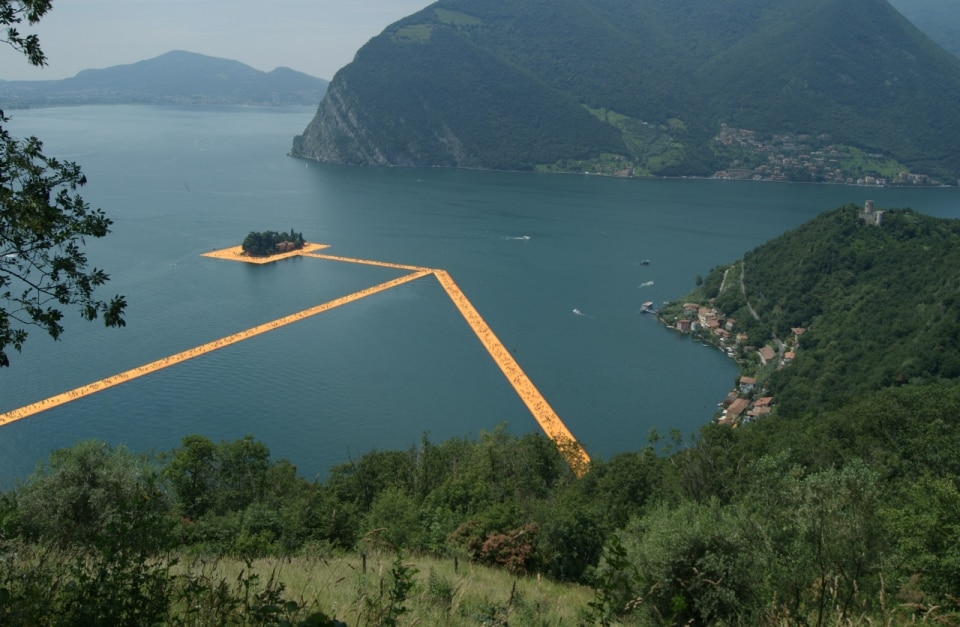
In July 2016, when the last strips of dahlia-yellow fabric from The Floating Piers were dismantled and removed from Lake Iseo, the installation seemed to dissolve like a mirage, leaving no visible trace of its presence. After sixteen days on display and over a million visitors, the temporary structure that had been capable of redefining the landscape and its imagery seemed destined to survive only in the memories of those who had walked across it.
However, ten years later, the legacy of Christo and Jeanne-Claude’s work appears much more tangible. What was conceived as an ephemeral installation has turned out to be the catalyst for a lasting transformation of the area. Lake Iseo has gained new international visibility, tourist numbers have grown steadily, and the relationship between landscape, culture, and local planning has changed.
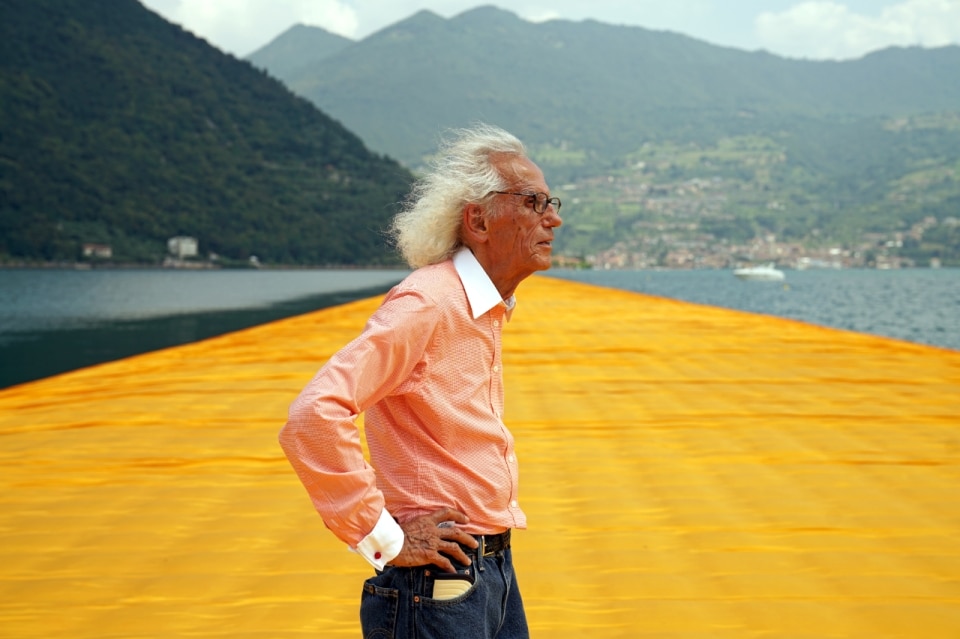
Christo and Jeanne-Claude's work stemmed from an idea they had nurtured for decades, but which they had never been able to realise elsewhere. Only Lake Iseo, nestled between mountains and villages, offered the conditions necessary to transform the seemingly impossible feat of walking on water into a collective sensory experience. This magical moment was destined to last just sixteen days, yet it was precisely its temporary nature that would produce far more enduring consequences.
Since 2016, the lake has seen a steady increase in tourist numbers, with approximately 400,000 more visitors each year than in the previous period and an overall growth of more than 50%. These figures reflect the installation’s media success, as well as Lake Iseo’s emergence as part of a new cultural and tourist landscape with international reach. According to Riccardo Venchiarutti, mayor and president of the Visit Lake Iseo association, the merit of the “orange walkway” was to raise awareness of a lake that risked being overshadowed by Lake Garda and Lake Como.
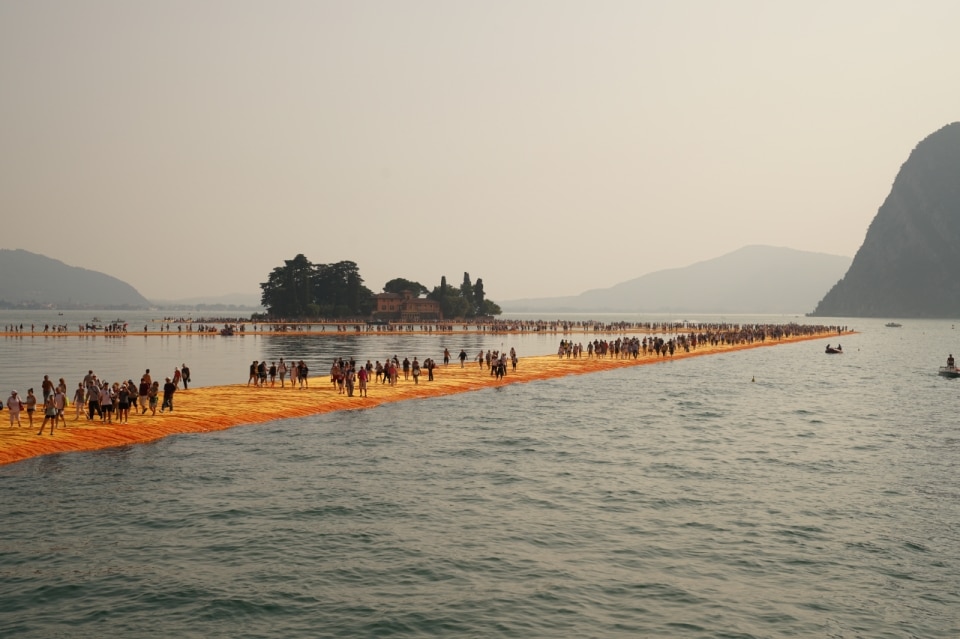
The landscape around the lake, which was temporarily fitted with infrastructure to accommodate around 1.2 million visitors over a period of just over two weeks, has evolved from a marginal destination to a new central hub. This transformation is reflected in greater international recognition, a more nuanced regional narrative and wider appeal, extending beyond traditional tourist hubs. In Monte Isola, long lines, strained services and rail disruptions in 2016 are now remembered as a positive turning point, having attracted an international audience for the first time without descending into mass tourism.
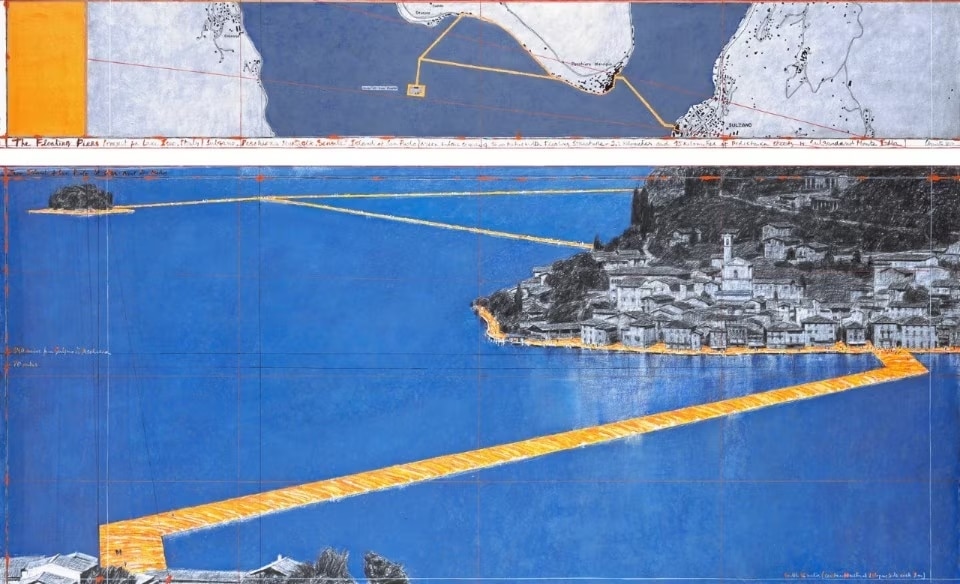
However, reducing the legacy of the Floating Piers to mere numbers would be misleading. For many visitors, walking on that floating structure was their first direct experience of contemporary art: an accessible, free and immersive encounter that transformed the relationship between the public, the artwork and the local landscape.
Marcella Ferrari, a long-time collaborator of Germano Celant's and CEO of the company overseeing the project's implementation at the time, explained to Brescia Oggi that the work's true legacy lies in its reconfiguration of the territory's perception. No one could have imagined that the floating pier would become the key to unlocking the area's story, opening up new ways to experience the space and inspiring a more ambitious vision for its future.
It is always difficult to predict the impact that a work of art will have on the places and communities that host it. Ten years later, the testimonies convey the magnitude of this once-in-a-lifetime experience, which has not only transformed the image of Lake Iseo, but also the way it is perceived. However, as is often the case with the most radical works, it is not an object that remains, but a transformation: a change that continues to take root in the territory and its people, long after its limited existence has ended.
Opening image: "The Floating Piers" by Christo and Jeanne-Claude, Lake Iseo, Italy, 2016. Photo by Fangel via Wikimedia Commons