


This article was previously published in Domus 1112, May 2026.
Ma Yansong: I think you’re the perfect person for us to explore the theme of this month’s issue: “Architecture is movement”. I’ve always noticed a strong sense of movement running through your works. Whether it’s the curling bridge (the Rolling Bridge), the rotating chair (the Spun chair) or a “breathing” building, they all seem to carry a common pursuit: to make architecture “come alive” and break the inherent constraints of static objects. You can understand that movement is about architecture, structure, space, and also about human beings. You’ve recently been advocating the concept of “Humanise”, or humanistic care, integrating humanistic warmth into design and criticising those boring, indifferent and people-detached buildings. This coincides with Domus’s theme this year, “Architecture is not architecture”. We’re both trying to expand the boundaries and definition of architecture, bringing it back to the human scale and human needs.
Thomas Heatherwick: I’m really interested in how we can move people, and with that I mean moving them with their emotions. Every project my studio and I have been working on has been looking at feelings. In my upbringing, I found that the new buildings being built were very unmoving, unless they were a museum or a library. And it was almost like feelings were something we celebrated not having. That came through at a time when the gravity of building housing for millions of people after World War II felt like a very cerebral problem to solve. There were also new technologies and materials. And because it’s so incredibly expensive to build buildings, there’s a great amount of anxiety when someone is commissioning a project. Will they lose money? Will somebody be irresponsible with that money? So to diminish the sense of risk, our profession has developed an image where everything is very controlled, and you have to appear as a reliable, dependable bureaucrat to be trusted. But this notion of rationality is actually irrational once you look at how humans are driven by emotions and feelings.
So, in trying to make places that matter or feel particular to people, I’m trying to tune in to that hunger we all have to feel seen and recognised. A friend of mine, Noreena Hertz, wrote a book called The Lonely Century, about how we thought our incredible devices would bring us together, and that the internet was an incredible democratising creation. But actually, what we didn’t realise was that those algorithms divided us, and in this century we’ve become imprisoned in a social addiction that isn’t actually social. So, more than ever, I feel my studio’s job is to make places that bring people together. And that’s driven by emotion.
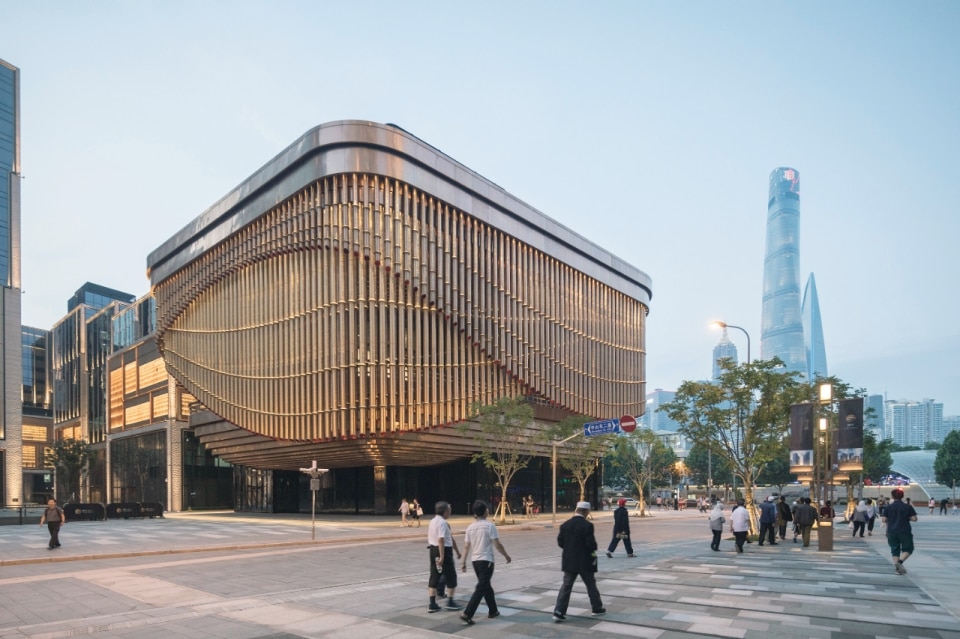
I suppose I’m trying to think a bit like a nutritionist, like we think of food as something that contributes to health. You have to be interested in what makes healthier societal places, and what makes them less healthy. That’s not about styles of architecture. I’ve used movement in my projects as an attempt to be nutritious in some way. When I was collaborating on the Fosun Foundation building in Shanghai with Gerard Evenden, a partner at Foster + Partners, one of our dilemmas was whether this cultural building should face the public space – which we were creating in our master plan for the Bund Finance Center to the west – or if it should face the amazing Huangpu River to the east, which is the heart of city.
That triggered the idea of a facade that could move and face any direction, which was also inspired by visiting the BMW factories in Munich 25 years earlier. While the cars were going through the production line, they were hung on trays to keep them moving at the rhythm and pace of all the different processes happening. It sort of felt illogical that these trays were carrying so much weight, instead of rolling the cars on the ground. So with the facade, I was thinking about expectation, because you don’t expect anything of that weight of architecture to move.
Normally, movement on buildings is digital, say with moving images, but there’s something incredibly static underneath in spirit. Moving digital has now become so common that everyone feels that. Whereas even a 10-year-old will feel a jolt of emotion if they see a piece of a building moving that you’d never normally expect to move. I think there’s an aspect of theatre to the built environment, to cities. We create theatre in theatres and in art museums all the time. But such a small slice of society actually goes inside those buildings. I’m so in love with cities and designing the infrastructure of our lives because cities are like our shared living rooms – a shared theatrical space that I feel we must treat like an interior. Your curiosity should be triggered when you’re moving through it. To me, the interiors of buildings are almost the exteriors.
More than ever, I feel my studio’s job is to make places that bring people together.
Thomas Heatherwick
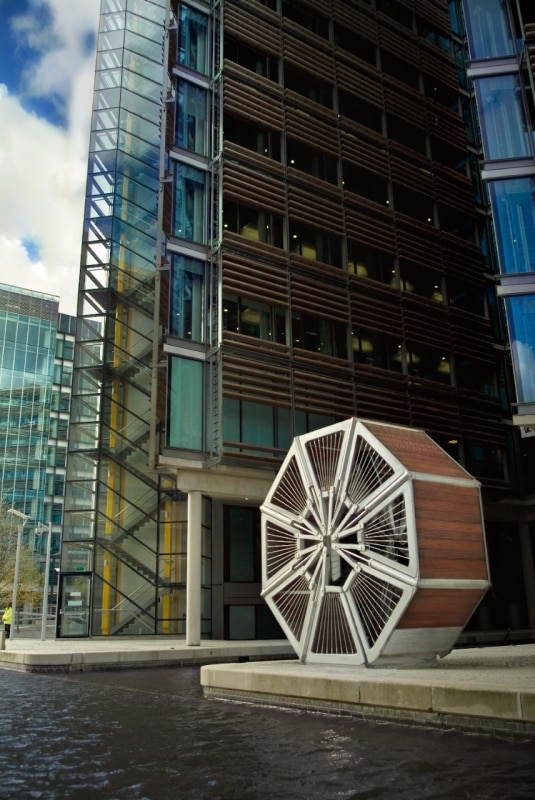
Going back to the Rolling Bridge we did nearly 25 years ago, it was just leaning into this idea. Even though it’s a tiny experiment on an opening bridge, the development process was quite long, and it was before incredible computer graphics. There’s an assumed way that an opening bridge opens, but actually, its job is just to get out of the way.
It was a line of thought that also came about from seeing animatronics and Jim Henson, who was one of the creators of the Muppets. There were also these dinosaurs that had been done for the BBC, using latex on the outside and mechanisms inside, and we realised our bridge was about the same size as one of the large dinosaurs’ tails. Originally, I was quite excited about making something wrapped in latex, then this rubber would bend, and inside there’d be a metal mechanism. A rubber bridge! But I realised that would kill the theatre of it; it would be better if it looked like a normal bridge.
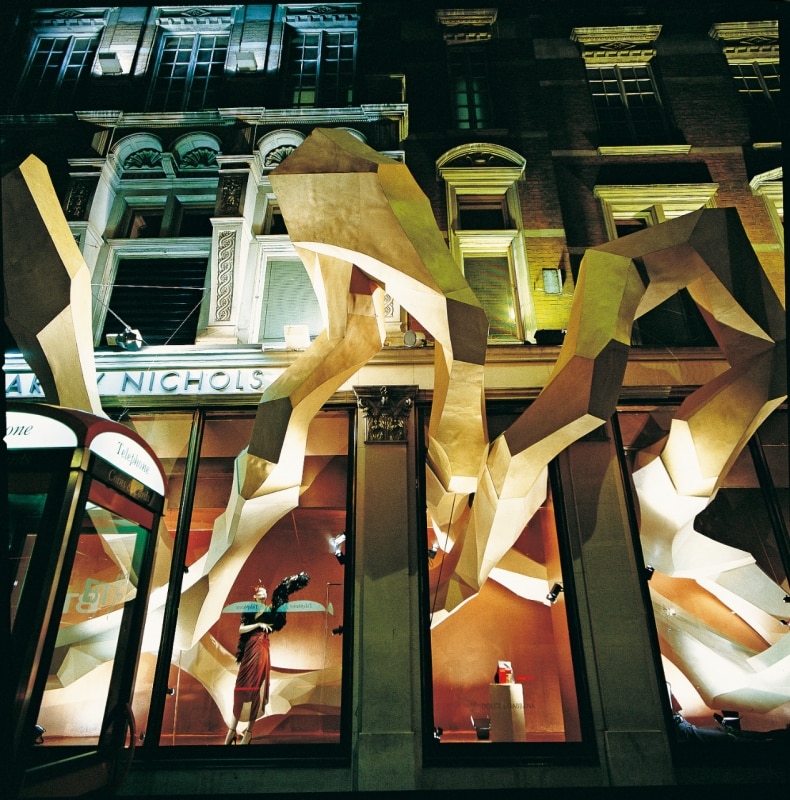
To go back to movement, I always felt a sort of two-dimensionality in the biggest objects. They felt like big two-dimensional facades stitched together. But then you’d look at natural landscapes and phenomenally complex forms. It’s sort of funny and frustrating because you can’t run your hand across a mountain range or treetops. So all you have is your eyes to absorb. One of my earliest projects was a window installation for Harvey Nichols. I don’t know if you’ve seen it.
Yeah, it wove through the building. That sense of movement isn’t about showing off – it gives the building emotion. Even a window display can make people feel that “this building has an expression” – that’s harder to achieve than designing a huge landmark.
It would have been easier to do a smooth snake. But that felt very passive and predictable for your eye. So in that context, where you’ve got a very sedate building, it felt like there was a need for more energy, something that felt like it had stress, that it was accelerating, slowing, turning. I was very much thinking about movement, energy and dynamism to give it its power.
But there are so many different kinds of movement we’ve put into our projects. In 99 per cent of the city, we tend to get simplistic, passionless, nutritionless forms, so in a certain sense, the work we’re doing feels like we’re trying to compensate for that. If every building were curvy or organic, we’d be the first people advocating the values of right angles. I’m not really interested in having one single style. I’m more interested in how people feel in their context, and what might be the most respectful thing you could give them.
It’s interesting to hear you mention the word theatre, because theatre tries to show something about people. Residential buildings need to be functional but not boring. People also need some emotional or spiritual spaces, art spaces and theatre. A writer from Shanghai (the writer is Jin Yucheng, author of Blossoms (Fan Hua), known for his delicate depictions of old Shanghai, its street life and its emotions) told me that when he was young there were no big buildings in Shanghai, and people loved to go to the Bund waterfront and look at the boats moving in the river. That reminded me of when I was a kid in Beijing, I loved to see the cars moving on the street. It’s like a show.
In a way, our work is that of producers. Some people we’ve worked with in the restaurant business really understand where you need to set up mirrors, maybe high up on a corner, so that the movement is multiplied and people feel the energy. In this lonely century, society is hungry for togetherness, and unfortunately many times shopping is the only excuse. I say unfortunately because we are also proud to work on store projects because they can be places and reasons to create physical proximity. Reading Christopher Alexander or Jane Jacobs, there is always so much energy that hits me. I like the story of you watching the cars. It means watching the world go by, doesn’t it? We like to do that, but if the world doesn’t do anything interesting what can we do about it.
Maybe that is what makes that project so special. In Japan, particularly Tokyo, there are so many successful streets and commercial districts in terms of scale. Your work, however, gives a totally different feeling. It’s not just about commercial logic, but rather as if you’re creating an emotional kind of refuge: a place where people really feel they belong.
In a way, our job is like being producers. Some of the people we’ve worked with in the world of restaurants really understand where you need to put mirrors, maybe at the top at an angle, so it magnifies movement and people feel energy. In this lonely century, society is hungry to be together, and sadly, shopping is so often the only excuse. I say sadly, but we’ve also been proud to work on shopping projects, because they can be places and excuses to create physical proximity. When you read Christopher Alexander or Jane Jacobs, there’s that energy that always strikes me. I love your story of looking at the cars. It’s watching the world go by, isn’t it? We love to watch the world go by, but if the world isn’t doing anything interesting, how can we help that?
But this notion of rationality is actually irrational once you look at how humans are driven by emotions and feelings.
Thomas Heatherwick
It’s important to say that a boxy building can be interesting, because otherwise, people think we’re only talking about the shapes, right? We’re also talking about the emotional fluid between humans and the world, their inner heart or energy. Speaking about theatre and boxy buildings makes me think of the Salk Institute by Louis Kahn. When you sit there in its empty plaza, watching the sky, the ocean, the clouds, the changing light, you’re also emotionally responding to that environment. I think that really feels like theatre. You feel this exchange and energy.
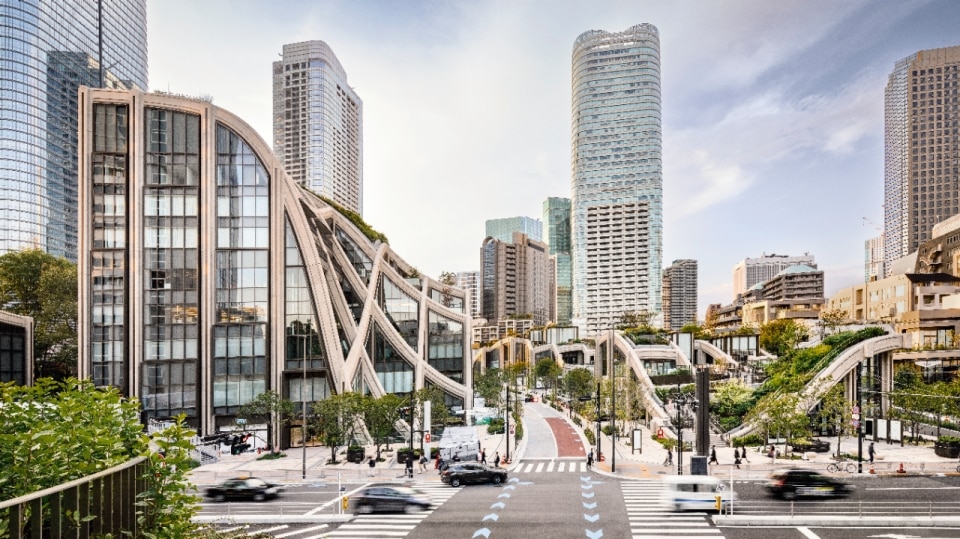
Sensitivity to how people feel in space is something I think is so easily missing. That was in our minds when designing Azabudai Hills in Tokyo – a sense of prospect and refuge. You can watch everyone else doing things and not feel like you have to buy something, or that you’re going to be approached. You can feel safe watching the world go by without always having to participate. It’s about making something that’s also fun for people who aren’t going to be playing basketball or skateboarding in that space.
Maybe that’s what makes that design so special. In Japan, especially in Tokyo, there are plenty of successful commercial streets and districts in terms of their scale. But your work feels totally different. It’s not just about commercial logic. It’s more like you’re creating an emotional kind of “shelter” - a place where people can truly feel they belong.
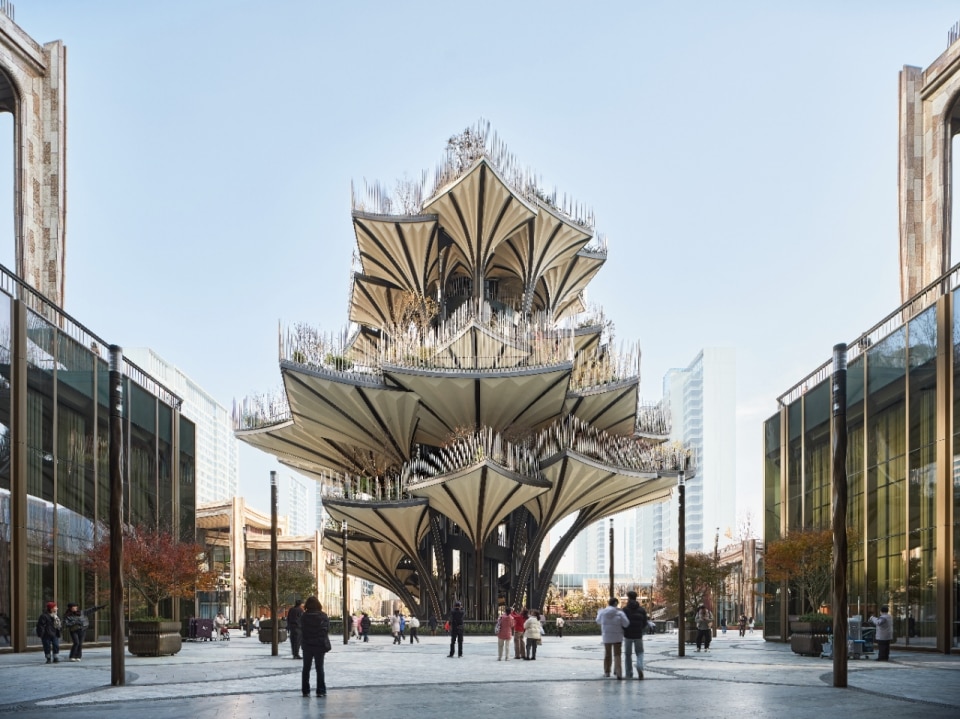
Sometimes, the thing you’re aware you’re bringing is just a sensitivity to the real values that a place could have, beyond just building big spaces. Often, at the beginning of a project, what we’re doing is developing a manifesto for it. Then you can test the design and architectural ideas as they evolve, and the landscape ideas, too. Rationally, you’ll probably get more customers if people feel good about coming there by themselves and feel safe, inspired and joyful. One of the most extreme examples is our project in Xi’an.
Yeah, the one with the big tree.
We designed the whole district and managed to get the agreement not to put the shopping in the middle, but to push it to one side, and to have this street that aligns with the 3,000-year-old tombs and the old building that has a few emperors buried inside it. Then there’s the telecoms tower just to one side, which we manipulated to be a holder of the space, instead of sitting in the middle of the space. It’s a bit like when people ruin a great site by building their home in the middle of it instead of putting their home to one side. We had a plot area of 92,000 square metres and a total gross area of 615,000 square metres. By keeping the four towers as simple, rectangular volumes, we could focus on humanising the first four floors. All around were pretty dead towers. It came as quite a shock, given that Xi’an is the end of the Silk Road; it’s where the Terracotta Army is, and it was also the capital of China.
We almost turned the landscape inwards to distract from that more disappointing context. The other side of it was using ceramic, trying to use materials that had mass-scale imperfections. I’ve tried to reflect on why people like old places so much. How much of that is just about the textures of oldness, and how much is the design, the scale? What are the factors involved? One of the things that seems to have emerged from the neuroscience of my Humanise book, and the different researchers we’ve been speaking to since then, is that mass, predictable surfaces actually stress you out. I think one of the things that patina gives is visual complexity, but we don’t have the benefit of having 4,000-year-old materials. China has the most incredible ceramic factories where we could mass-produce ceramic with glazes, and make mass-scale imperfections affordable. That was another part of it to go alongside all the interlocking tables that make the context and the frame within which the Xi’an Tree sits.
Yeah, you have to emotionally prepare for that final space. Architecture is like film. You don’t give the most powerful shot at the very beginning. You need pauses, you need build up – you let people walk into it, not get thrown into it. That long corridor, those quiet spaces – they’re just helping you breathe. Then when you finally arrive, the emotion hits. That’s not wasting space. That’s storytelling.
We could flirt with you, because you could see your actual destination, but we wouldn’t let you get to it yet, because we made you earn it. You had to walk through and around, and then your emotion grows. You make people more excited to see something if you don’t give it to them immediately. Often, architects talk about the inside of buildings, but I think we don’t talk enough about the outsides of our buildings, and what they give or invite for people who will never work or live there, or who will never buy anything there.
You talk about emotion, about public space. That’s exactly what I mean to say. In the past, when we judged a space, we counted heads, calculated foot traffic, looked at how hospitable it was. But few ever asked: what does it make people feel? What inspiration does it give them? The meaning of architecture has never been about how many people it can hold, but about how many hearts it can move. Your work has always proven this.
Modernism got some things right, but it also got some things wrong, and one of those was valuing the quantity of public space rather than its quality. And so often, big public spaces were intimidating, nobody loved them enough, they felt scary and became dumping grounds. Whereas actually, a smaller space, but with more care, love and an unexpected design, can be much more impactful. So I think it’s about quality, not quantity.
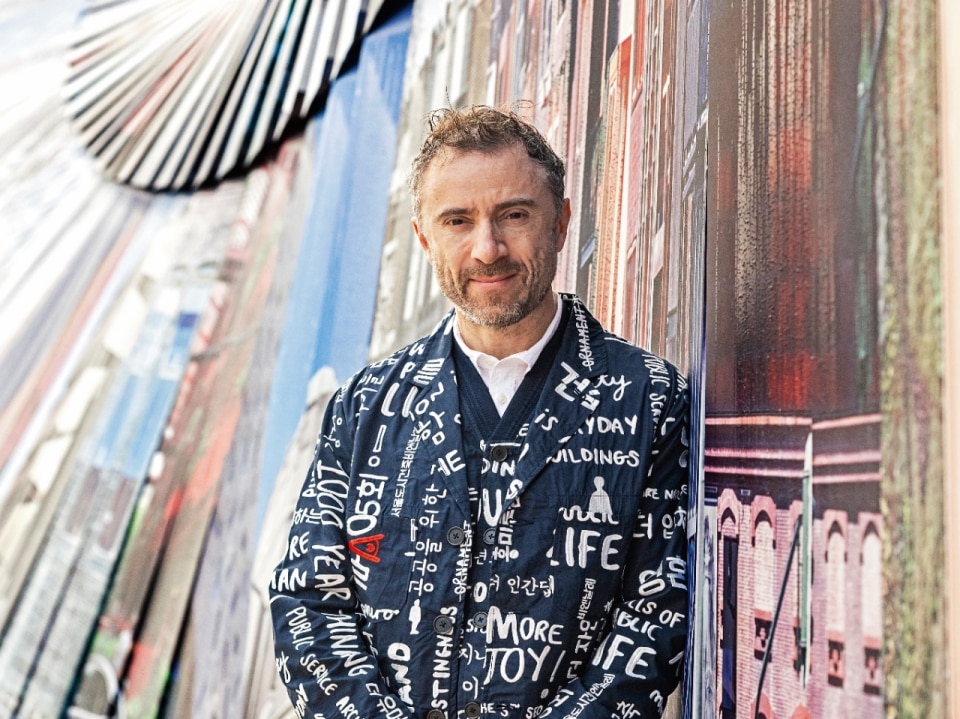
Opening image: Thomas Heatherwick. Photo Yongjoon Choi
.