


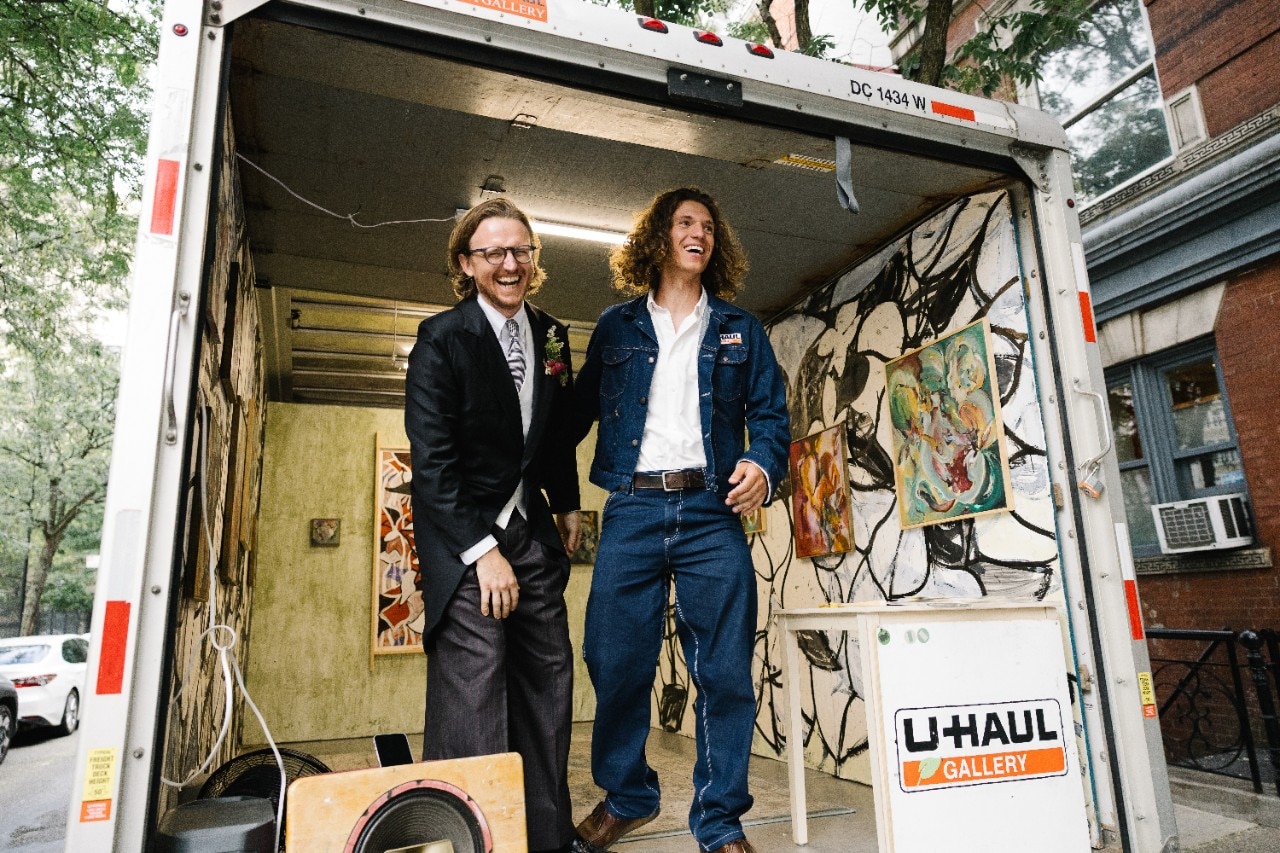

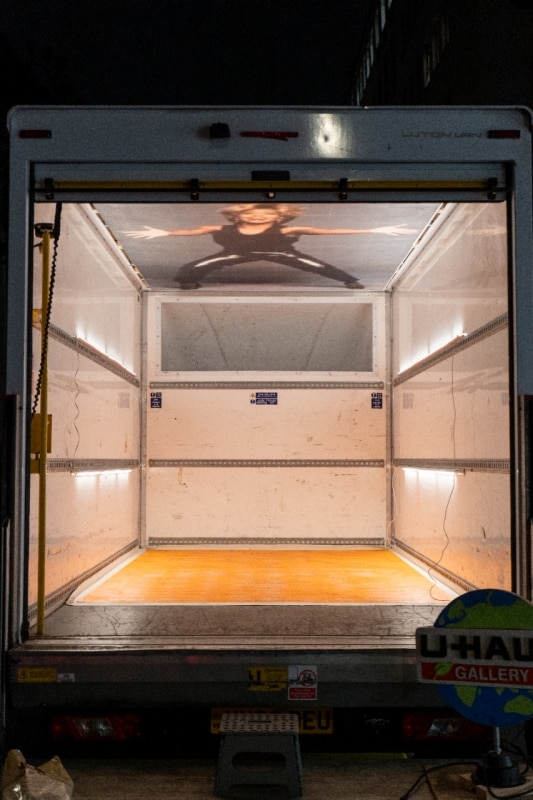


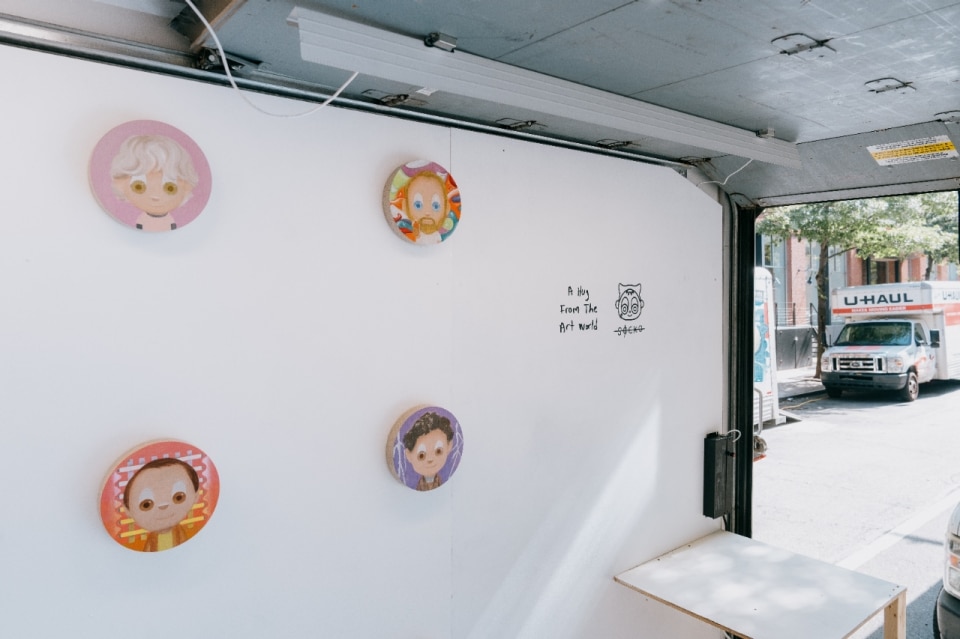
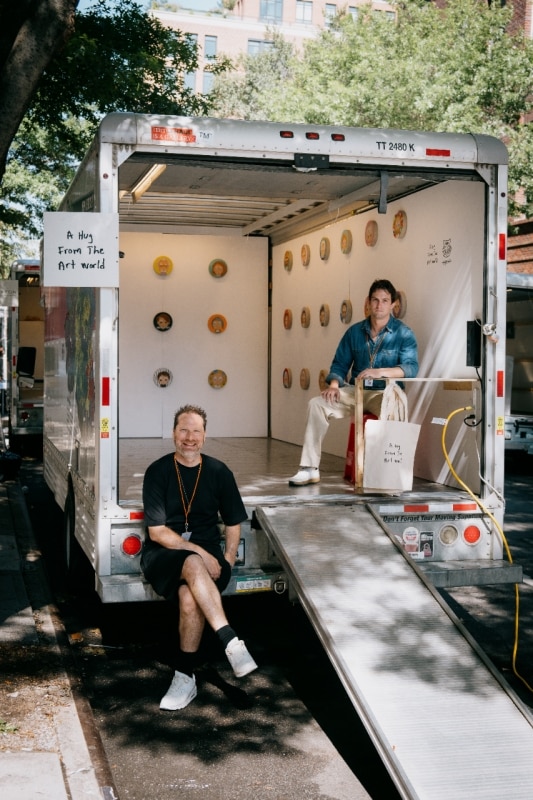
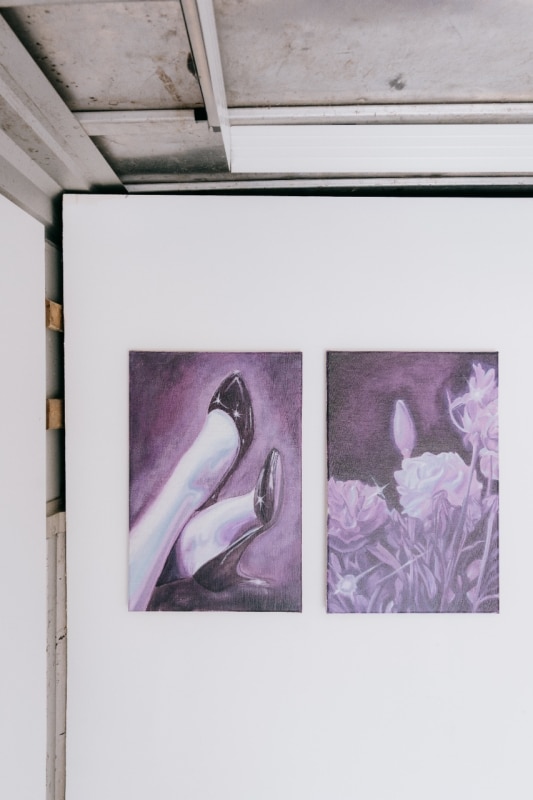
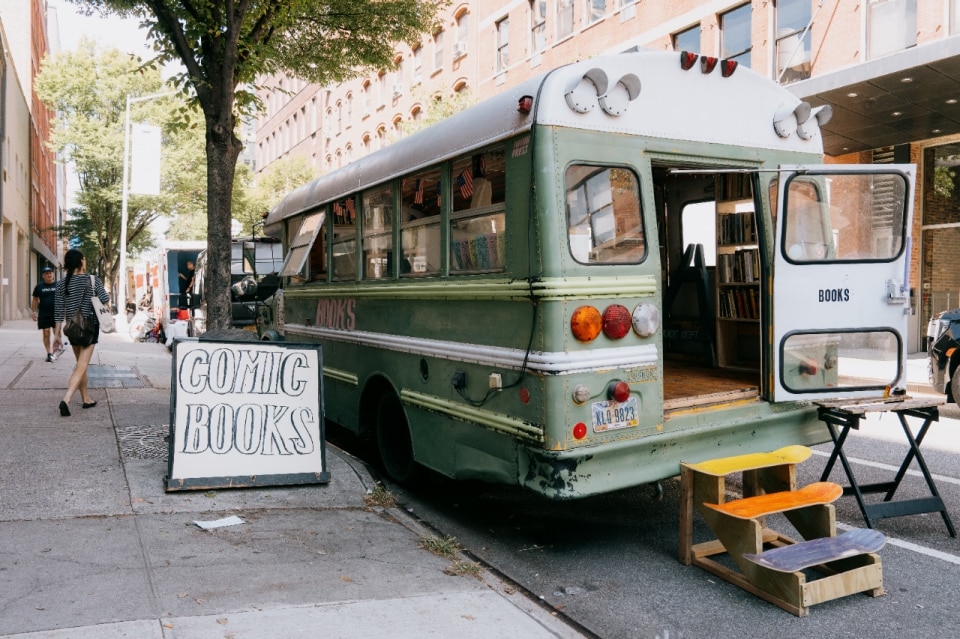
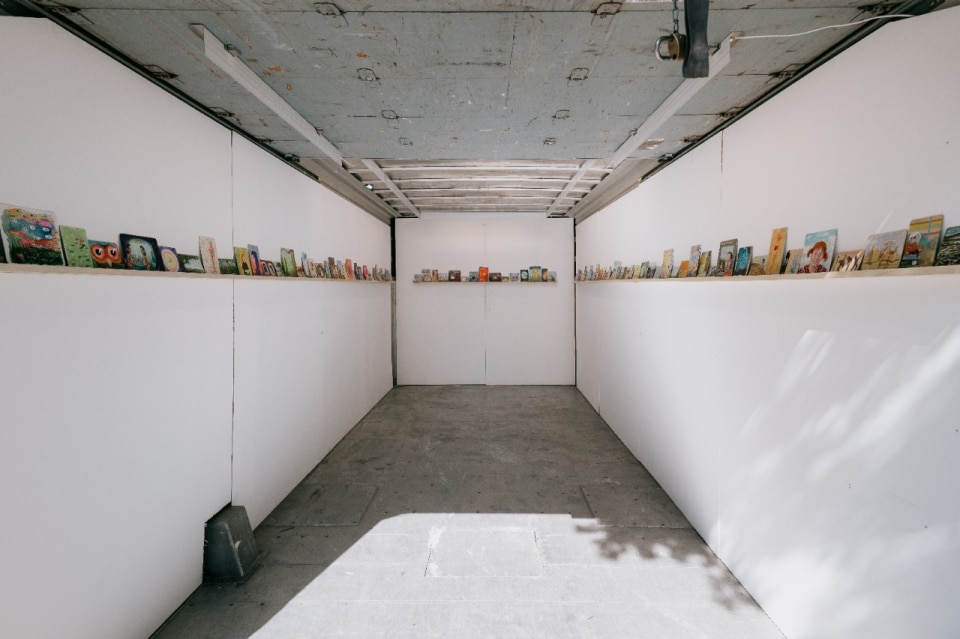
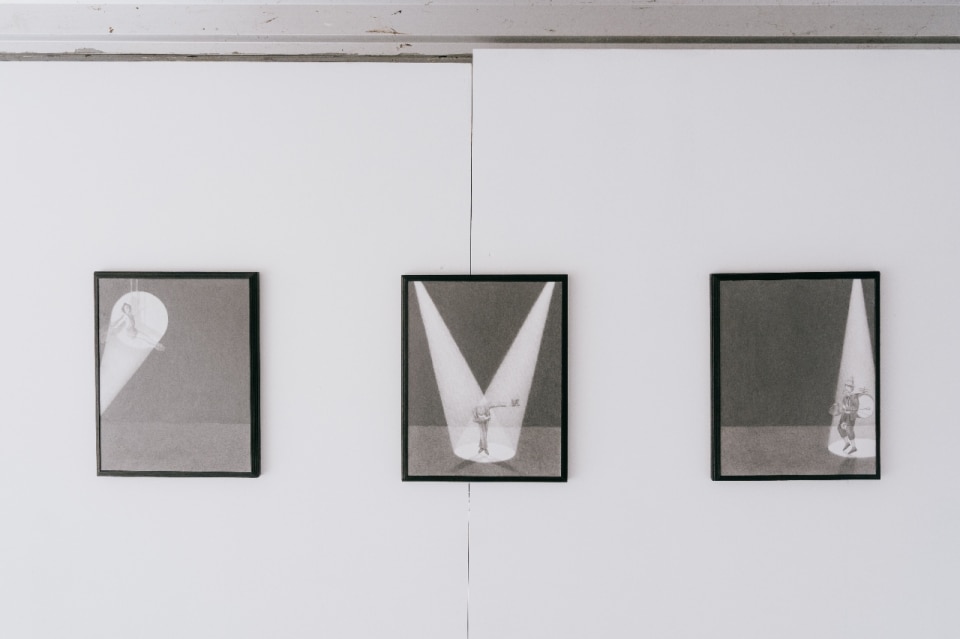
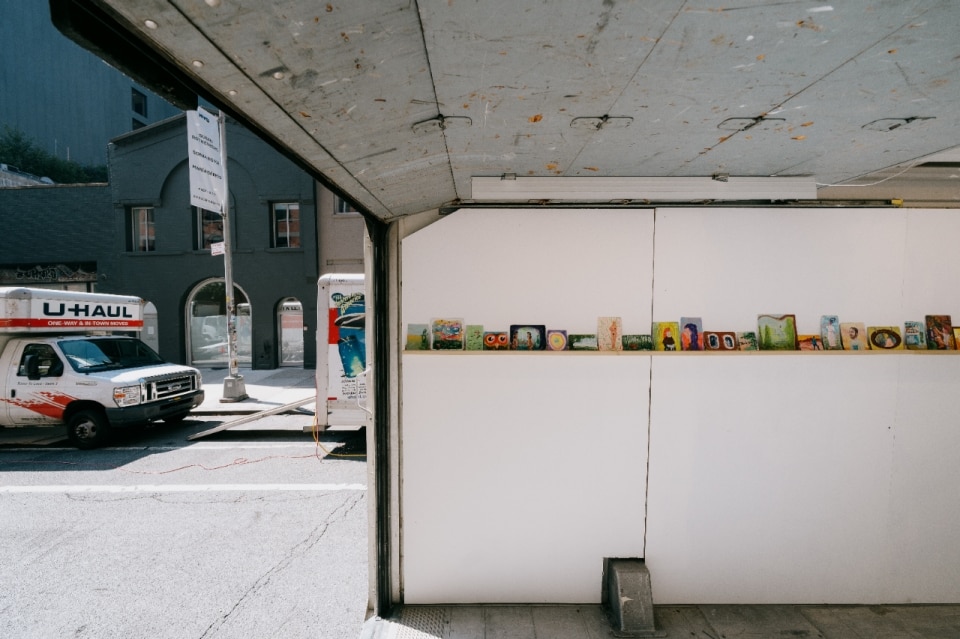
An art gallery inside a moving truck — or rather, several of them. U-Haul trucks, trailers, and vans, ubiquitous across the U.S. and typically used for DIY moving, have become the setting for everything: packing, storage, exhibition, and even sales.
The nomadic project is run by James Sundquist and Jack Chase, both artists and curators with deep roots in the art world. Their story began in May 2024 in New York, has since rolled through major art fairs in Europe, and may well change how we think about showing and selling art.
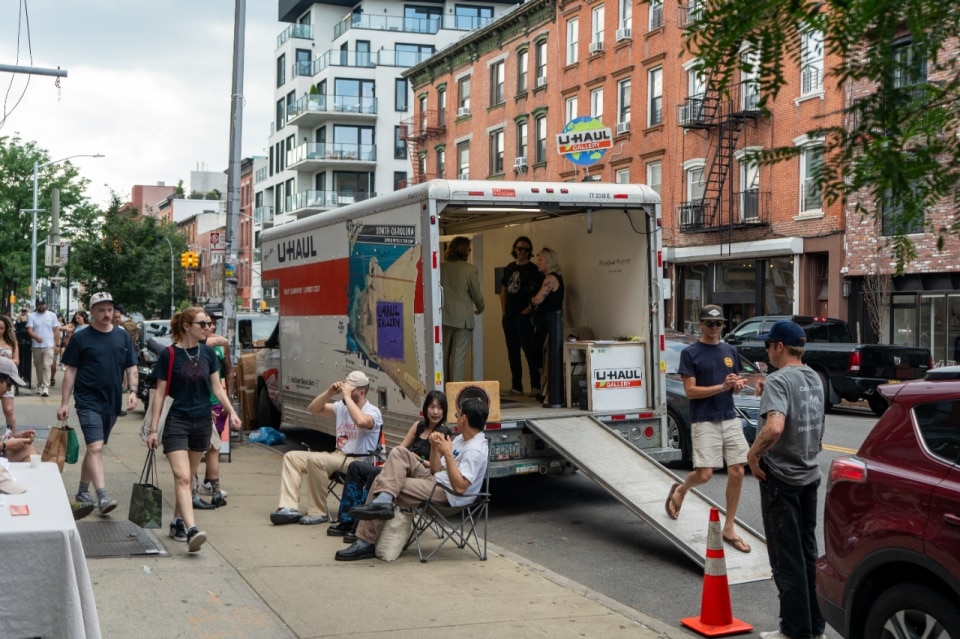
The “DIY Evangelists” taking on New York rents
“We are U-Haul evangelists spreading the gospel of DIY,” Sundquist and Chase tell Domus, describing their almost symbiotic relationship with the rental giant — which, with more than 24,000 pickup and drop-off locations across the U.S. and Canada, probably has no idea that these two gallerists have been using its trucks for over a year to mount itinerant exhibitions across American cities. “U-Haul does not pay us. We have not received any negative feedback from U-Haul.”
Every disadvantage is alchemized into an advantage. When we get parking tickets, we frame and sell them. When it rains, the show continues online where it never rains. When Frieze kicks us out, it validates what we are doing.
Sundquist and Chase are outsiders in an art system that, especially on the commercial side, is slowly eating itself alive: galleries struggle to renew themselves for millennial collectors, while those same collectors are buying less — and worse (remember the NFT craze?).
And then there’s rent. Because, yes, while art is a world of the already wealthy, it’s still a business where the numbers eventually need to add up. With New York housing costs sky-high, just imagine what it takes to rent and maintain a gallery space.
“The U-Haul Gallery was born out of a frustration with the New York City Time-Space-Money-Art paradigm,” they explain.
“Sundquist started the gallery in May 2024 after being scammed out of two-months rent by someone he was subleasing studio space from. Sundquist and friends had just started to build out that space with walls to create a workshop when they received notice to vacate. Those walls came down from the studio and straight into the back of a U-Haul where they became the walls of the first gallery show, ‘Delivery Included’, a group show.”
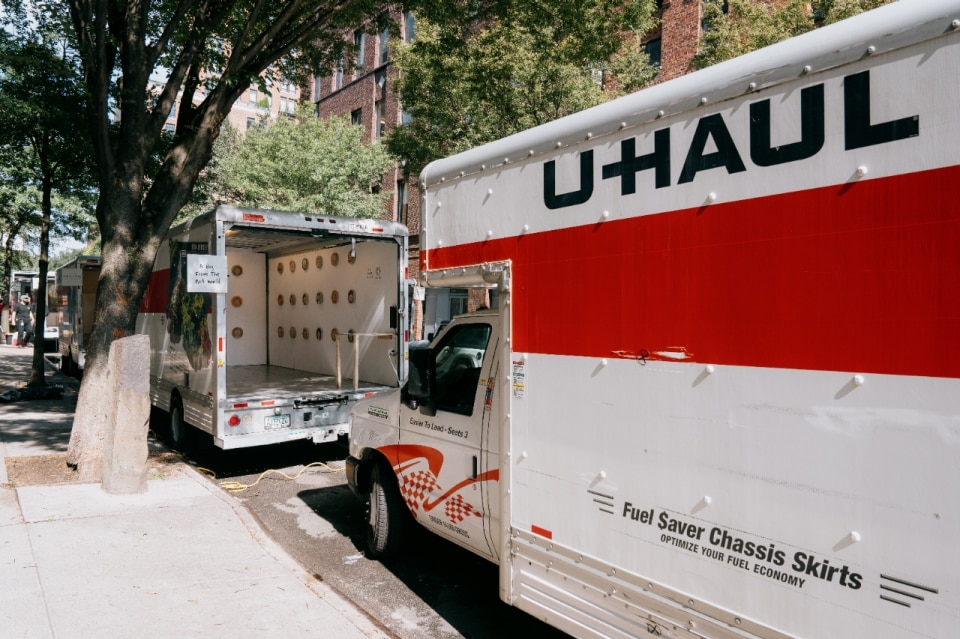
A gallery at $30 a day
“At $29.99/day, the U-Haul is undoubtedly the cheapest real estate in NYC and elsewhere. For that low rate, we can be in any neighborhood at any time. We escape the prohibitions of real-estate pricing while taking advantage of the prestige it creates in different areas. We steal back the power.”
From “Delivery Included” in May 2024 to their first appearance at Frieze Los Angeles the following February wasn’t a long journey — but it was packed with exhibitions exploring two main advantages.
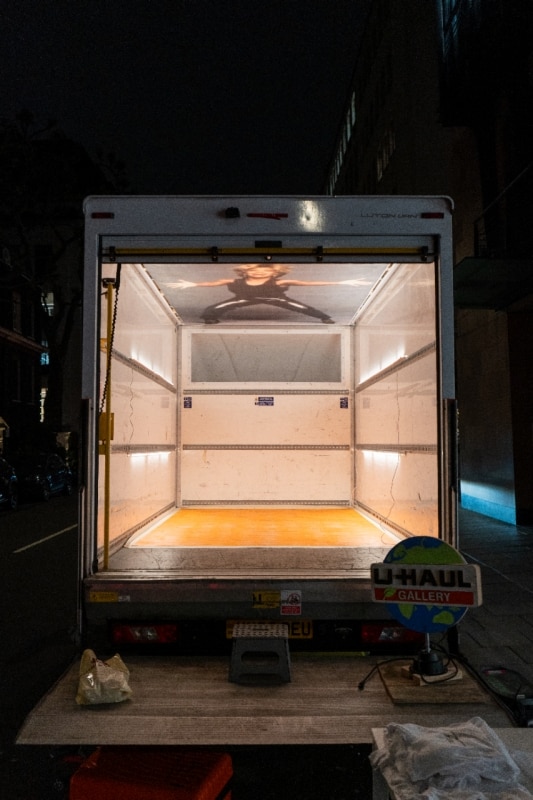
First, The U-Haul Gallery has almost no overhead. “With a brick and mortar gallery, you are paying a set rate for rent in a particular neighborhood. You are committed to a lease, insurance, utilities, and neighbors.”
Second, mobility itself becomes an artistic strategy: “Because we are mobile, location becomes a tool for us to speak to the content of the work we are showing. We can dream with the artist not only how the show looks on the inside, but when and where it will be seen. In this way, context is our medium, and the gallery is the vessel to explore it.”
Low costs also mean less financial risk — and more freedom to experiment. “Our lower overhead allows us to organize more ambitious projects. Ones that would typically be eschewed by traditional galleries for fear of their financial feasibility. We can take risks with the kind of work we show and how we show it.”
From a logistical standpoint, the process isn’t so different from a move: you go to a U-Haul location — which could be a gas station, an auto shop, a storage facility, often open 24/7 — and you rent.
NO PARKING means to us: GALLERY PARKING
Two of their best-known projects are U-Haul Art Fair and The Show of Stolen Goods. The first recalls the spirit of the Salon des Refusés — the 19th-century Paris exhibition for works rejected by the Academy. They organized it “using some elements of the typical fair model,” launching an open call and charging a small booth fee — though the booths, of course, were U-Haul trucks.
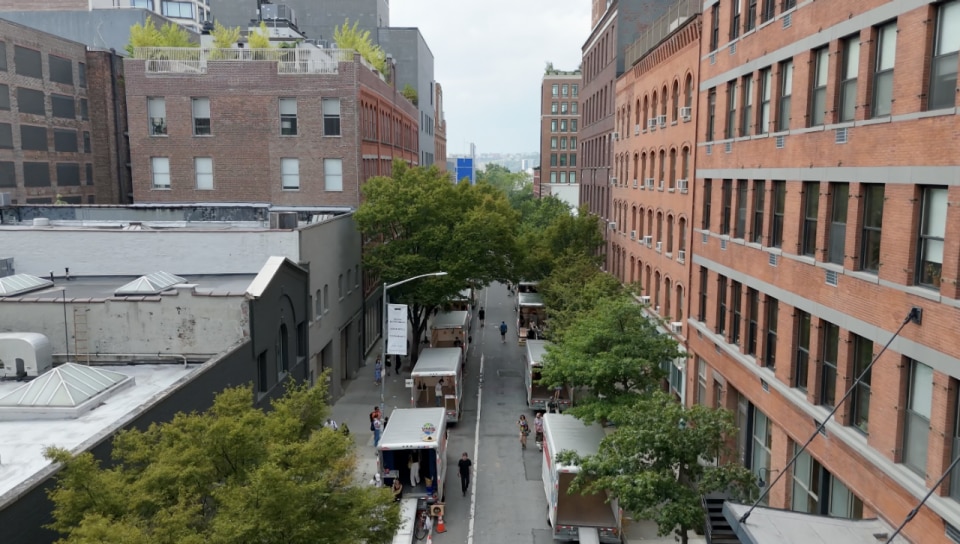
“We rented 12 trucks from 8 different locations across the NYC tri-state area, outfitted them with painted plywood walls and lighting, and provided exhibitors with a couple pieces of furniture and hand-painted gallery signage. The day before the fair we staged the trucks at 22nd Street, so exhibitors could install their booths”. To be clear, the 22nd Street is not just any street, but the heart of the New York art scene — one of the historic districts of contemporary art in the United States, where there are now over 400 galleries, including Hauser & Wirth and Dia Chelsea. And also, “a NO PARKING zone during the week”.
At $29.99/day, the U-Haul is undoubtedly the cheapest real estate in NYC and elsewhere.
The second, “The Show of Stolen Goods” — curated by Victoria Gill and Jack Chase — featured objects stolen or taken from workplaces. “We held our opening reception for that show at the steps of the Metropolitan Museum in NYC, the Home of over 1,000 Stolen Goods.” The exhibition playfully echoed debates about the restitution of looted artifacts from colonial times.
From U.S. Fairs to Europe: Frieze London and Art Basel Paris
From staging their own projects to crashing major art fairs like Frieze and The Armory Show, U-Haul Gallery didn’t take long to make noise. The duo has been kicked out of more than one parking lot outside the world’s biggest fairs.
“Every institutional interaction is a chance for us to gain strength and credibility, much like the Japanese martial art aikido we redirect our opponents offensive energy into a position of strength for ourselves. Every disadvantage is alchemized into an advantage. When we get parking tickets, we frame and sell them. When it rains, the show continues online where it never rains. When Frieze kicks us out, it validates what we are doing.”
Theirs is a kind of 1970s-style institutional critique reimagined for the Gen Z age — inclusive, irreverent, and very online. "Social media is a free tool that can offer incredible engagement which many art world galleries are not utilizing properly. They use it but with no creativity."
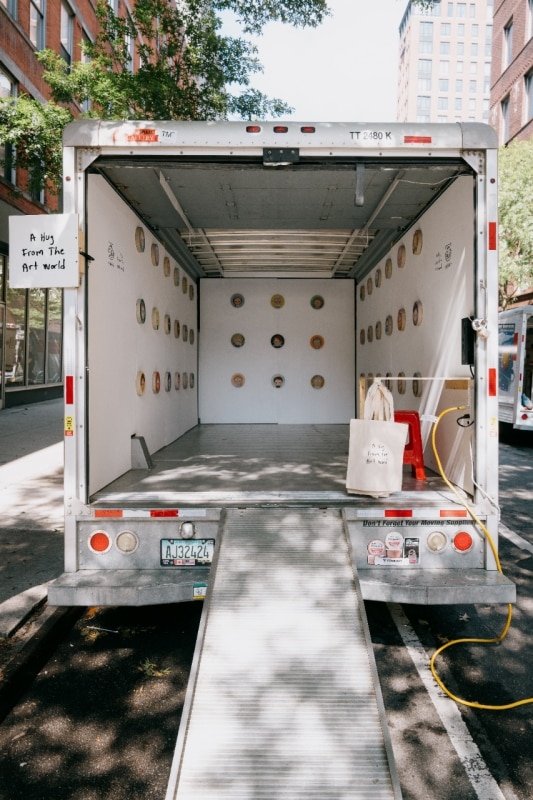
Soon, that principle — that every “No Parking” sign can mean “Gallery Parking” — will extend to Europe. “We did not register with Art Basel Paris or Frieze London. We intend to park outside the entrances to the fairs. If precedent holds, we are expecting to be kicked out of Frieze London by our friend Rae. Paris will mark our first interaction with Art Basel. We create our intent, we stake our claim, and the show begins.”
At Frieze London, in Berkeley Square — the heart of Mayfair — an U-Haul truck will host a solo show by painter Vladimir Umanets. Two works from his Ongoing series, where the artist invites the public to intervene on his evolving canvases, will be displayed alongside Chronicles, a film that delves into his philosophy — as radical as that of the gallery itself.
U-Haul Gallery's future involves a Rothko and Bob Dylan
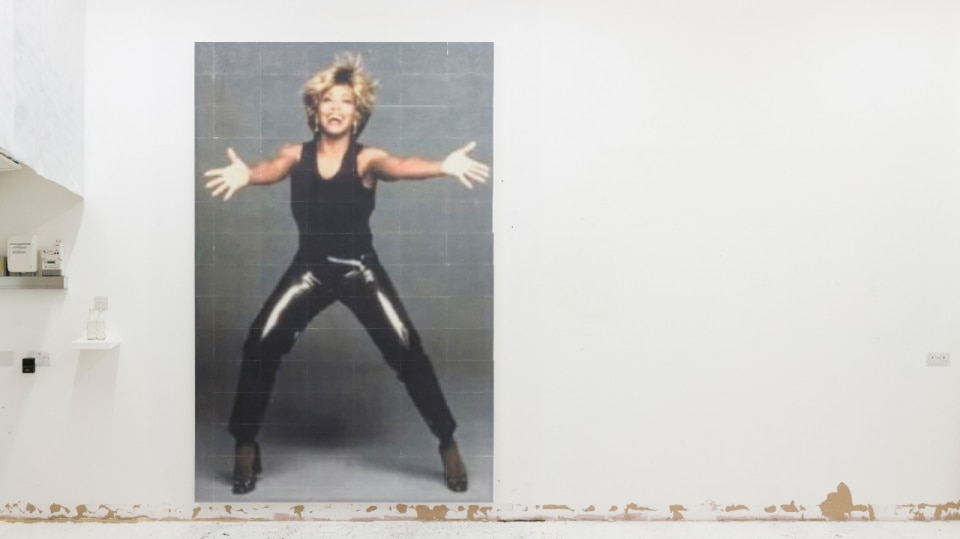
It’s too soon to know what U-Haul Gallery will bring next to Europe, but its mission statement already hints at an ambitious dream. “Deploying a Rothko in the back of the U-Haul will be the culmination of the conceptual project. Certifying that the properly outfitted U-Haul truck is a presentation space of equal caliber as a museum wall. After the Rothko, we will aim for a Serra to demonstrate our capacity for Mass.”
We held our opening reception for The Show of Stolen Goods at the steps of the Metropolitan Museum in NYC, the Home of over 1,000 Stolen Goods.
Meanwhile, as the blue-chip art world waits for the real-estate bubble to burst, Sundquist and Chase’s project is a reminder that art has always found strength in the absence of fixed spaces — and can still do so today.
When asked about their artistic and cultural reference points, their answer sums it all up: “Larry Gagosian, Mary Boone, Dave Hickey, Carnival Barkers, Bob Chase, Street Skaters, Patrick Murphy, The Pope, and Bob Dylan going Electric at Newport Folk Festival in 1965.”
And we all know what happened when Bob Dylan plugged in that electric guitar — he changed music history.