


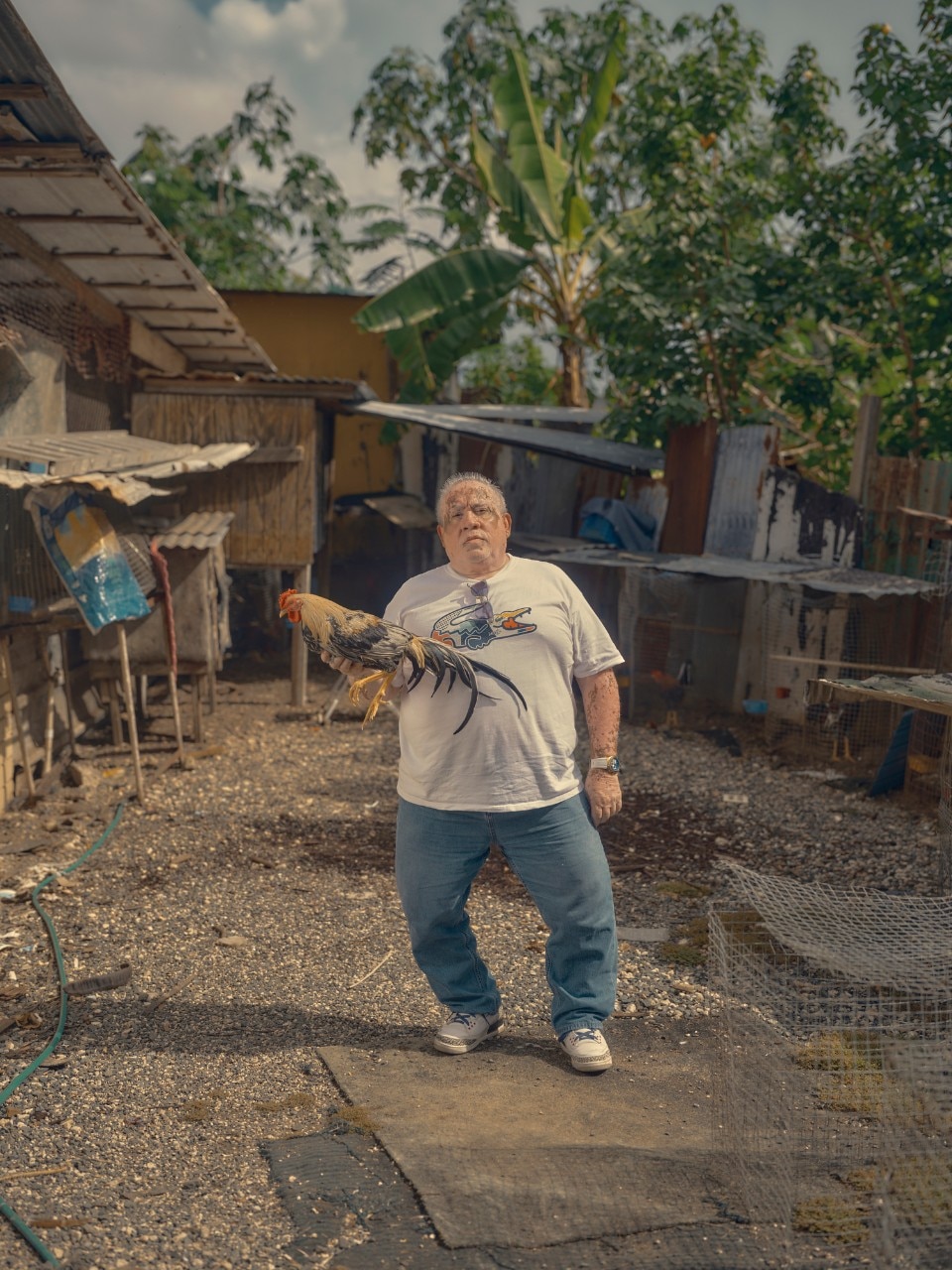

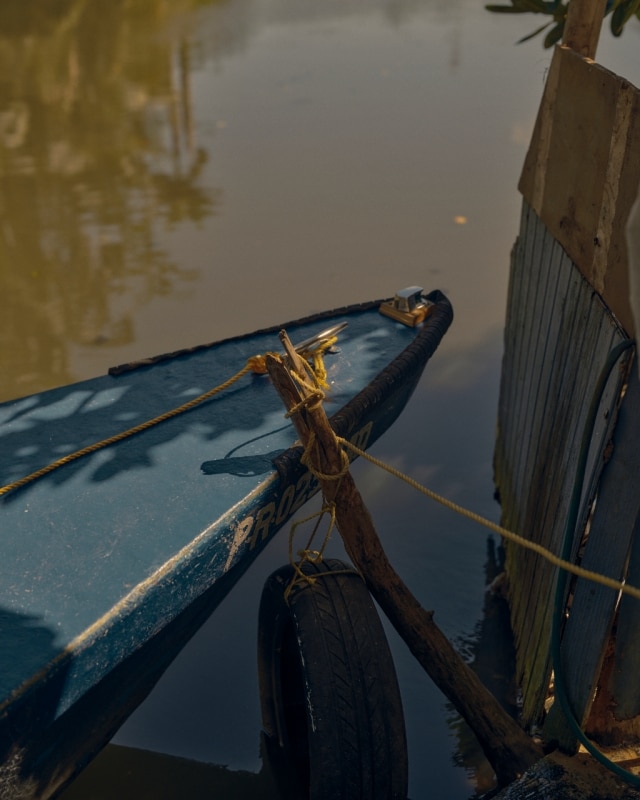
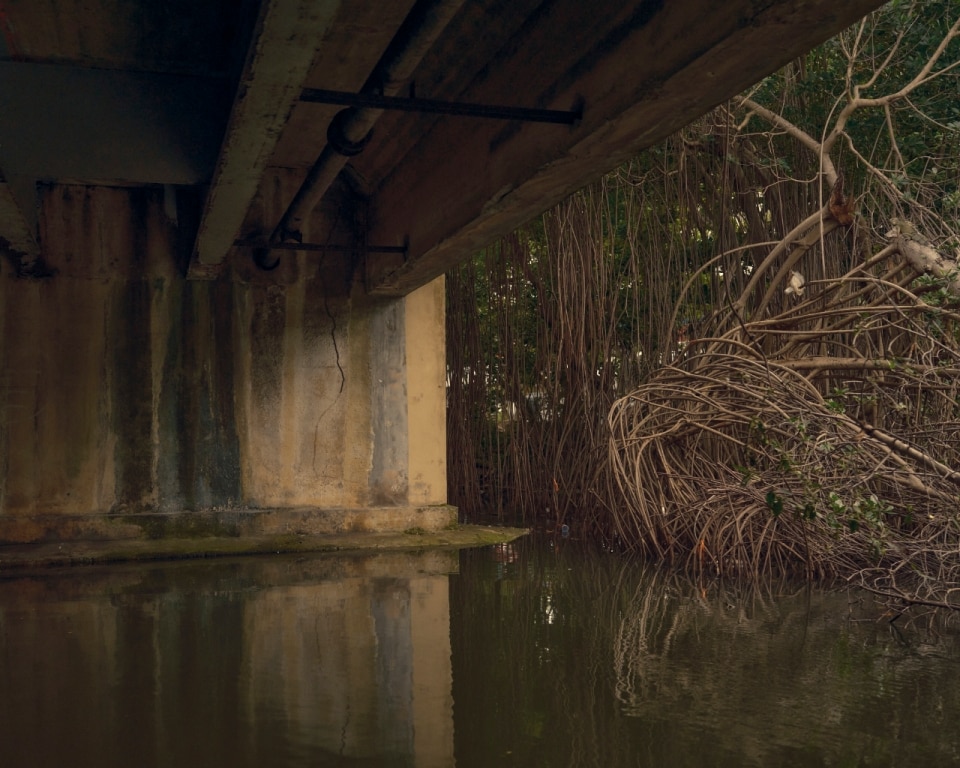
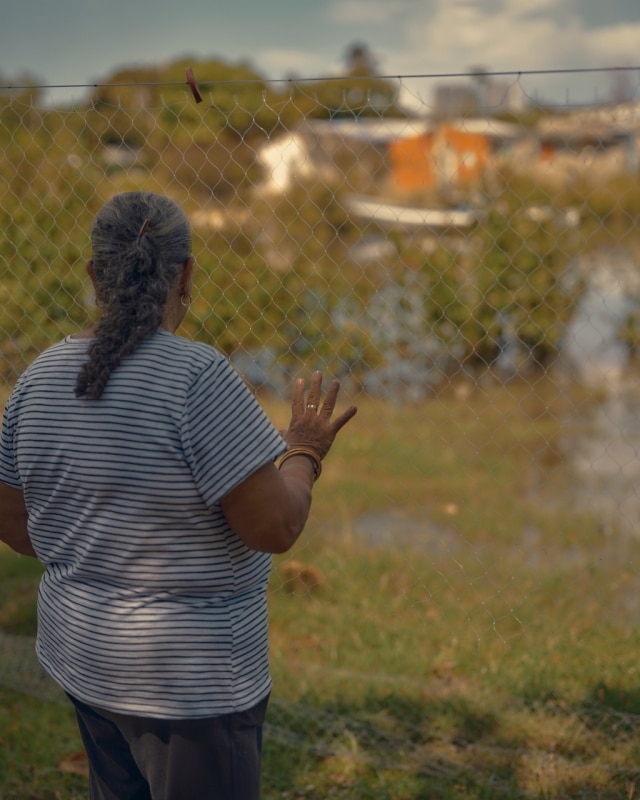
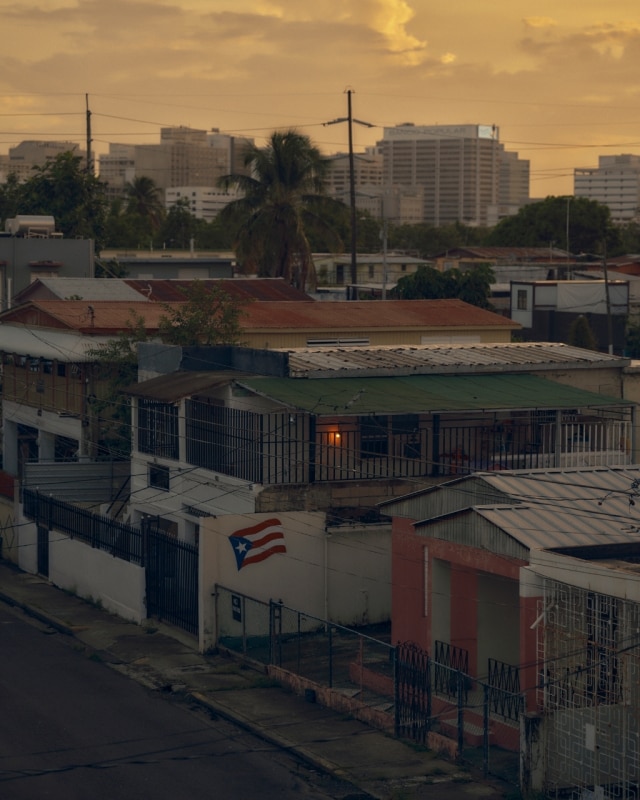
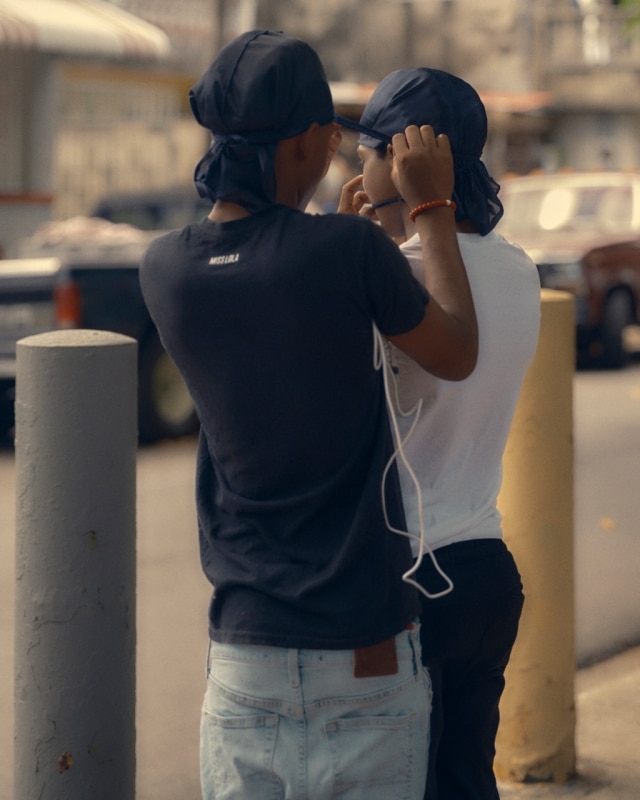
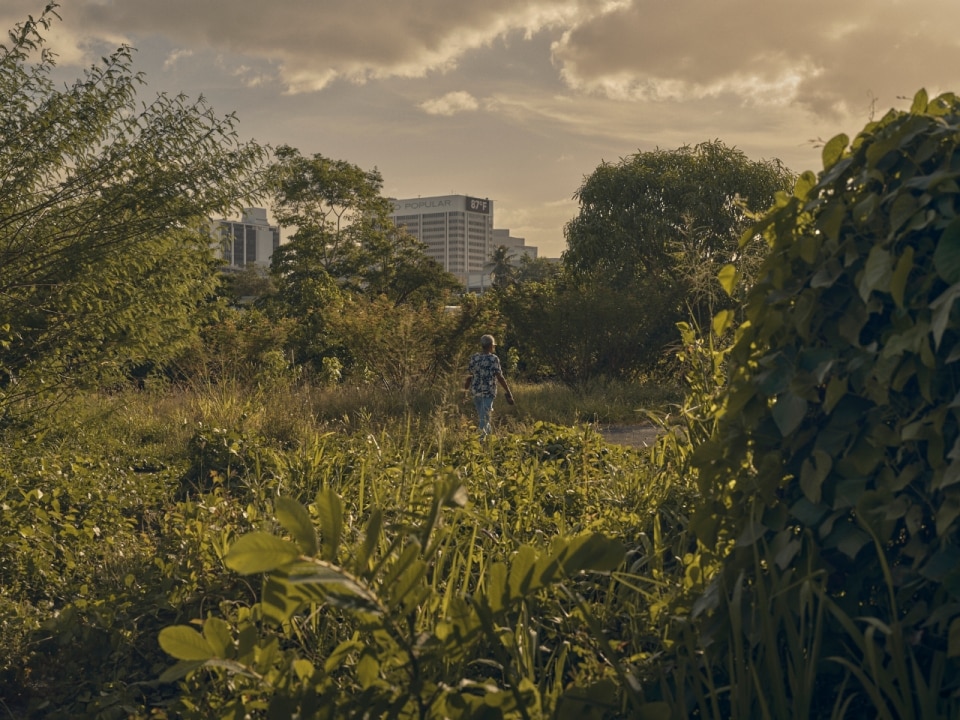
In San Juan, Puerto Rico, a contemporary art museum in a former high school hosts an intimate portrait show of the residents who have shaped — and been shaped by — Caño Martín Peña, the city’s clogged tidal channel. The Caño Martín Peña Land Trust, where these residents live, connects eight communities in protecting the land against developer and municipal interests. Documentary photographer Christopher Gregory Rivera enlisted locals to capture everyday life on land the community has preserved through collective stewardship in a show titled Sereno no me mandes a dormir.
Examining San Juan’s history reveals the poignant meaning behind the otherwise ordinary imagery in the exhibition. The canal at the heart of the Caño Martín Peña Land Trust was once abandoned as useless and plagued by malaria. In the first half of the 20th century, however, the area began to be inhabited by Black and Latino farmers and laborers seeking higher pay and new opportunities in the city. Fashioning wooden shanties above the swampy waters, they filled in the ground beneath with garbage and debris.
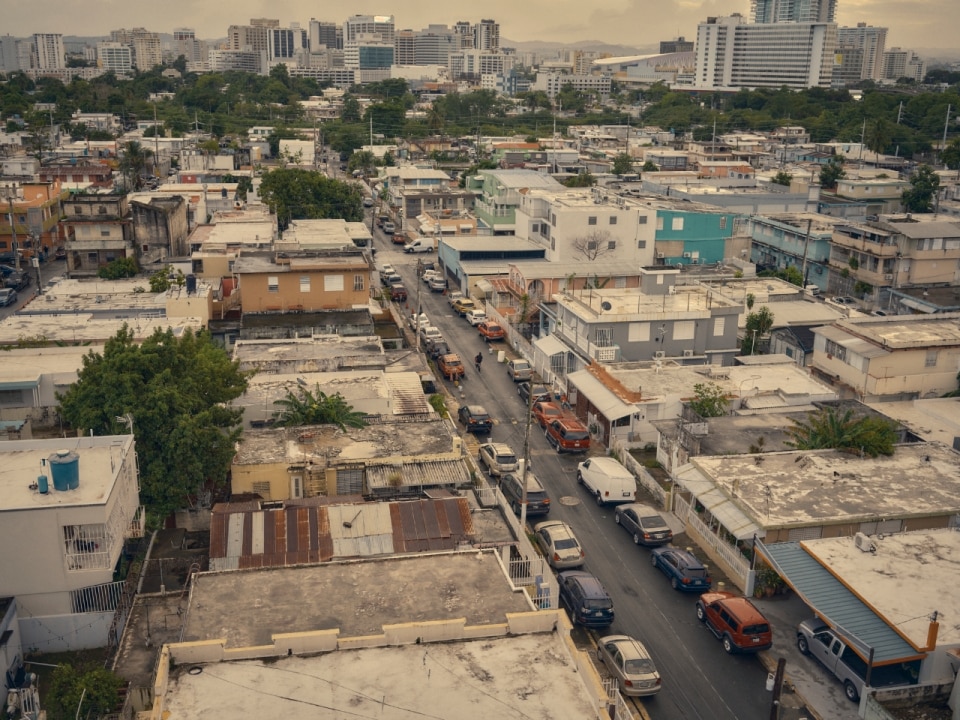
At the same time, and for decades, the canal became a receptacle for sewage and trash from the city at large. This was not a localized issue: pollution in the canal — which connects the Bay of San Juan in the west to the San Miguel Lagoon in the east — caused flooding across surrounding areas, including the Luis Muñoz Marín International Airport, the nation’s largest air hub.
From neglected canal to contested territory
As the undredged canal increasingly revealed itself as the source of citywide infrastructure failures, San Juan’s governmental approach shifted, reframing it from neglected infrastructure to valuable urban territory within the city’s real-estate economy. In the 1980s, developers began to recognize the value of land abutting the city’s banking artery, displacing residents from the eastern section of Caño Martín Peña.
Puerto Rico exists as an isthmus in Latin America — votes left uncounted, our infrastructure underfunded.
Abdiel Segarra, Museo de Arte Contemporáneo de Puerto Rico
In 2002, CMP residents began asserting political and legal authorship over the territory, drafting plans to resist relocation and the continued abuse of the land and canal. By 2004, after 700 community meetings, a corporatized coalition known as the G-8 (Grupo de las Ocho Comunidades Aledañas al Caño Martín Peña, Inc.) was formed. “We offered to dredge the canal ourselves against the will of the then governor,” said G-8 leaders. “The canal, however, could not be rehabilitated without input from the Army Corps of Engineers. We took things into our own hands, self-funding a comprehensive environmental review that the Corps was unable to deny.”
Community authorship against displacement
Segarra situates the project within Puerto Rico’s colonial administrative reality, where infrastructure is both chronically neglected and tightly controlled. “Puerto Rico exists as an isthmus in Latin America — votes left uncounted, infrastructure underfunded. But moments like these, when American administrative reach reminds us through the Army Corps of Engineers that we are technically a U.S. territory, reveal the limits of local sovereignty,” said Museo de Arte Contemporáneo associate curator Abdiel Segarra.
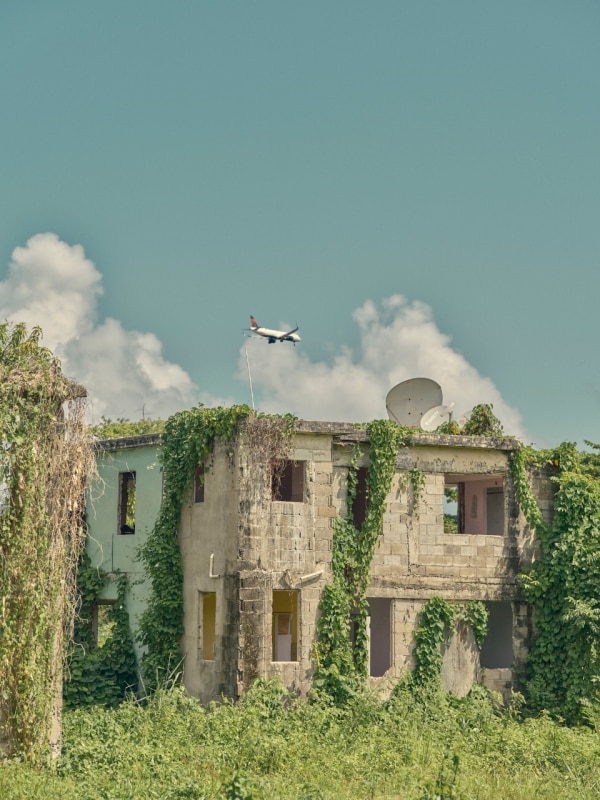
“Environmental scientists and architects, both within and outside the CMP, were engaged to translate community demands into a Comprehensive Development Plan — one that treated dredging, housing security, and flood mitigation as interdependent design problems,” said Rivera. “When presented to the Puerto Rican governor and the Army Corps of Engineers, officials were initially hesitant to accept the proposal.”
In 2016, the United Nations awarded the G-8’s activism and Comprehensive Development Plan a World Habitat Award, helping secure gubernatorial support and political backing from candidates seeking validation from the active voting bloc of over 20,000 residents within the CMP land trust community.
Exhibiting stewardship as spatial knowledge
“Today, the community is moving forward with plans to begin dredging the canal,” Segarra said, walking me through the basement corridor housing the exhibition.
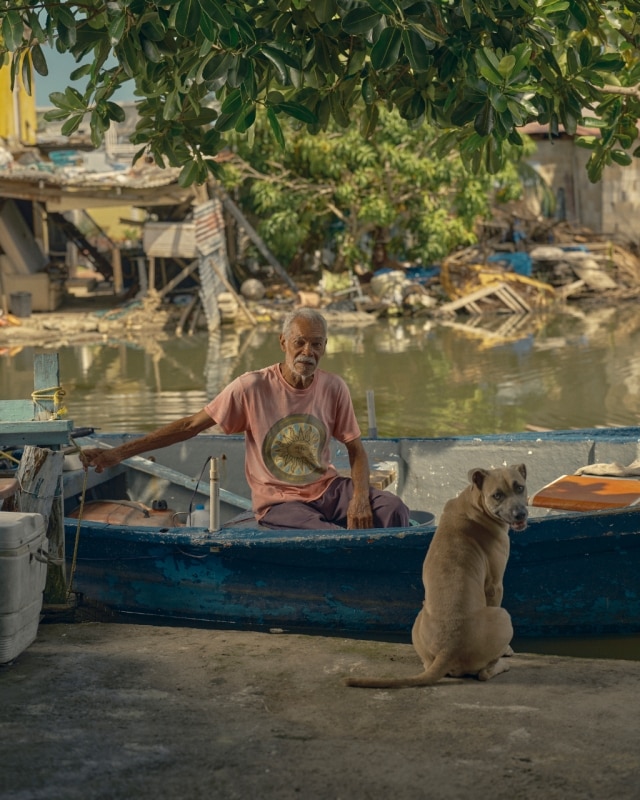
Rather than illustrating the canal’s crisis, the portraits function as a counter-map, documenting bodies, gestures, and everyday practices that have sustained an otherwise neglected urban system. In this sense, the exhibition operates less as representation than as a spatial tool, translating lived governance into visual form. Community ephemera and video testimonies extend this archive, revealing how land tenure and collective governance have functioned as protection against displacement, exclusion, and racialized precarity.
Environmental scientists and architects, both within and outside the CMP, were engaged to translate community demands into a Comprehensive Development Plan.
Christopher Gregory Rivera
The museum stands adjacent to a public high school, maintaining a porous relationship that allows students to circulate freely through its galleries. In doing so, the building acts as an educational extension of the neighborhood, foregrounding histories and spatial realities often obscured by San Juan’s tourism-driven urban narrative while acknowledging its own adaptive reuse.
Rethinking architecture through custodianship
The Caño Martín Peña Land Trust offers a pointed lesson in sustainable urban design. Flooding does not require vast pumping mechanisms or extractive engineering fixes — approaches often favored in climate-vulnerable regions such as Florida. Instead, the project demonstrates the legal, spatial, and custodial capacities of residents themselves. It challenges architecture’s reflex to outsource solutions, proposing land stewardship as a primary form of design intelligence. Most compellingly, Caño Martín Peña reframes authorship altogether, suggesting that architecture emerges not from dominance over terrain, but from sustained negotiation with it.
- Exhibition:
- “Sereno no me mandes a dormir” by Christopher Gregory-Rivera
- Curated by:
- Abdiel Segarra Ríos
- Where:
- Museo de Arte Contemporáneo de Puerto Rico (MAC)
- Dates:
- up until 26 January 2026