


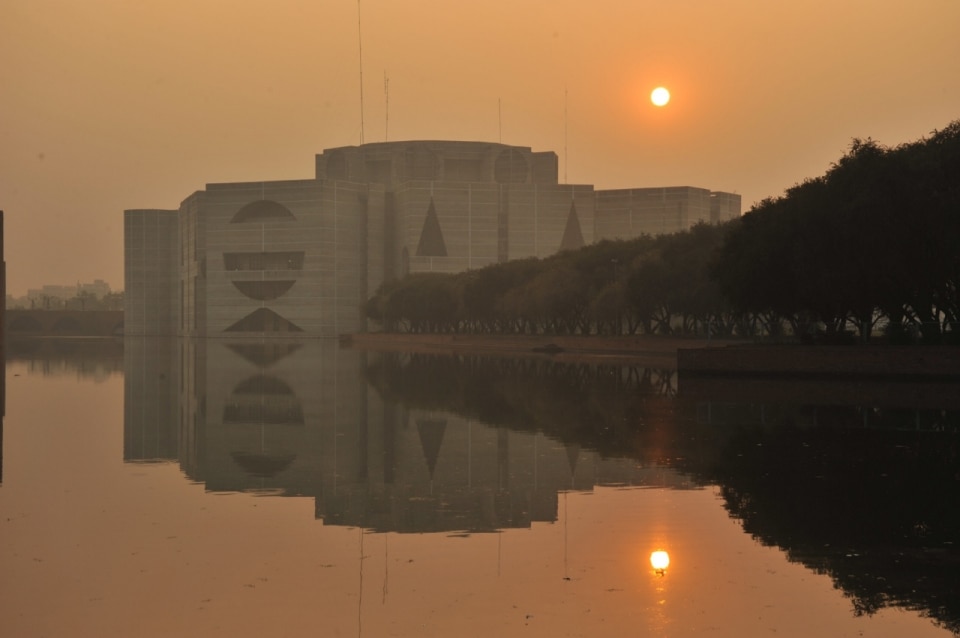
The halls of Dhaka’s National Assembly Building, known as the Jatiyo Sangsad Bhaban, have been empty for a long time. But on February 12, as Bangladesh holds its first elections since a mass uprising ended former Prime Minister Sheikh Hasina’s 15-year rule, the impressive brutalist structure designed by revered American architect Louis Kahn was once again filled with Bangladeshis.
One of the most extraordinary works of 20th-century architecture rises in Dhaka, Bangladesh. Fusing simplicity with disarming grandeur, the building was completed in 1982 in collaboration with local architects Muzharul Islam and Alam Syed Zahoor and represents post-independence modernist principles rooted in local Bangladeshi heritage just over a decade after Bangladesh gained independence in 1971 from Pakistan.
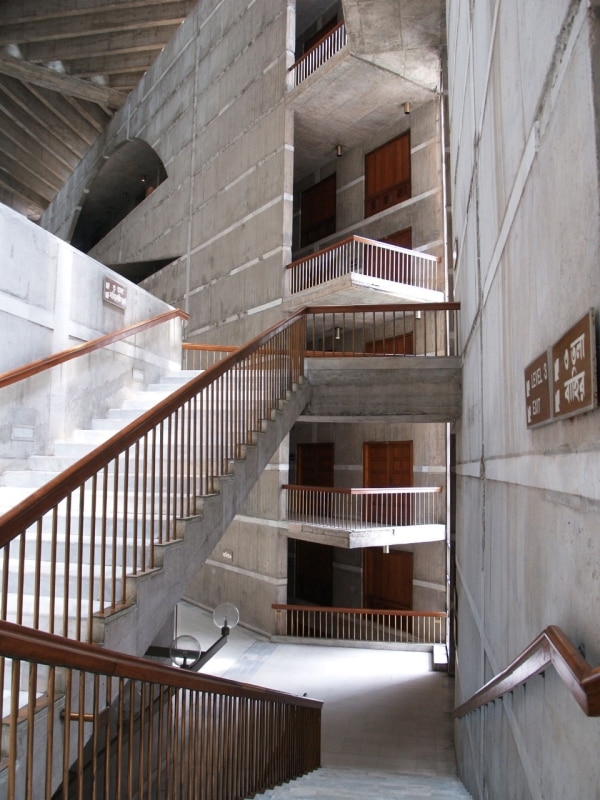
During a recent trip to Dhaka, Bangladesh, organized by the Durjoy Bangladesh Foundation, a non-profit foundation promoting the art and culture of Bangladesh and wider South Asia, I was able to visit Kahn’s mesmerizing structure just a few weeks before the country’s national elections. A masterclass in monumental geometrical design, journeying through the building’s numerous large halls, positioned around a central, octagonal, top-lit Assembly Chamber, as like entering a serene, monumental, and transcendent space where massive concrete, marble, and light converge. It offers a dramatic, almost spiritual experience, blending modernism with traditional Bengali elements through geometric shapes and light-filled, seven-story high, open, and airy interiors.
All material in nature, the mountains and the streams and the air and we, are made of Light.
The impressive structure sprawls over 200 acres (approximately 80 hectares), is 155-feet-high, comprising nine floors and featuring a central 354-seat assembly hall around which are surrounding offices stationed within a massive, geometric concrete building with white marble inlays that enhance its monumental and timeless feel.
What is notable as one walks through the edifice is how light and shadow form part of the architecture. Kahn treated light as a building material. For Dhaka’s National Assembly he used large, circular and triangular openings in the façade to act as devices to provide protective shade against the harshness of the sun and monsoon rains. These geometric voids, while connected to Dhaka’s natural environment, create striking aesthetic patterns where light and shade collide, reducing the hot rays of the sun while maximizing natural lighting. The effect offers a transcendent ambiance and illuminates the various rooms and hallways of the structure.
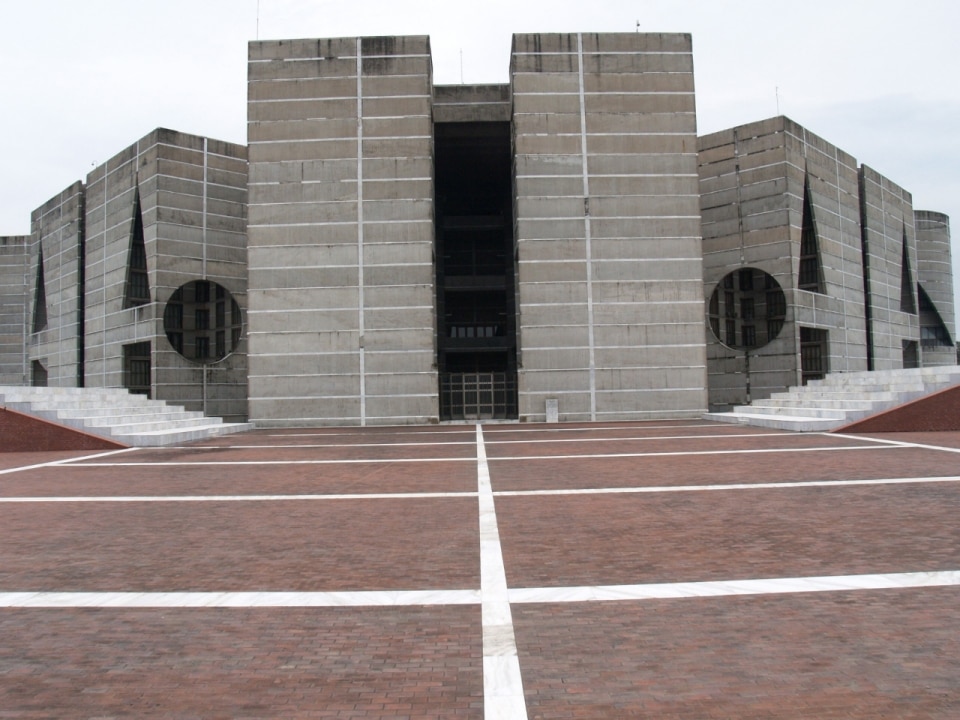
Khan employed a choreographic mastery of light within his complex spatial compositions.
“I sense Light as the giver of all presences, and material as spent Light,” Kahn once said. “What is made by Light casts a shadow, and the shadow belongs to Light [ …] All material in nature, the mountains and the streams and the air and we, are made of Light which has been spent, and this crumpled mass called material casts a shadow and the shadow belongs to Light."
To create the Jatiyo Sangsad Bhaban, Kahn studied local Bengali traditions to create a structure that was rooted in the Bangladeshi culture and landscape. He synthesized modern brutalist principles with the region’s specific climate-responsive and vernacular architecture characterized by its use of mud, bamboo, thatch and wood.
Kahn spent over one decade conceptualizing the design, drawing on his concern for light and monumentality while imbuing it with an almost mystical approach towards the incorporated forms and their organization. His research led him to spiritual interactions between geometric forms and crystals or mandalas—all of which can be found in the building.
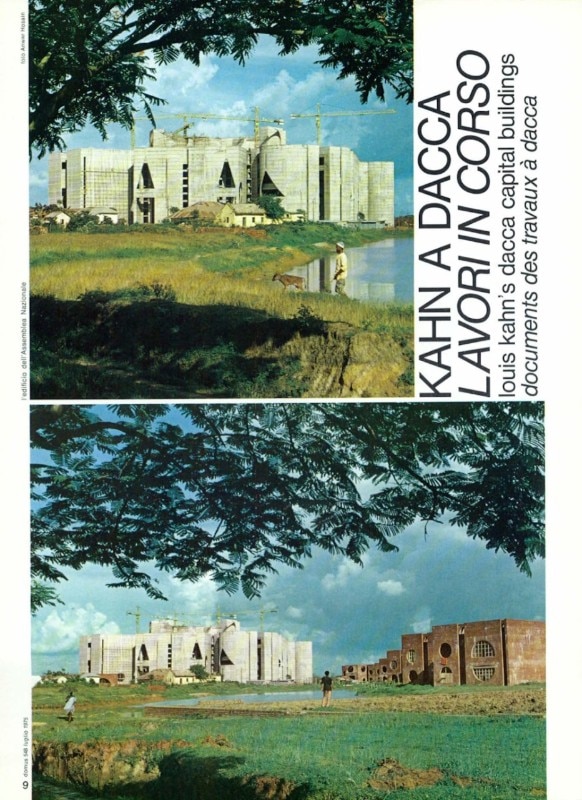
While the building’s structure and its monumental design is breathtaking and a reason alone to visit Dhaka, the history of its construction and what it represents in Bangladesh history is equally vital. Planning for the assembly building began in 1959 when Bangladesh was part of East Pakistan. Originally commissioned by Pakistan, it initially intended to serve the region as a second parliament house for the government of Pakistan, which was then headquartered in West Pakistan.
Pioneering Bengali architect Muzharul Islam was originally commissioned to design it but passed it on to Kahn who undertook the project alongside Kafiluddin Ahmed then chief engineer of the Public Works Department, who oversaw it. Construction began in 1962 and was completed in 1982 coinciding with Bangladesh’s emergence as an independent nation in 1971 and Kahn’s death in 1974. Completed under the supervision of Kahn’s colleague Henry Wilcots, it marked the young nation’s new parliamentary center.
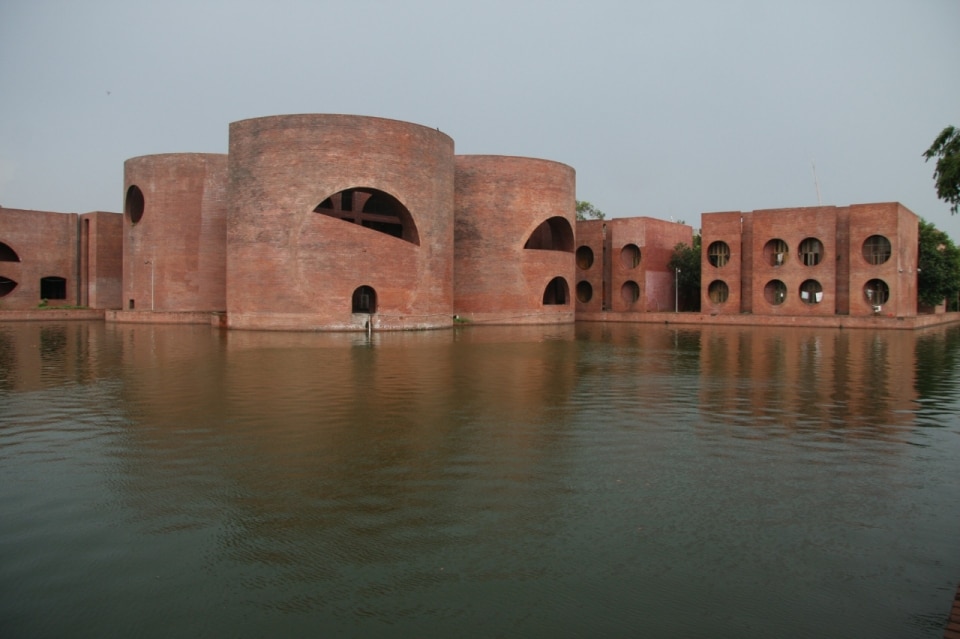
Kahn’s National Assembly Building in Dhaka, the Jatiyo Sangsad Bhaban, thus serves as the premier symbol of Bangladesh’s democracy, identity and independence. Its significance rings louder this month as Bangladeshi vote in a crucial election after a tumultuous period for the South Asian country. Kahn’s monumental structure, with its illuminated geometric patterns, offers again a transcendent symbol of hope and beauty and national unity for the people of Bangladesh.
All images: © Syed Zakir Hossain