



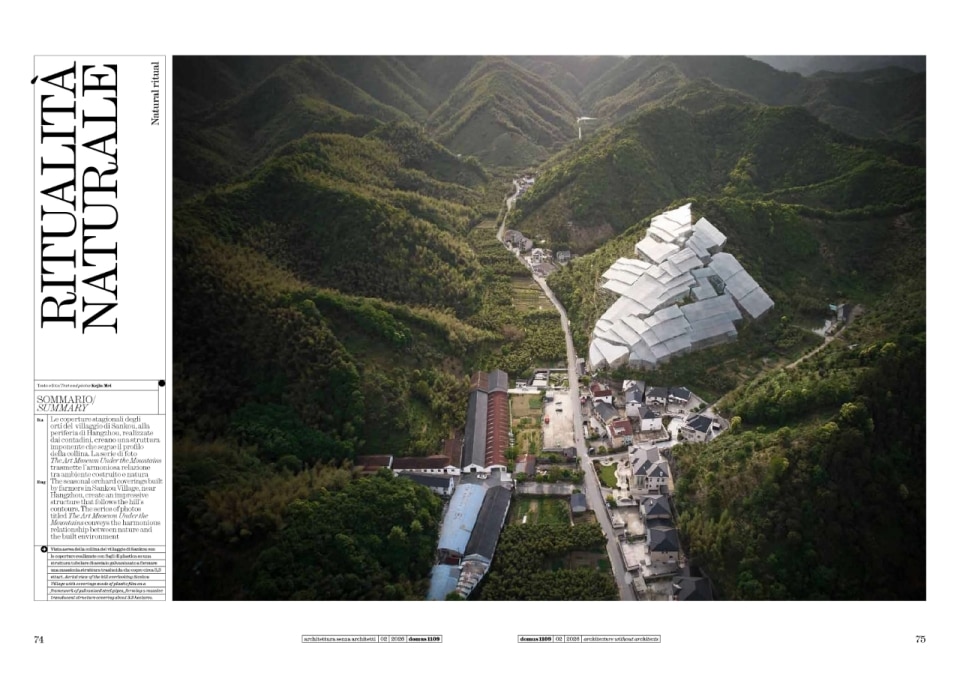
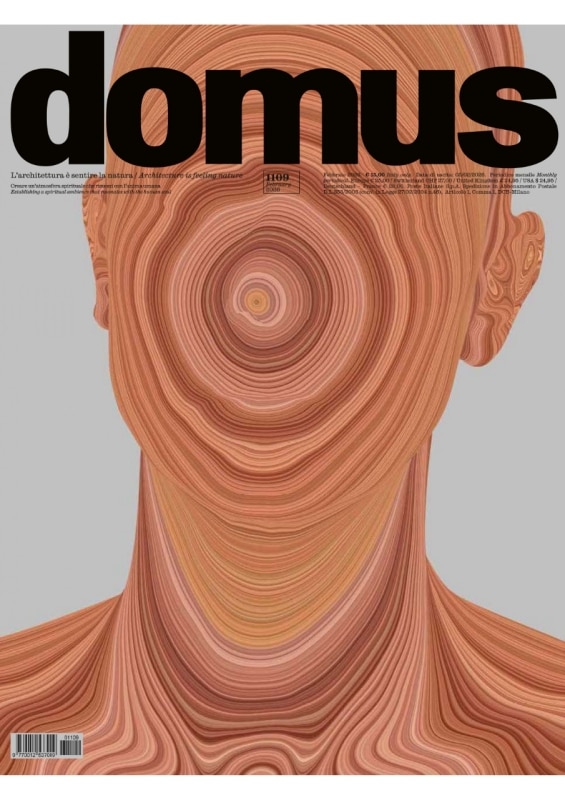
There is a precise moment when something snaps. Or rather: it shifts. Contemporary design has stopped chasing nature as a mere ornament, an aesthetic concession, and has begun to study it. To copy its processes, not its forms. Architecture that doesn't dialogue with nature, but behaves like nature. Adaptable. Circular. Regenerative. Words that sound like a manifesto, but here, in these pages, projects, and images, they take on a physical form.
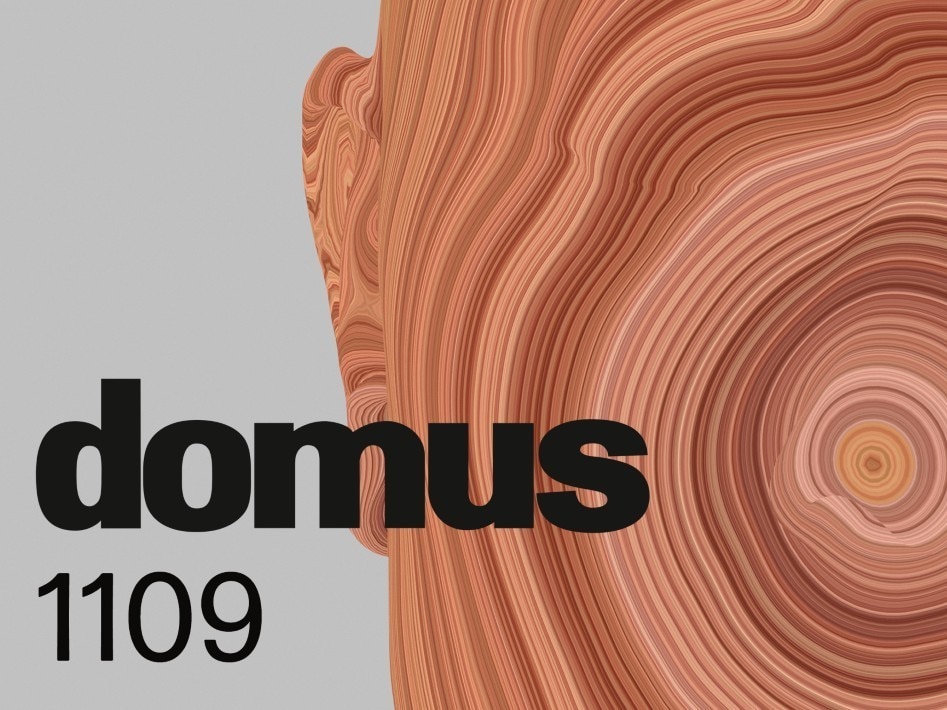
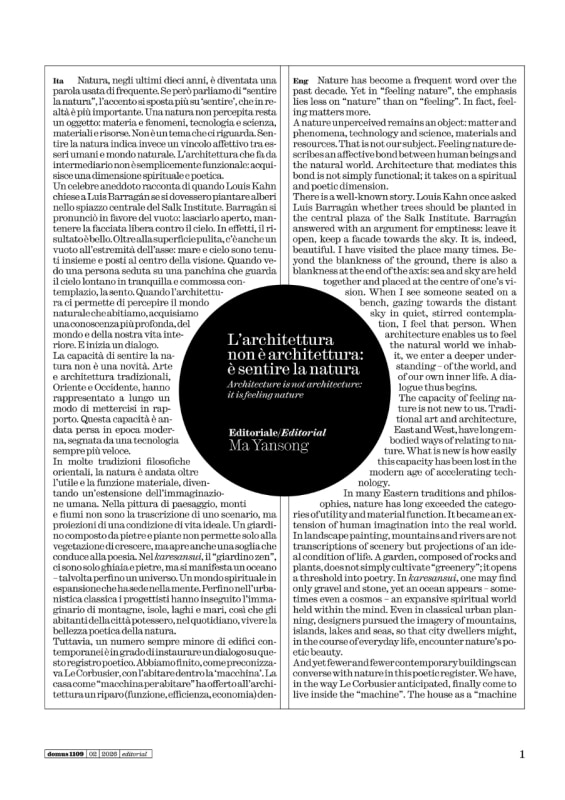
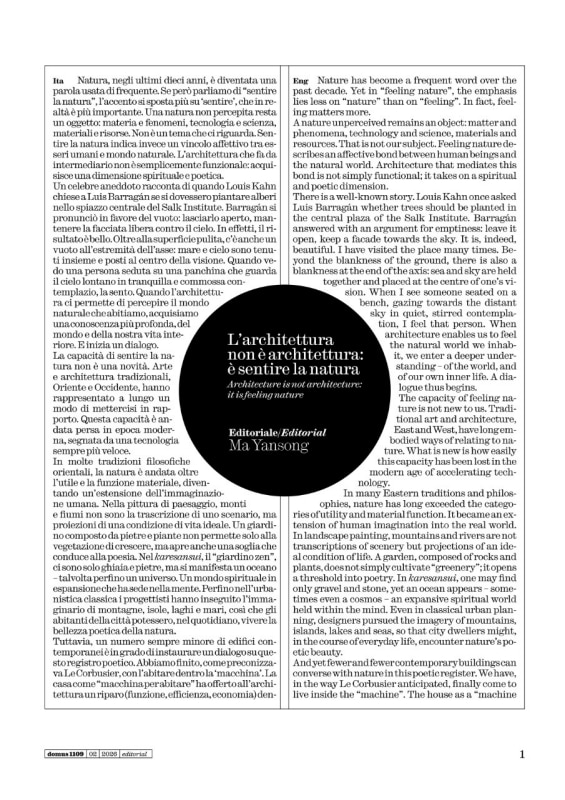
Domus 1109 hits newsstands, the February 2026 issue entrusted to Guest Editor Ma Yansong. In his opening editorial, Ma says it with disarming clarity: the point is no longer to give nature to architecture. It is to ensure that architecture learns from nature. That it inherits its logic. That it absorbs its silent intelligence, the kind that isn't seen but has worked for millennia. A course correction, indeed. Perhaps the only one possible.
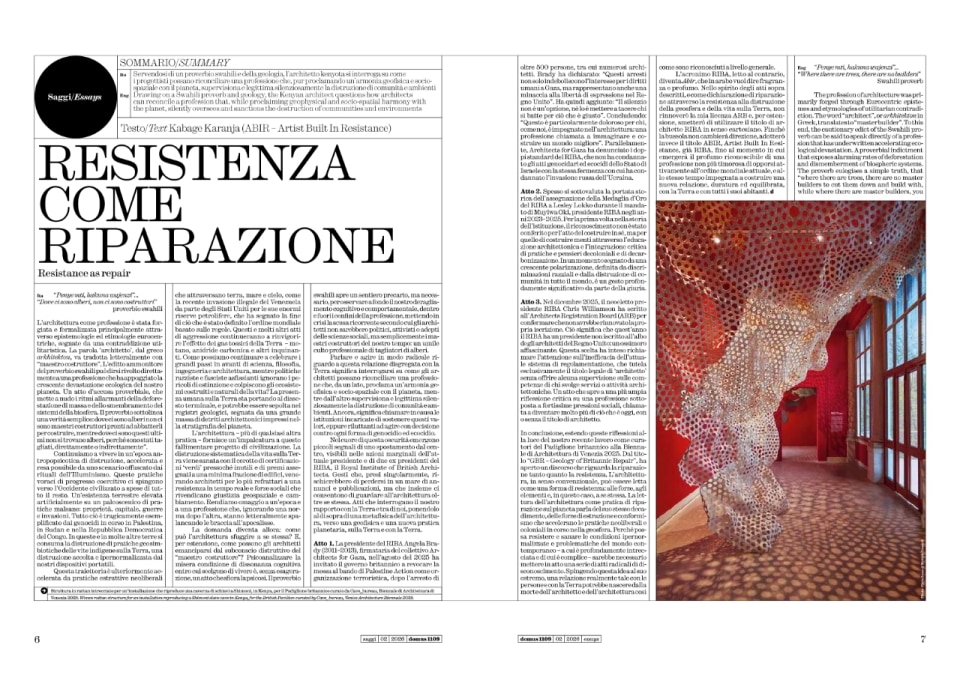
Kabage Karanja, Kenyan architect and co-founder of Cave_bureau, pens a searing essay titled "Resistance as Repair." Starting from a Swahili proverb – "Where there are trees, there are no builders" – Karanja indicts a profession that silently oversees and legitimizes the destruction of communities and environments. His proposal is as radical as it is necessary: to abandon the title of RIBA architect to adopt that of ABIR (Artist Built In Resistance).
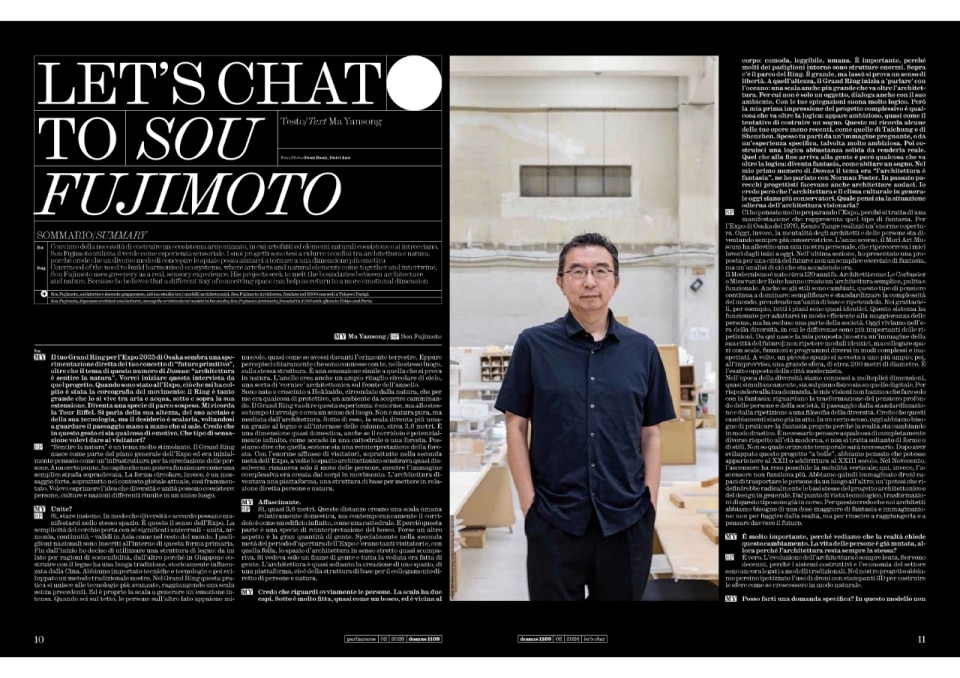
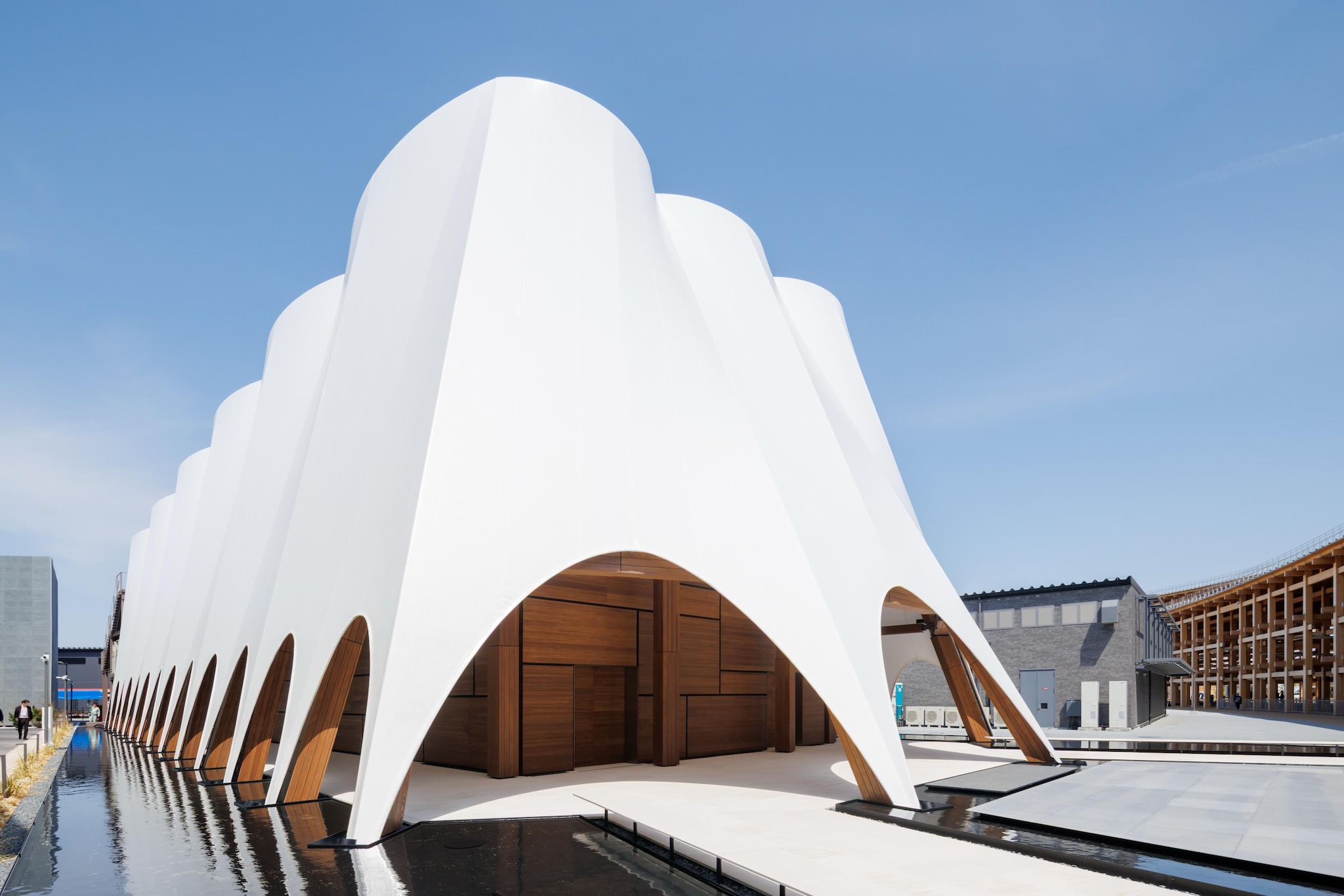
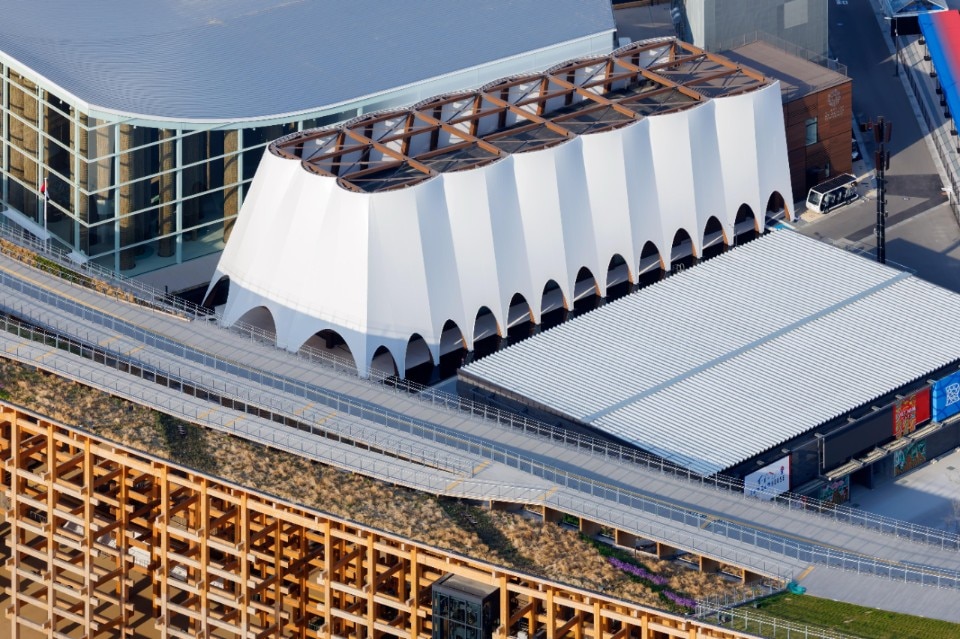
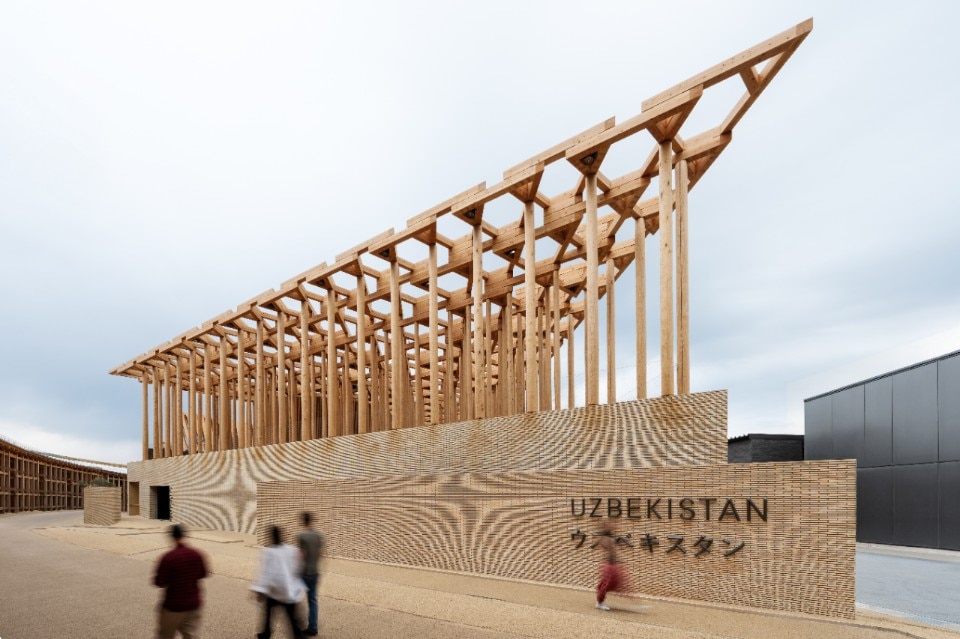
The dialogue between Ma Yansong and Sou Fujimoto represents one of the central moments of the issue. The two architects discuss the Grand Ring for the Osaka Expo 2025 – the largest timber building in the world with a surface area of 60,000 m² – as a phenomenological experience of nature. Fujimoto emphasizes how the ability to feel nature is not new: traditional art and architecture represented it for a long time. This ability was lost in the modern era, marked by increasingly fast technology.
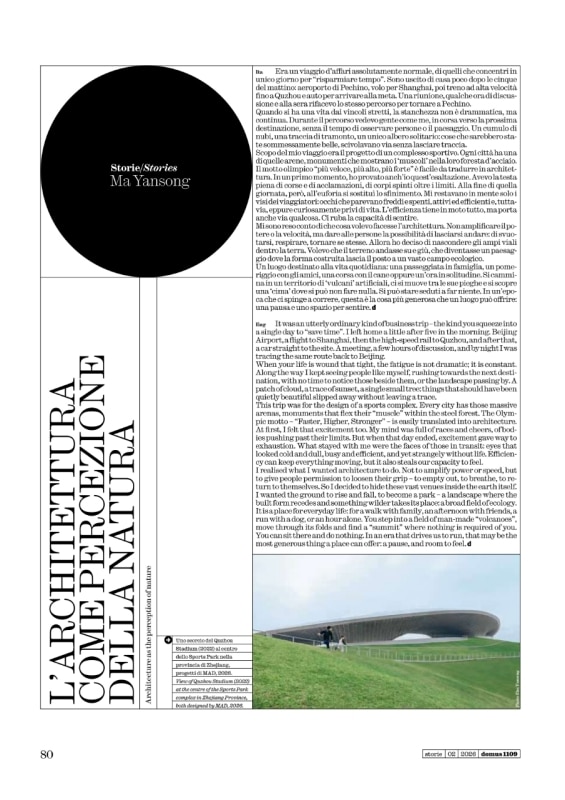
I realized what I wanted architecture to do. Not to amplify power or speed, but to give people the chance to let go.
Ma Yansong
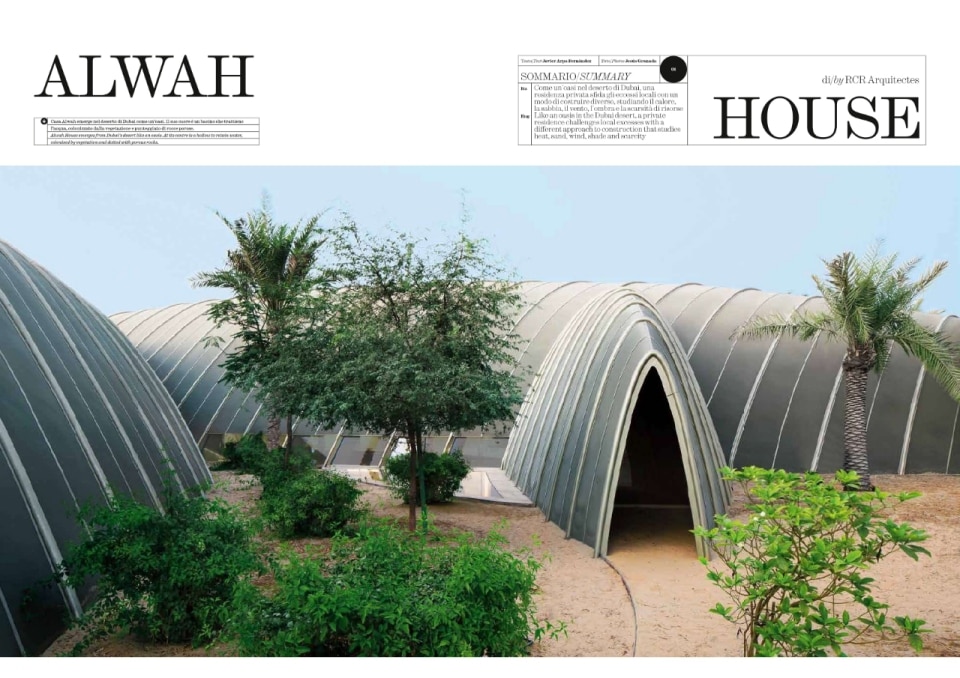
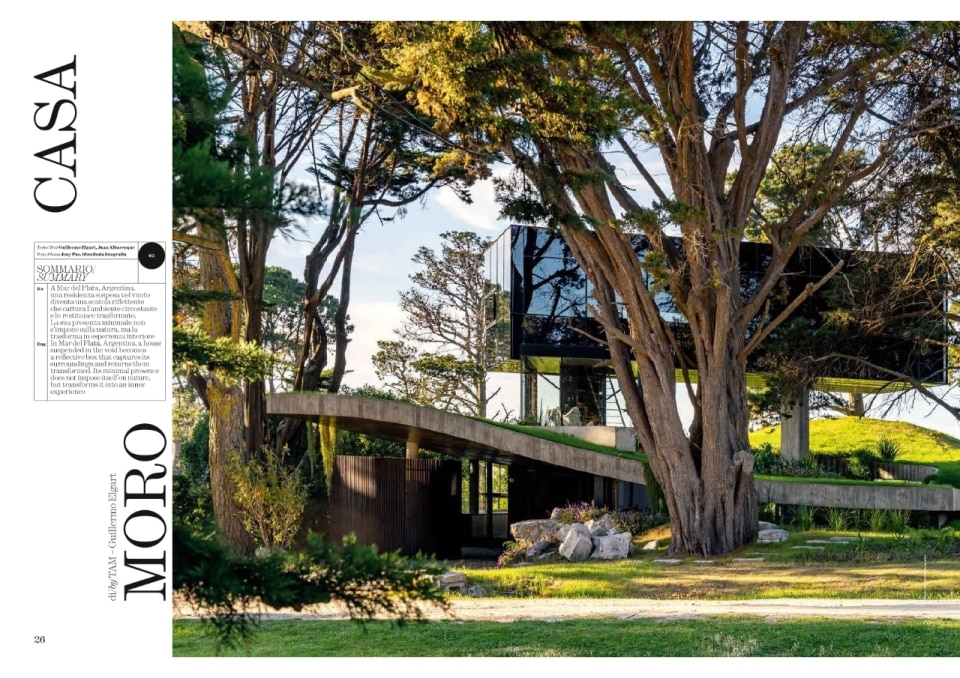
The projects documented in the issue constitute a true global atlas of the new sensitivity. In Dubai, RCR Arquitectes' Alwah House defies local excess with curved, partially submerged volumes reminiscent of desert rose petals, while a central basin conserves water, creating a microclimate built through depth, shade, and evaporation. In Argentina, Casa Moro in Mar del Plata proposes a nature understood as a mental and spiritual entity: a corrugated concrete mantle rests on the ground like a geological surface, while a reflective box floats among the trees, capturing and returning transformed fragments of the environment.





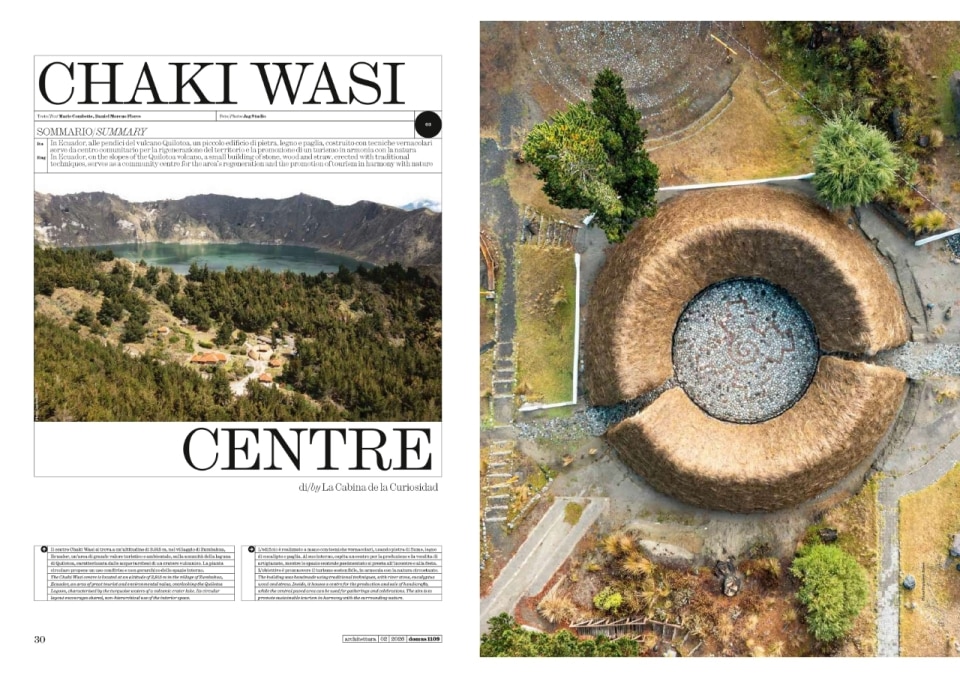
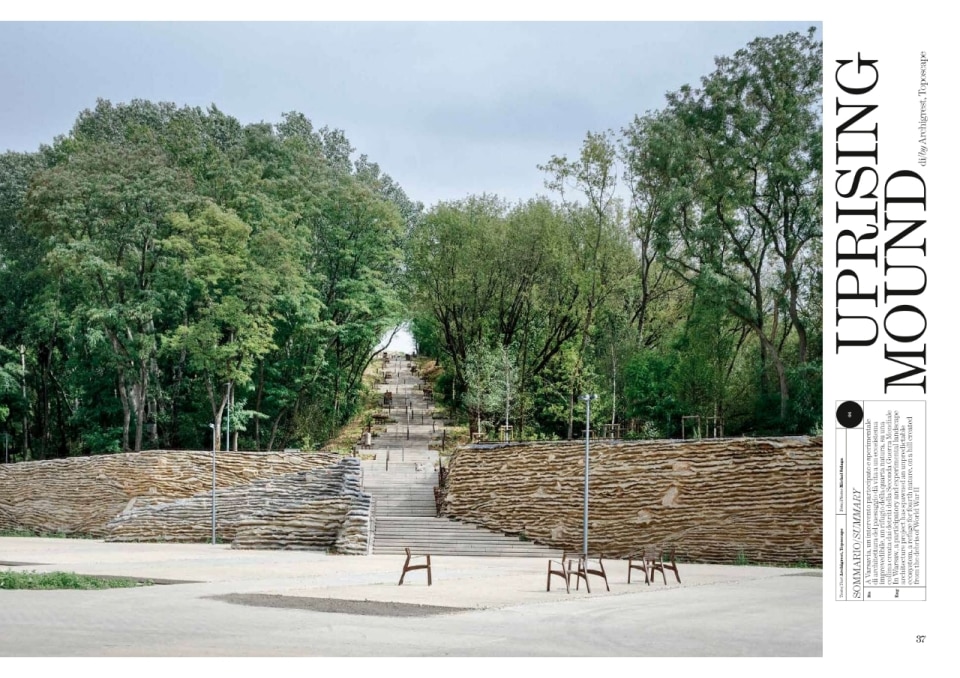
On the slopes of the Quilotoa volcano in Ecuador, the Chaki Wasi Centre bears witness to the strength of vernacular techniques and collective construction. The small building of stone, wood, and thatch was built in minga – Andean cultural practices of solidarity and collective action – involving the entire community with weekly rotations of those in charge. In Warsaw, Uprising Mound by Archigrest and Toposcape transforms a hill of WWII debris into a bioengineering experiment that shapes natural succession toward greater biodiversity.
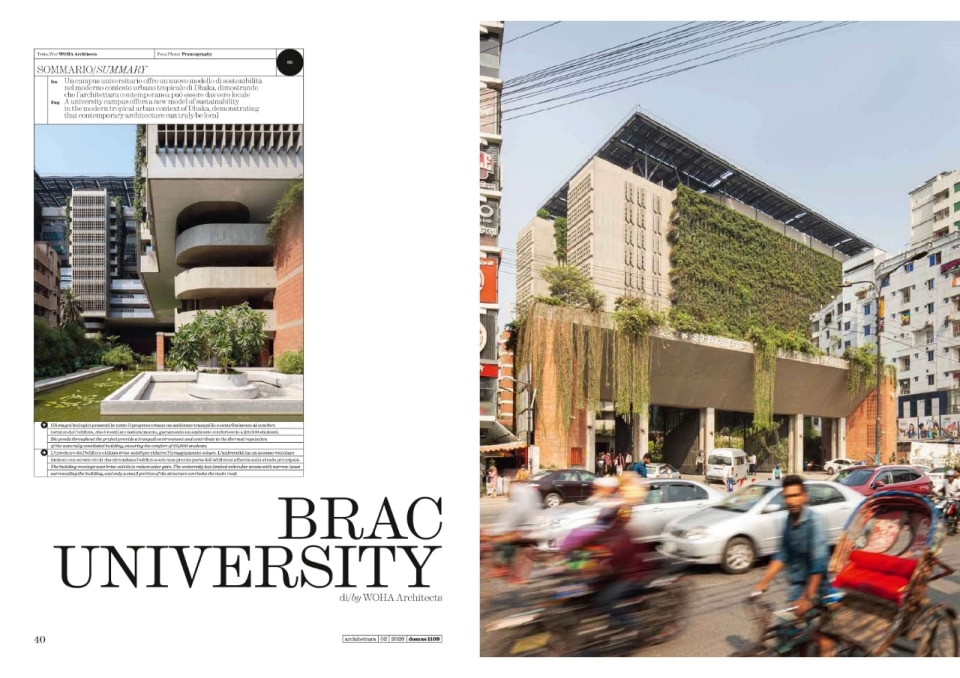
BRAC University in Dhaka by WOHA Architects performs an even bolder operation: it transforms an abandoned landfill into a vertical campus for 20,000 students, structured as a "vertical club sandwich" that reduces energy consumption by 40% and achieves a green coverage index of 130% with 26,000 m² of green areas.
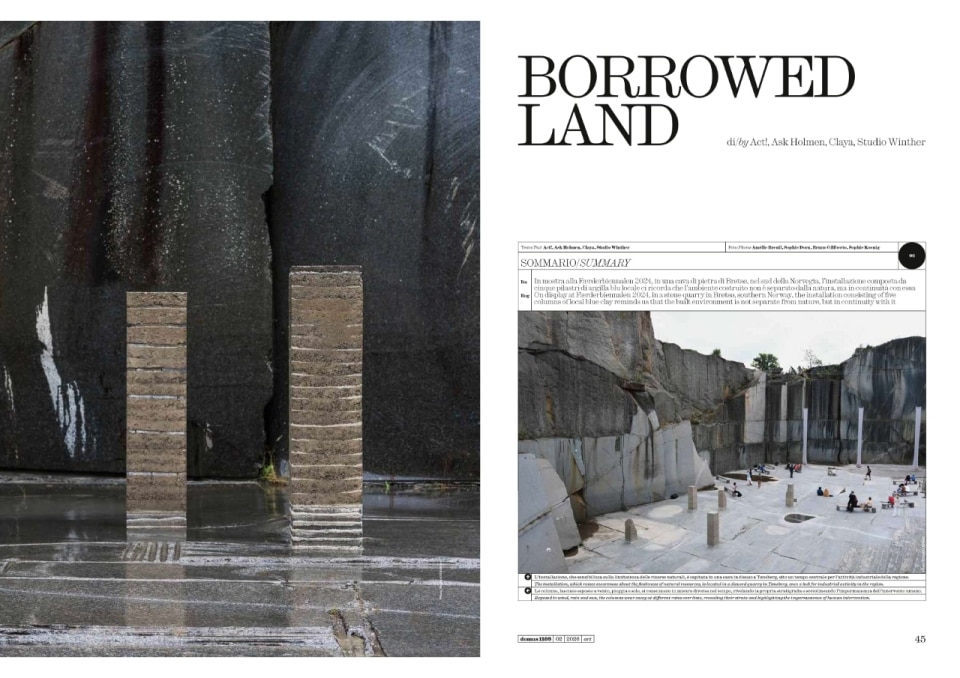
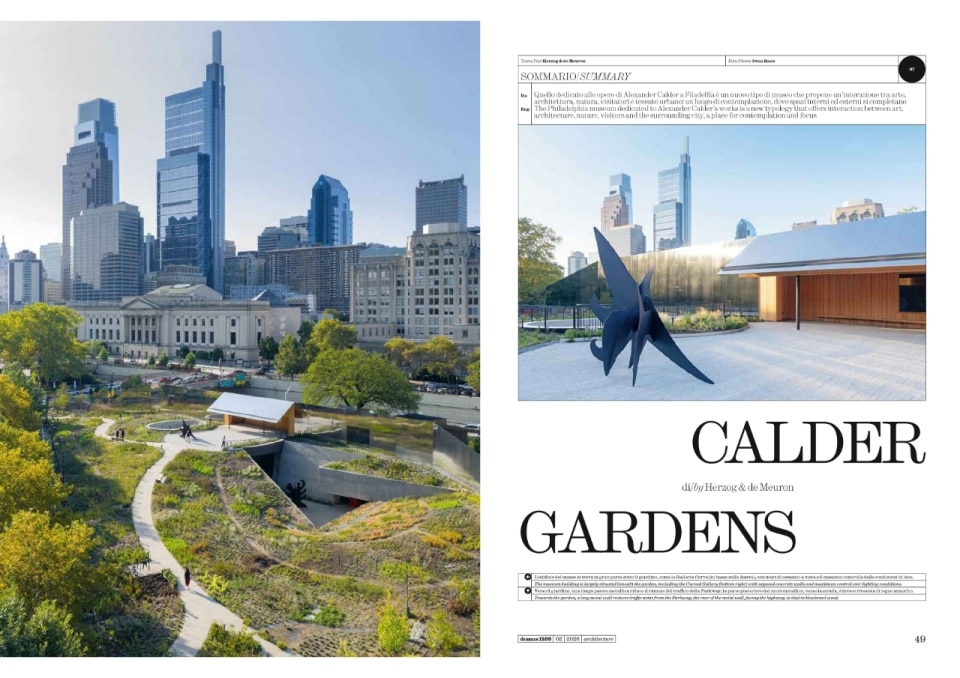
The boundary between artwork and architecture dissolves in installations that explore time and transformation. Borrowed Land, presented by Act!, Ask Holmen, Claya, and Studio Winther for Færderbiennalen 2024, is composed of five rammed earth pillars made of local blue clay designed to change over time: decay not as a failure, but as a form of expression. Herzog & de Meuron design the Calder Gardens in Philadelphia, where Jacques Herzog declares he "focused on space rather than form," creating a place where "one can sit, walk, and stop to observe nature or art, with the same ease one has when sitting under a tree."
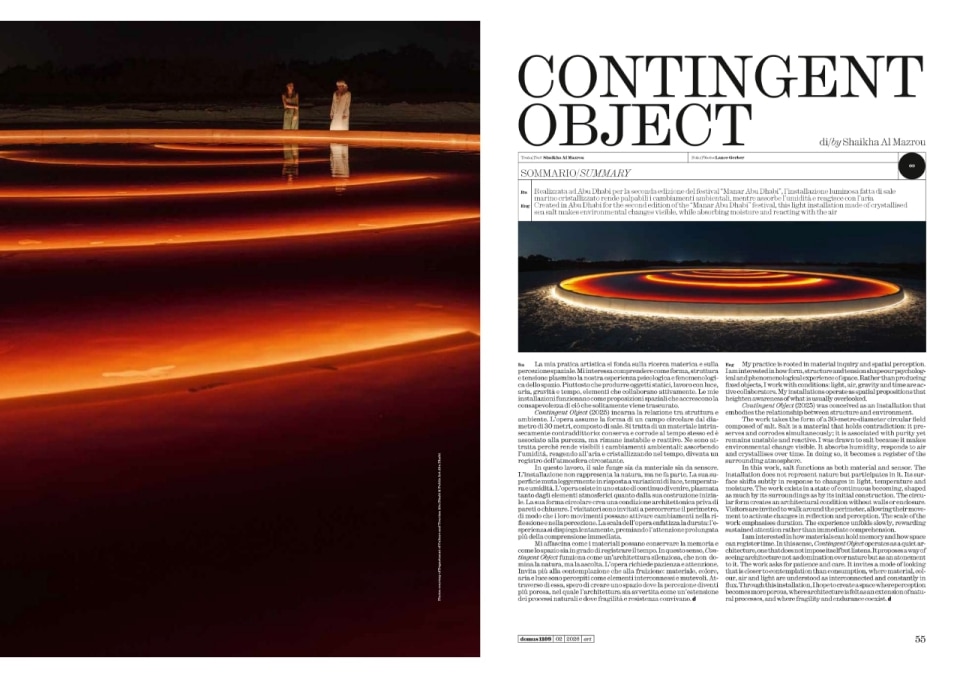
Artistic installations amplify this research. Shaikha Al Mazrou with Contingent Object in Abu Dhabi uses salt as a "material and sensor": by absorbing moisture and crystallizing over time, it becomes a record of the atmosphere.
Matt Shaw curates New Times for Nature, a section dedicated to three studios that embody radically different approaches. Nameless Architecture from Seoul blurs the boundaries between natural and artificial using local granite to create hybrids. Earthscape Studio in India lets "the site design itself" through a process of listening, working with local builders and vernacular techniques. Shanshan Landscape in China integrates nature into every project as a contribution to a "rebirth" of the landscape, as in their Pìn Xu studio built in a decommissioned quarry.
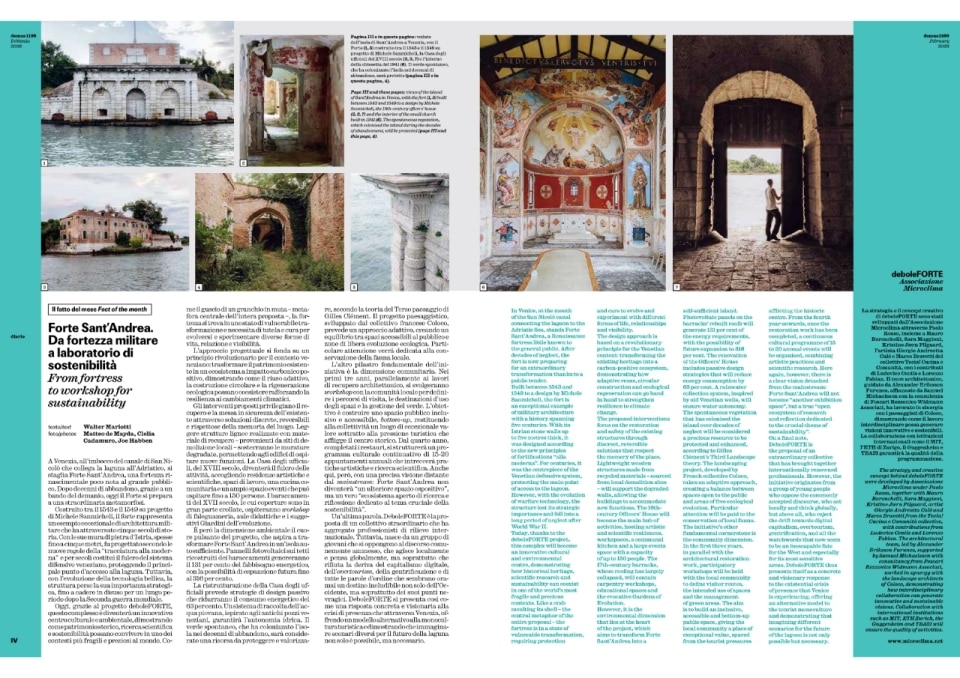
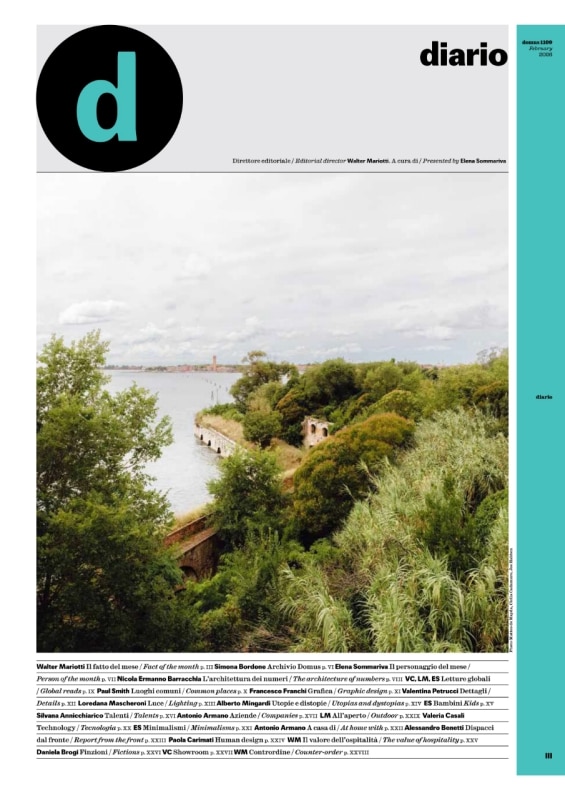
In the Diario section, a geography of projects emerges that look to the future of heritage. Walter Mariotti presents deboleFORTE for Forte Sant’Andrea in Venice, a metamorphosis of the Renaissance fortress into a carbon-positive cultural center, a concrete and visionary response for Venice. Elena Sommariva interviews Elisa Fulco who, through the association Acrobazie, uses contemporary art as a passport to worlds that often do not speak to each other in hospitals, psychiatric centers, and prisons.
The issue is no longer giving nature to architecture. It is to make architecture learn from nature.
The columns weave a rich counterpoint between symbols, matter, and the vision of the project. Nicola Ermanno Barracchia explores the architecture of the number One, the Tower, the first breath, the first kiss, the first step of the journey. Valentina Petrucci meets Giovanni Sassu in front of Guido Cagnacci’s Penitent Magdalene: "In art I seek carnality," Sassu declares before this seventeenth-century manifesto, suspended between the attraction of the body and the warning of the spirit.
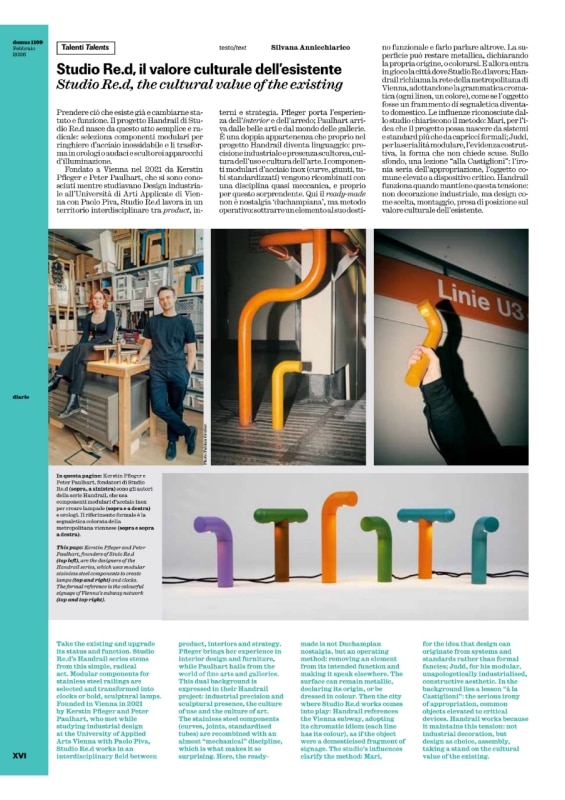
Loredana Mascheroni presents the Mia lamp by Davide Groppi, a designer who since 1988 has been exploring light with a precise ambition: "I would like to think that, at some point, one of my lamps becomes like a pair of scissors: that is, nobody knows who designed it." Silvana Annicchiarico presents Studio Re.d from Vienna (Kerstin Pfleger and Peter Paulhart), which with the Handrail project transforms modular railing components into clocks and lighting fixtures: "The ready-made is not Duchampian nostalgia, but an operating method." Antonio Armano tells the story of Enzo Catellani of Catellani & Smith: "Light is not design. It is doing. Turning it on, seeing what happens."
Valeria Casali analyzes the Färna fan coils by Innova designed by Luca Papini, which distance themselves from the muscular and technicist aesthetic of traditional plant terminals. Walter Mariotti describes the redesign of the Four Seasons Hotel Milano by Pierre-Yves Rochon with Patricia Urquiola as a manifesto of how contemporary luxury can be reinterpreted.
Daniela Brogi analyzes Pluribus by Vince Gilligan, a series that reworks the traumas related to the Covid-19 pandemic in an artistically significant sense. Again the Editorial Director, Walter Mariotti, in Contrordine, re-reads Villa Nemazee in Tehran by Gio Ponti (1957-1964), a "viewing machine" where the gaze traverses the entire plan without obstacles. Three decades later, in the same place, Azar Nafisi gathered students to read Nabokov, a forbidden author: "The villa was already an act of cultural resistance. It affirmed that one could be Persian and modern, Eastern and Western."
What emerges from this issue is a call to a different spirituality of design. As Ma Yansong writes: "I realized what I wanted architecture to do. Not to amplify power or speed, but to give people the chance to let go."
Nature inhabits us, and when form dialogues with it, it also dialogues with the human soul. An issue to explore with the necessary slowness, letting its voices wash over you. Enjoy the read.