



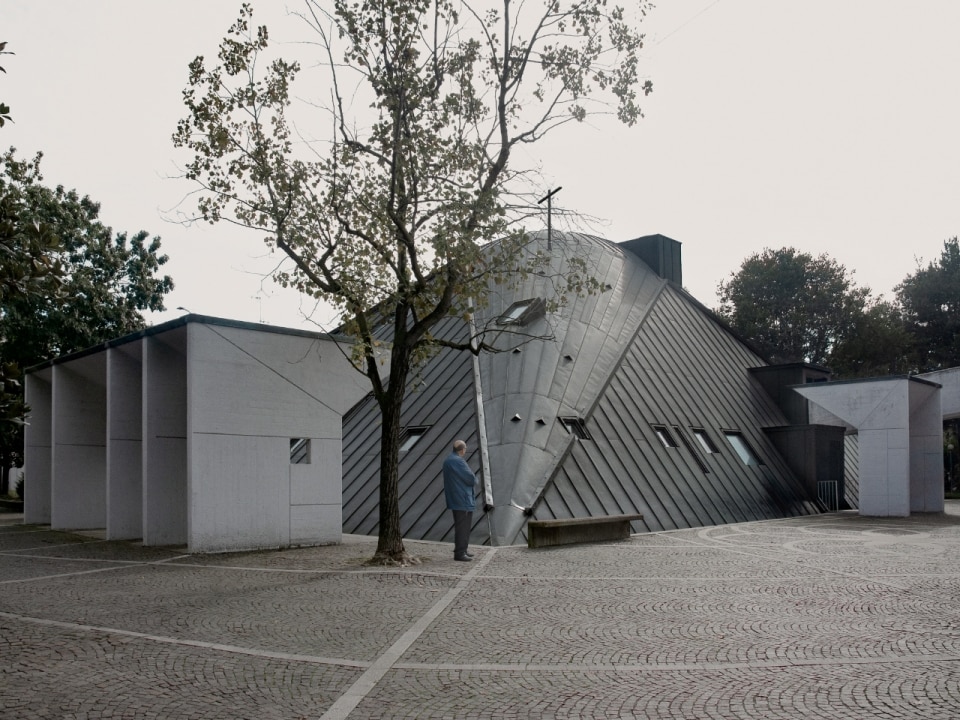

Between 1962 and 1965, as Italy was becoming increasingly secular, the Catholic Church opened a new liturgical season. The Second Vatican Council introduced reforms centering participation and clarity: the rules of the rite changed, and with them, the way churches were conceived and built. Architects began to design freer spaces, no longer bound to traditional typologies. The modernist Italian church was born.
Marta Minuzzo’s photographic series “Templi Moderni. Costruire il sacro in tempi distratti” (Modern Temples: Building the Sacred in Distracted Times) traces this transformation through a photographic journey across the country.
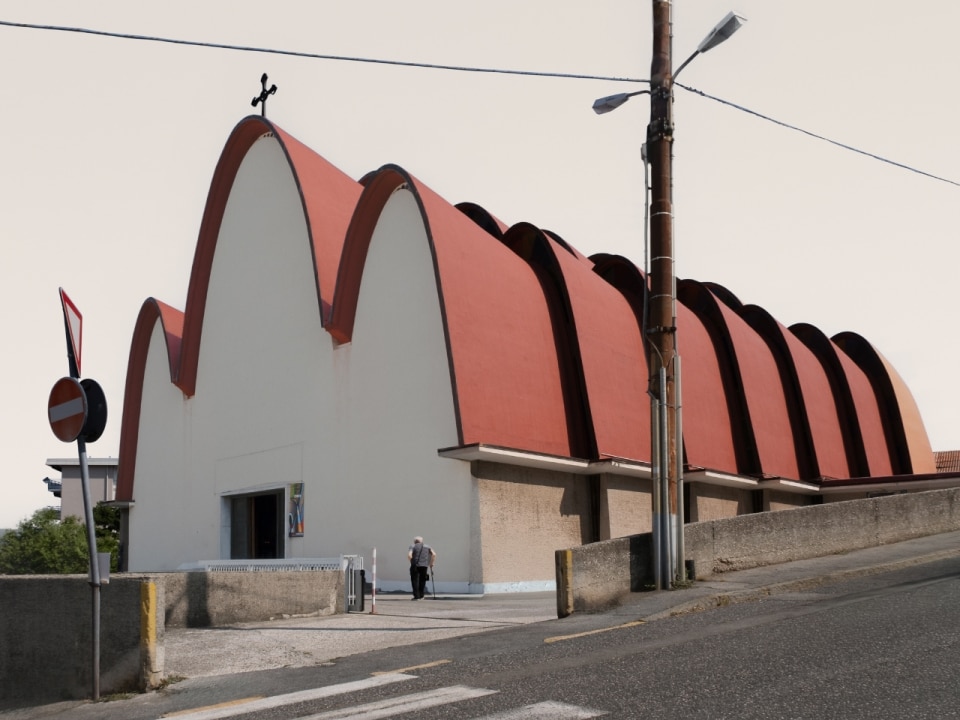
Over the last two years, she has visited and photographed more than seventy churches — from North to South — including works by Gio Ponti, Alvar Aalto, Mario Botta, Justus Dahinden, Pierluigi Spadolini, Paolo Portoghesi, Michelucci and others. Her aim is not only to catalogue new buildings, but to show how they narrate a profound shift in the way the sacred is imagined in contemporary space.
Seeking identity in the outskirts: Gio Ponti in Milan
In 1961, Milan’s Archbishop Giovanni Battista Montini launched a new wave of ecclesiastical construction in the expanding urban periphery. He called it “22 churches for 22 councils.” Alongside Giovanni Muzio, Carlo De Carli and Angelo Mangiarotti, Gio Ponti was invited to compete — and eventually designed a new church in Fopponino, a historic area between today’s Washington and Solari districts, dedicated to St. Francis of Assisi.
The sacred building was one of the key anchors around which new communities could take shape.
Marta Minuzzi
“For the Church, the sacred building was a central anchor around which new communities could take shape,” Minuzzo explains, noting that these projects were also a way of “accompanying the physical expansion of the city”—one that reached out to fast-growing neighbourhoods demanding different forms of gathering and worship.
“New churches for new territories were needed,” she continues, but also to respond to a profound transformation in liturgical practice. New plans were tested; materials became more diverse and modern — most notably concrete — and spaces were designed to welcome a broader community rather than impress a small elite.
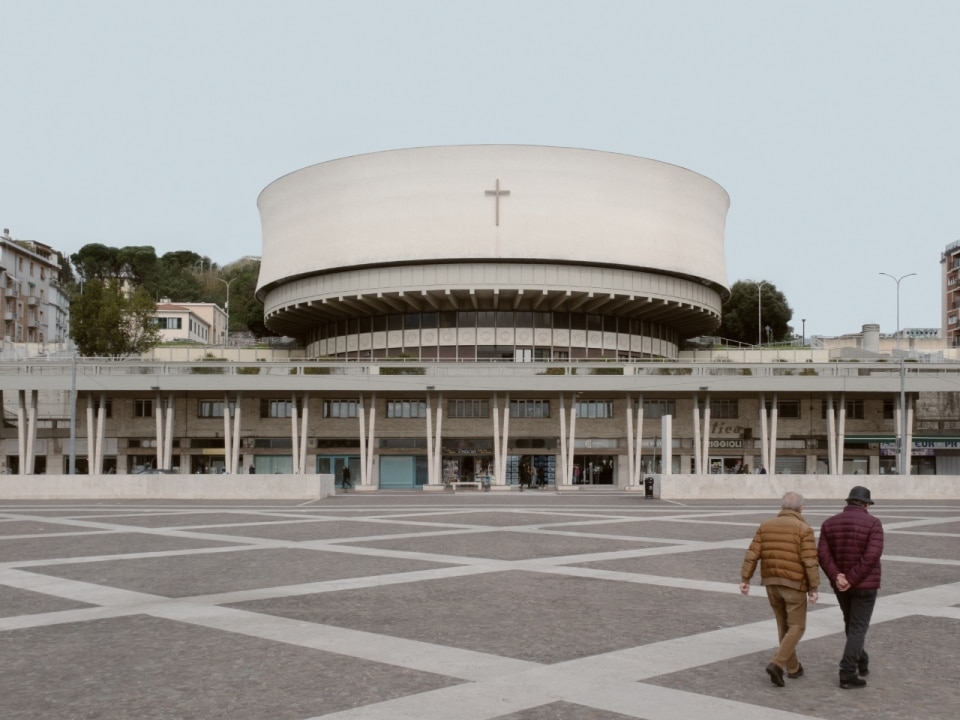
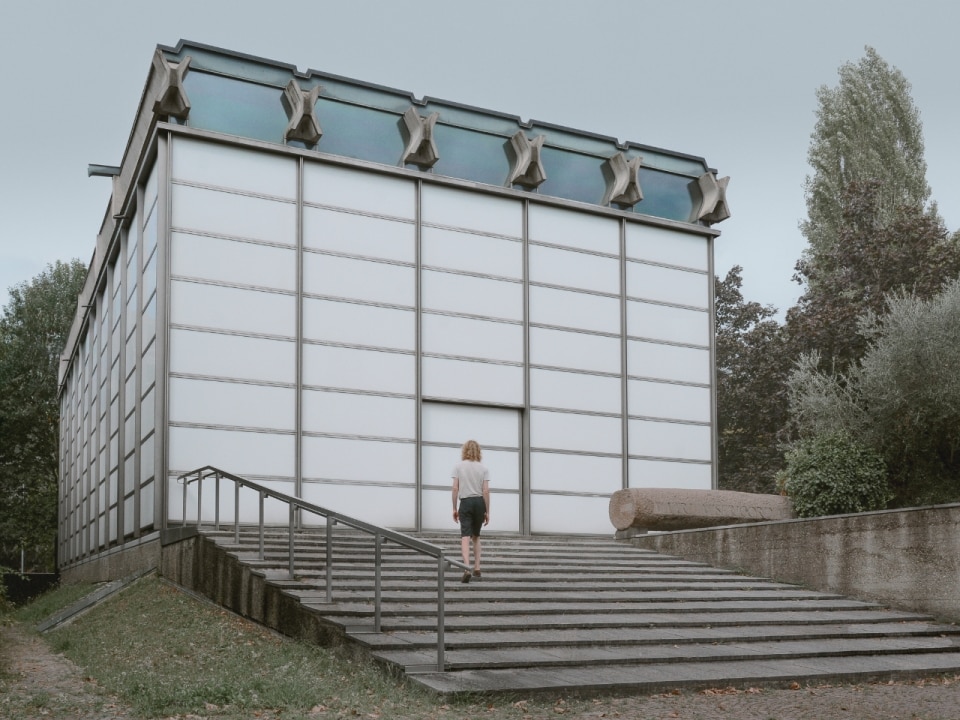
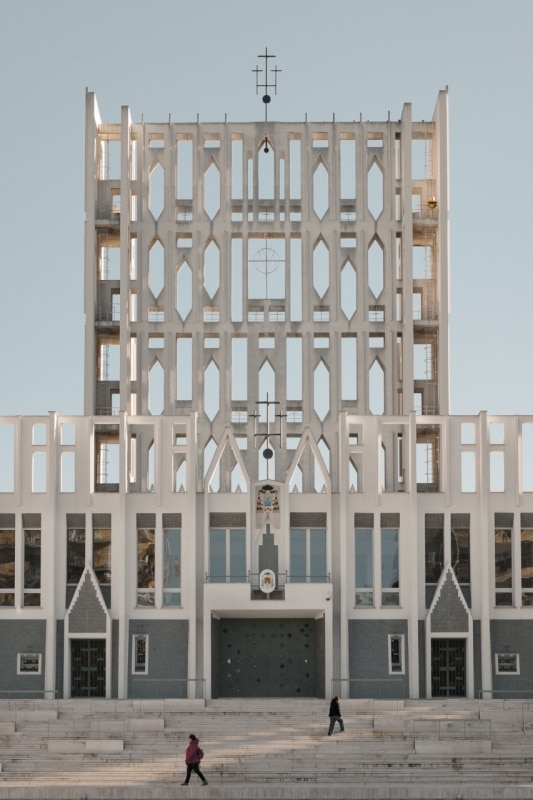
Ponti’s Co-Cathedral of Gran Madre di Dio in Taranto, completed in 1970, epitomizes this new sacred sensibility: rather than decoration, the project is defined by an essential architectural gesture. A perforated façade, monumentality derived from scale and water reflection, and a dialogue with the port city’s history and Mediterranean light create an entirely new, local language for the sacred.
Different languages of spirituality: Spadolini, Arrighetti and Dahinden
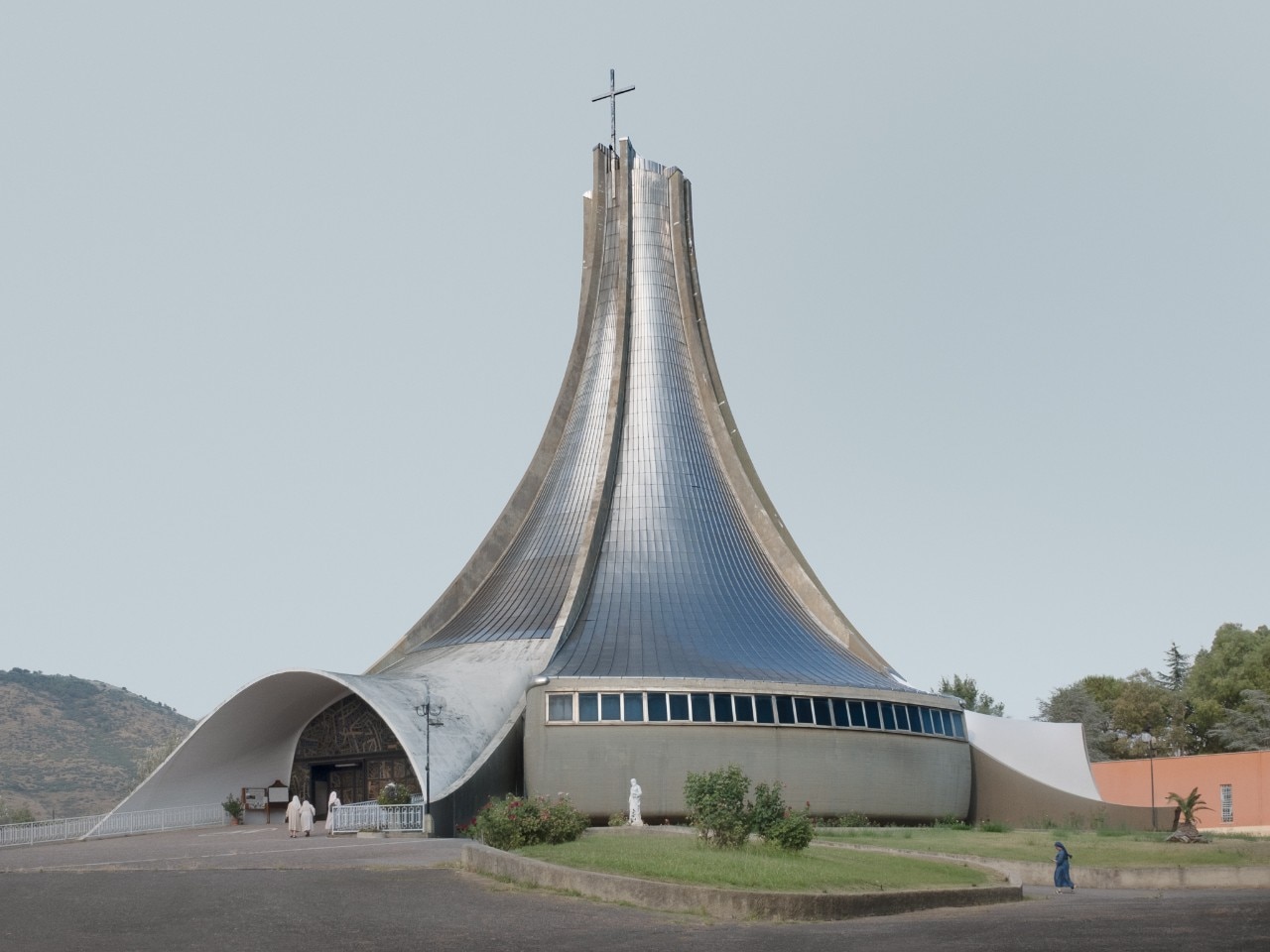
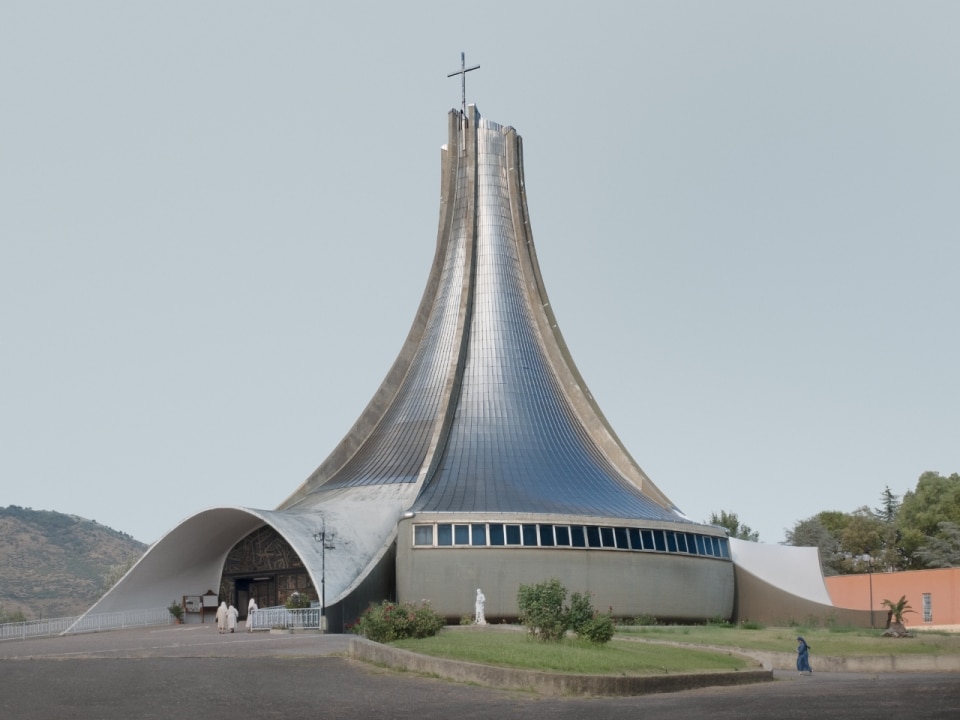
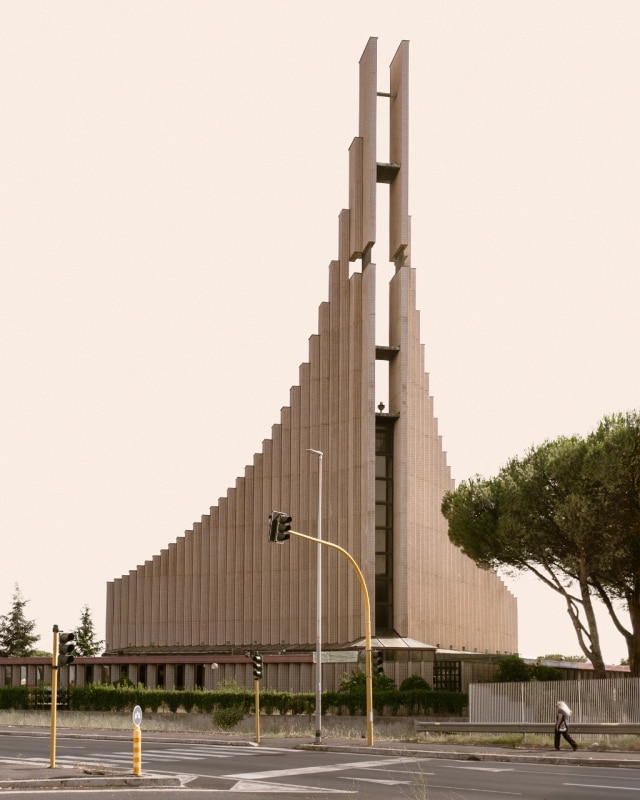
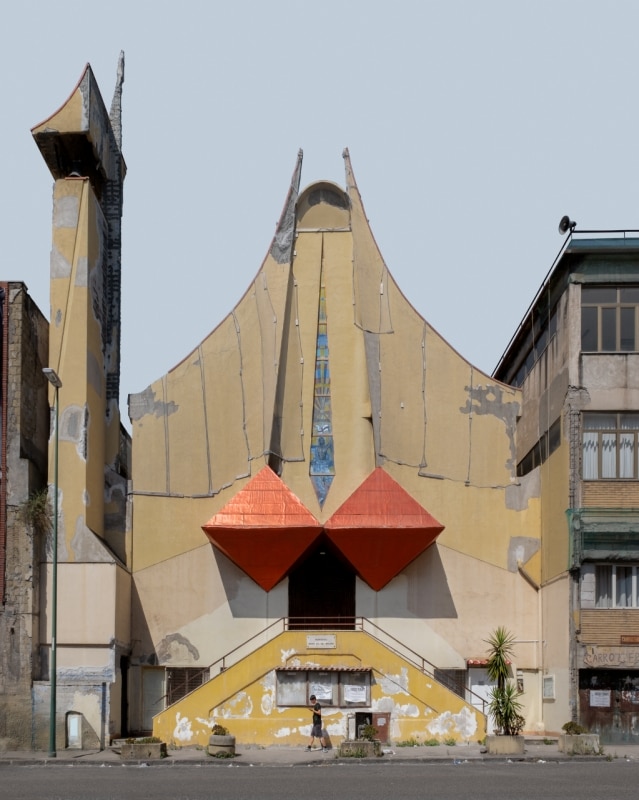
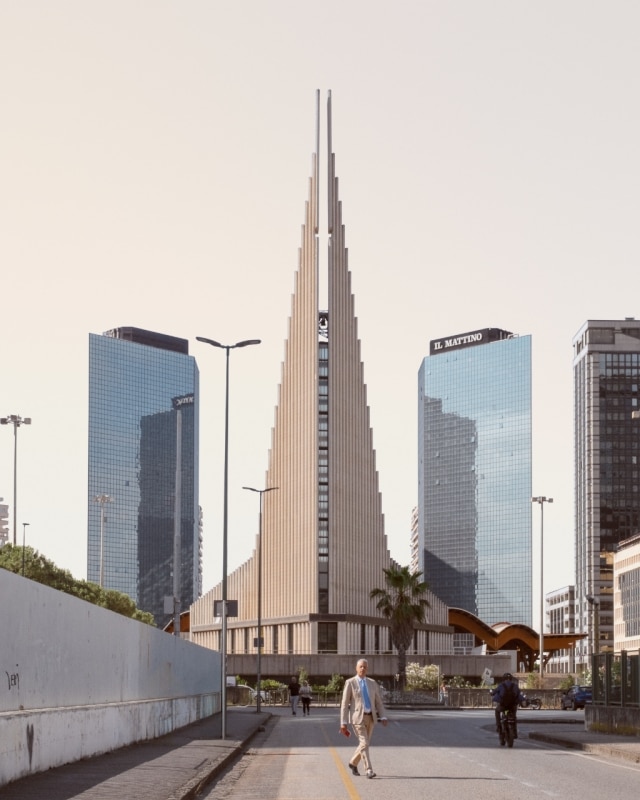
By the 1980s, Pierluigi Spadolini’s “twin” churches in Rome and Naples, and Arrigo Arrighetti’s San Giovanni Bono in Milan, signal yet another direction. Verticality and formal purity become metaphors for spiritual ascent: sharp silhouettes and structures projected upward embody the tension of transcendence.
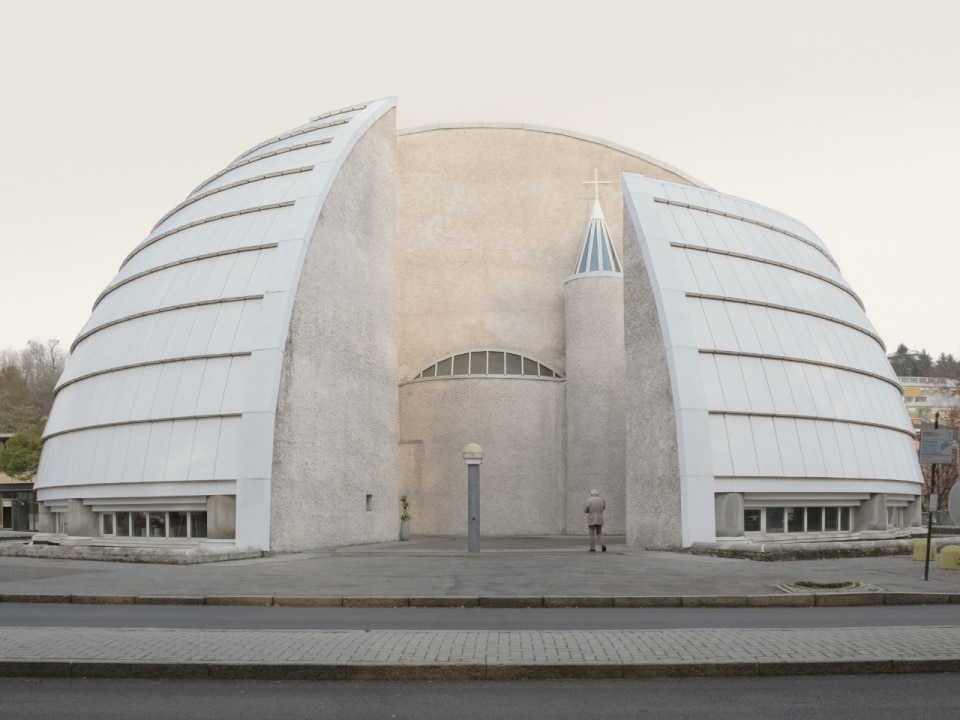
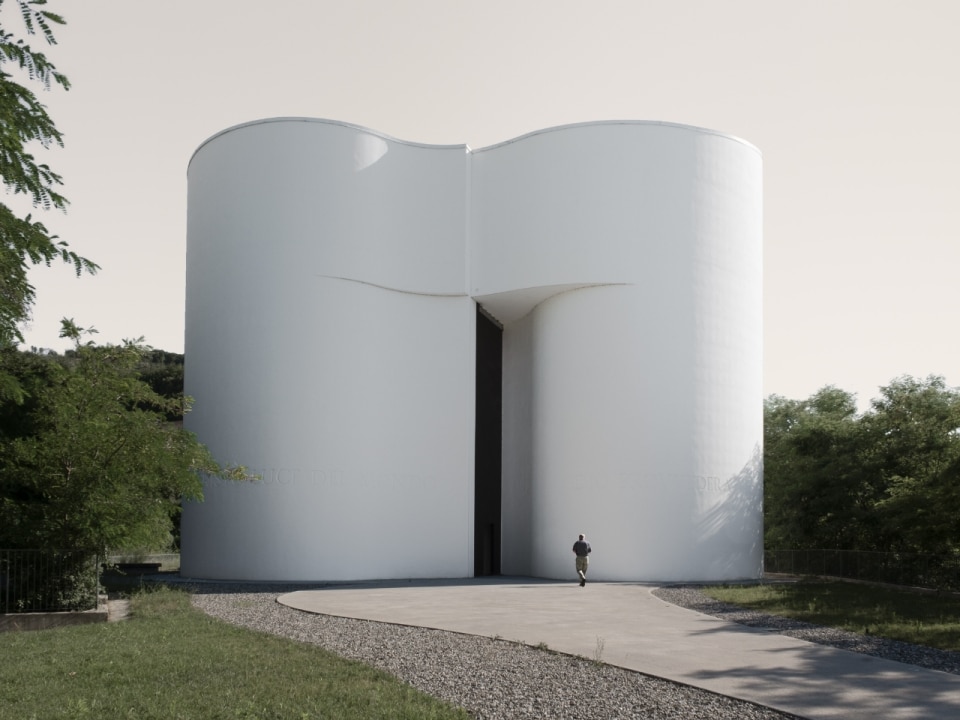
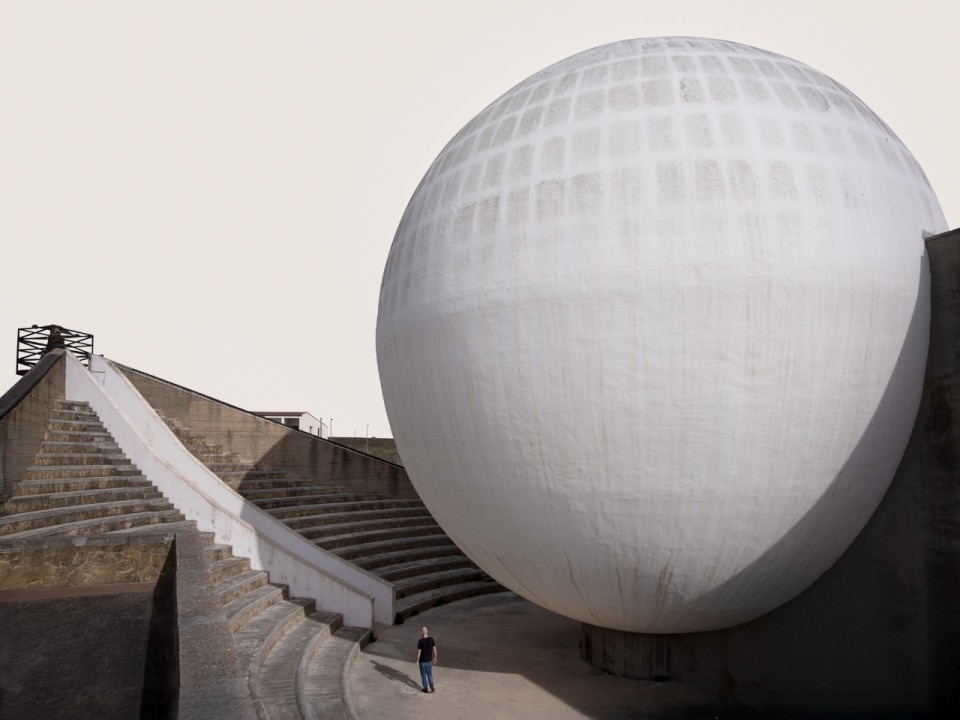
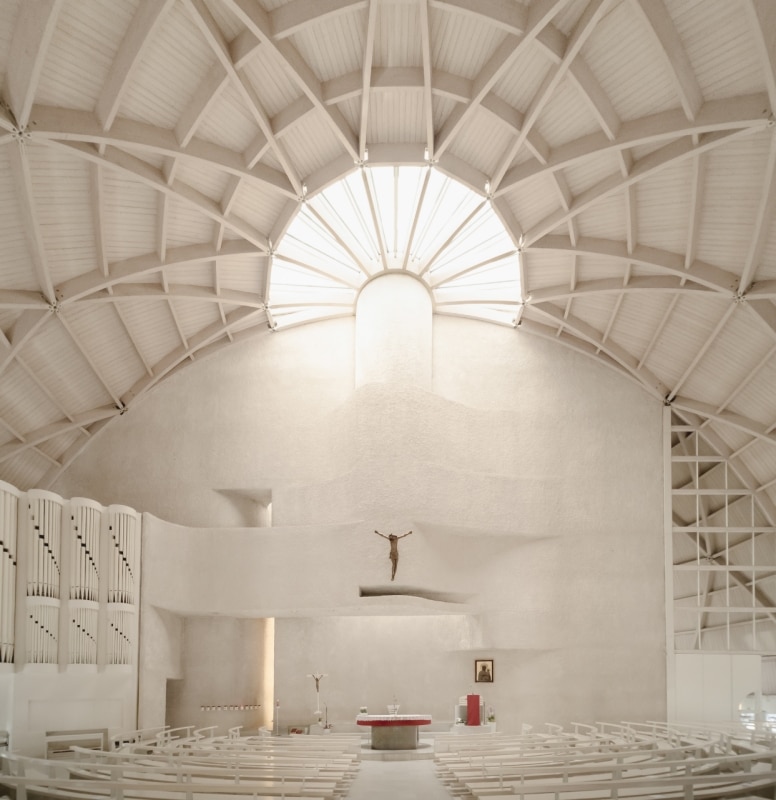
A different approach again appears in the Church of Saint Maximilian Kolbe in Varese, by Swiss architect Justus Dahinden. It is a vast white dome placed along one of the city’s busiest roads. The geometry is entirely circular, and the interior radically pared back: “inside, everything is white — the dome ceiling, the pews, the altar, the floor, even the organ. The only exception is the crucifix, illuminated by the light streaming from the oculus at the apex.”
A small town and a global star: Alvar Aalto in Riola di Vergato
A chapter of its own belongs to Alvar Aalto’s Santa Maria Assunta in Riola di Vergato — the Finnish master’s only realised work in Italy. As with Ponti, a cardinal issued the invitation: Giacomo Lercaro, Archbishop of Bologna, who discovered Aalto’s work after seeing an exhibition in Florence.
Sacred architecture becomes an urban and cultural device, called upon to redefine the Church’s presence and language in everyday life.
Built between 1975 and 1978 in the Apennines outside Bologna, on a project initiated in the 1960s, the church remains one of the most significant modern sacred buildings in Italy — partly thanks to its extraordinary bond with the community. The story begins with a face-to-face meeting between Aalto and the town’s residents. Soon after, they sent him a box filled with 100 kilograms of local materials — stone, wood, soil — which he incorporated into the design.
“Even today,” Minuzzo notes, “there is a constant flow of cars and people, something almost unthinkable for a place so remote.” The congregation gathers in the large square Aalto envisioned as an extension of the church — the space Minuzzo chose to photograph with the façade. “It seemed essential to show what Aalto achieved: a building that doesn’t dominate its landscape, but binds a community together.”
The 2000s: the church as urban landmark
If mid-century peripheries were still being built, by the early 2000s they were reclaiming identity — and demanding buildings that reflected it. According to Minuzzo, these are “sacred spaces that grow more abstract and symbolic.” One example is Richard Meier’s Jubilee Church — the Church of God the Merciful Father — in the peripheral district of Tor Tre Teste, Rome.
Part of the “50 Churches for Rome 2000” plan, it served both a local need and a global ambition, suggesting what a church of the third millennium might be: “a building that looks as if it has landed among the residential blocks surrounding it.” Hyper-white, lightweight and technologically advanced, Meier’s design is less an accompaniment than an urban landmark.
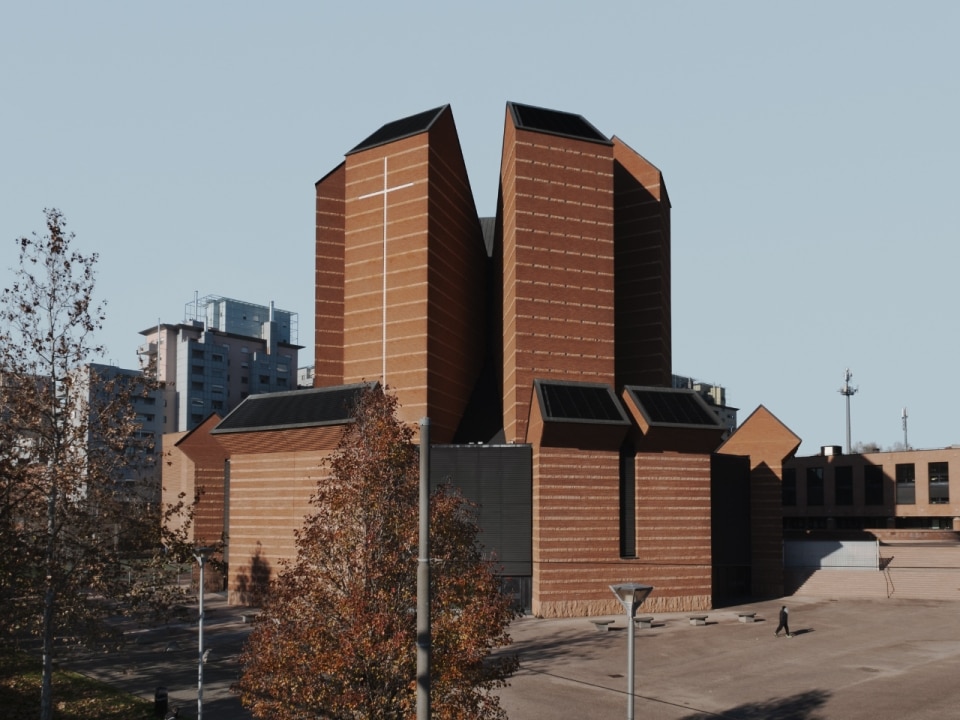
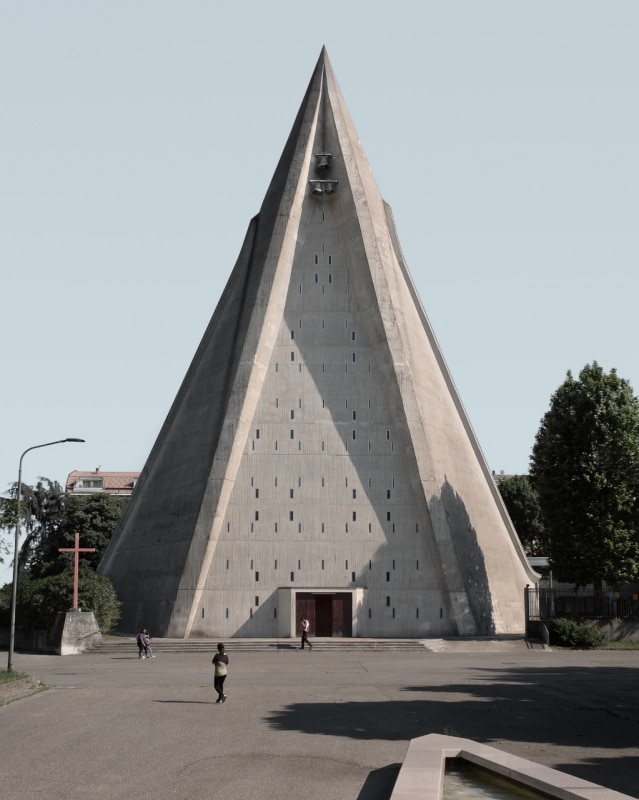
Between the two conditions — the church as community anchor and the church as city-scale symbol — stands Mario Botta’s Church of the Holy Face in Turin. Built in 2004 along the vast post-industrial axis known as Spina 3, over a million square metres of redeveloped factories, the building is a severe, imposing presence. “It feels almost like the first of the factories,” Minuzzo observes, yet it assumes the role of a civic and spiritual reference point for a district undergoing transformation — emblematic of the early-2000s shift toward urban regeneration in Italy’s once-industrial cities.
The churches photographed by Minuzzo emerge within a country that, in the postwar decades, rapidly changed both its face and its scale: from internal migration towards industrial cities to the expansion of the outskirts, from the economic boom to the gradual secularisation of public space. In this context, sacred architecture in Italy functioned above all as a cultural device — one around which entire communities and urban fabrics took shape: modernism’s response to the needs of a more secular and, at the same time, more cohesive nation.