

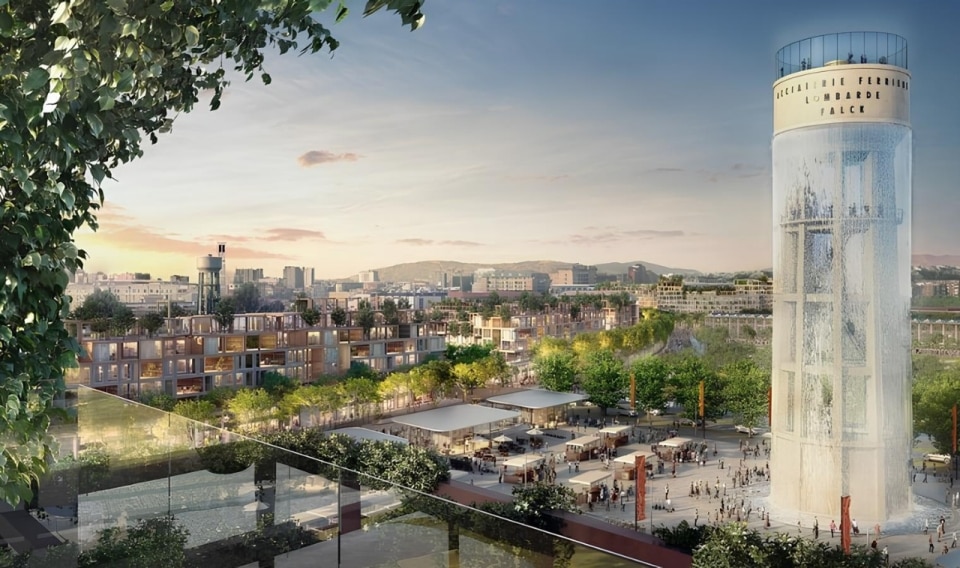
Situated in Sesto San Giovanni, a suburb at the terminus of the first, historic Milan subway line, the tower of the former Falck steel mills will be the first Milanese water tower to be transformed into a "panoramic fountain," in an intervention among the most scenic seen in the city in recent times.
Milan like other industrial cities from Chicago to Kuwait City was populated in the twentieth century with piezometric towers, elevated storage tanks that distributed water to industries and the citizenry. Today these towers have gone from being service infrastructures to being landmarks of industrial archaeology thanks also to the intervention of great architects, who have reinterpreted them as new urban signs.
The regeneration of the Water Tower is part of the broader Redevelopment MilanoSesto project, which involves names such as Norman Foster, Renzo Piano and Mario Cucinella in the transformation of one of Lombardy's most important industrial poles of the 20th century. Mario Cucinella Architects is responsible for the design of the City of Health and Research, a health and scientific center of excellence that will develop 197,000 square meters of regenerated area, while Foster+Partners signed the overall master plan.
The most awaited intervention, however, is the new railway station designed by the Renzo Piano Building Workshop with Ottavio Di Blasi & Partners, scheduled to open in December 2025: an 89-meter-long and 18-meter-wide glass walkway suspended 14 meters above the tracks that will directly connect the station to the subway and the railway, while also creating a bridge between the redeveloped area and the "old city."
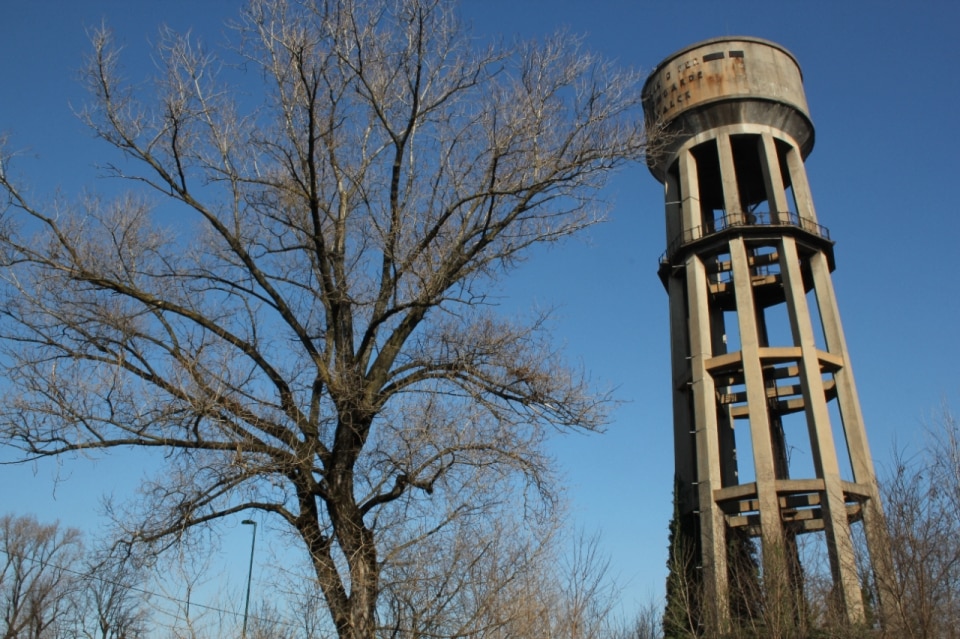
Promoted by Coima and Redo, MilanoSesto is now the largest urban redevelopment project underway in Italy, with the aim of restoring a new identity to an area that has marked the manufacturing history of the 20th century.
The piezometric tower in Sesto San Giovanni, built to serve the Falck steel plant, will become a new vantage point on the former industrial town on the outskirts of Milan. Its outer walls will be traversed by vertical water flows, while at the top a circular glazed structure will house a belvedere over the city. At the foot of the tower will rise the new Torre dell'Acqua square, connected to a network of four other squares envisioned by the master plan for the reconstruction of Sesto: the station, the historic Omec workshops converted into a food market and cultural hub, T3 and T5.
Opening image: Credits Urbanfile - Piezometric tower