

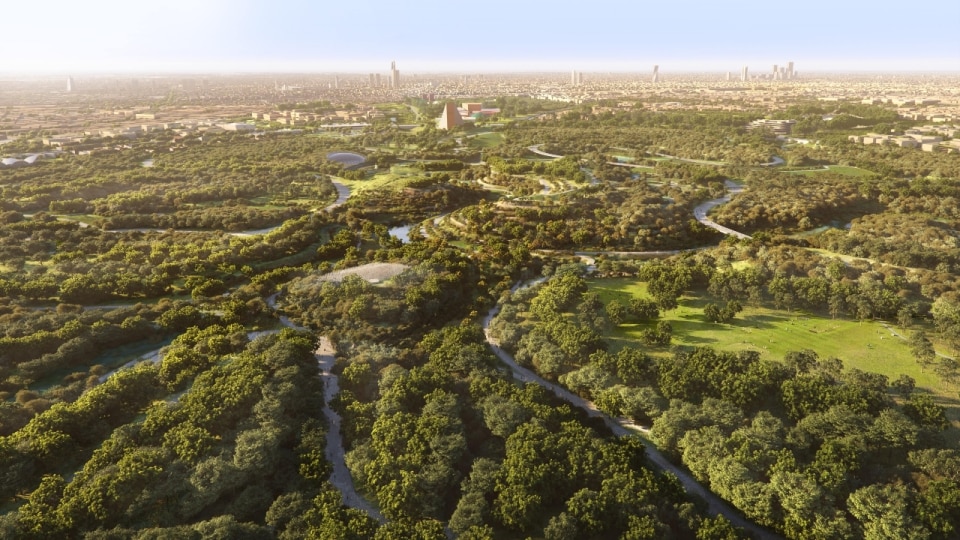
A park in the middle of the desert? It's all true. And it is happening in Saudi Arabia, of course, and more specifically in the capital Riyadh where a large area formerly used as an air base will become a huge green park.
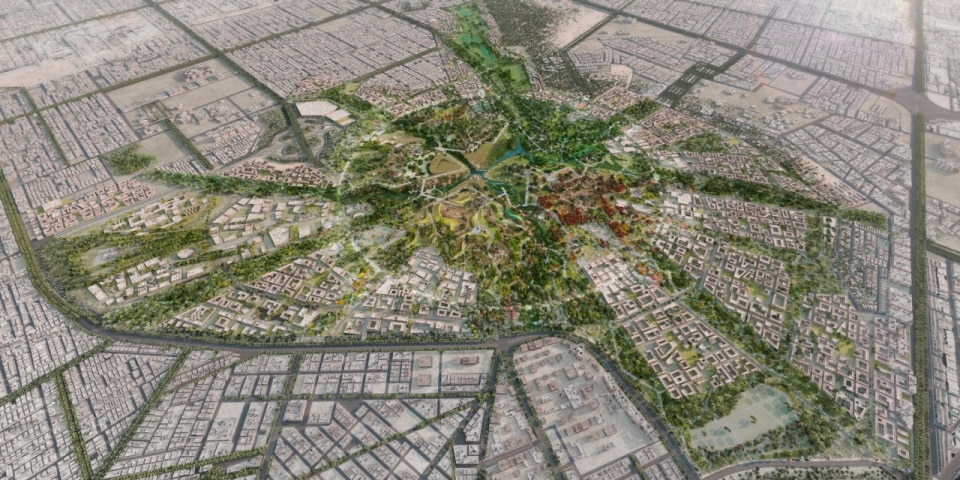
Unveiled in 2019 and included within the Vision 2030 program as one of the most ambitious initiatives, with the functional aim of generating a true cooling island, the park will bear the name of Saudi Arabia's King Salman bin Abdulaziz and will be the largest on the planet at 17.2 square kilometers in area-to compare, consider the 3.41 of New York's Central Park. "The Green Heart of Riyadh and Saudi Arabia" will be only twenty-five minutes away from King Khalid International Airport and connected to the city by roads and five new subway stations.
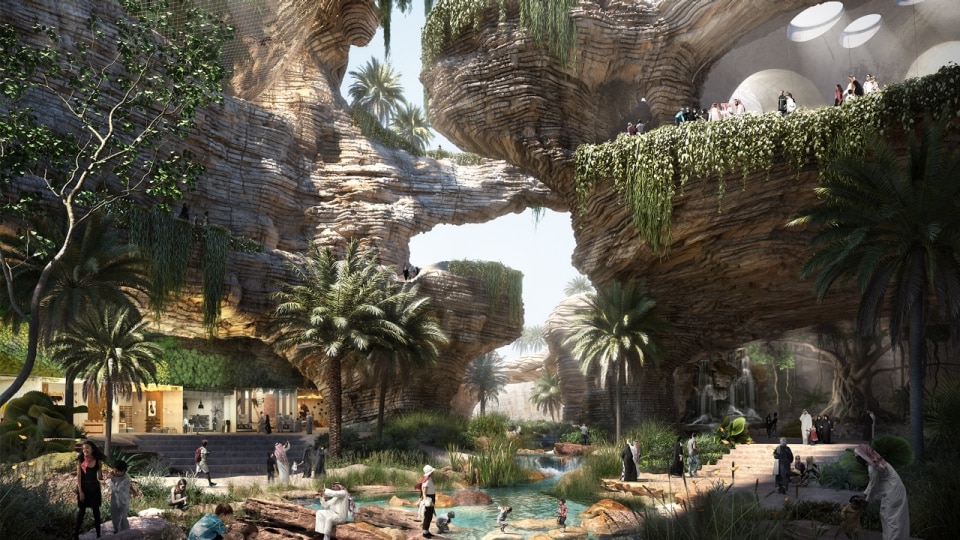
Approximately one million trees will be planted in the King Salaman Park area, irrigated with a system that purifies and reuses the city's wastewater; artificial waterways will run alongside the bicycle and pedestrian paths; and lighting will be powered by renewable sources. But it will be much more than a park: in fact, in addition to the greenery, vast spaces will be dedicated to architecture, public facilities for culture and sports, residential and commercial units.
A pavilion at the gateway to the park will be installed as a "manifesto of sustainable building" and a tribute to the Saudi architectural tradition: here an interactive pathway will illustrate the grand design of King Salaman Park to visitors. A loop more than seven kilometers long, "The Loop," will be a bicycle and pedestrian path punctuated by stations equipped for sports and facilities for services. Within this loop a veritable forest moved by alternating valleys and hills will be home to native and more than 600 imported plant species to support biodiversity.
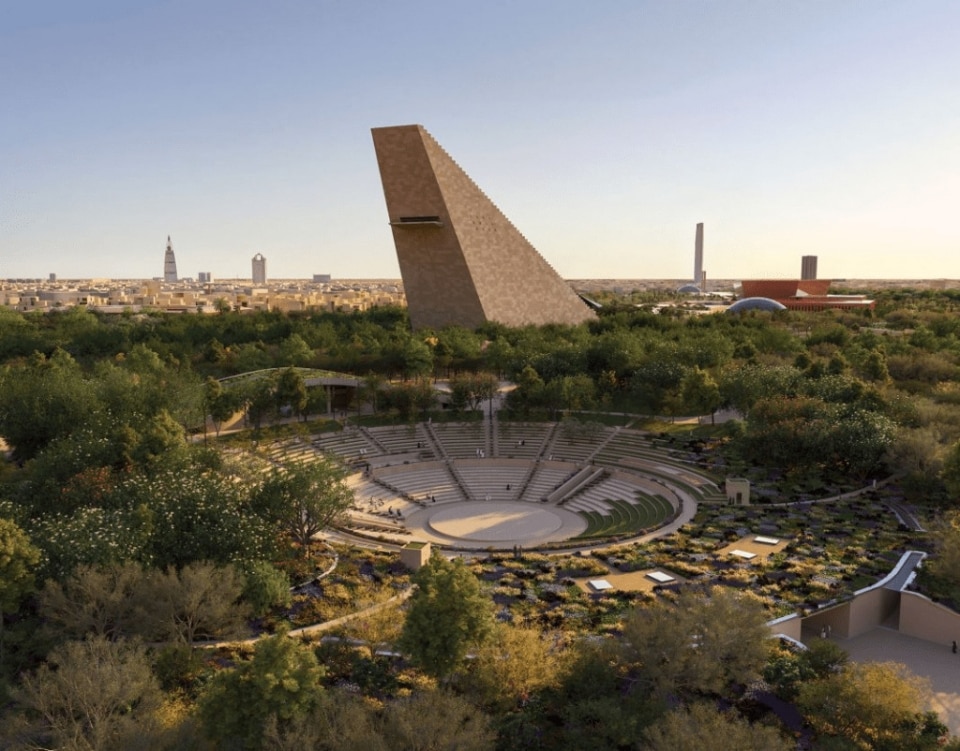
Then the "Art Park," a lush open area in which artworks and temporary exhibitions set up directly in nature, and in the same quadrant, an area of forty thousand square meters will house the 2,500-seat national theater, an open-air theater, a museum of architecture, other exhibition spaces and a visual arts academy.
It will be more than a park: in addition to greenery, vast spaces will be devoted to architecture, public facilities for culture and sports, residential and commercial units.
A "deep" focus is devoted to the soil, a central theme of today's urban planning: by excavating up to 2.5 meters, the site envisions the placement of a "regenerative" soil, in which red sands, pumice stone, biochar and microorganisms will be able to absorb rainwater and release it gradually, ensuring a natural cooling system, allowing vegetation to survive and preventing drought-related disasters.