



To tell this story properly, one must begin with light. The kind of light found on certain June afternoons, when in the Valdambra valley light stops being a weather condition and becomes an emotional fact. An emotion that falls obliquely over the hills between Arezzo and Siena, slicing through holm oaks and cypresses, setting the flowering broom ablaze, and breaking against the ancient stone of villages such as Duddova, Rapale, Sogna, and San Pancrazio. There, after having heated everything to intensity, light seems to explode—radiating outward and then holding still for a few infinite moments.
It is perhaps this timeless time that explains why a young man from Sweden chose to become an adult here, among these woods so different from the flat southern outskirts of Stockholm. One might call it a metaphysics of light—an explanation for John Werich that goes beyond the usual story of a foreigner falling in love with Tuscany. Yet another romance, another story, another outsider collected by this harsh and tender land and transformed into a postcard image: a stereotype of an Italy that exists only in marketing, and in the clichés of those who prefer imagination to reality.
A photographer, a writer, a village
Werich’s path has been the second one. Perhaps it began with the first: the literary fascination of Northern European culture, which looks at Italy with a devotion that feels almost inevitable. But it quickly became something else. A project. A responsibility. A community in which he chose to recognize himself and to contribute.
Werich’s path has been the second one. Perhaps it began with the first: the literary fascination of Northern European culture, which looks at Italy with a devotion that feels almost inevitable. But it quickly became something else. A project. A responsibility. A community in which he chose to recognize himself and to contribute. Arriving in Florence in 2006, not yet twenty years old, Werich studied at Polimoda, then at the British Institute, and finally at the Accademia Italiana. He is not the upper-class Grand Tour tourist, but a writer with a passion for gardens and architecture who, after completing his studies, decides not to return to Sweden—not because he was struck by a sunset over the Arno. Werich is an intellectual who chooses to inhabit the culture he has studied, to move through it with his eyes, to touch it with his hands, to breathe it in. Not only with the heart, but with the mind.
In 2010, he and his parents purchase a country house near San Pancrazio, one of the key points in the Valdambra valley, where he begins producing olive oil. This is not a folkloric detail but an act of belonging—a way of rooting himself, of learning the landscape not as a spectator but as a cultivator. Because one only truly cares for a land when one is willing to call it one’s own.
Nine years later, in 2019, something happens that changes everything. The village’s historic grocery store—founded in 1921 as a consumer cooperative—closes for good. It might seem like a minor event, one of many in the slow decline of rural Tuscany in the early 21st century: the disappearance of a small shop in a small village among the woods, a casualty of the socioeconomic drift that, according to the Bank of Italy, is irreversible. But it is not minor. Every time a small village loses its general store, its café, its hybrid space of food shop, meeting point, public phone, and social hub, it loses a piece of its social infrastructure—far harder to rebuild than it was to create.
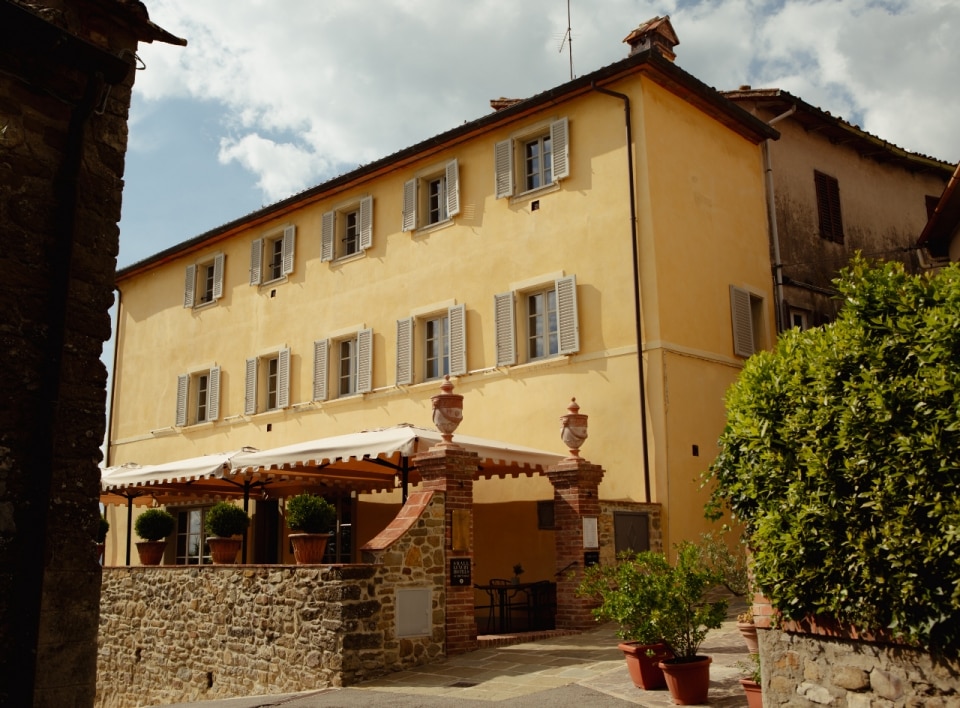
Werich knows this. He understands it. He feels it. So he acquires the space and returns it to the community in the form of the Cantinetta di San Pancrazio. He transforms it into a grocery, café, and wine bar: a place where locals and visitors meet on equal footing, without social hierarchies, without separation—the structural illness of contemporary tourism, which too often divides those who live there from those who merely pass through on holiday.
Architecture, or the civic act
One day, while solving a technical issue for the Cantinetta, John steps into the partly abandoned building behind it. It is a moment of revelation. He understands that something important could be done there. He discusses it with his partner. This is how Palazzo Tiglio is born—from an intuition in the heart of San Pancrazio, originally sparked by a practical problem.
The building has a long history, reaching back well before 1691. Constructed in the 17th century on medieval foundations—a stratification that reveals how, here, history is not ornament but structural backbone—it contains a medieval well and grain storage cavities carved into the rock, likely of Roman origin. An archaeological discovery that is not incidental, but rather confirmation of the continuous presence of human life in this place: inhabited, preserved, and shaped over millennia.
For this reason, Werich chooses a restoration approach that is conservative in the deepest sense of the word, guided by the idea of adding a new chapter to a story that has never stopped being written. In this, too, Palazzo Tiglio stands in radical contrast to the growing number of hospitality projects in Italy that increasingly use history as a backdrop—often in a soporific way—reducing it to scenography, pretext, or marketing device. A layer of golden dust sprinkled over surfaces to give patina to operations that remain fundamentally commercial at their core. Werich does something different, and far more difficult: he listens to the place. He engages with the community, with what cannot be easily said but only experienced. He allows Roman foundations, medieval vaults, and 17th-century proportions to dictate the rules of the game. He works to return rather than impose, acting as a restorer in the highest and most demanding sense of the term.
Over the centuries, the palazzo passed through many noble hands, including the Scodellini family. Each change of ownership left traces, layers, memories embedded in the walls. With an attention worthy of an archaeologist, Werich reads them all and has both the respect—and the courage—not to erase them in order to make room for something new. At Palazzo Tiglio, the new coexists with the old without conflict and without excessive reverence. It is, in essence, a dialogue between adults.
The rooms, and the silence of detail
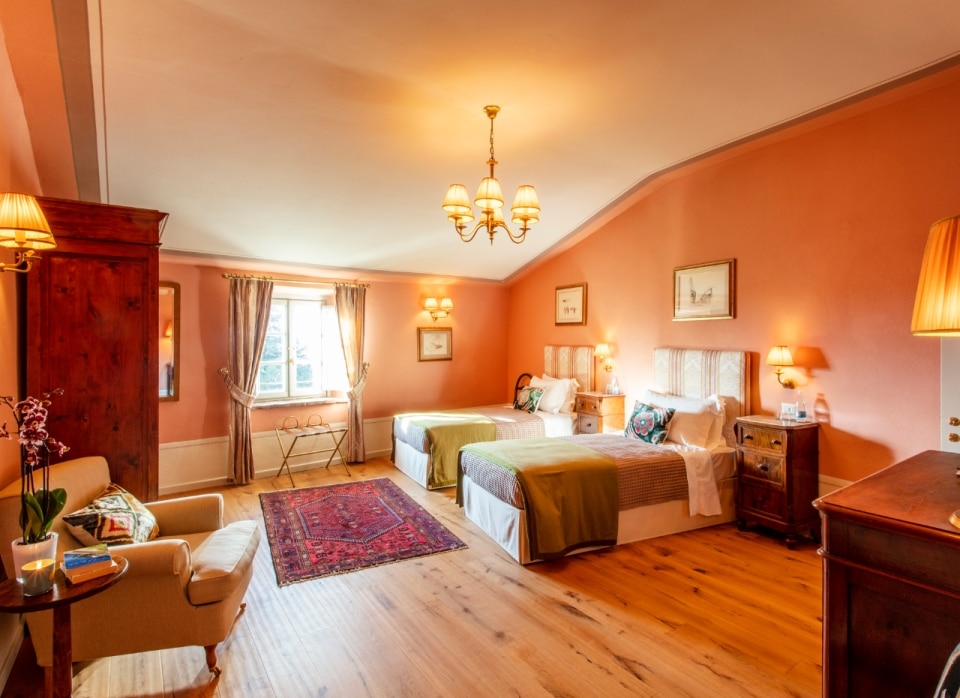
Meanwhile, as Werich’s projects unfold in successive layers—much like the building itself—the restoration of the 17th-century noble residence continues. In 2021, Palazzo Tiglio is inaugurated. By 2024, it evolves into a small boutique hotel with six rooms and suites.
Six. Not sixty, not six hundred. Six.
This is not a commercial choice; it could not be. It is both an ethical and aesthetic decision. Six rooms mean guests who are known by name, atmospheres that do not dissolve into anonymous corridors, and a form of care that cannot be delegated to systems but remains human and personal. It also means that John Werich and his family remain present, visible, and responsible.
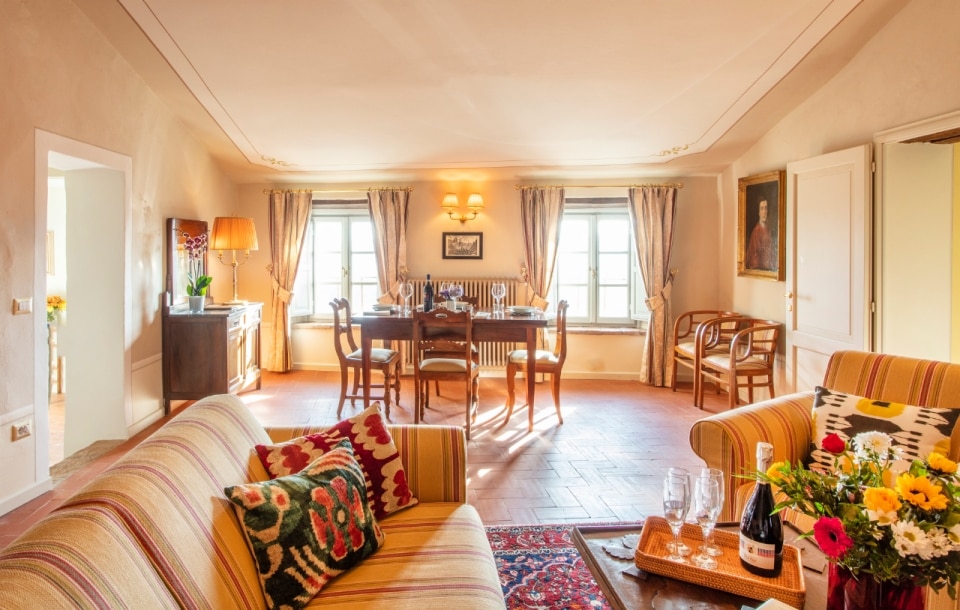
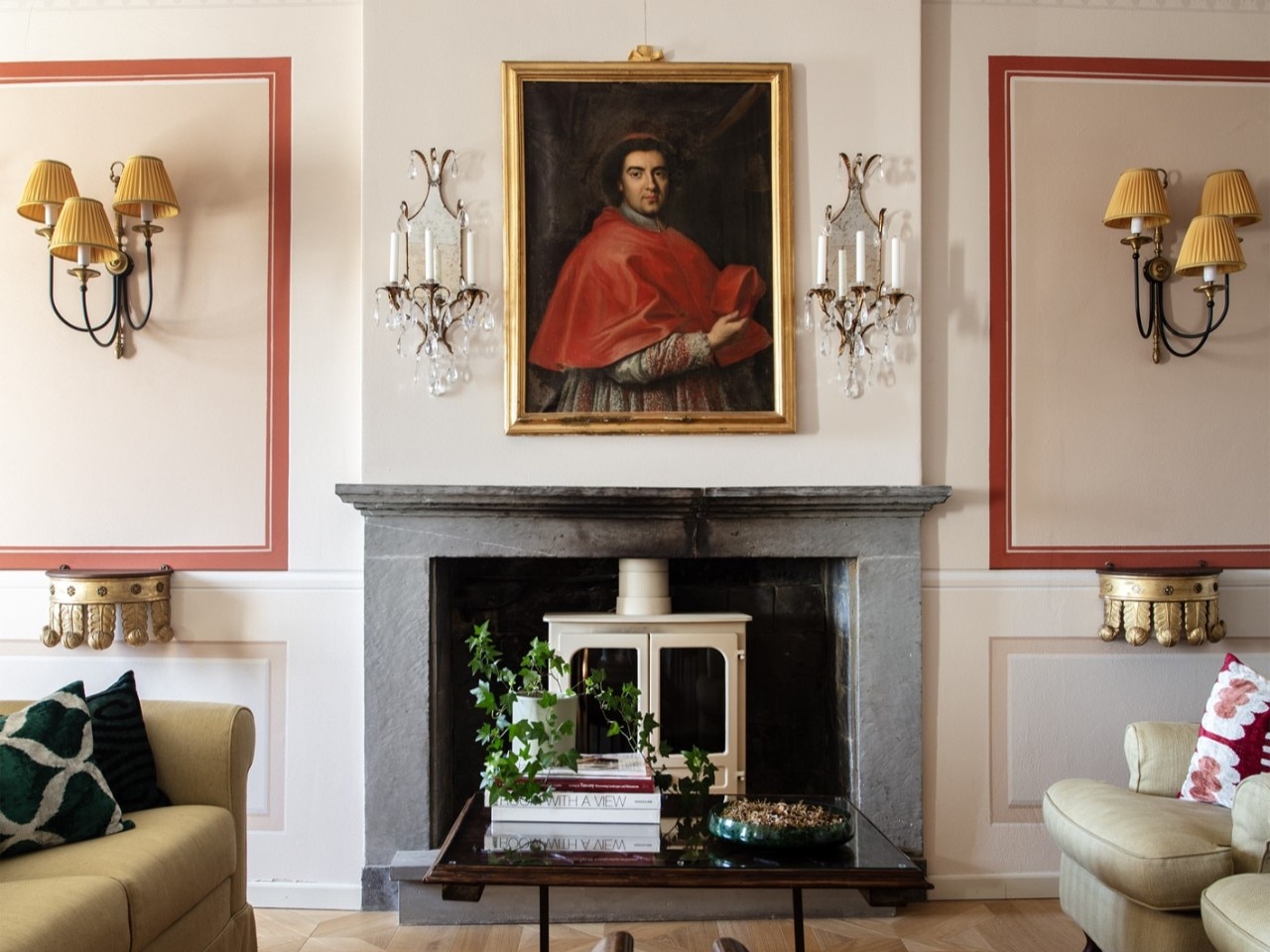
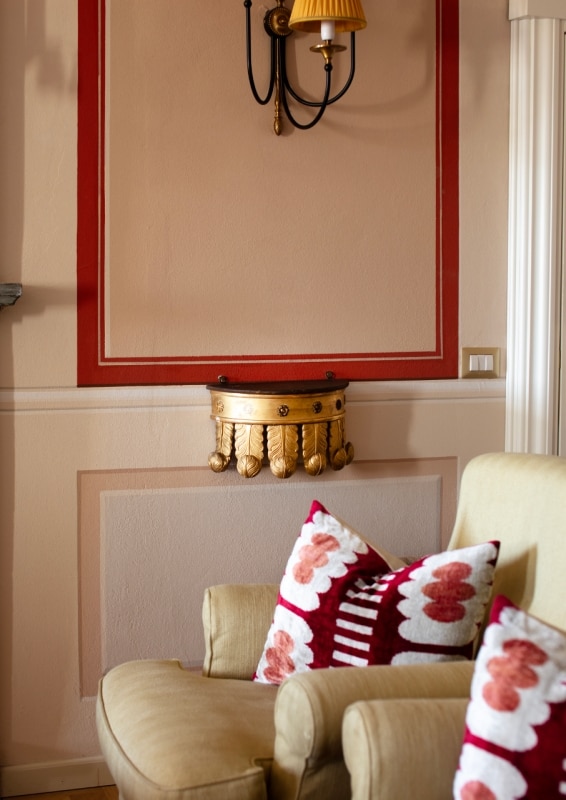
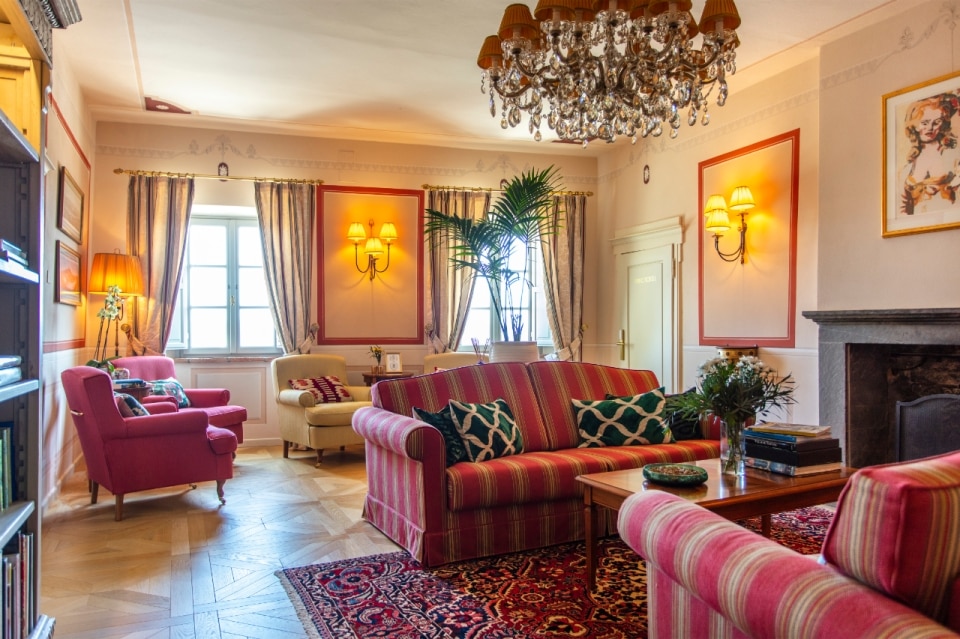
The rooms are furnished with almost obsessive attention to detail—rare even in high-end hospitality: hair ties in the amenities kit, ironing boards placed in the rooms, double shoe brushes. Antique furniture alternates with works of art, while ceilings feature decorations with a faint Art Nouveau influence. But even here, caution is needed with words: “antique furniture” and “Art Nouveau decoration” can mean many things, not all equally refined. Here, they form a silent accumulation with coherence—the coherence of someone who truly knows objects, who has vision, culture, and sedimented knowledge. What stands out is also the library, which includes a strong focus on photography.
Werich remains, after all, a photographer. He still looks at the world through composition—he knows how to choose objects, colours, and placement, and why they belong where they are. The rooms at Palazzo Tiglio possess that rare quality the French call habitabilité: they feel already lived in, already inhabited by a story that predates the guest’s arrival and will continue after their departure. In fact, it will wait for their return—something that inevitably happens. A couple from Florence, John says, has returned more than 150 times. A difficult benchmark for anyone, anywhere.
At a time when Italian tourism oscillates between the unchecked gentrification of art cities and the nostalgic “museumification” of small villages, Palazzo Tiglio offers a third way [...]. A form of hospitality that does not extract value from the local area but rather generates it
Next to the building, across the road, there is a walled rose garden with a seating area, a swimming pool, and a botanical kitchen garden. A tripartite garden in the Renaissance tradition: one part for the body, one for the mind, one for the spirit. At the end, there is a vast, uninterrupted view over the Valdambra, unfolding with the quiet generosity of landscapes not yet colonized by mass tourism. Before returning up to the restaurant, there is the medieval church of San Rocco, still consecrated but reactivated as an exhibition space. Every element here is not an addition, but a continuation.
The Cantinetta, or the democracy of space
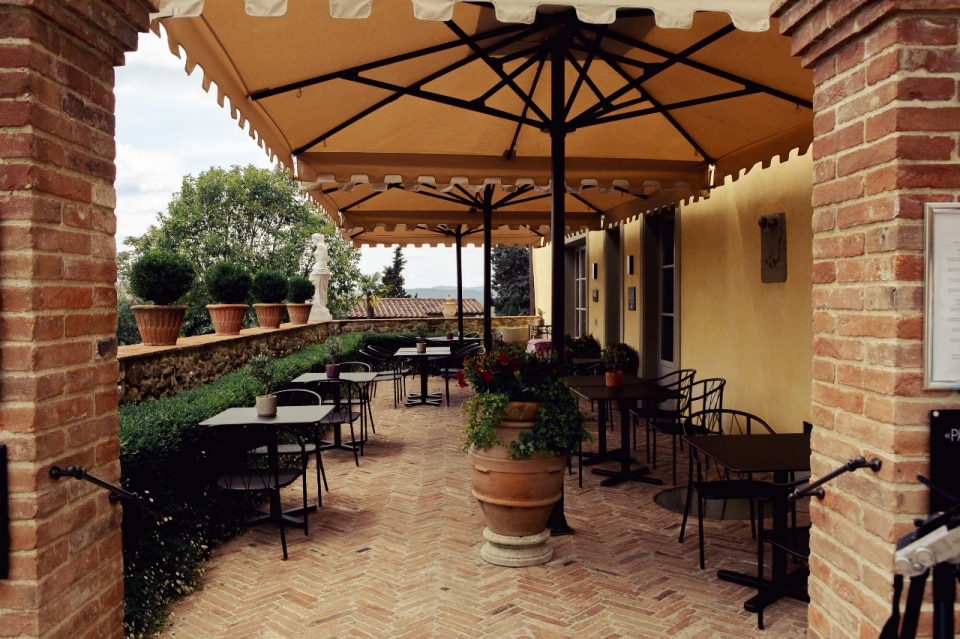
Within this ethical and aesthetic system, the Cantinetta deserves its own reflection, because it is perhaps the most radical gesture of the entire Palazzo Tiglio project. At a time when luxury hospitality tends toward exclusion—building bubbles of comfort that isolate guests from the surrounding reality, turning landscapes into backdrops and local communities into extras—Werich makes the opposite choice. He opens a space that does not belong to the hotel, even if it is connected to it. A space that belongs to the village, serves the village, and is frequented by the village for its own reasons. This is not romanticism.
It is a precise stance on the relationship between hospitality and territory. It is the awareness that a refined place that destroys the context it depends on is an ontological contradiction: it is undermining exactly what it is trying to sell. Werich understands this earlier than many operators far more experienced than him in the hotel industry. Perhaps because he comes from a cultured family, perhaps because he is an intellectual not clouded by sector logics. But above all because he has become one of the place—one of San Pancrazio.
The kitchen, or the landscape
In the original cellars of the palazzo, the gourmet restaurant finds its home. The decision to place the kitchen underground was not a logistical necessity but, so to speak, a narrative one.
You descend below street level, below ordinary time, into a space carved into the rock—forty-seven trucks were needed to remove the debris—still bearing the marks of centuries of use. Dining here becomes an act with something almost liturgical about it, though not in the pompous or self-referential sense that the term has acquired in contemporary fine dining. Rather, it is liturgical in its original meaning: a ritual that connects those who perform it to something larger than themselves.
The gastronomic proposal is led by executive chef Mattia Parlanti. It is seasonal, moving between sea and land, drawing on a carefully selected network of local producers. The starting point is the kitchen garden of Palazzo Tiglio itself, cultivated by Werich together with the chef. Again, this is not a marketing gesture—no “zero kilometre”, no “sustainability slogans”, all those overused expressions that have been emptied of meaning through repetition. This is practice. Werich genuinely tends the garden. The chef genuinely cooks what the garden produces. The menu changes because the seasons change, because what grows changes. It is a chain of cause and effect that gives food a truth that is difficult to fake.
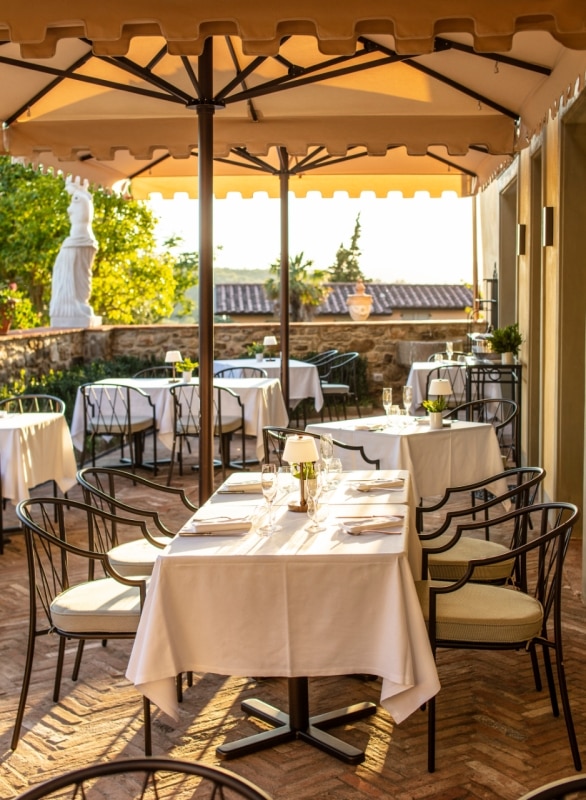
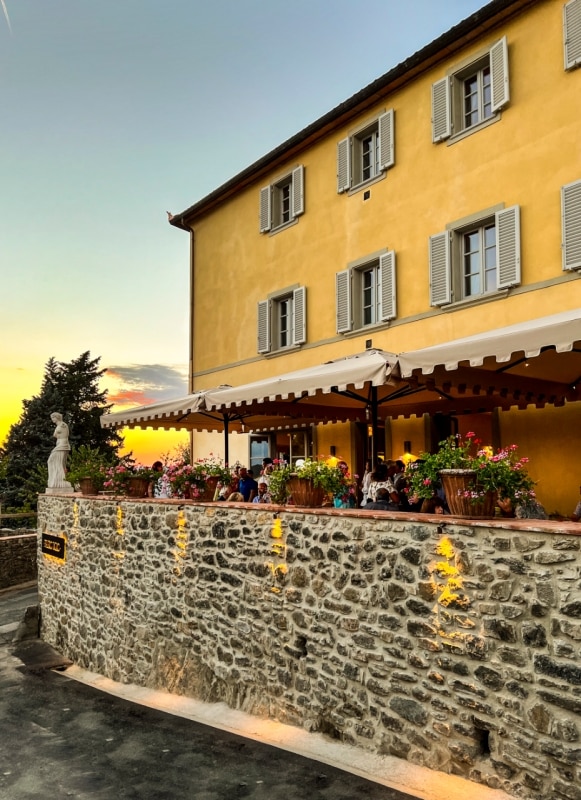
In the dining room, maître and sommelier Danilo Salvi presides with a discreet expertise that reflects the stylistic signature of the entire project: never ostentation, never performance, never representation. Skill as background, not foreground. The restaurant has two indoor dining rooms enriched with artworks, and an outdoor terrace overlooking the valley, from which the sunset over San Pancrazio is, according to those who return, something that stays in the body rather than only in the eyes.
The Filarmonica, or the future as restoration
There is one final chapter to this story, perhaps the most emblematic.
A few steps from the hotel stands the theatre of San Pancrazio, built in 1916 for the local Società Filarmonica—a musical association founded in the same year—and left unused for almost fifty years. A small theatre, still structurally sound, with a new roof installed in 2024, though not entirely in keeping with the original structure. A place that has been waiting. Or rather, that was waiting. Werich decided not to let it wait any longer.
He promoted the creation of a non-profit cultural association to raise the funds needed for its full restoration. And he succeeded: entirely private funding. The official reopening is scheduled for summer 2026, marked by an inaugural concert on July 18 featuring internationally renowned pianist Per Tengstrand, winner of the Cleveland International Piano Competition.
Werich does something different and much more difficult: he listens to the place, connects with the community, and engages with what cannot be put into words but can only be experienced. In this way, he lets the Roman foundations, the medieval vaults, and the 17th-century proportions set the rules of the game
A theatre reopening in a village of a few hundred inhabitants in the Tuscan countryside. If this is not an act of civic resistance, what is? If it is not proof that the most authentic form of luxury is the one that produces public beauty rather than private comfort, then what could it possibly be?
The silent lesson of Palazzo Tiglio
Palazzo Tiglio has been included in the Michelin Hotel Selection Guide. It has been a member of Small Luxury Hotels of the World since 2024—among the most intimate properties in Europe within the network, with some of the highest ratings in Italy. It has also received the Golden Crown of Historic Residences. The recognitions are there, and they are deserved. But the point is elsewhere. The point is the model. At a moment when Italian tourism oscillates between the aggressive gentrification of major art cities and the nostalgic museumification of smaller villages, Palazzo Tiglio offers a third path—not a compromise, but something qualitatively different.A form of hospitality that is also stewardship, also care, also cultural project. A hospitality that does not extract value from its territory but produces it. That does not consume place but nourishes it. That does not separate social classes but brings them together.
The lesson is simple, in the end. John Werich is not a hotelier. He is an inhabitant, to use Gio Ponti’s word. A young man who chose to share the place he adopted as his own first with his family, then with his partner and business associate, and finally with the community he wished to belong to. He did so according to ancient rules he found and embraced, and newer ones he established slowly and deliberately. Rules that have to do with beauty—of landscape, interiors, food, and the people who live in San Pancrazio or come to spend a few days there—but also with responsibility.
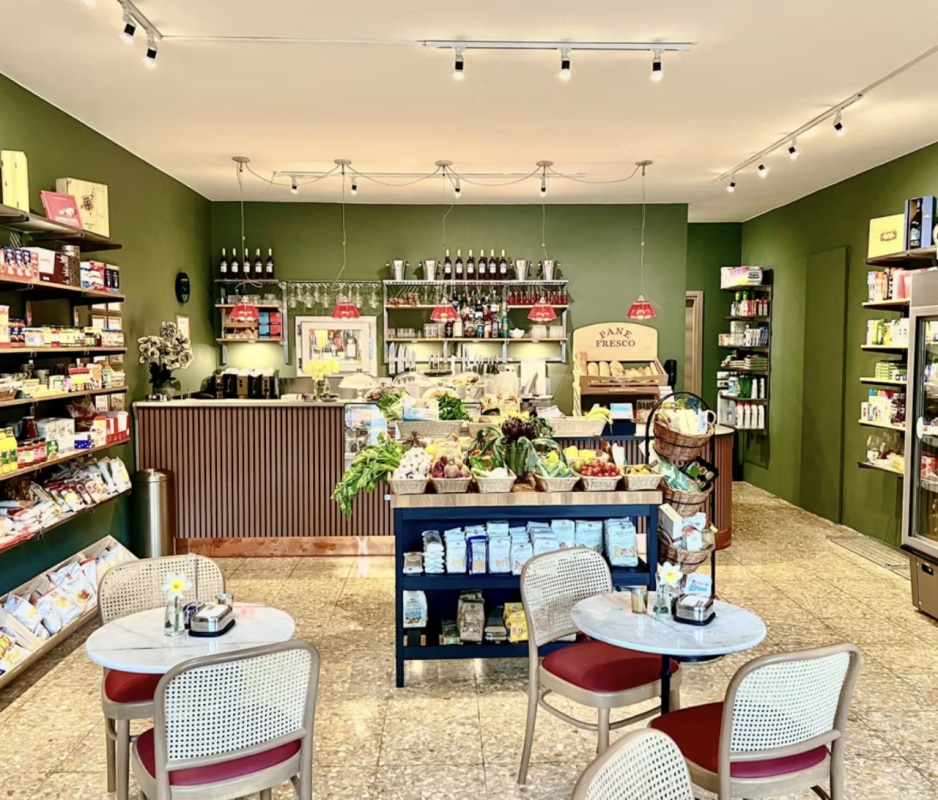
The idea that anyone who arrives in a place and transforms it carries a debt toward that place, one that cannot be repaid merely through façade restorations or job creation. It is repaid through continuity of life: a garden cultivated personally, a shop that serves both local workers and visiting guests, a theatre reopened for everyone, an orchard tended by hand.
A continuity of life that is complicated, but profoundly beautiful. There is something deeply Scandinavian in all this—not in the sense of Nordic design or minimalist aesthetics, but in the underlying ethic: the belief that the common good is not a voluntary gesture, but a necessary condition for a dignified life. What Werich has brought to this corner of Tuscany is not a style, but a posture. And Valdambra, which has seen many styles come and go with quiet amusement, was not used to a posture that is both different and respectful.
We must have the courage to say it. There is something deeply Scandinavian about all this—not in the sense of Nordic design or stylized minimalism, but in the underlying ethic, in the idea that the common good is not a voluntary concession but a necessary condition for a dignified life. What Werich brought to this corner of Tuscany is not a style but an attitude. And Valdambra, which has seen so many styles and welcomed them all with a smile, was not accustomed to a different yet respectful attitude.
Before leaving
Early in the morning, when the June light begins to fall obliquely over San Pancrazio, Palazzo Tiglio is already there, waiting for it. It has, after all, been waiting for centuries—for both the light and the travellers. It waits with the quiet wisdom of not wasting what has been inherited, and with the generosity of returning it in better condition than it was found. John Werich has had that wisdom. And that generosity as well. It is not little. It is a great deal. It is not common. It is rare. And above all, it is a lesson worth remembering—especially on the way home.