



Before becoming a playground for international starchitects, Tirana was a city shaped by the monumental architecture of the socialist regime. The Palace of Congresses is part of a series of public buildings constructed between 1981 and 1988—during the final years of the political system established by Enver Hoxha and his successors—designed to project state authority through architecture. Together with the National Historical Museum and the Pyramid, it remains one of the defining landmarks of Tirana’s urban landscape.
Completed in 1986, the building overlooks Dëshmorët e Kombit Boulevard, the city’s main civic axis. It was originally built to host congresses of the Albanian Party of Labour. Designed by Klement Kolaneci, the structure combines the austere language of socialist institutional architecture with references to local building traditions. Following the collapse of the regime, it continued to function as a congress centre and venue for concerts and cultural events, surviving the profound political and economic changes that have reshaped the country since the 1990s.
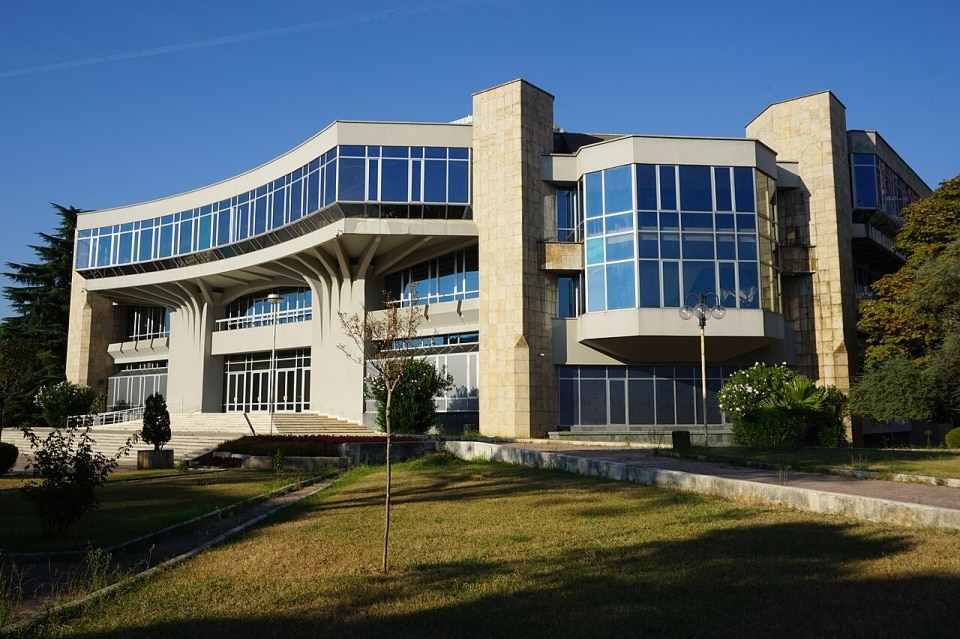
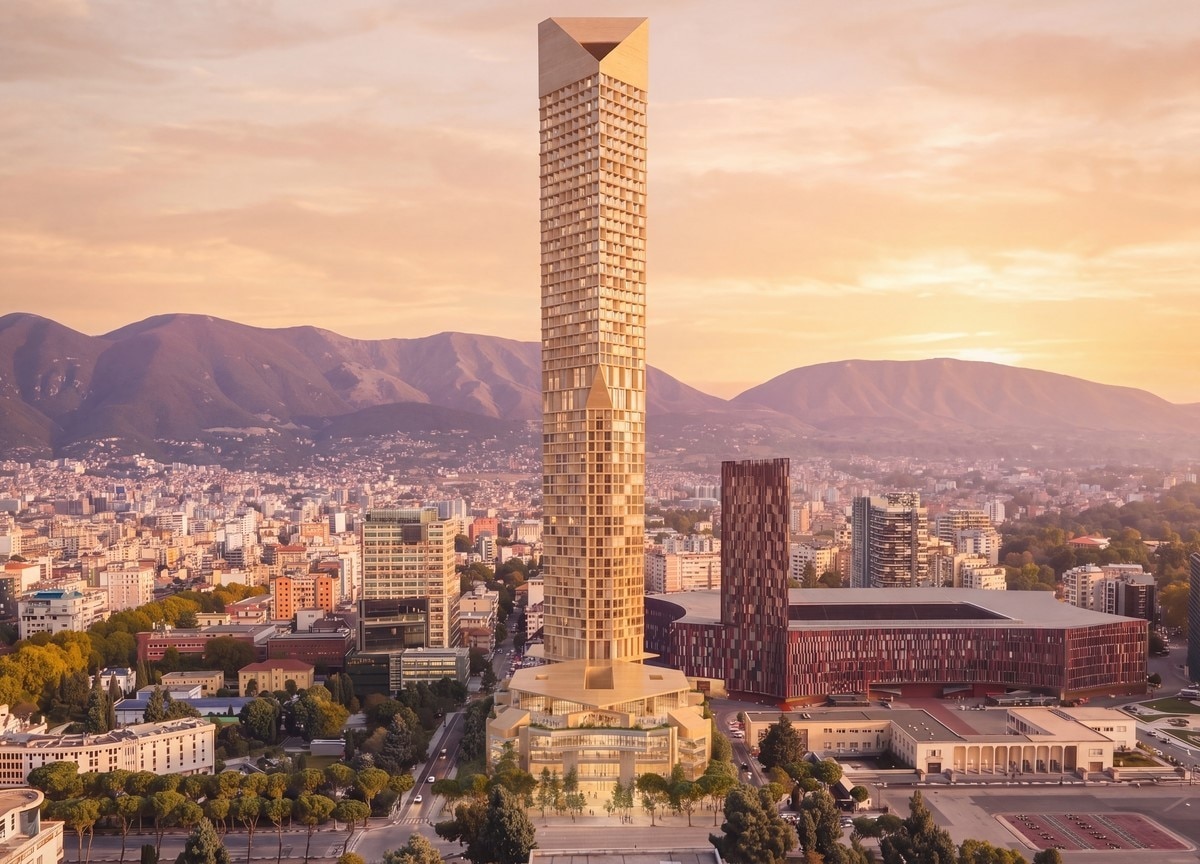
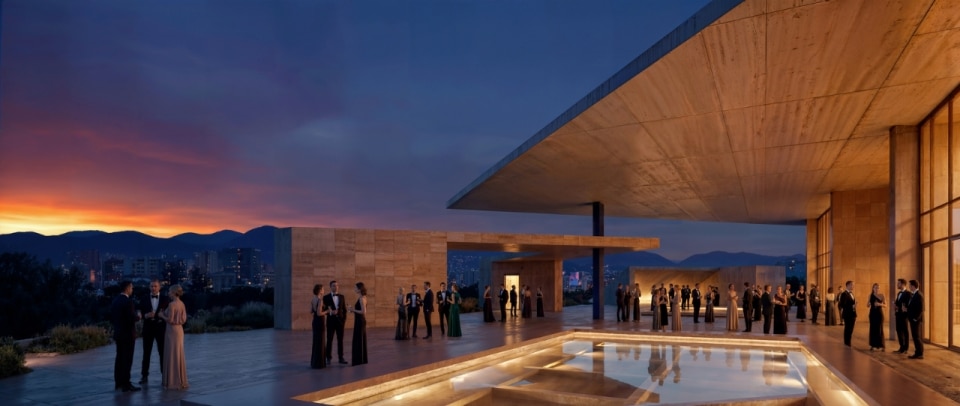
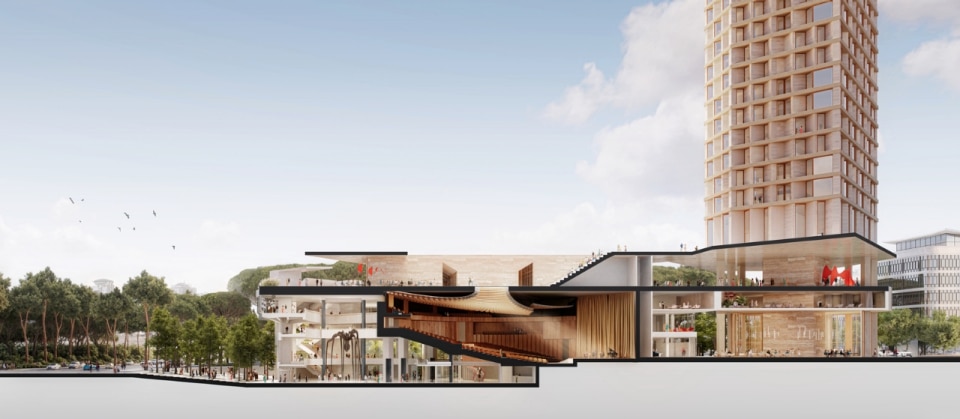
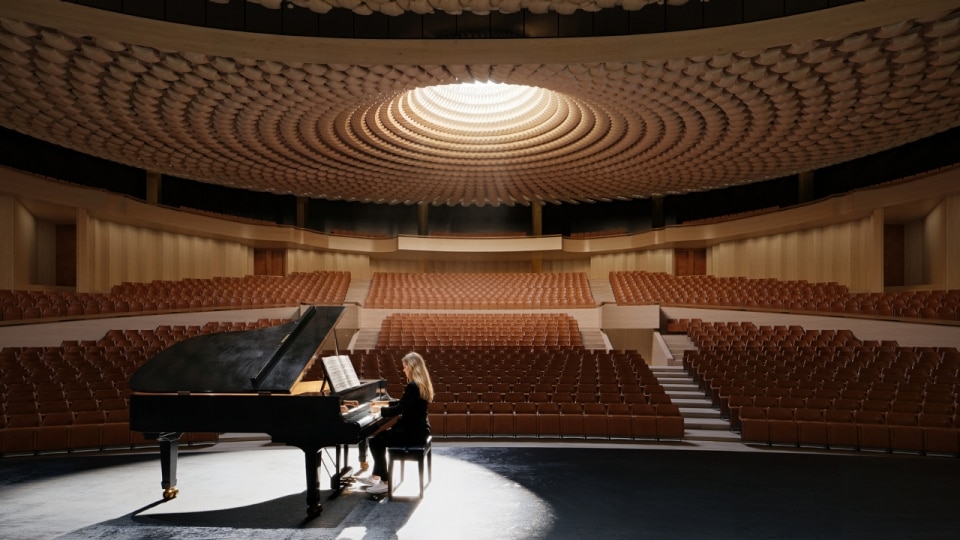
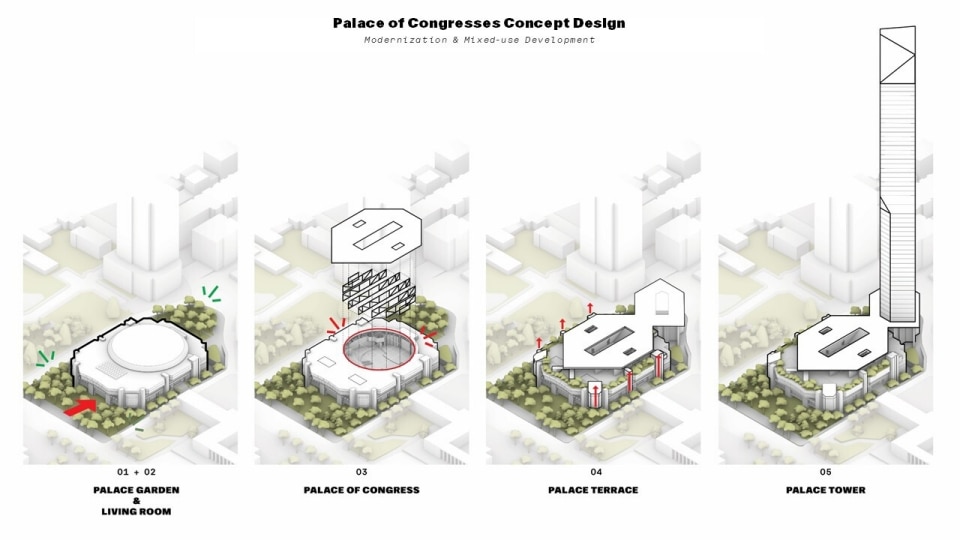
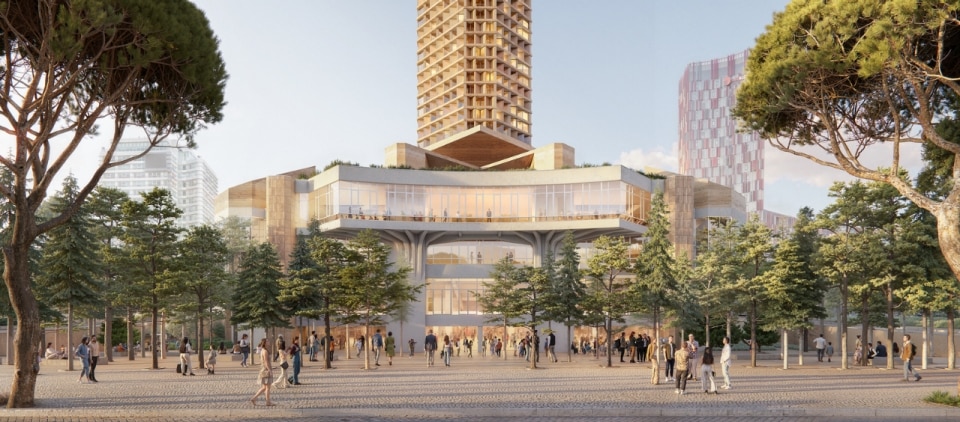
Today, the complex is entering a new phase of transformation. Herzog & de Meuron has won the international competition launched by the Albanian government to reimagine the building. The proposal preserves the existing structure while upgrading its spaces, treating the Palace of Congresses as an integral part of Tirana’s urban memory.
This approach is far from self-evident, and comparisons with the Pyramid are inevitable. Opened in 1988 as a museum dedicated to Enver Hoxha, the building was transformed in 2018 by MVRDV into a centre for education and digital innovation, becoming the most emblematic example of the adaptive reuse of Albania’s socialist monumental heritage. Unlike the Pyramid, which stood abandoned for many years, the Palace of Congresses remained in continuous use, albeit for purposes different from those for which it was originally conceived. Yet Herzog & de Meuron faces a challenge similar to the one tackled by MVRDV: finding a balance between preservation, renewal and urban development.
This is familiar territory for the Swiss practice, which has repeatedly engaged with historically significant buildings and infrastructure throughout its career. Among its best-known projects is the transformation of the former Bankside Power Station into London’s Tate Modern, as well as the redevelopment of the Küppersmühle Museum in Duisburg. In both cases, existing structures were treated as active design material rather than mere relics of the past.
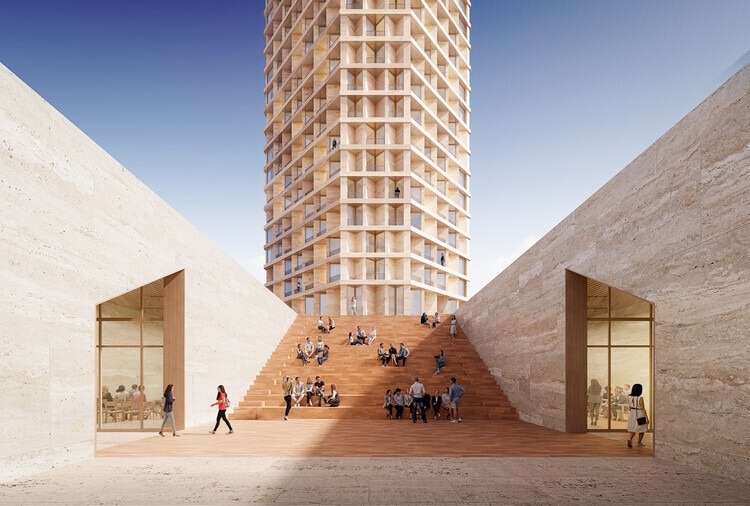
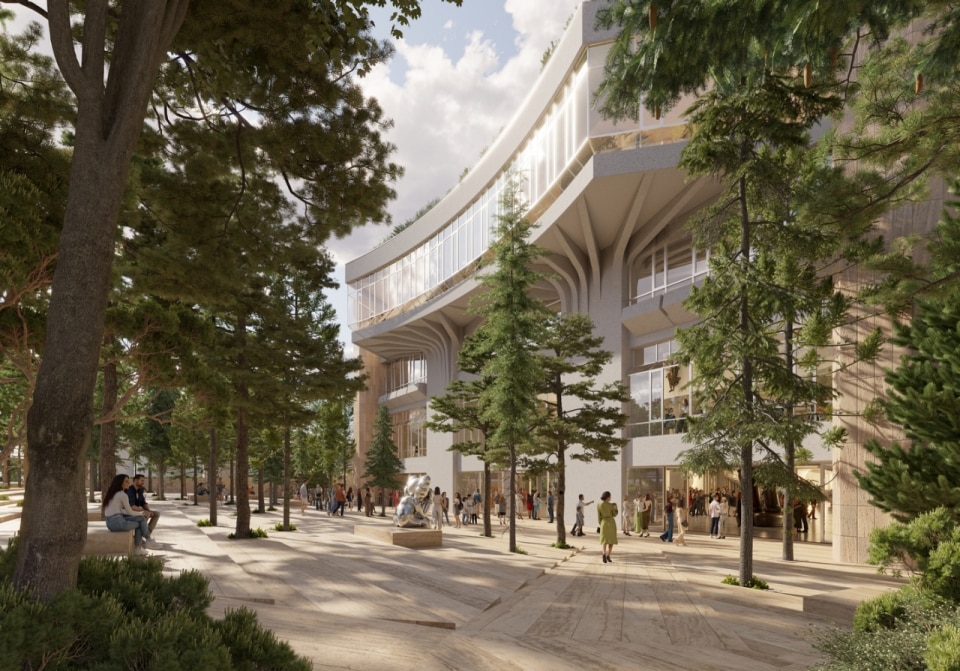
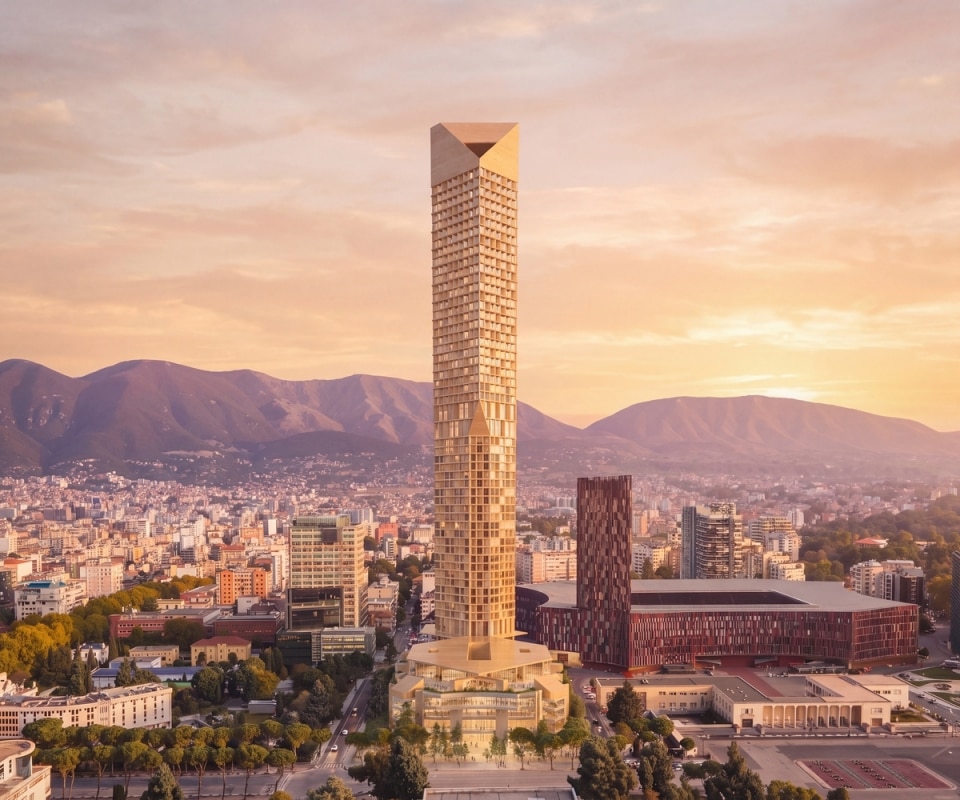
The Tirana project covers a site of approximately 4,760 square metres and includes new public spaces alongside a landscape scheme designed by Michel Desvigne Paysagistes. The most visible addition, however, will be a new mixed-use tower rising next to the historic complex. Reaching a potential height of 255 metres, it is expected to accommodate offices, retail space and a hotel, joining the growing number of skyscrapers that are steadily reshaping the Albanian capital’s skyline.
The project brings together two very different chapters in Tirana’s history. On one side stands the Palace of Congresses, built to embody the power of the socialist regime; on the other, the new tower, a symbol of the real-estate-driven development shaping the contemporary city. The coexistence of these two structures may ultimately tell the story of Tirana’s transformation over the past four decades more effectively than any political manifesto ever could.