


What does the mountain represent today, at a time when climate change is stripping away its glaciers while gorpcore brings hiking boots, technical shells, and Salomons to the small-plates bars of Western cities? It is ultimately a design question.
And there is one object capable of refocusing such a broad discussion, providing both the material and visual tools to address it. It is at once an object and a piece of architecture, a defining obsession of recent years, sitting at the intersection of cultural, environmental, and political concerns, a small symbol carrying larger ideas: the bivouac shelter.
Now central to contemporary outdoor culture, and often the subject of viral imagery, bivouacs were originally conceived to democratise access to the mountains as a sporting landscape. They introduced infrastructure into remote terrain while remaining lightweight and safe. Consider the Refuge Tonneau, designed by Charlotte Perriand in 1938 and conceived to be carried on people’s backs and easily assembled at high altitude, as her daughter Pernette recounted to Domus.
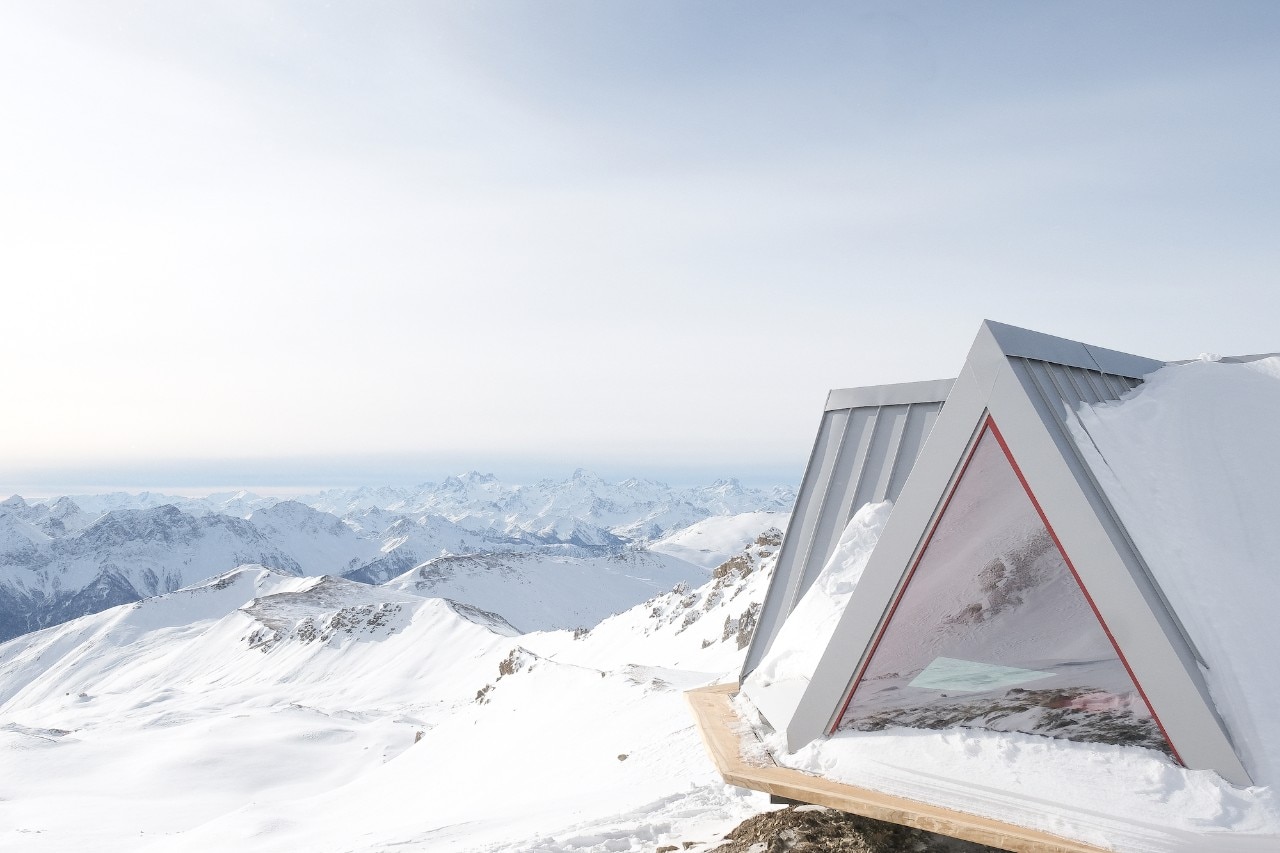
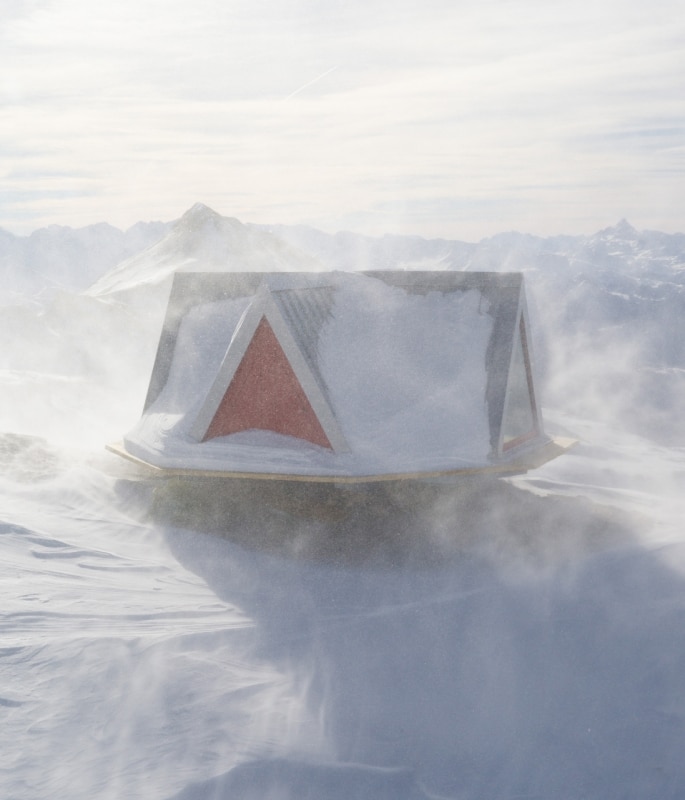
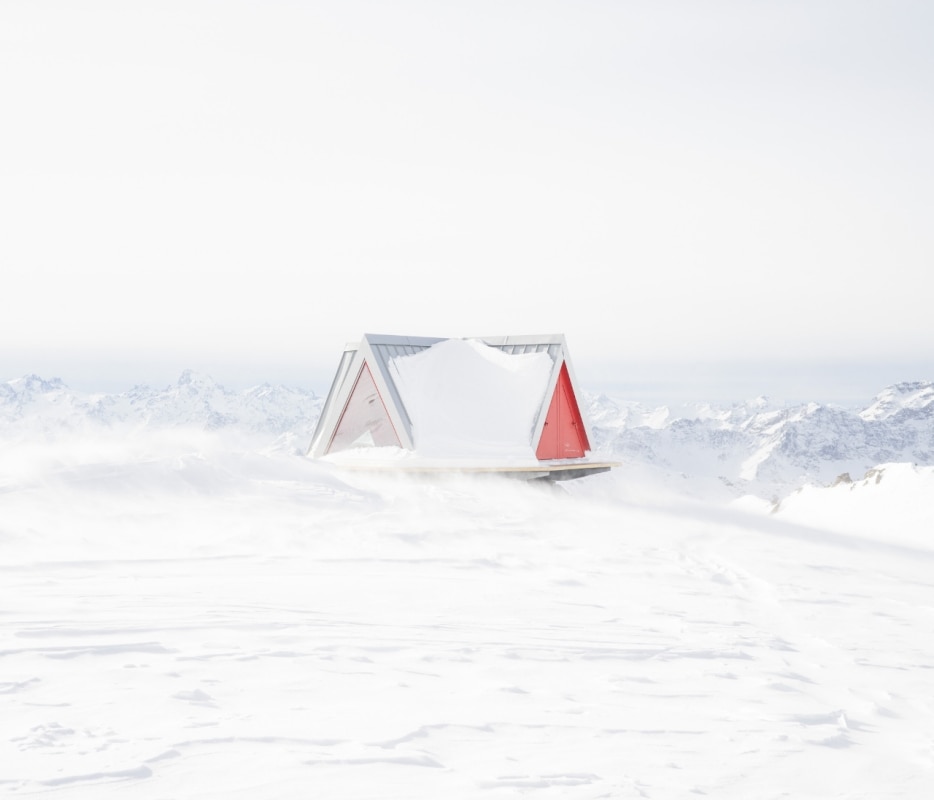
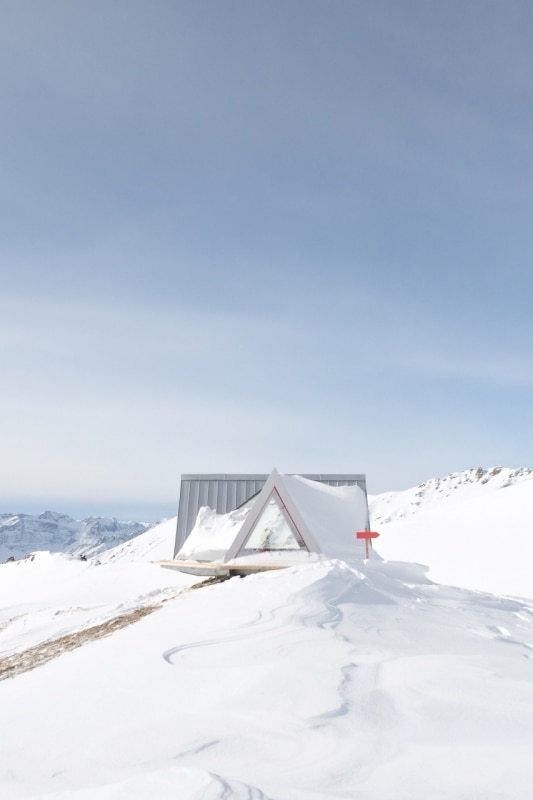
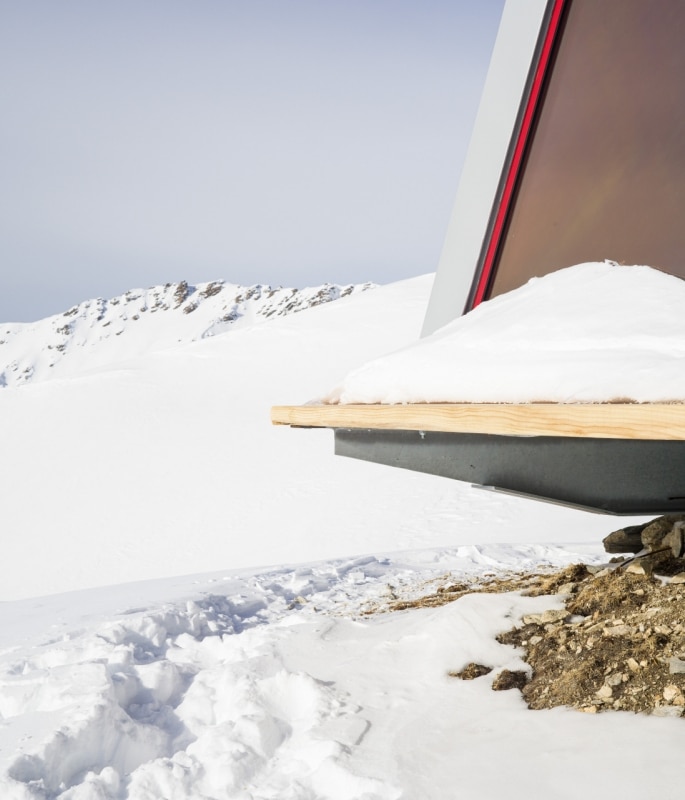
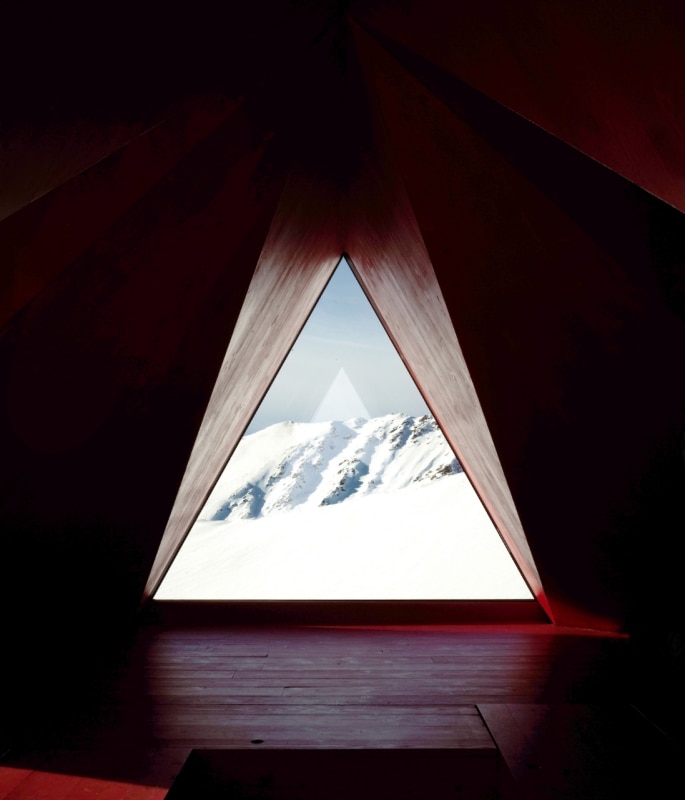
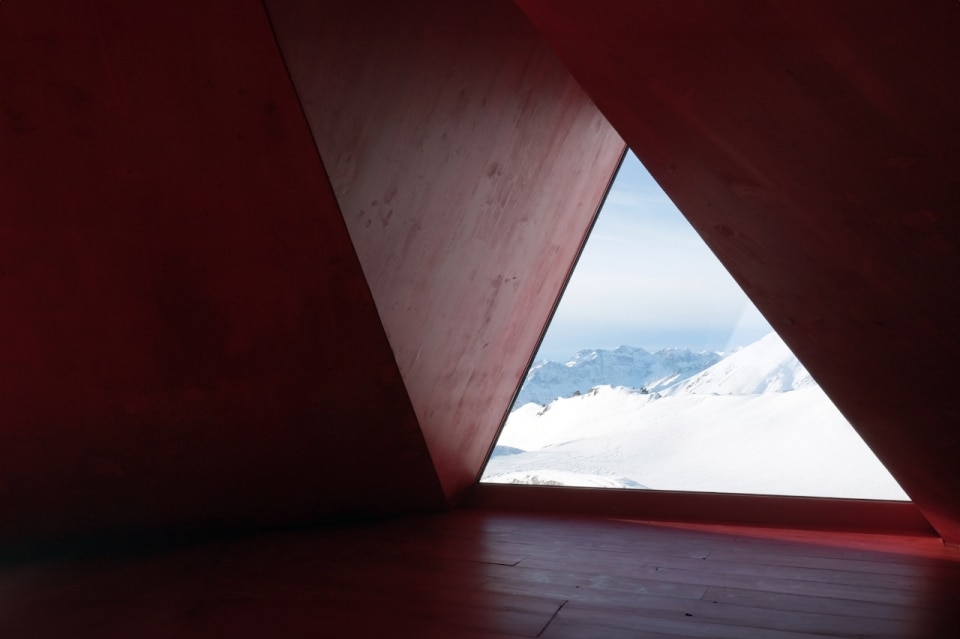
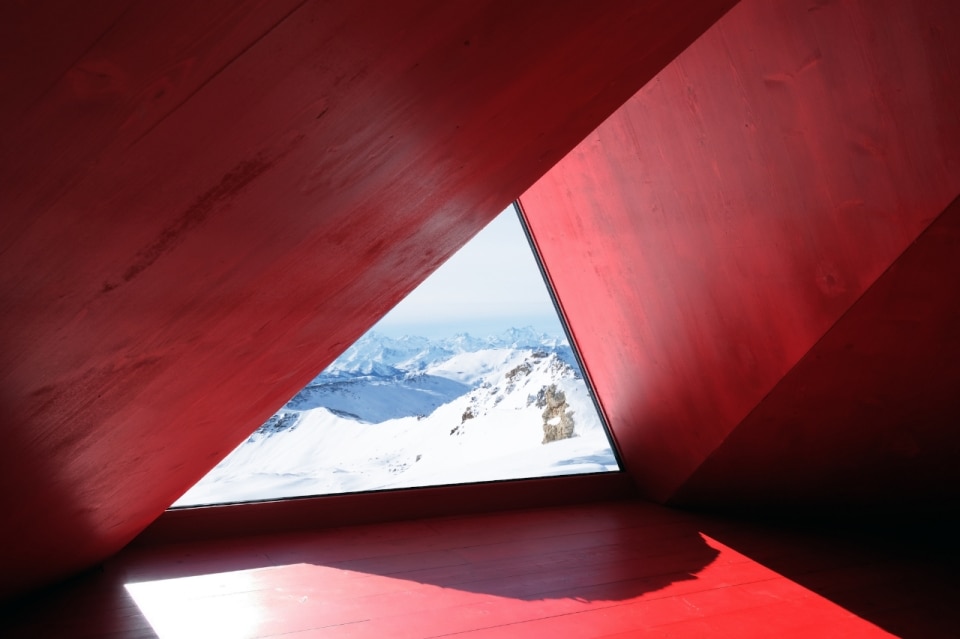
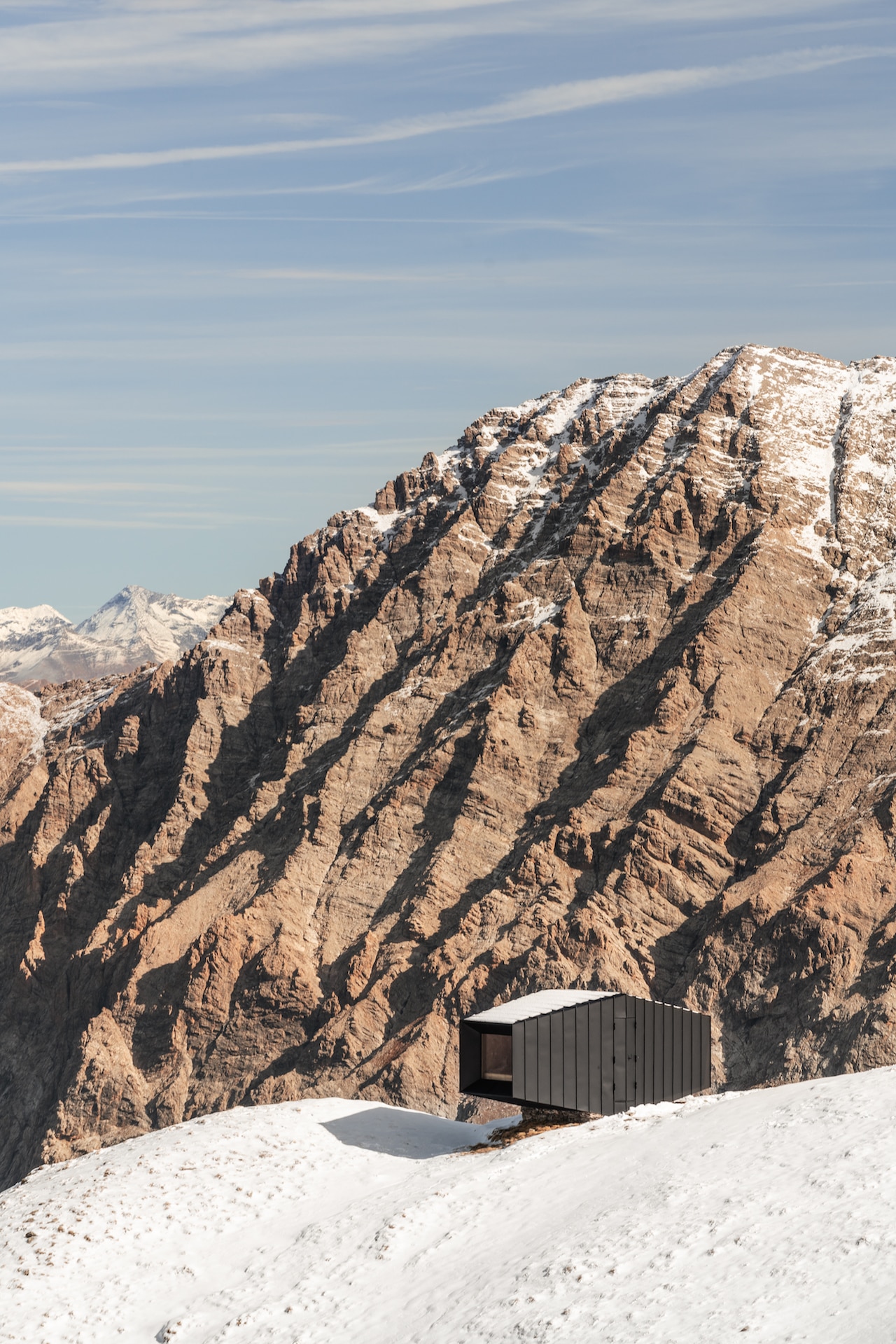
So how do we design a bivouac today? Is it still a vehicle for experimentation? Asking Andrea Cassi and Michele Versaci seems almost inevitable. The co-founders of EX. – a multidisciplinary design practice whose name evokes “experimentation, exploration, experience, extreme...” – have completed three of Italy’s most compelling recent bivouacs in just a few years: Corradini and Berrone in the mountains above Oulx, in Piedmont, and Frattini, inaugurated in 2025 in the Orobie Alps near Bergamo.
These objects are fragile architectures, but architecture itself is inherently fragile, as it is constantly being affected, constantly changing over time. It is ultimately impermanent.
Andrea Cassi
 View gallery


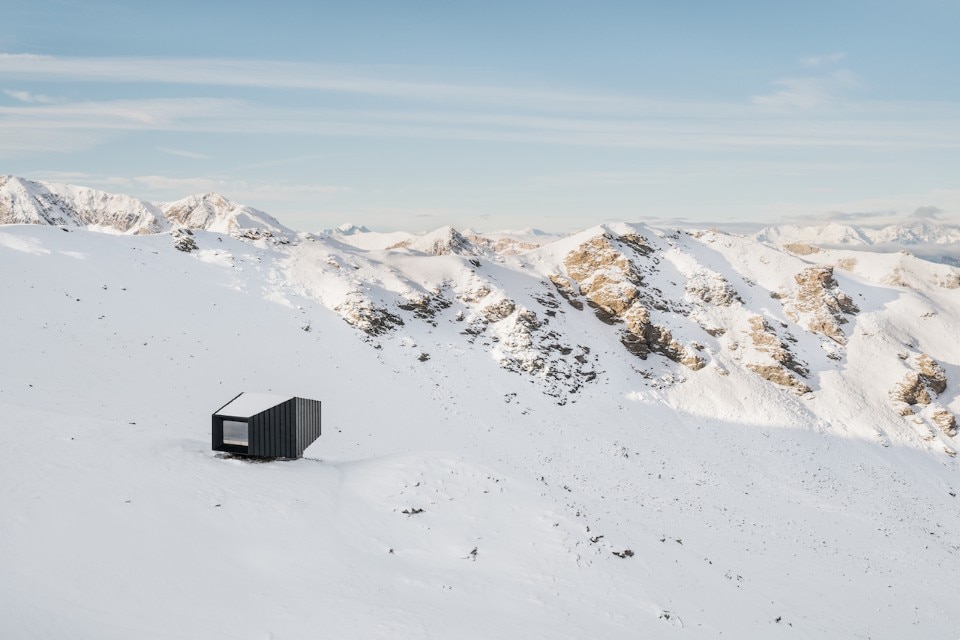
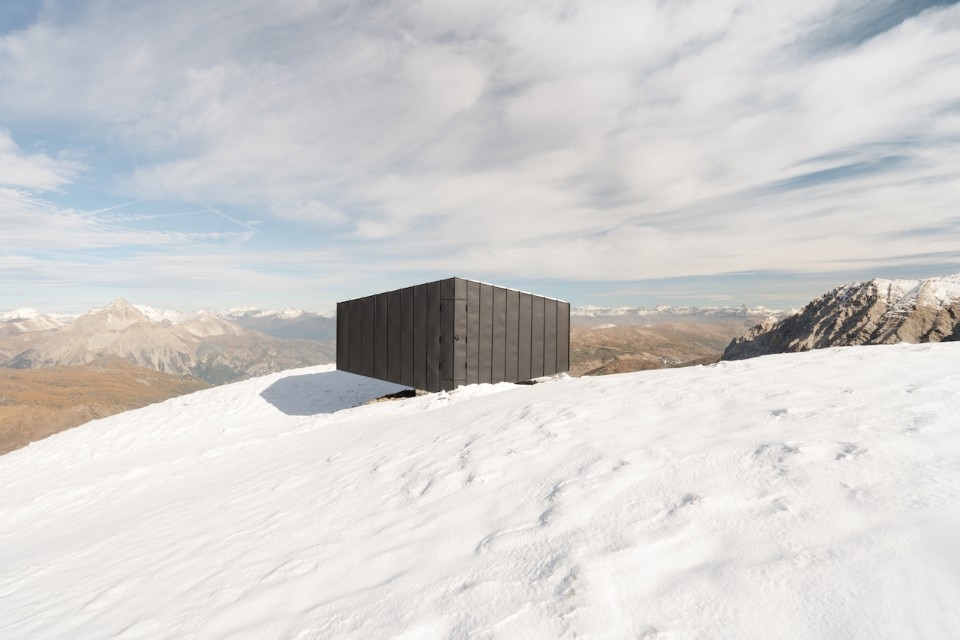
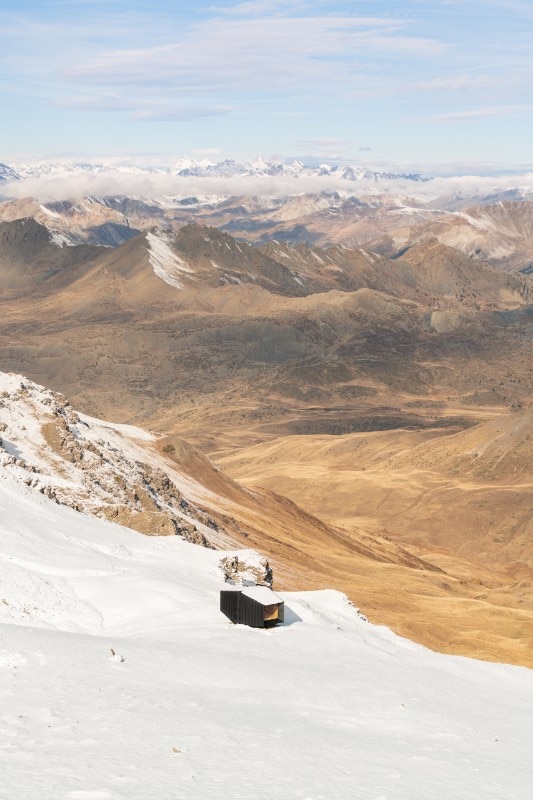
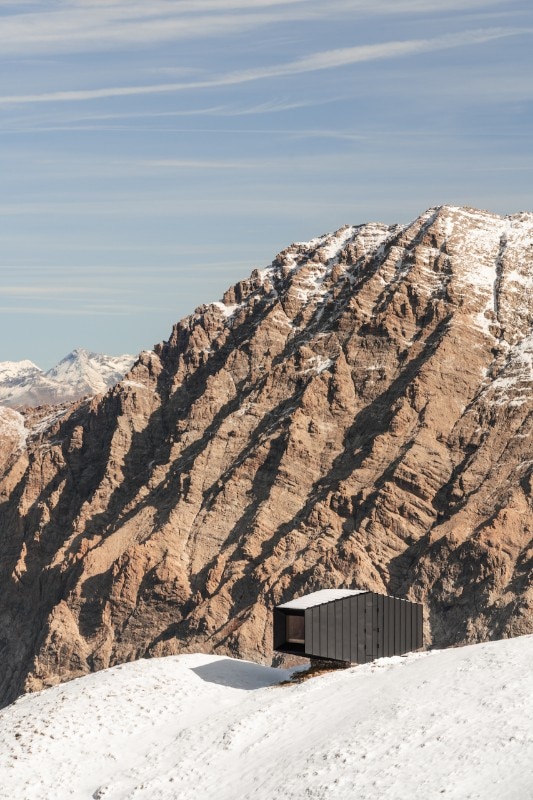
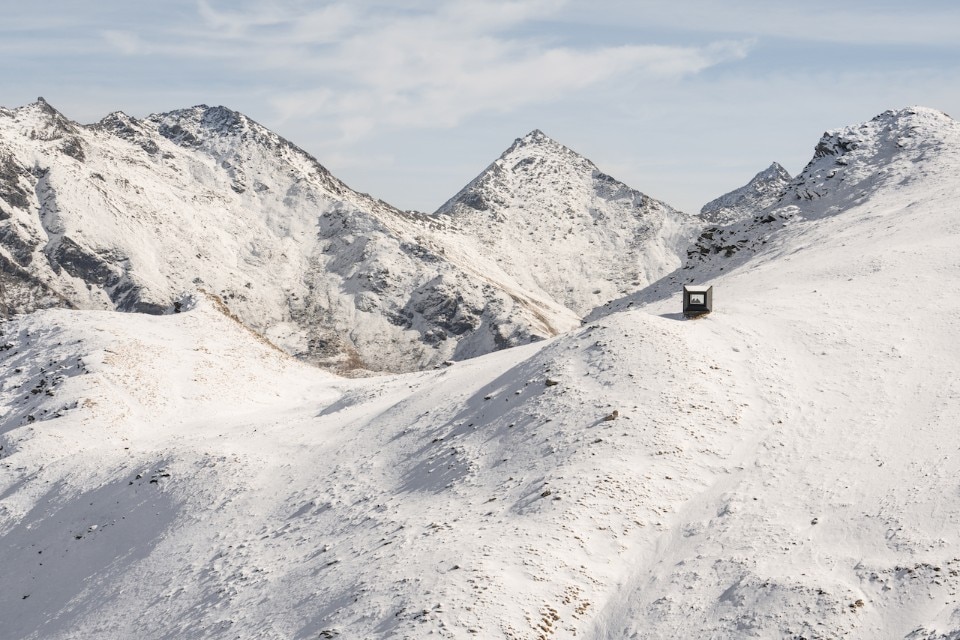
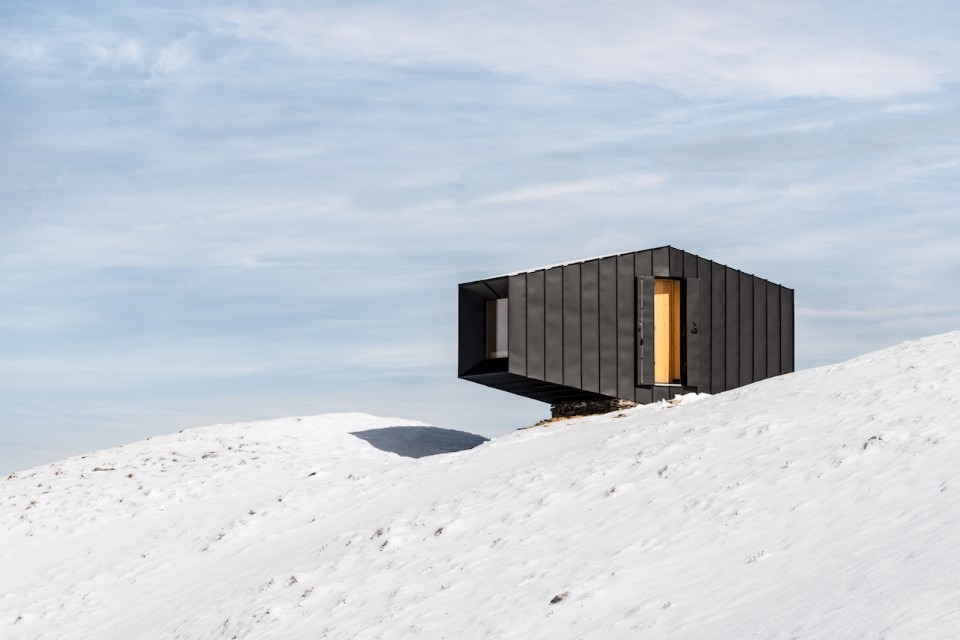
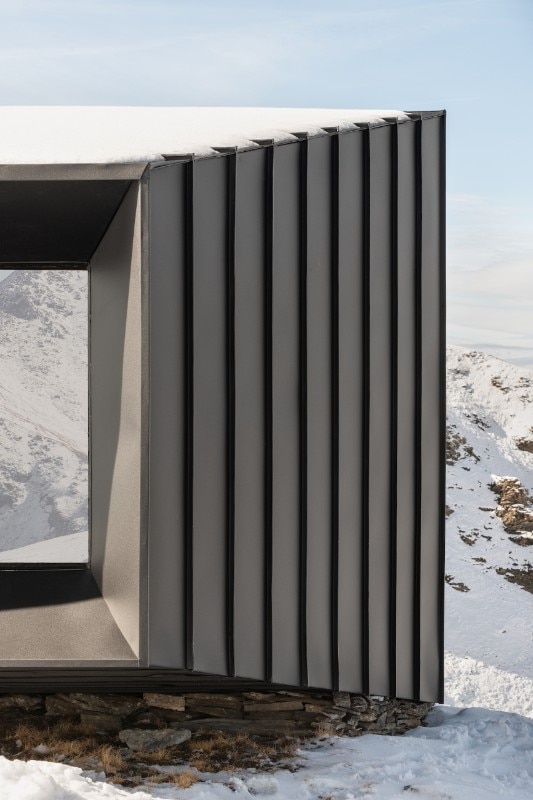
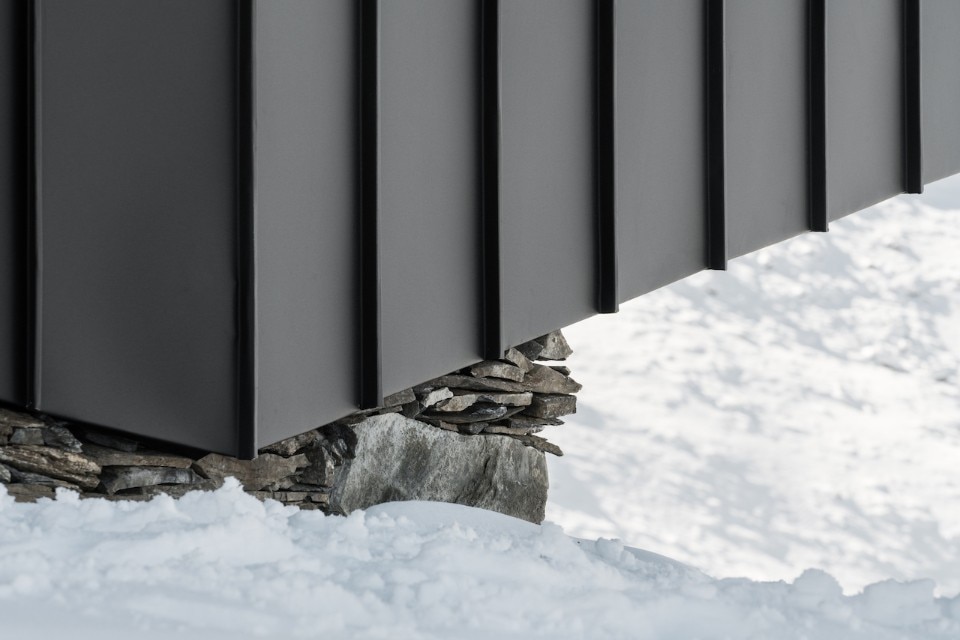
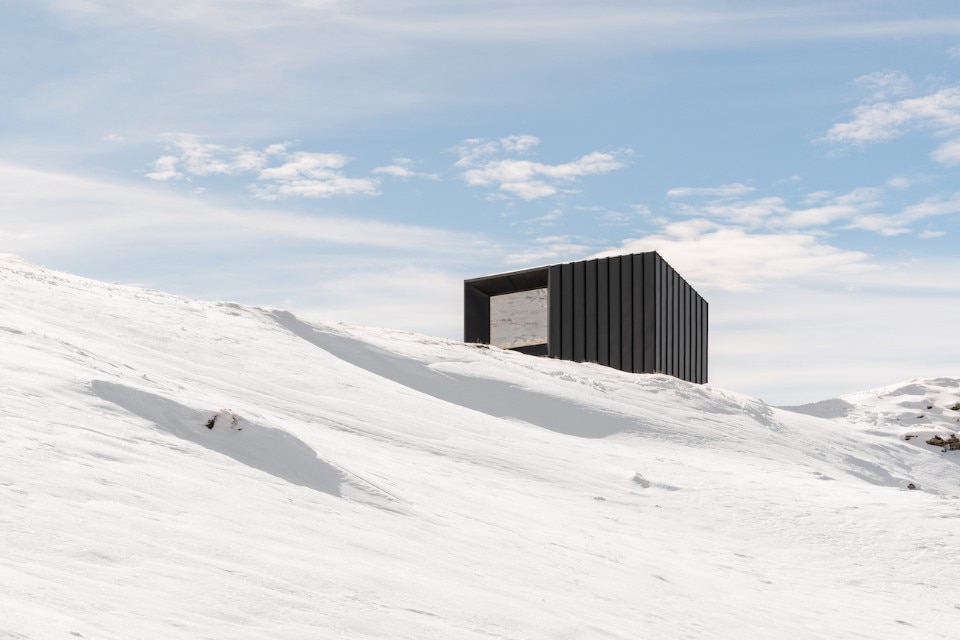
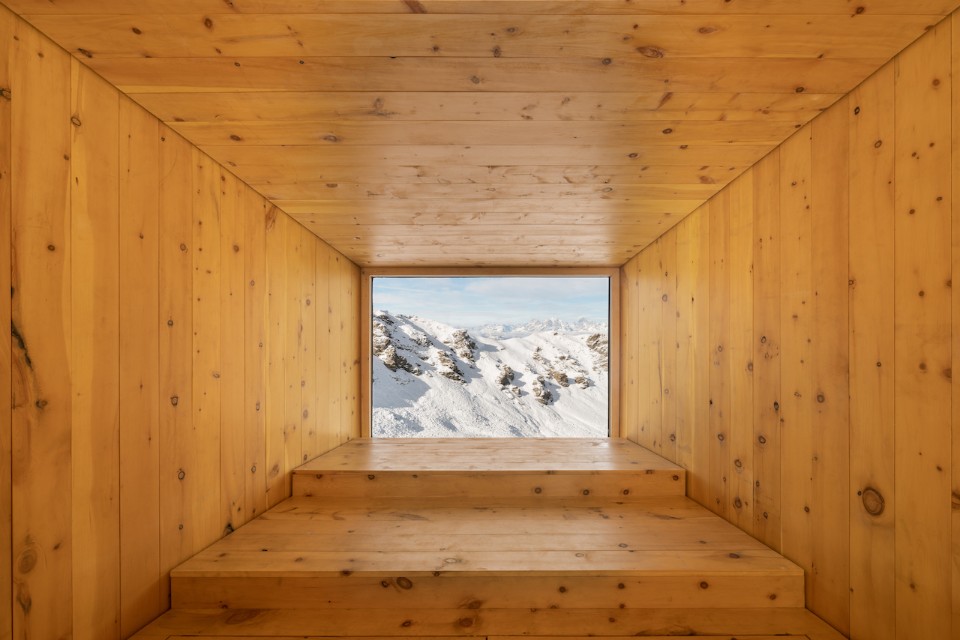
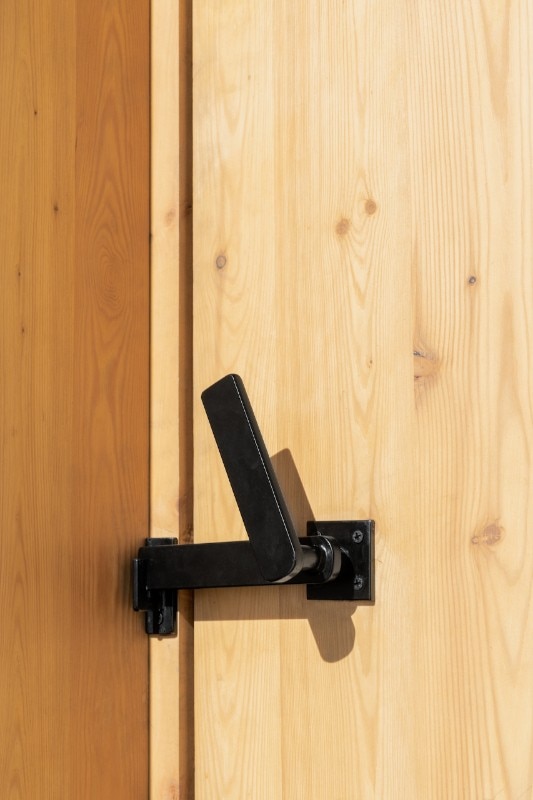
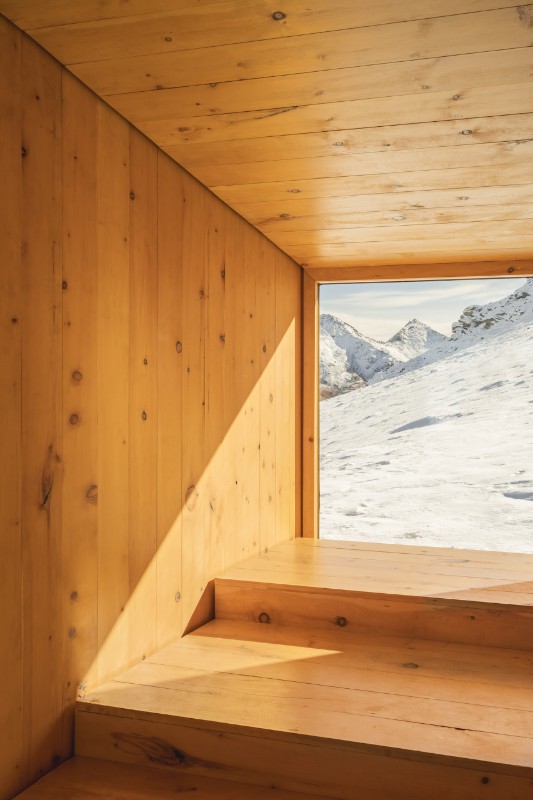
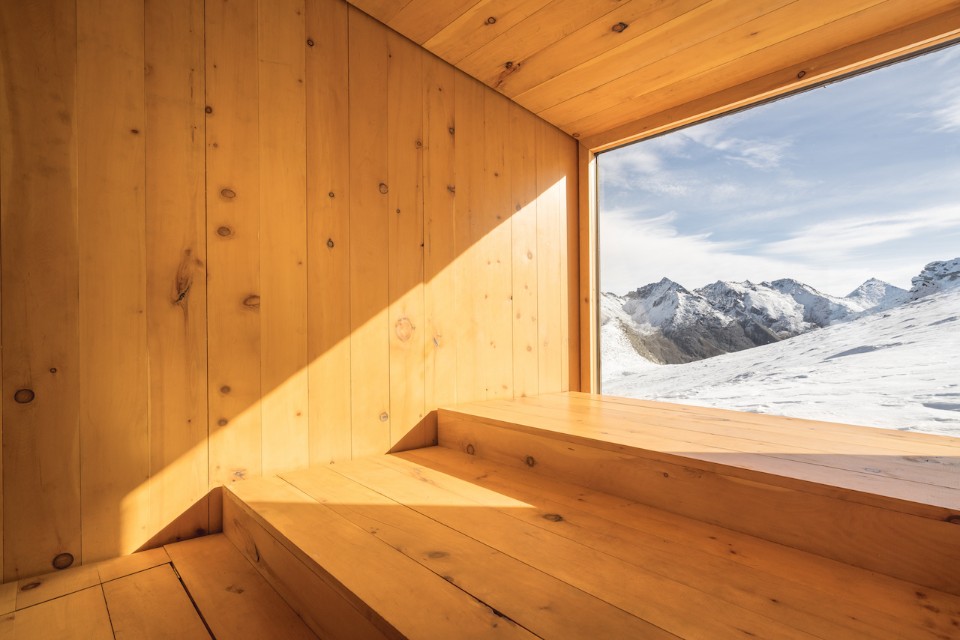
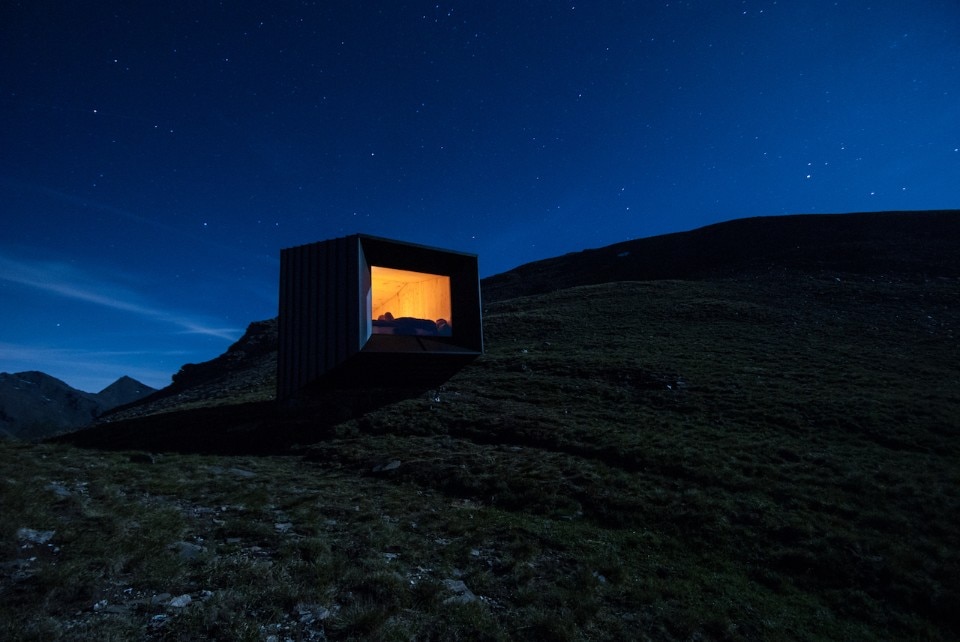
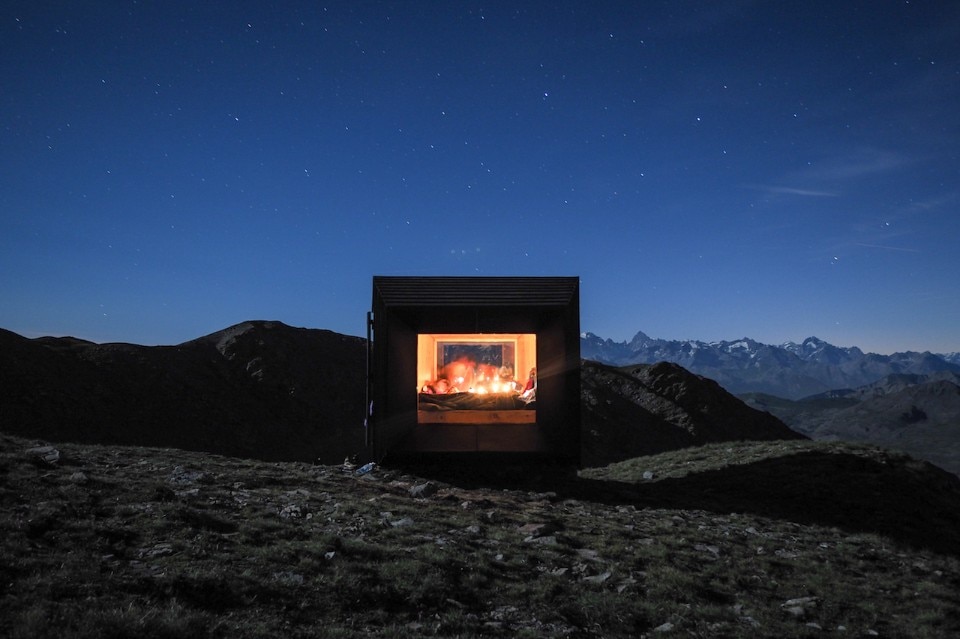
The conversation begins, fittingly, with Perriand. “For us, she’s a guiding light,” says Cassi. “Both the shelter at Mont Joly and the Tonneau, which she developed with Jeanneret, were opportunities for experimentation, and many of those experiments later found their way into everyday furniture. We feel a strong connection to that approach. We’re equally interested in using extreme environments as testing grounds for ideas that can later inform more urban forms of design.”
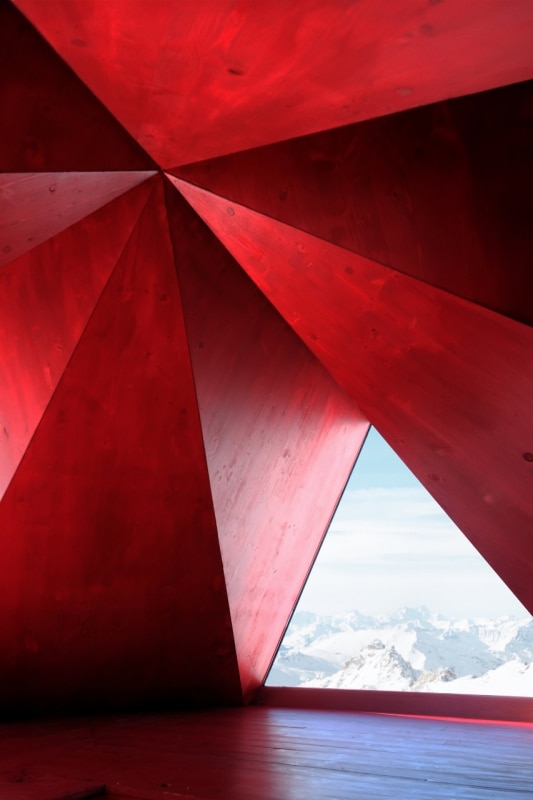
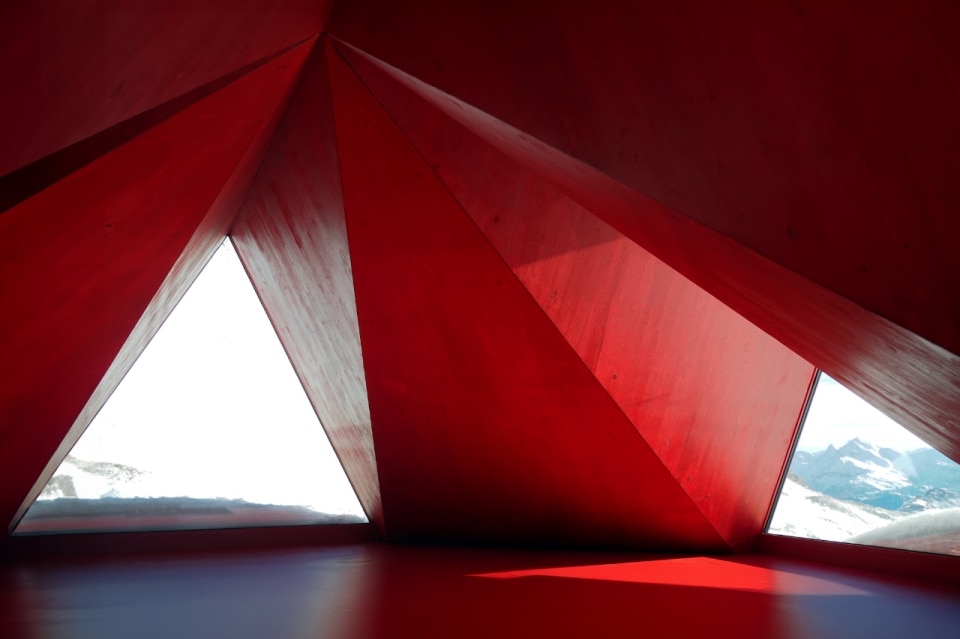
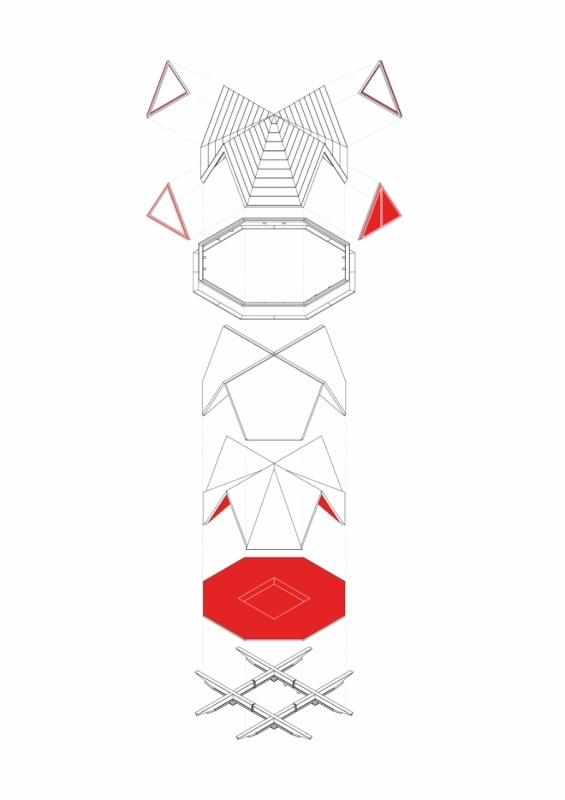
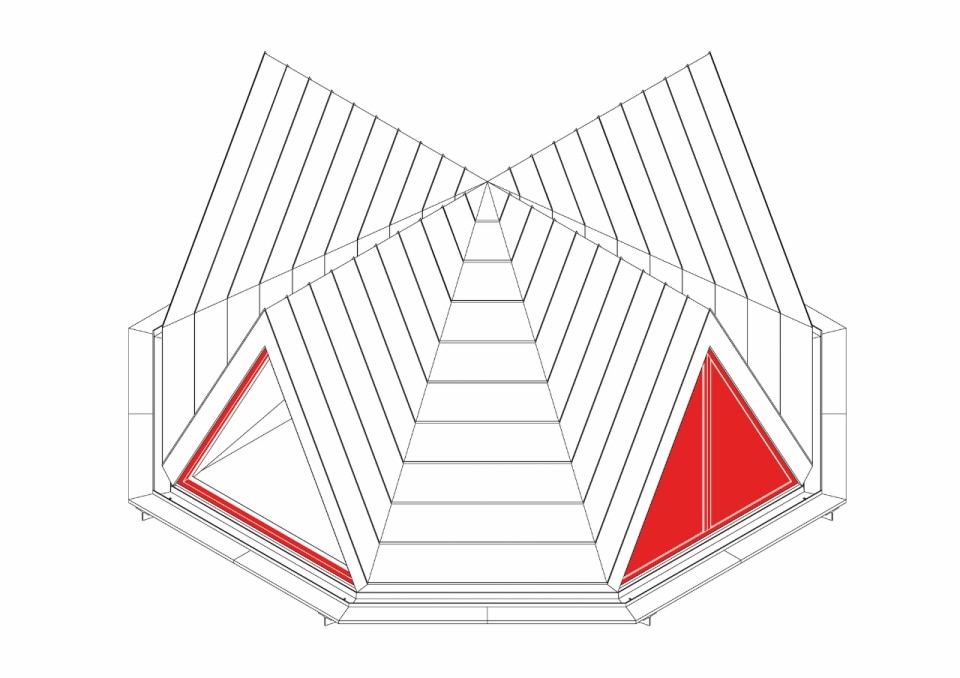
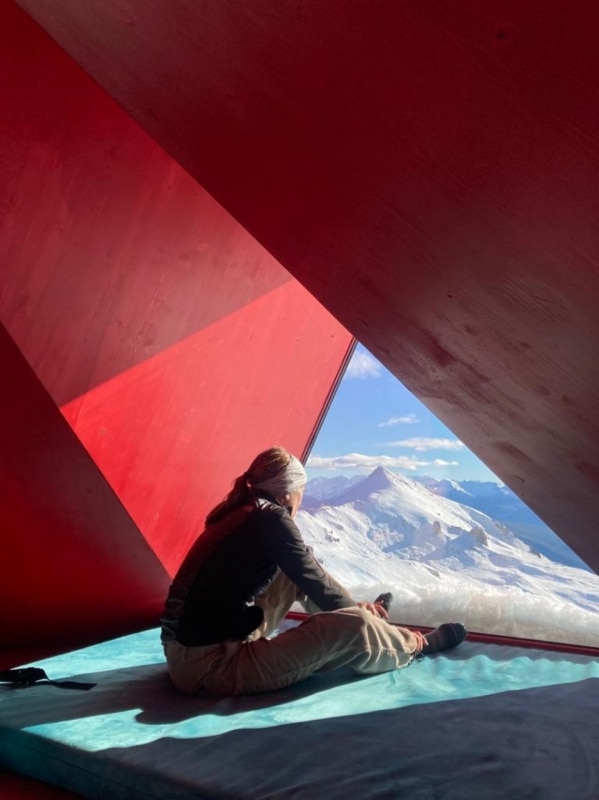
Just as Perriand refined her thinking from one refuge to the next, EX. has treated each project as a step in an ongoing evolution: from Corradini’s telescopic balloon-frame volumes, to the folded CLT (cross-laminated timber) structure that earned Berrone the nickname “Pinwheel”, and finally to Frattini’s metal ribs supporting cork panels wrapped in a membrane – a solution that removes an entire layer from the assembly, making the system even lighter.
Weight, context, and change
Lightness, then. A double-edged quality in a building type whose greatest risk is not being crushed by the elements but being torn away by the wind. Yet it remains essential.
For EX., three principles underpin every project: weight, the relationship with context, and change over time.
Weight matters, Cassi explains, “both in the practical sense, in terms of assembly, and in a broader sense. As Buckminster Fuller famously asked: ‘How much does your house weigh?’”. Then comes the relationship with the environment, understood above all as a construction material – as the sum of those “moving materials” that Hiroshi Sambuichi described as air, water, and light. These are active forces that not only shape a project but become part of its very substance.
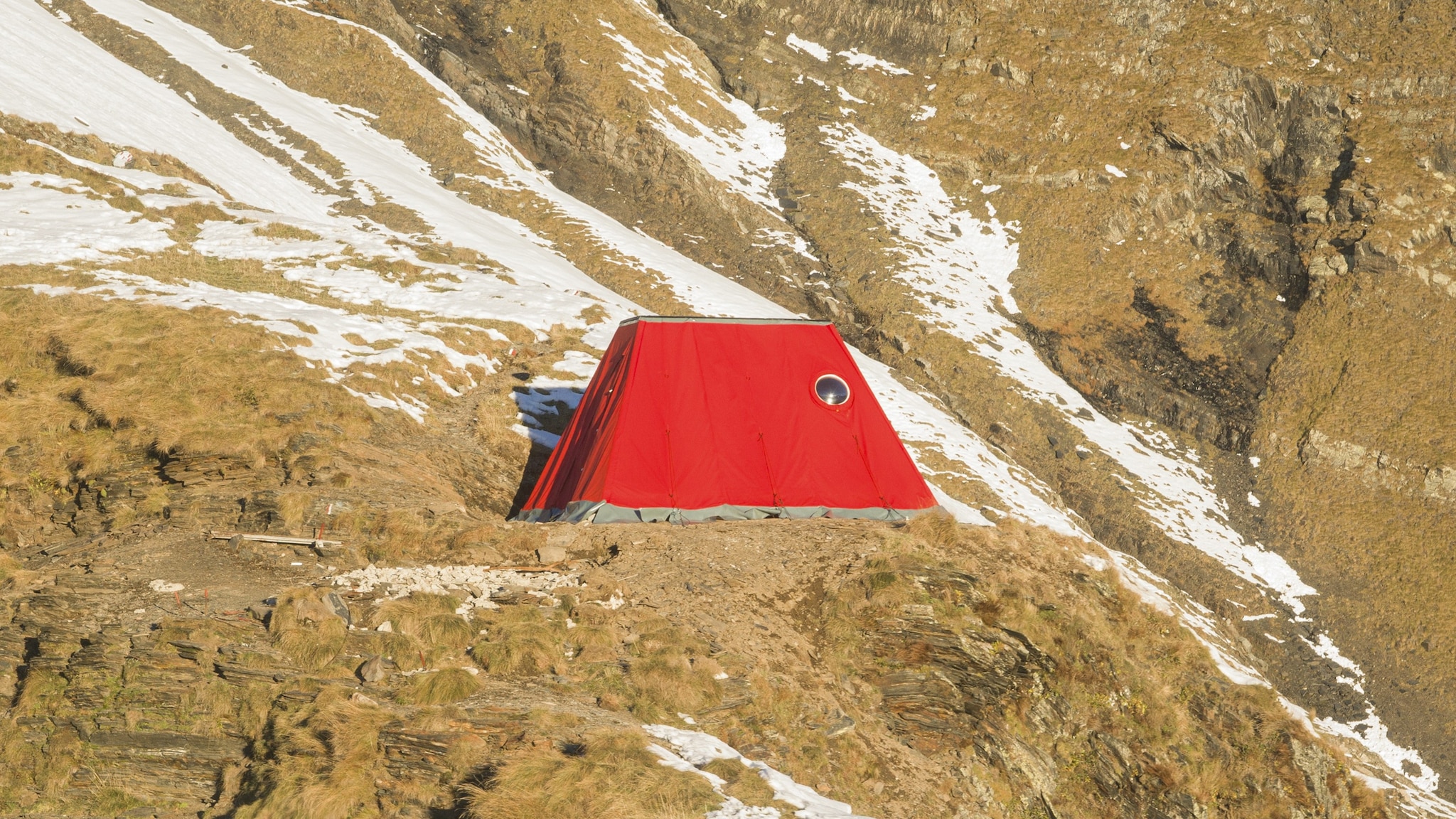
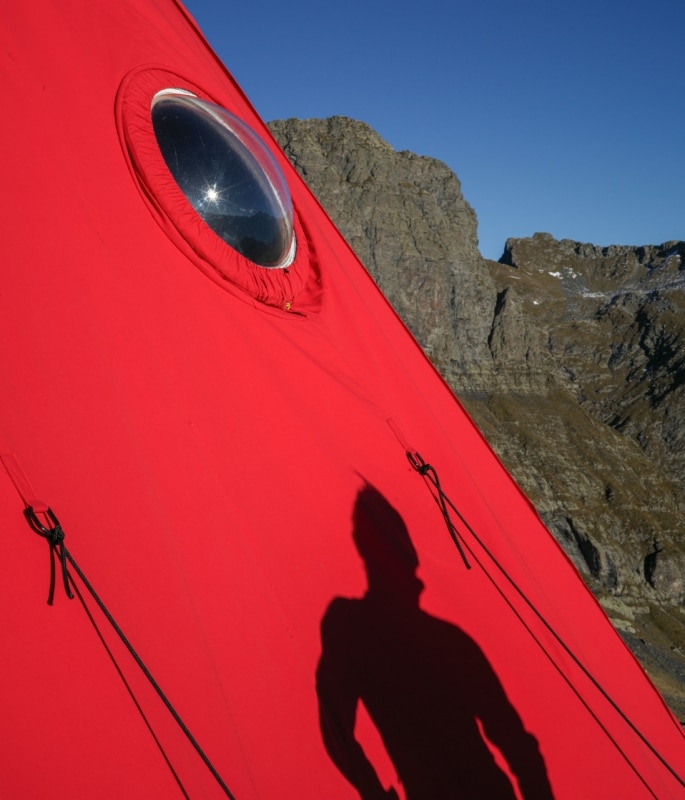
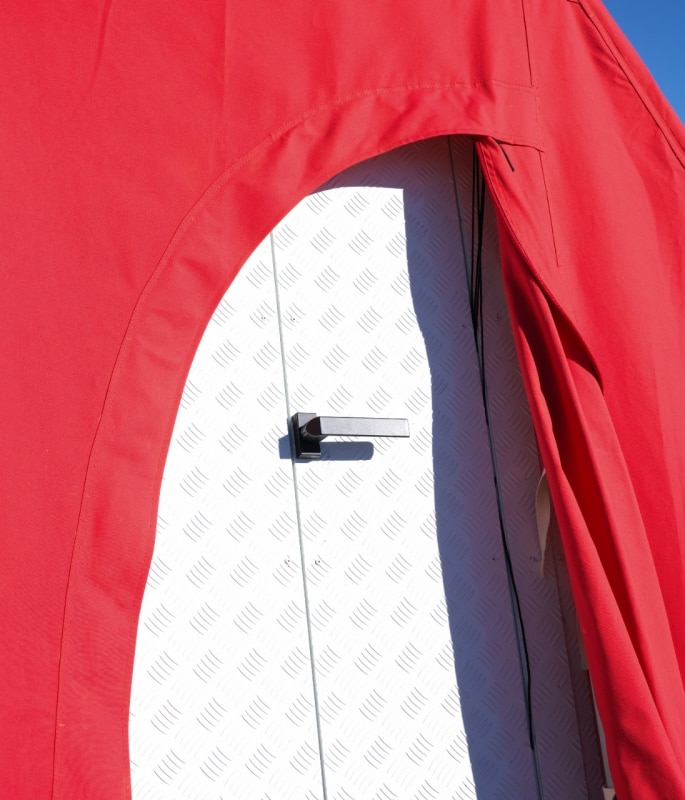
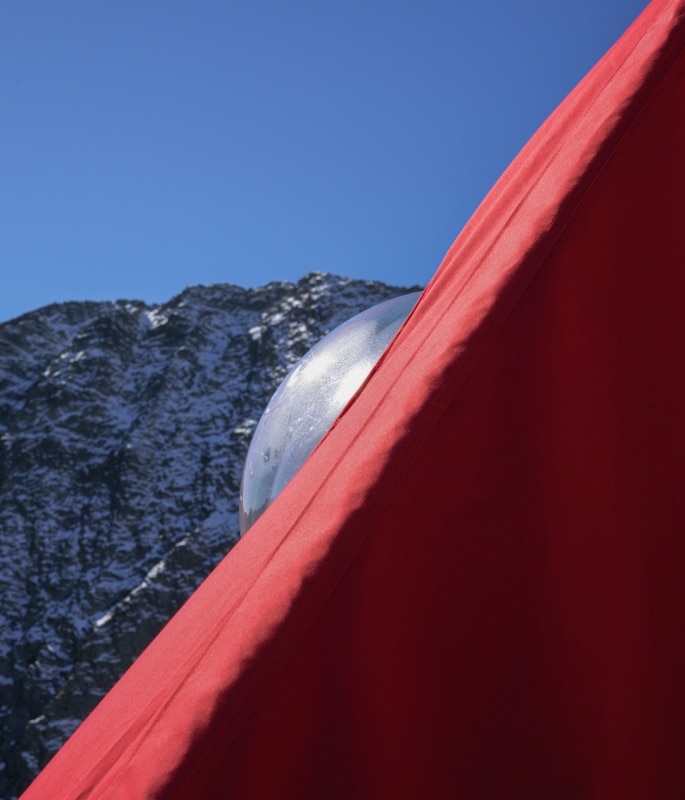
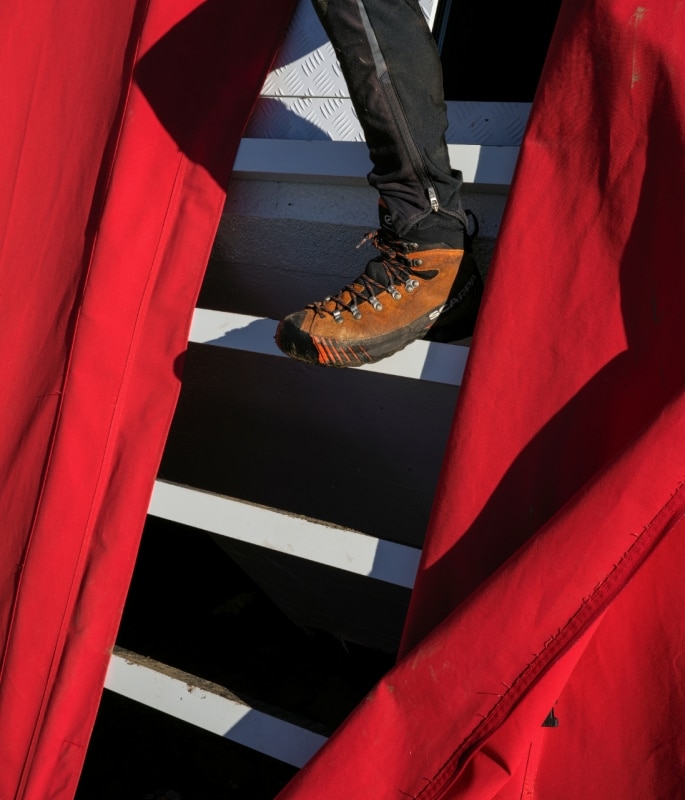
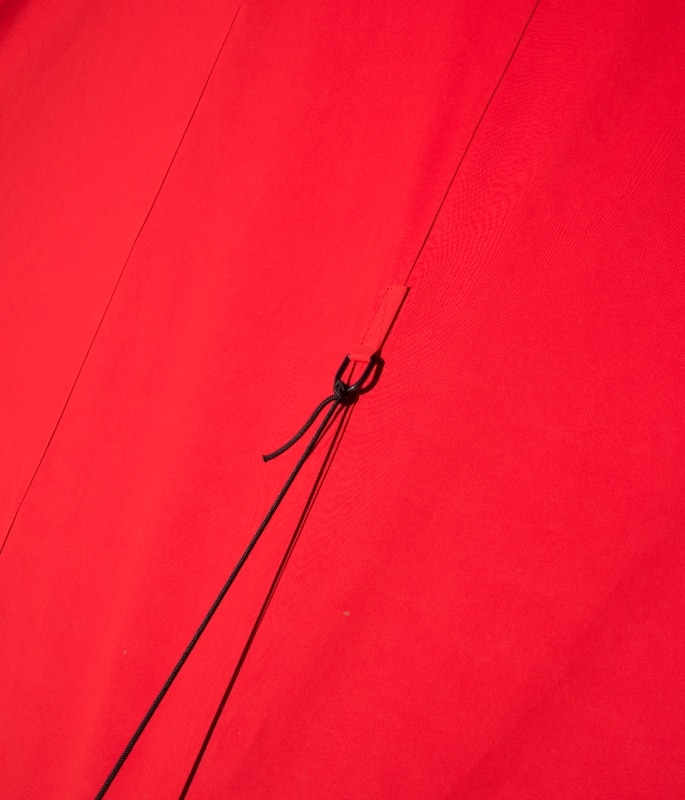
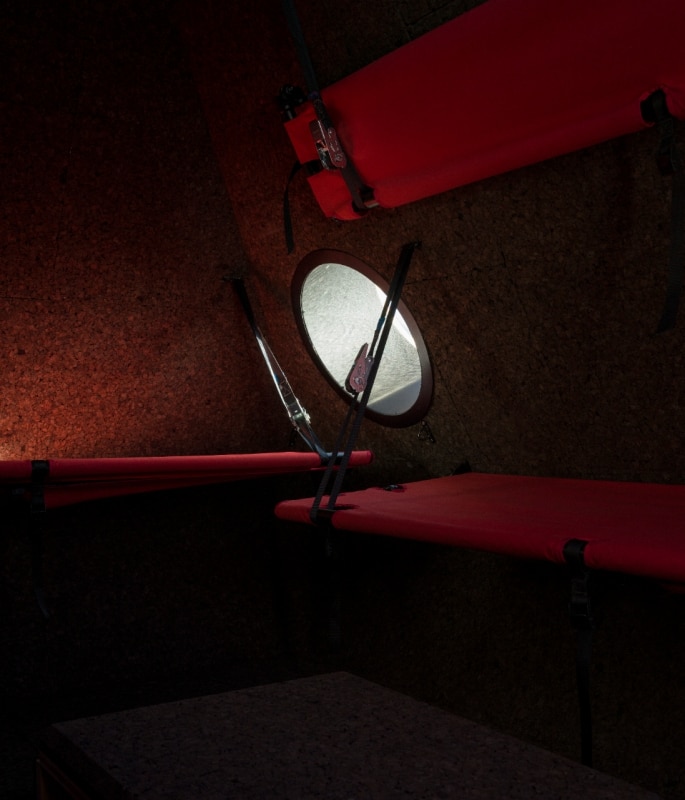
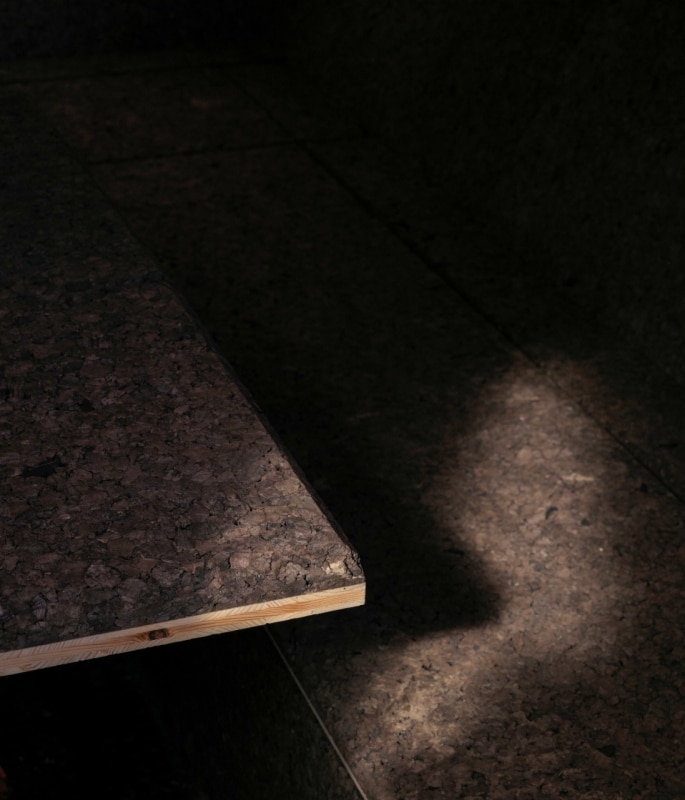
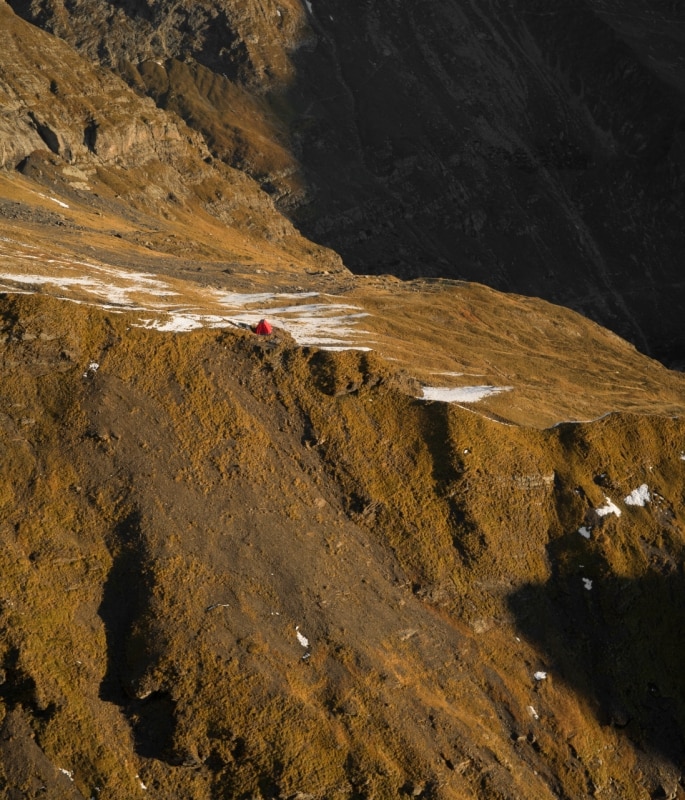
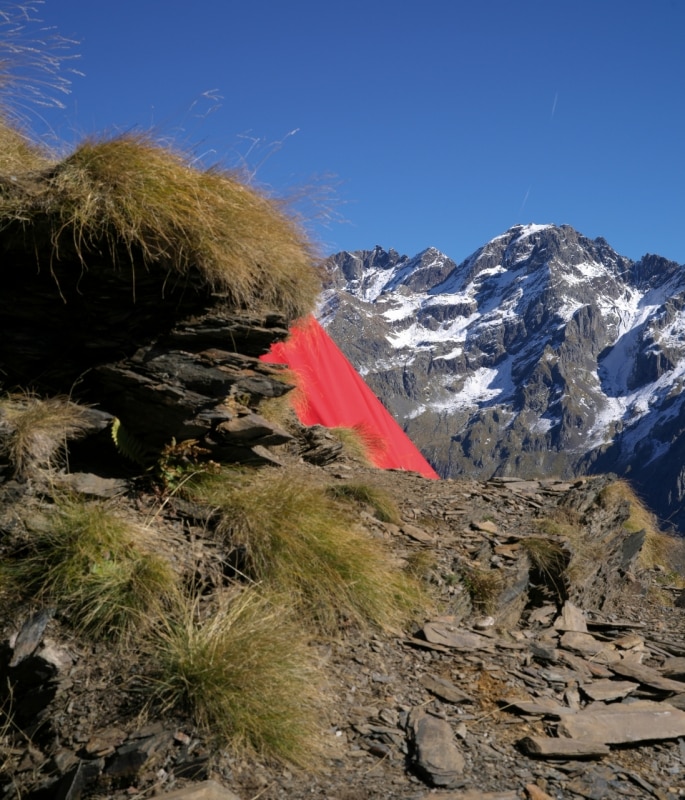
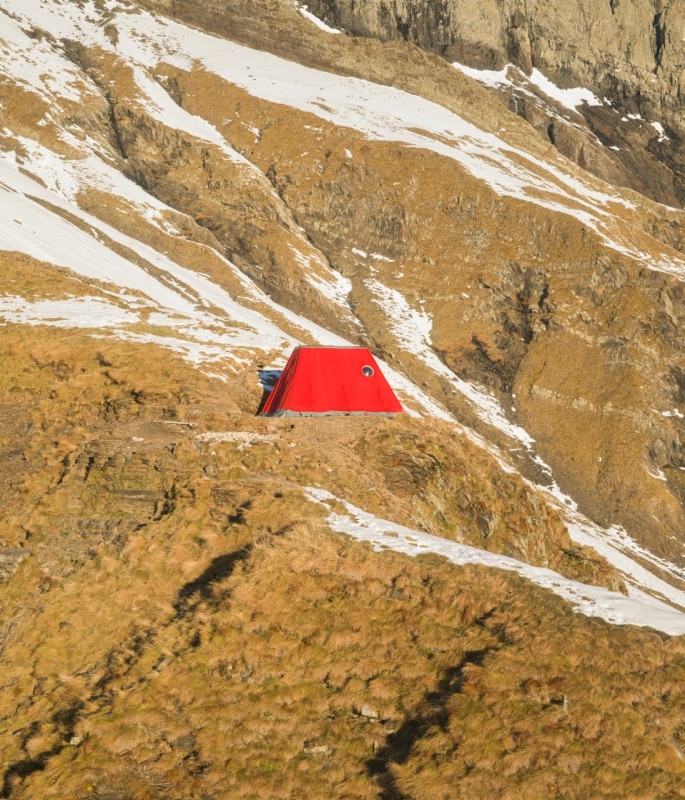
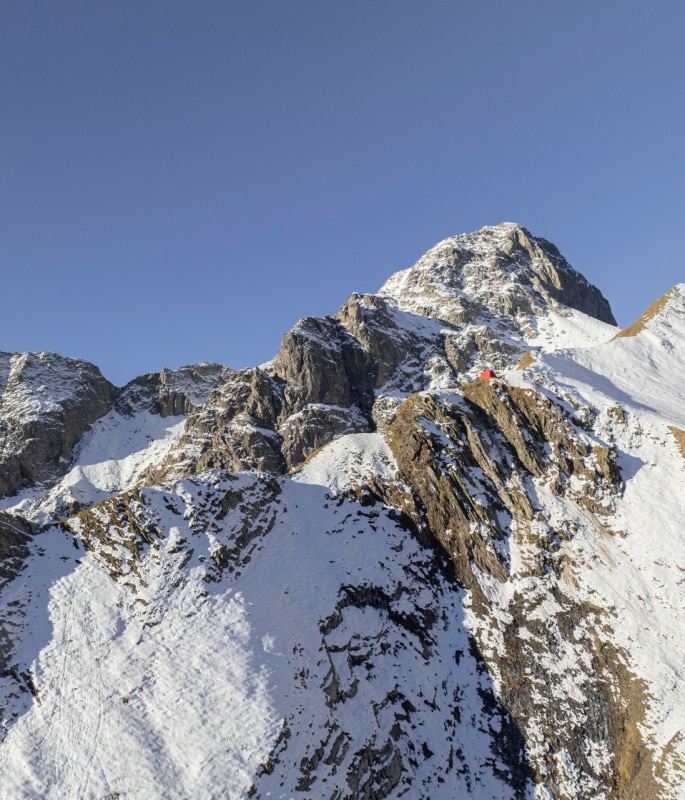
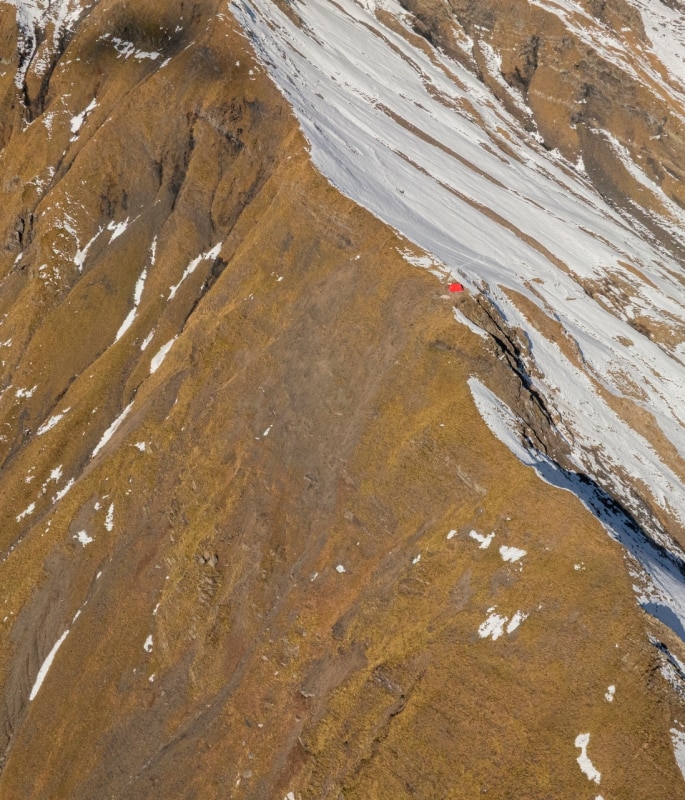
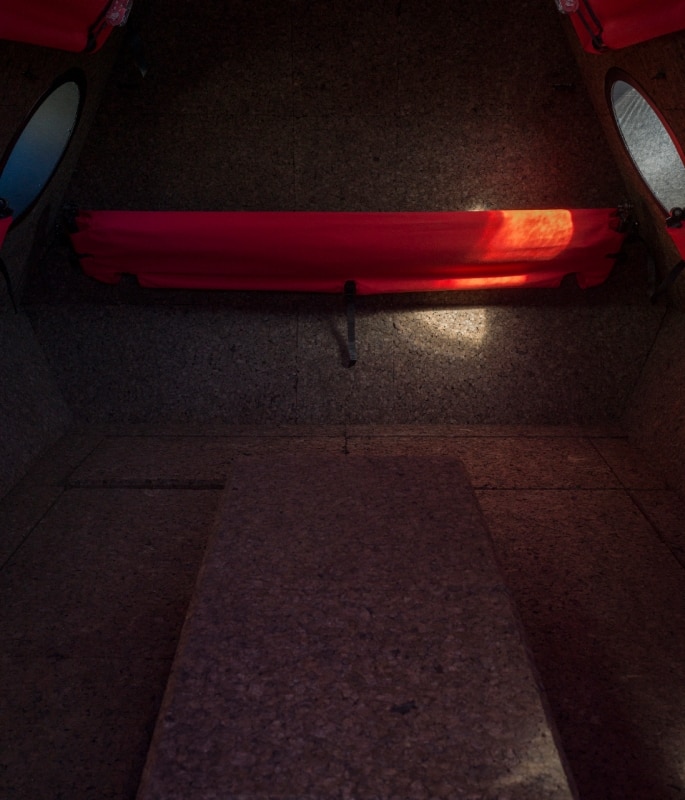
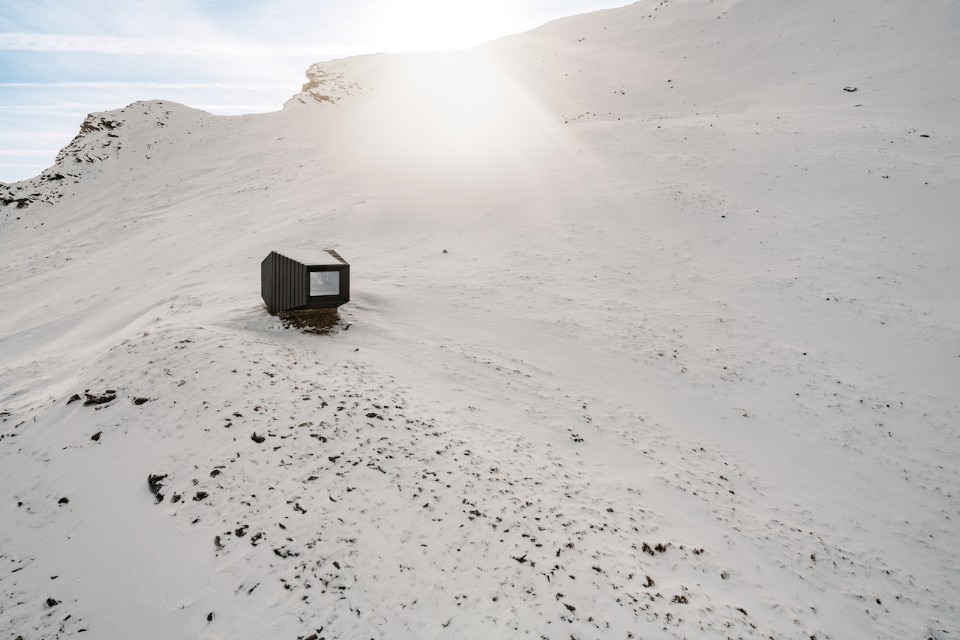
Snow and wind offer clear examples. “We’ve always tried to understand how a building interacts with weather conditions,” says Versaci. The first bivouac, for instance, “generated vortices of wind that kept the entrance completely free of snow, even when there were two metres on the ground.” Learning from that experience, Berrone was designed to welcome snow during winter, exploiting its insulating properties.
The third principle concerns time, Cassi continues, invoking Stewart Brand, founder of the Whole Earth Catalog, and an early advocate of the MIT Media Lab. For Brand, “a building is not something you finish. A building is something you start; it begins a dialogue with its context and with the people who will inhabit it.” A building is never truly complete. It continues to evolve.
The double lightness of bivouacs
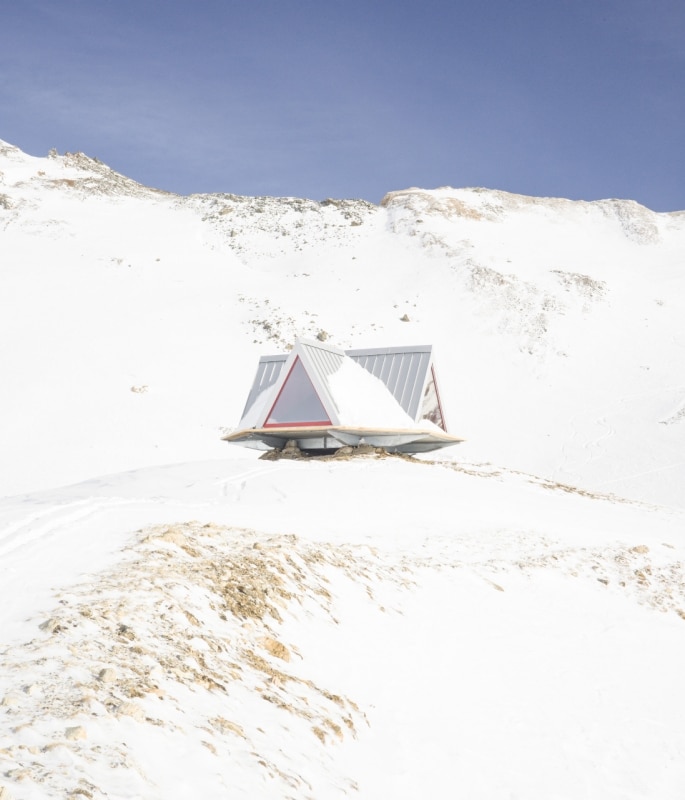
The design of a bivouac could be described as pursuing a double form of lightness. On one hand there is physical lightness: the sense of impermanence that EX. values so highly and that becomes evident in the way these structures meet the ground. Corradini is anchored directly into bedrock with screw foundations; Berrone rests on prefabricated footing blocks; Frattini adopts a reversible hybrid solution.
On the other hand there is a cultural lightness, embodied in the role these objects play within mountains increasingly shaped by the dynamics of contemporary tourism.
A building is not something you finish, a building is something you start, said Stewart Brand; it opens a dialogue with its context and with the people who will inhabit it.
Andrea Cassi
“Some time ago, alpine guide and photographer Ben Tibbetts photographed our bivouacs,” Cassi recalls. “The images appeared in the Financial Times alongside an article titled ‘Should alpine architecture be more boring?’ We replied with a short letter, suggesting that the issue is perhaps about culture in several different senses. People need to be prepared. You can’t simply go wherever you want, or arrive there by helicopter.” Something he has witnessed firsthand not far from Corradini: “A small yellow helicopter landed on the neighbouring mountain. Someone got out and went skiing”.
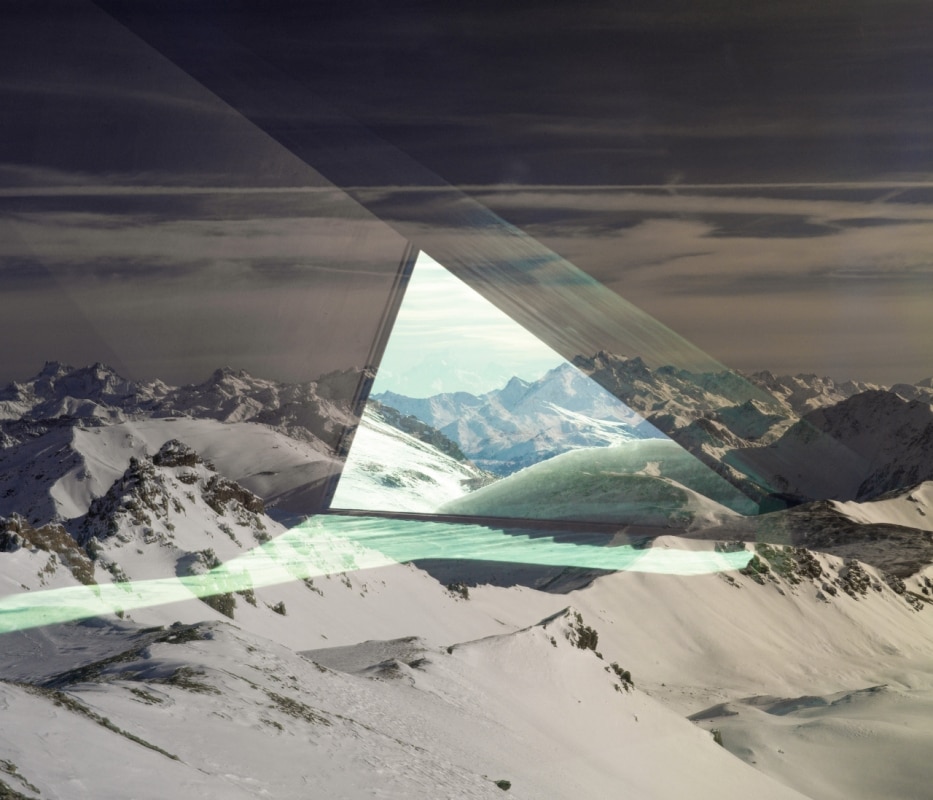
At a moment when outdoor aesthetics, gorpcore, and high-altitude events are drawing unprecedented attention, a renewed awareness of limits – many of which seem to have been forgotten – has become urgent. Yet this renewed interest also represents an opportunity for territories otherwise threatened by abandonment, as well as for the present bivouac capital itself, which requires mapping and long-term planning capable of balancing supply and demand. It has already generated unexpected crossovers. One example is the convergence of mountaineering and contemporary art at Frattini, whose reconstruction was powered by GAMeC in Bergamo and which now hosts an artwork of its own.
Designing impermanence
In this sense, the bivouac remains a laboratory. Not only for testing materials and technologies, but also for imagining new behaviours and new relationships with the environment. It is a theme that has returned to the forefront of contemporary design, often beginning in extreme contexts such as the mountains. Vitale Bramani followed this path before patenting the Vibram Carrarmato sole – Ex and Vibram, whose trajectories were already closely aligned, recently crossed paths through the conversations organised for Mountains of Milano. Perriand did the same with the transportable spaces of her Refuges.
And, much like Perriand’s work, experiments by EX. frequently find their way back into domestic interiors and urban life, bringing with them a sensibility grounded in impermanence, transformation, and the possibility of reversibility: the same qualities that lend strength to the light-footed presence of their bivouacs.
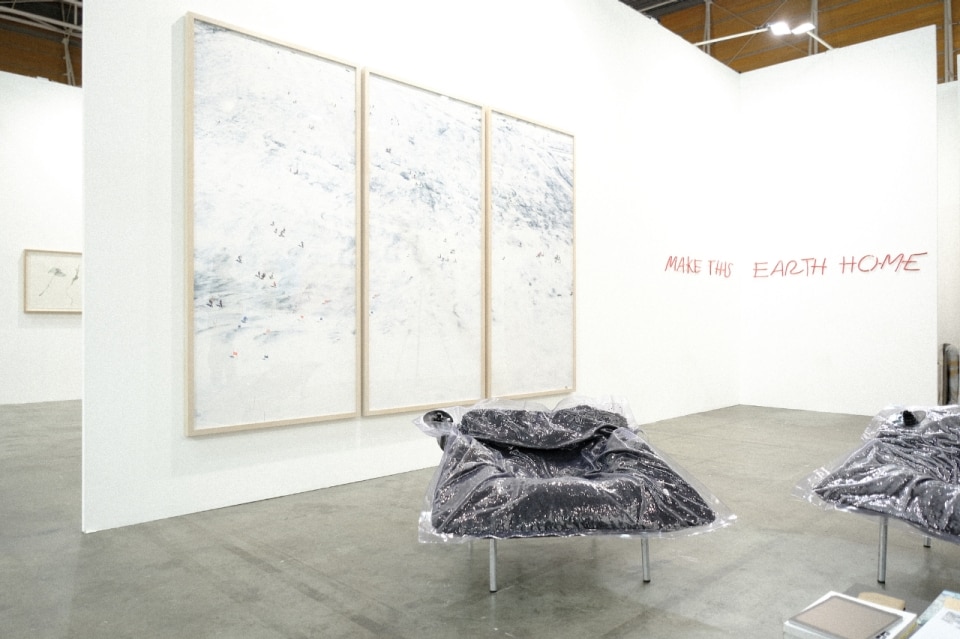
This can be seen in the constant reconfigurability of Riforma, their system that combines marble offcuts with timber battens and steel cables. The technique has Japanese origins, still it also supports Jürg Conzett’s footbridges in Switzerland. The resulting elements can become walls, furniture, or virtually any form assigned a new function. It can also be found in the unpredictability – or perhaps the predictably restless nature – of the vacuum bags filled with Sicilian volcanic ash created for Ncontemporary’s seating installation at Artissima. As the bags gradually lose their airtight seal, their interaction with the body changes as well. “Like being on a glacier,” says Cassi.
Can such fragility accompany projects at every scale? The bivouacs and their designers seem to suggest it can. And perhaps that is the answer to the question we began with. Today, a bivouac is no longer designed against the mountain, but alongside its transformations. “These objects are fragile architectures,” Cassi confirms, “but architecture itself is inherently fragile, as it is constantly being affected, constantly changing over time. It is ultimately impermanent”.
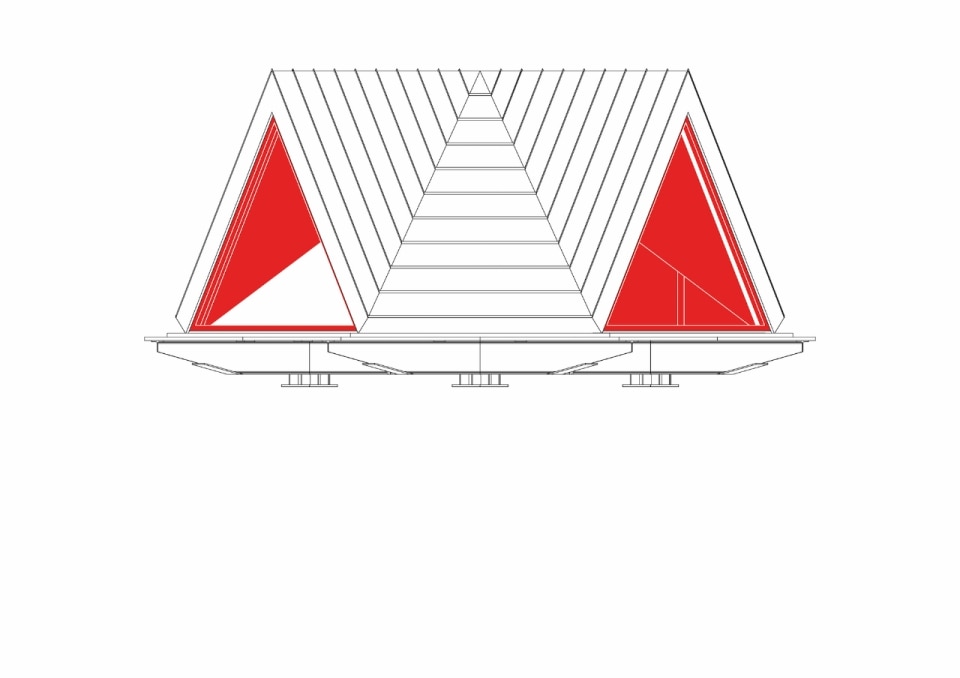
Opening image: EX., Bivacco Berrone (Pinwheel Shelter), Oulx, Italy 2023. Photo by EX.