

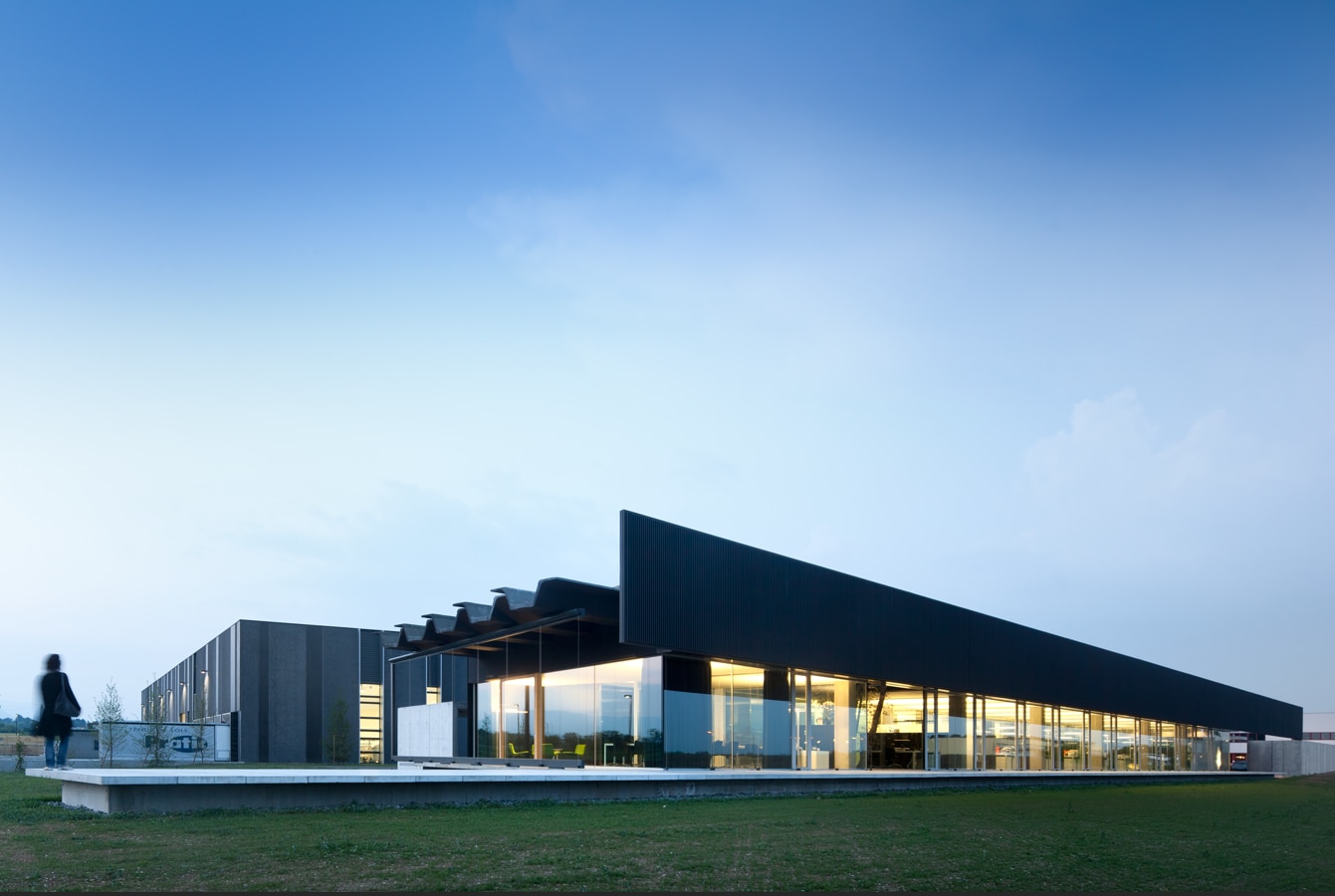
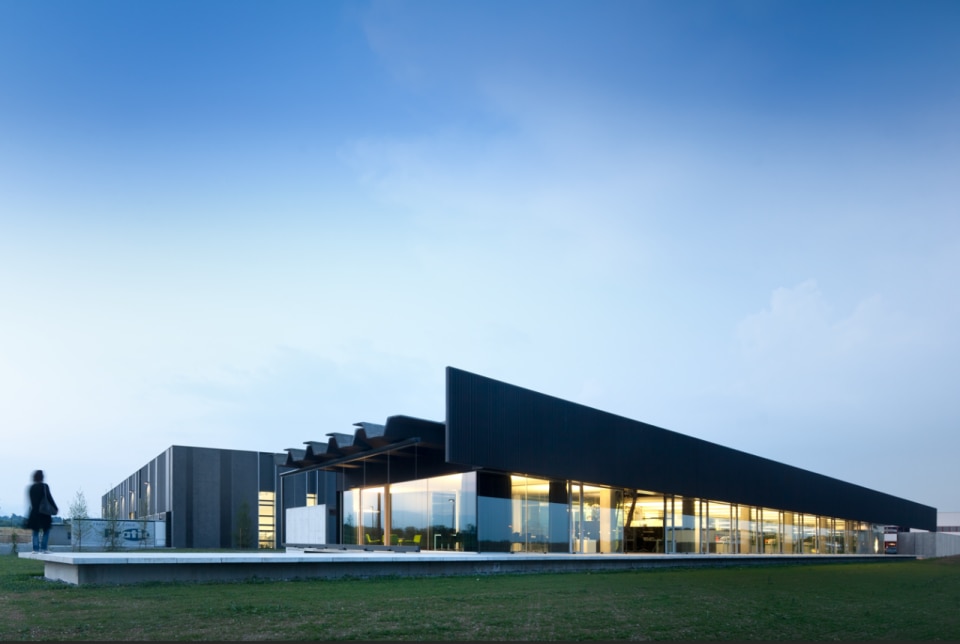
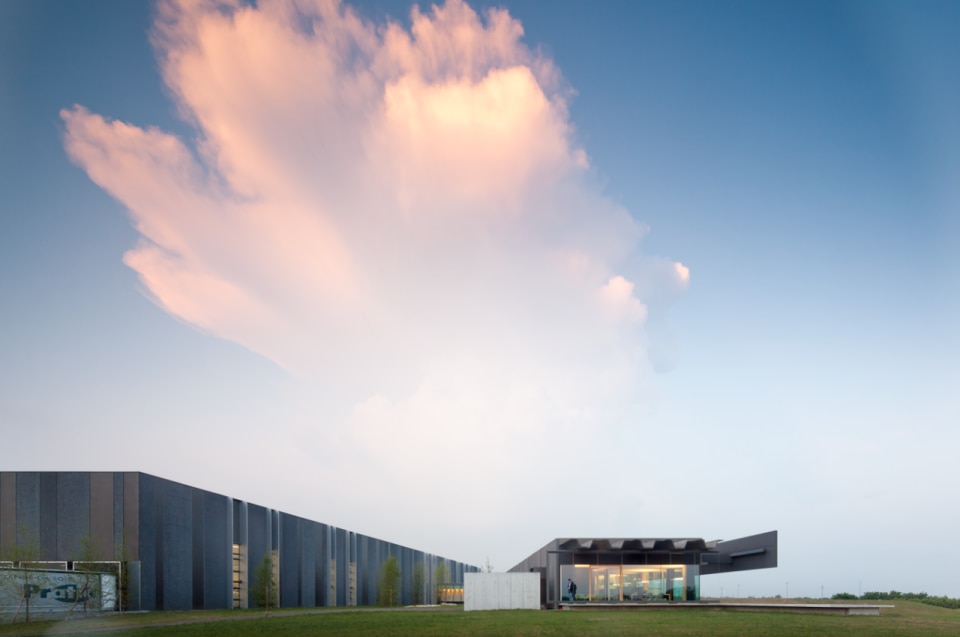
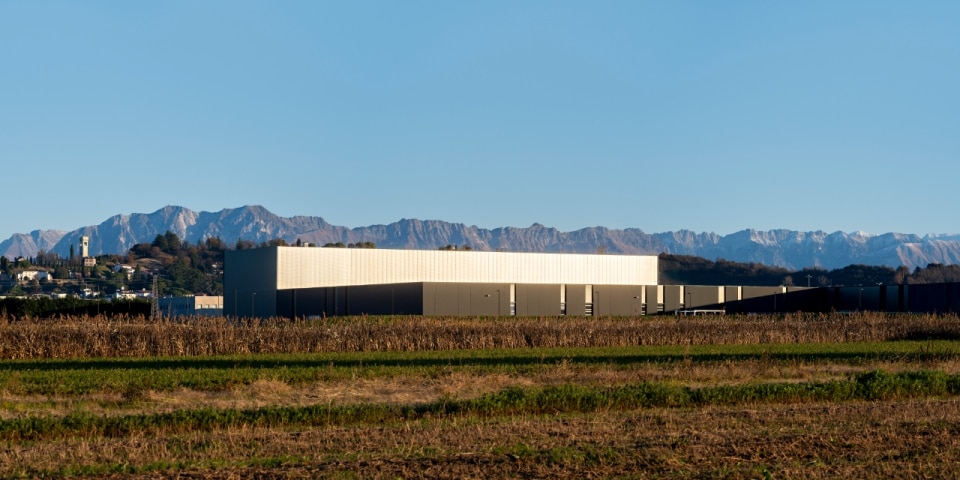
They seek to establish a relationship with the landscape they inhabit. Pratic’s headquarters in Fagagna, nestled among the hills of Friuli near Udine, belongs to this category. Seen from the nearby state road, the complex designed by Geza—the studio founded by Stefano Gri and Piero Zucchi—never feels intrusive, yet it commands attention. At certain times of day, it appears as a dark, mineral mass; at others, it reflects the Friulian sky so completely that it almost dissolves into it.
“We wanted to make a strong statement without disturbing the surrounding hilly landscape,” explains company president Edi Orioli, a former motorcycle racer and four-time winner of the Paris-Dakar Rally, as he and CEO Marco Durì guide Domus through the headquarters. Pratic, owned by the Orioli family since 1960, manufactures solar shading systems, ranging from traditional awnings to bioclimatic pergolas.
What emerges from their account is a relatively rare ambition: to transform a production facility into a complex that engages more broadly with the landscape and offers a meaningful experience to those who pass through it and work there every day.
The origins: a new headquarters, a company, and an architectural practice
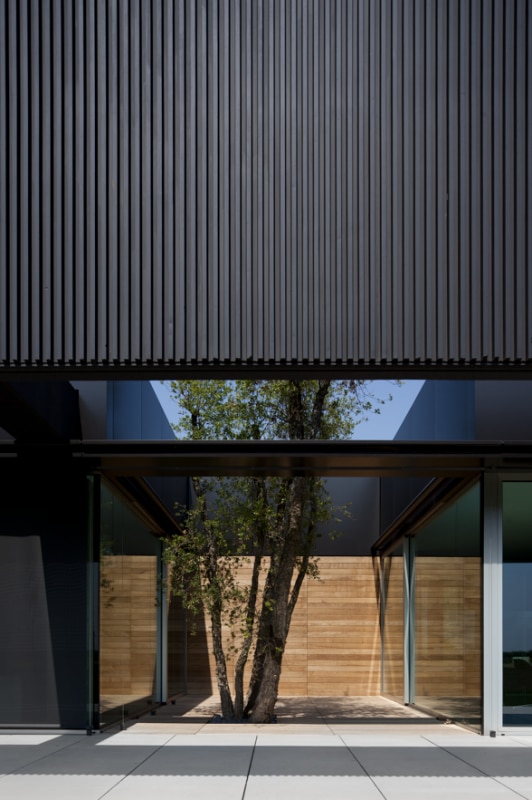
“Pratic was founded by my father and uncle 65 years ago,” says Edi Orioli as we stand in the courtyard of the company’s new headquarters. It is a family story rooted in manufacturing culture, one that has evolved into an international enterprise and is now part of StellaGroup.
The company’s transformation began long before the new headquarters was conceived. Over the decades, Pratic evolved from producing traditional sun awnings to developing bioclimatic pergolas and advanced outdoor shading systems, building a strong and distinctive identity along the way. As the company grew, the need for change became increasingly evident. In 2011, the first chapter of the new headquarters was completed: Pratic 1.0.
From the outset, the challenge was not simply to build a new production facility. Relocating the headquarters represented a delicate transition for the company: moving to a different municipality meant transferring the entire manufacturing operation, with the potential to significantly impact the more than 30,000 square metres of land on which the project would stand.
“When this headquarters was conceived,” explains CEO Marco Durì, “the goal was to provide greater comfort for our employees while also respecting the natural environment around us.”



For this reason, the architectural practice chosen for the project had to be deeply rooted in the same territory. “The spark happened while we were working on a residential project, for which Pratic had supplied some of its products,” recalls Piero Zucchi. From that moment, a relationship began that would continue to strengthen over time. Geza also designed the company’s subsequent expansions in 2018 and 2023, establishing a collaboration that has now spanned more than a decade.
Three phases, one continuous evolution
Italian architectural history offers several notable examples of industrial buildings that served not only as functional facilities but also as sites of design experimentation—from Olivetti’s factories to the works of Pier Luigi Nervi and Angelo Mangiarotti’s industrial architecture in the Monza area. Production was not treated as a technical problem to be neutralised but as an opportunity to explore the relationship between building, work and territory, while creating spaces of genuine quality.
Everyone knows the building, even though there isn’t a large sign on top of it.
Piero Zucchi, Geza Studio
Once the idea of the anonymous industrial shed is abandoned, industrial architecture can become something more meaningful—an expression of a company’s values rather than a generic container. Pratic 1.0 (2011), Pratic 2.0 (2018) and Pratic 3.0 (2023) do not operate as separate episodes but as successive states of the same architectural organism.
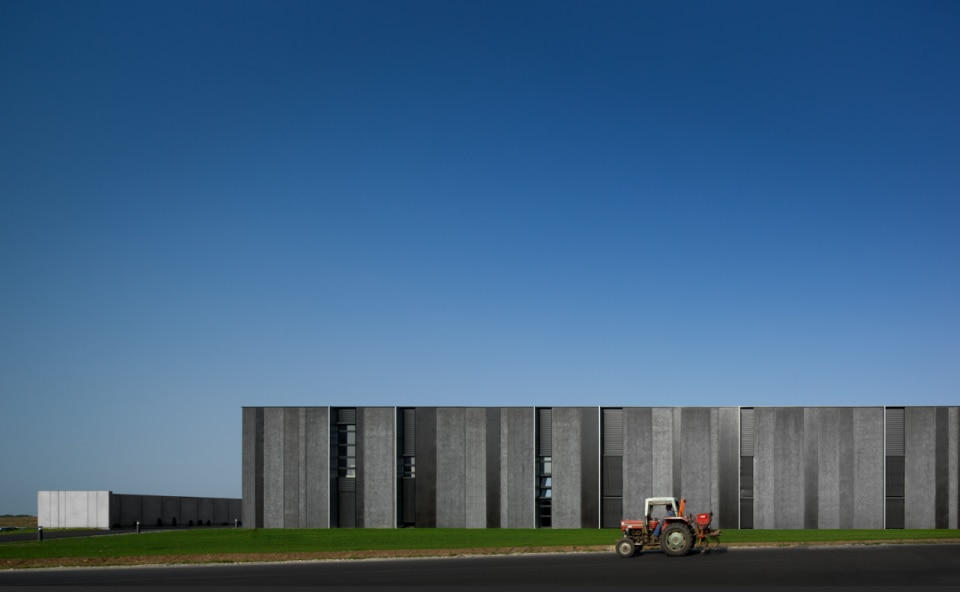
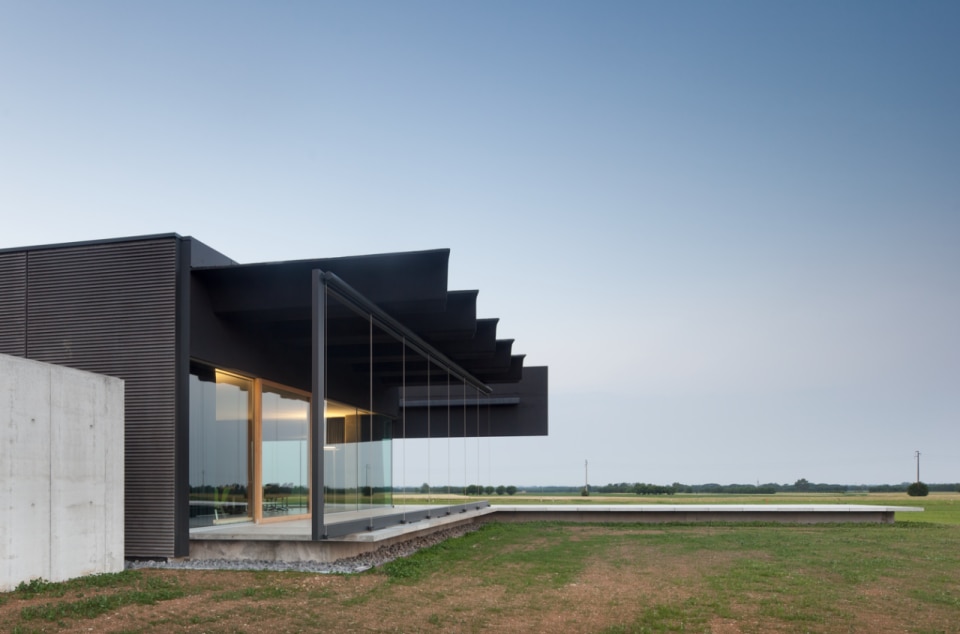
“It’s a lava-like architecture,” says Zucchi of the 2011 project. “It feels as though it is emerging from underground.” The building works through the materiality of dark concrete and prefabricated panels whose black marble aggregates vary subtly in grain size. These minimal differences create surfaces that become more matte or reflective depending on the light.
Even the vertical openings in the production spaces stem from a deliberate reflection on the relationship between interior and landscape. “It was a gamble,” the architect recalls, “because in industrial buildings windows are normally placed high up. Here, we wanted people working inside to be able to look out.”
The production complex, conceived as a space inhabited by people rather than merely a technical machine, was therefore “designed as much for those working in the offices as for those on the factory floor,” says Durì.
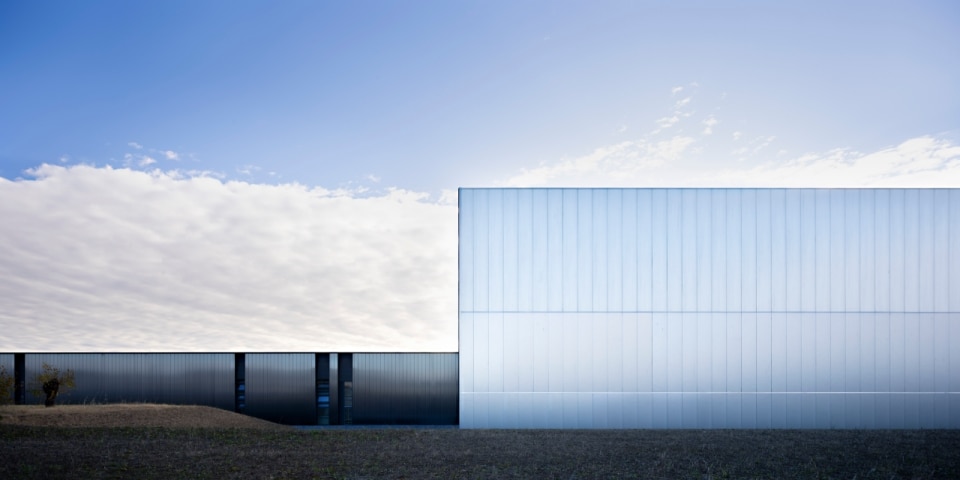
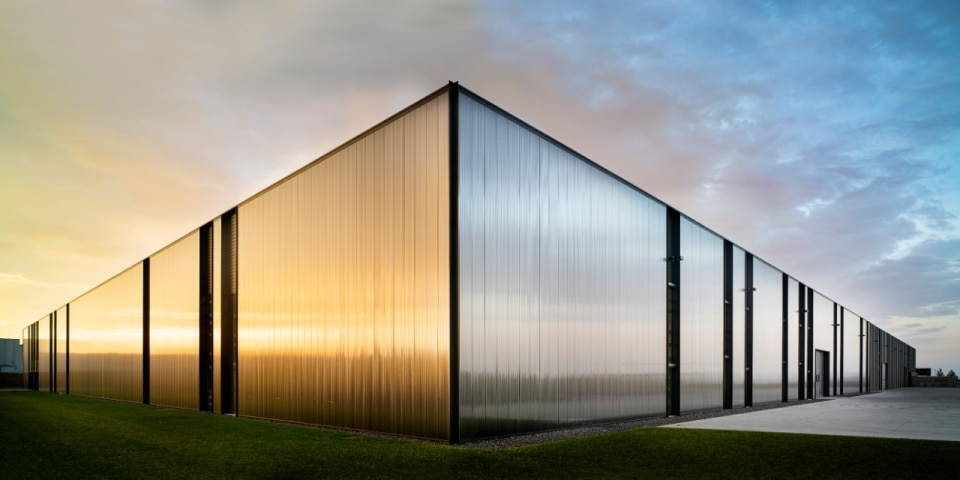
If the first building appears to emerge from the ground, the second begins to reflect the sky. “Pratic 2.0 mirrors the changing nature of rain, sunlight and clouds,” Zucchi explains. Its surfaces constantly react to atmospheric conditions, absorbing the surrounding Friulian landscape.
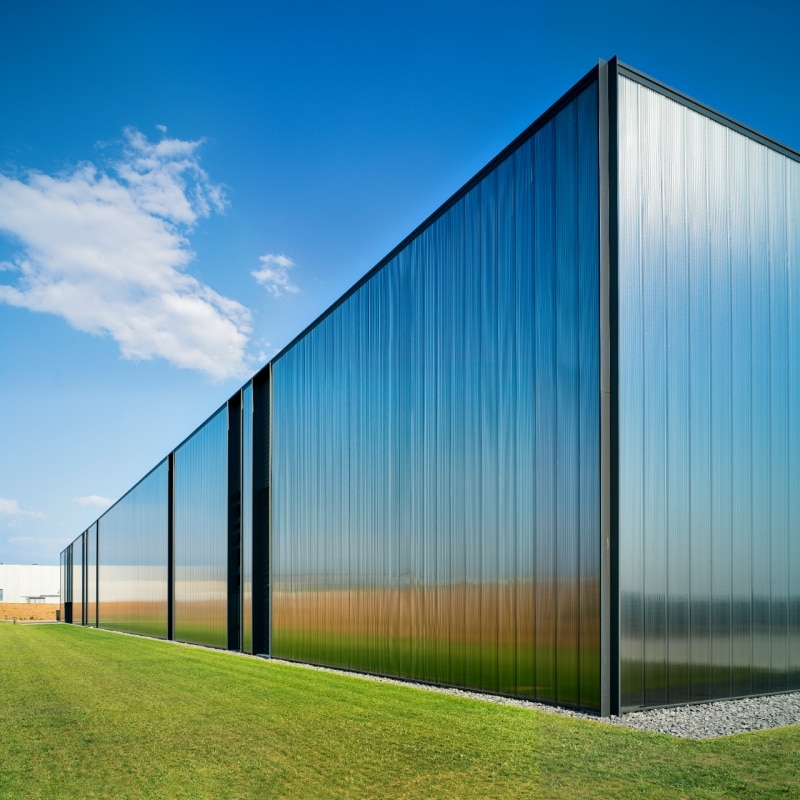
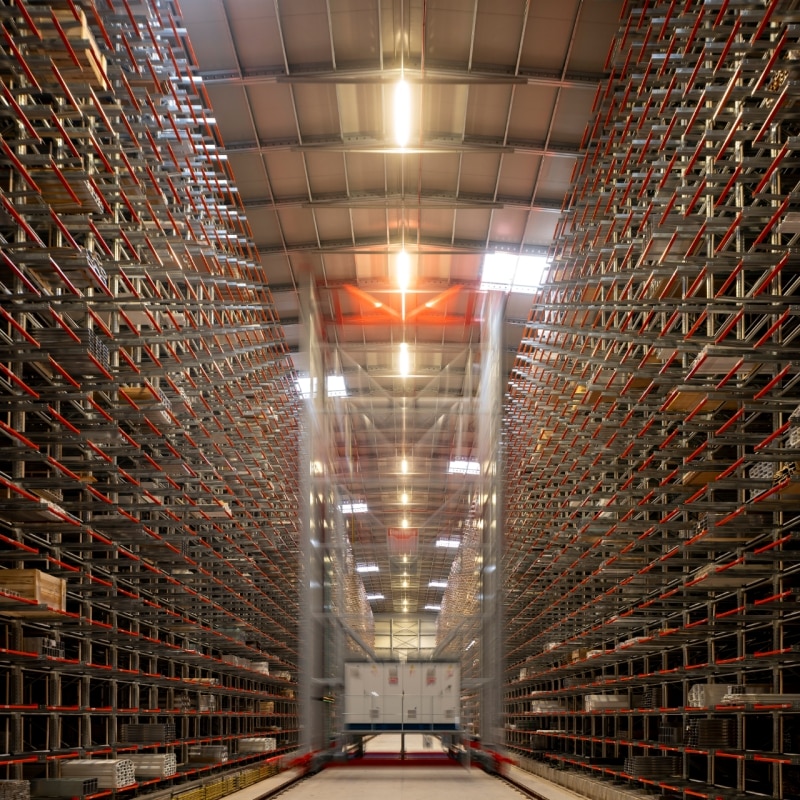
With the latest expansion in 2023, the architects and the client confronted yet another scale of intervention: an eighteen-metre-high automated vertical warehouse. Rather than emphasising its technological character, the project reverses its vocation. Clad in translucent panels, the volume seeks transparency from the outside, appearing as an abstract presence within the landscape.
“It was designed to disappear into the Friulian sky,” says Zucchi. “But at sunset, it turns into a piece of gold.”
Industrial architecture and land art
The project is not driven by camouflage, nor by a generic notion of sustainability. Its declared theoretical reference is American Land Art: Robert Smithson, Richard Serra and Michael Heizer. These artists worked directly on the ground itself, making subtle interventions in the landscape.
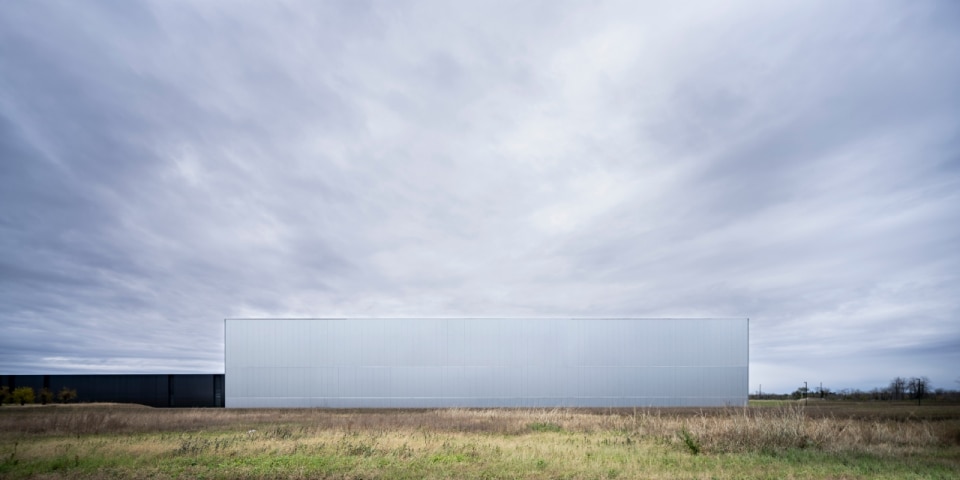
“When you use these large horizontal elements as tools for reading the landscape,” explains Zucchi, “you can create interventions that modify the terrain in an almost natural way.”
Many of the project’s specific gestures derive from this approach. The sunken parking area, for instance, was designed to avoid the appearance of a roadside retail complex. It is concealed behind an embankment created from the excavation material generated during construction.
This approach moves beyond the design of individual buildings and towards the construction of a territorial condition. It also explains why the three phases of the headquarters never function as autonomous objects; instead, they appear as different ways of inhabiting and engaging with the same landscape.
Designing shadows
There is an almost inevitable coherence in the fact that a company specialising in solar shading systems ultimately created a headquarters centred on the control of light and shadow. The entire complex in Fagagna operates through shading devices: deep overhangs, reflective surfaces and bespoke solutions developed for every scale of the project, from street level to the skylights of the automated warehouse.
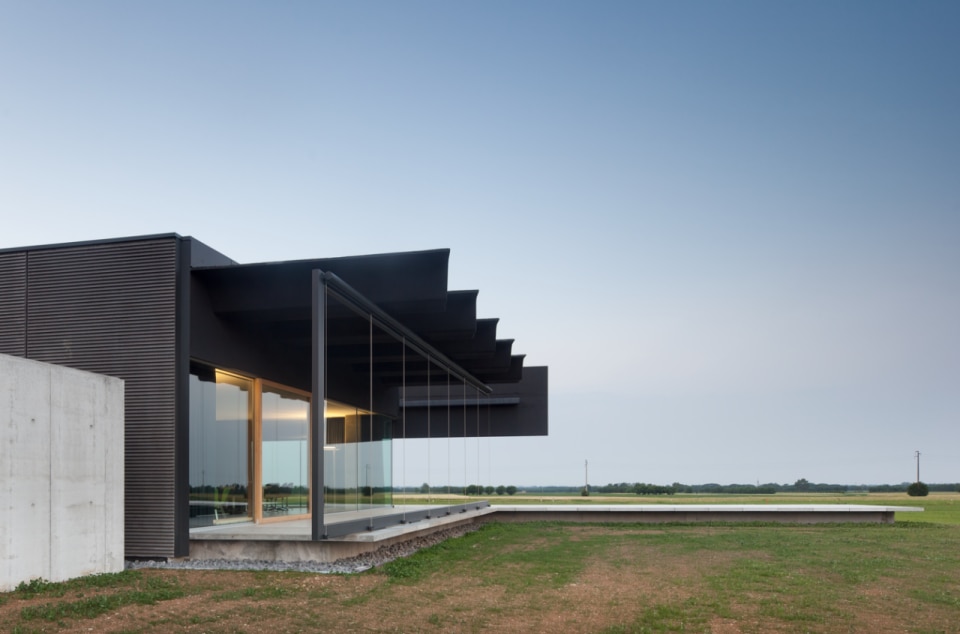
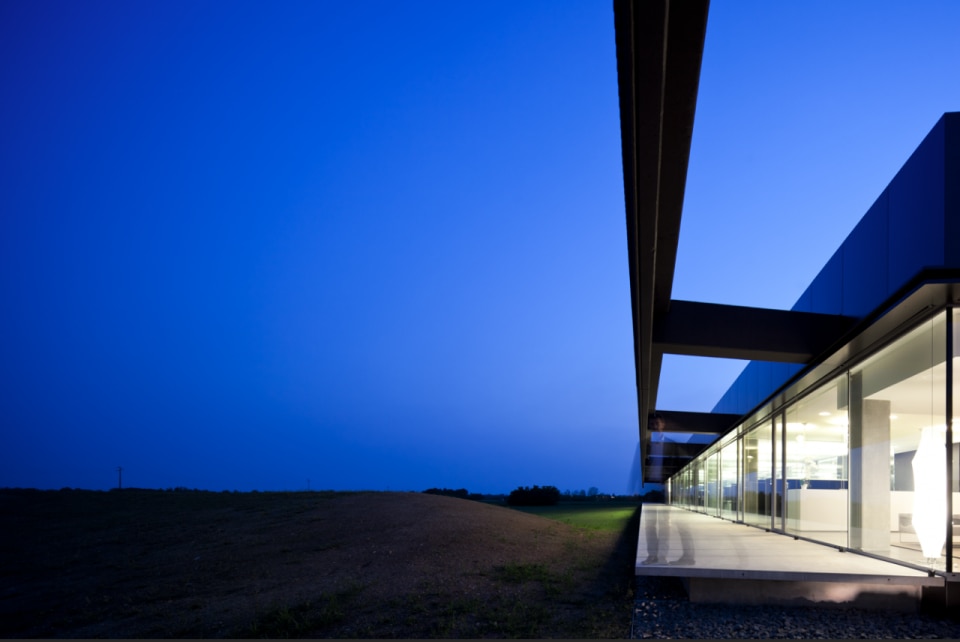
The most recognisable element, however, is the monumental beam projecting from the office building—a fifty-metre-long “line of shadow” extending above the glazed façade facing the state road.
Zucchi calls it “the suspended shadow” and explains that its position derives from a precise solar study. In summer it protects the offices from direct sunlight, while in winter it allows daylight to penetrate deep into the interiors.
It is a passive environmental system that is both simple and sophisticated, so distinctive that, as Zucchi notes, “everyone knows the building, even though there isn’t a large sign on top of it.”
The unfinished
Outside, beneath the enormous beam, visitors can walk along a raised pathway that seems to project itself into the landscape. On the western side, where the sun sets, the building appears to end abruptly. The prefabricated structure remains exposed and the route never truly concludes, suggesting something left unsaid.
“It’s as if a section had been left behind,” says the architect.
The result is theatrical, almost metaphysical. The space has often been used as a display platform, and today Pratic has chosen to exhibit one of its own products there. Yet this too is likely a temporary installation—fitting for an industrial architecture that remains open to the possibility of change.