

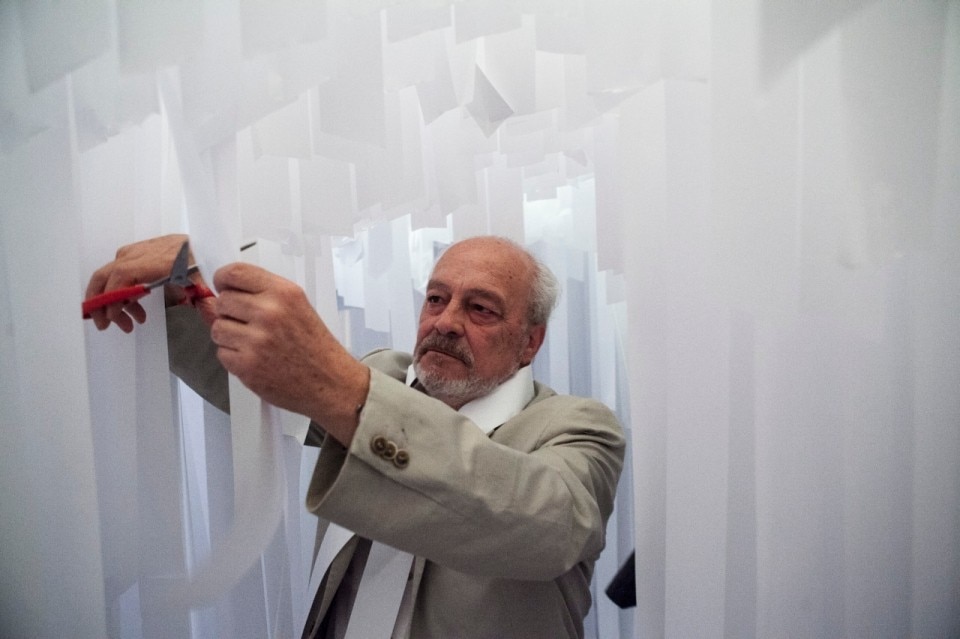

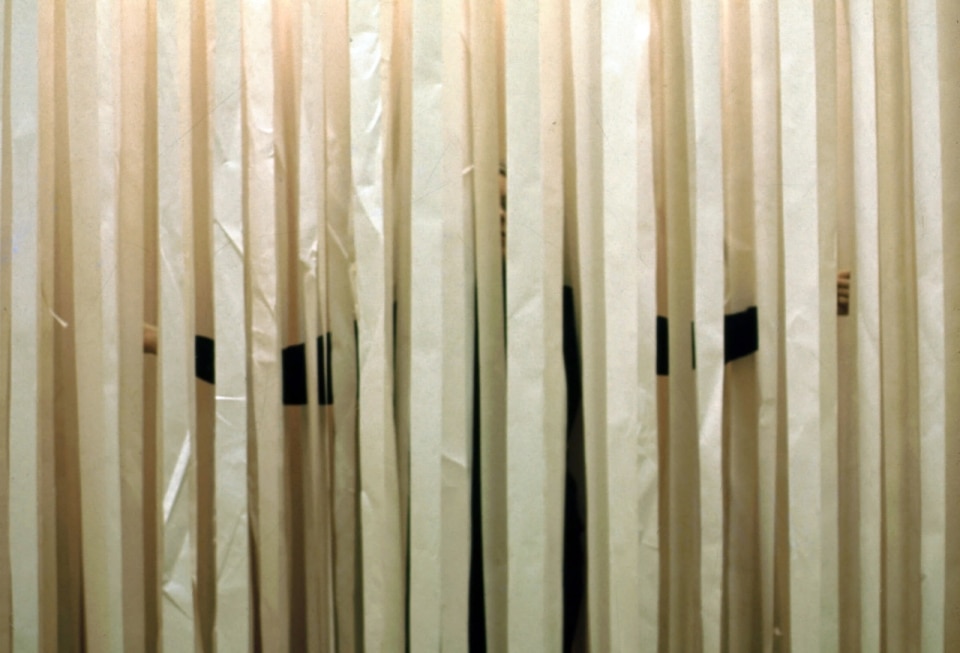
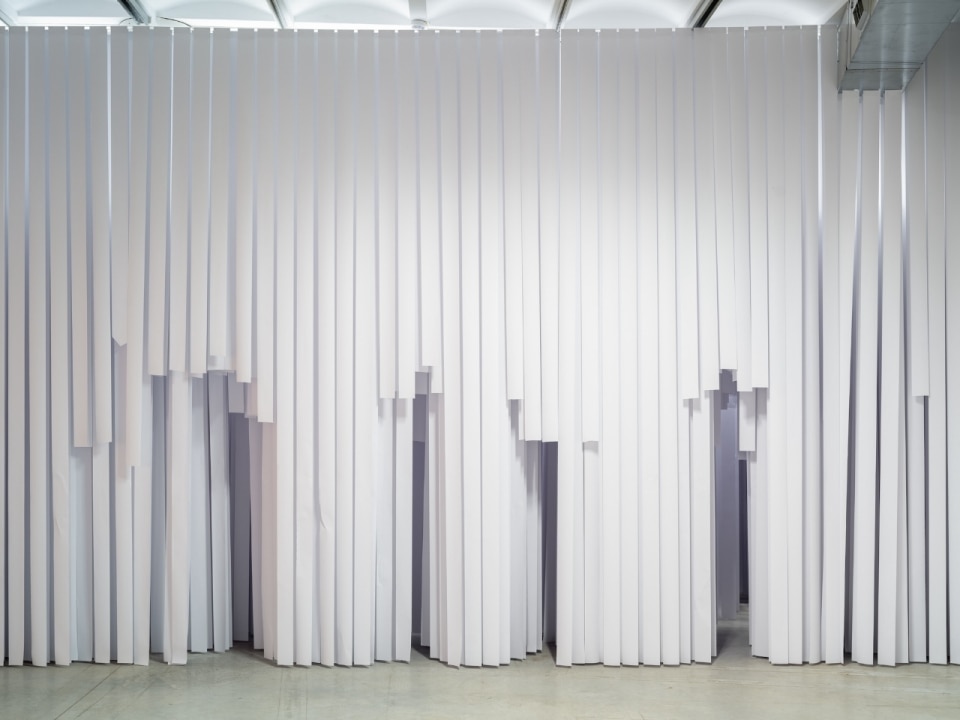
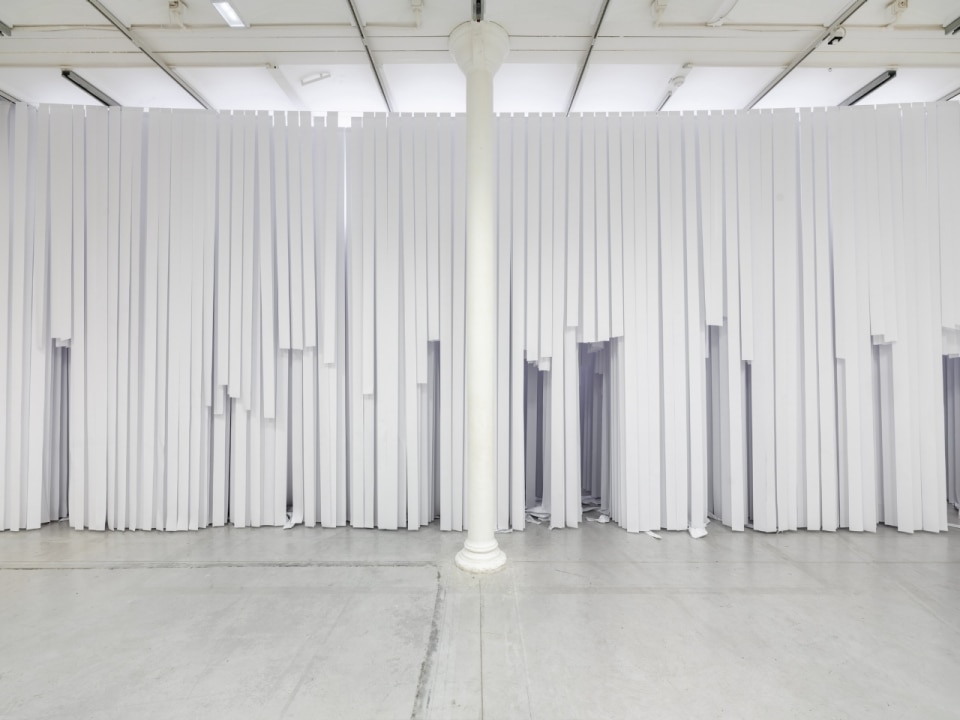
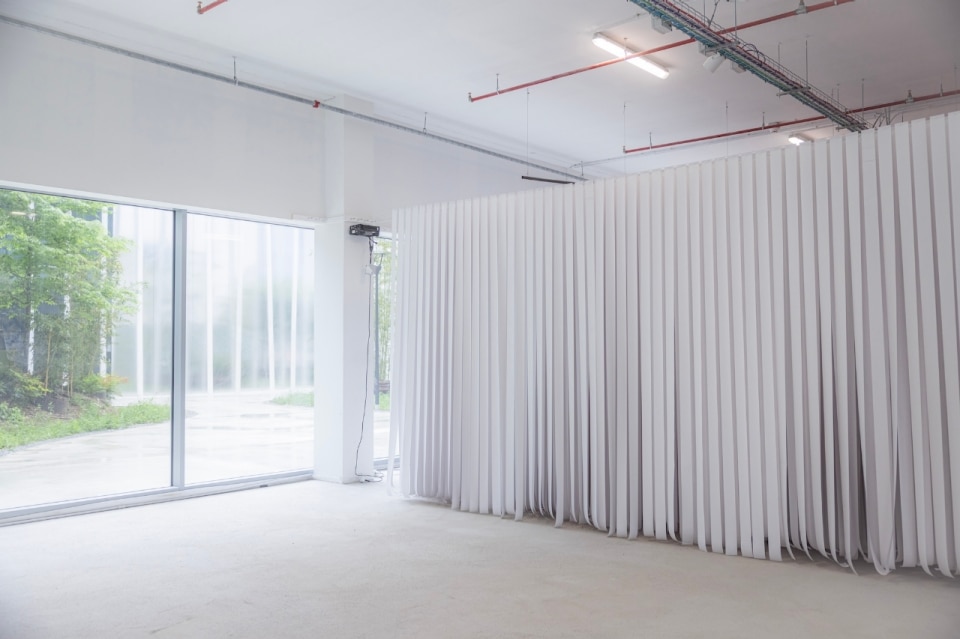
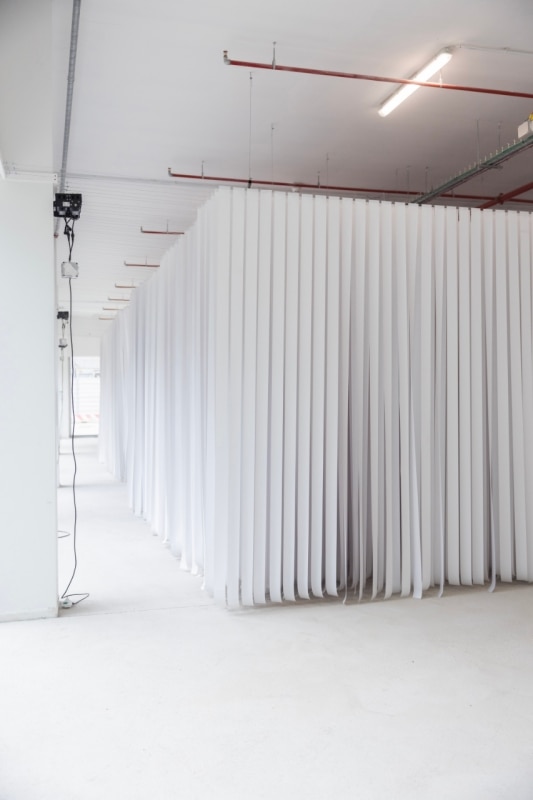
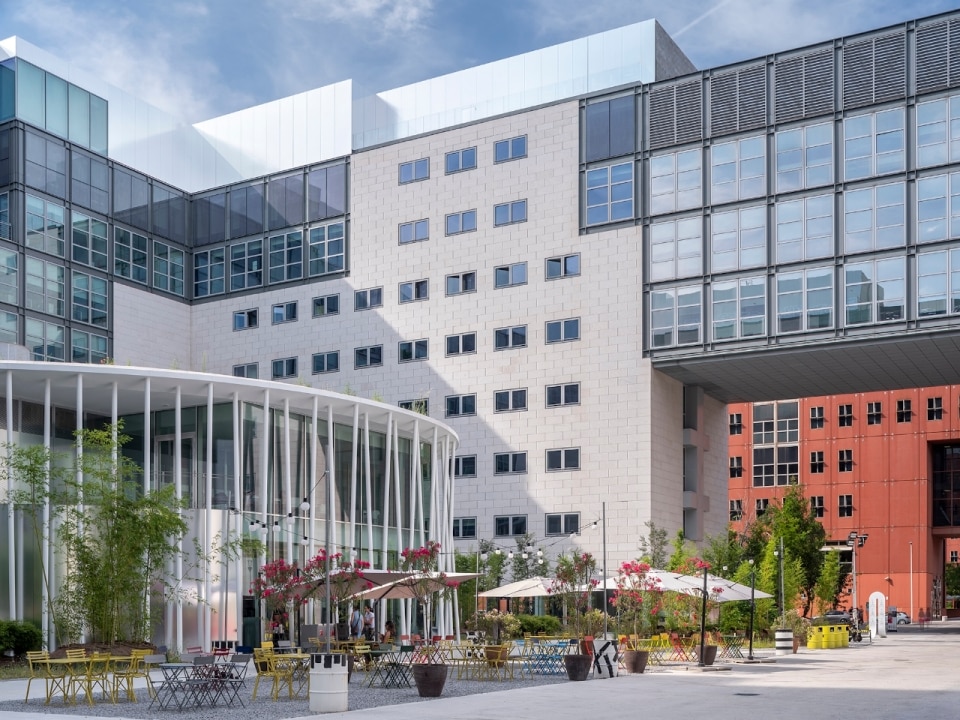
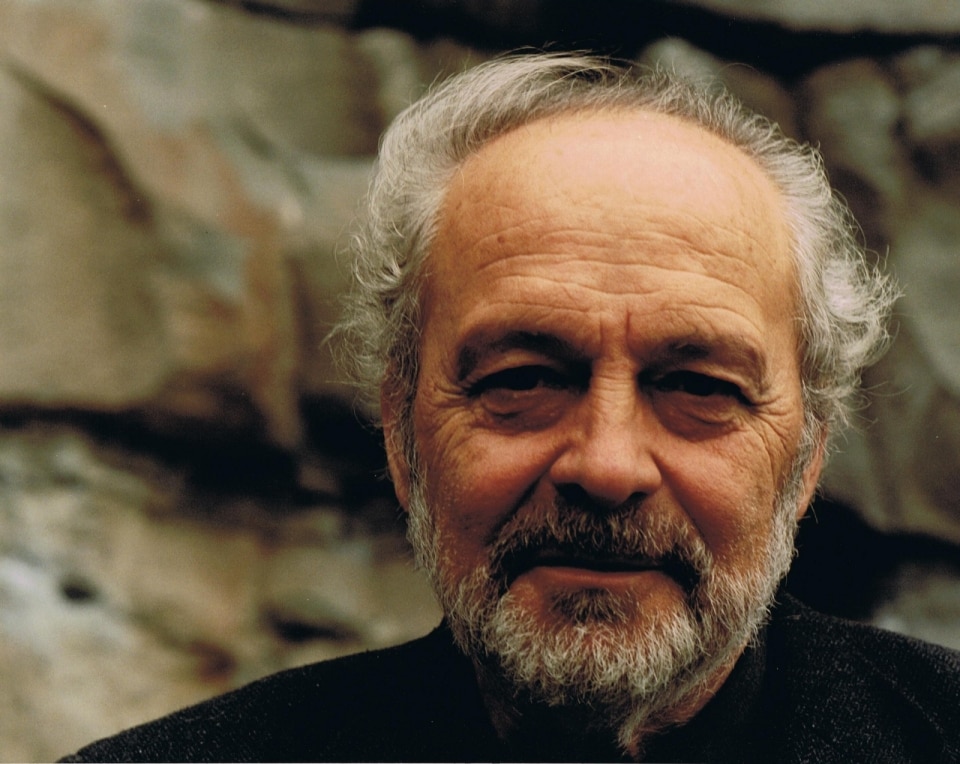
Paper strikes again. This time, it is the former industrial interiors at the heart of BiM, a major urban regeneration project in Bicocca, that are saturated with vertical strips of paper. And once again, the catalyst is Gianni Pettena, the self-styled “anarchitect,” who since the Florentine season of Radical Design – of which he was a key contributor – has looked more to art than to building.
Yet calling him “the architect who never built” is a mistake he swiftly corrects. “Every time I’m introduced that way, I stop them immediately,” he says. “Architects who draw in order to build end up realizing maybe 3% of what they design. I, on the other hand, have built everything. I’ve designed nothing: I built first, and only afterwards drew what I had done – the exact opposite of design. Making comes first, realization; then, of course, photographing, filming, inhabiting… anything, even if it’s accidental or beyond control.”
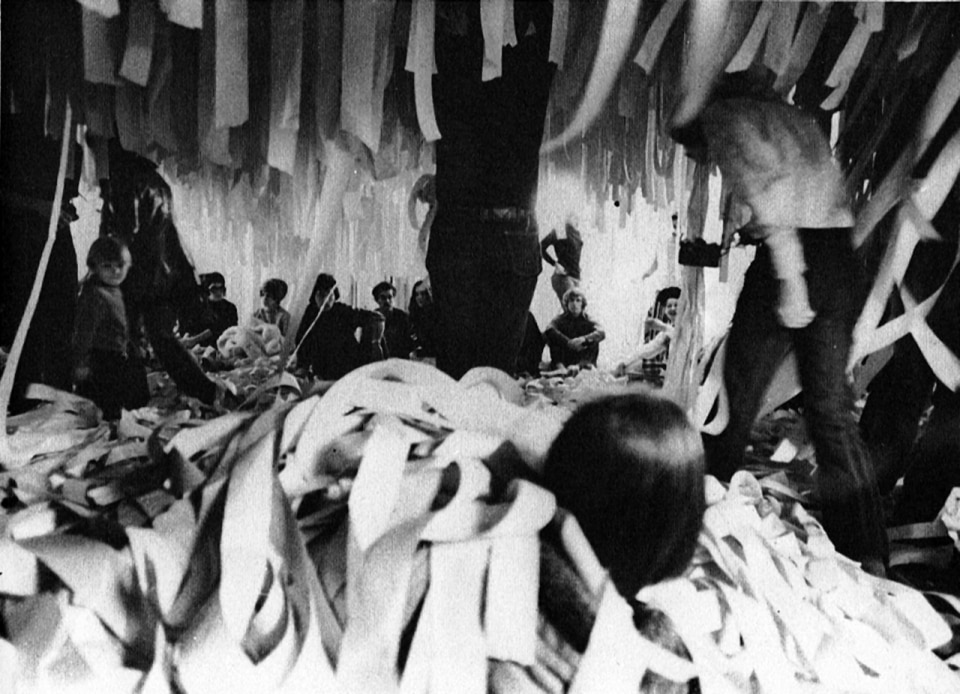
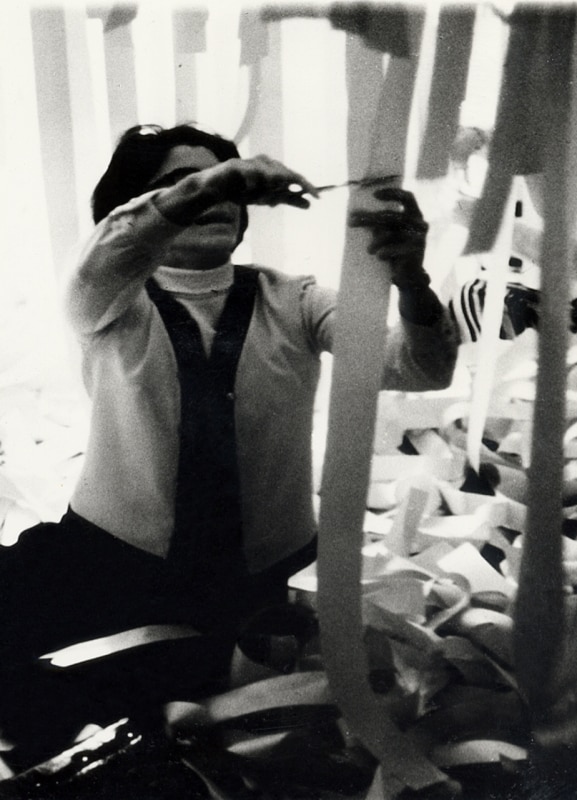
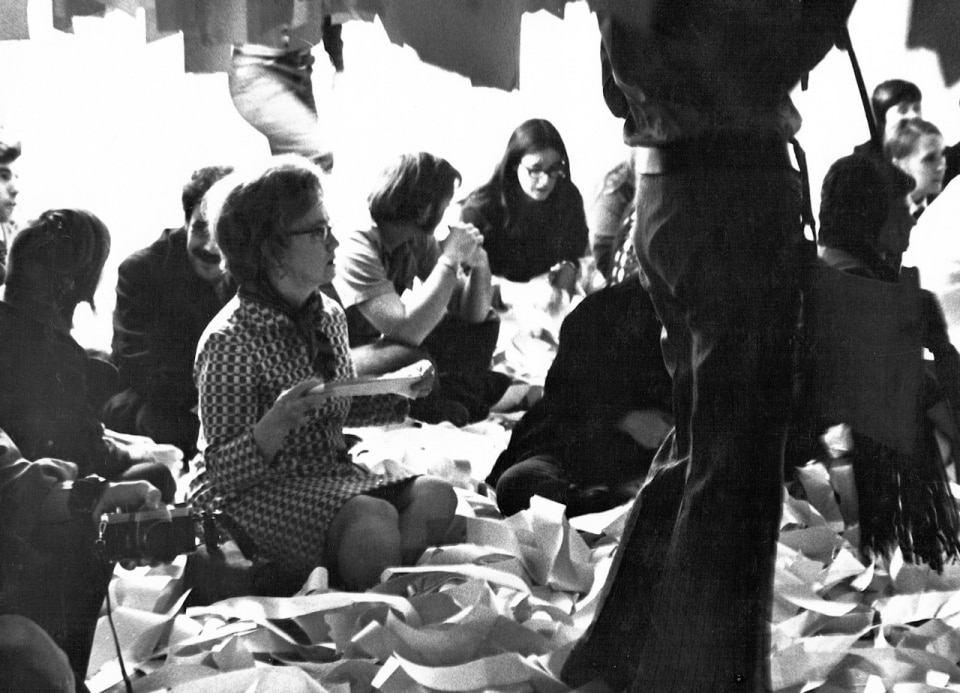
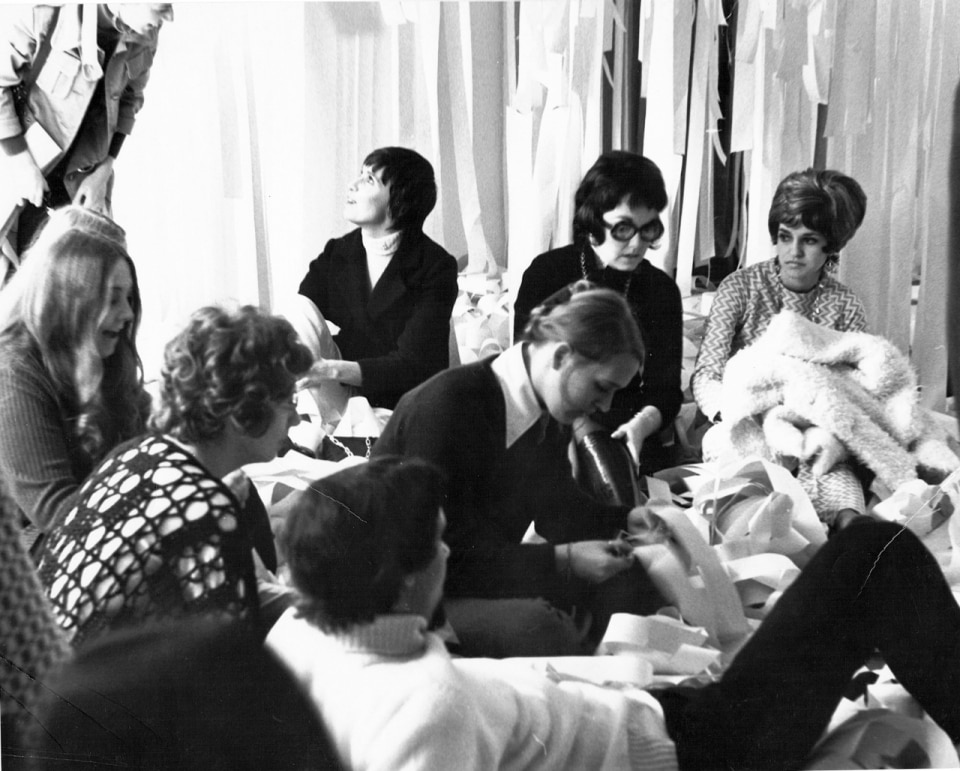
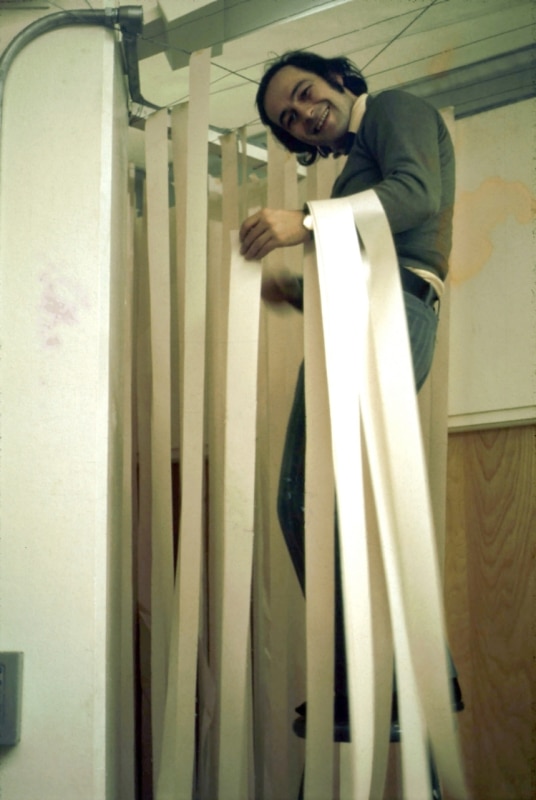
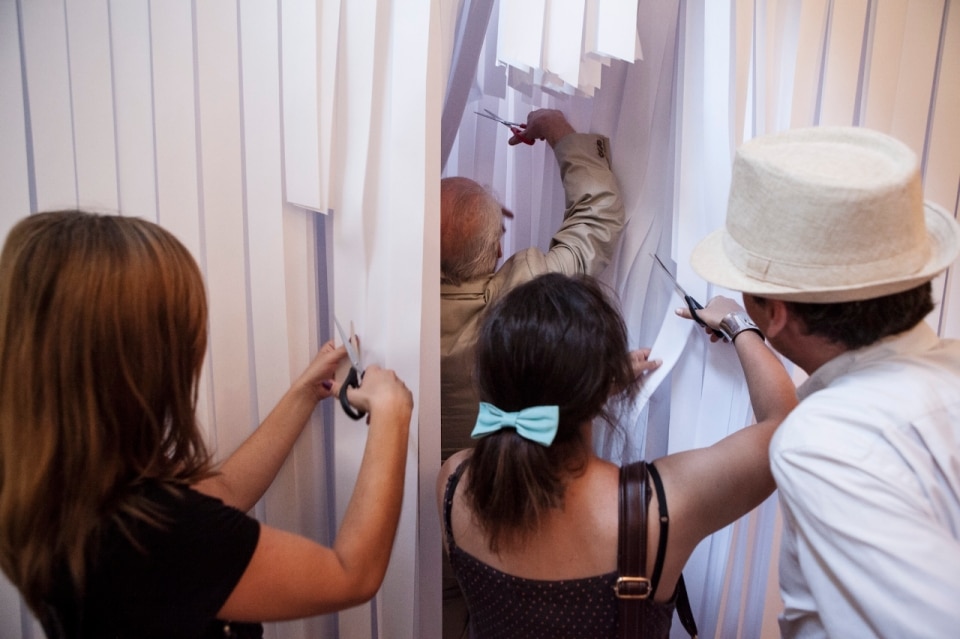
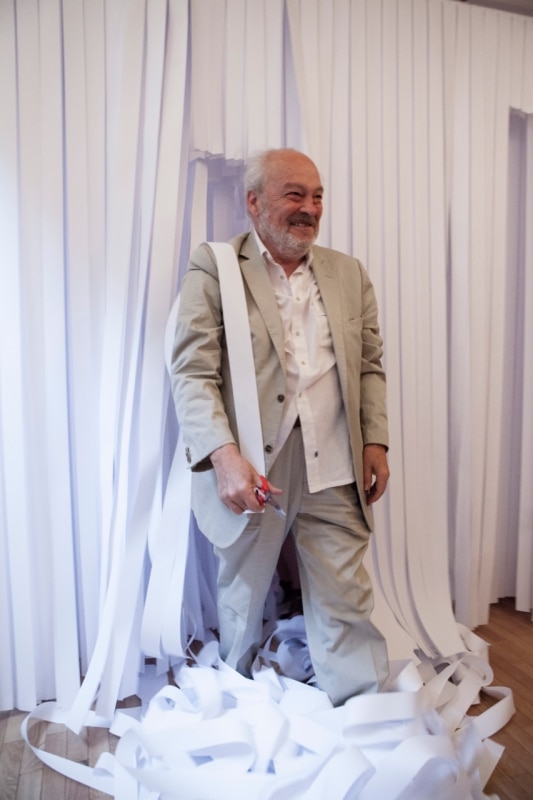
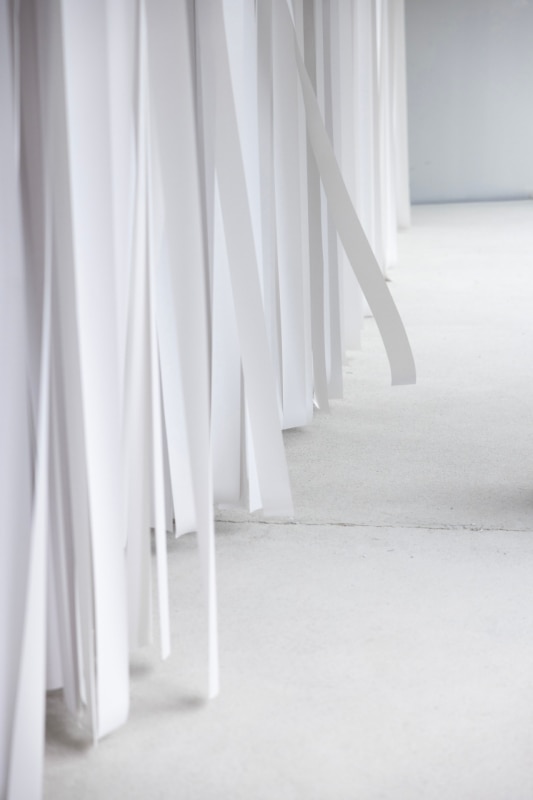
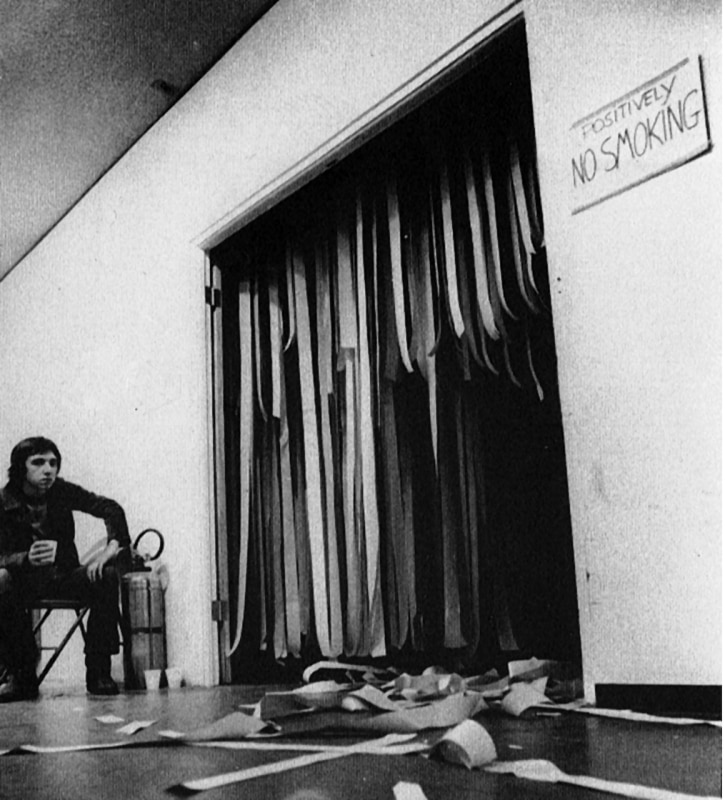
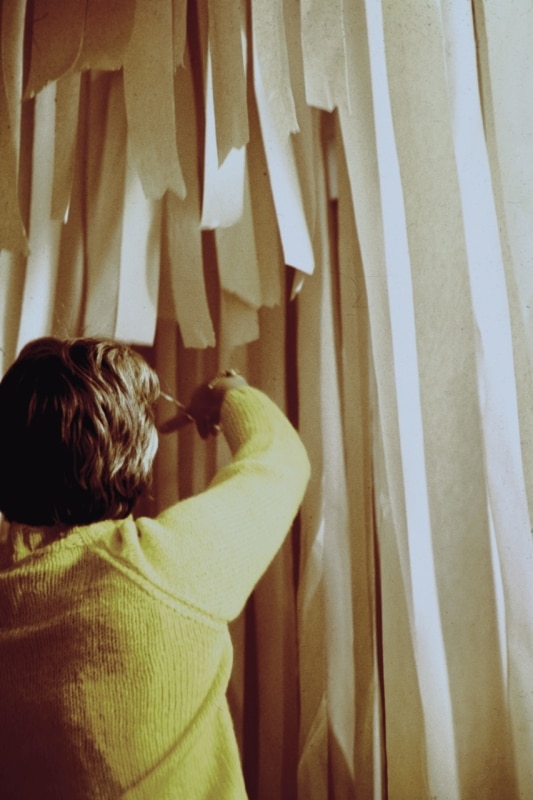
All of Pettena’s spaces are built, and above all, made possible by a fundamental trait: they are do-it-yourself environments, materializations of people’s existence within the containers of their lives – streets, landscapes, architectures. Paper embodies this perfectly. First conceived in Minneapolis in 1971, the project consisted of saturating a space with vertical strips of paper, the very room where Pettena, then a visiting lecturer at the local university, was meant to give a talk. “As people arrived, each was handed a pair of scissors and told: ‘do it yourself’, cut out your own space, do whatever you like. Just don’t try to go straight; be a little sinuous, otherwise it turns into a corridor, visually rather dull”. There were around 400 seats: “They gathered the paper strips they cut, made piles to sit on, and that became the space they had chosen to carve out and organize. It was fun for me too, because I had no idea what would happen, I had never done it before”.
Space is not meant to be designed; it is to be traversed
Amid the background noise of Art Week and Design Week – “I see a great deal of confusion” – and the ongoing attempts to definitively pin down what this or that movement was – “Il sonno della ragione genera mostre!” (The sleep of reason produces exhibitions!) – Pettena’s position remains almost irreducible, for all its irony. It is the stance of someone who continues to see architecture as something that cannot be commanded or steered: “never a delegated relationship, but a direct relationship with space to be invented.” This is why he finds little meaning in the idea that certain places today might require architects more than others: “It’s a way of limiting the possibility of imagining. The invention of space is a destiny; it should not be on demand: it is a spontaneous act.”
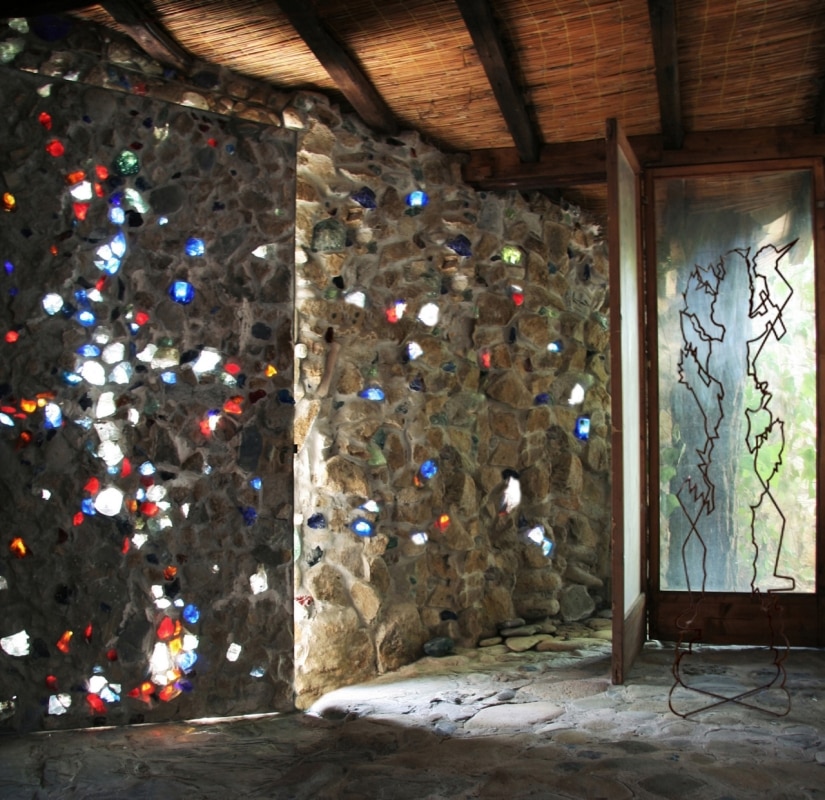
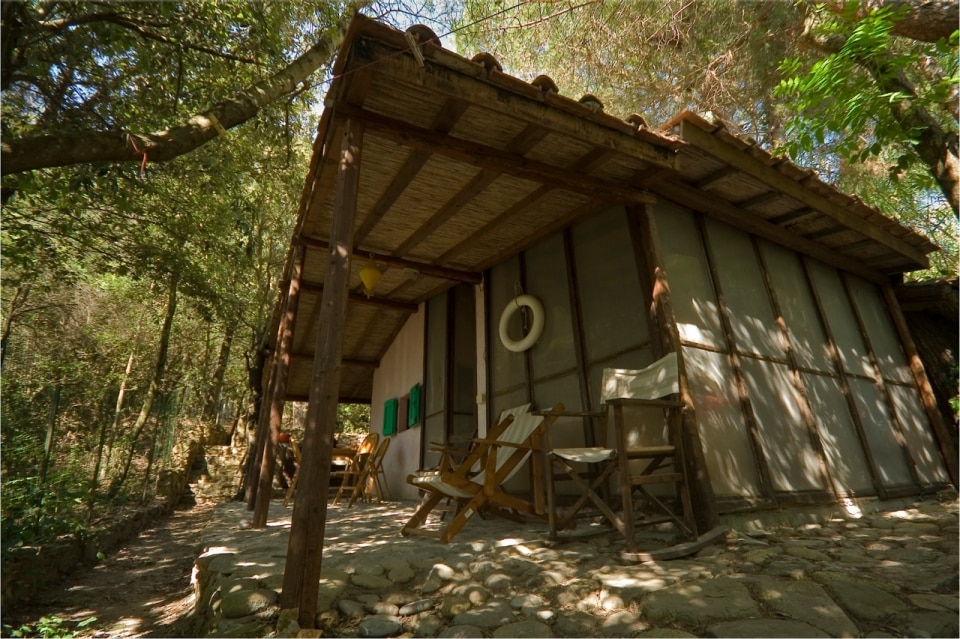
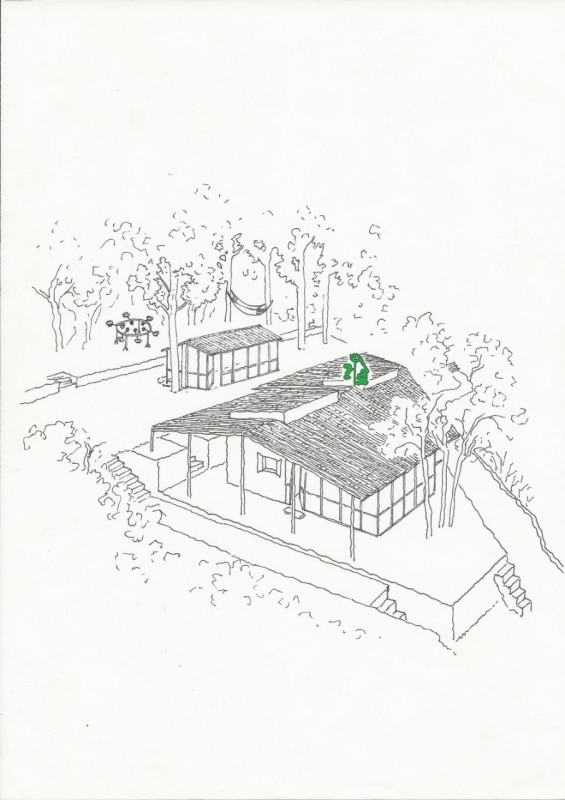
Spontaneous, too, is his own home. Over decades, together with his family, Pettena shaped a dwelling overlooking the Gulf of Viticcio on the island of Elba: an architecture that gradually took on the nature of a story rather than a construction, even though people sleep and eat inside it. “I didn’t alter anything; I nestled into a point within what already existed, without even changing the use of anything.”
It had been a shelter for tuna nets, abandoned and collapsed, set on a terraced slope facing the sea. “And I did not touch this substantial human intervention.” Instead, he inserted himself into one of those terraces and, by clearing brambles and embedding within Mediterranean scrub, allowed the structure to grow gradually, without adding to or subtracting from the place: stones gathered from the sea or nearby, and a tiny initial living unit, almost like a caravan. “I bought furnishings from factories supplying caravan and camper manufacturers: minimal, foldable equipment.” Parents would sleep in the living area – where the table lowers to become a bed along with two benches – while a mezzanine was created for the daughters.
A movement that never wanted to be
It may sound like a manifesto of Radical Design – semi-nomadism, Supersuperficie, No-Stop City – but Pettena quickly cools such readings. “Radical Design, in the end, never really existed,” he says, resisting any easy critical appropriation. “It was a climate, a way of narrating ourselves through projects, through the tools you were learning as an architecture student. It belonged to our specific historical moment, even if we didn’t quite live that moment; each of us was minding their own business”. Still, making history precisely by minding one’s own business sounds like an achievement. “Exactly: for us, it was”.
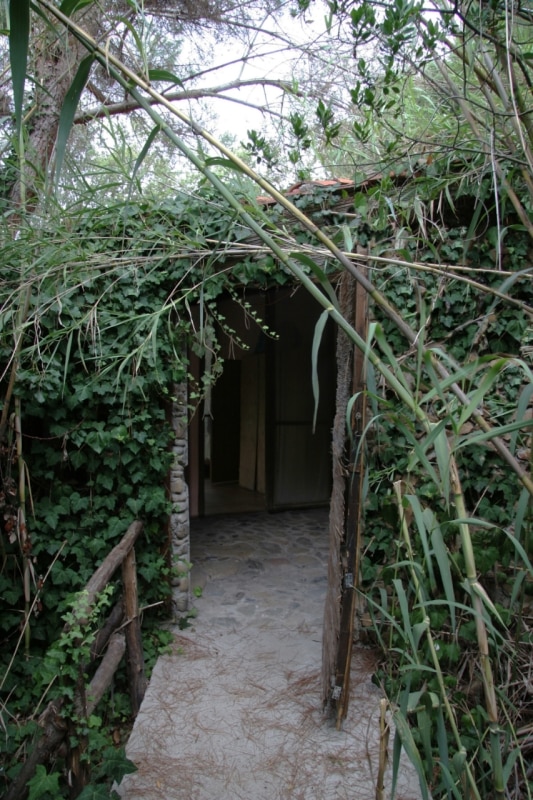
A current that still resists being mapped into any definitive taxonomy, not least because it was never uniform, neither in positions nor across generations. The contrasts between Superstudio and Archizoom were well known; figures such as Ettore Sottsass – “the only architect who really understood visual art” – participated in the same discourse while belonging to an earlier generation. And when the radical impulse crystallized into postmodernism, few oppositions were as clear as that between Memphis – eager to embrace the market – and Alchimia, which rejected industry in favor of experimentation.
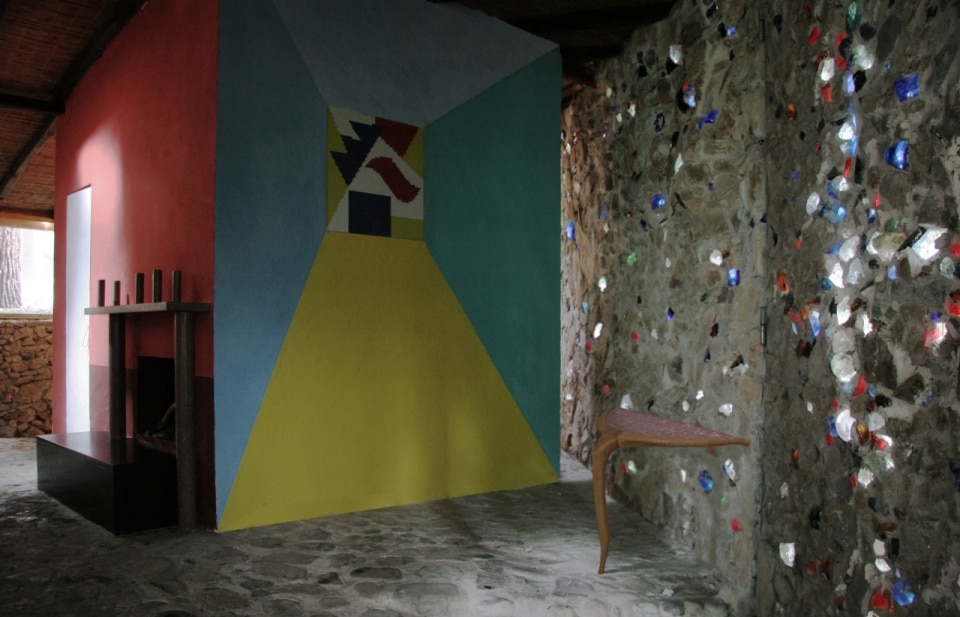
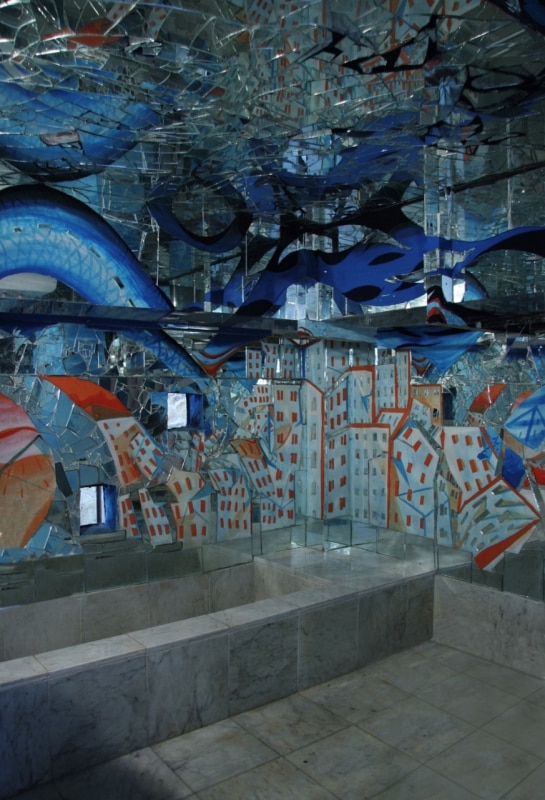
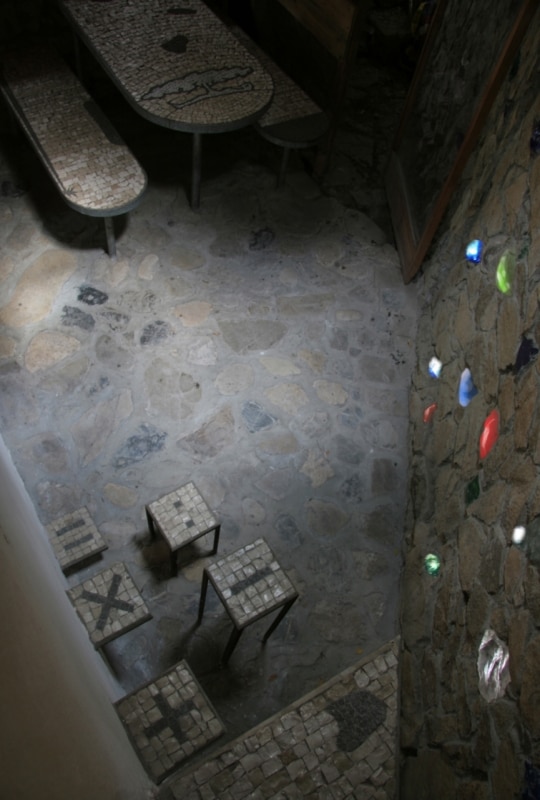
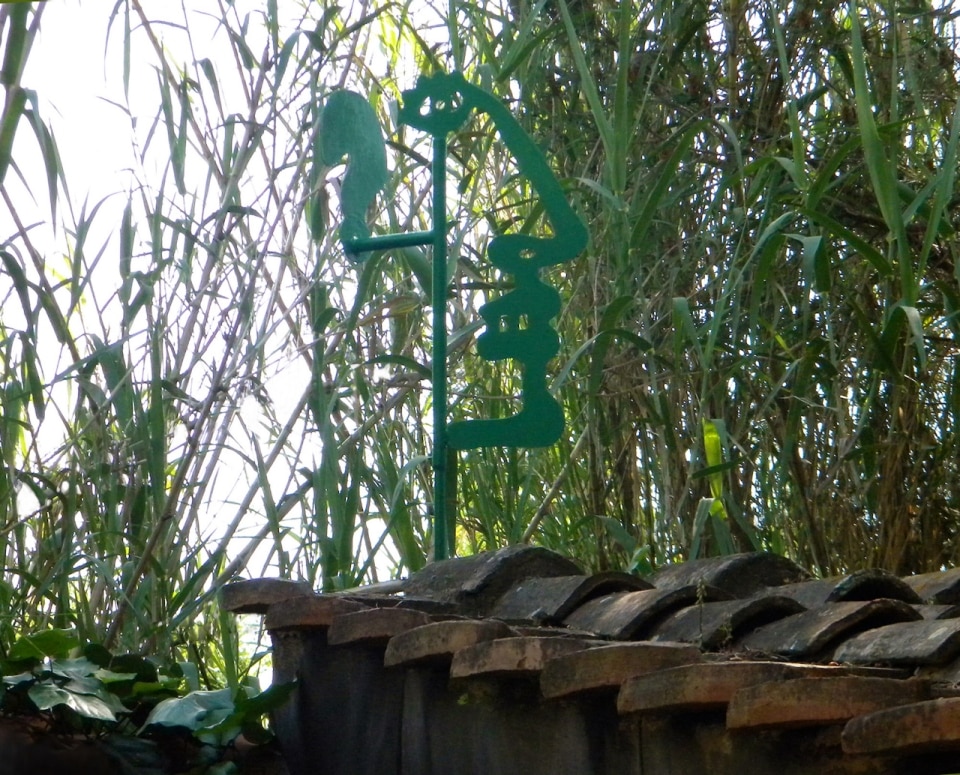
And yet the house on Elba returns here, too. The way it grew—and, above all, what it contains—is a concise narrative of Pettena’s life: a continuous weaving of encounters, contaminations, and—among the often-quarrelsome radicals—reconciliations. Inside, on two sides of the same volume, one finds Sottsass’s fireplace and Alessandro Mendini’s mosaic; then Lapo Binazzi’s (from UFO) coat rack, Andrea Branzi’s girouette, and works by younger artists such as Ugo Marano and Marco Pace.
It translates the same interest in dialogue that Pettena cultivated during his years of teaching, and which also emerges in the only public building he has completed: the extension of the Canazei town hall, originally designed by Ettore Sottsass Sr., a project that works on the father’s architecture as a tribute to the son.
It is the same spirit that, for over fifty years, has led the most diverse people to carve out their own space once again, armed with scissors. To do, with strips of paper, what designed and constructed architecture can never fully allow: defining space through one’s own presence. As Pettena puts it: “I built everything. I designed nothing”.
Opening image: Gianni Pettena. Paper, Futura Gallery, Glass of Water , Praga 2013. Courtesy Gianni Pettena
We would like to thank Giulia Pettena and Marco Pace for their support and participation in the conversation.
- Exhibition:
- Paper/Northern Lights
- Curator:
- Davide Giannella
- Venue :
- BiM
- Address:
- viale Piero e Alberto Pirelli 10, Bicocca, Milan, Italy
- Dates :
- Free access. April 14 – 26, 2026, 12pm – 8pm on weekdays and 10am – 7pm on holidays. April 27 to May 31, 2026, visits by appointment at tuttospecific@gmail.com