



This article was previously published in Domus 1112, May 2026.
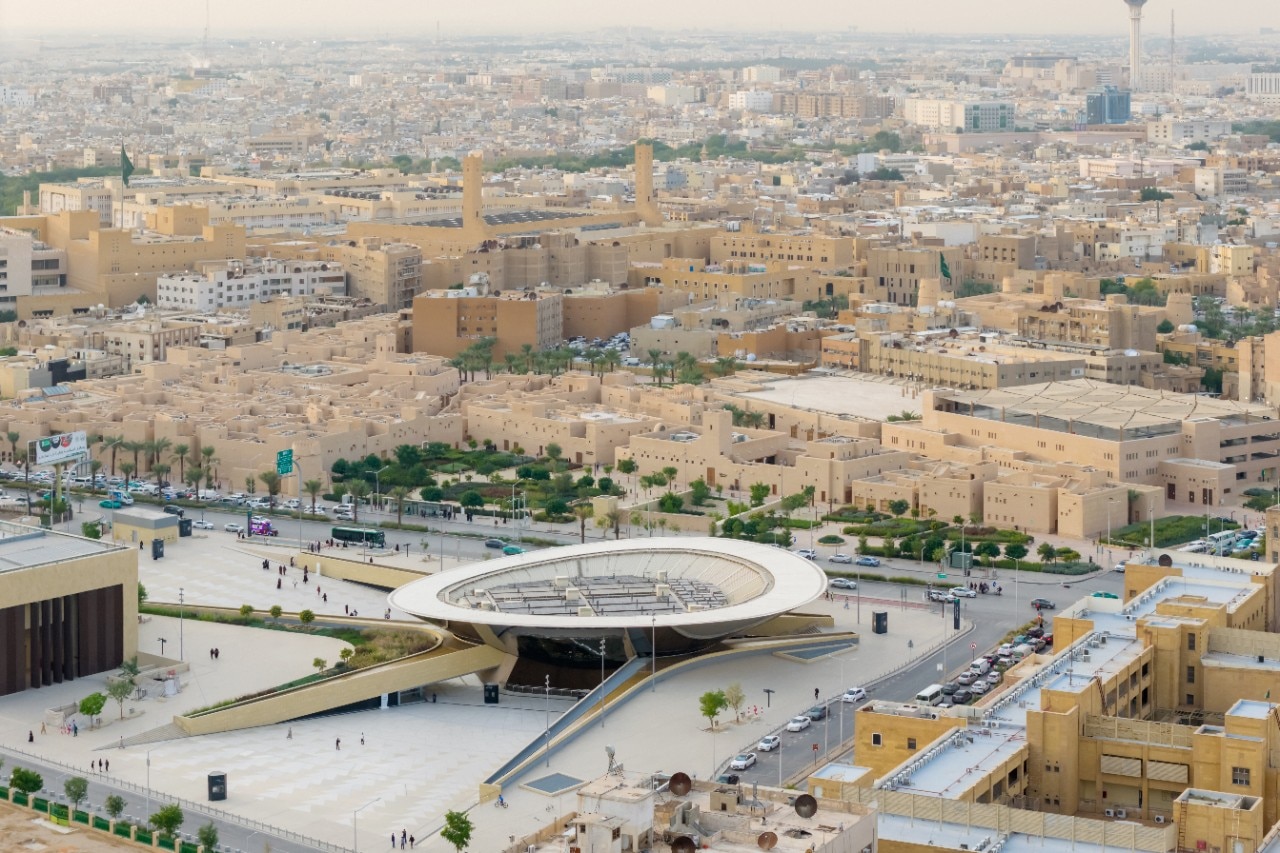
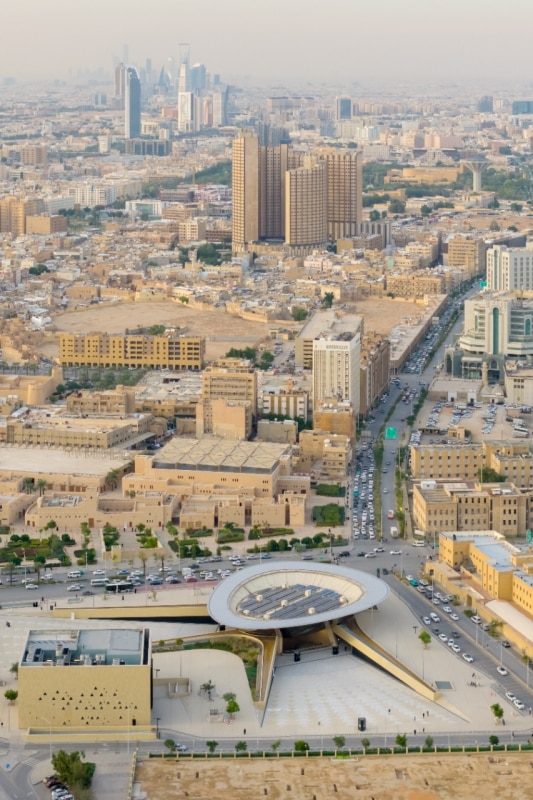
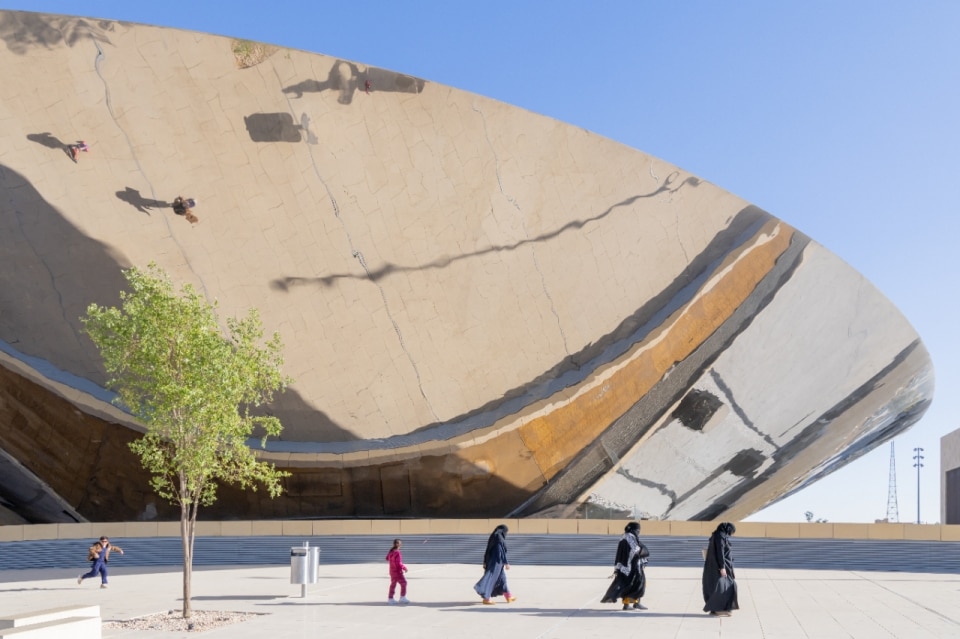
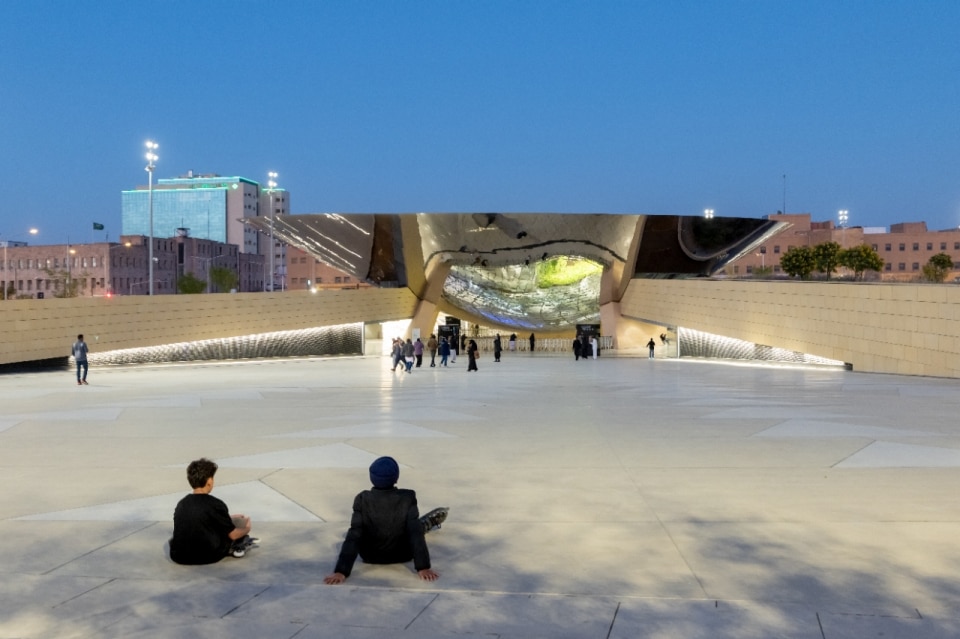
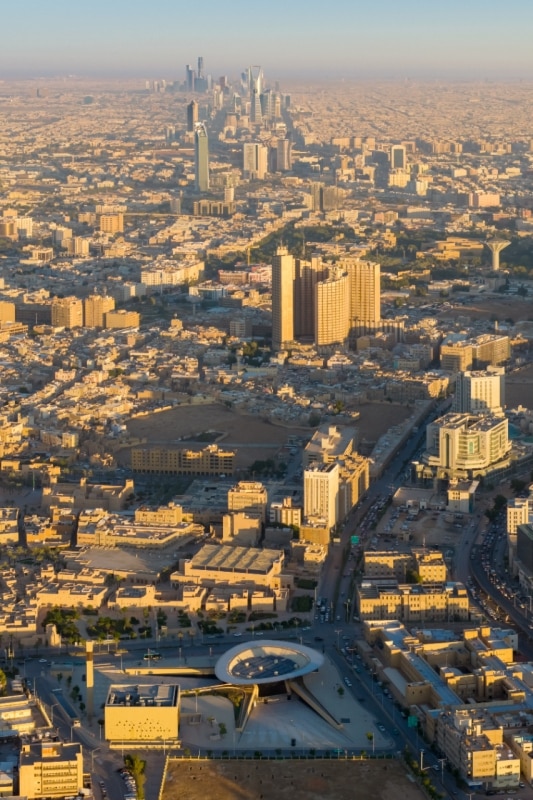
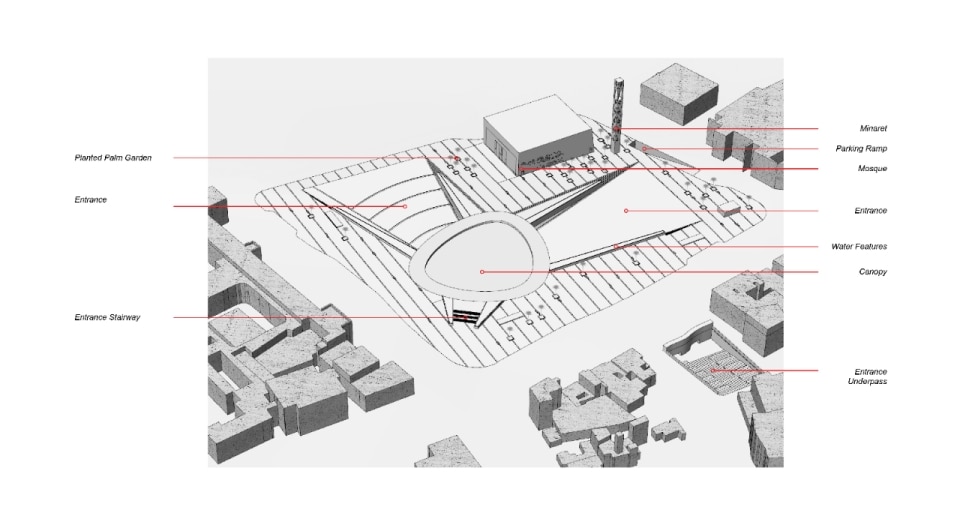
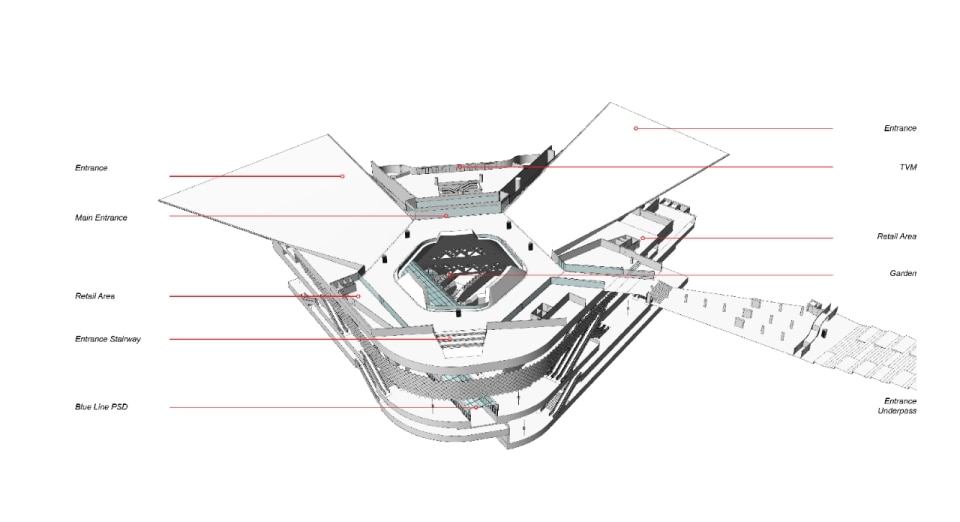
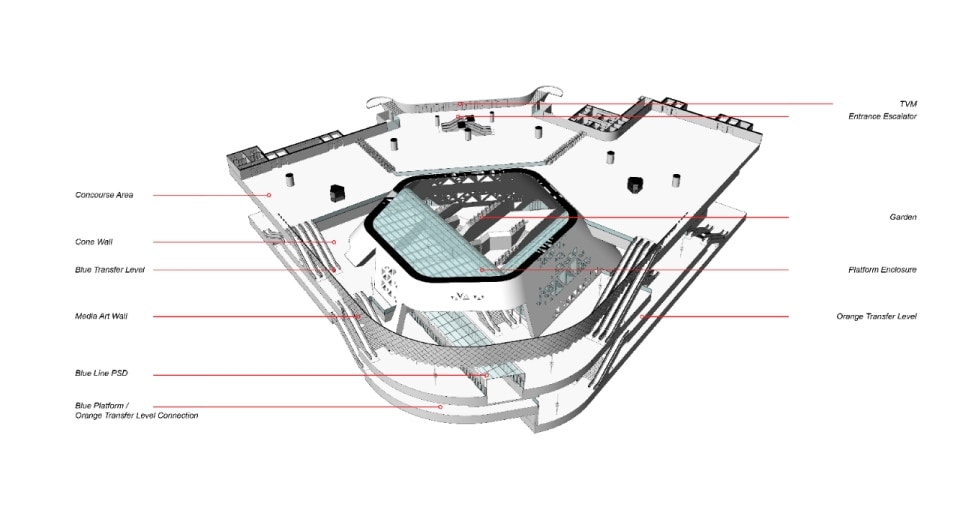
As one of four main hubs in the Saudi capital’s new metro system, connecting two of the main metro lines, the station in the his toric Al-Qiri district is designed as an open urban and pedestrian plaza with a large stainless steel canopy that acts as an urban periscope.
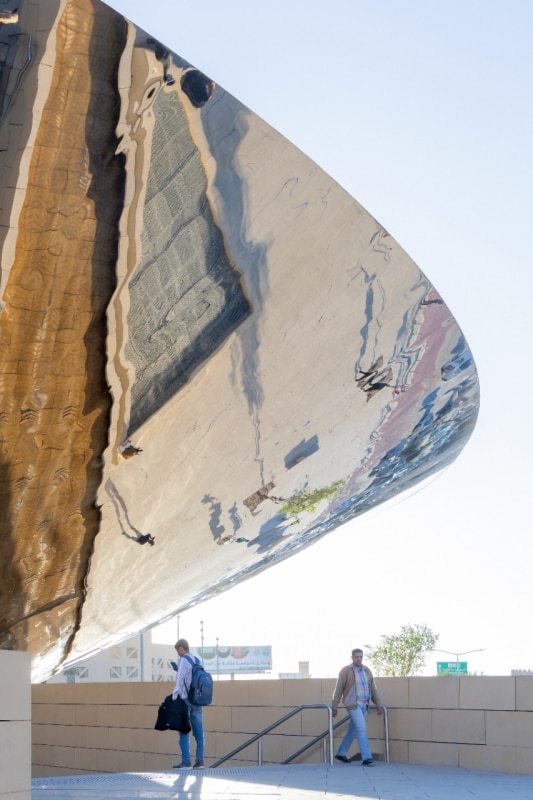
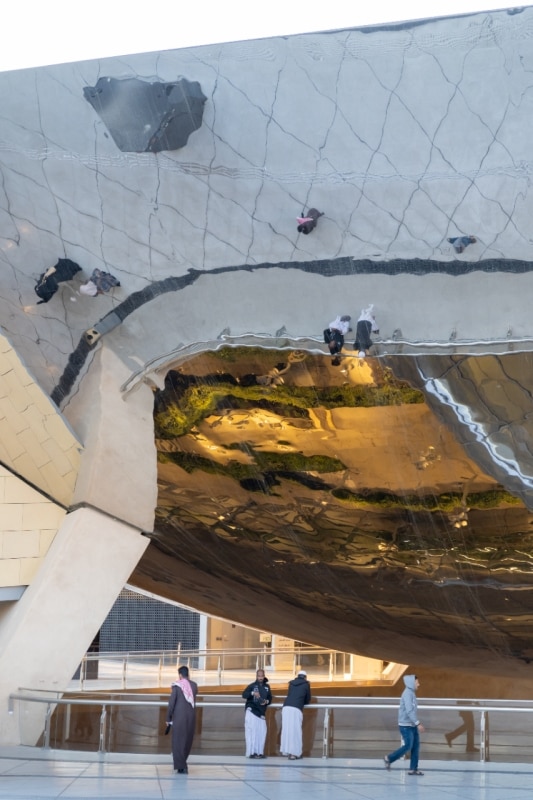
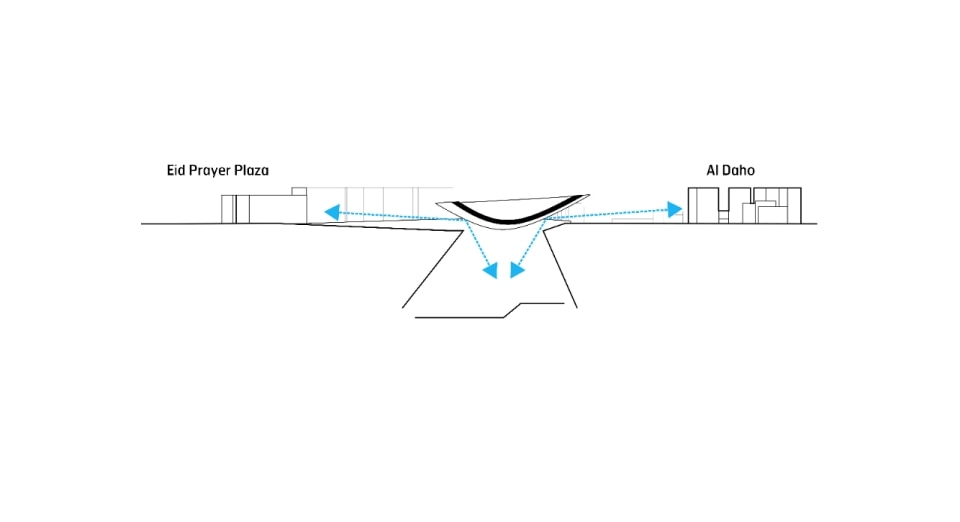
The station levels are visually linked by the mirror-like overhang structure that reflects the outside inwards and the inside outwards, while also directing natural light into the underground station and providing shade to the surrounding public areas.
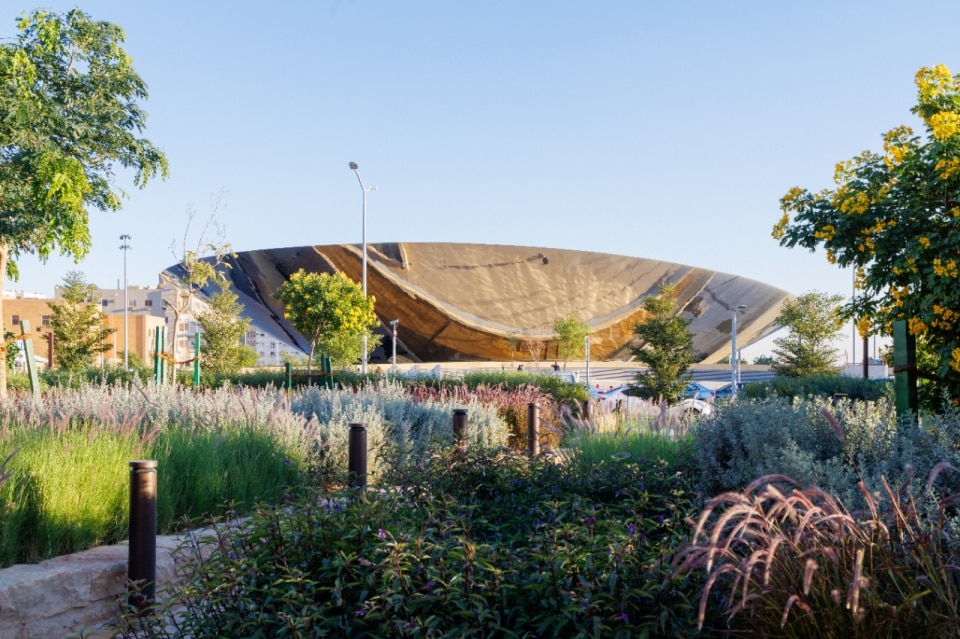
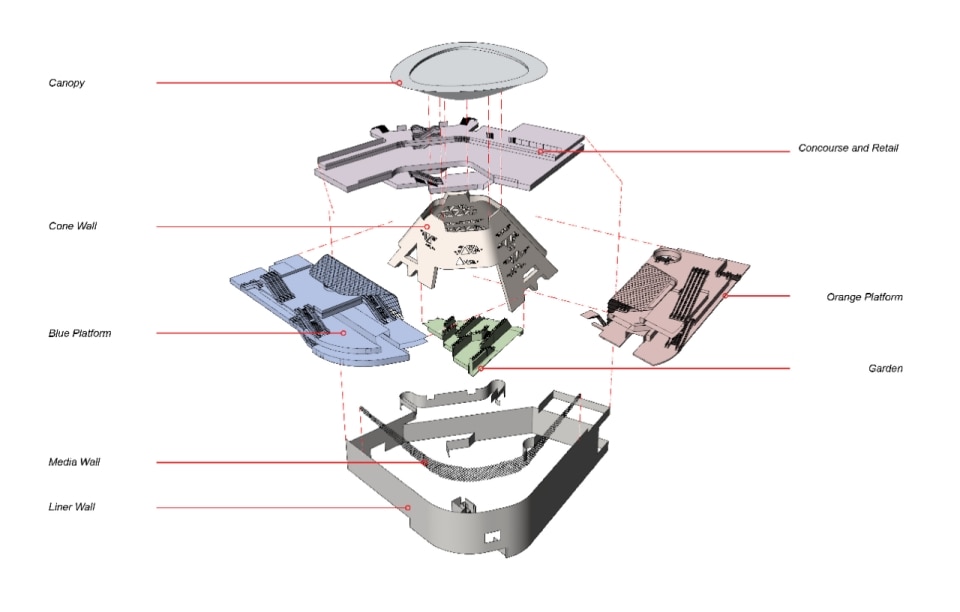
The steel canopy serves as the focal point and marks the station’s main entrance. The supporting steel space frame allows the canopy to extend above and beyond its base to form a massive cone wall. Beneath ground level, the sloping interior walls are finished with a rendered surface inspired by the ar ea’s traditional architecture. Acting as both a unifying architectural element and a point of orientation within the building, the steel canopy also reflects indirect sunlight down wards from its mirror-like surface.
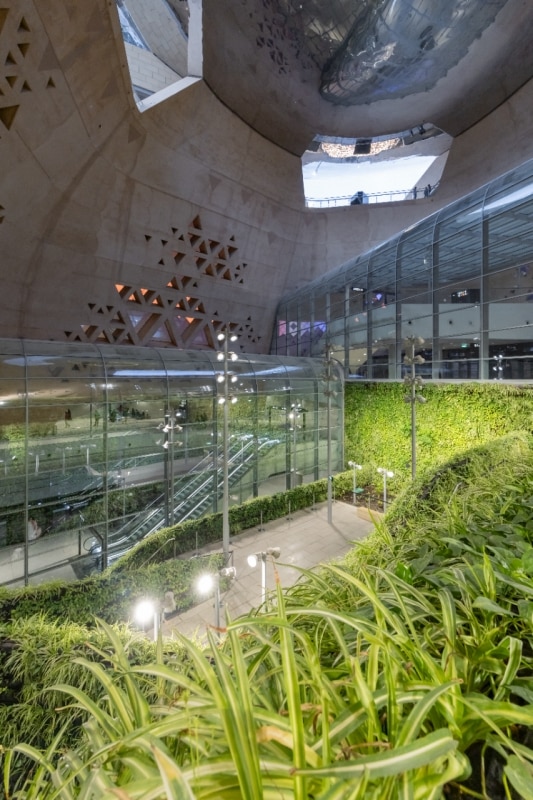
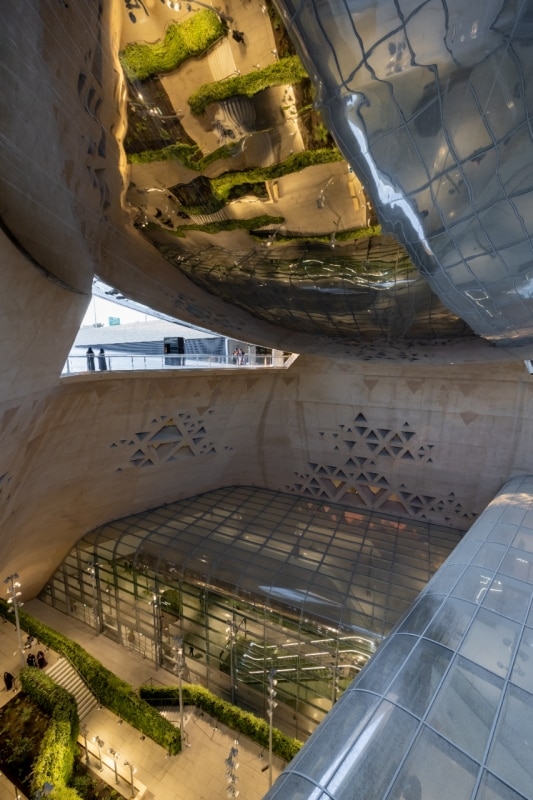
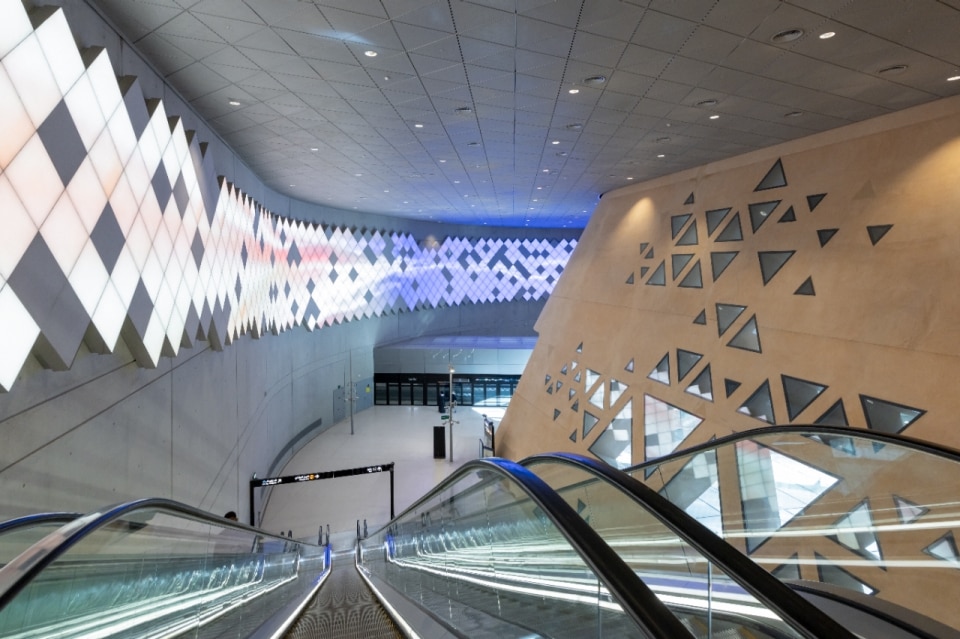
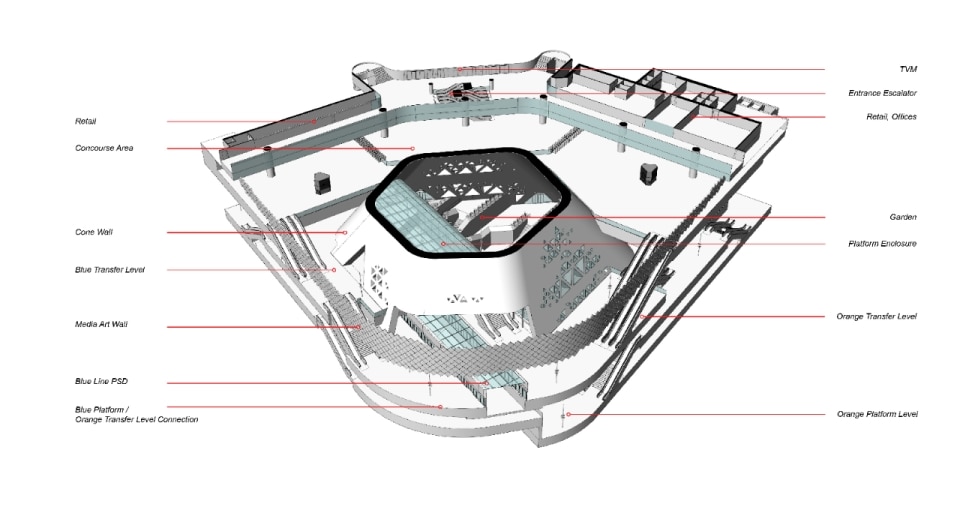
Designed to create subtle glimpses between the different sections of the station, the patterned openings – formed by 326 tri angular carvings in three different sizes – al so filter light gently into the atrium.
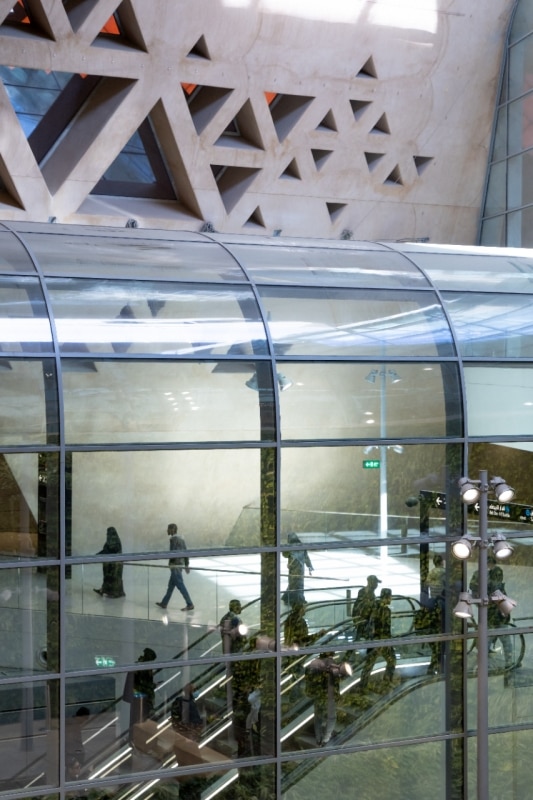
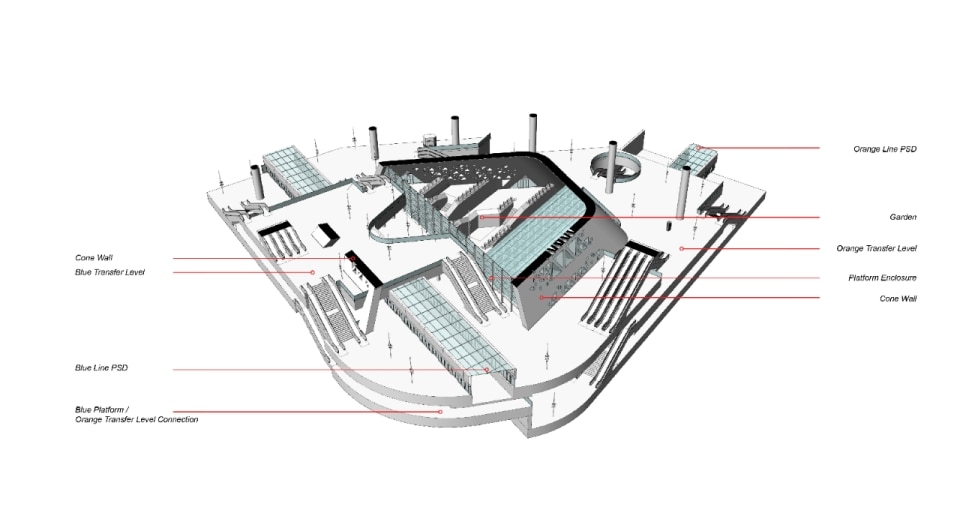
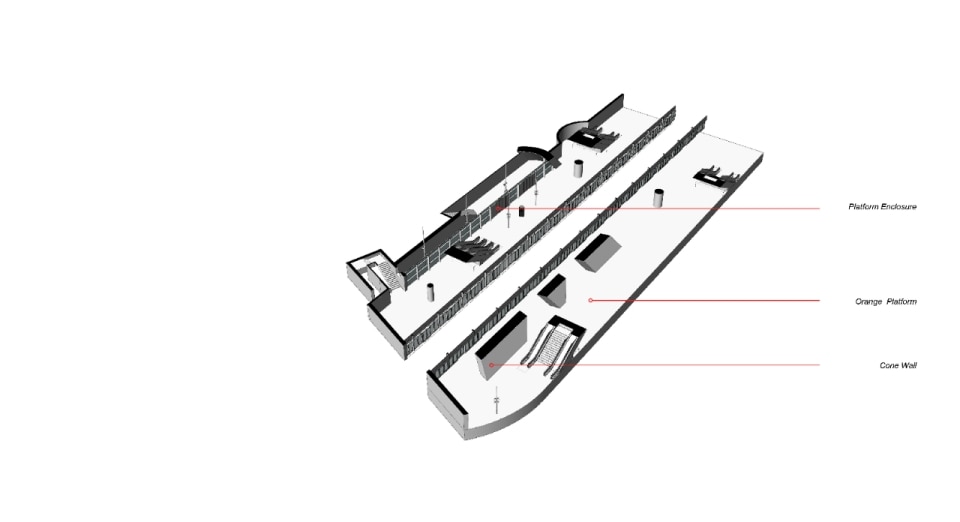
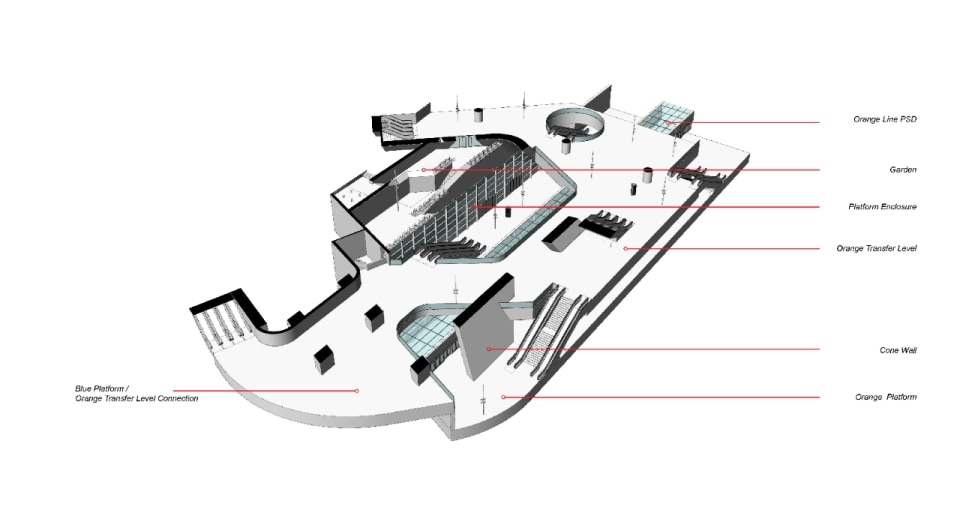
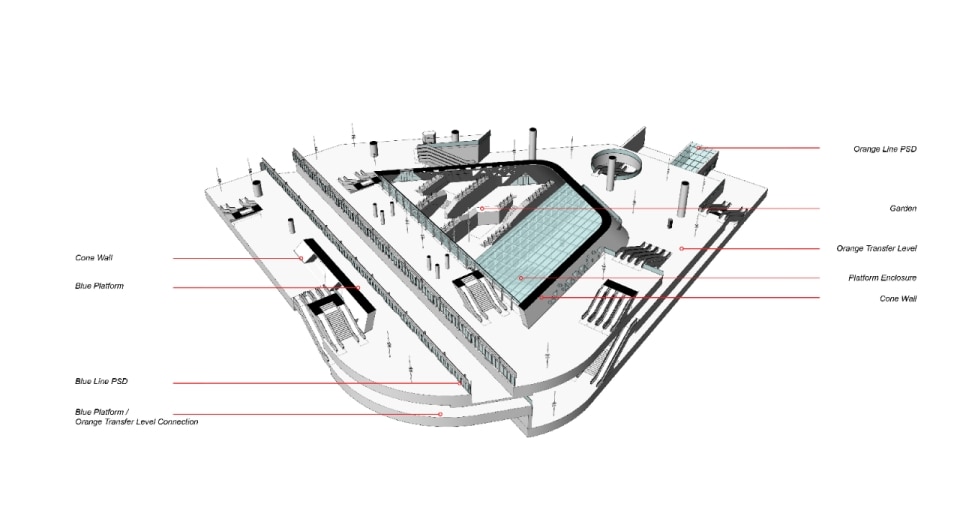
When passengers step off a train and look up, they see a 360-degree view of the ur ban landscape reflected on the underside of the canopy, giving them an immediate pic ture of where they are in the city. Likewise, people arriving from the city can look up to the canopy and see a mirrored reflection of everything happening below. The two metro lines traverse the open space within trans parent tubes, creating a striking visual pres ence and enhancing wayfinding throughout the station. The platforms are also each en capsulated within glazed tubes that pro trude into the atrium void, allowing a seam less integration between interior and exte rior, and opening the platform areas to the grandeur of the atrium for both arriving and departing travellers.
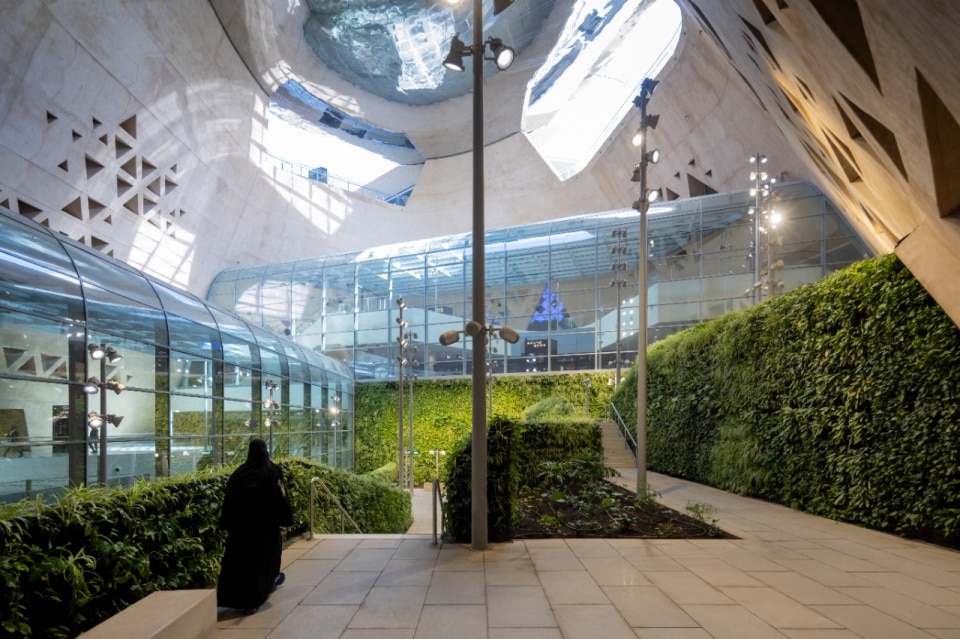
At the base of the atrium, at around 35 metres below city level, an accessible garden helps to maintain a temperate environment even during the hot summer periods. Wa ter for irrigation is collected from the paved plaza areas and canopy above. The new pla za and garden further strengthen the public realm, providing valuable shared spaces for the nearby communities.
With respect for the station’s historic setting, the inner atrium walls are adorned with a window-cut pattern inspired by tradi tional Najdi motifs, echoing the architectur al character of the surrounding neighbour hoods.
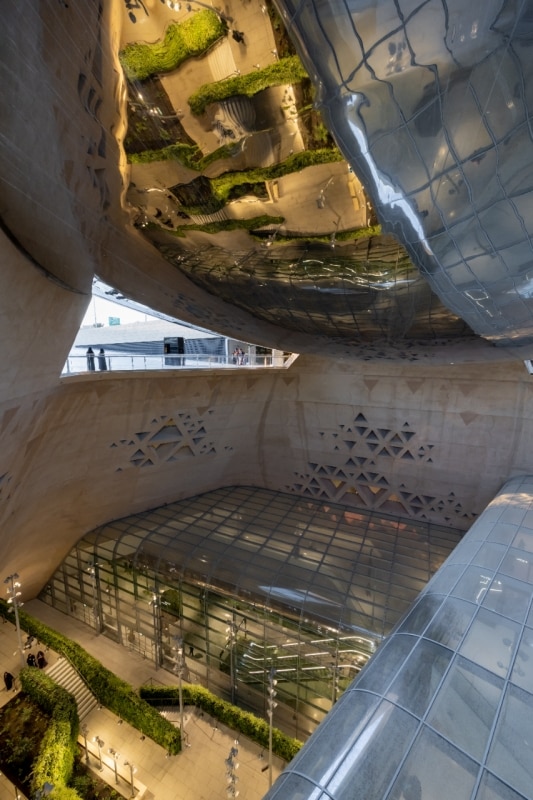
Designed to create subtle glimpses between the different sections of the station, the patterned openings – formed by 326 tri angular carvings in three different sizes – al so filter light gently into the atrium.