


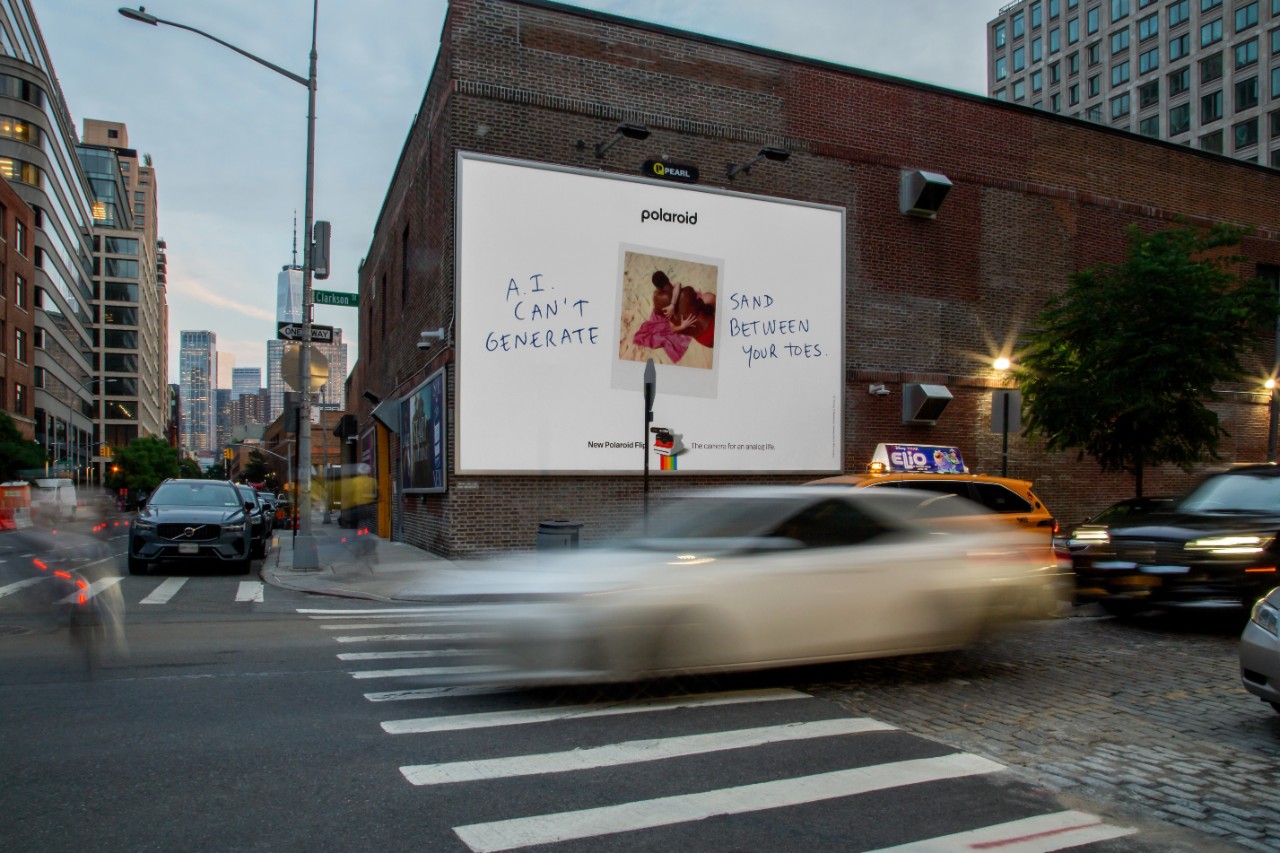







In recent years, tech nostalgia has evolved from a simple aesthetic revival into a broader cultural movement. From the renewed popularity of early-2000s digital cameras and film photography to the comeback of screen-free music players and other Y2K-era gadgets, the recent past has become a way for people to step back—at least in part—from the overwhelming saturation of today's digital world.
The rise of AI and the diffusion of AI-generated imagery have contributed to supercharge these trends, expanding them beyond generational boundaries.
In a recent poll conducted by Pew Research in the US, only 16% of respondents said they believe AI will have a positive impact on society, and it's increasingly common to encounter people who increasingly complain about various forms of gen-AI fatigue.
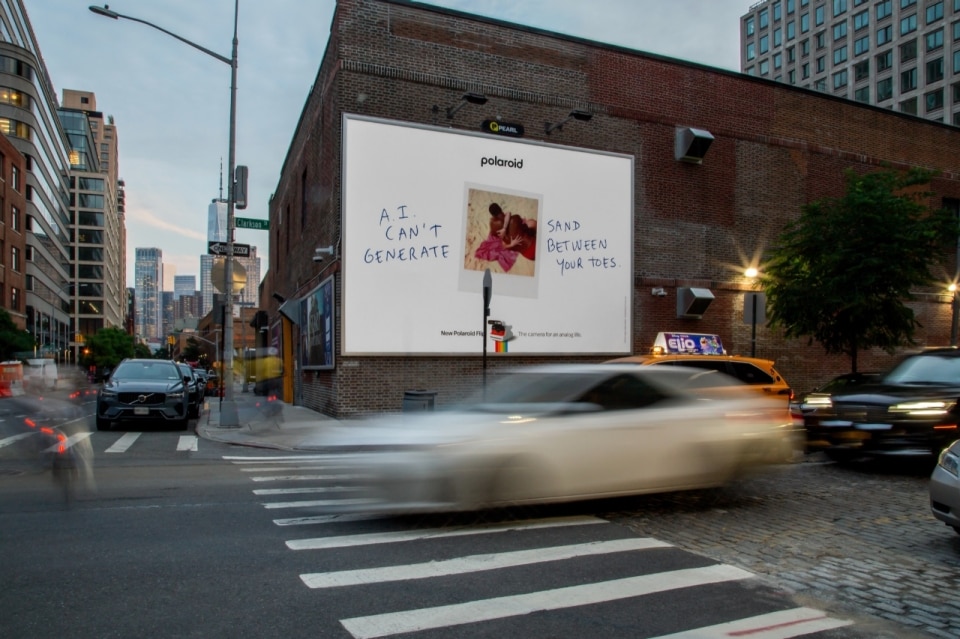
It was just a matter of time until this broad resentment could be chewed and processed by capitalism's digestive tract––marketing. The merit of doing so goes to Polaroid, which last year came up with an interesting widespread campaign all centered around the refusal of what the company's Mad Men called "the reign of screens and AI".
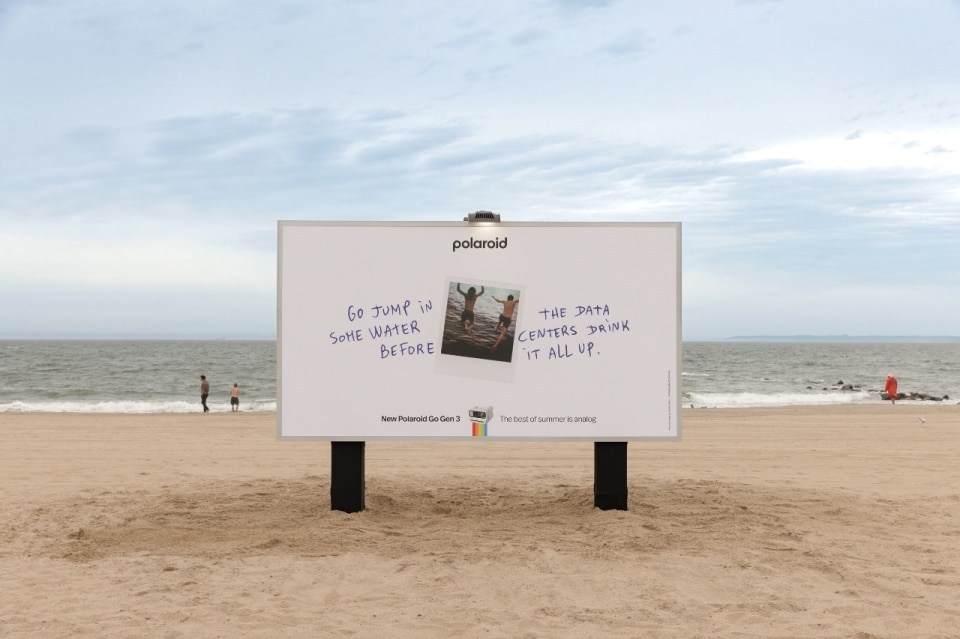
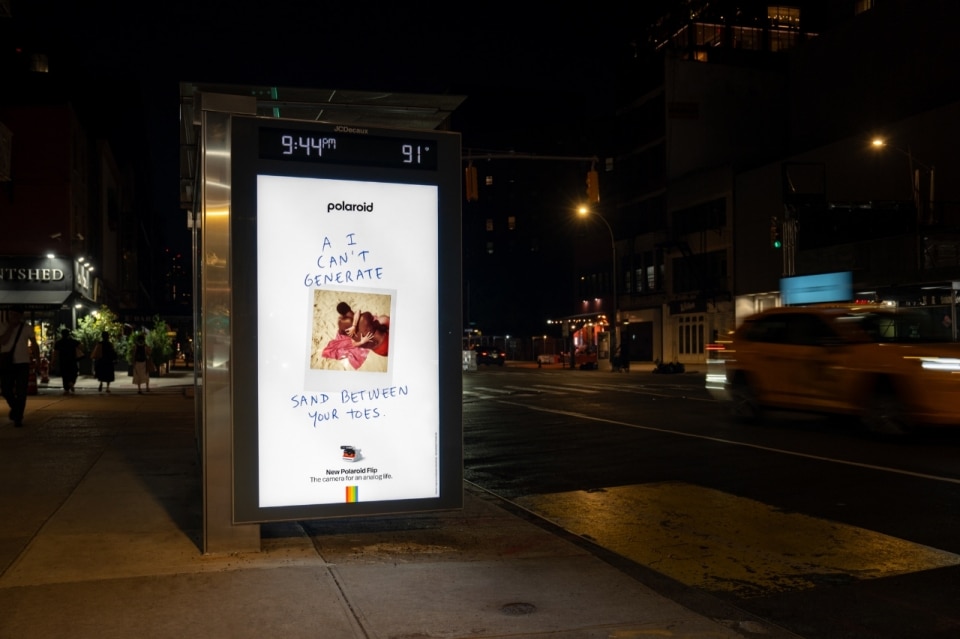
The ads are simple: a Polaroid picture accompanied by a well-honed two-liner playing on themes of human connection, memories, relationships. For the 2026 summer Polaroid has revamped and expanded the campaign to promote the new Go Gen 3 instant camera. The latest installation in Coney Island, for example, invites the passersby to "go jump in the water, before the data centers drink it all up", tapping into the US debate around the hyperscalers' buildout of massive datacenters across the country.
The billboard joins a global campaign that has seen similar installations going up in London (including the takeover of King's Cross Station), New York, and South Korea. The ads feature actual Polaroids and handwritten claims such as "You can't bask in blue light", "Dance like nobody is recording", and "What a glorious day to stare into various screens for hours on end".
"When we stopped asking ‘How do you make instant cameras appealing to Gen Z?’ and started asking ‘Why should Polaroid exist at all in an AI era?’ we knew we were on to something. For Polaroid, the simple act of existing is already an act of rebellion. While our campaigns are provocative and challenge our relationship with technology, we’re not anti-digital.", said Patricia Varella, Creative Director at Polaroid. "We know we have to live alongside it, but we’re deeply pro-human, and know what humanity gives us. And we know what we stand to lose if we don’t protect it. That’s a fight worth fighting."
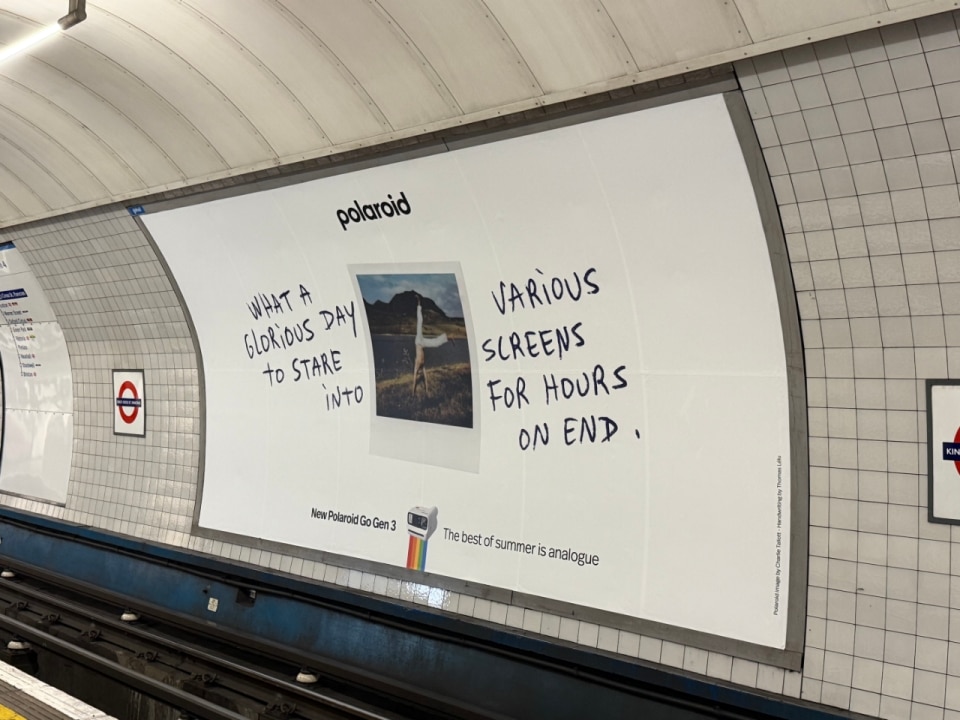
From our side we can just say "Bravo, Polaroid". This is hands-down a fantastic campaign. All takes can be wholeheartedly agreed with, and they're selected carefully to touch on a wide gamut of criticisms we hope can become more and more widespread. While critics have been elaborating on the astounding downsides of the generative AI frenzy for a while, and we could read countless essays on excessive screen usage, the refreshing directness of a billboard campaign is a good sign of mainstream adoption of such stances.
While we're aware that a marketing campaign aims to sell things, rather than change them, it's still a welcome step in the right direction. Saying that we all collectively hate what screens, and smartphones, and generative AI chatbots, have done to society is not a niche, anti-tech complaint anymore. Polaroid's campaign has taken a perfect instant picture of what that feels like.