

This article was previously published in Domus 1112, May 2026.
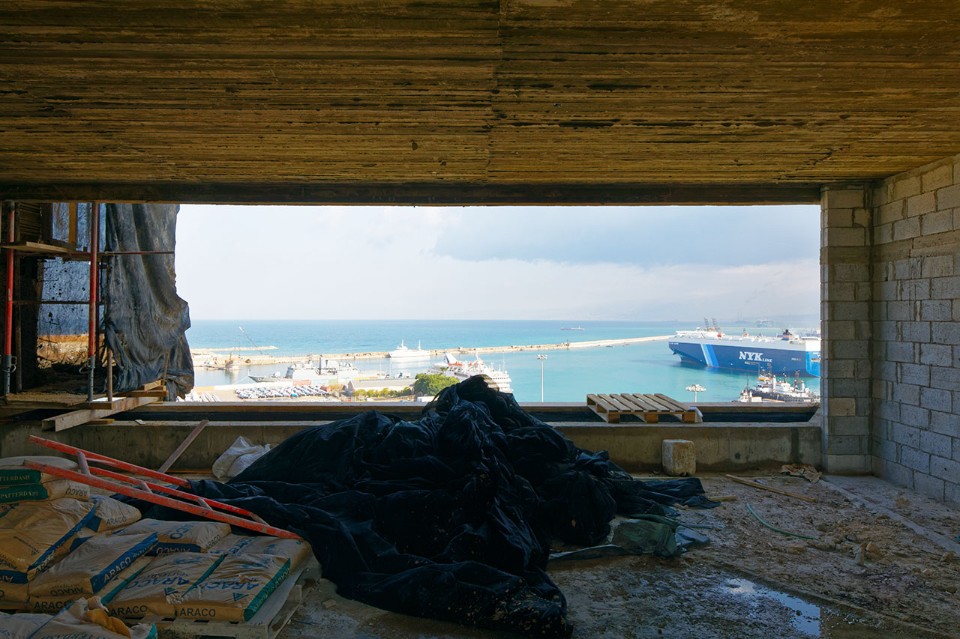
I was born with movement, in a city where movement defines everyday life. Buried seven times, destroyed and revived, I have always seen it in constant flux, in constant transformation. The only constancy is the Mediterranean, itself never still. The story begins in Beirut, where movement starts at the threshold where memory and place intersect. In this Levantine city, instability is not an exception but a condition of existence. Here, one must learn to be a good sailor, navigating high waves awakened by storms and learning to enjoy pristine, crystalline waters at early dawn.
But learning to be a sailor is only a coin flip away from becoming an architect. You navigate shaken ground. You embrace movement through form. You try to forge the dynamics of society into architecture that can make sense, architecture that elevates daily life to the same experience of awe as the sea itself. You learn to orchestrate with climate, to read the depth of the ground beneath you, to uncover unknown layers, and to let hidden treasures emerge, things that were always there but never revealed to the eye. To grow up in a city like Beirut is to understand early that architecture is never fixed. It is always provisional, constantly negotiating with time, fragility and becoming.
Architecture is never an end state. It is a temporary alignment of flows, a momentary condensation of time, matter and life.
What is archaeology? Archaeology is the scientific study of past human societies through material remains, artefacts, structures and traces. But these remains also reveal how humans moved and how movement shaped and reshaped the land. Archaeology is a process in motion. It is a continuous search for what has been in order to reconstruct a story that is always incomplete. This process finds its deepest resonance in a city of layers like Beirut, once Berytus under the Roman Empire, Bērūt in earlier Phoenician times, meaning “wells,” and Bayrūt in Arabic.
This city of layers teaches how to read through fragments. Remnants of buildings persist, voids are reclaimed by nature, and unfinished structures are softened over time by light, wind and vegetation. In Beirut, nature is never outside architecture. It infiltrates it, slipping into gaps, inhabiting ruins, transforming absence into presence. This coexistence between fragility and resilience shapes my understanding of movement, not as displacement but as transformation. Movement becomes the capacity to evolve while remaining connected to what came before. From this condition emerges a central intuition in my work. Movement is the capacity to change. It is not rupture but continuity. Not erasure but becoming.
Before architecture, there is always nature. Wind, water and light are active forces rather than abstract elements. They do not impose form. They negotiate it over time. Water flows, erodes, remembers. Light reveals and dissolves at once. Wind reshapes quietly, almost imperceptibly. These are not spectacular gestures but fundamental movements. They remind us that form is never fixed but always relational, defined by forces larger than itself. Architecture becomes one layer within a broader ecological and temporal system. The body is our first shelter, followed by clothing and then architecture. Each layer mediates our relationship with the world, yet none should become a boundary that closes us off. The moment a boundary becomes absolute, it risks becoming a form of death, suffocating life itself.
I search instead for porosity, the capacity to breathe, to exchange, to converse, to remain open and alive within the environment. There is always a vital movement of humans, invisible exchanges, air, light, sound and life itself. To begin a project is always to enter an already existing movement. It is an act of listening, an attentiveness to what is already present but not immediately visible, the memory of the ground, the wind, the intensity of light, the traces of what once was.
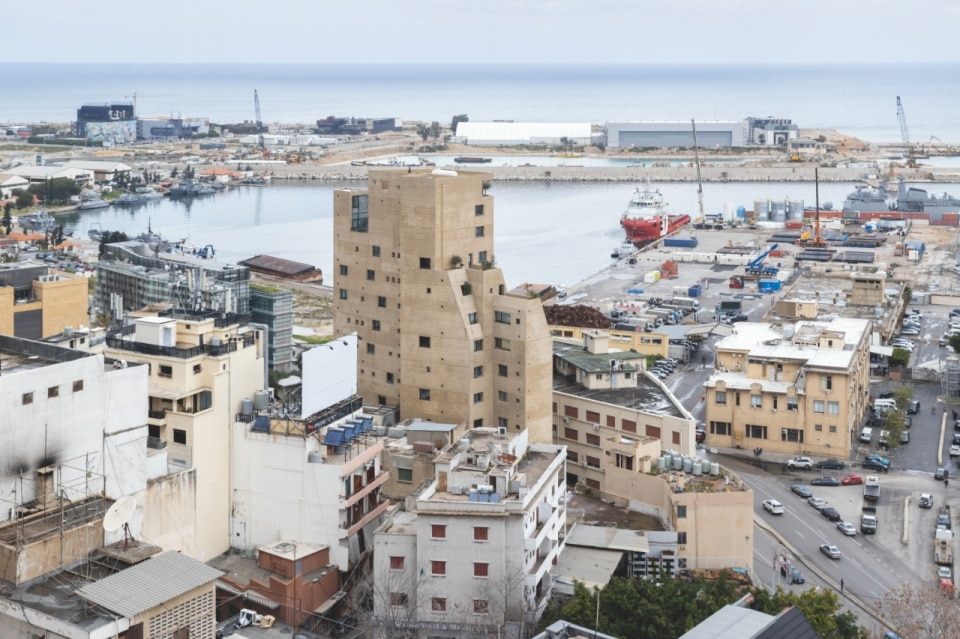
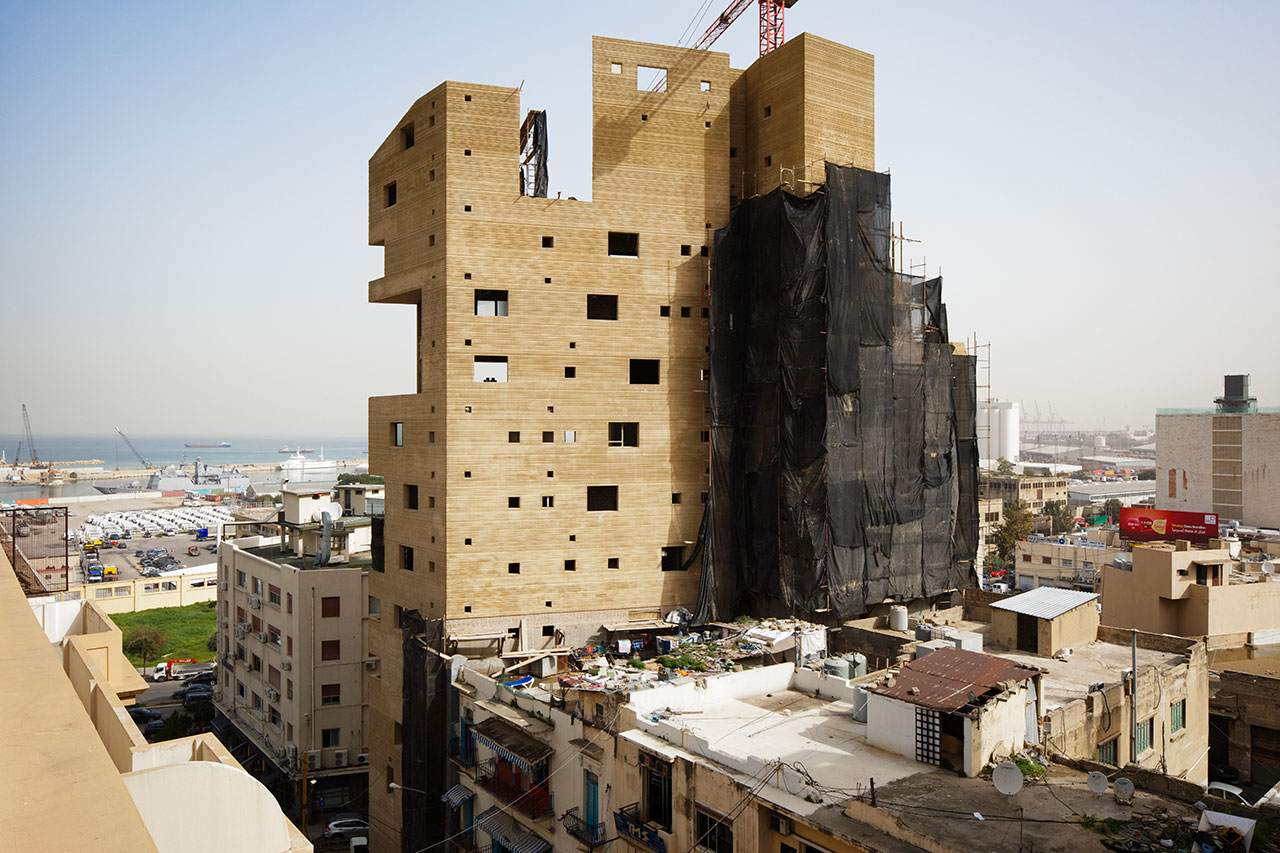
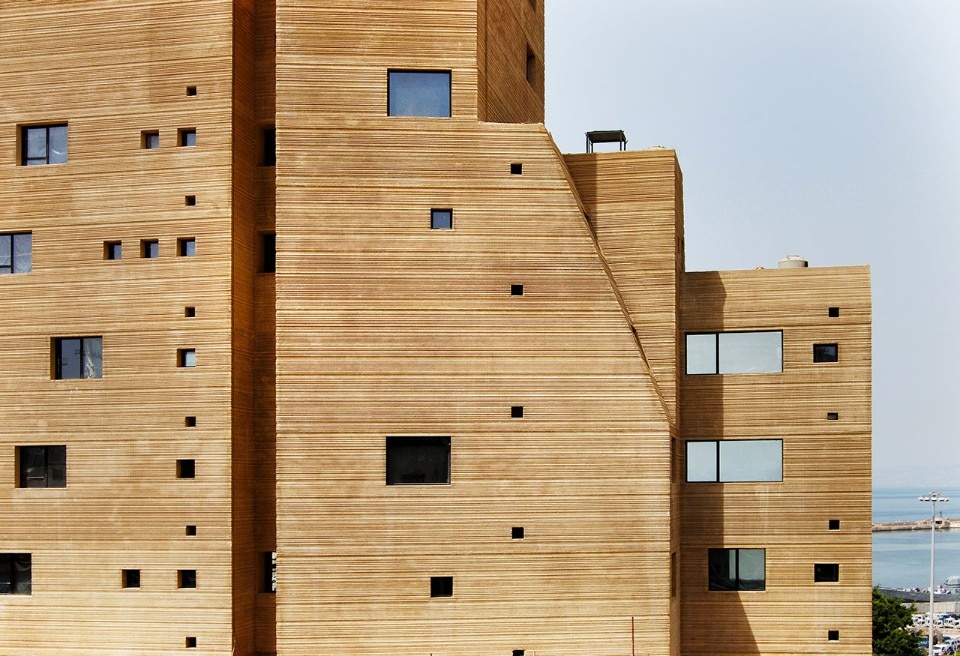
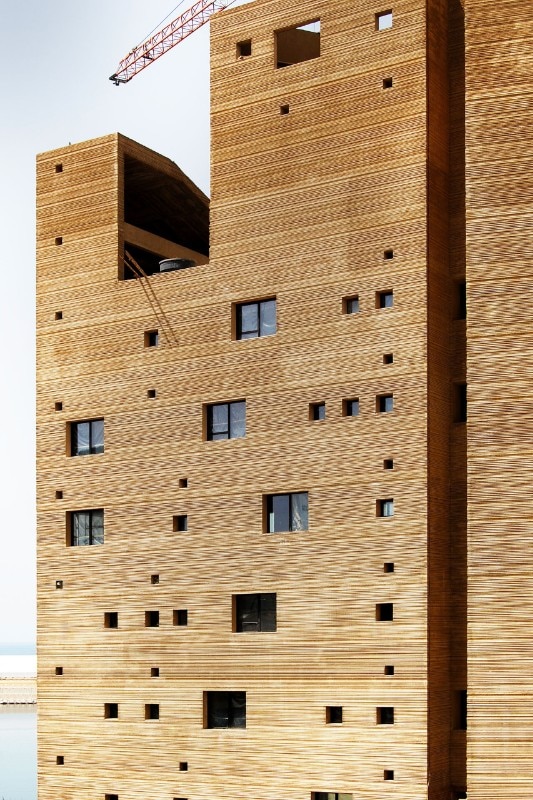
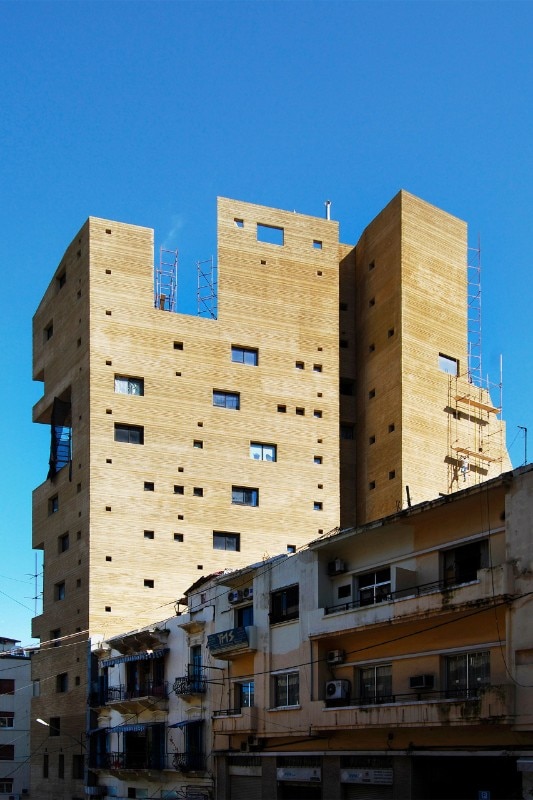
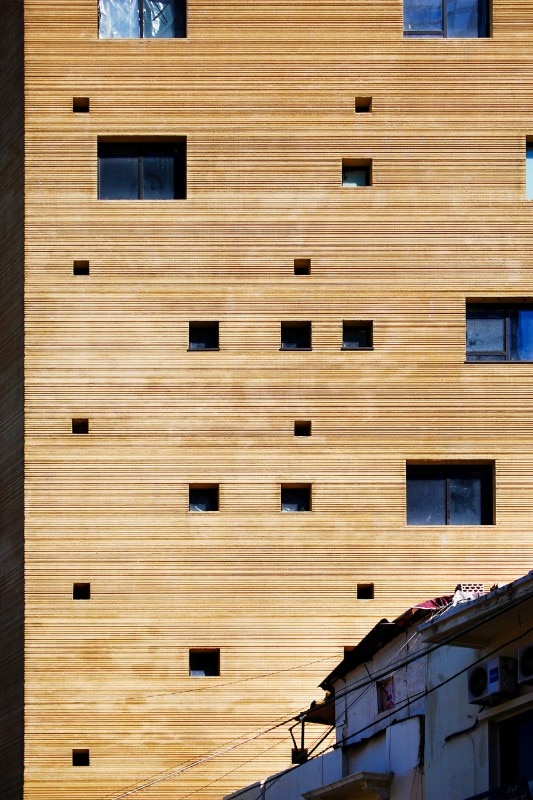
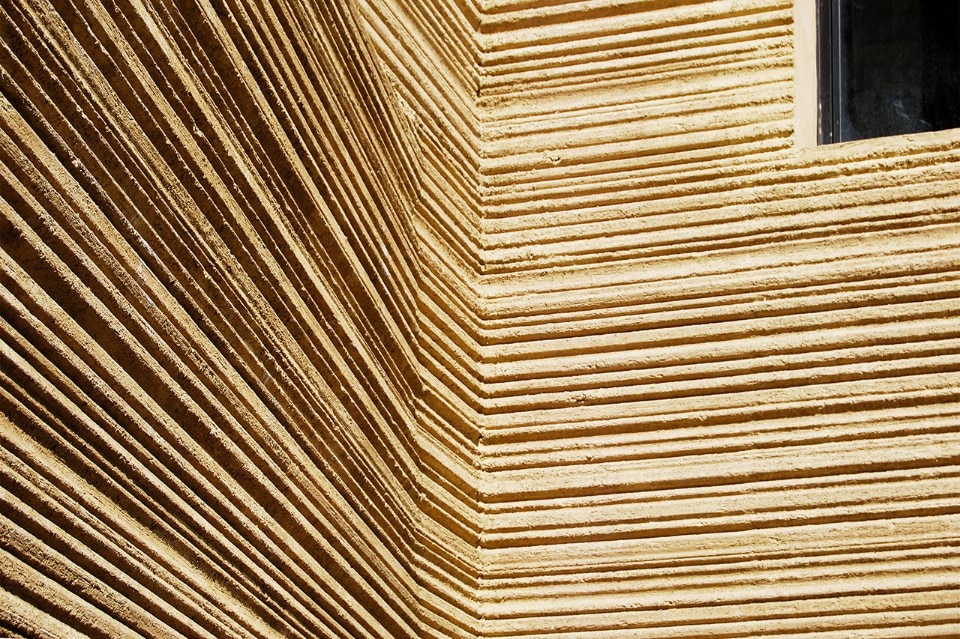
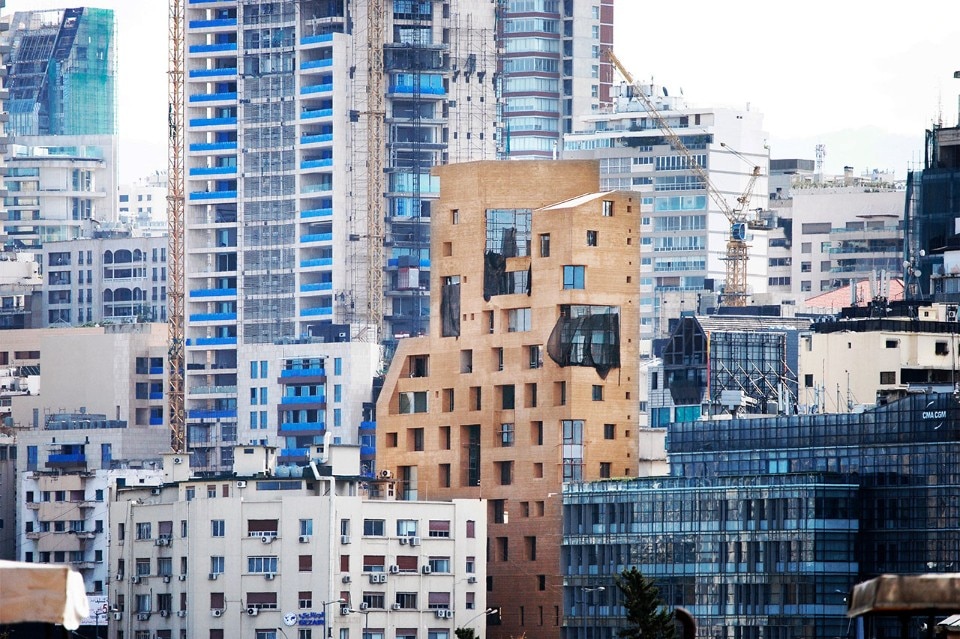
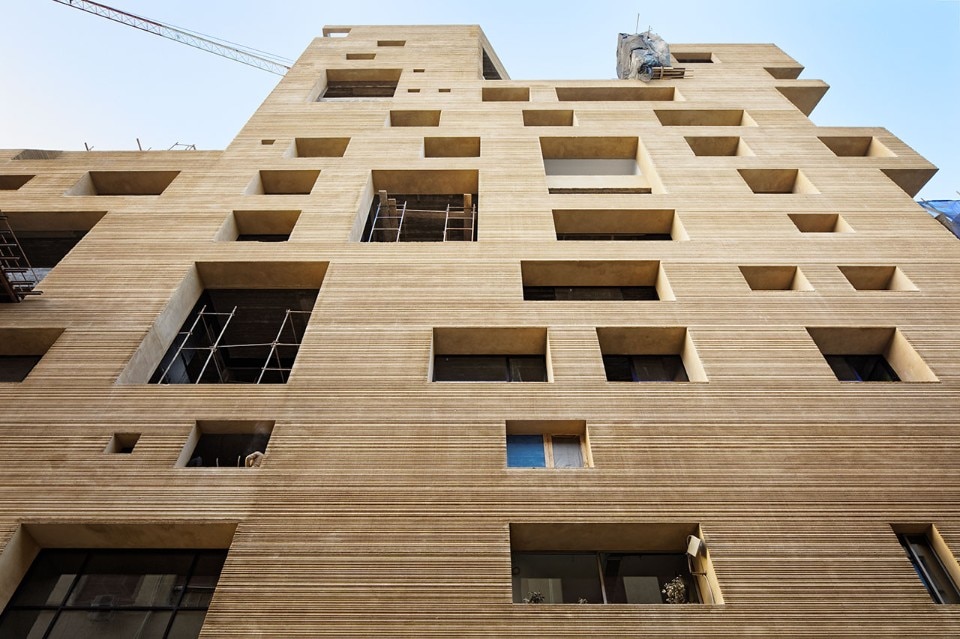
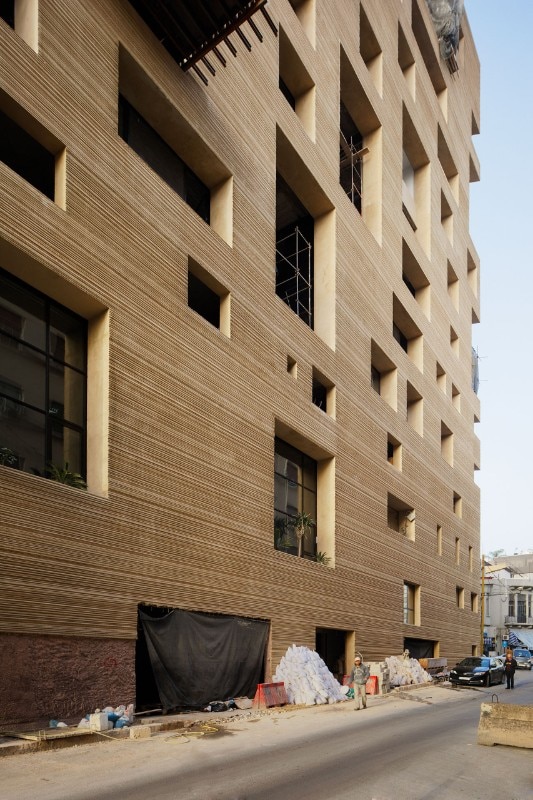
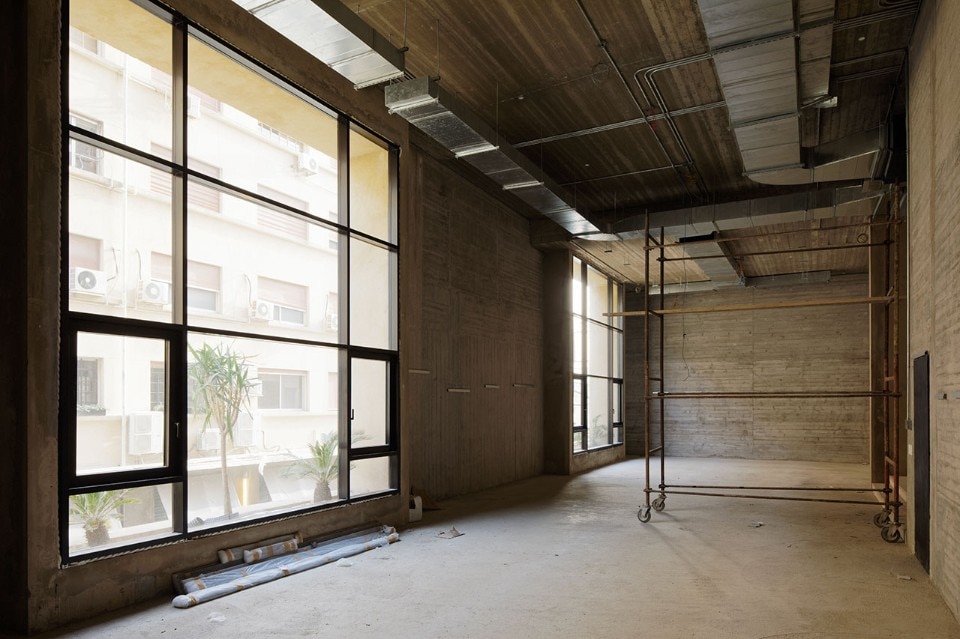
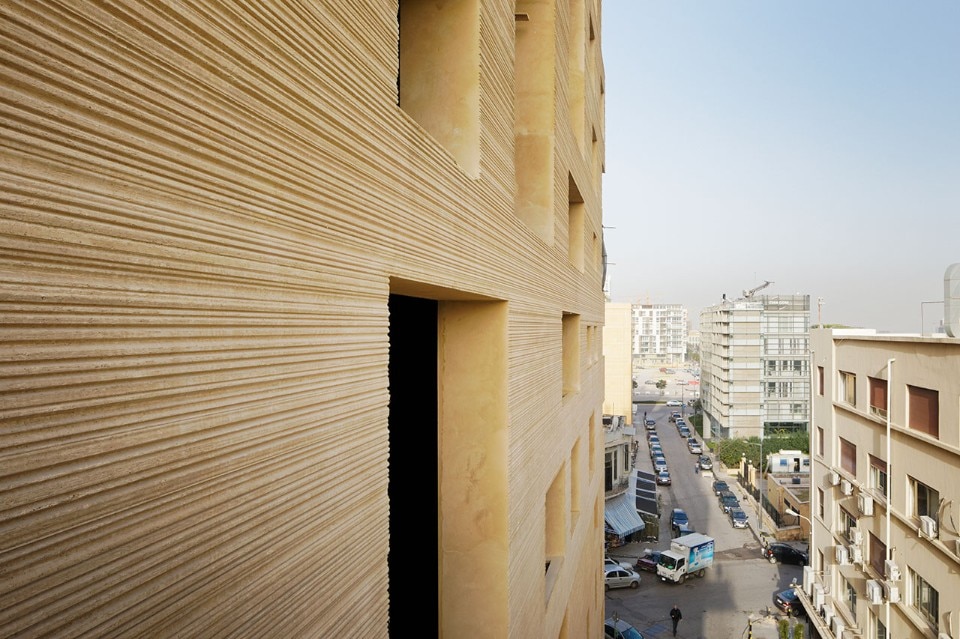
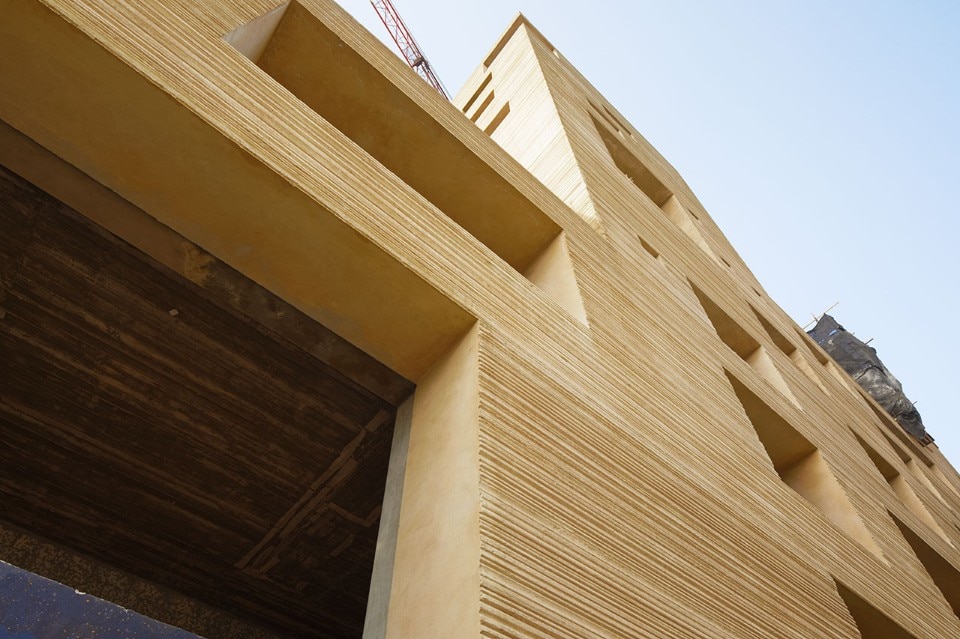
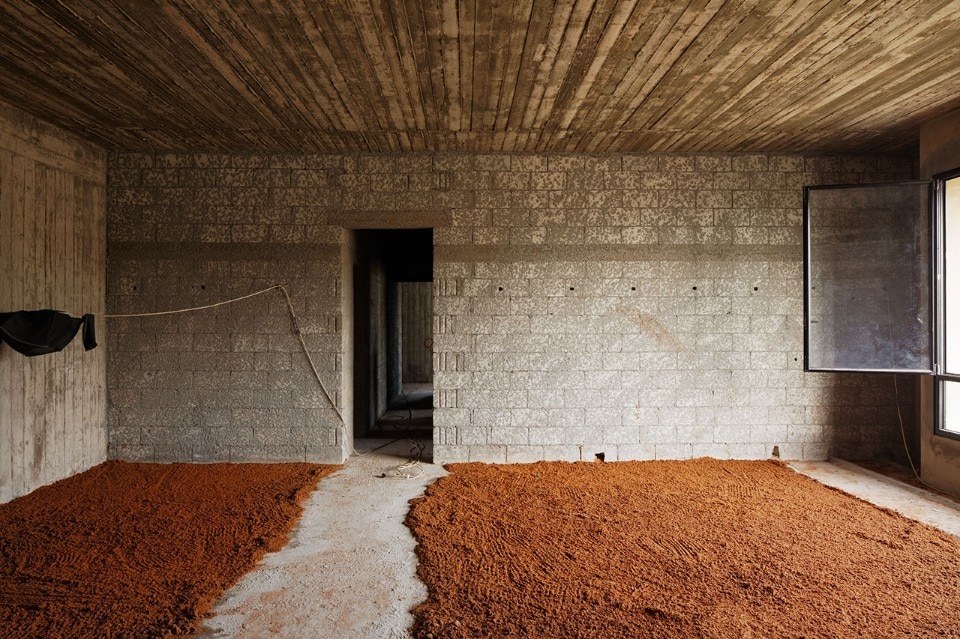
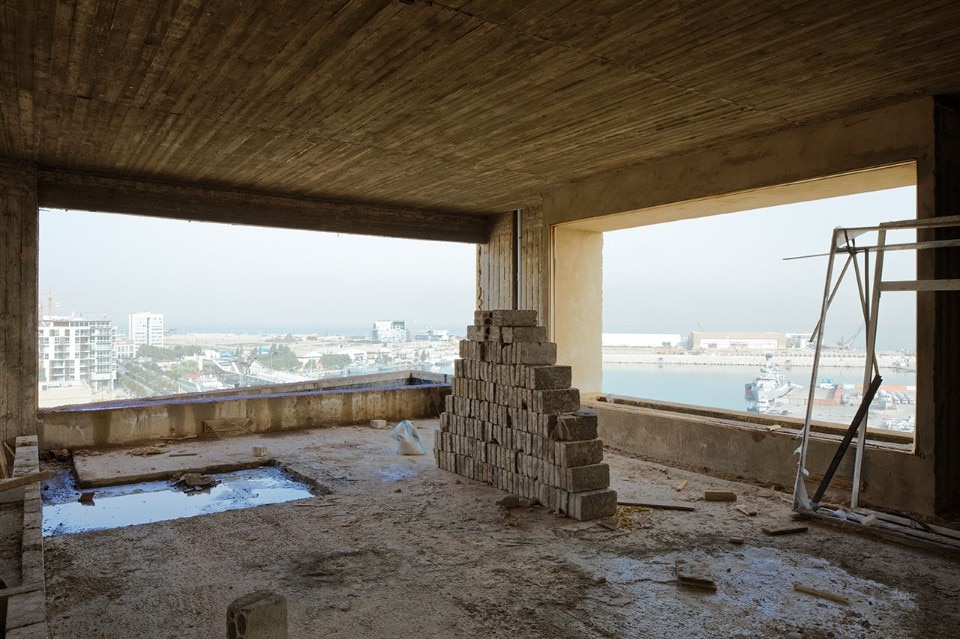
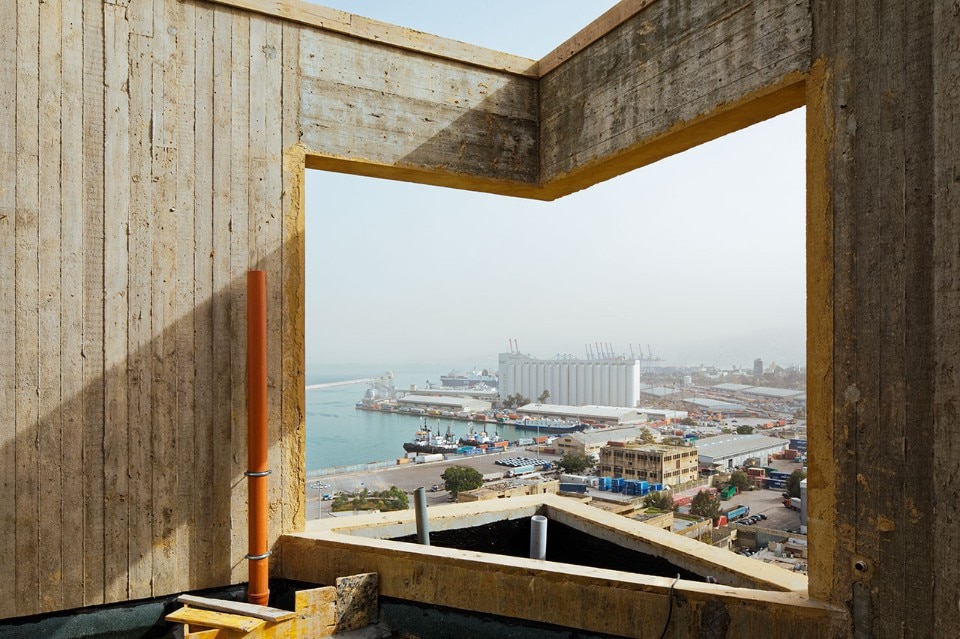
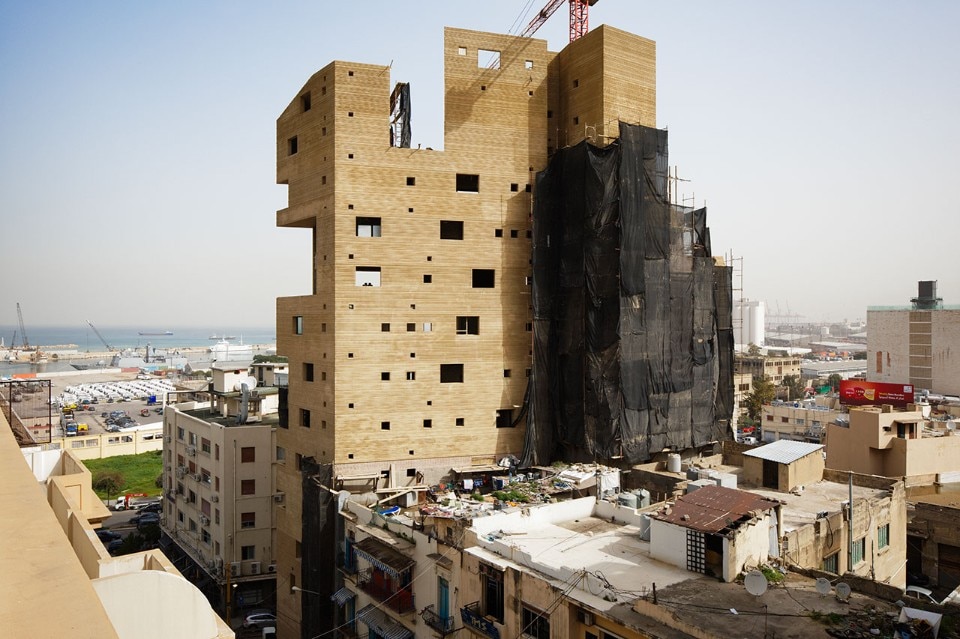
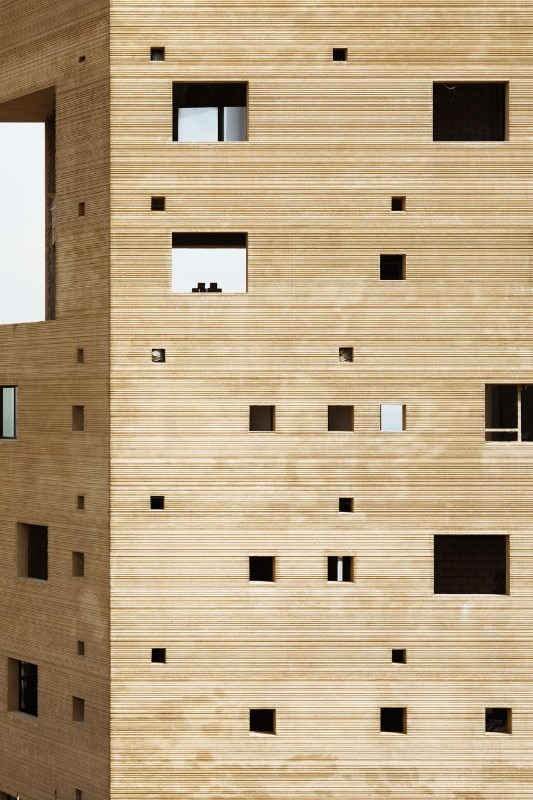
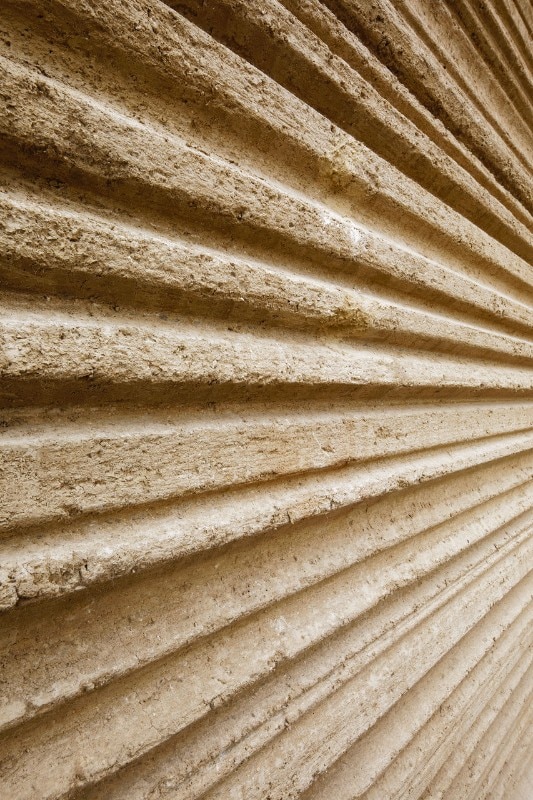
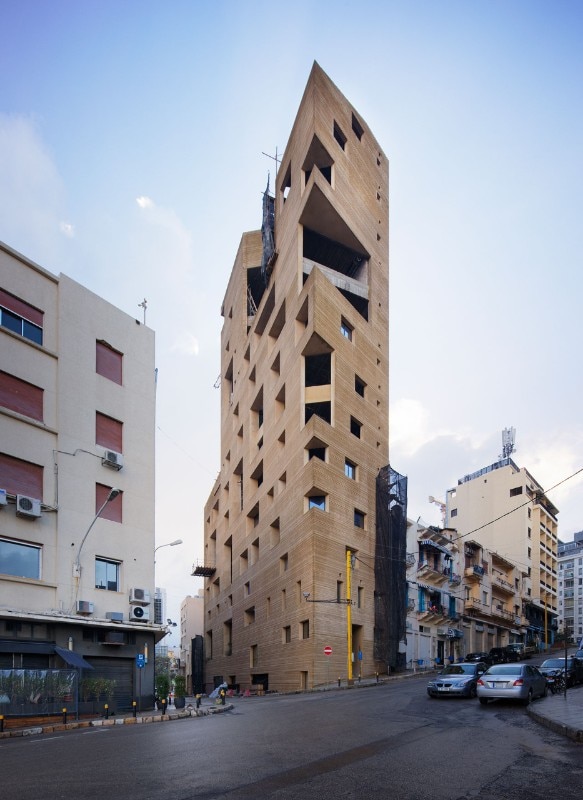
We trust our intuitions. Intuition is based on patterns the brain has learned over time, often without us realising it. The unconscious carries this accumulated experience of the world we hold in our bodies. It should not be dismissed when we stand before a line to draw. In this sense, intuition is not opposed to knowledge. It is another form of understanding, embodied, situated and lived. It is enriched through research, through archaeology, where architecture begins when these invisible moving forces start to align. Stone Garden in Beirut refuses to be a static object. It aspires to become almost geological, shaped by erosion and accumulation rather than imposition. Vegetation inhabits its bow windows. Birds enter over time. Small ecosystems form within the structure.
Inside and outside are never fully separated. They interpenetrate continuously. Movement here is not limited to circulation. It becomes atmospheric and temporal. It unfolds through sequences of approaching, entering, pausing and crossing thresholds. The building reveals itself gradually, as something becoming rather than something already defined. It is an ode to life, while constantly surrounded by the presence of destruction and death.
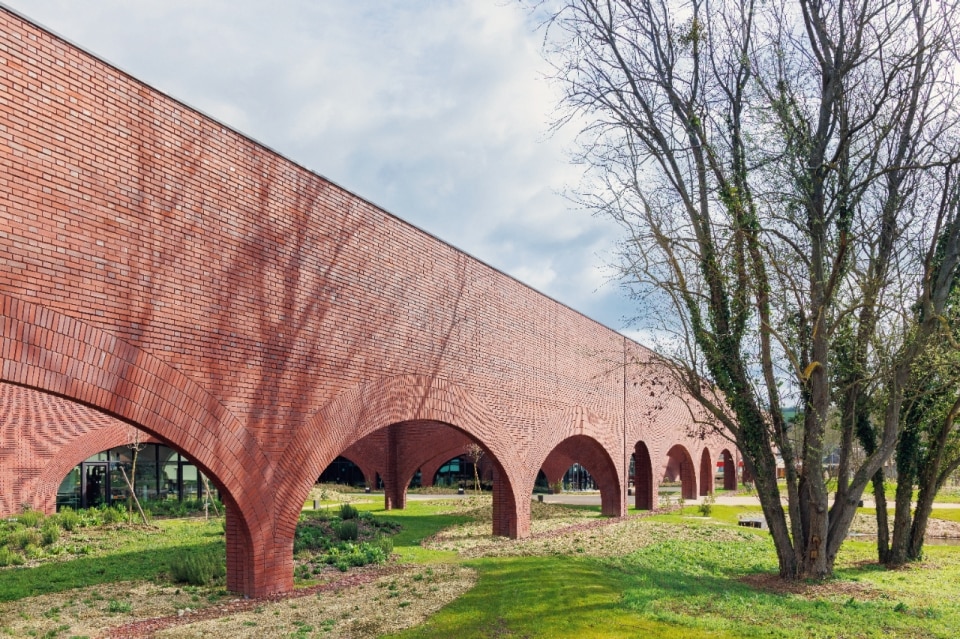
The hand is movement. It brings architecture closer to the body. Through controlled gestures, it shapes earth into form, generating waves of ground, matter and emotion. The hand can make, moving soil, compacting it, firing it, colouring it and building it layer by layer. Rhythm is what brings architecture to life. In the Hermès workshops in Normandy, rhythm emerges through 550,000 bricks, each one made, fired and assembled one by one. They carry time, craft and gesture. Brick becomes a language of movement For a saddlery manufacturer, repetition generates spatial rhythm, echoing the cadence of a galloping horse and translating motion into architecture. Each brick holds the trace of human craft, inscribing time into matter and linking body, technique and space.
Movement is the capacity to change. It is not rupture but continuity. Not erasure but becoming.
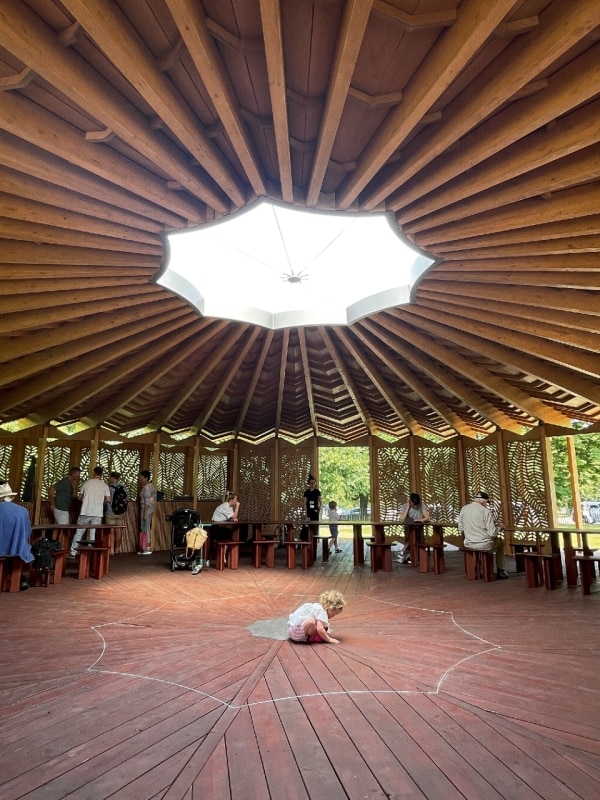
There is also a powerful movement in still architecture. Around a long communal table, in a carousel-like structure, people sit, speak, eat and exchange, reconnecting everyday gestures to questions of ecology and coexistence. We share ground under the same roof. As Beatriz Colomina once told me, we even share bacteria when we share a table, the invisible flows that bind us to each other, to the earth, to light and weather. The Serpentine Pavilion embodied this idea. Its skeletal structure, composed of repeated timber ribs, formed a wheel-like geometry suggesting movement. Slender beams supported a light canopy, designed for reversibility, built to be dismantled, reused and extended beyond its moment. Movement here is also temporal, architecture as cycle, return and reuse. Architecture recedes to amplify attention to people, landscape and the living world.



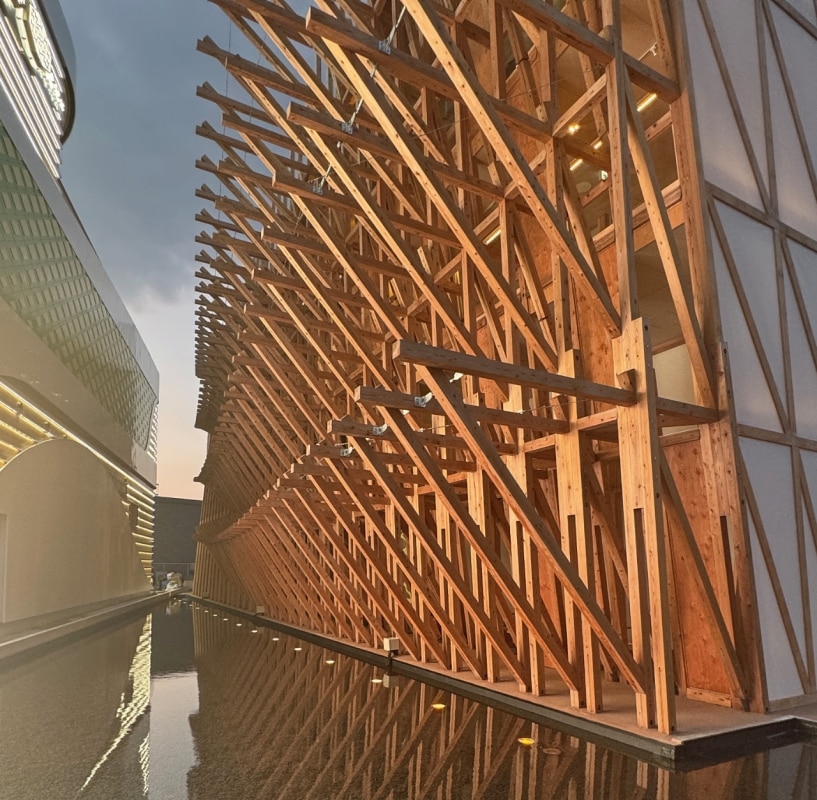
This idea of passage continues in the Bahrain Pavilion at Expo 2025 Osaka. “Connecting seas,” the pavilion acts as a vessel in motion, echoing traditional dhow boats shaped by maritime exchange. Built from 3,000 pieces of Japanese cedar, its assembly resembles choreography, bodies moving in space, lifting elements larger than themselves through precise joinery. Inside, air flows freely. Light moves through the structure. As one moves through it, perspectives shift, and movement multiplies across levels and surfaces. In Japan, one learns that everything is in motion. Movement is the constant flow of time, what is called mono no aware, the awareness of impermanence, or kū, the understanding that all things are interdependent and always shifting.
Movement is not only physical. It is time, rhythm, awareness and natural flow. An observatory in Toyama embodies these relations in concentric form. Observatories originated from humanity’s need to track celestial movement for timekeeping, navigation, agriculture and belief systems. Early civilisations in Mesopotamia and Egypt observed the sky from temple rooftops to organise calendars and understand seasonal cycles. Visiting Jantar Mantar in Jaipur, India, was for me an experience of movement itself. A remarkable observatory built from stone and marble, it measures celestial motion with the naked eye. Here, architecture becomes instrument, allowing light and shadow to reveal the world through stillness.
Before architecture, there is always nature. Wind, water and light are active forces rather than abstract elements. They do not impose form. They negotiate it over time.
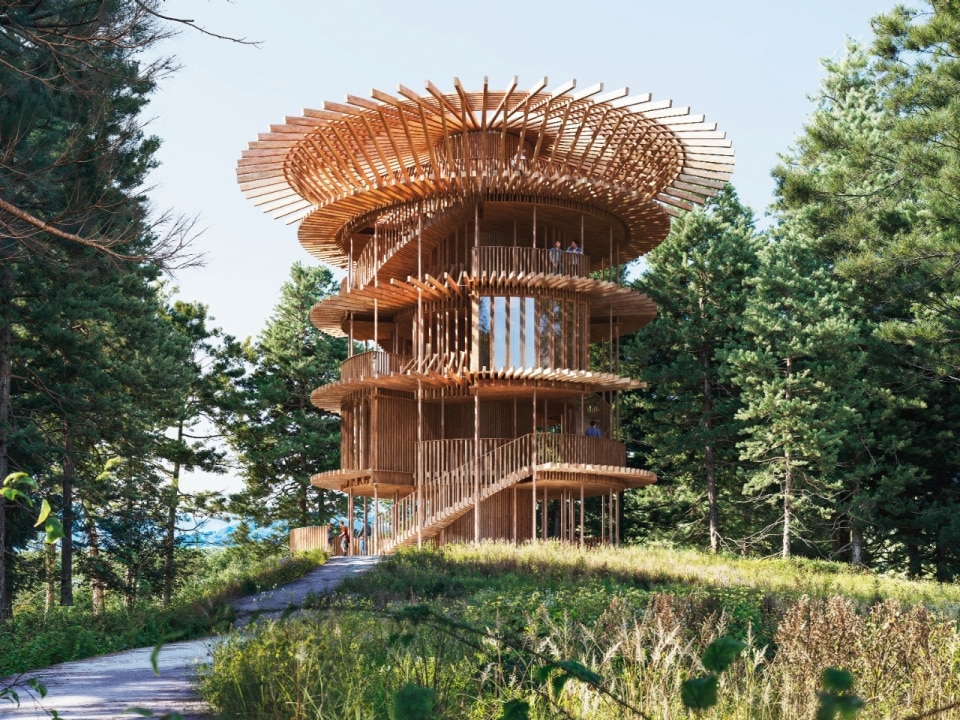
The Play Earth Observatory in Japan, located in a forest near the city of Nanto, continues this relationship. A revolving structure rises from the ground among vegetation, extending towards the canopy. It echoes the branching logic of a tree, dissolving into the forest. Movement becomes a shift in scale between earth, body and landscape. To embody nature is to embody movement, the labyrinthine quality of a landscape. For a short installation during Milan Design Week at Palazzo Litta, Metamorphosis in Motion invites visitors to slow down. It proposes a longer path, a time to spend, a space to gather, to converse, and to experience shared presence on an earth always in motion.
Ultimately, movement is not something we observe from a distance. It is what we are made of. It is the silent condition that binds geology, body, memory and architecture into a continuous field of becoming. To build is not to fix form, but to enter this ongoing current with care, to listen before acting, to translate forces already in motion into space without arresting them. Architecture is never an end state. It is a temporary alignment of flows, a momentary condensation of time, matter and life. It holds stillness only as a form of intensified movement, a pause within continuity rather than its interruption.
To understand movement in this way is to accept that nothing is ever complete, only in relation. Every structure, every landscape, every “body” is part of a larger rhythm of transformation that exceeds it. What remains is not permanence but resonance. As Henri Bergson wrote, “reality is mobility,” and what we call forms are only “snapshots taken along the movement.” To conclude is not to close but to continue differently. To recognise that even those words are part of what they describe: an unfolding movement, in progress.
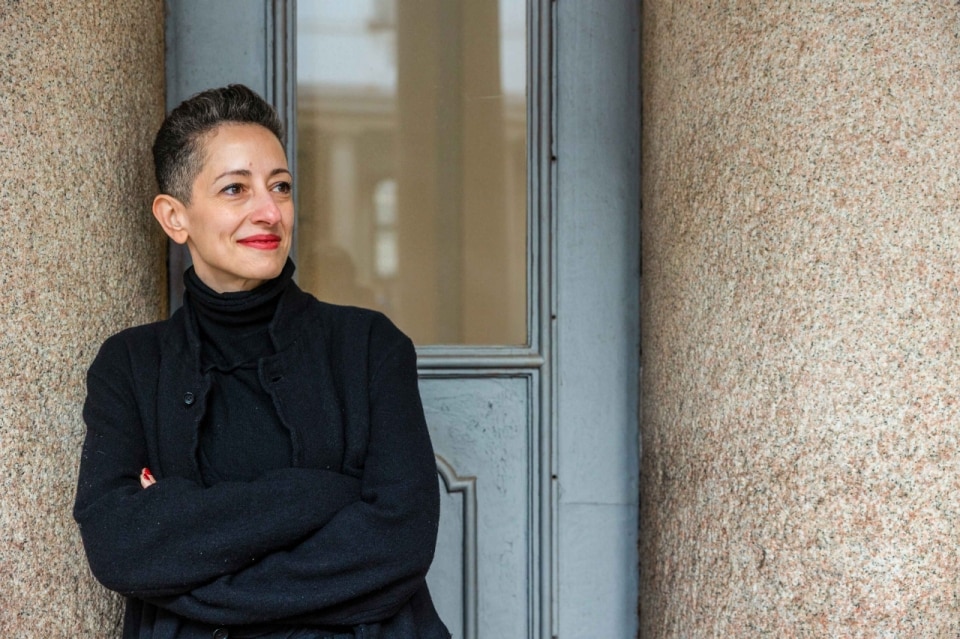
Immagine di apertura: Lina Ghotmeh potrait at Palazzo Litta. Photo Emanuele Cremaschi