


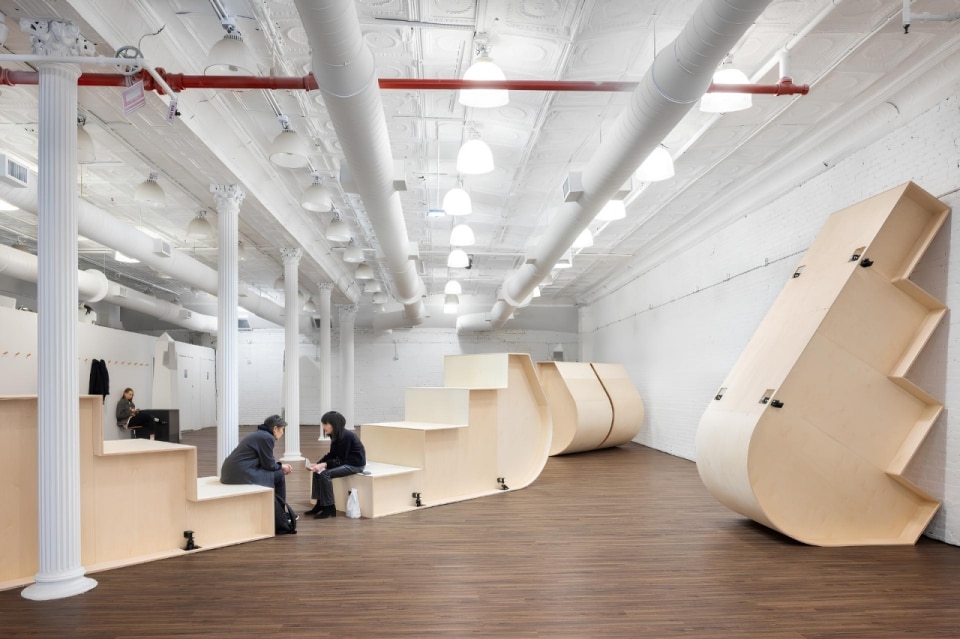
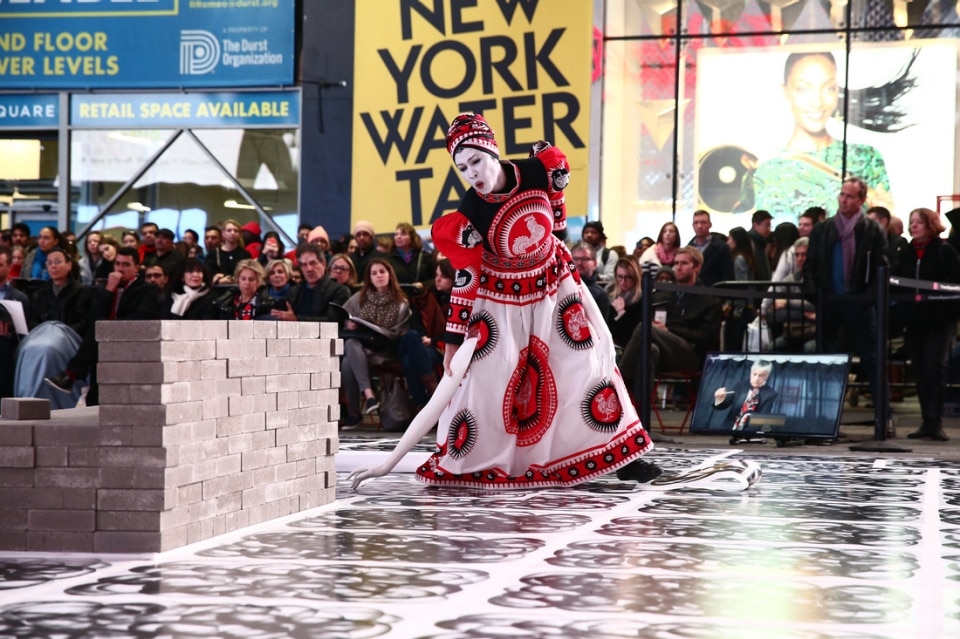
In New York's cultural landscape, there is an institution that has been transforming the city into a stage for twenty years: Performa. Founded in 2004 by art historian and curator RoseLee Goldberg, it was the first biennial entirely dedicated to performance, inviting visual artists to extend their research into the realm of performance. More than one hundred international artists have been involved in the several editions of the biennial, and more than twice as many venues in New York have hosted them, from the Guggenheim rotunda, to Times Square.
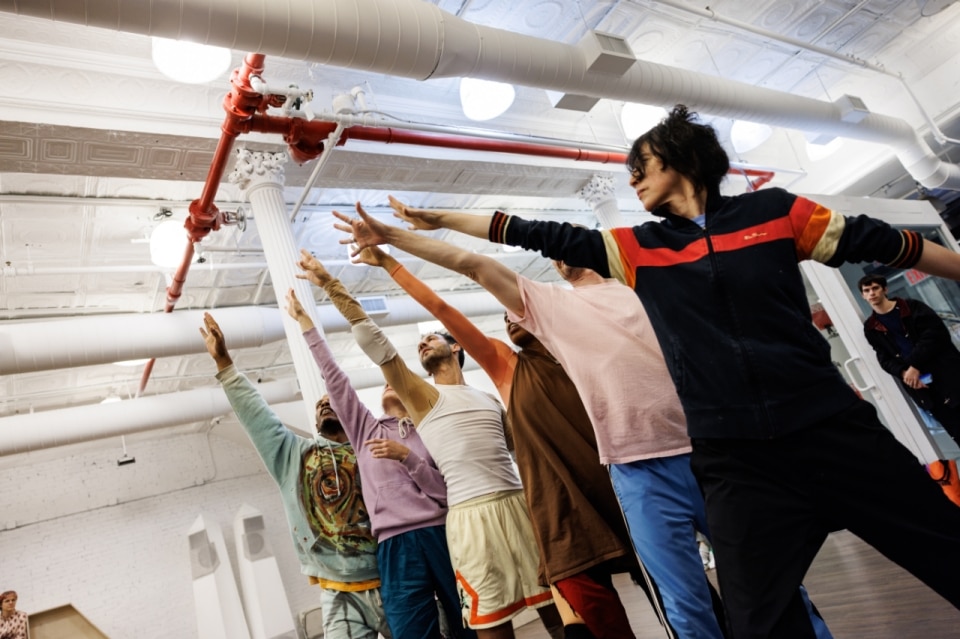
For the 2025 edition – counting fifty-four international artists and collectives, including Tau Lewis, Diane Severin Nguyen, Ayoung Kim, Aria Dean, Sylvie Fleury, Lina Lapelytė, Pakui Hardware, and Camille Henrot – the Performa Hub, headquarters of the event, was designed by New York-based firm Diller Scofidio + Renfro, as a conceptual and operational infrastructure built to reflect and amplify the changing and evolving nature of the biennial.
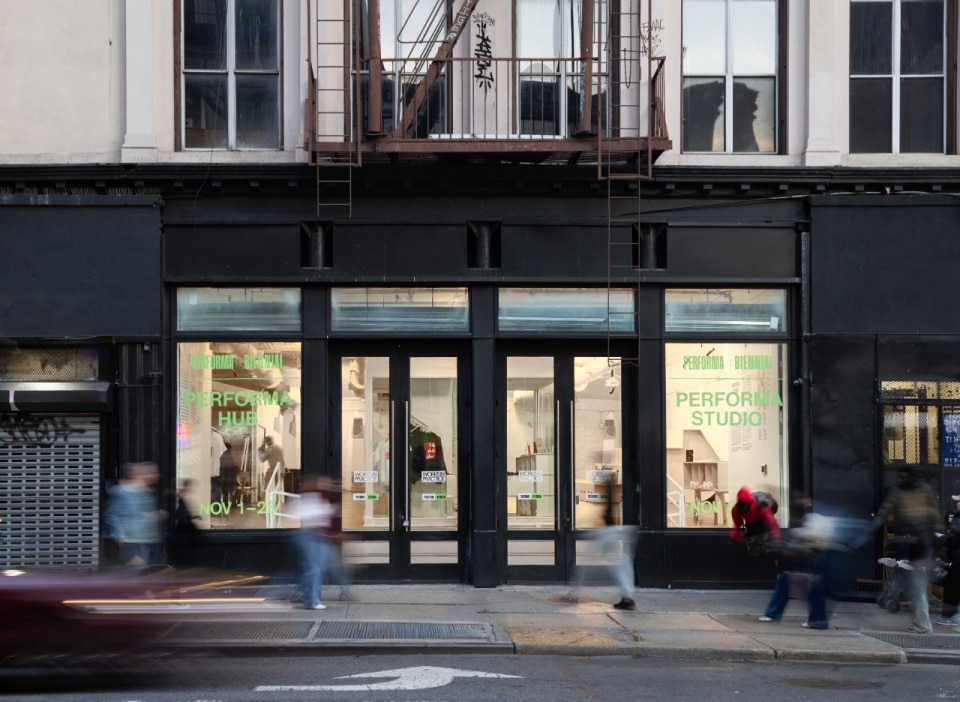
Located in the heart of SoHo, the Hub, designed as an open, and modular space, translates Performa's philosophy into architecture. Diller Scofidio + Renfro envisioned an environment that would be a habitat for exchange and action, rather than a mere container.
At the core of the Hub is the Performa Studio platform, dedicated to movement and choreography, conceived in collaboration with Moriah Evans and Isabel Lewis, with a program of daily sessions, practices, and open rehearsals that reveal the processes involved in the creation of a performance. The environment designed by DS+R translates this logic into a stable but flexible field of action, capable of supporting Performa's activities in its dual nature as both an event and a process.
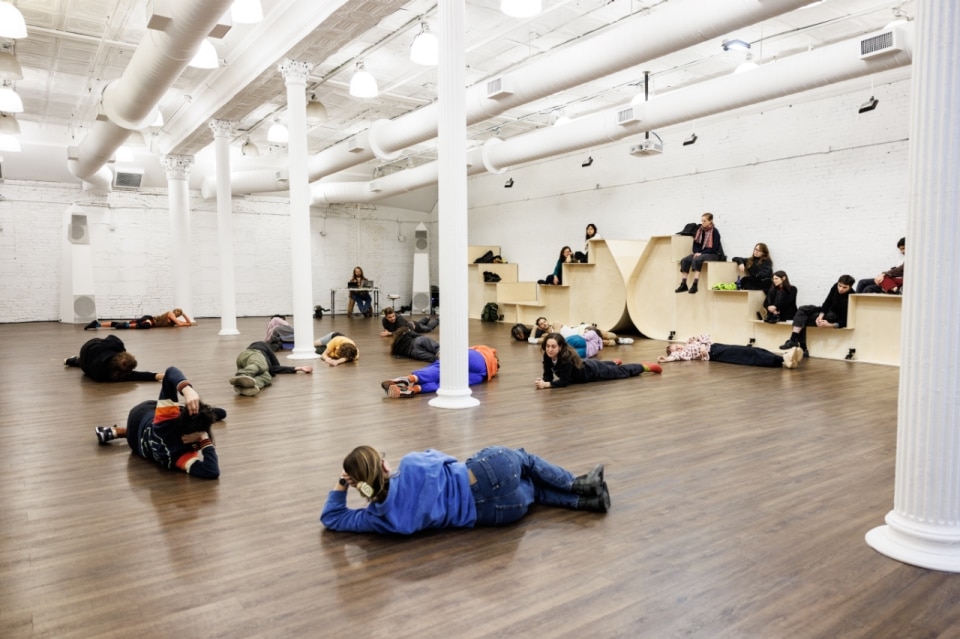
With a large window facing the Broadway, the Hub, with an industrial soul like that of the neighborhood that hosts it, opens onto the city: a row of Corinthian columns—a typical detail of cast iron facades—vertically punctuates the space, with brick walls and a coffered tin ceiling—the classic tin ceilings of certain 19th-century New York buildings—completely covered in white paint. The only contrasting elements are the red pipes of the sprinkler system and a system of modular elements in natural wood that can be used as seating or scenery depending on the occasion. The project is completed by an internal glass booth where Performa merchandise and publications can be purchased.
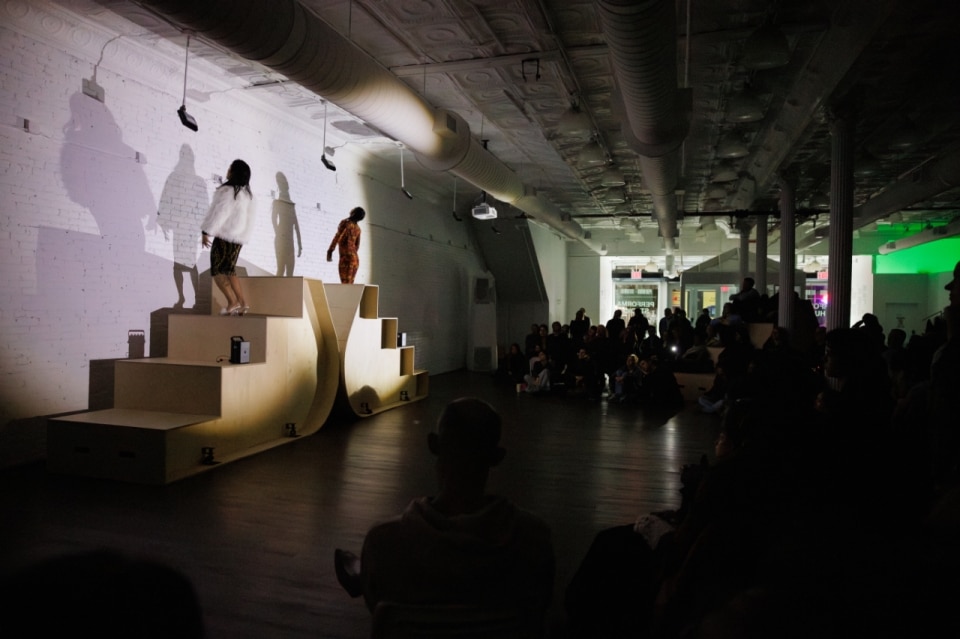
The flexibility of this environment is, in some ways, an extension of the concept of “radical urbanism” that Goldberg considers part of Performa, and which in the new Hub is translated into a space that does not impose a hierarchy, but creates a field of possibilities. Architecture, in this sense, is a catalyst, a form that changes following the trajectories of the bodies, sounds, and actions that run through it.
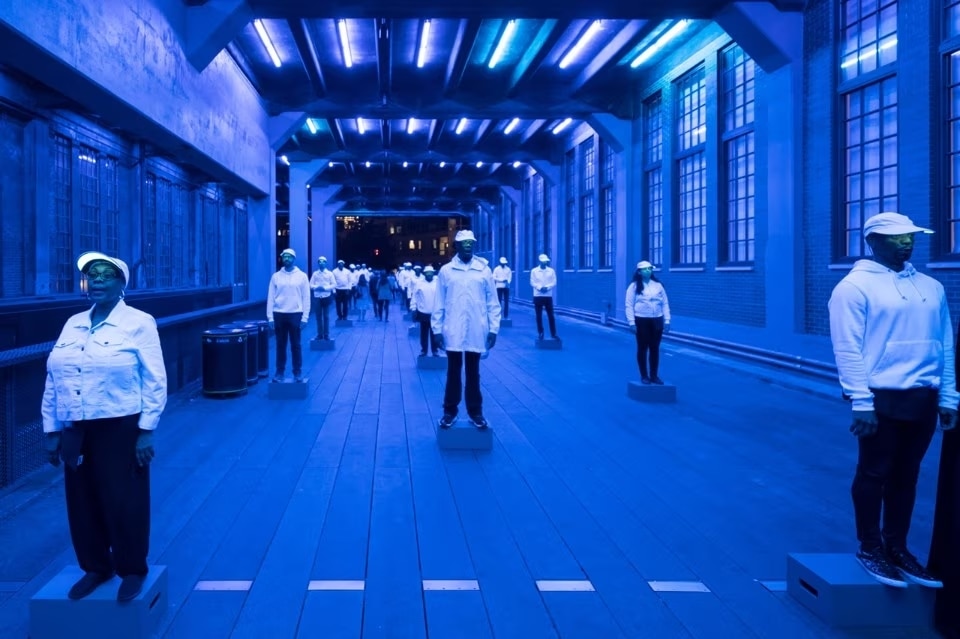
Performa Hub 2025 marks the first official collaboration between Performa and Diller Scofidio + Renfro, although the two have been in dialogue for decades. Since the early 1980s, RoseLee Goldberg has written extensively about the work of Elizabeth Diller and Ricardo Scofidio, when their practice was still focused more on performance and installation than on built architecture: from the set for The American Mysteries (1984), to The Rotary Notary and His Hot Plate (1987) a work inspired by Duchamp's The Large Glass. And while Goldberg defined that period as a sort of “dress rehearsal” for the ideas that the studio would later translate into architectural form, with the arrival of Charles Renfro in the late 1980s, the dialogue between art and architecture expanded further, leading in recent years to performances such as The Mile Long Opera (2018) with a thousand singers on the High Line, to the latest work The Corner Problem (2025) presented at the last Milan Triennale Inequalities.
Opening image: Performa 2025 Biennial Hub. Designed by Diller Scofidio + Renfro with Scenic + Fabrication by Safwat Riad and furniture by USM. Photo: Bridgit Beyer.