


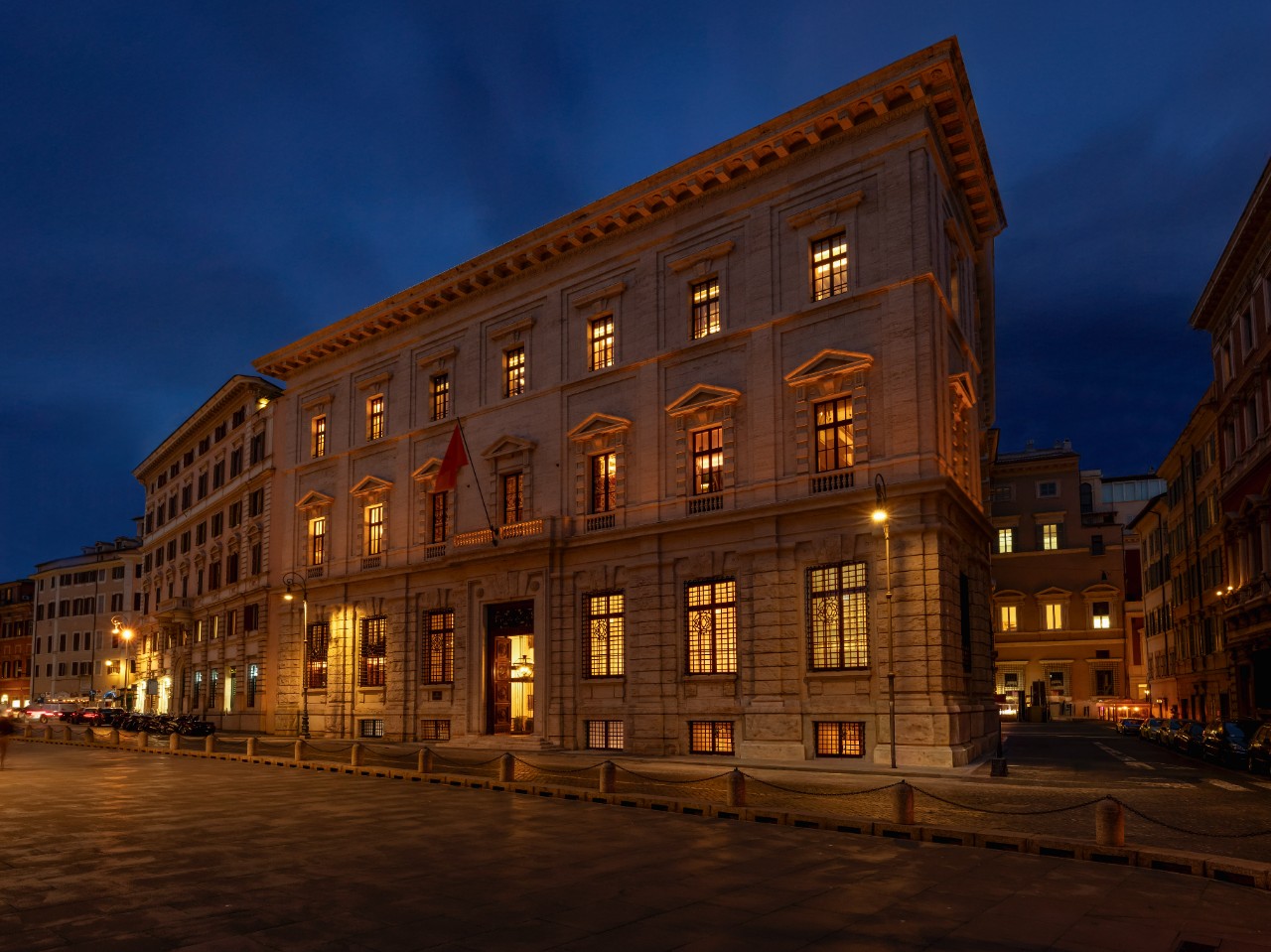

Rome renews its image as the “eternal city” through continuous, often surprising stratifications and transformations. This is the case of Corinthia Rome, a new luxury hotel located in the headquarters of the former Bank of Italy in Piazza del Parlamento, designed by Marcello Piacentini in 1914 and renovated in the interiors by London-based GA through a challenging adaptive reuse: an austere and imposing architecture, conceived to represent the economic and political power of the state and now converted, almost by oxymoron, into a place of hospitality, intimacy and conviviality.
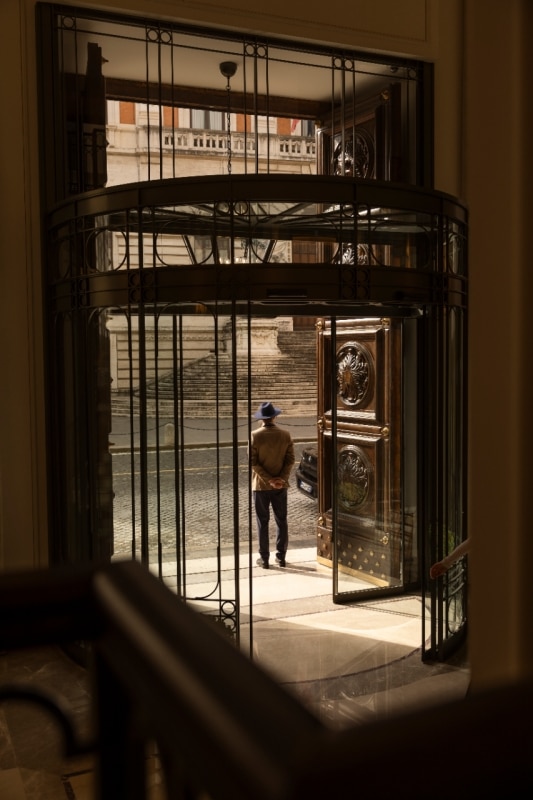
But how can such a stern soul be reconciled with the hedonism of high-end hotellerie? We asked Simon Abela, the interior designer architect from GA who developed the project in all its phases and took us on a tour of the recently opened hotel.
“For me, the most intriguing challenge in a project is to intervene in an existing context that no longer meets its original functions and breathe new life in it through renewed contemporary uses.”
Piacentini's "fascism of stone"
The transformation of the Bank of Italy into a hotel was precisely one such challenge. Although the building had not yet been stripped of the ornamental trappings of classicism, it already foreshadowed the recurring elements of the architectural language that Piacentini would develop in the years that followed, becoming one of the principal architects of Rome’s transformation between the two world wars. A style that solemnly embodied the iconography of a "fascism of stone" – as Emilio Gentile (one of the most authoritative contemporary Italian historians) calls it – massive, austere and destined to endure for centuries, from the architectural to the urban scale.
Marcello Piacentini was also one of the most influential Italian architects and urban planners of the first half of the twentieth century: among his major works, the Città Universitaria, the EUR district and the opening of Via della Conciliazione in Rome, while outside the capital Piazza della Vittoria in Brescia, with the INA Torrione (among the first Italian skyscrapers) and the Palazzo di Giustizia in Milan are also worth mentioning.
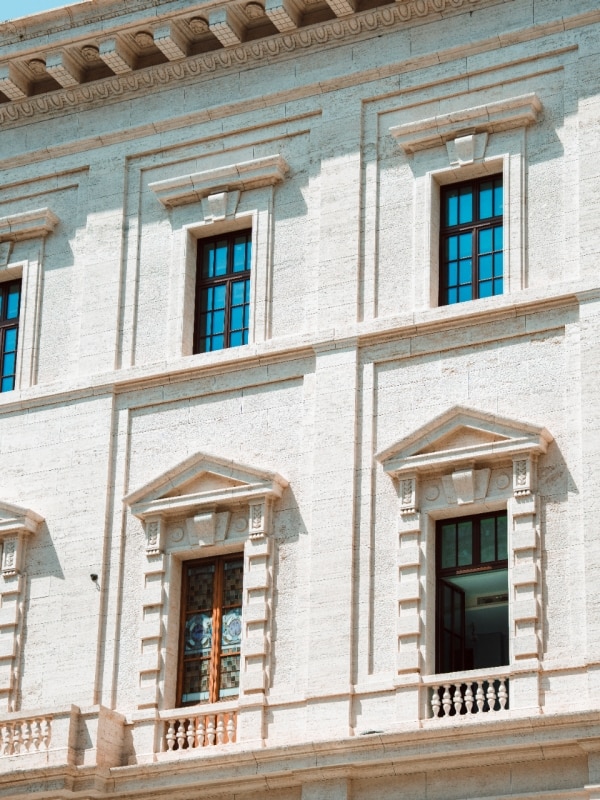
Of this approach, today, in the former Bank of Italy, traces remain in the monumental and unyielding marble front facing Parliament Square: "a finger raised" - Abela observes - against the overlooking Art Nouveau-style Palazzo Montecitorio extension by Ernesto Basile, which Piacentini deemed unsuitable to embody institutional "gravitas."
Over time, the bank lost its original configuration due to heavy tampering in the 1960s, remaining underutilized for decades until it was decommissioned. In 2019, the complex was acquired by a private international investment company, which promoted its transformation into a luxury hotel, developing the project with Corinthia Hotels and with the contribution of GA.
A palazzo that becomes a home
Given the poor condition of the original premises, the firm opted to almost completely dismantle the structural elements and unsuitable partitions in favour of a layout better suited to the new use. A historical "void" that facilitated the project's development: "the absence of historical elements gave us a freedom of manoeuvre that we would not otherwise have had" — notes Abela — "but which did not prevent delays caused by the pandemic and procedural red tape".
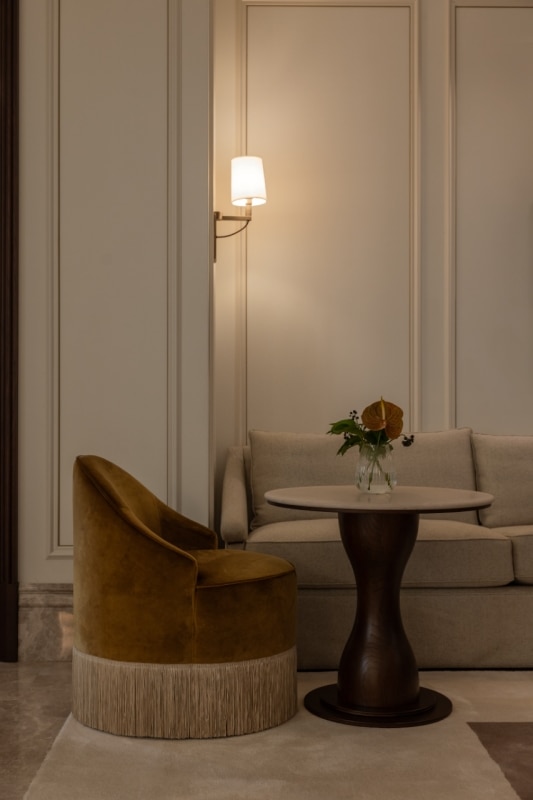
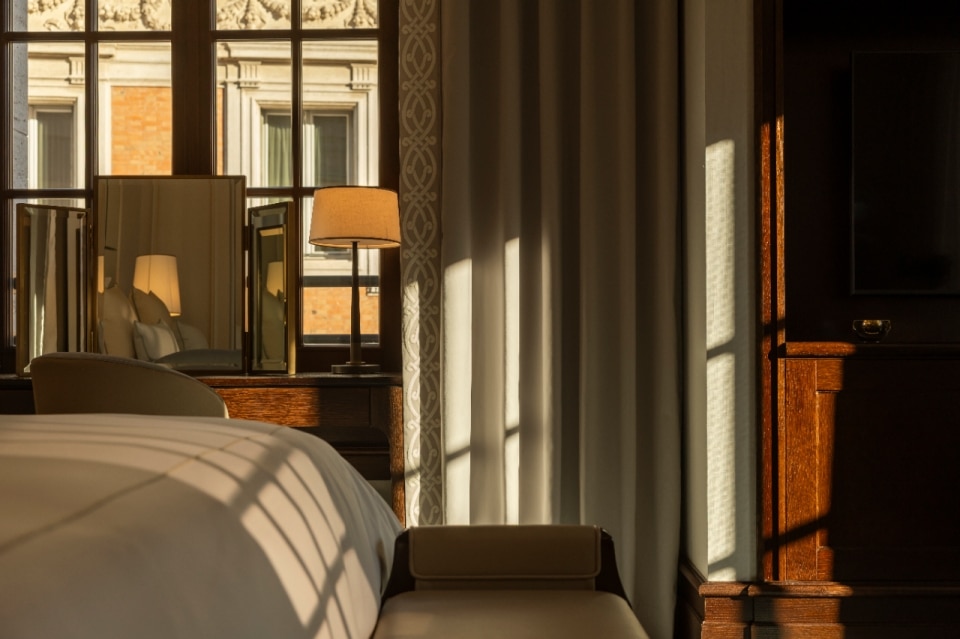
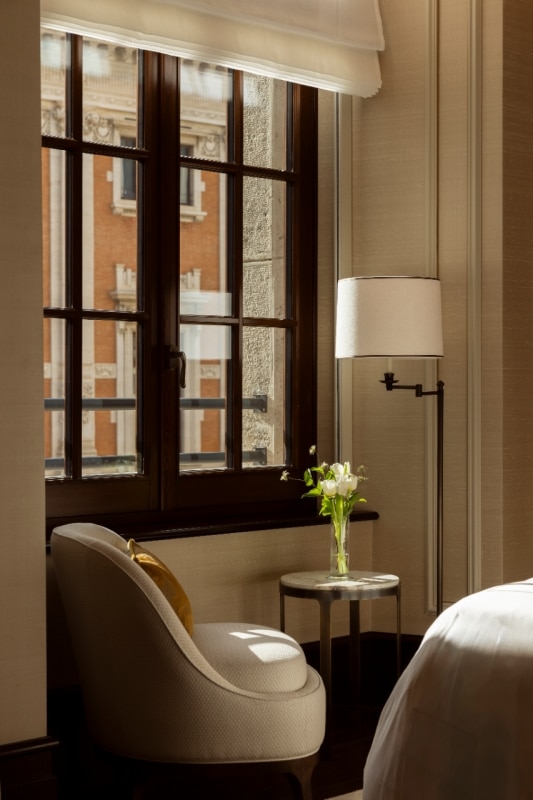
At the heart of the project lies the delicate balance between the grandeur of a stately palazzo and the domestic intimacy of a family home: “We wanted to create a space that conveyed the sense of a home that had belonged to a family for centuries,” explains the designer, “an intimate place rich in domestic warmth, where the stately character of the Palazzo remains clearly evident.”
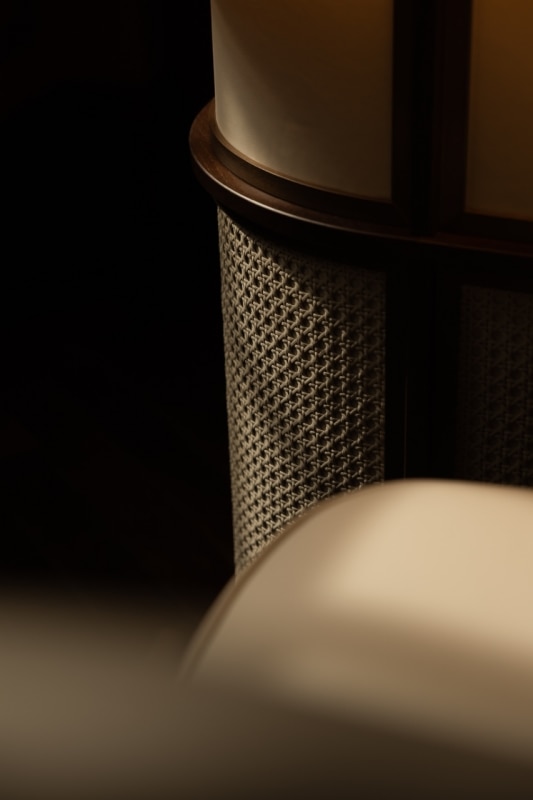
The goal is achieved through a deep material sensitivity and sartorial attention to details, furnishings and finishes, which reinterprets the Genius loci and pay homage to traditional Italian craftsmanship. Polychrome marble floors, finely carved oak furniture and finishes, moldings and bas-reliefs convey the idea of a timeless elegance that lies in the composure of the rooms rather than in ostentation.
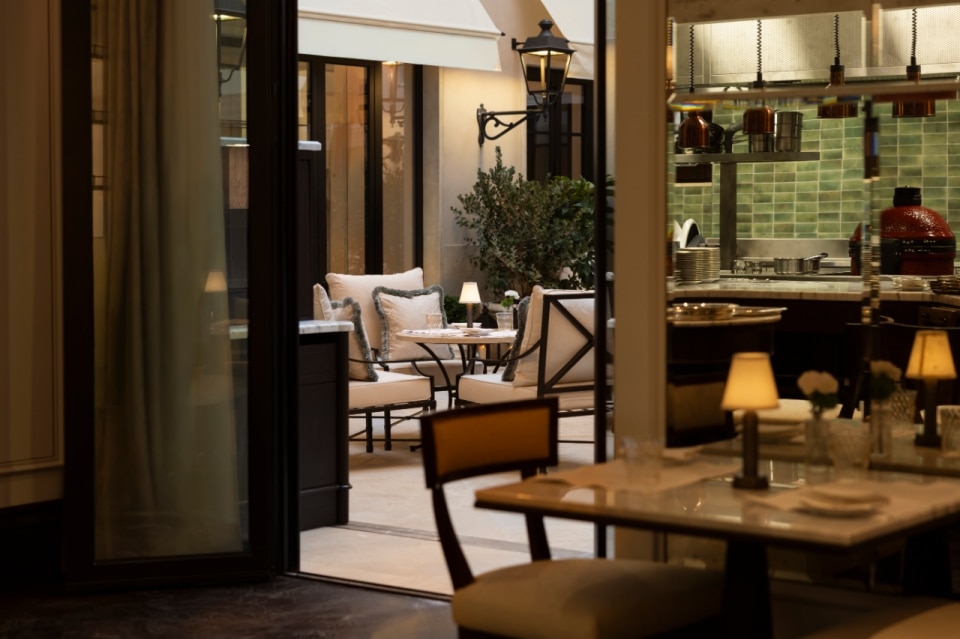
The building, about 9,700 square meters spread over seven levels, houses 60 rooms, including 21 suites. On the raised floor, in the entrance lobby, the only space that has retained its original double-height elevation, light-toned marble contrasting with oak furnishings and modulated light define a courtly yet pacifying atmosphere. Beyond the lobby is the central open-air courtyard, freed from the 1960s roofing, around which the two restaurants revolve.
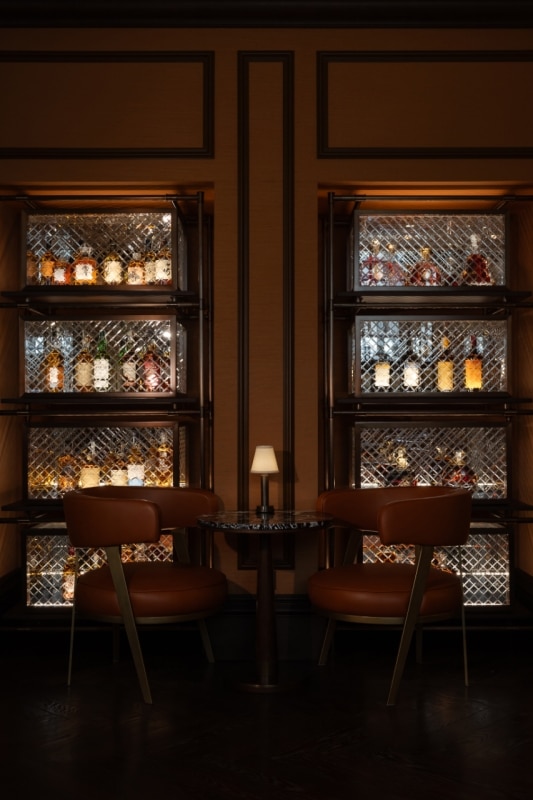
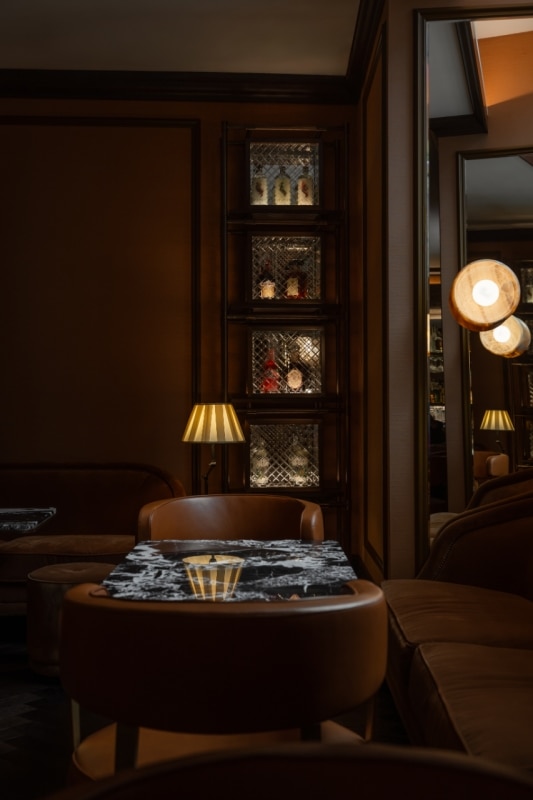
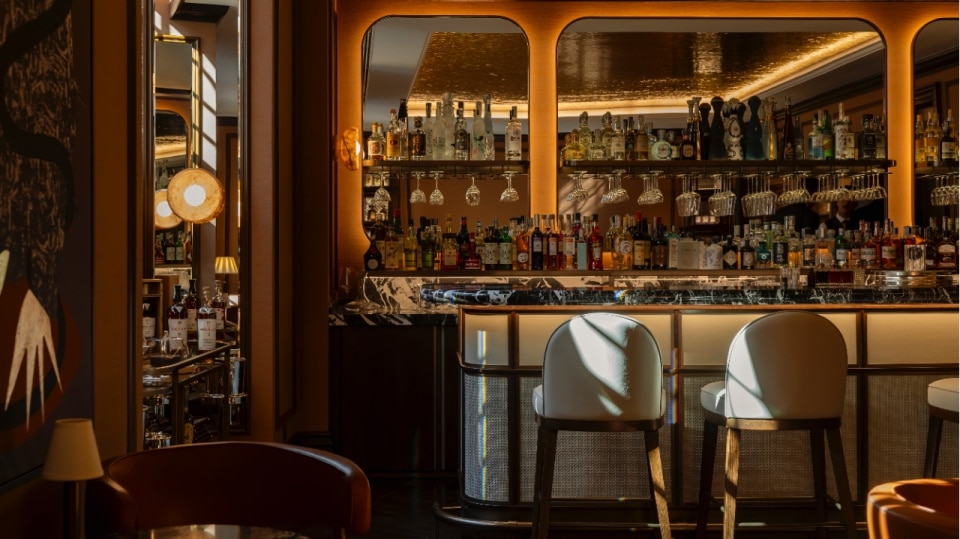
Slightly further inland, the bar takes on the vaguely amniotic character of a fumoir, where dark wood furniture and warm lighting dialogue with a gilded glass mosaic ceiling that gleams like a handful of coins, ironically alluding to the building's banking memory.
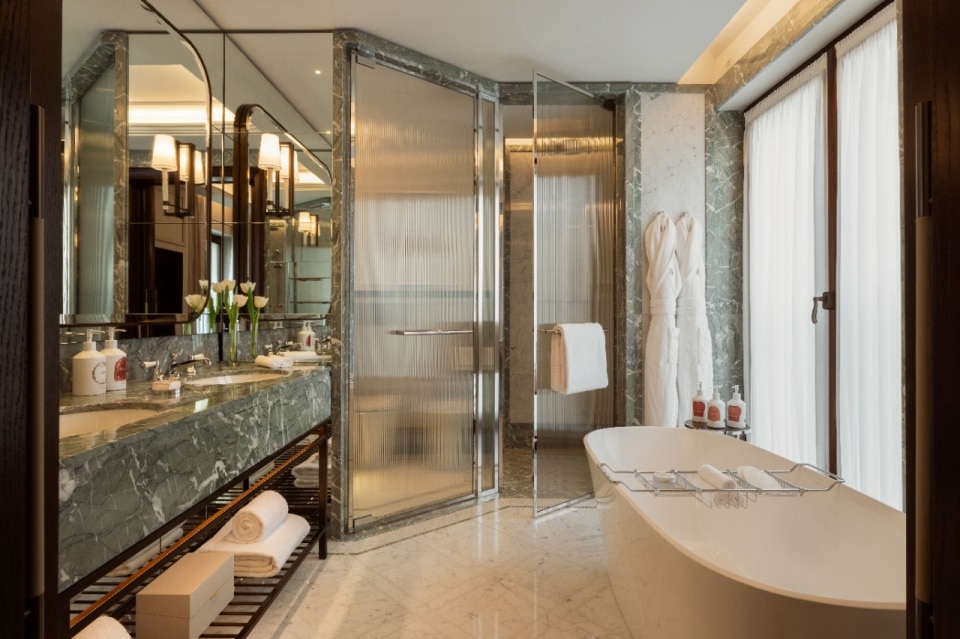
On the second basement level, the caveau lives again as a spa, reinterpreting the rituals of Roman baths amid brick walls, Carrara marble, travertine and mosaics.
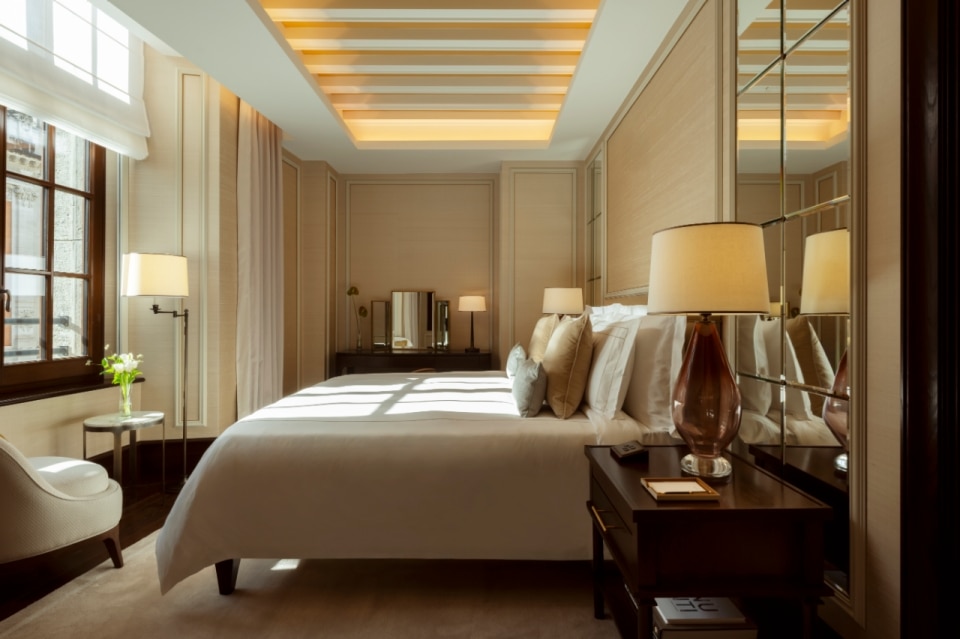
The guest rooms are situated on the upper floors: spaces enveloped in a kaleidoscope of wood finishes, linen and silk wallpapers and polychrome marble, where a sense of wonder is ever-present, from the "secret" rooms housing wardrobes and bathrooms to the wooden bar area that opens up like a cabinet of curiosities.
The cherry on the top is the historic Council Chamber on the second floor, the only original room preserved and transformed into a suite through a meticulous philological restoration that has brought mosaics, walnut doors, a coffered ceiling and frescoes back to life.
"Eternity is adaptation."
If Piacentini conceived of an architecture destined to defy time, history, as is often the case, proved him wrong: the Bank of Italy remained suspended in the limbo of oblivion for a long time before being reborn in an unexpected guise, less projected toward infinite time and more permeable to the daily dynamics of life and relationships.
However, it is precisely through this transformative process that the building has gained its longevity, surviving time not because it is "carved in stone" but because it is capable of adapting to new meanings.
A point of view also confirmed by Simon Abela, who is clearly critical of increasingly less durable architecture: "much architecture today is ready-made, as quick to build as it is to dismantle. The result is an anonymous urban landscape, devoid of soul and human scale".
And he concludes, "I absolutely do not think that we should no longer build and remain crystallized in the past. It is a moral responsibility for an architect to build something that is better than what you tear down. I think you have to design buildings that last not just a few years. And if needs change, you can respond with new functions, not necessarily demolition. Because eternity, after all, is the adaptation."
A compromise with immortality that, perhaps, also Piacentini would have made: perhaps without too much enthusiasm but not without seeing the need for it.