


Over the last decade, between Expo 2015 and the recent Winter Olympics, Milan has transformed into a city of endless construction sites: an urban laboratory attempting to redefine the relationship between public ground and those who traverse it every day.
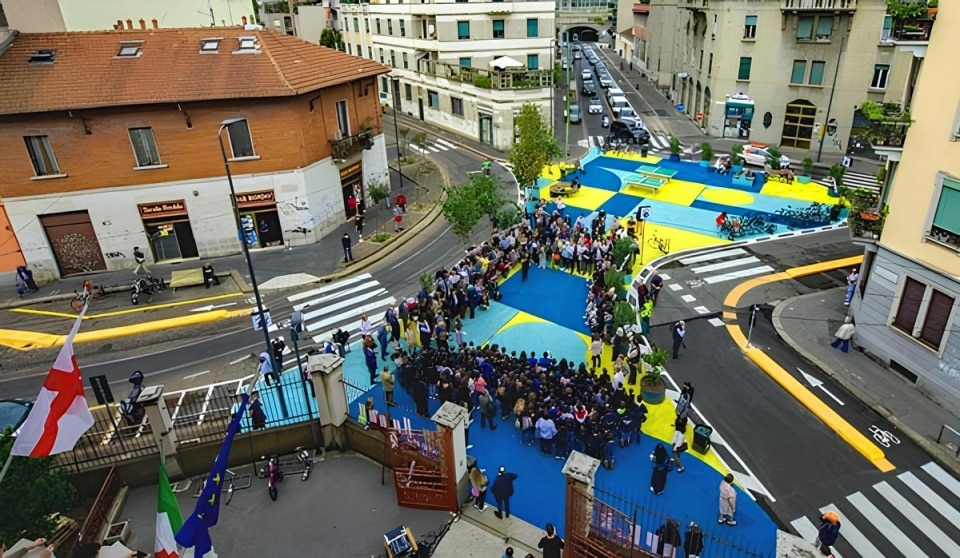
A new signal of this metamorphosis comes from the final project for the intersection of via Spoleto and via Venini, in the NoLo district, where work began a few days ago. What Milanese people have come to know as “Piazza Arcobalena” will abandon its temporary look made of colorful pavement and ping-pong tables to take on a permanent configuration by the end of 2026.
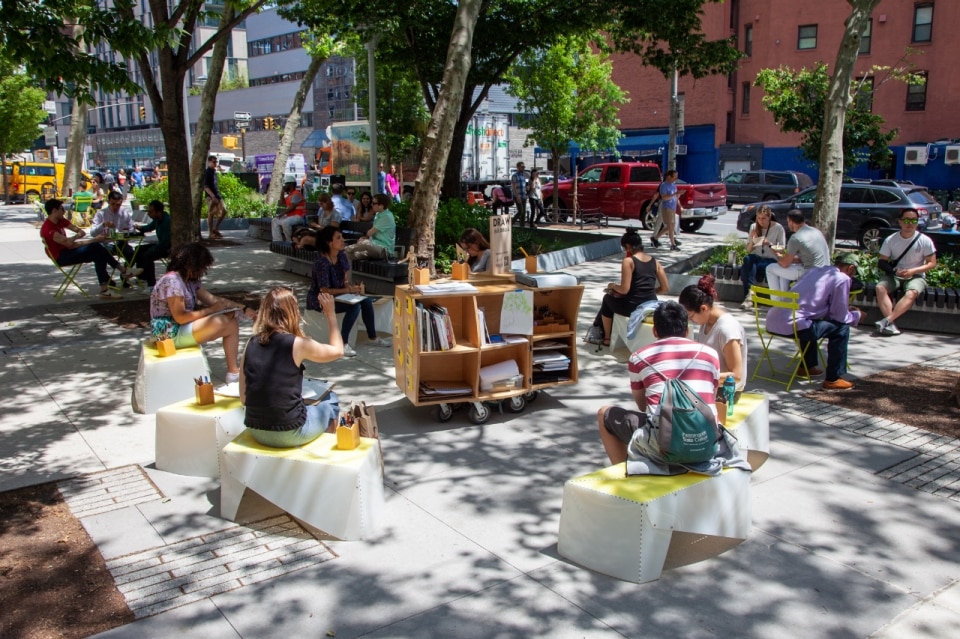
This is the clearest sign yet of a shift that is now underway: the season of light experimentation-asphalt painting, mobile furniture, quick and low-cost interventions-is giving way to structural and lasting transformations capable of rewriting the fabric of the city in the long run.
However, this evolution does not only respond to a desire for urban decor. Behind the transformation of squares and streets is, above all, a climate strategy. The replacement of asphalt with trees, draining surfaces, and new green areas is part of the plan with which the Municipality is trying to transform Milan into a “sponge city” looking at European models such as Copenhagen and Barcelona. In January of this year, twenty-seven strategic interventions were announced, intended to reduce impermeable surfaces, mitigate heat islands, and improve rainwater management during extreme weather events.
From tactical urbanism to permanent transformations
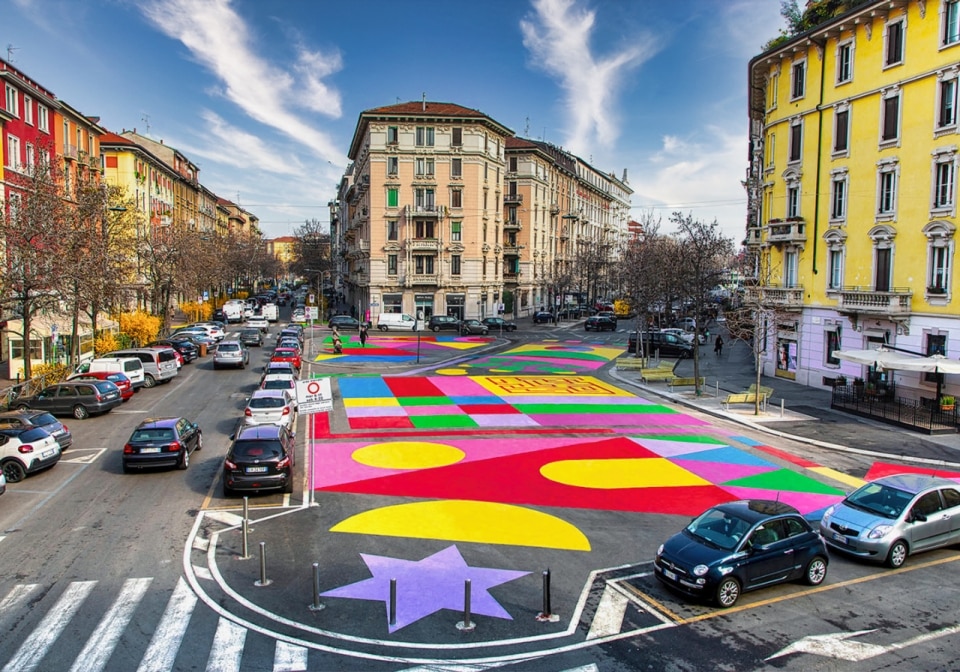
This process began in 2018 with the “Piazze Aperte” program, based on the principles of tactical urbanism: rapid, economical measures with a high social impact. Through colored paints, potted plants, and light furnishings, Milan began to subtract space from cars to return it to social life.
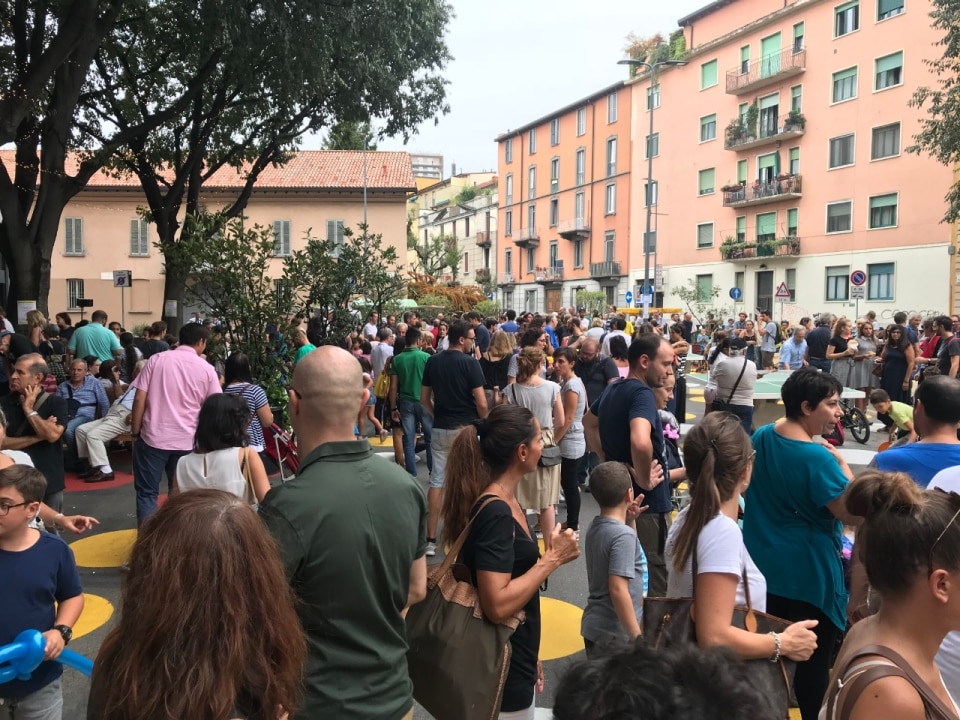
The strength of the project also came from the direct involvement of citizens. Through the public notice “Piazze Aperte per ogni scuola,” residents and school communities were able to propose interventions to make school entrances safer, transforming intersections and street widenings into protected spaces and gathering areas.
Between 2018 and 2024, places such as Piazza Dergano, Piazza Minniti, and the Porta Genova area became open-air experiments, demonstrating how it was possible to change the perception of urban space even without permanent interventions.
The mosaic of construction sites that is changing Milan
In the 2025-2026 biennium, two movements are advancing in parallel: on one hand, the definitive consolidation of the tactical squares already tested; on the other, new temporary transformations that continue to test different ways of living in public space.
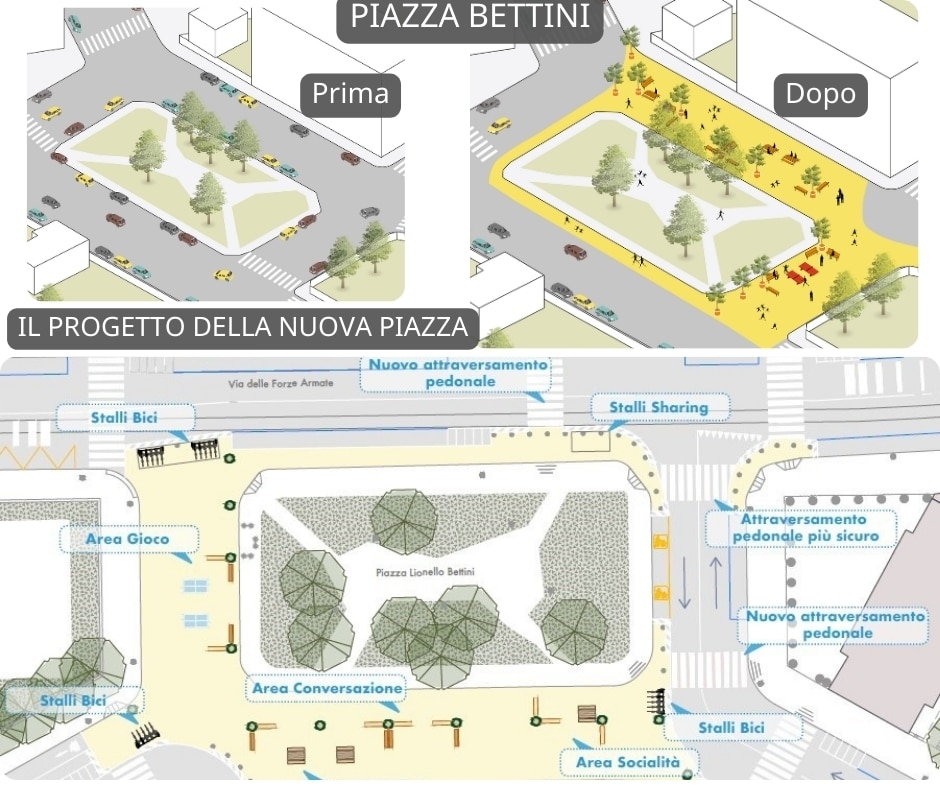
This is happening, for example, in Piazza dell’Assunta in Vigentino, where the church parvis is returned to a new pedestrian dimension, or in the Lionello Bettini area at Maddalena, in Municipio 7, where work started last September introduced games, benches, bike racks, ping-pong tables, and new trees. Interventions that, as often happens, have also fueled a heated debate among residents, especially regarding the reduction of parking spaces for cars.
Other projects are already a reality or nearly completed, such as the sustainable urban drainage systems (SUDS) implemented in via Pacini and via Guido da Velate, designed to manage rainwater naturally.
In the Isola district, the construction site on via Toce continues, where the transformation that began in 2020 with pedestrianization and the introduction of urban furniture is taking a definitive shape. Here, the project aims to join the Bruno Munari and Santa Maria alla Fontana gardens by closing a stretch of road to traffic. In recent weeks, the addition of greenery has accelerated the visual change of the area, now characterized by new flowerbeds and a large pedestrian parterre.
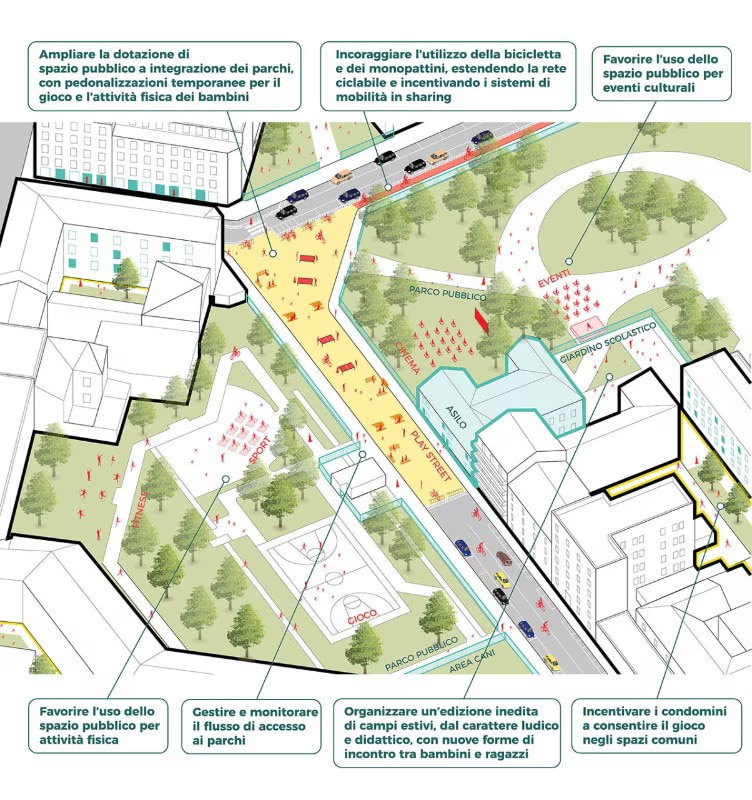
The transformation now involves the entire city, from the Calvairate district to the historic center. In piazza Imperatore Tito, work is starting with the aim of expanding green and pedestrian areas, while the project for piazza Santo Stefano aims to redesign the relationship between the parvis and the public space, currently still marked by the disorderly presence of cars.
Among the most relevant interventions planned for 2026 is the redevelopment of Piazza Arnoldo Mondadori, in the Porta Lodovica area, where approximately 600 square meters of asphalt will make way for benches, racks, trees, and shrubs.
Another strategic project concerns the Politecnico di Milano area: largo Volontari del Sangue will be transformed into a new green pedestrian area in front of the university, designed as a public space for students and residents.
Opening image: Spoleto Square on opening day. Via Wikimedia Commons