






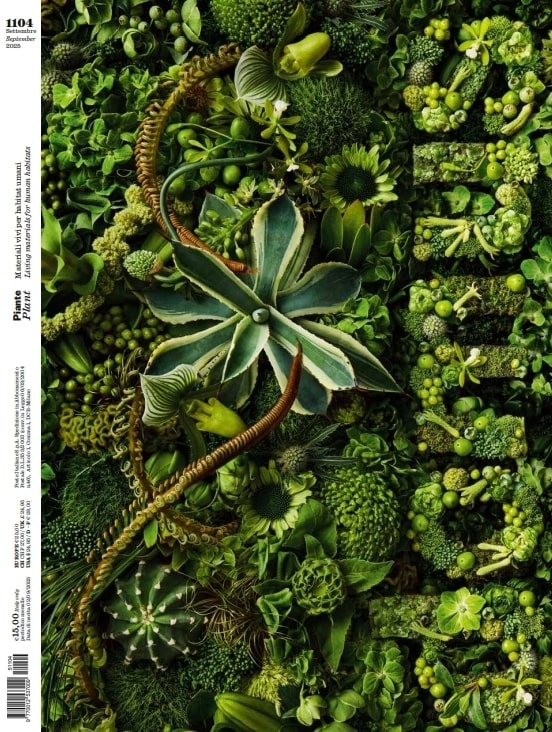
The September 2025 issue of Domus plunges into the central question of our lives: what does it mean to inhabit our time? This profound exploration focuses on the sometimes fragile, sometimes glorious relationship between humanity, architecture, and the world. More than a simple collection of human achievements, this issue serves as a quiet invitation to rethink our ancestral pact with nature, to weave a new tapestry of mutual interdependence, and to practice true coexistence among all beings.
As always, each issue of Domus is a journey that takes us from the territories of memory to the most daring innovation, driven by the firm conviction that the future is not built, but cultivated—and it starts, as it always has, with culture, the very stratification that defines us.
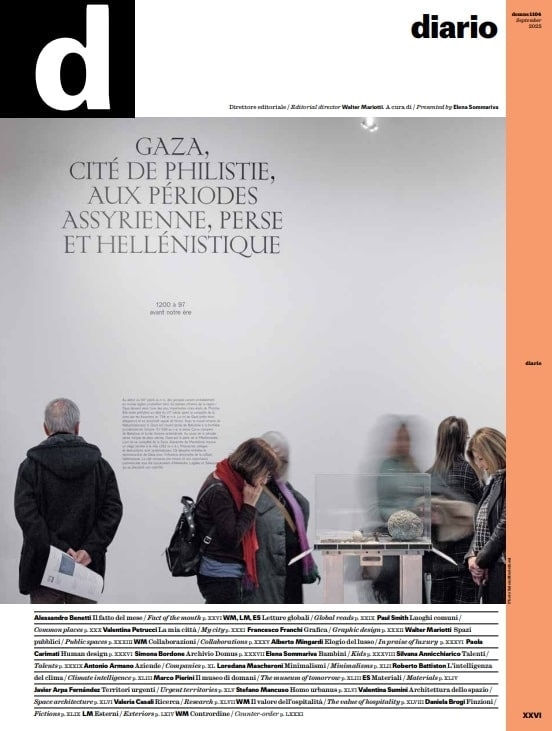
The "Diario" section opens with a look at the fragile artifacts of a treasure in exile: Gaza’s cultural heritage, as told by Alessandro Benetti. This is a "patrimonial crisis" that is not just archaeological, but deeply human—a stark reminder of history’s brutality and beauty’s resilience. And beauty, as we know, needs to be cared for. This care is evident in the restoration of the Palazzo dell'Arte at the Triennale di Milano. Under the guidance of Luca Cipelletti, it has been transformed back into a public square, a porous space where the city can breathe and connect. The project aimed to restore Giovanni Muzio's original vision, creating a seamless flow between inside and out—a work of reclamation that is also an act of generosity to the community. Central to this narrative of civilizational layers is the reflection of Elsa Fornero. In a text by Valentina Petrucci, she discusses Turin and the value of "the surplus"—that excess of beauty and meaning that is never a superfluous expense. It resonates as a warning for our era, which tends to consume the present without investing in the future. This call for authenticity is also reflected in the magazine "Stüa," edited by Francesco Franchi, which aims to tell the story of a place's identity, and in a text by Simona Bordone, which evokes the historical significance of embroidery as a form of secret communication, a female art that transcends time.
The September 2025 issue of Domus plunges into the central question of our lives: what does it mean to inhabit our time?
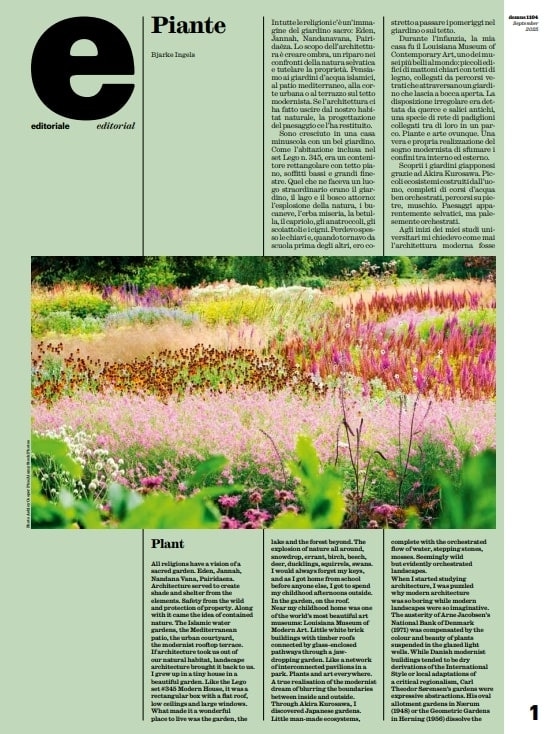
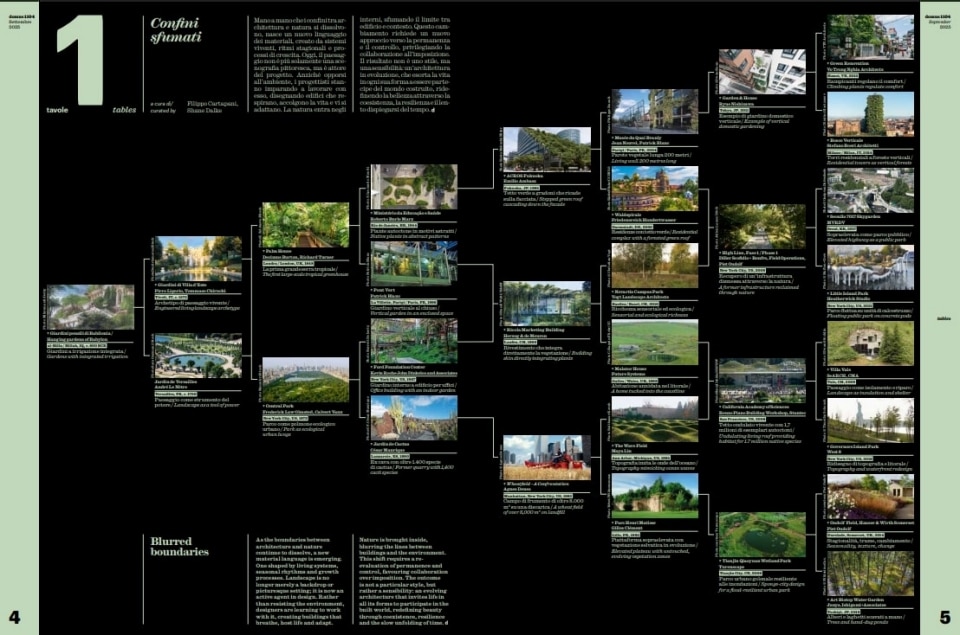
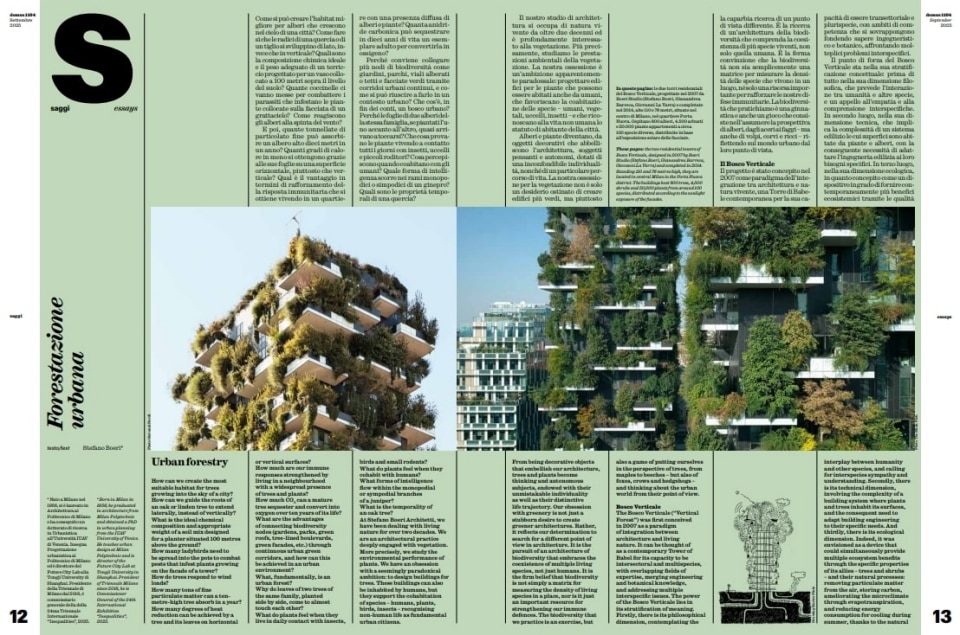
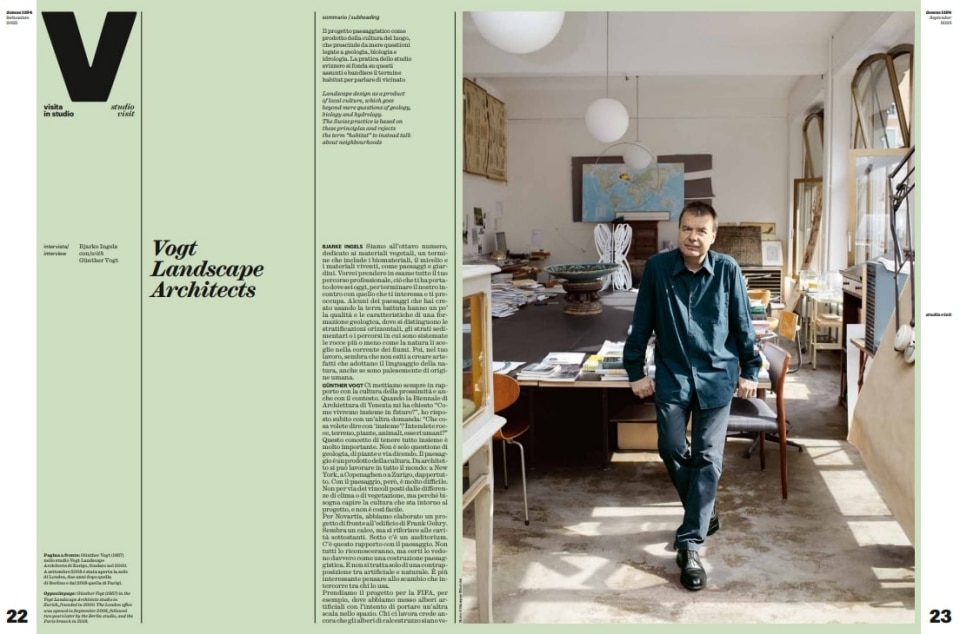
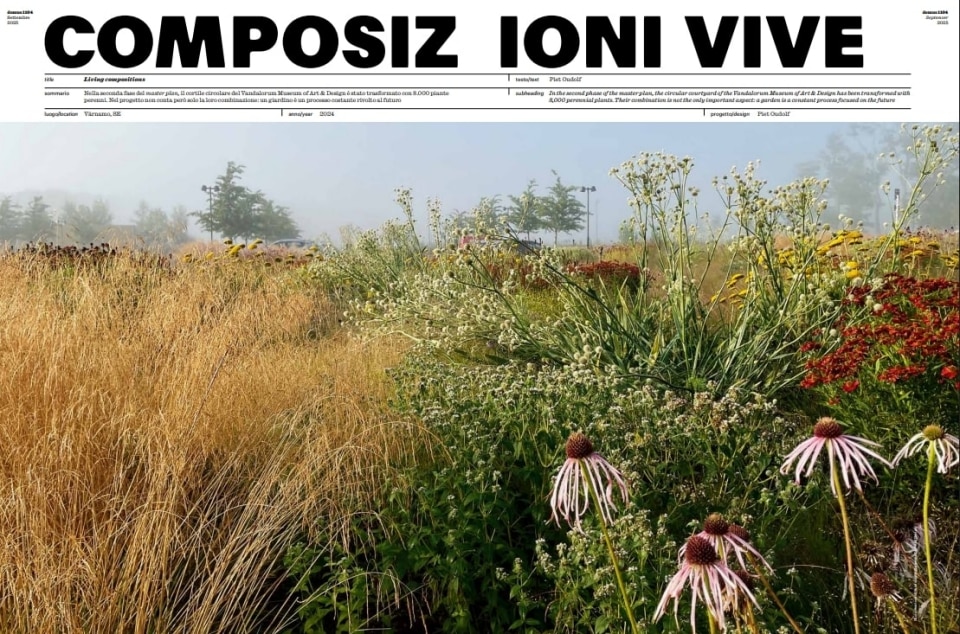
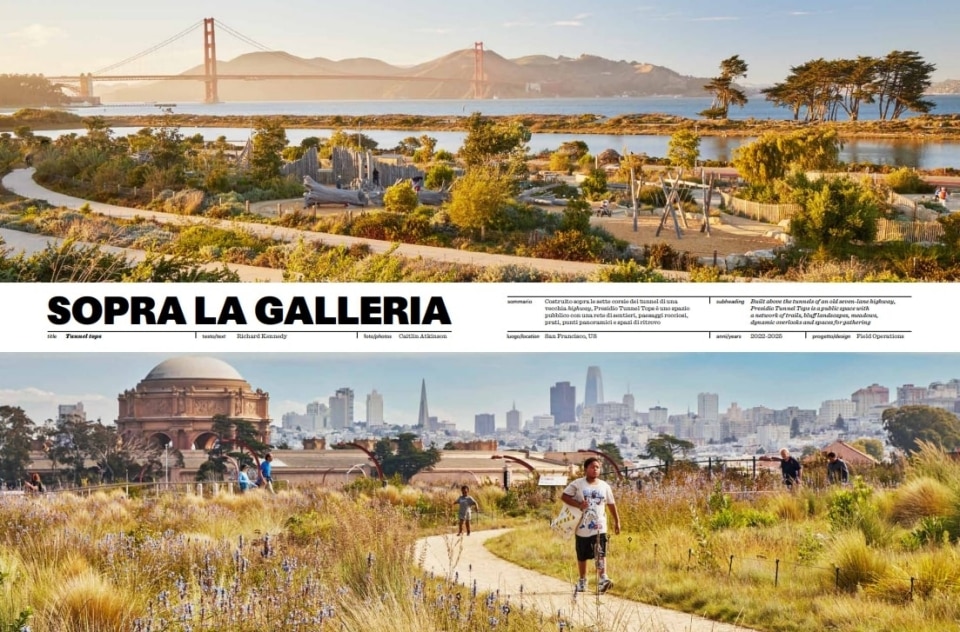
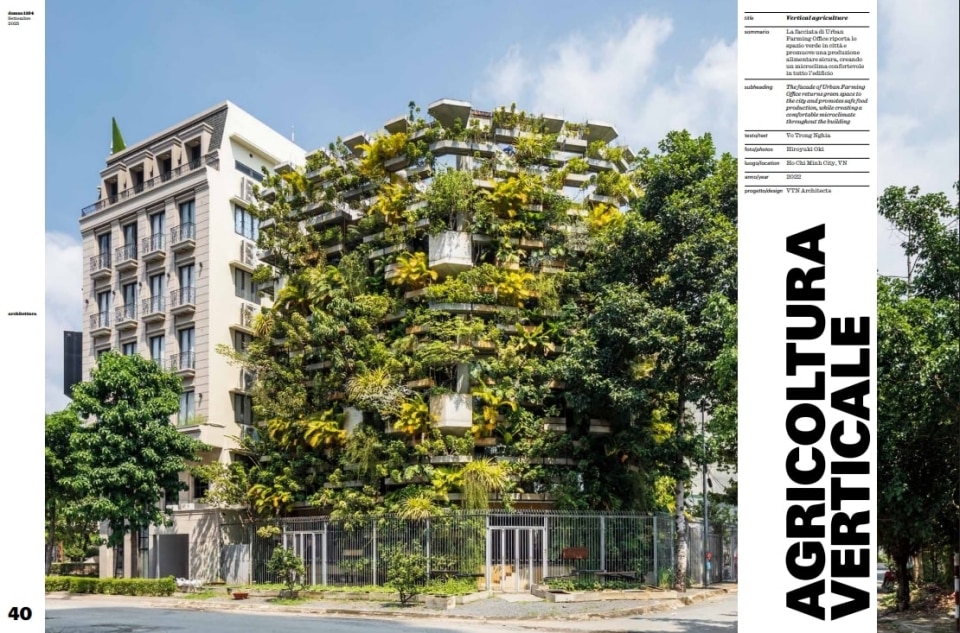
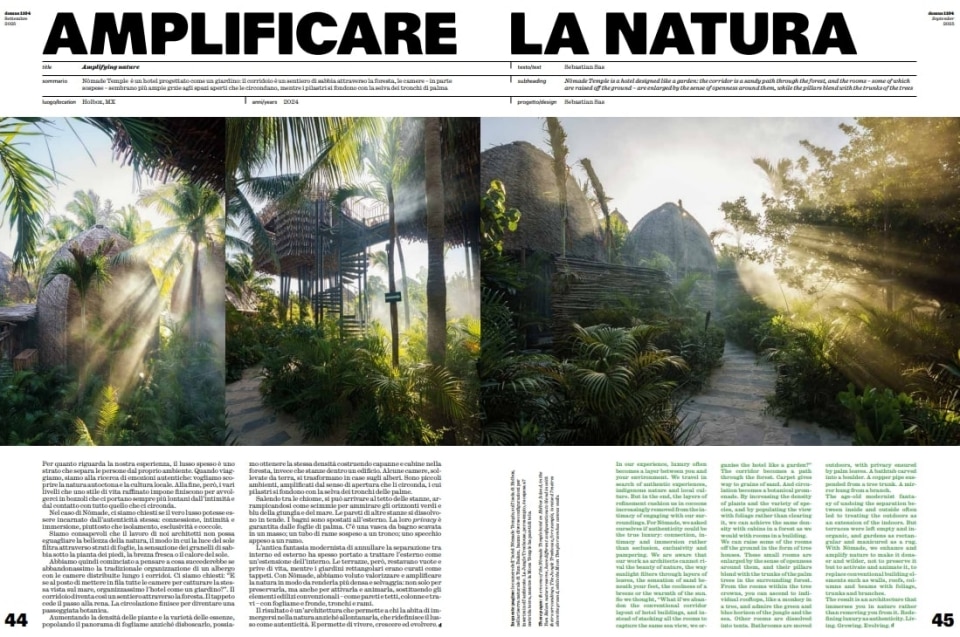
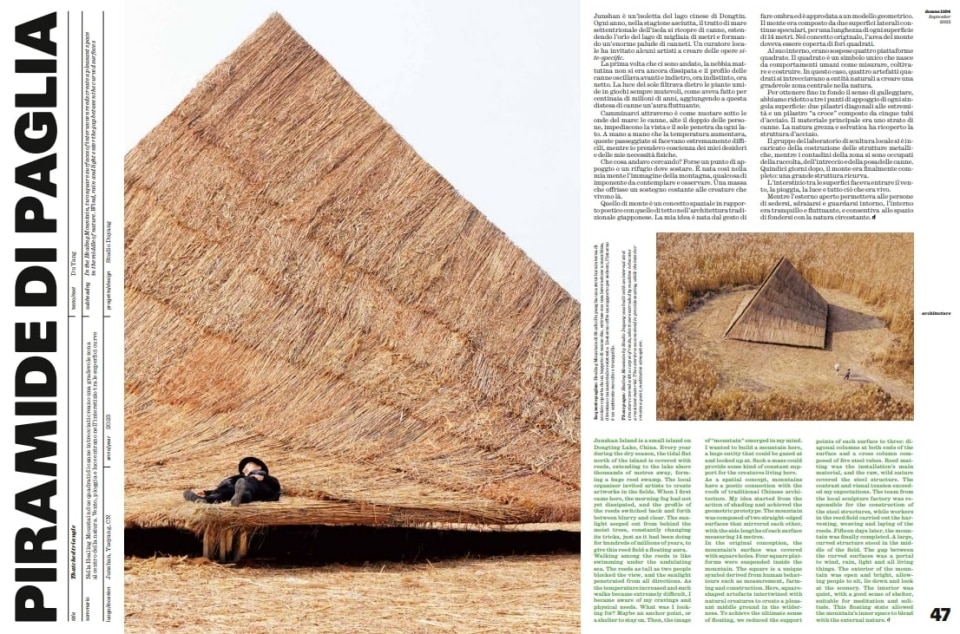
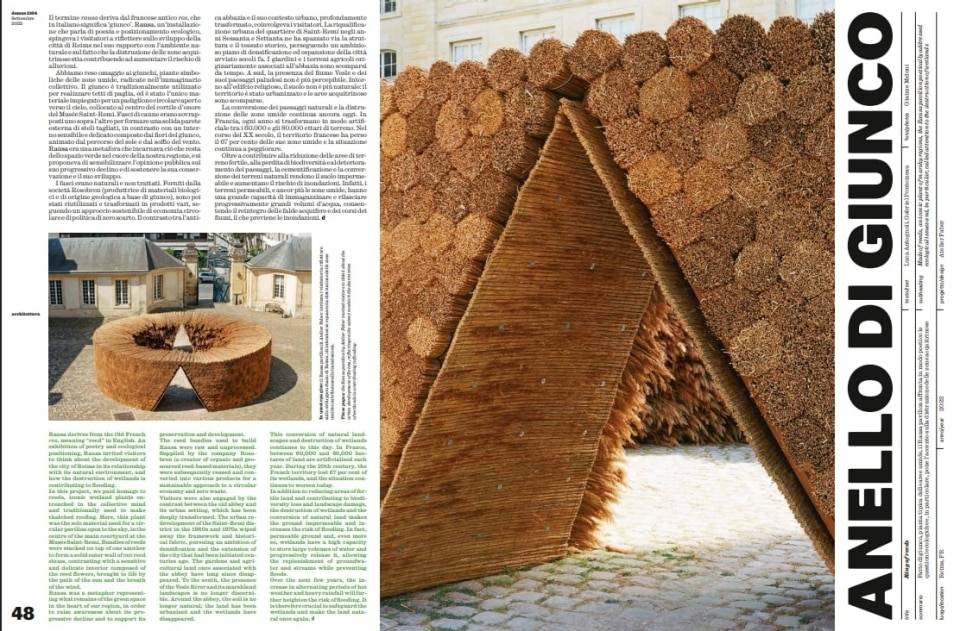
But the true heart of this issue is its exploration of architecture that becomes an organism, breathing and living. Setting aside political debates, Stefano Boeri invites us to see the Bosco Verticale not as a building, but as a vertical forest—an ecosystem that generates biodiversity. Its evolution, such as the social housing project in Eindhoven, shows that integrating nature is not a luxury, but a necessity for everyone. Echoing this vision, Richard Kennedy presents Presidio Tunnel Tops in San Francisco, where nature reclaims what technology had taken away, transforming an infrastructure into a living park. Sebastian Sas with the Nômade Temple in Mexico and VTN Architects in Vietnam reveal an architecture of doing, one that merges with vegetation, blurring the line between the built and the living. In an interview with Günther Vogt, the landscape is no longer a mere backdrop but the fundamental infrastructure for our existence, an "interspecies neighborhood" that must be designed and cared for.
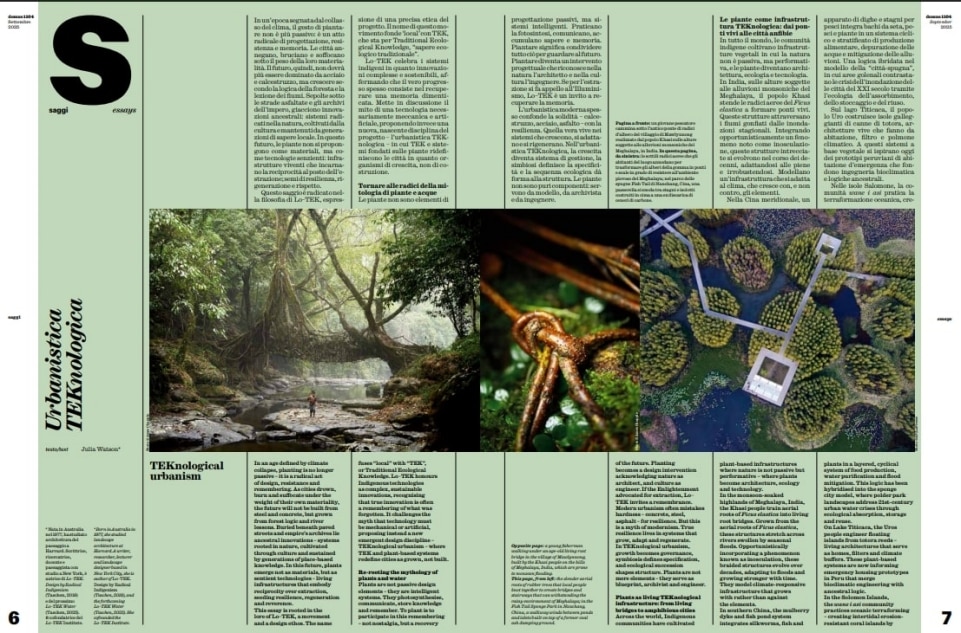
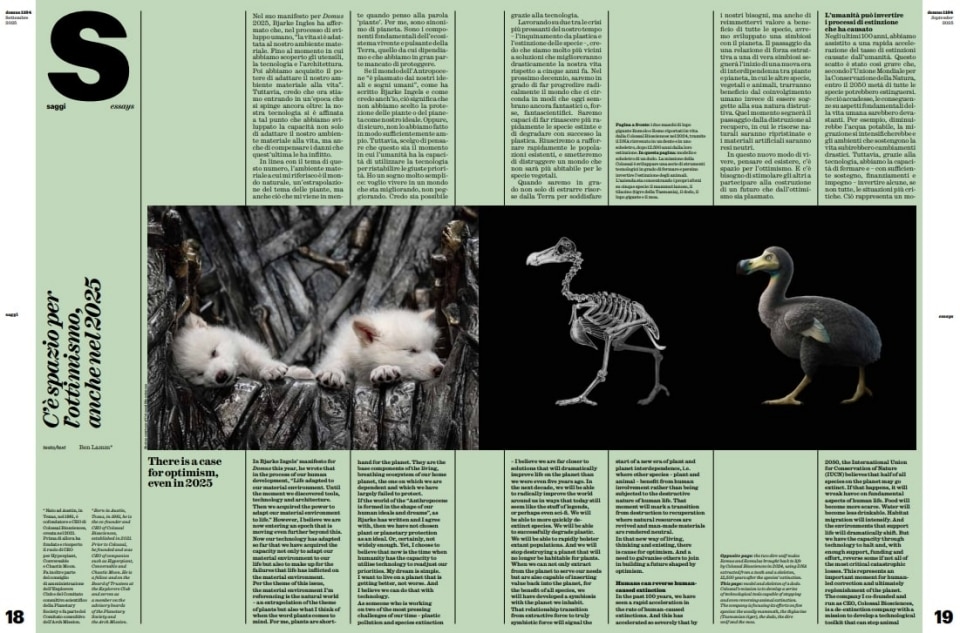
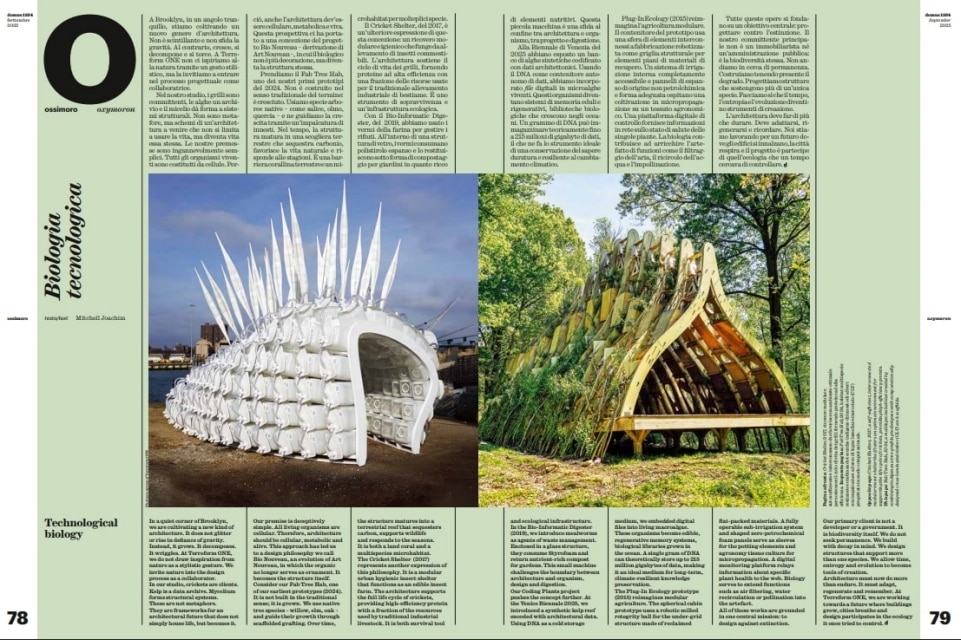
Domus then pushes further, questioning the role of science and technology. Julia Watson, with her concept of "TEKnological Urbanism," reminds us that true knowledge is already present in ancestral practices, in indigenous solutions that have always worked with nature, not against it. While Ben Lamm, in "There's Room for Optimism," envisions a science capable of repairing human errors, bringing back extinct species and degrading plastic, Mitchell Joachim in "Technological Biology" pushes this concept to the limit, imagining a future where buildings are living beings.
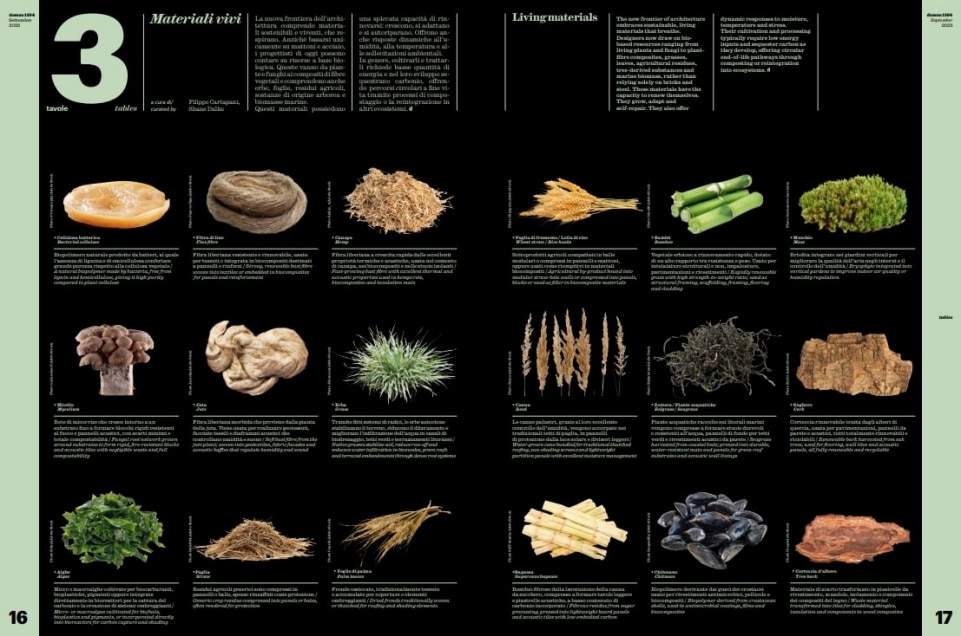
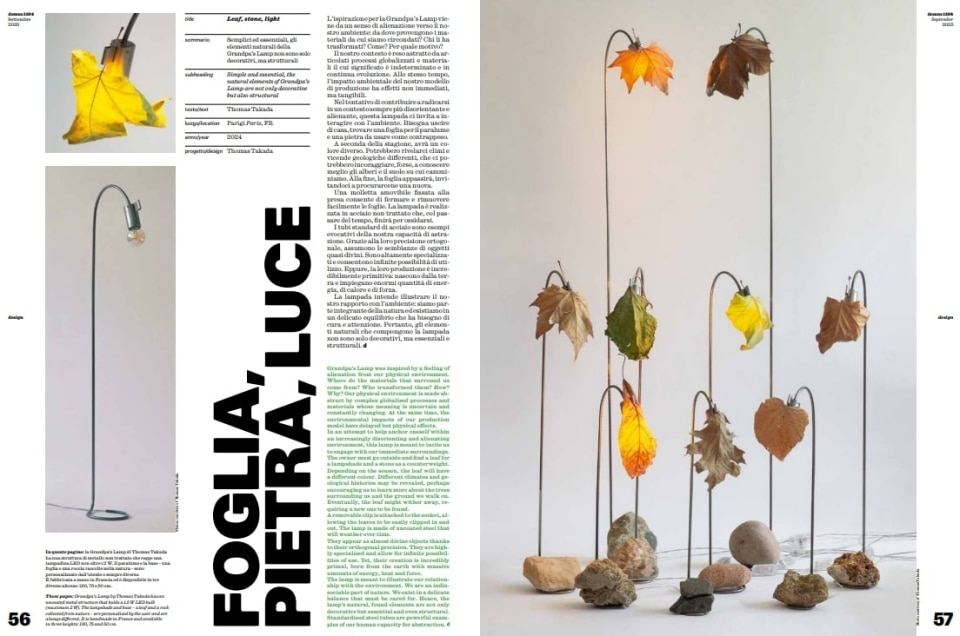
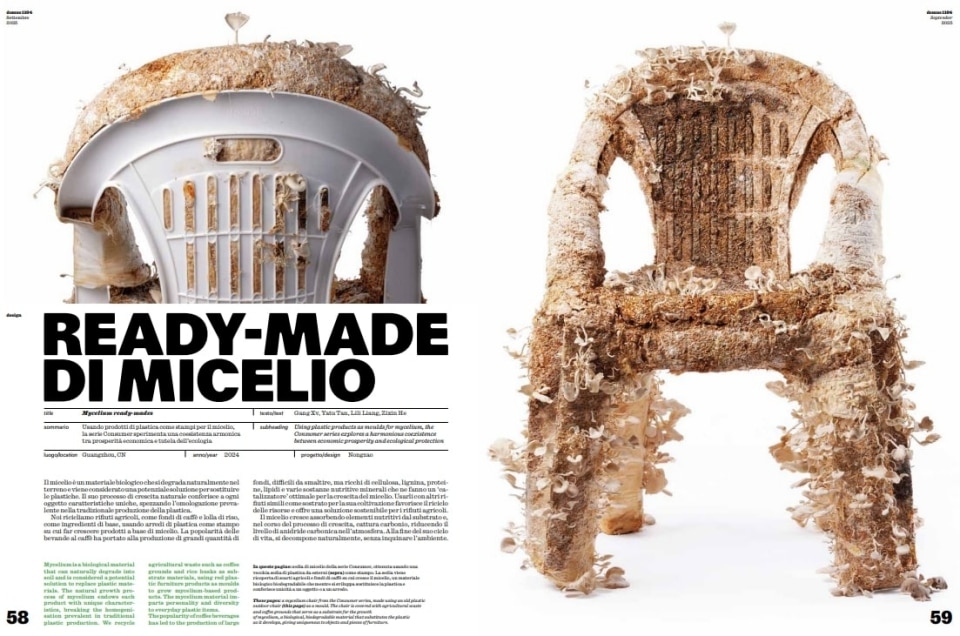
Reviews by Loredana Mascheroni on Massimo Rigaglia and Elena Sommariva on Issey Miyake and Atelier Oï present designs that use organic and recycled materials. Silvana Annicchiarico celebrates Aida Rasmussen's chair as a manifesto of ethical and sustainable design. Antonio Armano, in his text on FerreroLegno, highlights a company that blends tradition, innovation, and environmental respect. Even the humble door handle, as Valeria Casali explains, can become an architectural work, a point of contact between a person and a space.
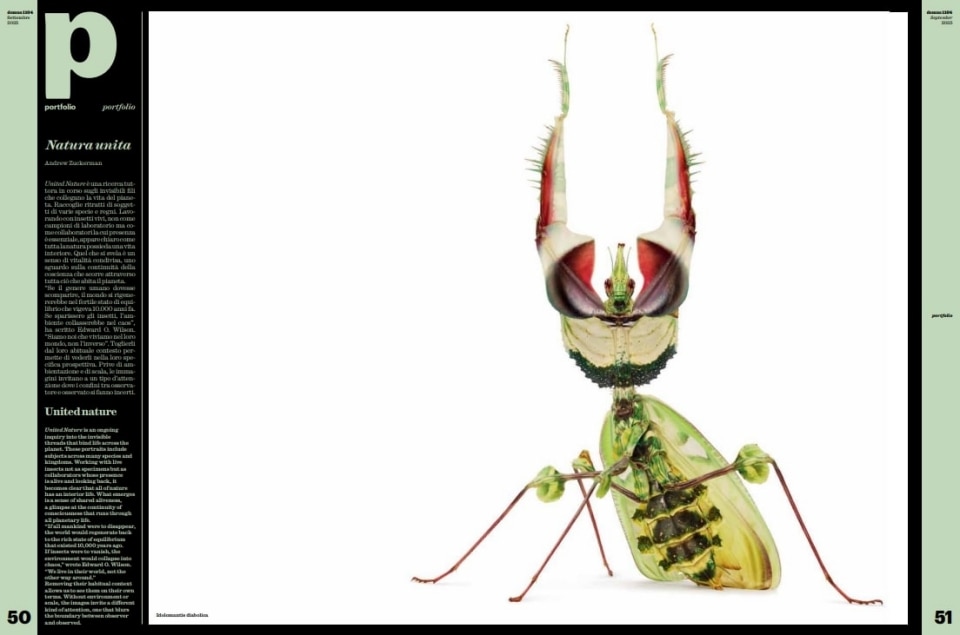
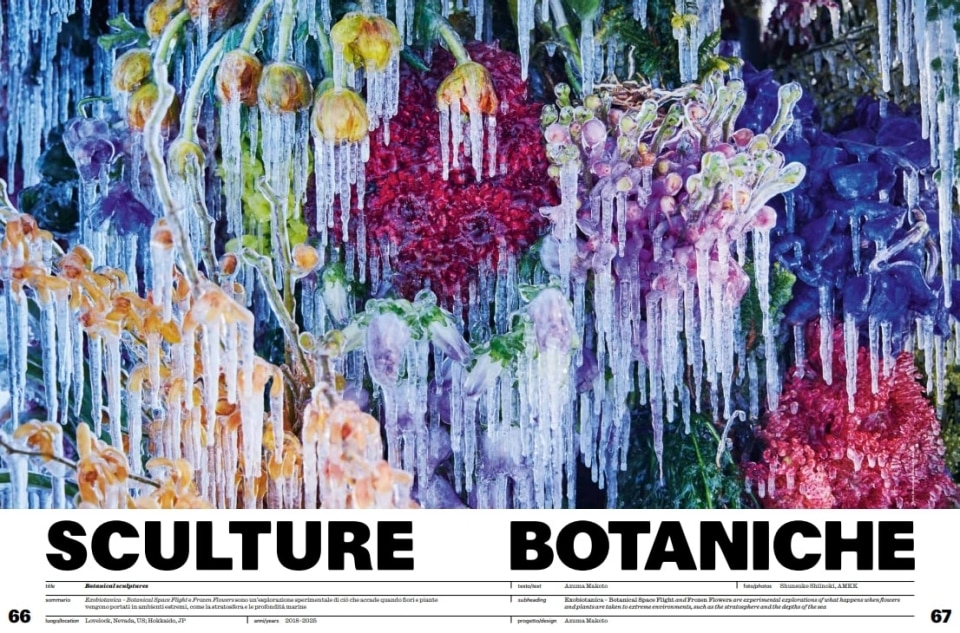
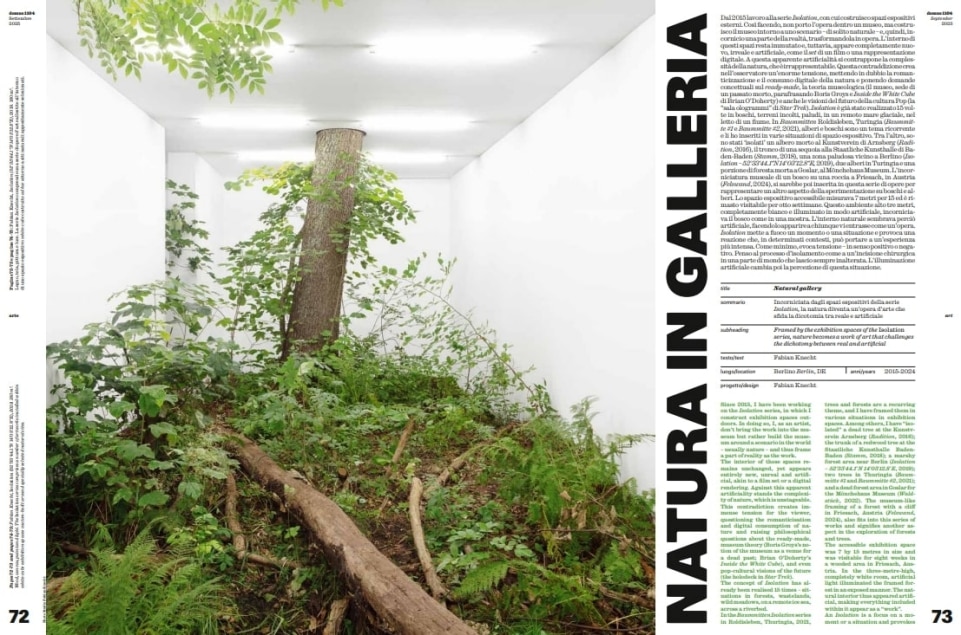
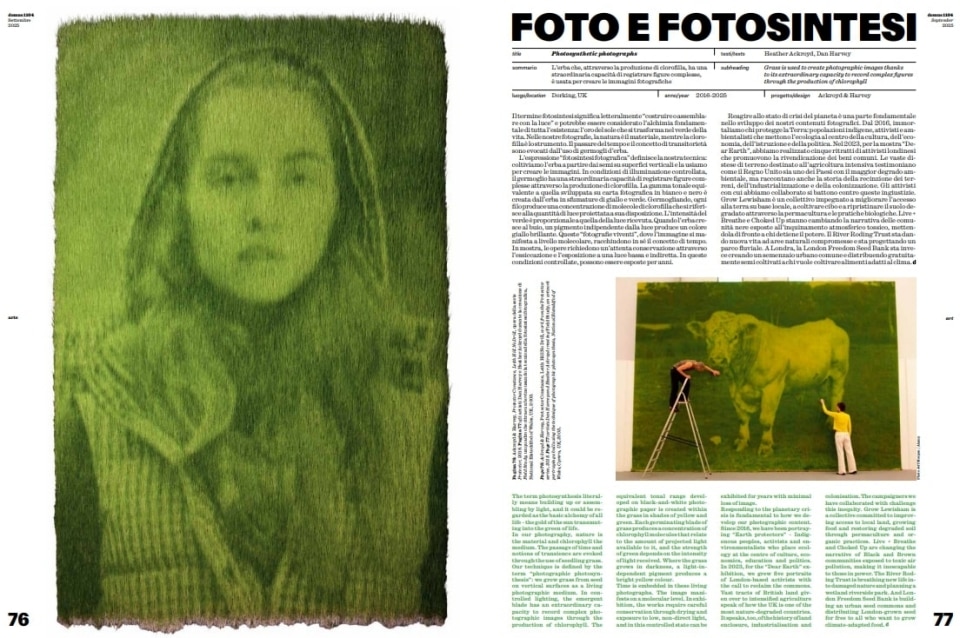
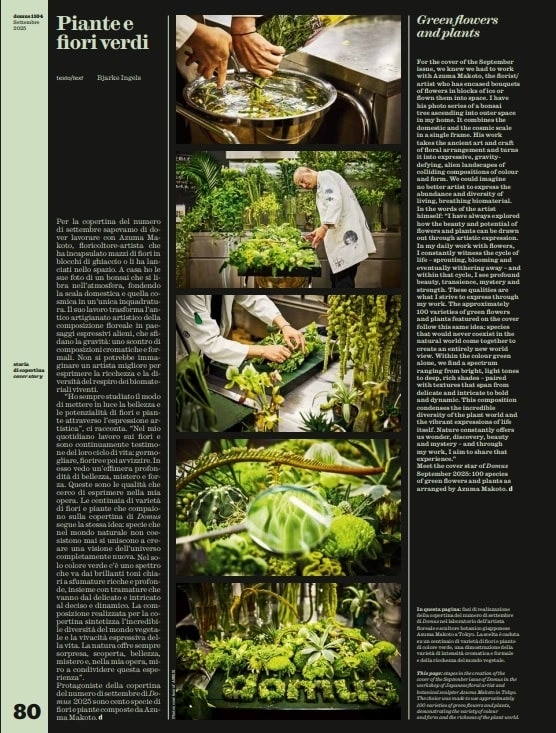
Finally, art, with its powerful ability to reveal the invisible, offers us a look at the climate crisis that is both sublime and painful. The botanical sculptures of Azuma Makoto, which defy gravity by launching flowers into space or trapping them in ice, force us to reflect on limits and fleeting beauty. Photos by Ackroyd & Harvey, created through grass photosynthesis, transform nature into an artistic medium, while Fabian Knecht, with his "white cubes" in the wilderness, questions what is artificial and what is authentic. The reflections of Roberto Battiston in "Sapiens vs. Insipiens" and Alberto Mingardi in "In Praise of Luxury" provide a conceptual framework for understanding the challenges ahead. An article by Marco Pierini on the museum of tomorrow and one by Valentina Sumini on extra-planetary infrastructure project us into a future that is already here. Through these threads—including a final reflection by Walter Mariotti on a time when cars were deified and had their own architectural temples—the September issue of Domus offers a complex, multi-faceted portrait of our time, revealing that design is, ultimately, an act of profound love and respect for the world we inhabit.
Happy reading!