


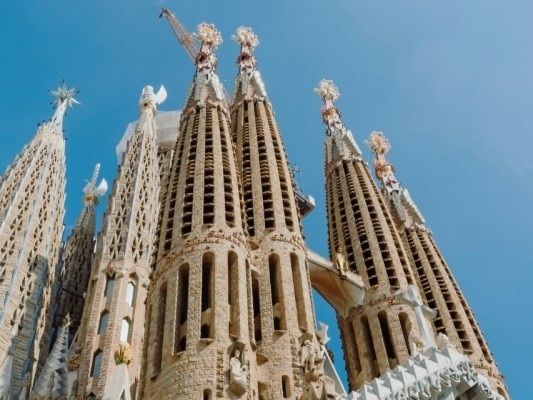
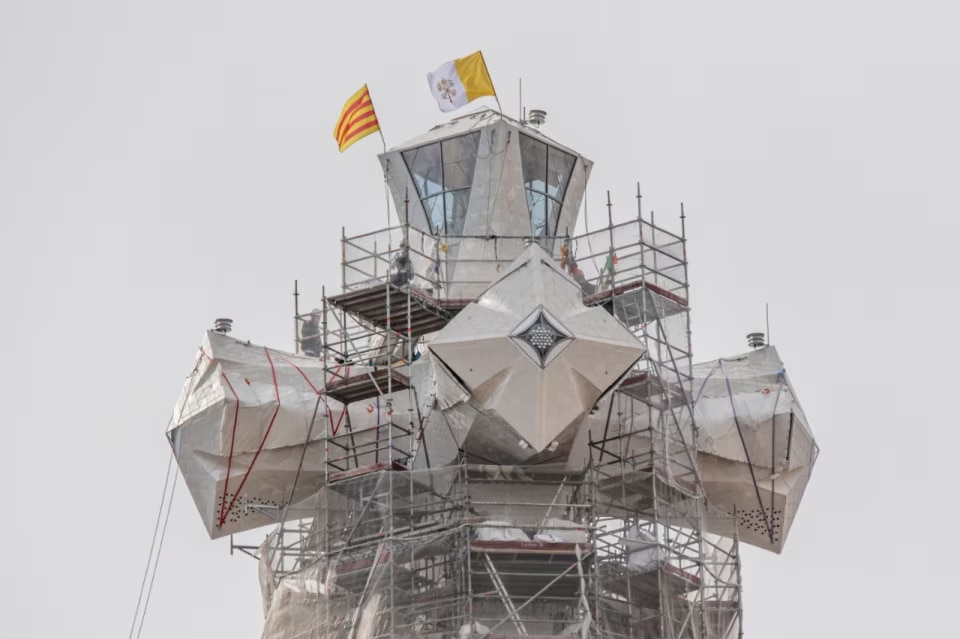
On 10 June 2026, amid tight security in Barcelona for the visit of Pope Leo XIV and state authorities, the blessing of the Tower of Jesus Christ at the Sagrada Família gave the world the impression that the most famous construction site in modern architecture had finally reached completion. Images of the basilica illuminated by fireworks fuelled this perception, leading thousands of people to believe that Antoni Gaudí’s masterpiece was now complete. In reality, however, this is not the case: the most controversial parts of the project have yet to be built, and an urban planning issue remains unresolved that could lead to new demolitions in the heart of Barcelona.
One deadline follows another, and headlines announce historic milestones. Yet the reality of the situation is that the temple designed by Antoni Gaudí remains, essentially, unfinished. The imminent completion of the Sagrada Familia is announced at regular intervals, but although the public narrative of the construction site progresses through symbolic deadlines and celebratory milestones, the reality of the work is more complex, consisting of technical, urban and cultural issues that remain largely unresolved. As we previously reported here on Domus, we must return to this concrete and tangible truth if we are to trace a chronology that truly focuses on the reasons for this continuously delayed “conclusion”.
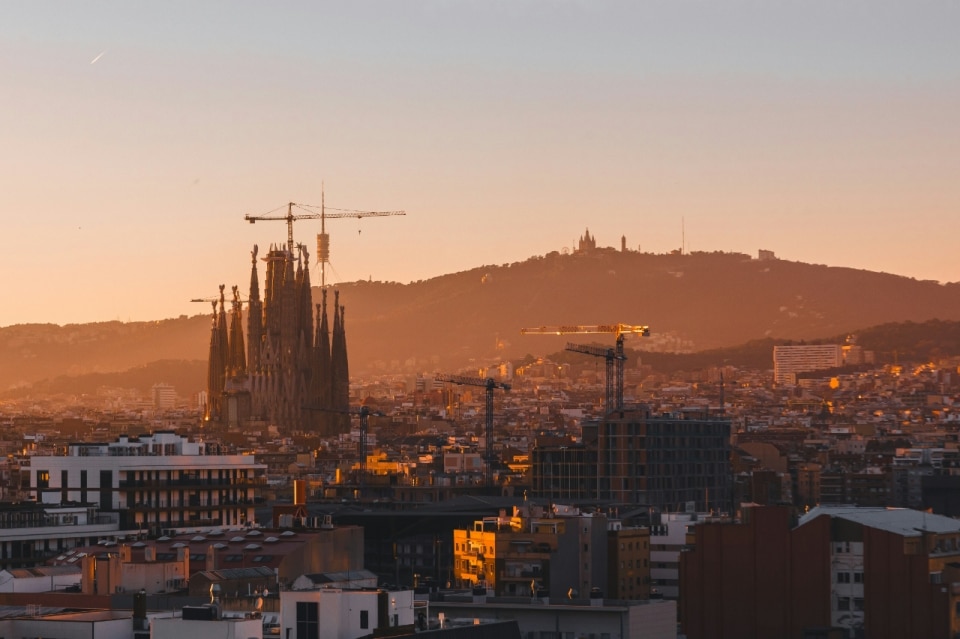
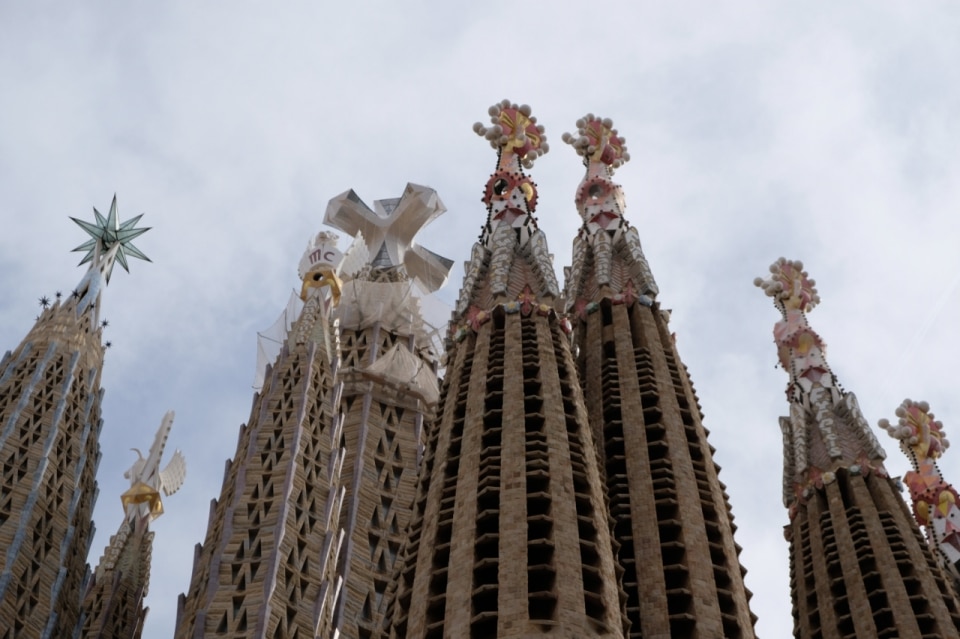
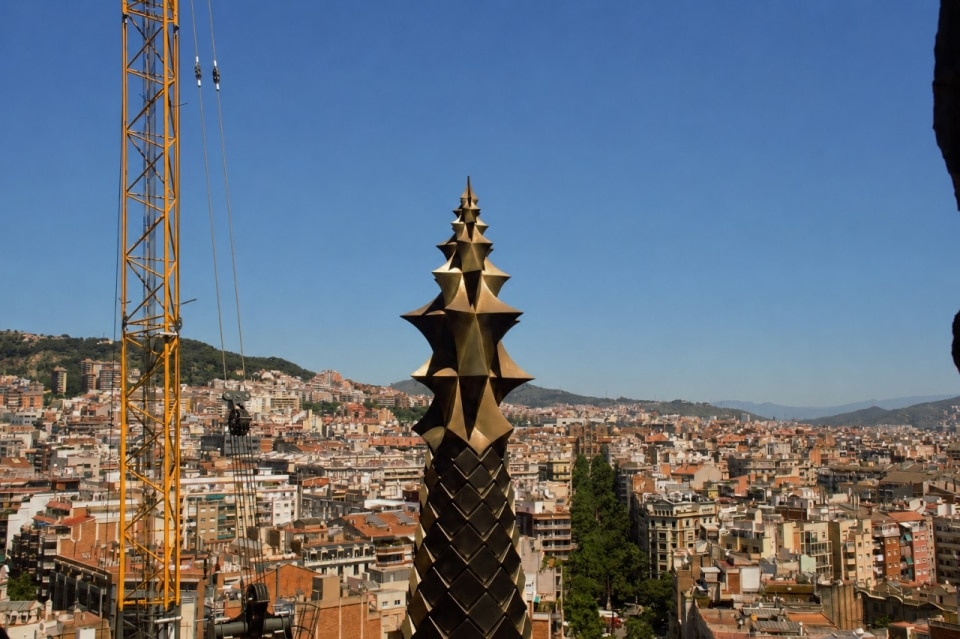
Today, the image of the towers soaring over the Barcelona skyline creates an apparent sense of completeness. Of the 18 towers planned in the original project, four have yet to be built. The remaining 14 towers are complete or in an advanced stage of completion, but not all are fully operational. One of the two planned sacristies has not yet been started, nor have some portions of the cloister that will connect the façade and chapels. The Baptistery and the Chapel of Penitence, which are to be placed symmetrically to the right and left of the future main portal, are still absent, as are the pyramidal lanterns of the central nave roof.
The core of the missing works is therefore concentrated on the south façade, the main entrance to the temple designated by Gaudí, which is still at a rather early stage of construction. The Glory Façade will depict the entire history of humanity, from Adam and Eve to the Last Judgement, and will conclude the narrative dedicated to the life of Jesus, which is also depicted on the Nativity and Passion Façades. To date, only the base pillars have been built; these have been under construction since 2024. The final bell towers, which are dedicated to the apostles, are completely missing. Unlike the latter, however, the iconographic and narrative plot is still being defined, as are the materials planned for completing its symbolic apparatus. Sculptures, lanterns and the monumental entrance staircase “exist” only in the 3D model printed on the scaffolding erected on Carrer de Mallorca.
We are therefore entering a decisive phase that will last at least a decade and will be crucial for both the visual impact of the work and the way in which the Junta Constructora manages the numerous controversies affecting the Sagrada Família, especially those related to its position in the neighbourhood. This renders some parts of the project incompatible with the surrounding buildings.
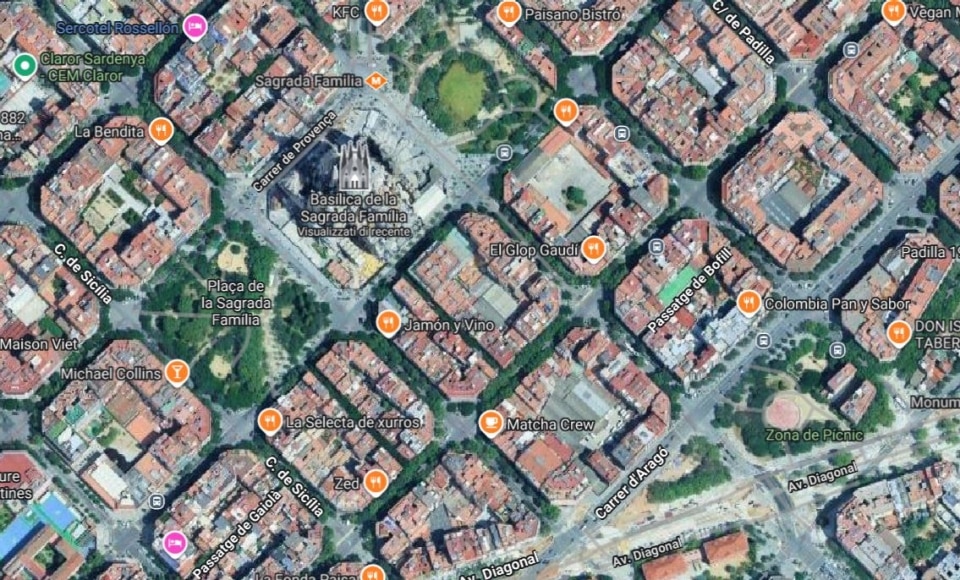
Despite a 1975 report by the Spanish Ministry of Education claiming otherwise, the original project actually plans for a monumental entrance staircase and an elevated walkway over Carrer de Mallorca, connected to the adjacent block. The realisation of this project would involve the expropriation and demolition of numerous 1970s residential buildings belonging to the Núñez y Navarro company. To ensure an unobstructed view of the Glory Façade, the 1976 General Metropolitan Plan (PGM) for Barcelona classified the area between Carrer de la Marina and Carrer di Sardenya, almost up to Carrer d’Aragó, as a public square and green space. Today, this area comprises not only homes, but also commercial activities, offices, garages and seventeen tourist apartments with regular licences.
It is a prospect that has long fuelled open conflict with residents, who have always opposed the social consequences of the work. As recently reported by La Vanguardia, the Sagrada Família has already obtained a licence to continue construction of the facade, but a satisfactory agreement must first be reached with all parties involved in order to complete the staircase. Negotiations between the Temple, the Municipality of Barcelona and the neighbourhood residents are ongoing, and have recently entered a more intense and delicate phase – thanks to the completion of the Tower of Jesus, upcoming elections and, more recently, Pope Leo XIV’s visit to Barcelona.
The most evident sign of this change in pace is the gradual reduction in the number of families involved: today, it is estimated that there are just over 200 homes, compared to the thousand predicted during the previous municipal council. This reflects a set of converging political choices. On the one hand, there is the possibility of creating a smaller version of the planned avenue/esplanade, thus limiting demolitions to a single block (between Mallorca and Valencia). On the other hand, the administration intends to prioritise residents’ right to housing in the balance between urban planning and social interests.
Estimates of the number of families involved remain uncertain, though more precise. The newspaper El País conducted an independent survey which yielded a range of between 156 and 213 units. Similarly, the neighbourhood association in the district conducted its own census, which revealed a maximum of 216 potentially affected homes. There is no united front even among individual preferences: some would like to remain in the neighbourhood, while others would prefer monetary compensation. Some owners of buildings dating prior to 1976 – although not automatically affected by the demolitions – still request inclusion in the compensatory measures package.
Behind the numbers are families with different legal conditions and expectations. For homeowners, the neighbourhood association demands that any solution must provide a new home in the same area at no financial cost to the families – a condition it considers non-negotiable.
The thorny question of where these families could actually be relocated remains unanswered, which is an extremely relevant topic in a city experiencing a severe housing crisis fuelled by mass tourism and international real estate investments. Another lesser-discussed issue is the economic model of the construction site, which is funded entirely by private sources, primarily through entrance fees and donations. In 2025, 2.3% of these funds were paid to the Municipality of Barcelona to offset the costs of externalities caused by the large volume of tourists in the neighbourhood. However, this still fails to resolve the issue that has slowed down the construction process for years.
Behind the glorious façade, an architectural game is being played in search of shared legitimacy. The unpredictable consequences of integrating a nineteenth-century project into a living, contemporary urban fabric are at the centre of this game. The Sagrada Família is heading towards its final phase, but its completion no longer depends solely on architecture. Rather, it hinges on the outcome of an urban negotiation that will determine whether Gaudí’s vision can be realised in its entirety or if it must adapt to contemporary Barcelona for the first time. While the most recent forecasts predict completion of the structures by around 2034, as long as the fate of the Glory Façade and its monumental staircase remains tied to this confrontation between institutions, builders and residents, every date will remain more of a promise than a certainty.
Opening image: Sagrada Família, photo by Pourya Gohari from Unsplash