

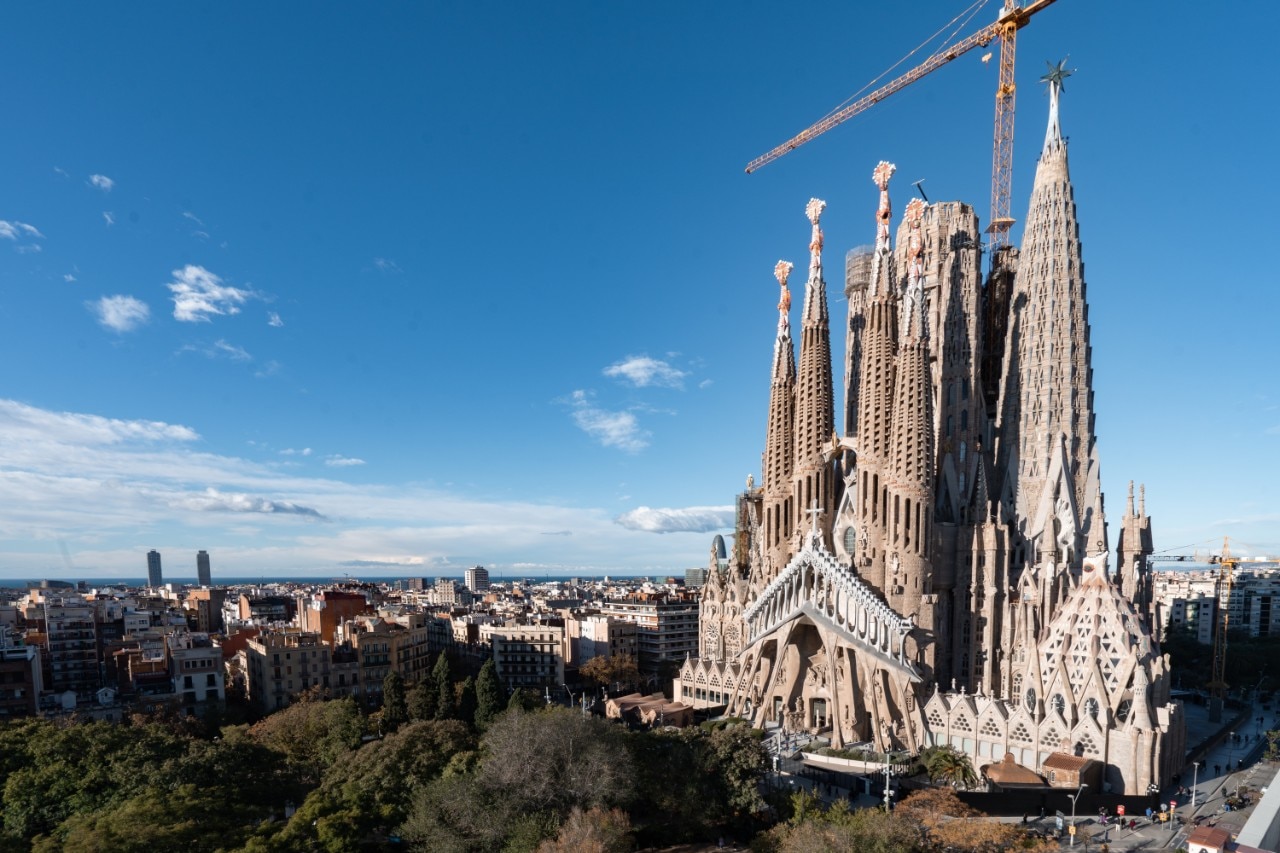

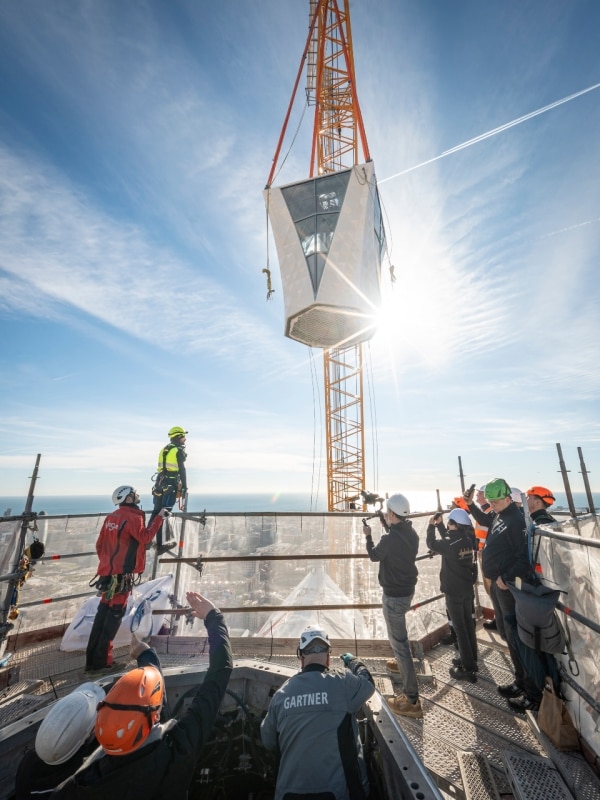
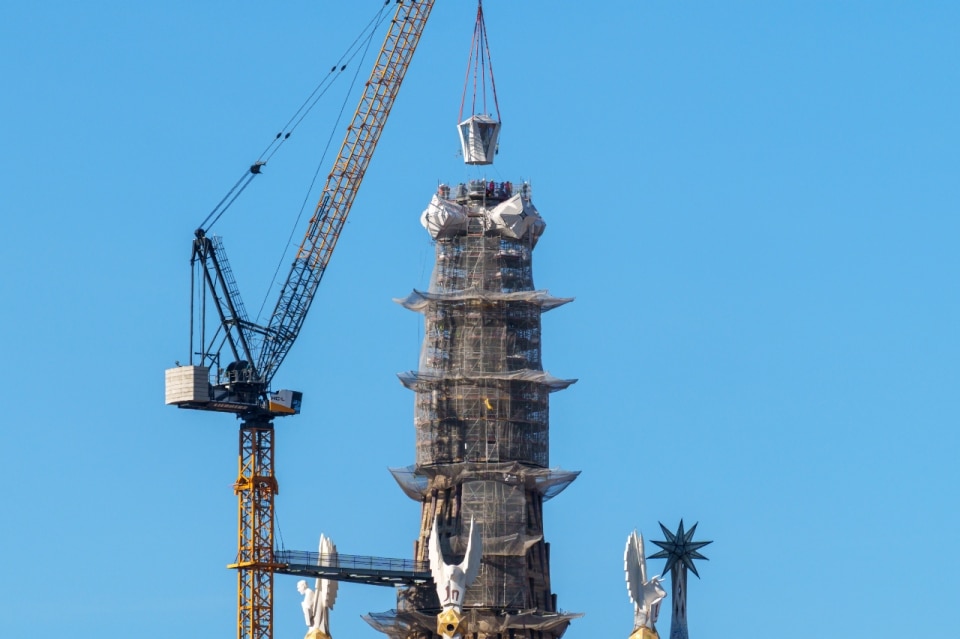
A construction site spanning 144 years, the architectural symbol of Catalonia, and the masterpiece of Antoni Gaudí. Work on the Sagrada Familia began in 1882 and, from 1883 onward, has followed the Catalan architect’s design — a project to which he devoted the final 15 years of his life. With the placement of the upper arm of the cross on the Tower of Jesus Christ, the basilica’s exterior has finally been completed, while the interiors are scheduled for completion by 2028.
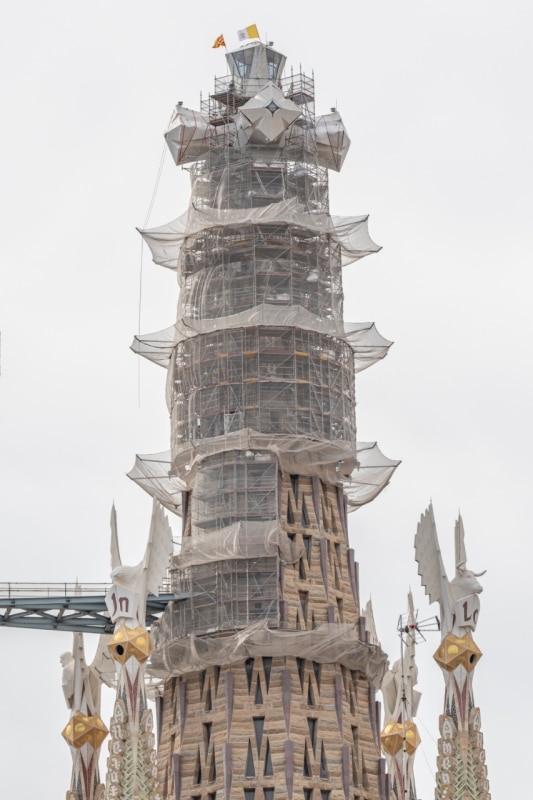
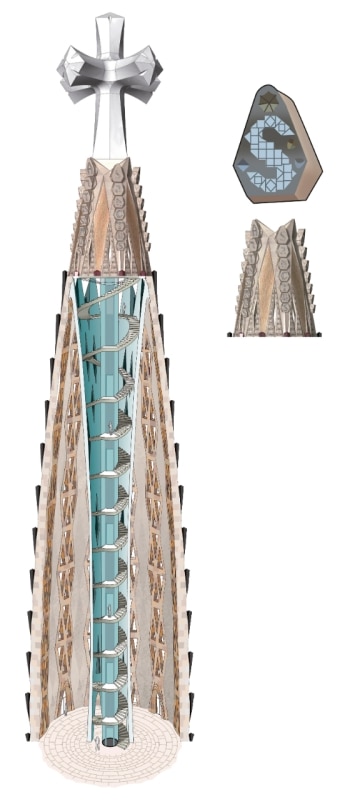
Exactly one hundred years after Gaudí’s death, the sixth of the central towers now rises at the summit of the temple. The Tower of Jesus Christ stands at the heart of the complex, surrounded by the four towers of the Evangelists and the tower of the Virgin Mary, all interconnected by bridges and internal passageways.
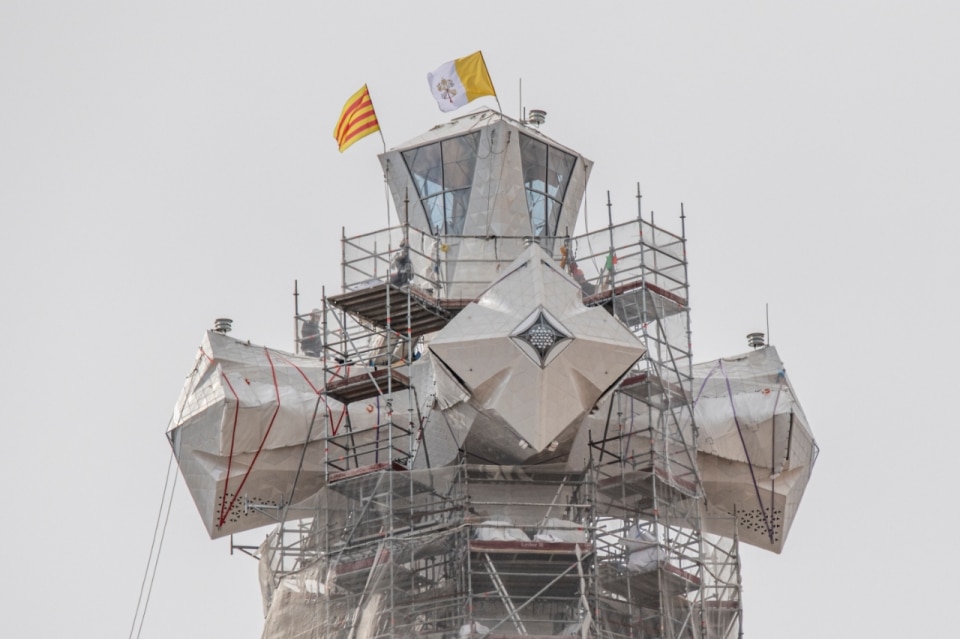
The tower is set on a dodecagonal plan. Its structure consists of twelve levels of pre-compressed stone panels, manufactured off-site and assembled in situ starting in 2018. The installation of the final panel in 2024 brought the tower to 142.5 meters, marking a decisive milestone toward its definitive configuration.
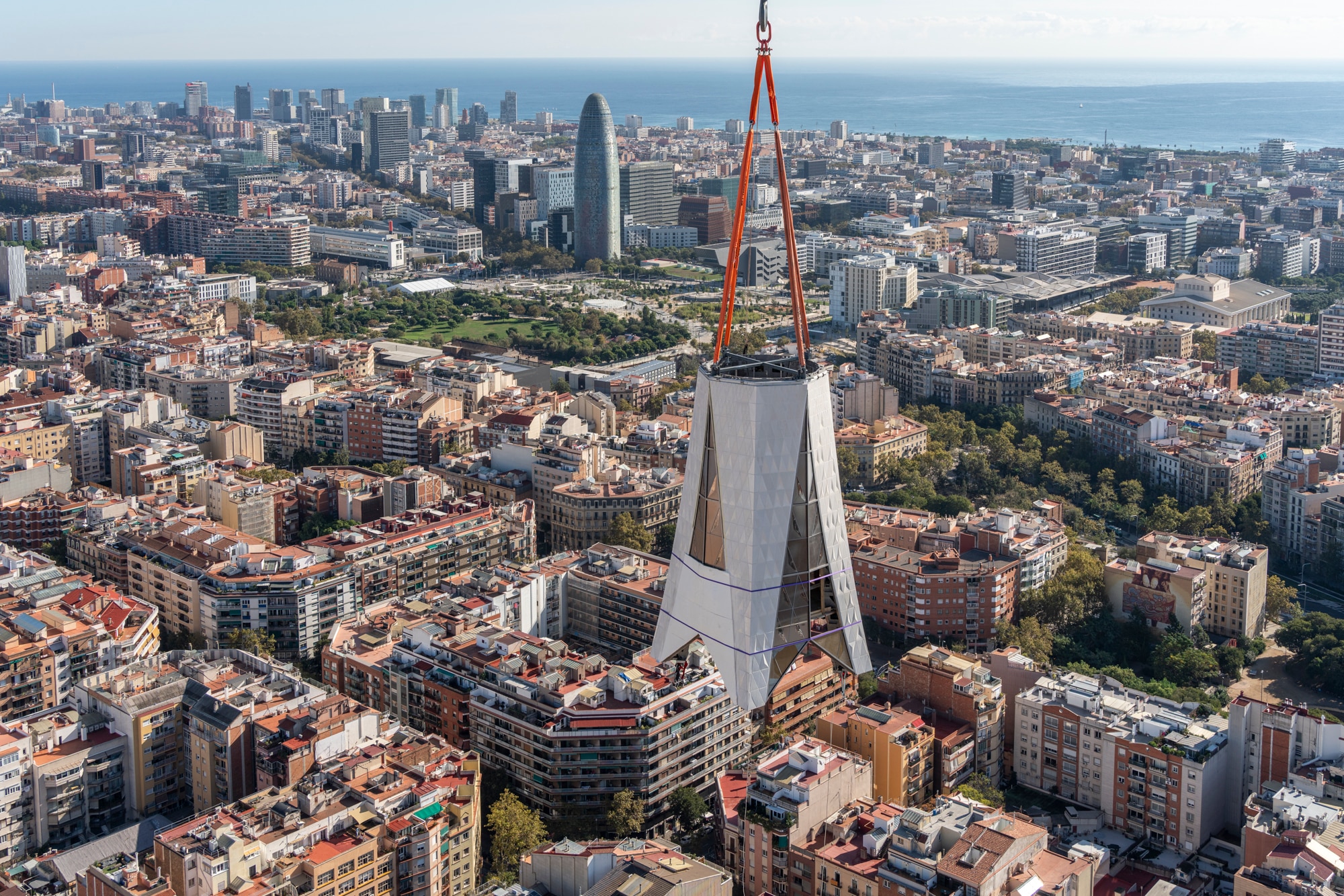
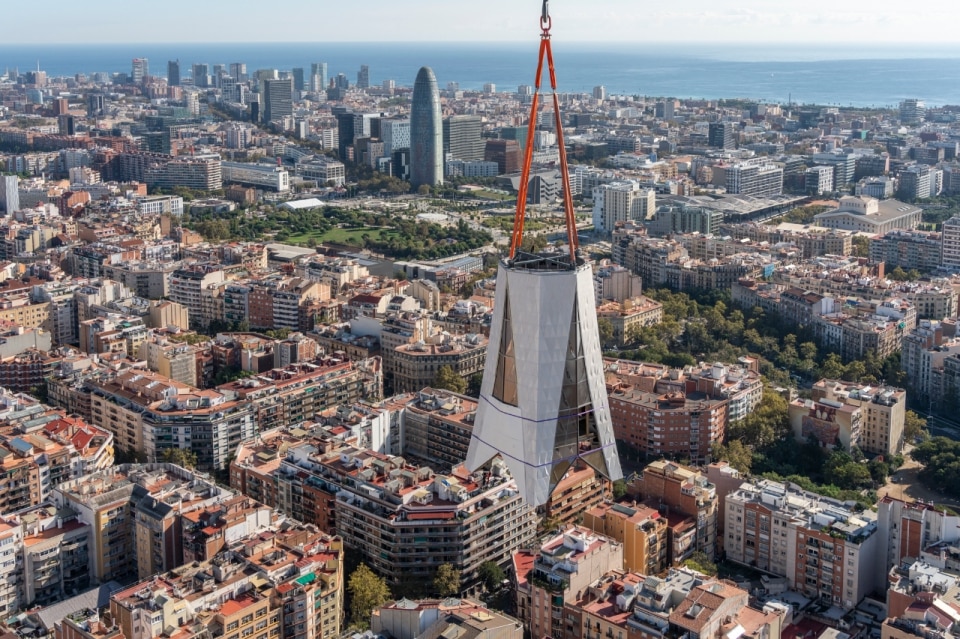


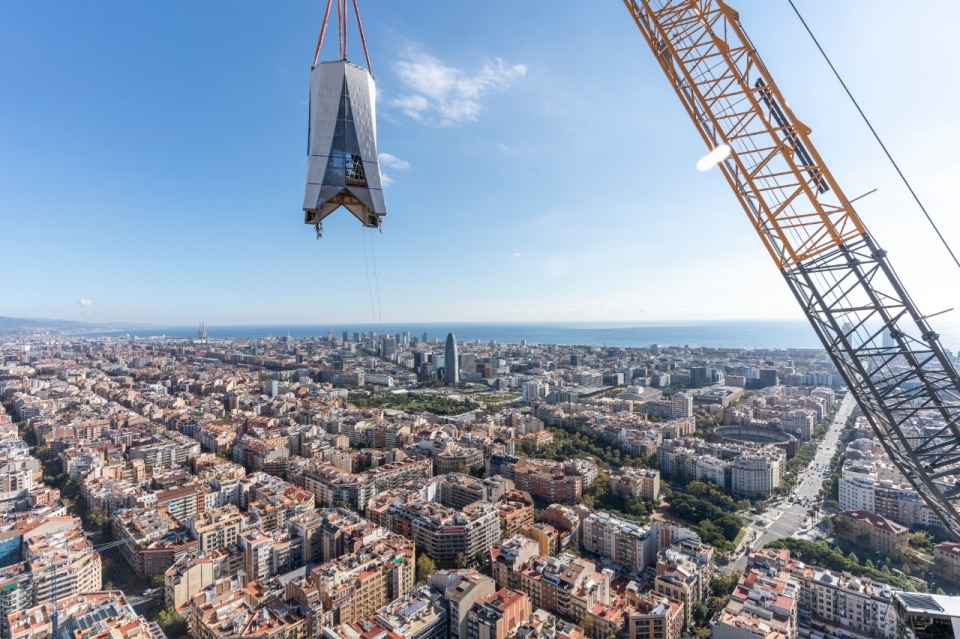
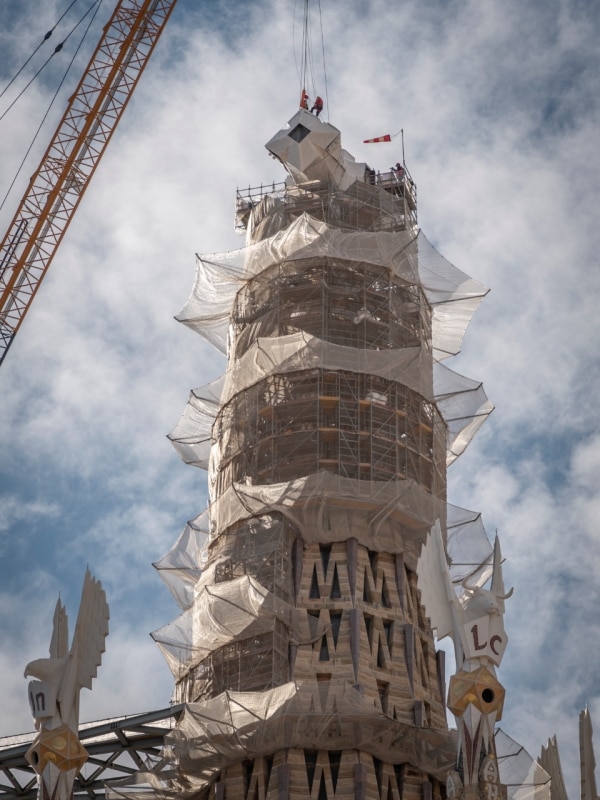
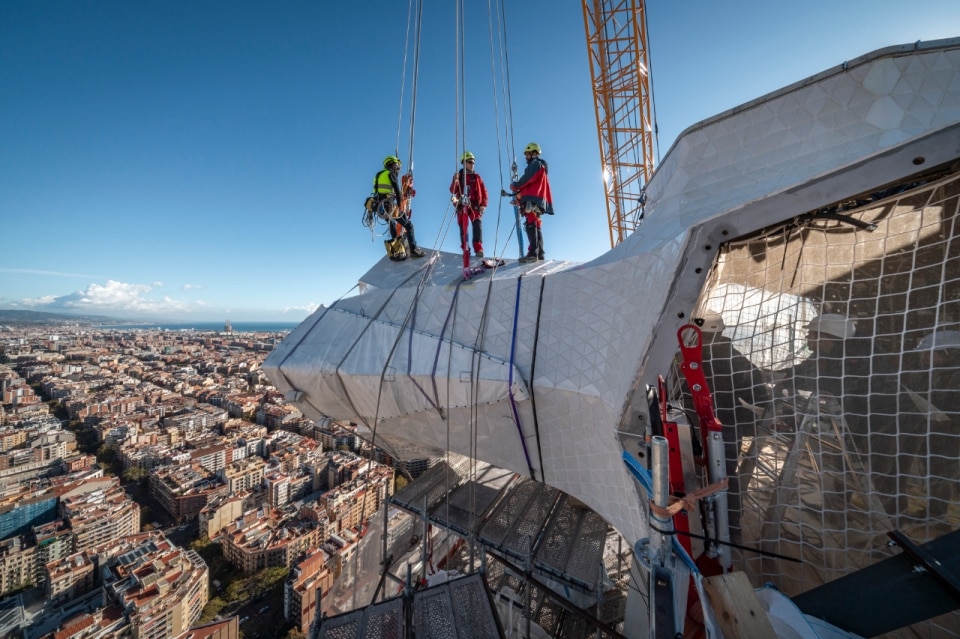
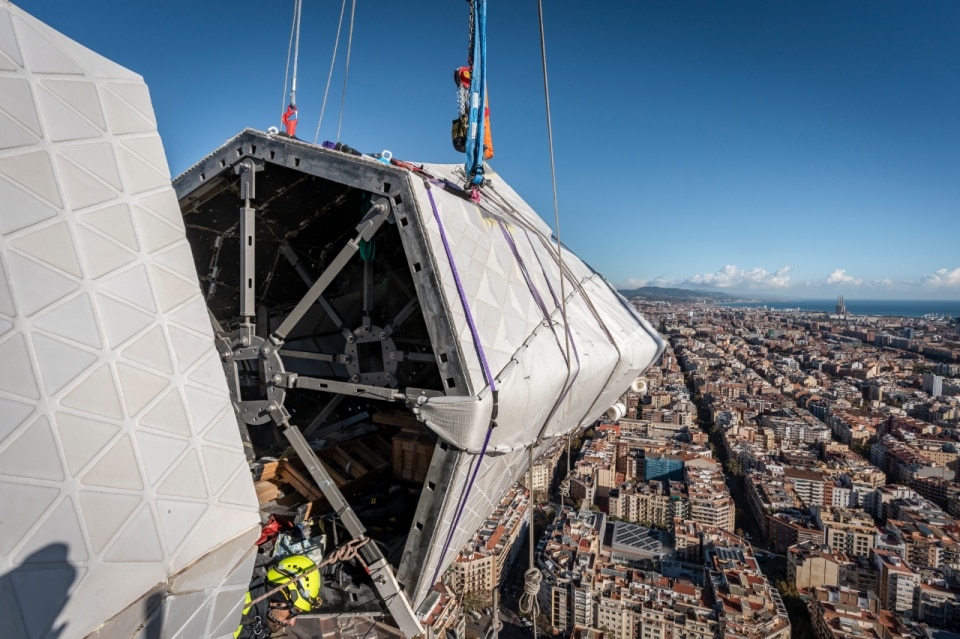
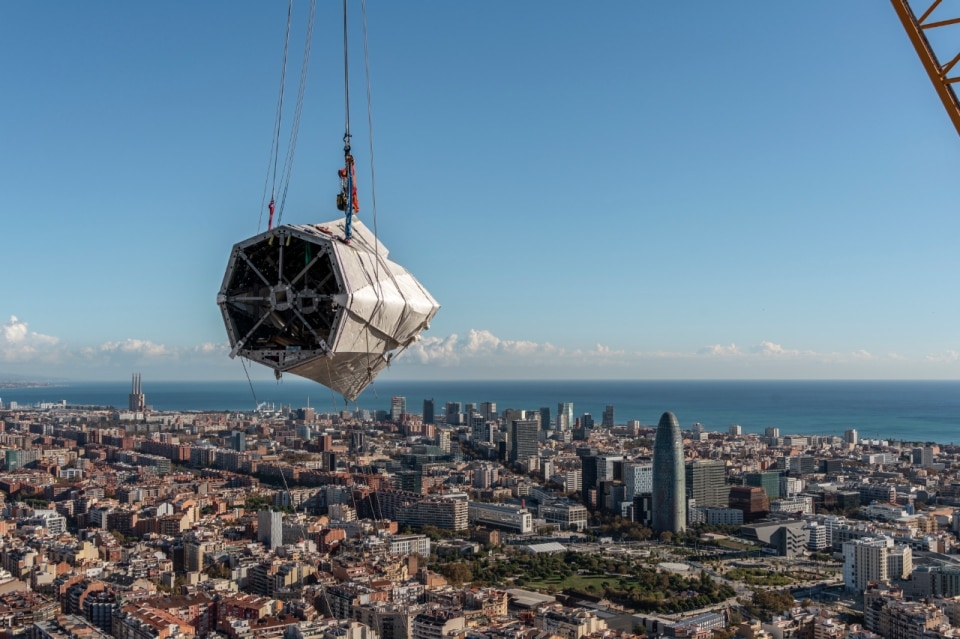
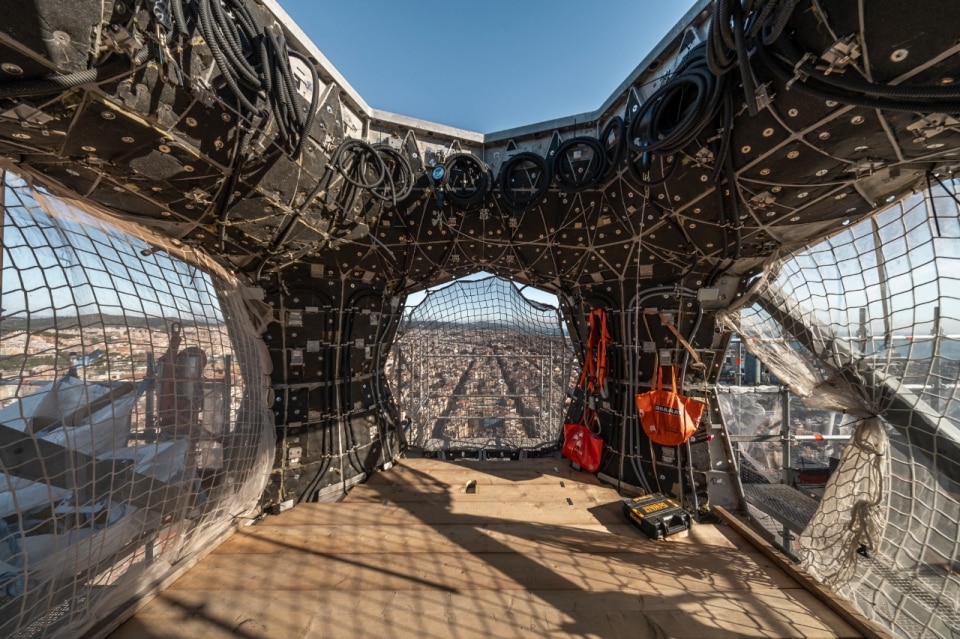
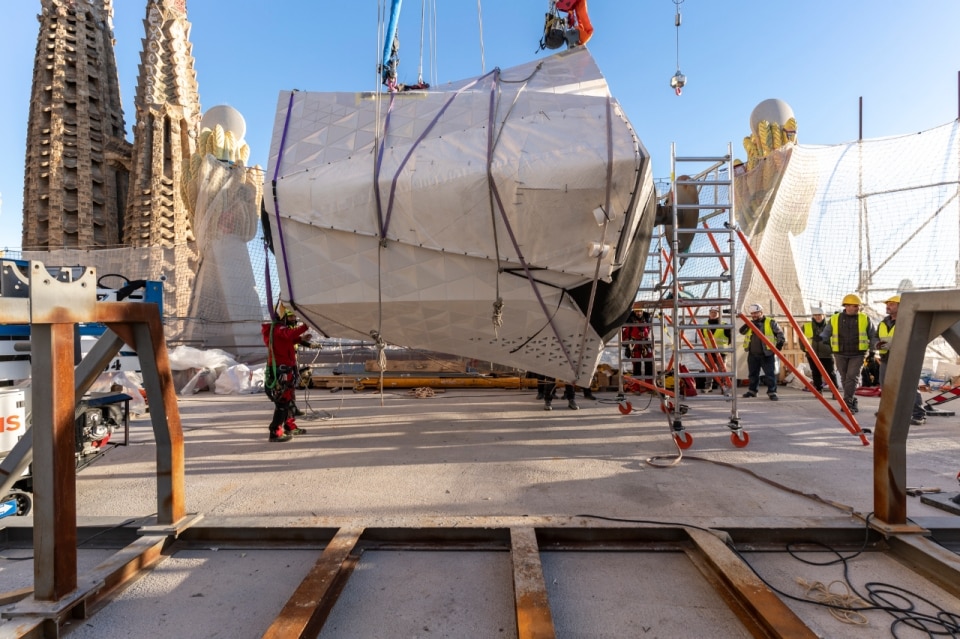
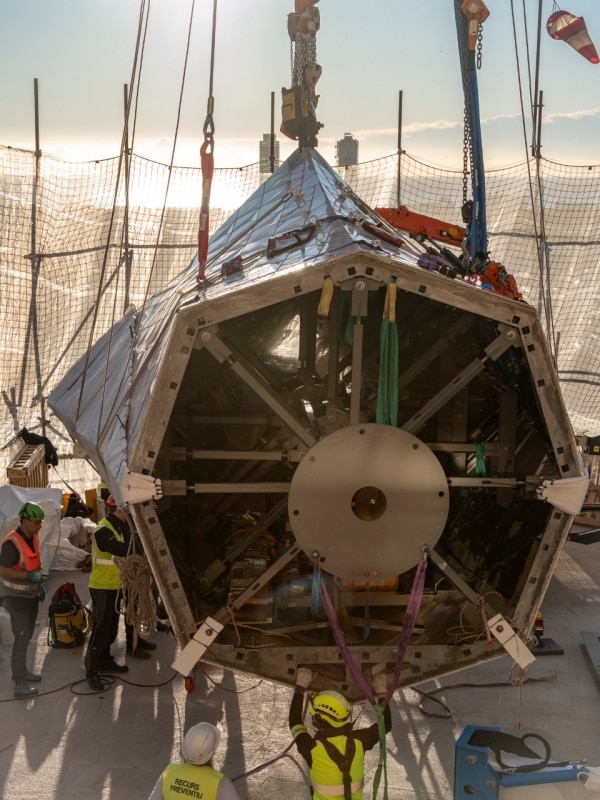
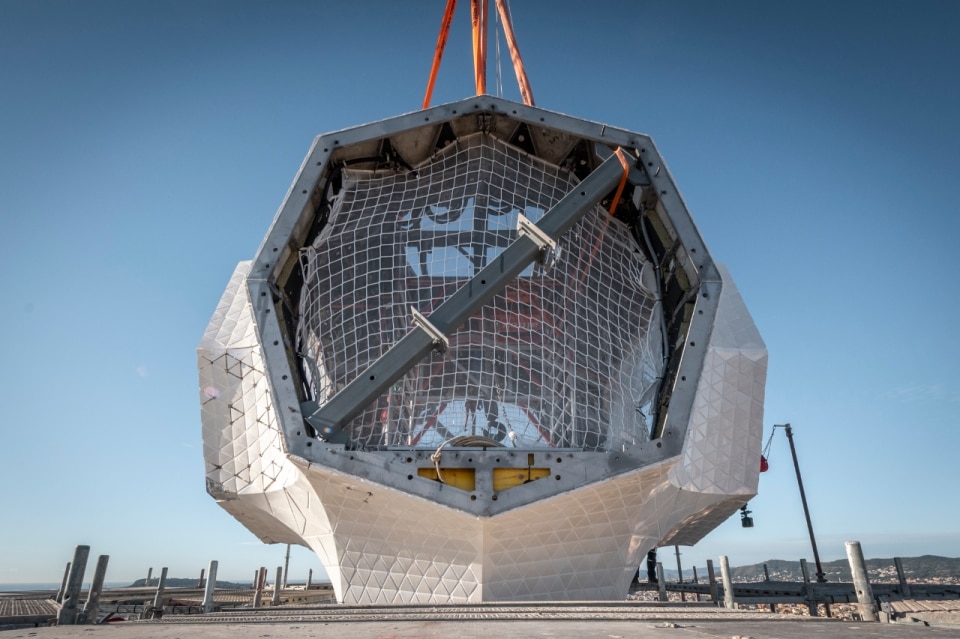
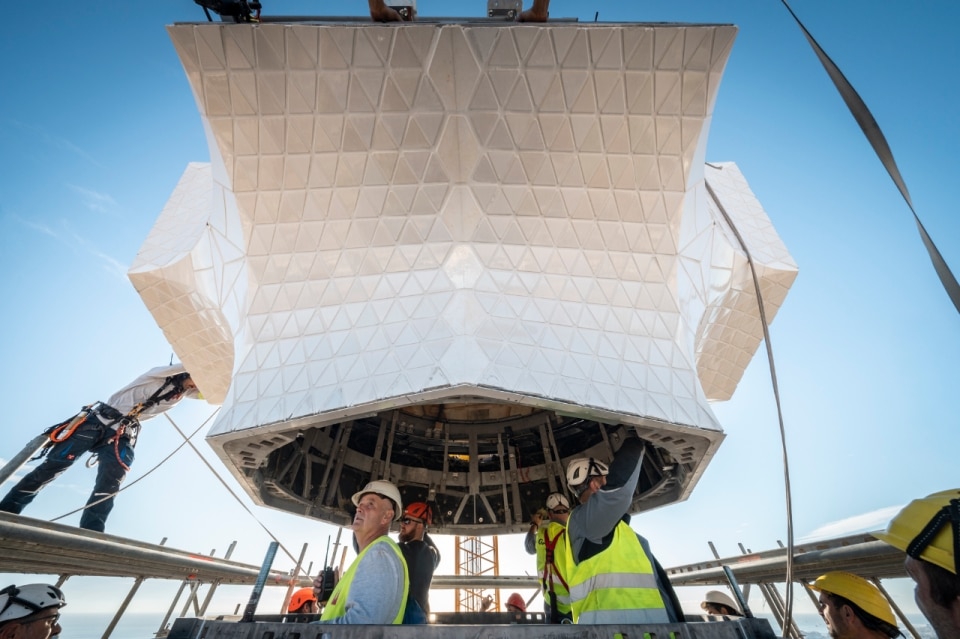
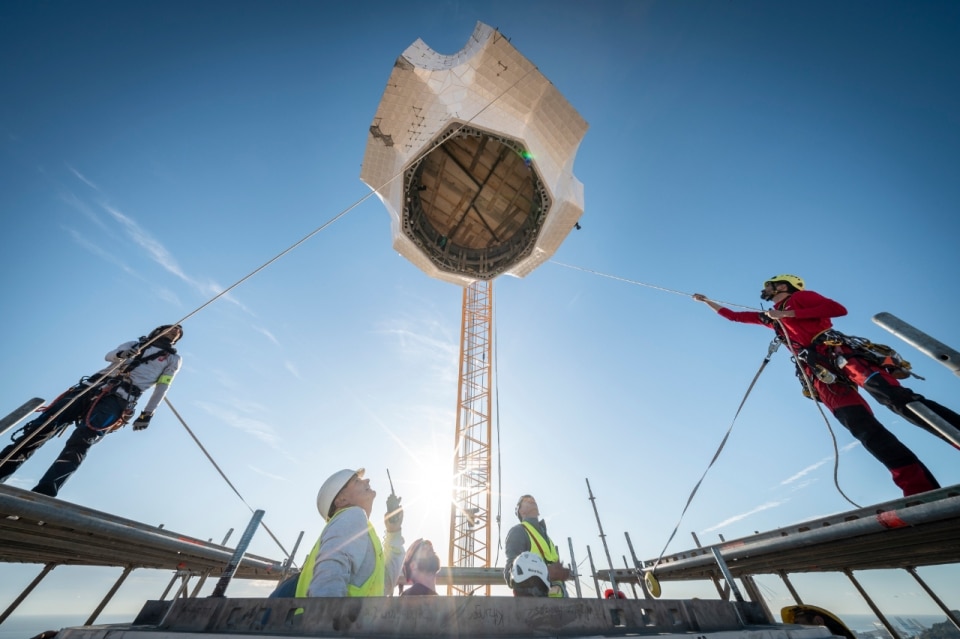
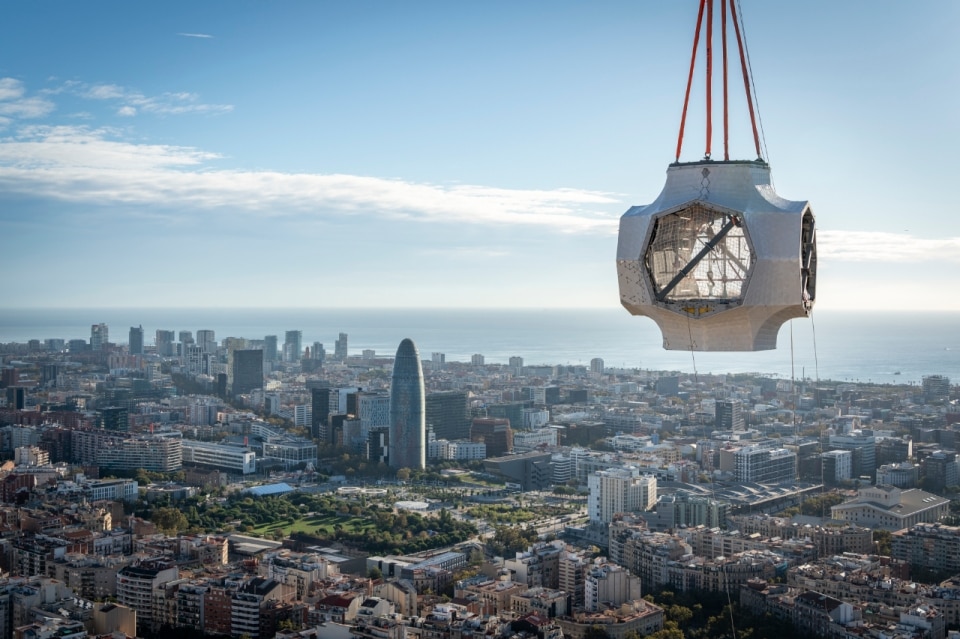
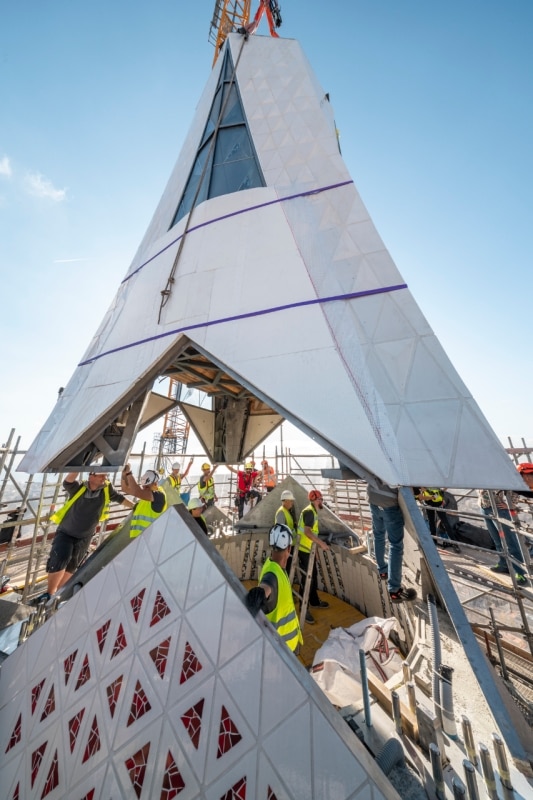
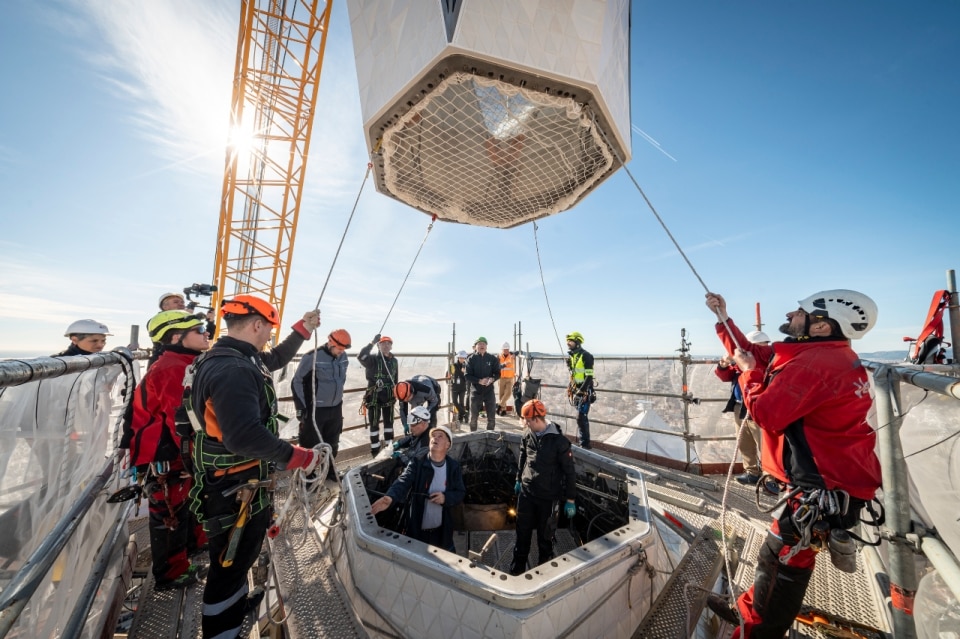
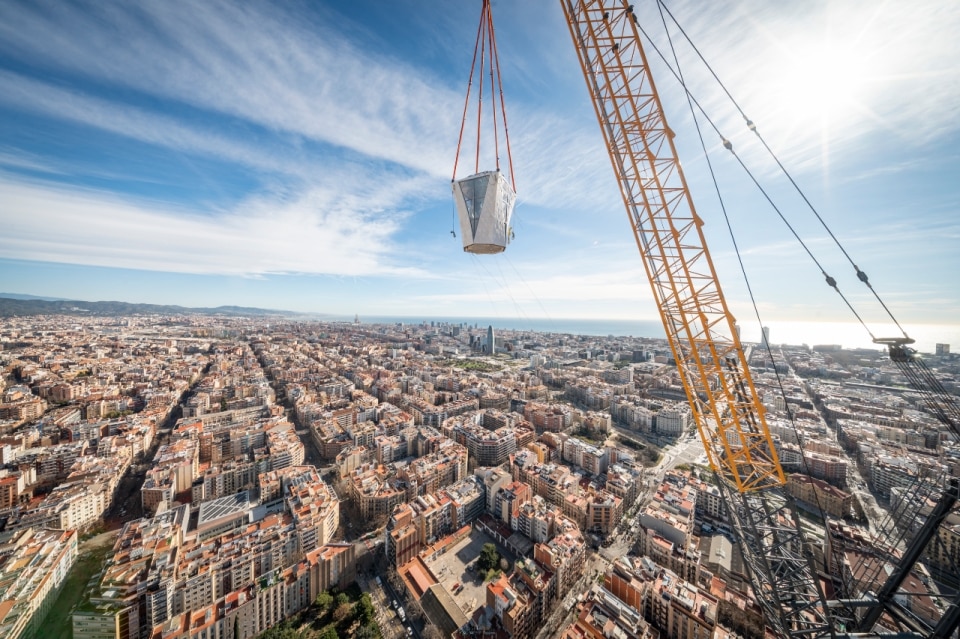
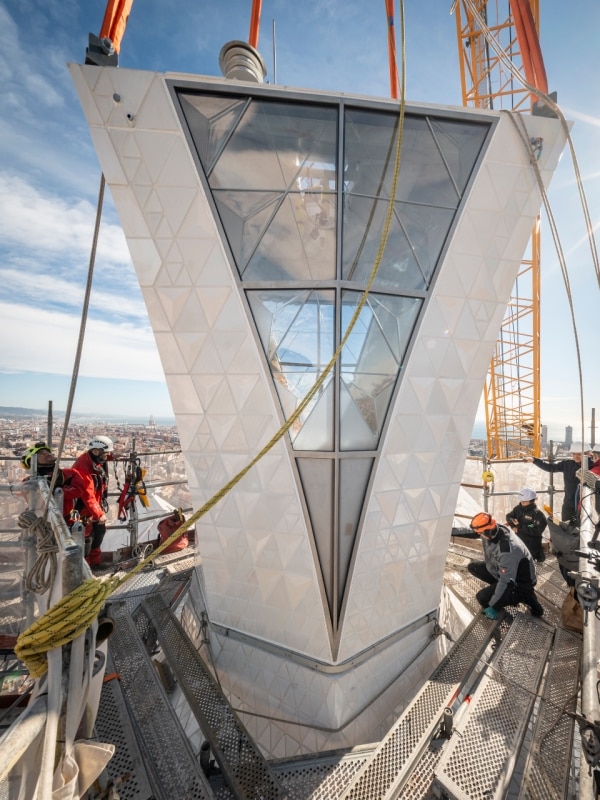
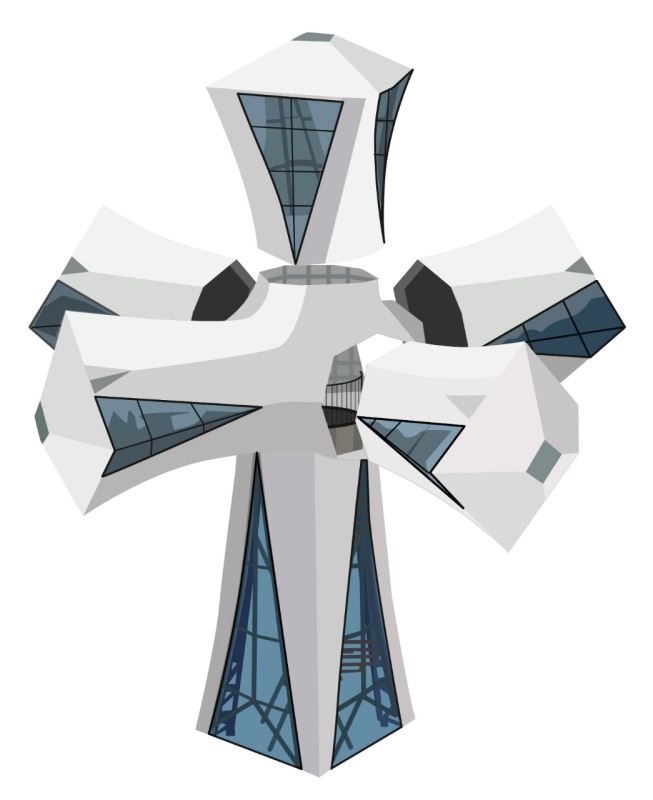
Crowning the structure, above a base, is the four-armed three-dimensional cross, measuring 17 meters in height and 13.5 meters in width. The final arm completing the cross was installed on February 20. Clad in glass and white glazed ceramic, it brings the Sagrada Familia to a total height of 172.5 meters, making it the tallest church in the world (Milan Cathedral stands at 108 meters, while St. Peter’s Basilica in Rome reaches 137 meters).
Like the rest of the tower, the cross was installed using prefabricated components produced in Germany, while the interior and exterior cladding and stained glass were crafted by Catalan workshops. An Italian contribution will also be part of the project: Andrea Mastrovito’s sculpture of the Agnus Dei — which Gaudí intended to place at the center of the cross — will be installed inside the upper arm and visible from within the structure.
Opening image: Adobe Stock