


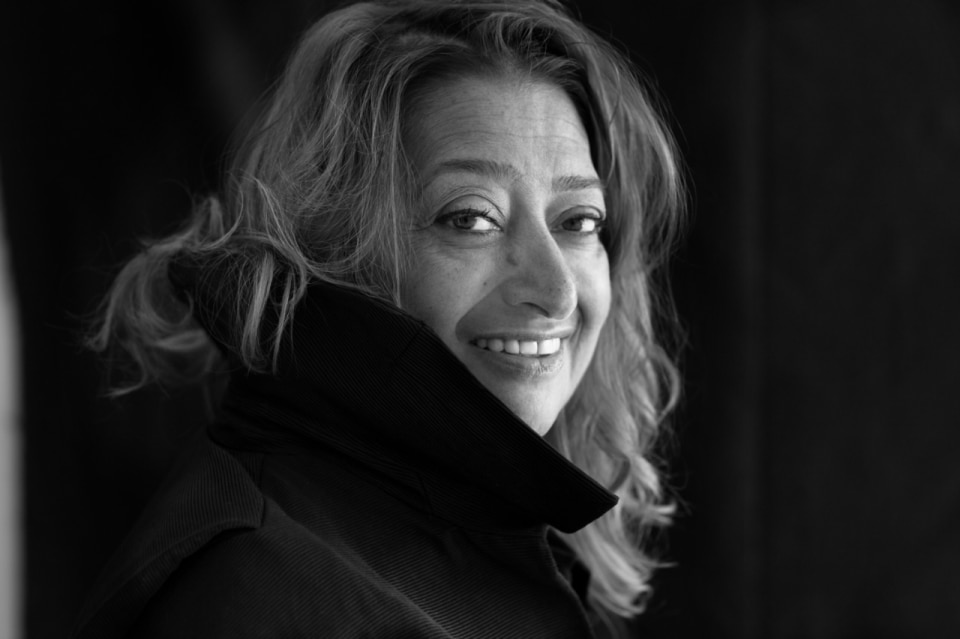
Ten years after the passing of Zaha Hadid, the sixth chapter of the Hans Ulrich Obrist Archives — which frames Hans Ulrich Obrist’s decades-long practice as a dynamic, polyphonic archive of contemporary art history — pays tribute to the Iraqi-born architect by offering a layered and intimate reading of her design research. The narrative is reactivated through the dialogue between Hadid and the curator, a relationship that over time shaped her trajectory through a constellation of encounters, projects, and conversations.
The exhibition "Zaha Hadid: 'I Think There Should Be No End to Experimentation'," conceived in collaboration with the Zaha Hadid Foundation and hosted at LUMA Arles, inside Frank Gehry in the Parc des Ateliers, insists on the centrality of abstract painting as a tool of spatial invention: even before geometric complexity became easily manageable by digital software, Hadid was constructing architecture by means of calligraphic signs, axonometric axes and multiple perspectives, pushing the discipline toward an alternative spatial lexicon that would find a constructed translation only years later, in buildings such as the Vitra Fire Station or the CMA CGM Tower.
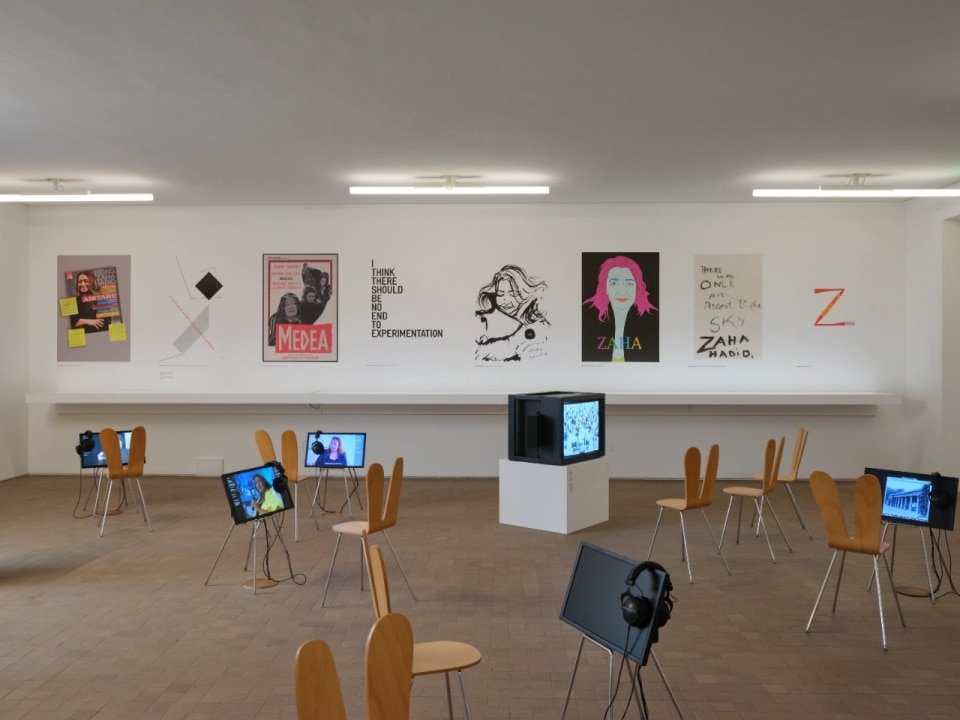
Drawing is presented here as a radical field of experimentation, where form and movement precede construction and define its very conditions of possibility. The exhibition unfolds in three chapters, returning to the theoretical origins of Hadid’s work and weaving together the influence of Russian Constructivism and the avant-garde with her training at the Architectural Association under Rem Koolhaas and Elia Zenghelis, before moving through her reception in France and her long-standing collaboration with Obrist.
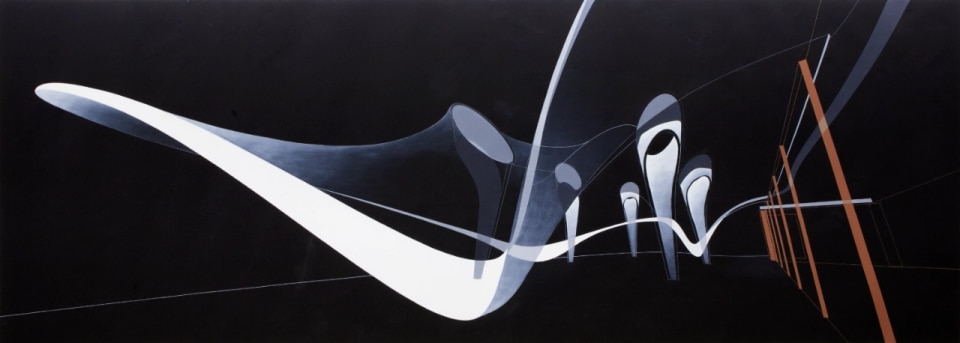
Their relationship began in the late 1990s and took a first concrete form in 2000, when Obrist invited Hadid to create Meshworks for the cycle “La Ville, le Jardin, la Mémoire” at Villa Medici. From there, a series of encounters in London, Basel, Munich, and Paris established an ongoing exchange on the city, the museum, and the possibilities of contemporary urbanism. The connection deepened with Obrist’s appointment to the Serpentine Galleries in 2006, of which Zaha Hadid had been a board member since 1996 and for which she had already designed the Pavilion. From early collaborations to shared projects at the Serpentine— such as the 2007 installation Lilas, the Serpentine North Gallery, and The Magazine restaurant — their dialogue consistently moved across scales and contexts, always returning to space as an open field of inquiry.
Without yielding to the temptation of retrospection in the canonical sense, "Zaha Hadid 'I Think There Should Be No End to Experimentation'" recounts Hadid as a figure moved by an ongoing tension between discipline and trespassing, both a maker of forms and a theorist of an architecture in constant redefinition. Along with calligraphic paintings, notebooks, and drawings — brought together for the first time in a significant nucleus since the Serpentine's posthumous exhibition "Zaha Hadid: Early Paintings and Drawings" — unpublished interviews recorded between 2001 and 2013 accompany archival materials and visual contributions from colleagues and admirers. The discursive dimension of architecture — often marginalised in monographic exhibitions — thus regains centrality by being presented as an indispensable exercise in critical questioning and reflection, as well as a design practice.
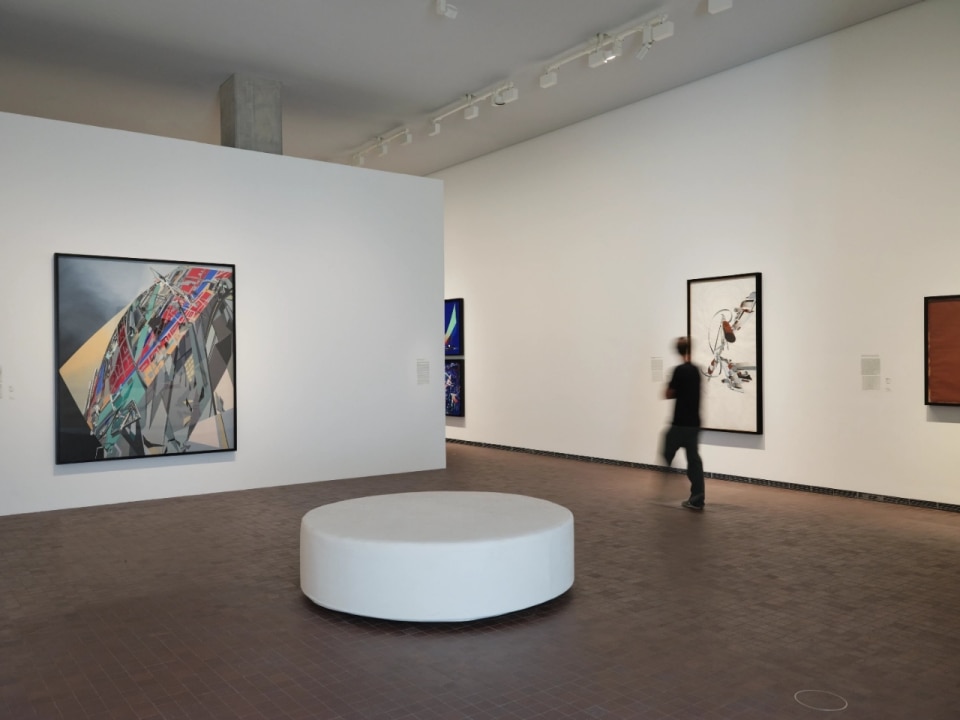
Although awards such as the Pritzker Architecture Prize, the Stirling Prize and the RIBA Royal Gold Medal have solidified Zaha Hadid's international profile, this exhibition is rooted in another genealogy: one that positions her, before anything else, as a producer of images and possibilities — and, above all, as Obrist’s elective interlocutor in a conversation that has helped redraw the boundaries between architecture, art, and curatorial thought.
Opening image: Zaha Hadid © Photograph by Brigitte Lacombe
Exhibition: Zaha Hadid: 'I Think There Should Be No End to Experimentation'Curated by: Hans Ulrich Obrist, Arthur Fouray, Lucas Jacques-Witz Where: Luma Arles, Arles, France Date: May 1 - Spring 2027