


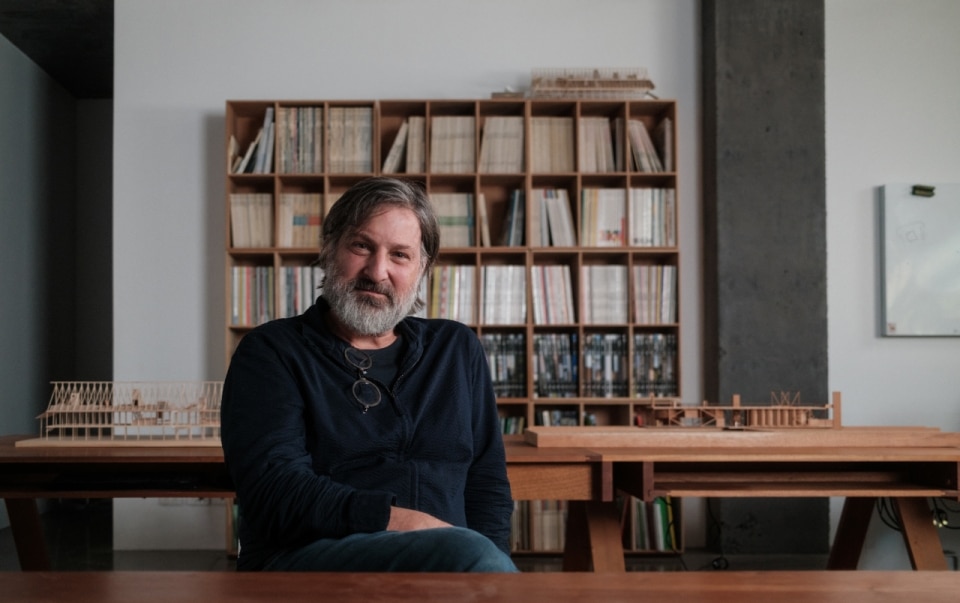
Smiljan Radić Clarke and the 2026 Pritzker: fragility as resistance
There is a moment, in the history of every discipline, when a recognition does not merely celebrate an author but redefines the very meaning of what that discipline should be. The 2026 Pritzker Prize awarded to Smiljan Radić Clarke is one of those moments. Not a coronation — Radić is too reserved, too ironic toward power, to allow himself to be crowned — but something subtler and more necessary: a declaration of principle. Architecture, this choice seems to say, is not spectacle. It is not brand. It is not the sum of its followers. It is, still and always, an act of thought that becomes stone, wood, light, silence.
In recent years we have grown accustomed to Pritzker Prizes that resemble political manifestos or historical reparations. Awards that are entirely justified, necessary, fair. But the recognition given to Radić is of another nature. It is a prize for the irreducible complexity of architecture as an art. A prize that could have been awarded twenty years ago, and that arrives now — in the middle of a world collapsing, of bombed buildings, of cities torn apart — with timing that feels like a wager. Or perhaps a response.
From the edge of the world
Santiago de Chile, 1965. A father of Croatian origin, a British mother. A family of immigrants carrying with them the memory of distant landscapes, of layered cultures, of multiple roots that do not cancel one another out but coexist in a generative tension. Radić grows up in a city that is itself a threshold: between the Andes and the Pacific, between the seismic instability of the ground and the vertigo of the sky, between an imported modernity and an identity searching for form.
He studies architecture at the Pontificia Universidad Católica de Chile — almost failing, he himself recounts, almost expelled from the very system meant to shape him. That crisis, that formative humiliation, pushes him to travel, to read, to study history. He goes to Venice and studies aesthetics. Then he returns to Santiago. He opens his studio in 1995. Slowly, he begins to build a world.
In 30 years of work, Radić has built a body of work that is, to look at it in its entirety, one of the most coherent and radical that contemporary art has produced.
It is not a linear career. Not a trajectory of conquest. It is an oblique path, like his buildings, which never march straight toward their destination but reach it through detours, lateral accumulations, and stratifications that evoke geological time more than the calendar of commissions. Yet over thirty years of work Radić has built a body of projects that, taken as a whole, is one of the most coherent and radical produced in contemporary architecture.
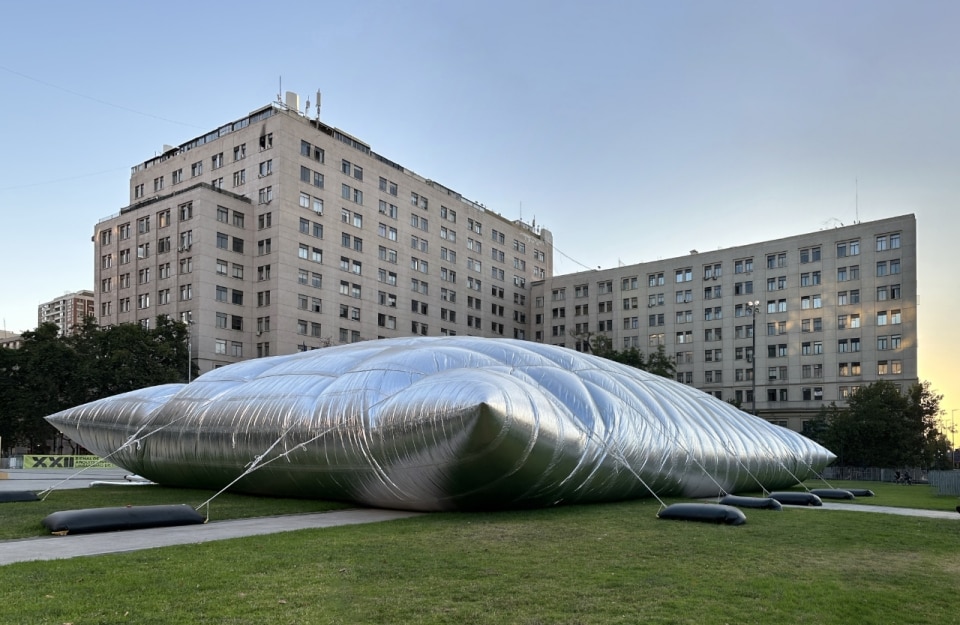
The poetics of fragility
The word most frequently associated with Radić’s work is fragility. The Pritzker jury writes that his buildings appear temporary, unstable, deliberately unfinished — almost on the verge of disappearing. It is an accurate description, but one that requires an even more precise clarification: in Radić, fragility is not weakness, nor cheap aestheticism, nor the tired poetics of the ruin that has exhausted architectural criticism in recent years. Radić’s fragility is an epistemological position. It is the refusal of any certainty not earned, of any authority not deserved. It is the awareness that architecture inhabits a border zone between the permanent and the provisional — and that life truly unfolds in that very zone.
In 2017, almost as a formalization of this credo, Radić founded the Fundación de Arquitectura Frágil, hosted in his own studio. A name that is a program, a manifesto, a quiet declaration of war against architecture as consolidated power. Fragile architecture is not the architecture of the faint-hearted: it is the architecture of those who know that every construction is a wager on the future — and that the future never allows itself to be fully captured.
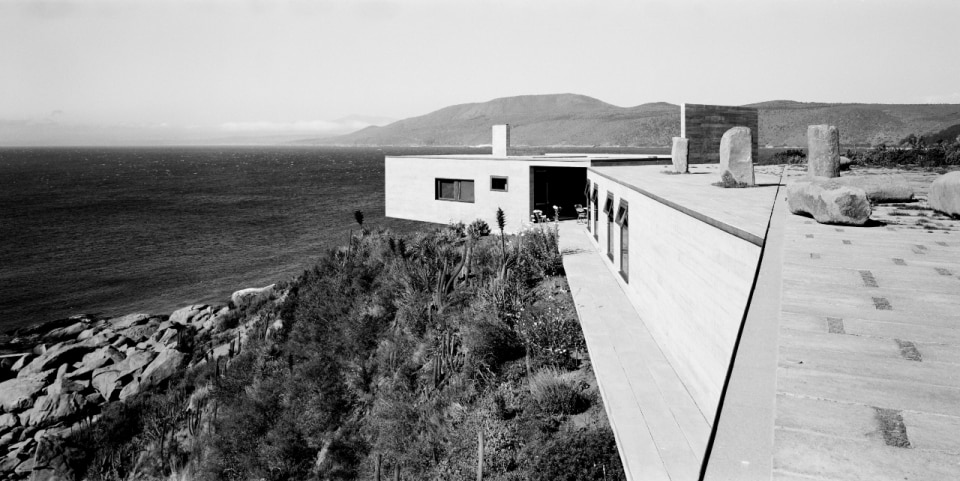
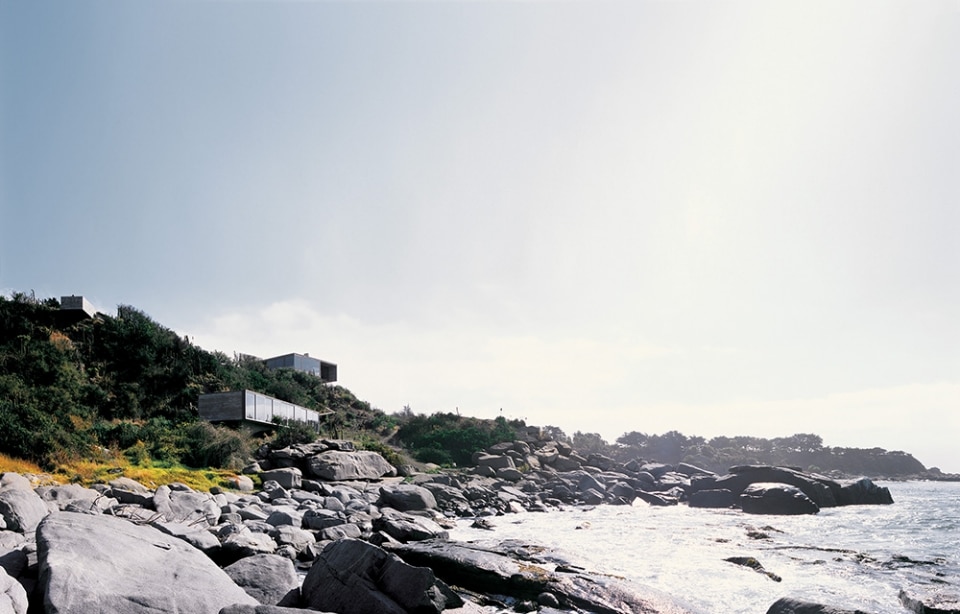
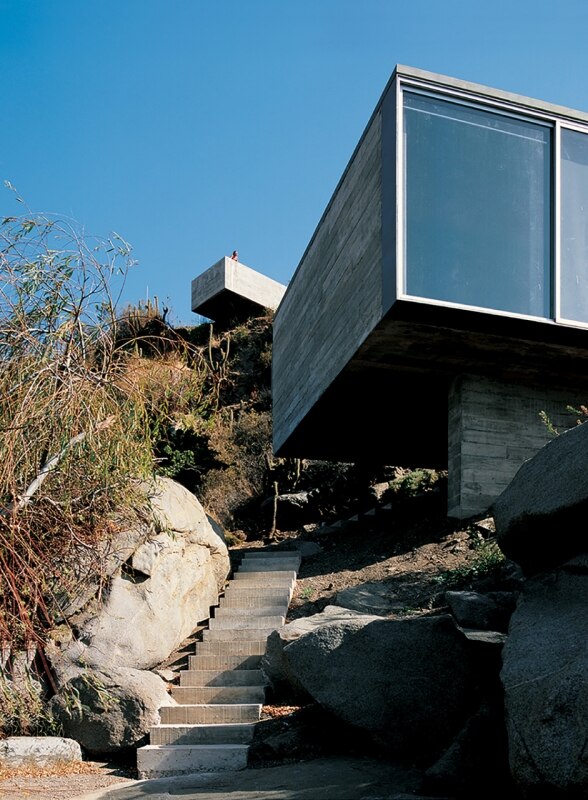
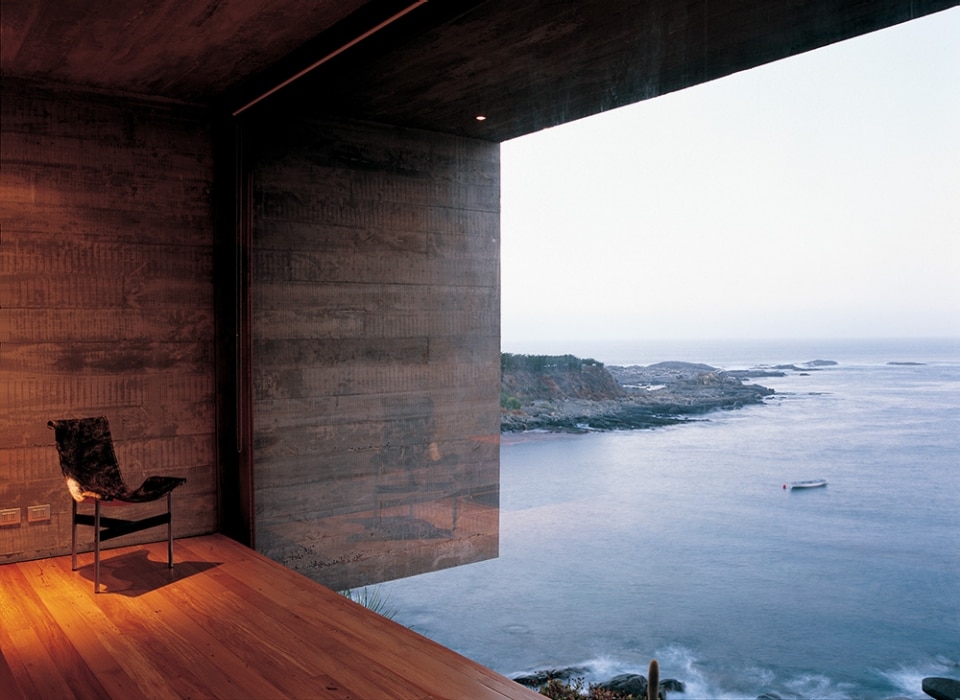
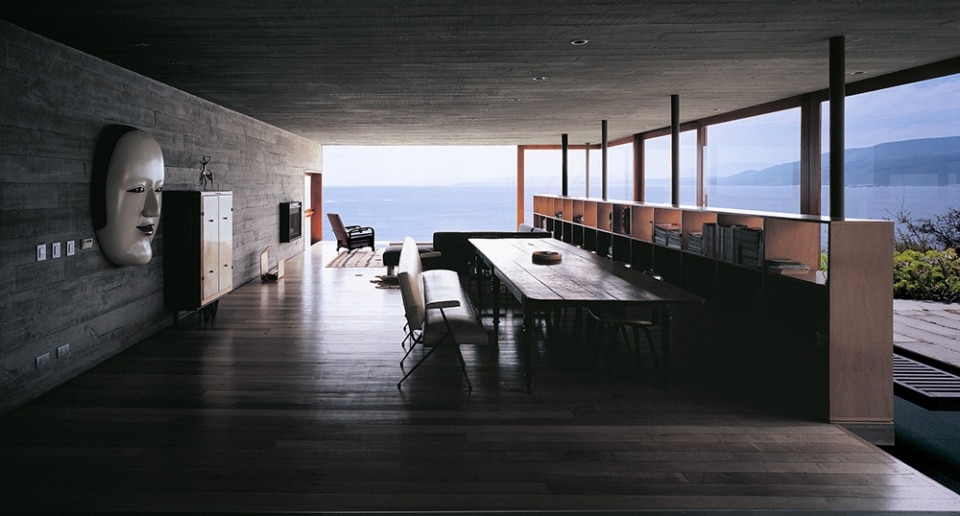
Casa Pite, in Papudo, is perhaps the project that best embodies this position. Embedded into a rocky outcrop on the Chilean coast, the house does not fight the landscape: it infiltrates it, lets itself be crossed by it, allows the landscape to win in certain moments in order to win itself in others. The granite boulders are not decorative elements: they are actors, carriers of weight, figures charged with a temporality far beyond human habitation. Entering that house does not feel like entering architecture in the conventional sense. It feels like entering a condition — a state of intensified presence.
Radić's fragility is an epistemological position. It is the rejection of all unearned certainty, all unearned authority.
The same can be said of the House for the Poem of the Right Angle, built in 2013 in the forests of Vilches together with the sculptor Marcela Correa, his wife and long-time collaborator. The title is not accidental: it alludes to Le Corbusier, certainly, but with a freedom that is already a critique. Where the Corbusian Modulor represents measure, control, triumphant rationality, the house in Vilches is inquietude, ambiguity — a wrestling match with nature that produces no declared winner. Correa and Radić have worked together for decades, and this partnership — between architecture and sculpture, between building and installation, between solidity and ephemerality — is one of the least discussed and most essential aspects of his poetics.
Stones, boulders, and caryatids of rock
An obsession runs through Radić’s work: the boulder. The found rock, unworked, untamed. In his constructions, granite boulders serve as structural supports, thresholds, guardians. In the Serpentine Pavilion of 2014 in London — a translucent fiberglass shell supported by stones — these rocks function like caryatids in an archaic temple that was never built but has always existed in the imagination. The Pritzker jury described the pavilion as a temporary refuge, neither fully enclosed nor openly transparent. It is a beautiful description. But perhaps the truest one is simpler: the pavilion was the dream of a child building a hut, carried to its highest transfiguration.
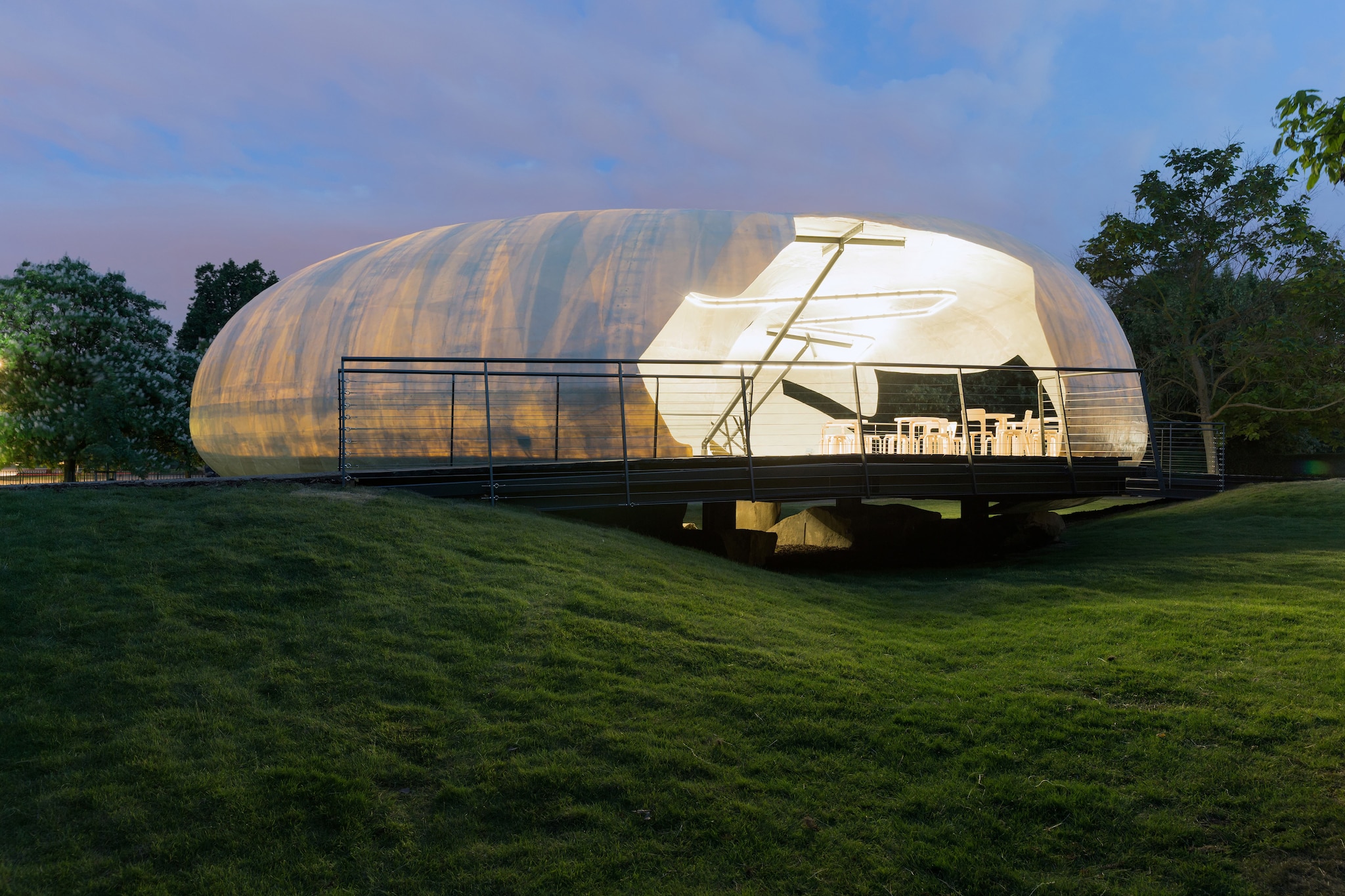



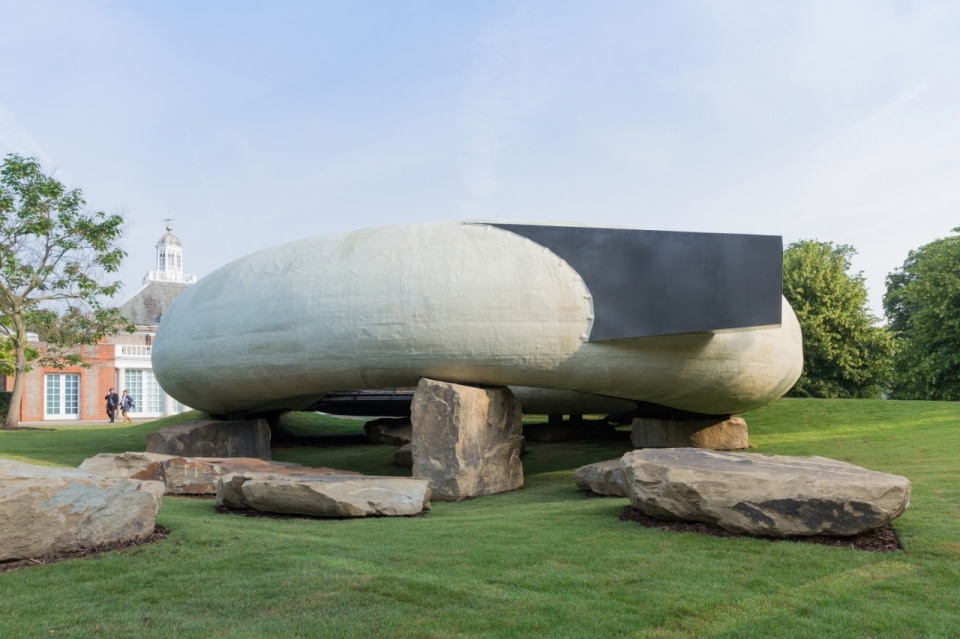
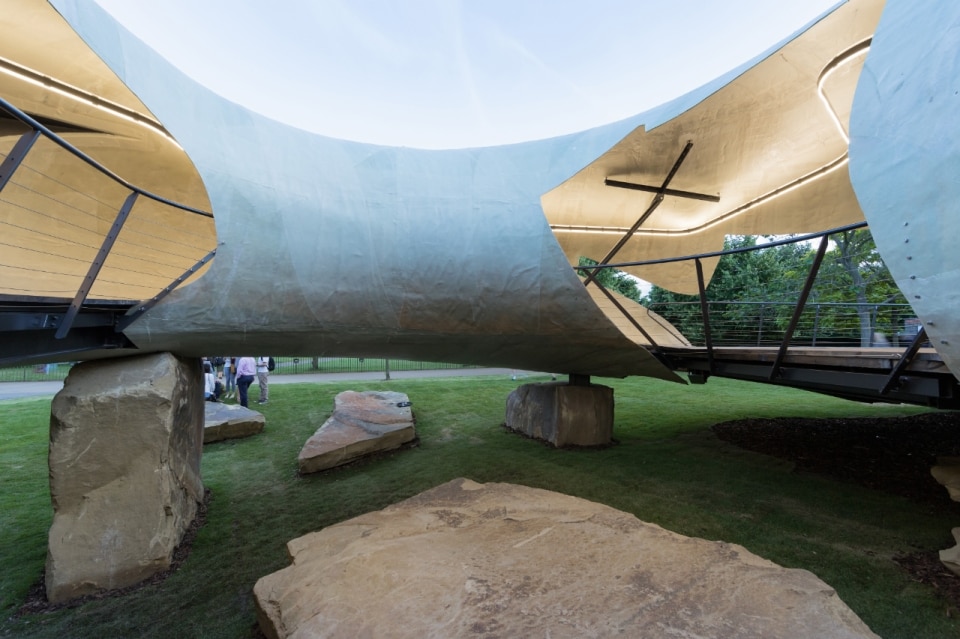
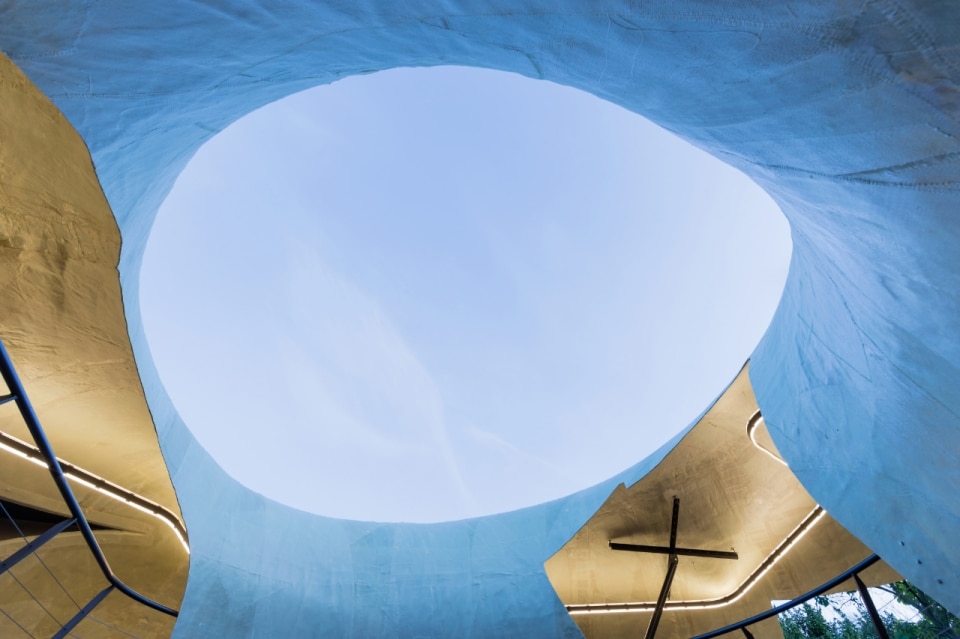
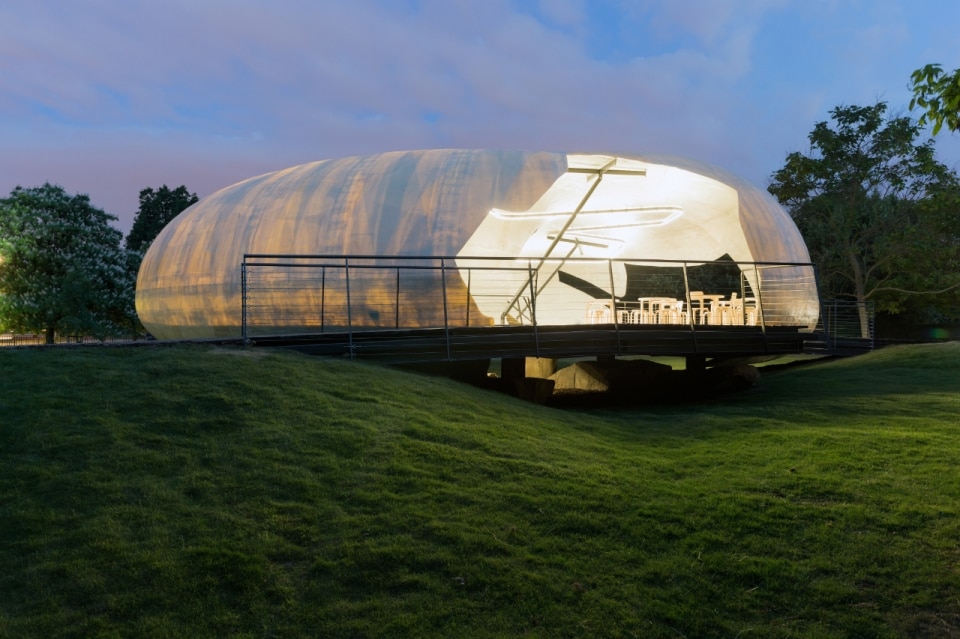
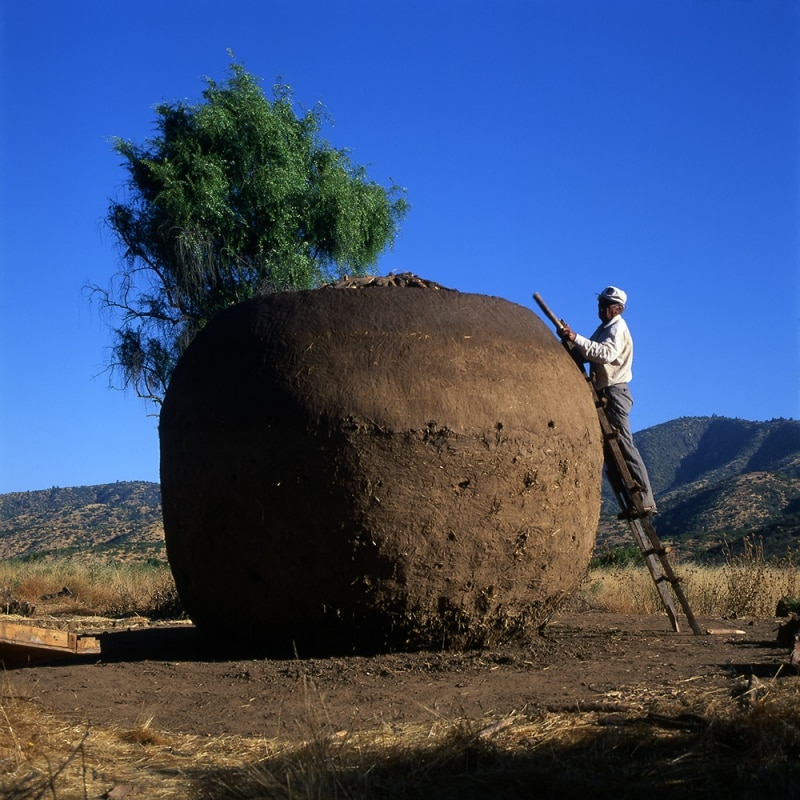
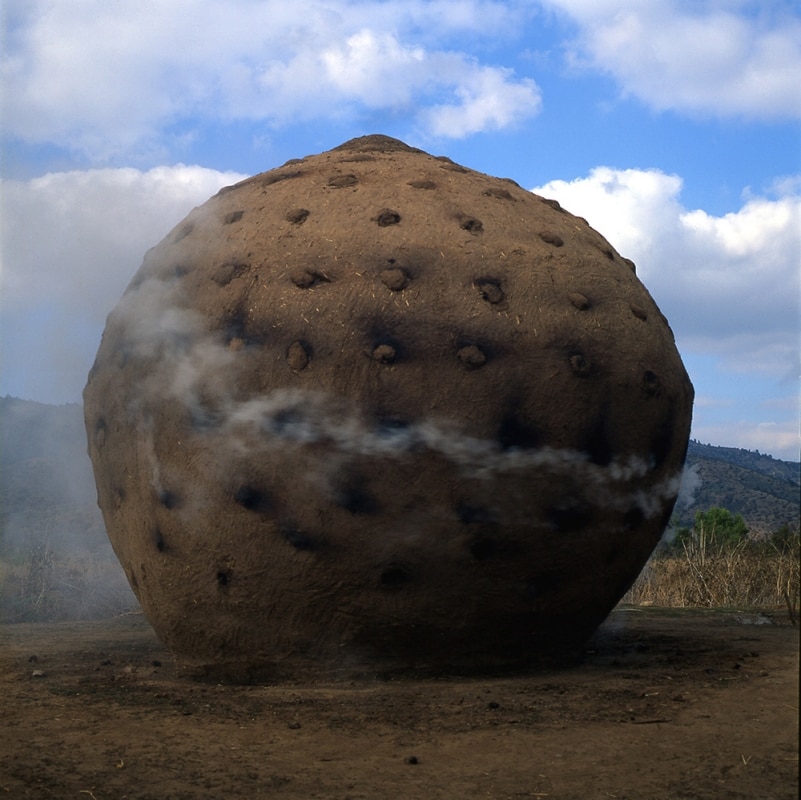
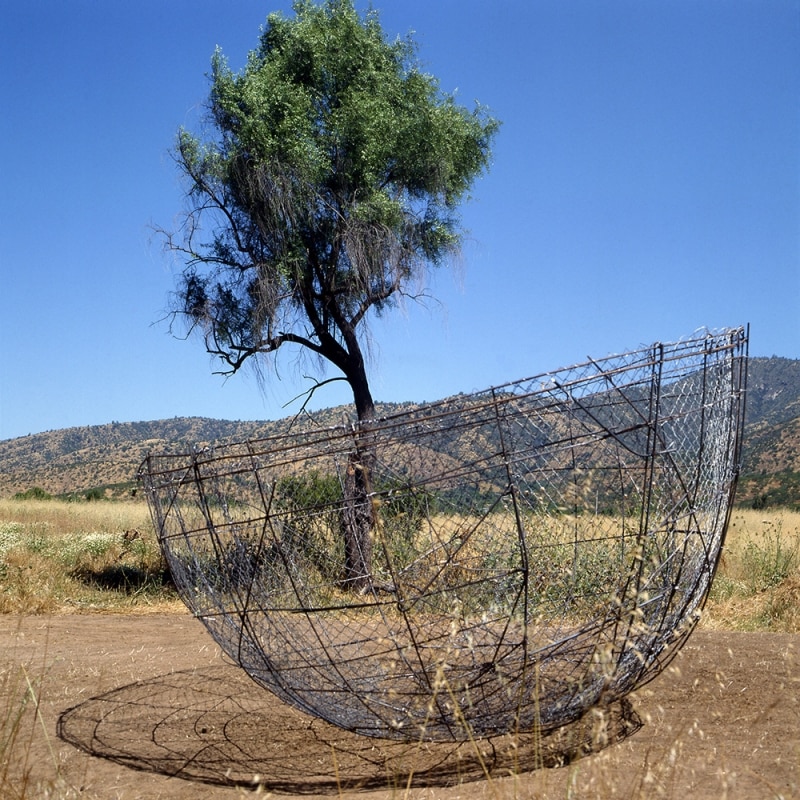
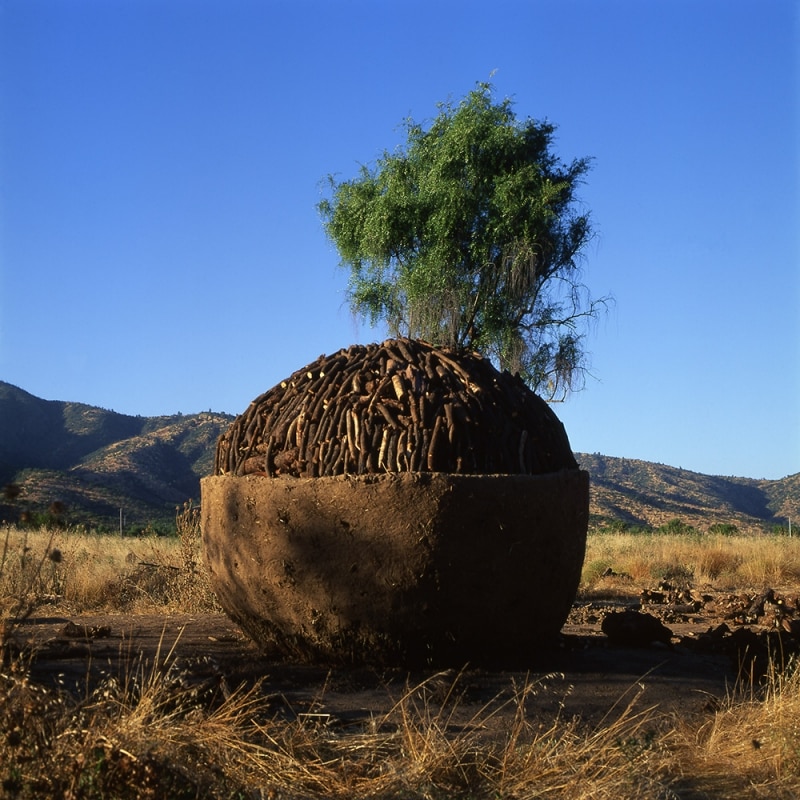
Radić’s stones are not symbols. They are presence. They are the matter of the world claiming its right to exist alongside the matter shaped by human hands, without being reduced to ornament or quotation. In this sense Radić is close to certain sculptors of land art — Richard Serra, Michael Heizer, Nancy Holt — but his ambition is more domestic, more human, more concerned with the individual body inhabiting space than with the collective body crossing the landscape. His buildings are meant to be lived in, not contemplated from afar.
Santiago, theatre, the music of building
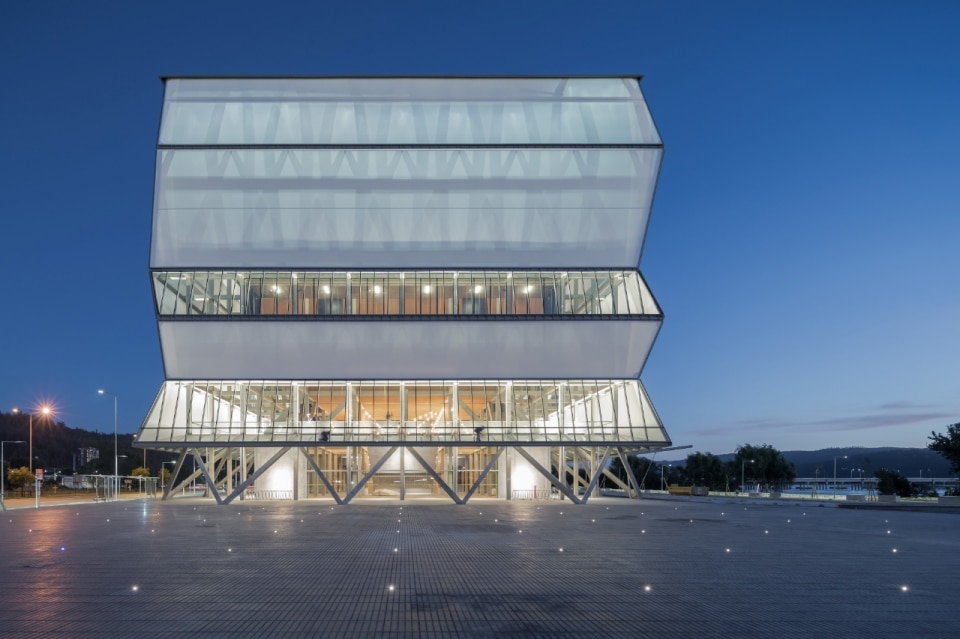
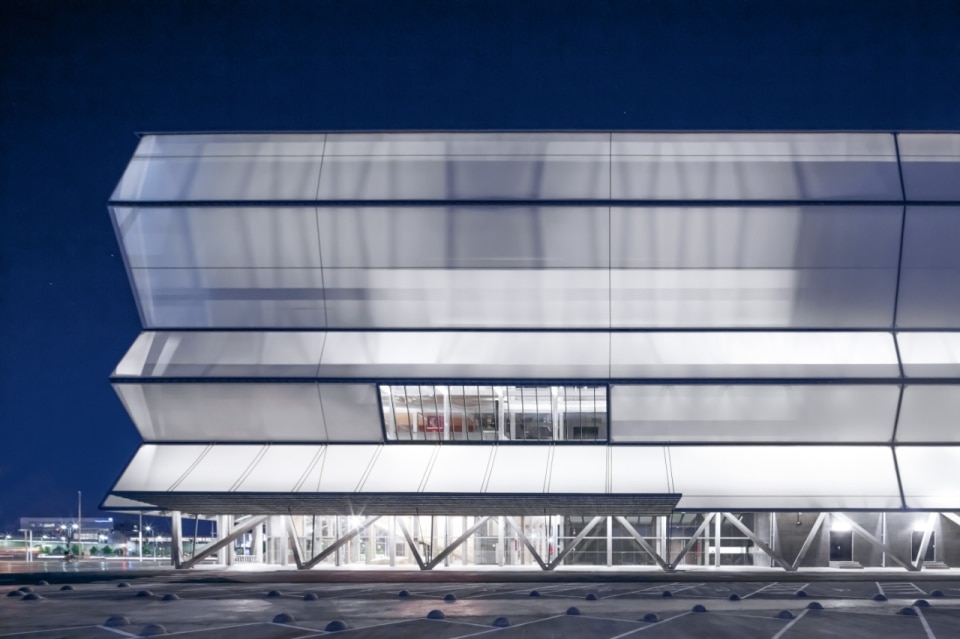
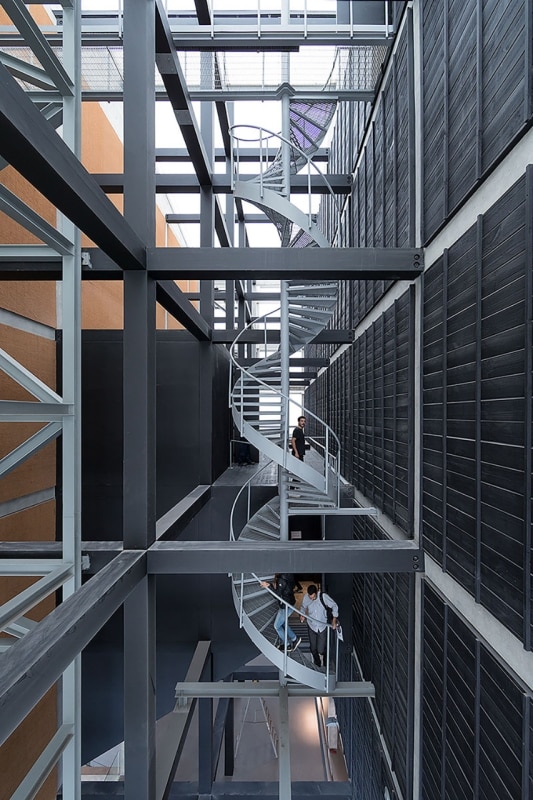
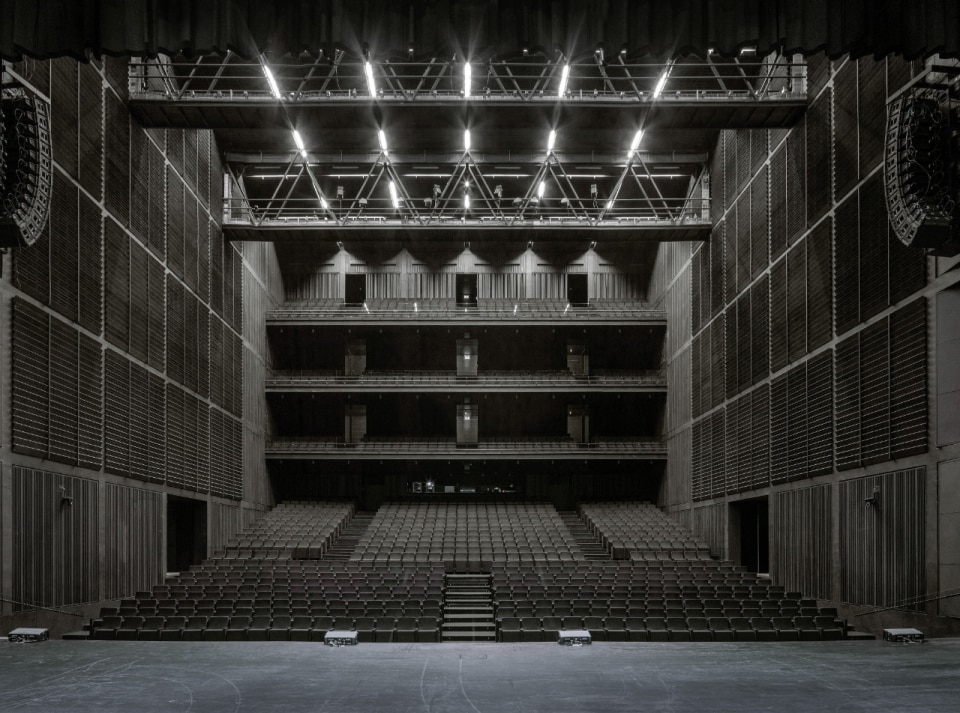
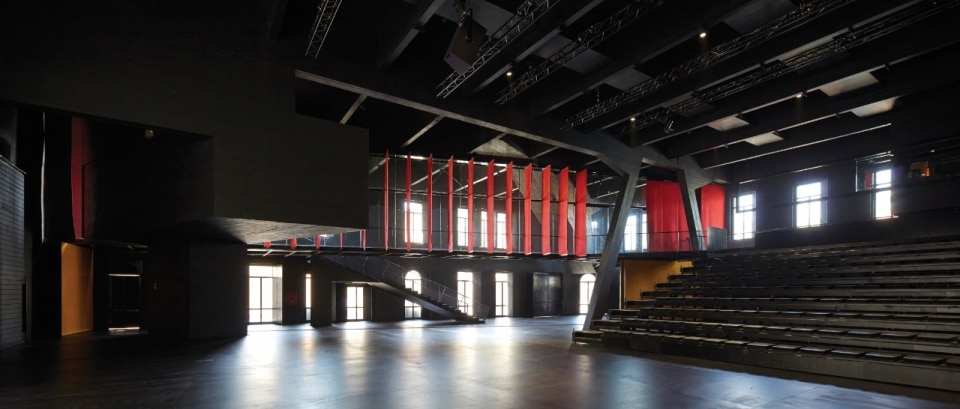
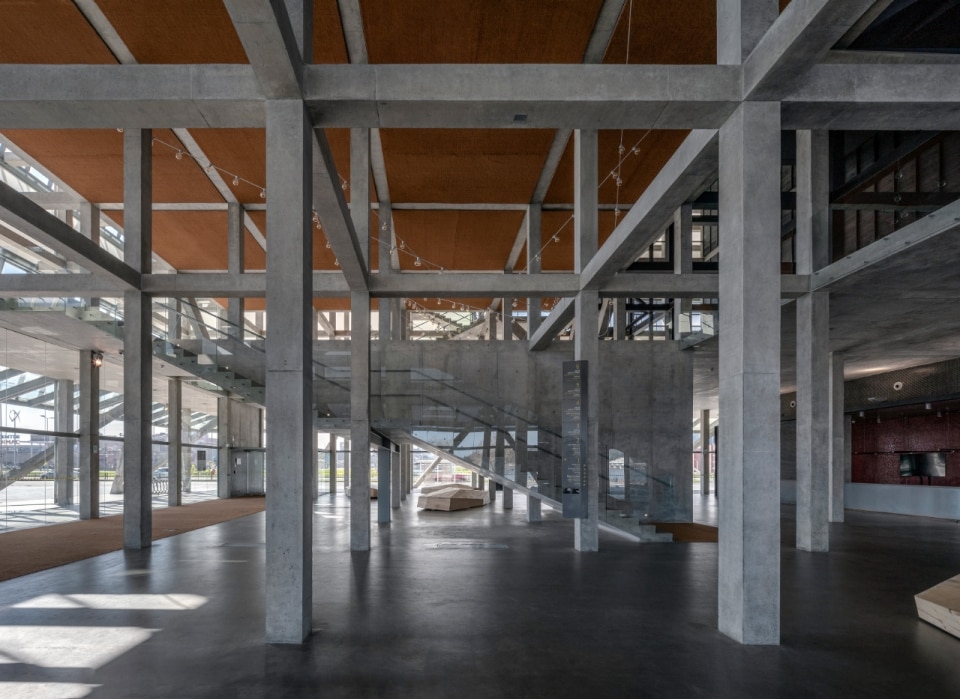
The Teatro Regional del Bío-Bío in Concepción, completed in 2018, is probably the project in which Radić’s talent finds its most accomplished expression at a civic scale. A semi-translucent envelope, carefully engineered, modulates light and supports acoustic performance through restriction — as the Pritzker jury wrote. Construction here becomes narrative, where texture and mass carry meaning as much as form. It is a building that knows it is a theatre even before containing one: its envelope is already a stage, its interior already a platform for collective life.
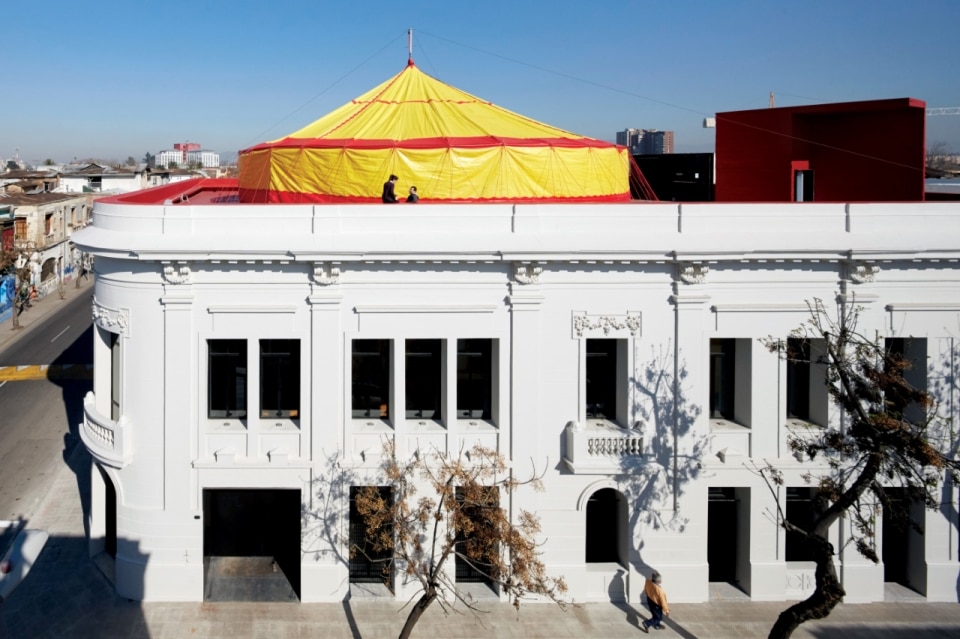
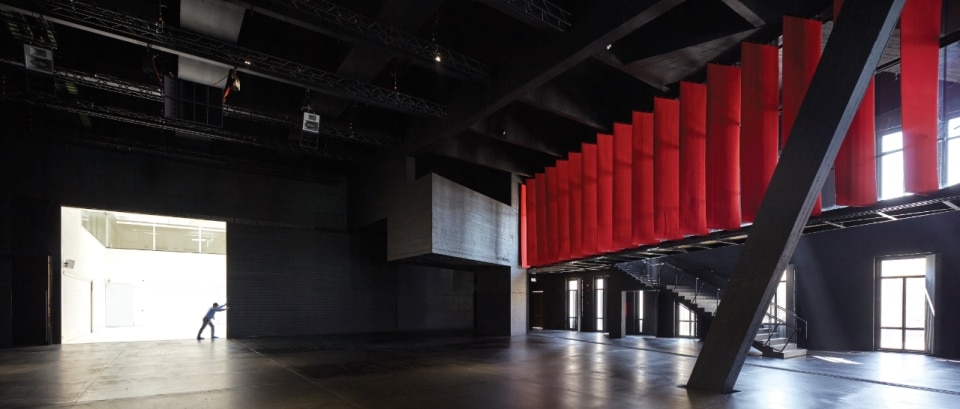
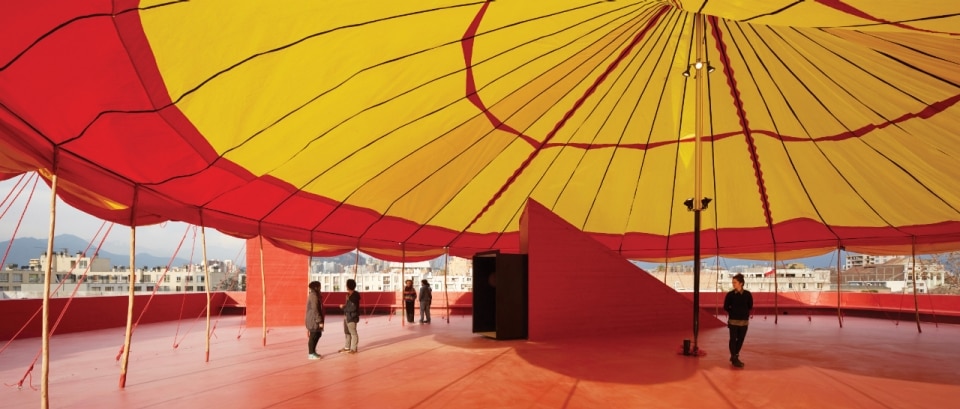
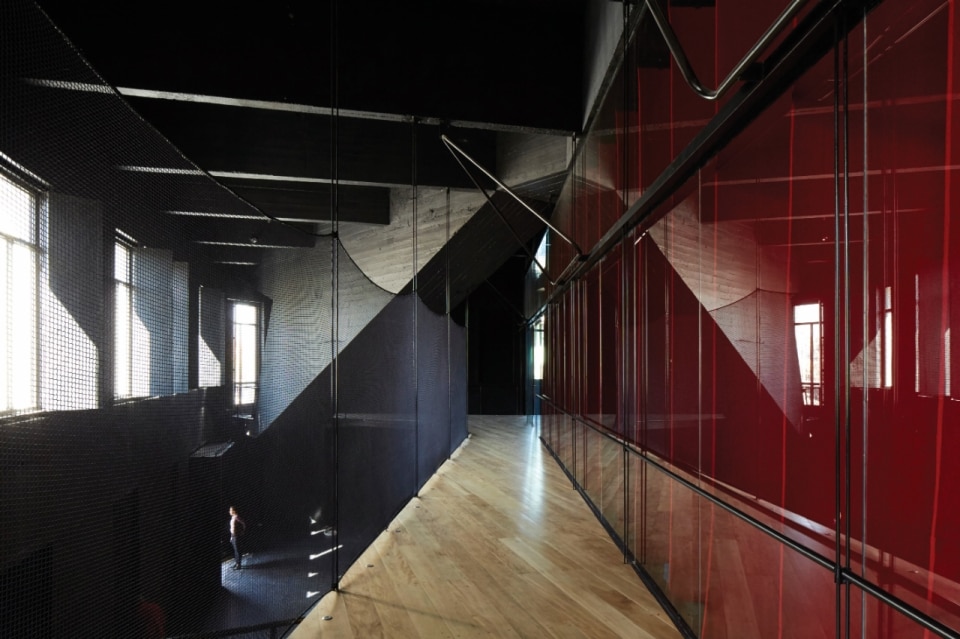
Then there is NAVE, the performing arts center in Santiago completed in 2015 — a building born from the conversion of an industrial workshop that becomes a laboratory, an incubator, a place where disciplines hybridize. Radić does not like rigid boundaries between the arts. His foundation carries that same openness in its name: fragile architecture is also porous architecture, permeable, willing to receive influences from everywhere — literature, music, sculpture, art history. It is not eclecticism; it is the opposite of eclecticism. It is the search for an essential core that can only be reached by crossing many territories.
An architect of his time — and beyond it
Radić is sixty. Neither a promising young figure nor a master already consigned to history. He is in the full maturity of a practice that still has much to say, much to build. And the Pritzker arrives at a moment when the discussion around architecture is crossed by tensions that cannot be ignored: the climate crisis, the housing emergency, the systematic destruction of the built heritage in war zones, the gradual erosion of the civic meaning of public space. In this context, choosing to honor an architect like Radić — who has never built a skyscraper, who works with a small studio, who refuses the logic of growth as an end in itself — is a precise statement. It says that architecture is not measured in cubic meters, in budgets, in media visibility.
Radić is an architect who has decided not to be afraid of his own loneliness. To not seek consensus as an alibi.
Alejandro Aravena, chairman of the jury and himself a Chilean and Pritzker laureate (2016), described Radić with rare precision: that in each work he responds with radical originality, making obvious what was not obvious before. That he returns to the most irreducible foundations of architecture while exploring limits not yet touched. That, working from the edge of the world, with a small studio and under harsh circumstances, he can lead us to the most intimate core of the built environment and of the human condition. It is a beautiful portrait — and a true one. Yet there is something Aravena does not say, and that deserves to be added: Radić is an architect who has decided not to fear his own solitude. Who has chosen not to seek consensus as an alibi. Who builds slowly, stubbornly, as if each building were the only one he were allowed to make.
Architecture as a positive act
In recent days Radić said something worth recalling — not verbatim, but in its deeper meaning: that this is a sad moment in history, not the best circumstance in which to receive a prize. He quoted the poet Nicanor Parra, who in the 1940s wrote that the sky was falling apart, and added that today it seems the earth itself is cracking. And yet — he said — he continues to believe that architecture is a positive act. He continues to believe that the Pritzker is part of that positive act, despite the circumstances.
It is a declaration of faith. Not religious, not ideological — simply human. Architecture as resistance to dissolution, as the affirmation that it is still possible to inhabit the world even when the world seems uninhabitable. This, ultimately, is what Radić has built in thirty years: not buildings, but proofs of possibility. Practical demonstrations that architecture can still be practiced as if it mattered, as if beauty had consequences, as if the human body in space were still the measure of all things.
Domus, the world, the stone
For a magazine like Domus, which for nearly a century has held together the tension between project and culture, between construction and thought, between the specificity of making and the universality of meaning, the Pritzker awarded to Radić is more than good news. It is confirmation that the discourse on architecture has not yet been exhausted by the communication of architecture. That practices still exist which resist spectacularization. That someone still builds as if stone had memory, as if wood had a voice, as if light filtering through a fiberglass wall could say something words cannot.
Smiljan Radić Clarke has received the 2026 Pritzker Prize. He said it will probably be a bit of a headache, all this attention he would rather avoid. We believe him. But we hope the noise fades quickly, and that he returns soon to building, in the silence of his studio in Santiago, among books, granite boulders, and drawings that look like dreams transferred onto paper. Architecture needs it. We need it.
Overview image: Smiljan Radić Clarke, photo courtesy of The Pritzker Architecture Prize