

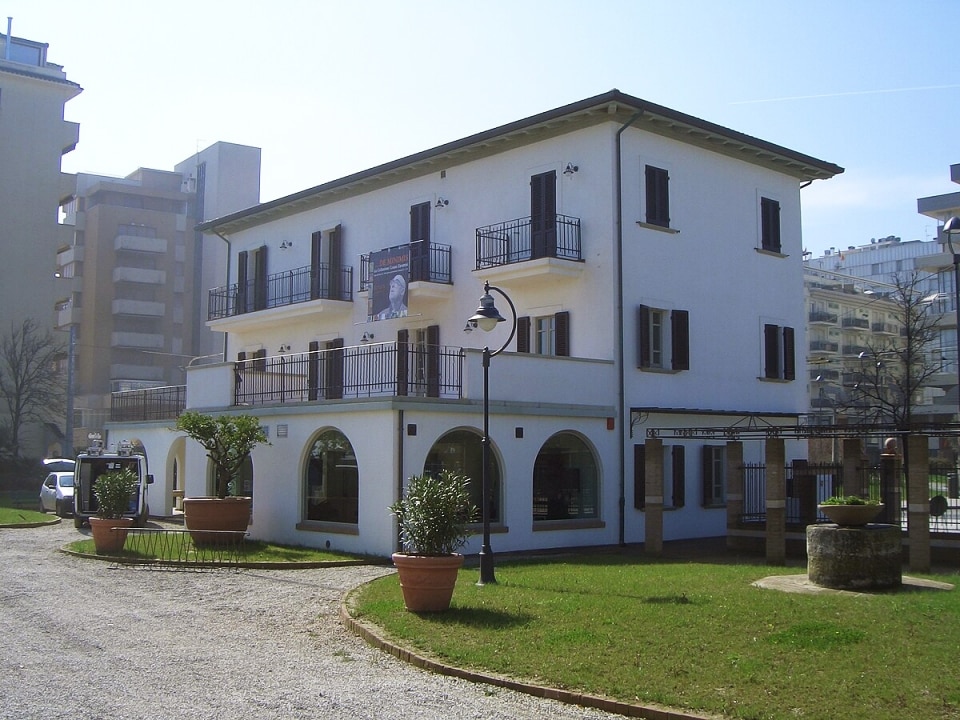
A rather unassuming Liberty-style villa built on two floors at the end of the nineteenth century, with a small tower on the eastern side giving it a touch of distinction: the summer residence once belonging to Benito Mussolini and his wife Rachele — later renamed “Villa Mussolini” — is largely indistinguishable from the many seaside houses that line Riccione’s promenade.
If it appears ordinary to the eye, it is quite well known to history. Rachele Mussolini purchased it on behalf of her husband in 1934, and it served as the family’s summer retreat until 1943, the year Fascism fell and Mussolini was secretly moved to various locations across Italy. It is said that it was here, in Riccione, that the Mussolini children learned of their father’s arrest. Around this house — immortalized in the newsreels of the Istituto Luce, Italy’s first state film institution and one of the regime’s favorite propaganda tools — took shape the myth of Riccione as a symbol of Fascist-era tourism, surrounded by rationalist seaside colonies that still dot the coastline, often in ruins.
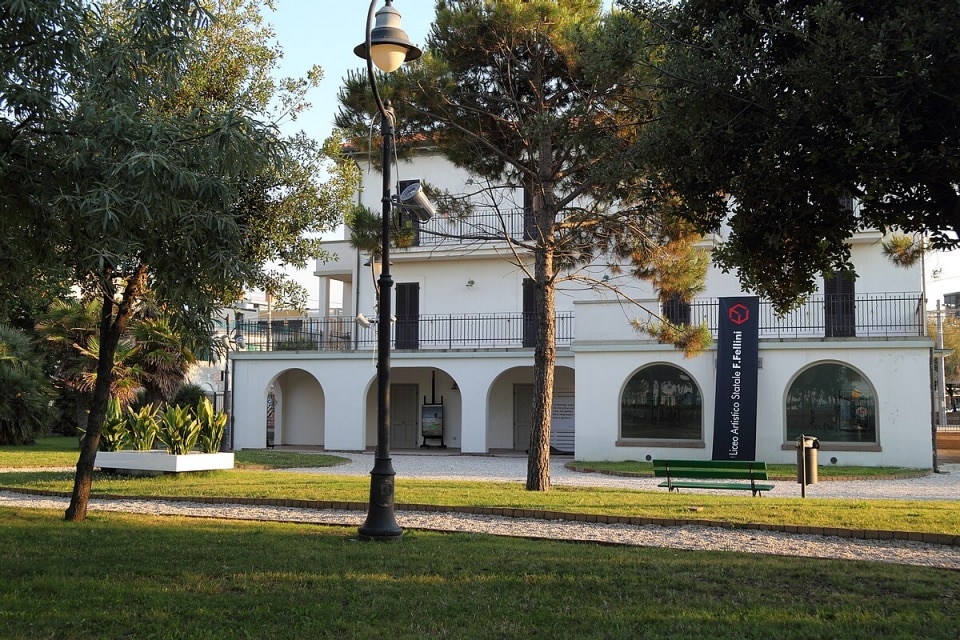
During the ten years of ownership, the Duce’s family expanded and personalized the villa: they purchased adjacent lots, built a tennis court, and constructed private residences for Mussolini’s children. When, after the war, Villa Mussolini was first put up for sale, it was divided into several separate housing units.
Shortly after 1952, the original core of the villa was acquired by the Carim Foundation — the Savings Bank of Rimini — which granted its management to the municipality. Villa Mussolini thus became a cultural center, hosting exhibitions and community events, and over time stood out as one of the few examples in Italy of the public reuse of a site tied to Fascist history.
Today, that fragile balance risks changing, as the villa could once again become a private residence. In recent days, Villa Mussolini has returned to the market: the Carim Foundation has launched a tender procedure for the sale of the company that owns the property. Among the potential buyers is, naturally, the Municipality of Riccione, intent on preserving the symbolic and civic value that the Liberty villa has acquired over time.
The controversies surrounding the sale are significant — from the question of its name (which Mayor Daniela Angelini described as “not a priority”) to its designated use, which should remain strictly cultural, to the transparency of the procedure and the municipality’s ability to finance the purchase. The future of this century-old villa, marked by a twenty-year regime that felt like a century for Italy, remains to be defined.
The deadline for submitting offers is set for December 22, 2025.