


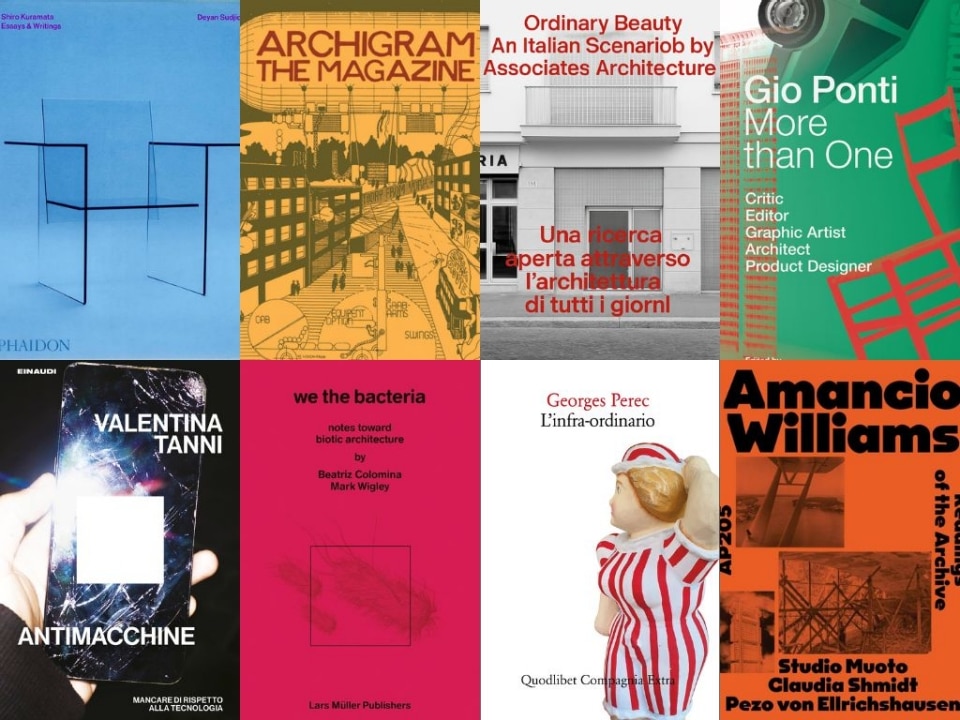
As every year, we’ve reached the moment of selecting books to read, give, or treat ourselves to at Christmas. Until not so long ago, people complained about a certain scarcity of titles, especially in the field of design. Architecture, by contrast, has always enjoyed an abundant output: catalogues, monographs, critical essays, architects’ writings. Today, however, design publishing has also become both rich and increasingly high-quality. On dedicated shelves, one no longer finds only those melancholy volumes of decoration that, instead of helping us imagine more desirable cities and homes, ended up inducing a peculiar sense of depression.
Alongside established publishers, now beginning to look at design, graphic design, and fashion as pressing contemporary themes, a nouvelle vague of independent publishers—international, from Valiz to Spector, Onomatopee, Set Margins, as well as Italian ones such as Mousse, Nero, Humboldt, bruno, Krisis Publishing, Letteraventidue, Johan+Levi, Lazy Dog, among others—has emerged. These publishers are unafraid to venture off the beaten path, exploring uncharted territories, launching corrosive essays, subversive manifestos, monographs on emerging designers, or “artists’ books” in highly experimental formats. At the same time, major museums have discovered that design and fashion exhibitions attract ever larger audiences, extending the experience through increasingly generous illustrated catalogues. The choice, today, is truly vast.
So what criterion should guide our selection? Perhaps that of books that endure. Because beyond effervescence—essential for bringing fresh air into design culture—only a few volumes manage to stand the test of time and establish themselves as books one not only wants to buy and give as gifts, but also to keep.
Colomina, Wigley, We the Bacteria. Notes Toward Biotic Architecture, Lars Müller, 2025
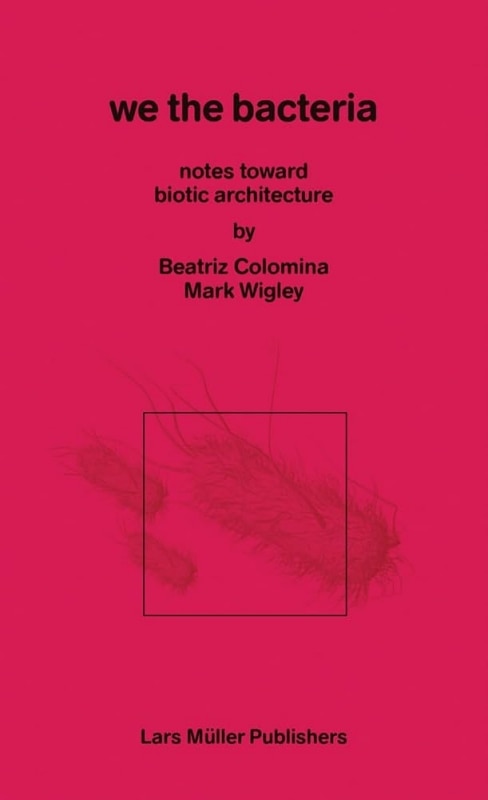
“Microbes invented architecture”: it is from this statement that Beatriz Colomina and Mark Wigley set off, with their inexhaustible critical verve. First presented as an exhibition during the latest Triennale di Milano (Inequalities, 2025), their new book We the Bacteria. Notes Toward Biotic Architecture represents—both in form and content—the ideal sequel to the now legendary Are We Human? Notes on an Archaeology of Design (Lars Müller, 2016), and continues in the same direction: a radical reflection on the origins of architecture. By overturning the traditional perspective, the authors begin with an observation of the interior of the human body—“the intestinal architecture of microbes”—which allows us to see the human-built environment differently, “as if for the first time.” From this premise, the entire history of architecture (and of humanity, from prehistory to the Covid-19 pandemic) is revealed in a new light. “Microbes are the architects, the builders, the maintenance workers, and the inhabitants of the biosphere and of every form of life within it—including human beings.” Is this a praise of the bacterial world, so often unfairly maligned? A corrosive critique of anthropocentrism? Above all, it is a masterful treatise on architecture, no longer understood as the construction of buildings, but as the organization of the microbiome. Epoch-making.
Ordinary Beauty. An Italian Scenario, edited by Associates Architecture, Caryatide, 2025
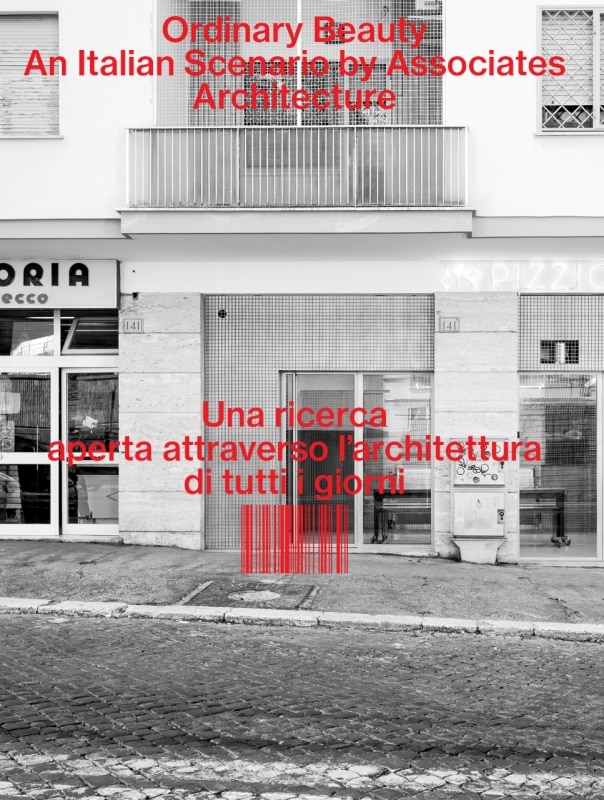
It can be leafed through like a photography book and read like a novel. The opposition between beauty and the ordinary is the starting point that Ordinary Beauty. An Italian Scenario, edited by Associates Architecture, decisively overturns. The book shows how what is everyday—often perceived as neutral or banal—can become an authentic site of architectural quality. By giving visibility to a new generation of Italian designers—from Babau Bureau to Studio Ossidiana, from a25architetti to Motu, from Supervoid to (Ab)normal—the book takes the ordinary as its raw material, “first imagining a new way of living, then designing the spaces that will host that new life.” In this gesture, beauty is no longer an exception but a responsibility: a discreet presence that emerges from the way architecture accompanies everyday life. Ordinary Beauty thus reveals the transformative power of what was already before our eyes.
Gio Ponti. More than One: Critic, Editor, Graphic Artist, Architect, Product Designer, edited by Manfredo di Robilant and Manuel Orazi, Lars Müller, 2025
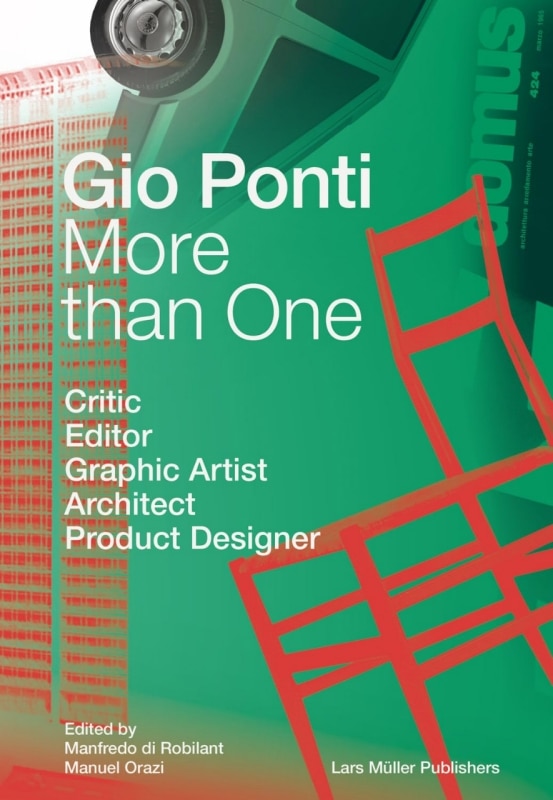
Gio Ponti in the round: critic, editor, graphic designer and illustrator, architect, and product designer. Like a multifaceted Renaissance artist, yet resolutely modern. In recent years, publications on this master—who traversed the short twentieth century—have multiplied. His rediscovery has only just begun. This volume, published in English by Lars Müller and edited by Manfredo di Robilant and Manuel Orazi, is set to become a fundamental reference, both for the quality of the essays addressing the many facets of his personality and work, and for the richness of its iconographic documentation. Charismatic yet reserved, Gio Ponti emerges as an tireless seeker of form, of a design that is not only comfort, but consolation. A book that is at once luminous and enlightening.
Amancio Williams: AP205, Readings of the Archive, Canadian Centre for Architecture / Spector Books, 2024
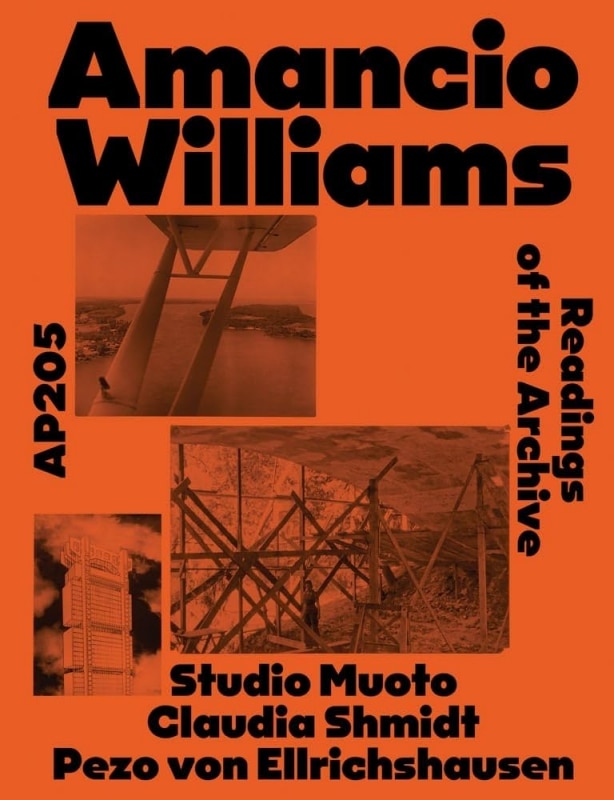
More and more, the world is looking south. Architecture included. And the Argentine architect Amancio Williams (1913–1989) stands as a central figure in modern Latin American architecture. Visionary, radical, and politically engaged, Williams realized only a few projects over the course of his long career, such as the Casa sobre el Arroyo (1943–1946) in Mar del Plata, conceived as a concrete block resting on an arch suspended over a stream. The book dedicated to Williams by the CCA Canadian Centre for Architecture in Montreal reveals his archive, donated to the institution in 2020: drawings, photographs, correspondence, and models are presented “out of the box,” in three sections commented on by three guest curators—Studio Muoto, Claudia Shmidt, and Pezo von Ellrichshausen—whose complementary perspectives intertwine history, design practice, and critical reflection. A constellation of fragments that sketches the portrait of an unconventional designer, complex and still surprisingly contemporary.
Archigram: The Magazine, Distributed Art Publishers (D.A.P.) / Designers & Books, 2025
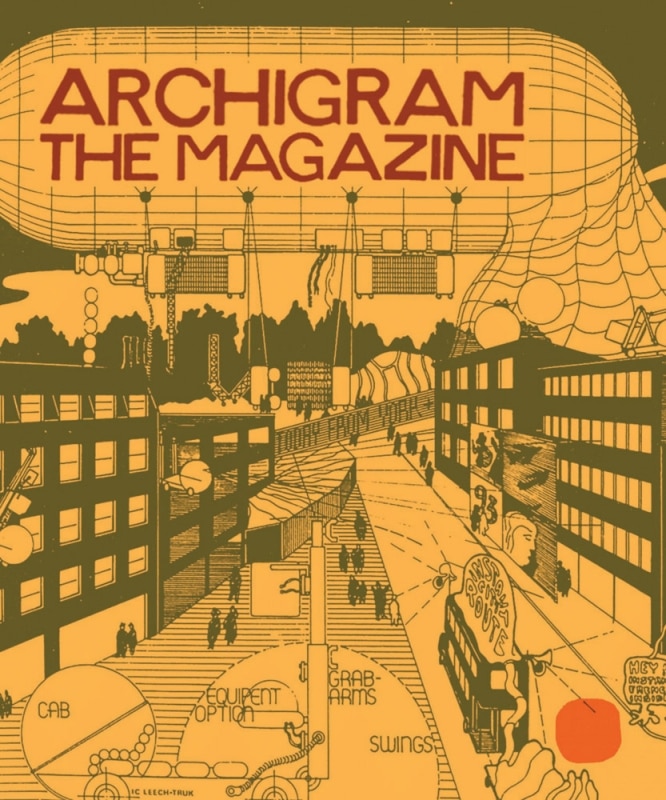
This is not a simple revival—it’s an explosion. The box set produced by D.A.P. opens like a treasure chest, revealing a true trove for lovers of architecture, design, and pop culture. Inside are facsimiles of all ten original issues of Archigram—from the electrifying debut of 1961 to the final issue, 9½, in 1974—restored with their subversive charge fully intact: flyers, fold-out inserts, pockets, posters, a pop-up centerfold, gatefolds, and even an electronic resistor, all reproduced with rigorous philological accuracy. Completing the set is a Reader’s Guide by Thomas Evans and Steve Kroeter, along with a constellation of texts by figures such as Tadao Ando, Mike Davies, Odile Decq, Norman Foster, and Kenneth Frampton. A true detonator that reactivates the energy of the London-based collective—Warren Chalk, Peter Cook, Dennis Crompton, Ron Herron, David Greene, and Michael Webb—who rewrote the architectural imagination through a daring contamination of pop iconology, machine civilization, artistic experimentation, comics, psychedelia, and science fiction. An invaluable archive that still radiates the electric vibration of an era in radical transformation. Refreshing.
Frederick Kiesler, Magic Architecture: The Story of Human Housing, edited by Spyros Papapetros and Gerd Zillner, The MIT Press, 2025
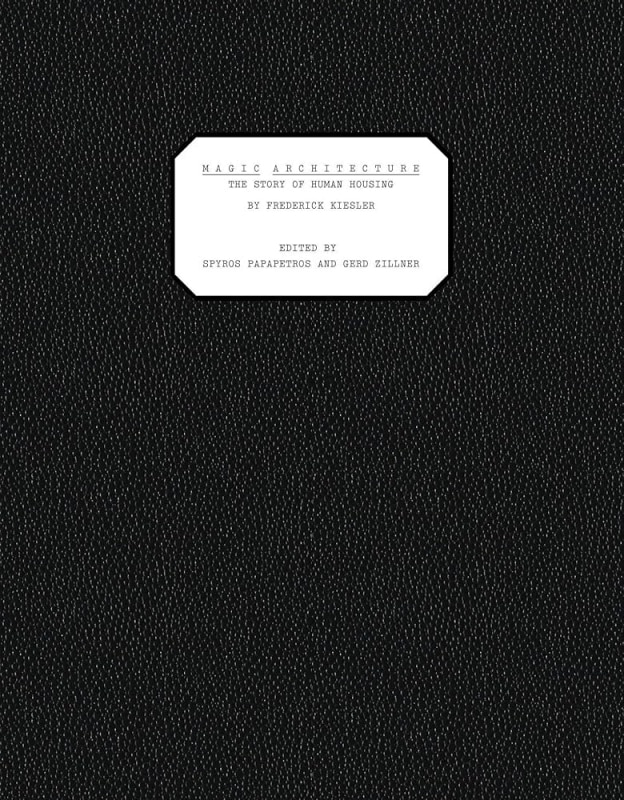
Magic Architecture, the legendary manuscript by Austro-American architect Frederick Kiesler (1890–1965), finally sees the light of day. Completed in the postwar period as a bold Vitruvian treatise and accompanied by a rich iconographic apparatus, the book had remained unpublished. Today, thanks to the editorial work of Spyros Papapetros (Princeton University) and Gerd Zillner (Frederick and Lillian Kiesler Private Foundation, Vienna), MIT Press presents it in a critical edition that respects its original format and reveals its most visionary folds. Kiesler reconstructs the evolution of human dwelling from its origins to the nuclear age, drawing connections between the construction techniques of humans and animals alike. From this comparison emerges his idea of “magic architecture”: a universal architecture, suspended between dream and reality, conceived to confront the critical conditions of postwar existence. His reflection on the impact of modern technology, intertwined with an alternative epistemology that looks to the “magical” practices of early cave images and protohistoric artifacts, reveals a decisively visionary approach to rethinking the relationships between art, architecture, and design. It is no surprise that he is remembered for transforming the modernist motto: no longer form follows function, but form follows vision.
Béatrice Grenier, Architecture for Culture: Rethinking Museums, Rizzoli International Publications, 2025
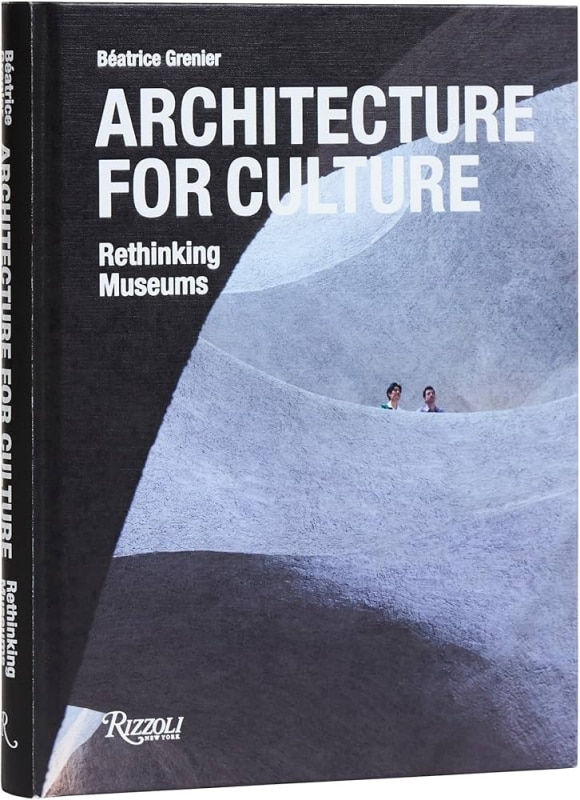
The museum is not a space separated from the world. In an unstable era, it takes on increasing importance not so much as a guardian of cultural and identity-based heritage, but as a living place of education, experimentation, dialogue, and knowledge. The volume by Béatrice Grenier, curator at the Fondation Cartier and Domus contributor, highlights the urgency of this cultural construction site, placing the relationship between architecture and urban space at its core. Through a rereading of historical cases and contemporary projects, Architecture for Culture shows how architecture can transform the museum into an alternative encyclopedic device, capable of questioning the dichotomy between the urban and the wild, and of fostering a democratization grounded in the integration of technologies as forms of knowledge. From this perspective, the museum emerges as a critical laboratory for architectural experimentation and an essential space for imagining not only the future of the city, but of society itself.
Valentina Tanni, Antimacchine. Disrespecting Technology, Einaudi, 2025

Valentina Tanni has accustomed us to texts that deviate from conventional trajectories and open up new perspectives on our digital world. This new work, published by Einaudi Maverick (a series whose name suits it perfectly), is a necessary read at a time when we are increasingly subjected to technology, glued to smartphones and dependent on computers. It is a healthy, brilliant, well-documented, ironic, and visually rich invitation to use technology anarchically—to “disrespect” it: to dismantle it, manipulate it, personalize it, misinterpret it, turning it into an expressive, playful, and political terrain. In this liberating game, the very concept of purpose dissolves, overturning the idea that technology (and thus design as well) should be limited to solving problems. A book that is at once subversive and scholarly.
Slow Technology Reader: A Tool for Shaping Divergent Futures, edited by Carolyn F. Strauss, Valiz, 2025
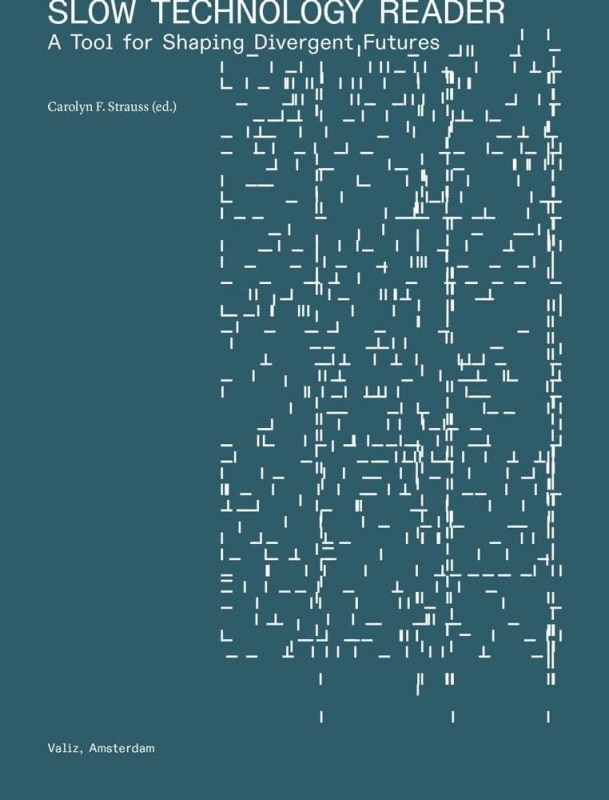
Conceived as a dense anthology of contributions, the new book published by the dynamic Dutch publisher Valiz—consistently at the forefront of contemporary debates—opens up a radical perspective on the digital, placing slowness at the very center of technological thinking. Moving between art, speculation, and critical reflection, the volume explores tools and practices that resist time, as well as non-Western, ecological, feminist, queer, Indigenous, and even non-human forms of knowledge. In a world dominated by digital acceleration, this book invites us to slow down, rethink, and inhabit technology in fairer ways, where conviviality, cooperation, and contemplation converge. A manifesto for a slower, more conscious, and freer technology, capable of imagining equitable futures open to possibilities so far overlooked. An invigorating—almost therapeutic—read.
Deyan Sudjic, Shiro Kuramata, Phaidon Press, 2025
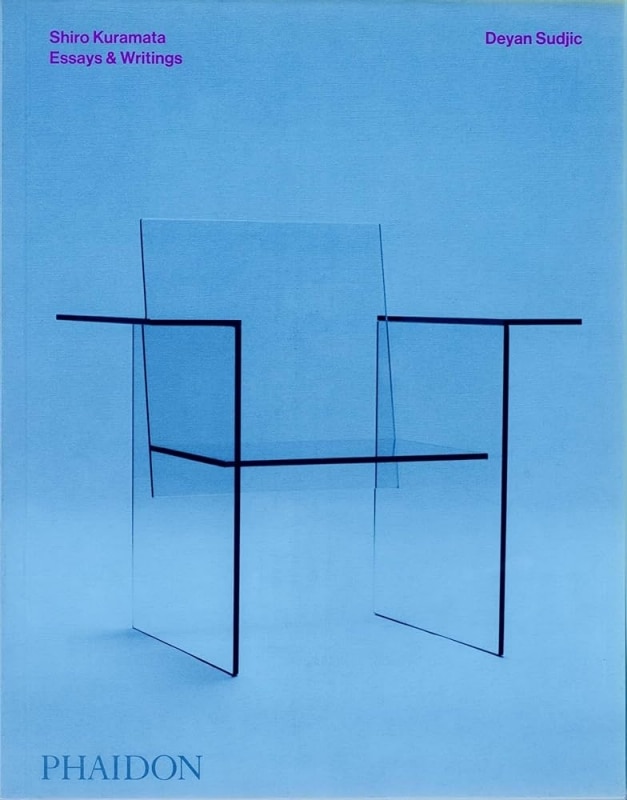
Shiro Kuramata (1934–1991) as we have never seen him before. This newly updated edition of the monograph edited by Deyan Sudjic—former director of the Design Museum in London, the Venice Architecture Biennale (2002), and Domus—brings together the complete works of the celebrated Japanese designer in an elegant acrylic slipcase. From the artificial flowers and resin of the iconic Miss Blanche armchair (1988), which transforms furniture into tangible poetry by uniting visual lightness with concrete functionality, to the wire-mesh seat How High the Moon (1985), each object bears witness to Kuramata’s audacity, irony, and radical poetry. A collector’s volume for designers and beyond, showing how design can simultaneously be art, invention, and a challenge to convention.
Georges Perec, The Infra-Ordinary (Quodlibet, 2023); Think/Classify (Quodlibet, 2024)
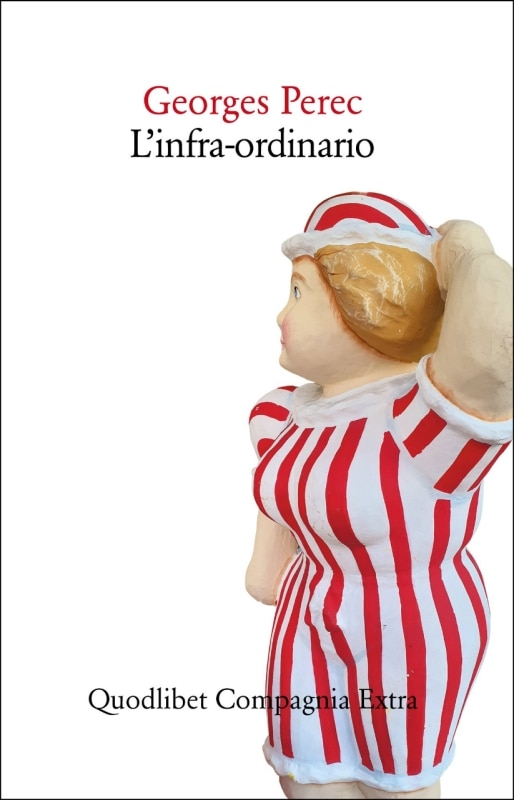
We add an eleventh recommendation, allowing ourselves a detour into literature. For several years now, Quodlibet has been committed to publishing the work of the French writer Georges Perec (1936–1982), an tireless experimenter with forms and formats. For those working in design and architecture, Perec is essential reading. His exercises in observing domestic and urban spaces, his almost obsessive passion for cataloguing the things and gestures that make up everyday life (Think/Classify, Quodlibet, 2024)—those ephemeral dynamics and material sedimentations that constitute The Infra-Ordinary (Quodlibet, 2023)—together form a true repertoire of methods and analyses, enabling us to see the world we inhabit with greater clarity, but also with a more playful eye.