


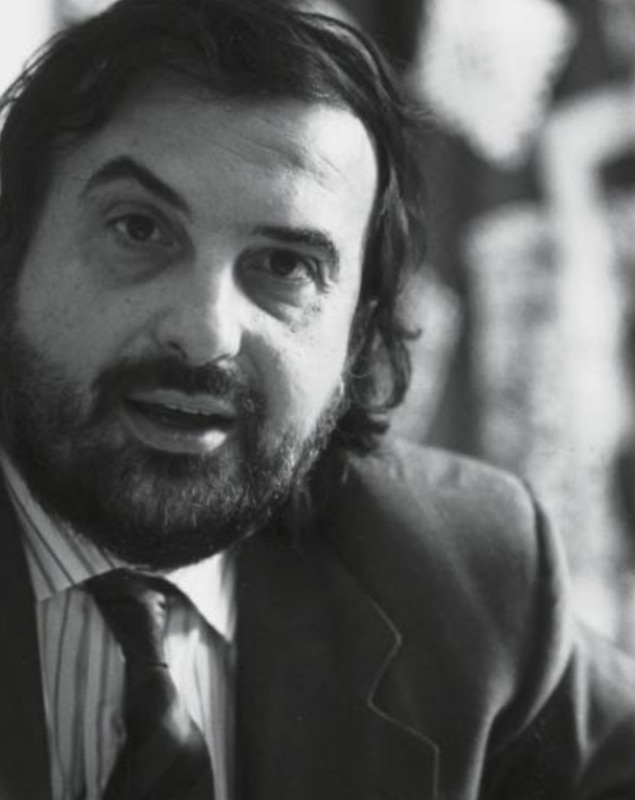
In the landscape of architectural criticism, Cesare Maria Casati stands out as a figure of remarkable significance. Born in Milan in 1937, tall, distinguished, with gestures as measured as his speech, Casati lived surrounded by books, magazines, and projects. “Architecture is not just construction, but the narration of a worldview,” he often said, among photographs portraying him alongside the great names of global architecture. A graduate of the Politecnico during the years of the economic boom, he personally experienced that creative ferment in which Italy established itself as a laboratory of innovation in design, quickly demonstrating his ability to bridge theory and practice.
His editorial career began with Domus, marking a pivotal chapter in his professional journey. He joined the editorial staff in 1965, invited by Giò Ponti—his former mentor—whom he would eventually succeed as editor-in-chief from 1976 to 1979. “When you lead a magazine with such a legacy, every editorial choice becomes a dialogue with the past and a bet on the future,” he once recalled. During his tenure, always in conversation with Ponti’s daughter Lisa and publisher Gianni Mazzocchi, Casati preserved the magazine’s intellectual stature while opening it to new disciplinary contaminations. “I’ve always believed that a magazine shouldn’t merely document what exists, but help create what doesn’t yet exist,” he explained, leafing through some historic covers. Looking back today, it's clear that many of the pressing themes in contemporary architecture—sustainability, urban regeneration, social inclusion—were already present in the pages curated by Casati, when they still represented pioneering positions.
I’ve always believed that a magazine shouldn’t merely document what exists, but help create what doesn’t yet exist.
Cesare Maria Casati
After Domus, from 1981 to 1985, he was editor-in-chief of La Mia Casa, paving the way for the founding, in February 1986, of the publishing house L’Arca and the international magazine of the same name dedicated to architecture, design, and visual communication. Less known to the general public, his work as a designer was nevertheless significant, revealing an approach marked by synthesis and lightness, in which methodological rigor and sensitivity to context combined to produce projects of great formal clarity. “Architecture is always an expression of its time and society. Today, we live in an era of uncertainty and transition. The contemporary architect must find responses that are neither nostalgic nor utopian, but pragmatically visionary.”
A severe yet never cynical critic, Casati did not hide his concerns as a forerunner: “Spectacular architecture runs the risk of producing photogenic buildings that fail to create places where people can truly identify. We need to return to an architecture capable of dialoguing with history and with context.”
In recent years, when asked about the secret of his professional longevity, he would reply, “Who ever said we should stop being curious?” A complete intellectual, able to combine technical expertise with cultural depth, Casati leaves behind a valuable legacy: a holistic vision of architecture, most clearly expressed during his leadership at Domus, which should serve as a guide for those growing up in an age of extreme specialization and fragmented knowledge.