results
No results
Please enter a long search term
Cuba. Tattooing History
“CUBA. Tattooing History” at PAC in Milan, reflects on Cuban art, tracing the guidelines required to achieve a correct understanding and knowledge of the country.
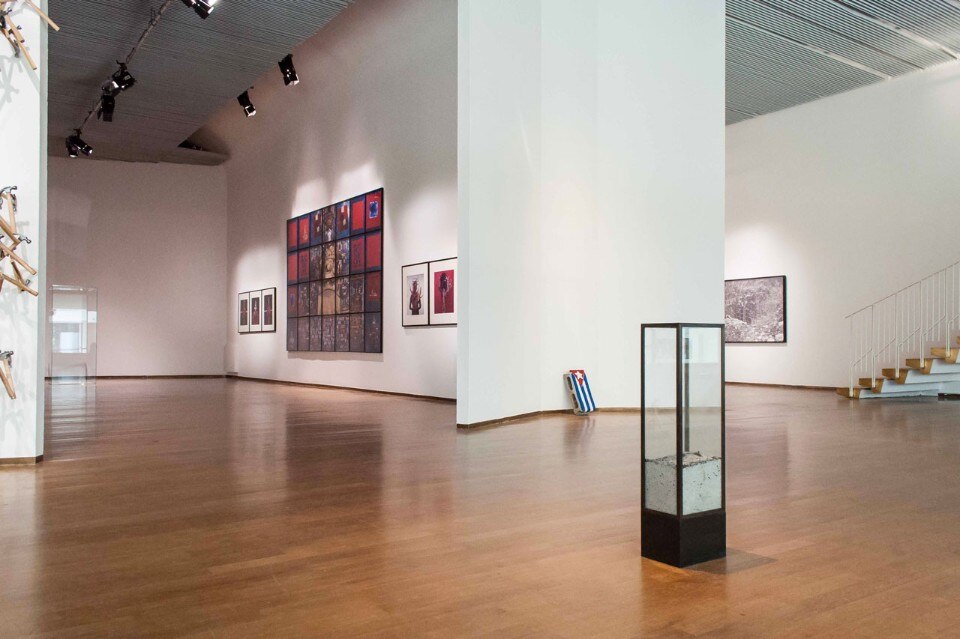
PAC Padiglione d’Arte Contemporanea presents “CUBA. Tattooing History”, an exhibition that, for the first time ever on the initiative of a public space in Italy, offers an organic and in-depth reflection on Cuban art, both inside and outside the island, aimed at tracing the guidelines required to achieve a correct understanding and knowledge of the country.
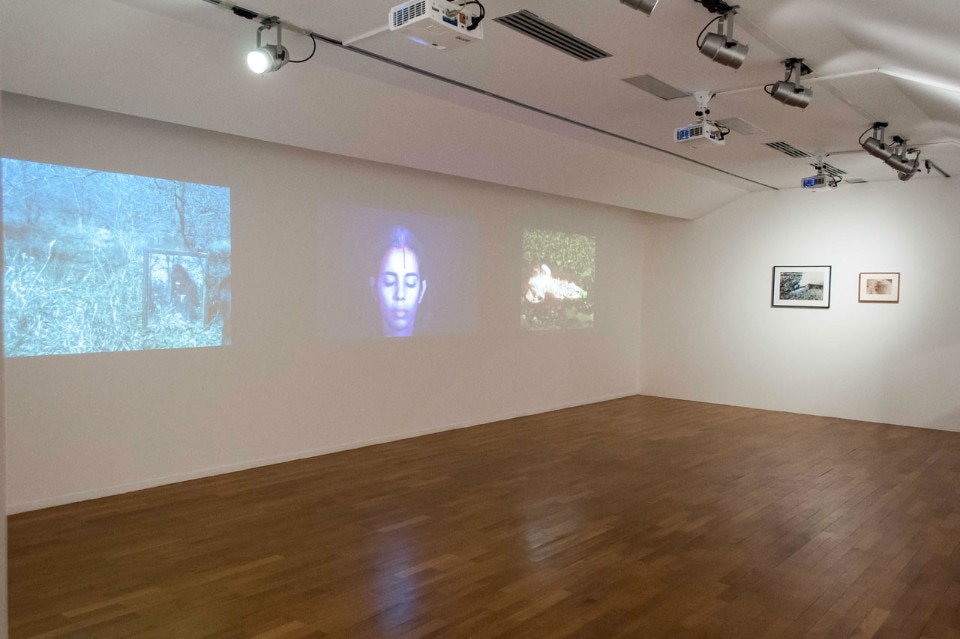
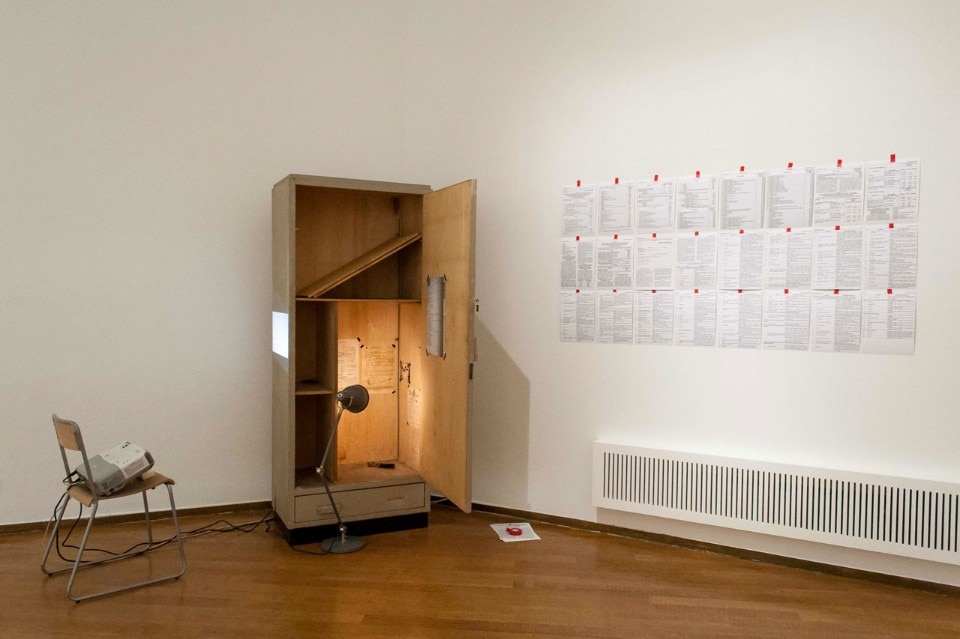
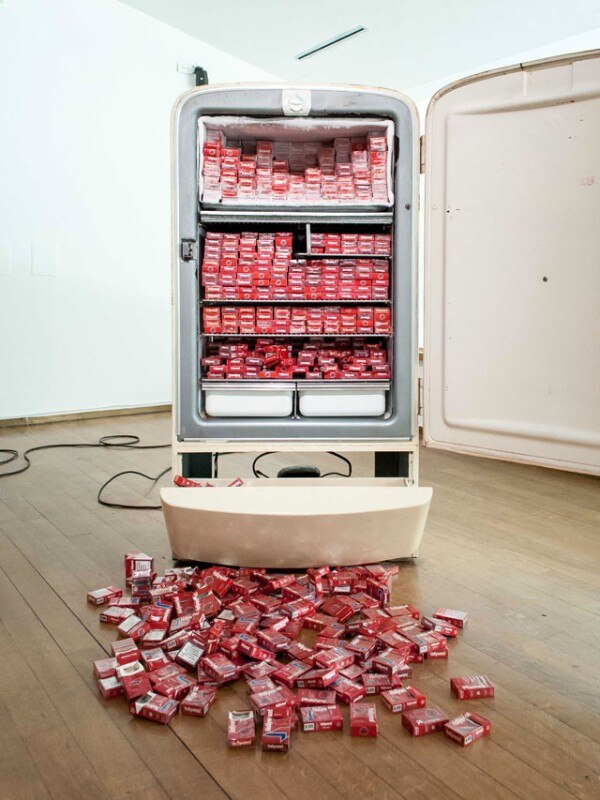
Celia – Yunior, Asì no se da el café, installation view
“The exhibition is an exclusive project of great artistic quality, which views contemporary creativity from across the ocean – says Municipal Councillor for Culture Filippo Del Corno. PAC characteristically seeks contemporary art’s newest and most original languages, and organizes unprecedented events for the people of Milan who, also thanks to a major public program and exceptional evening hours, are given the opportunity to approach a new art world. What emerges from this scenario is Cuba’s constant tension between local tradition and its openness to the world, expressed by way of the ongoing cross-fertilization between the performative roots of the Cuban scene and the avant-garde art forms that are more familiar to us.”
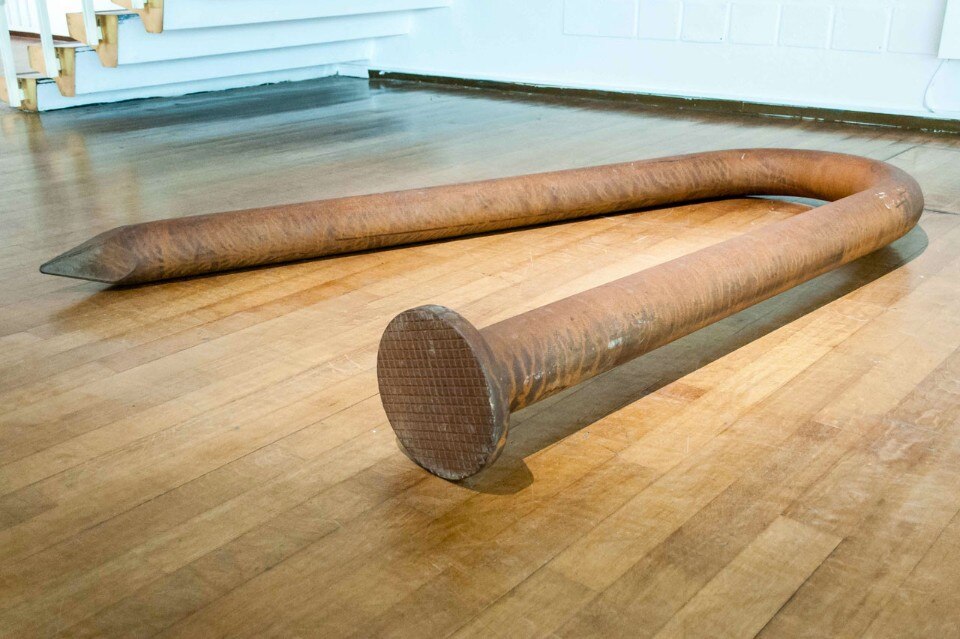
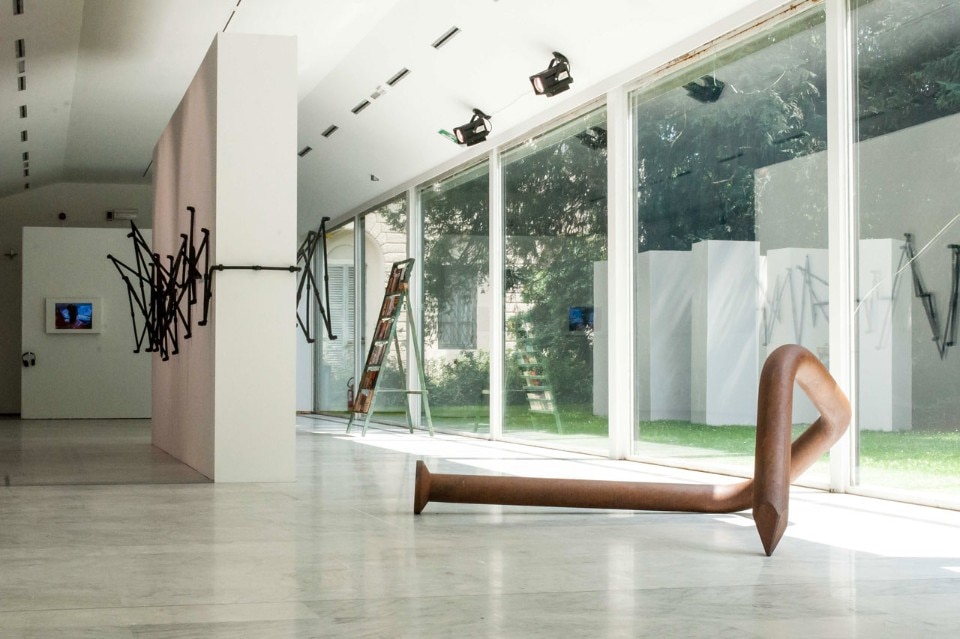
Los Carpinteros, Clavo siete, 2015, installation view
The tale of Cuba becomes a journey along the route of creativity, thereby designing a map and exploiting art to conceive a unique and unprecedented key to interpretation for what were once known as “other cultures”, currently taking the lead on the international scene.
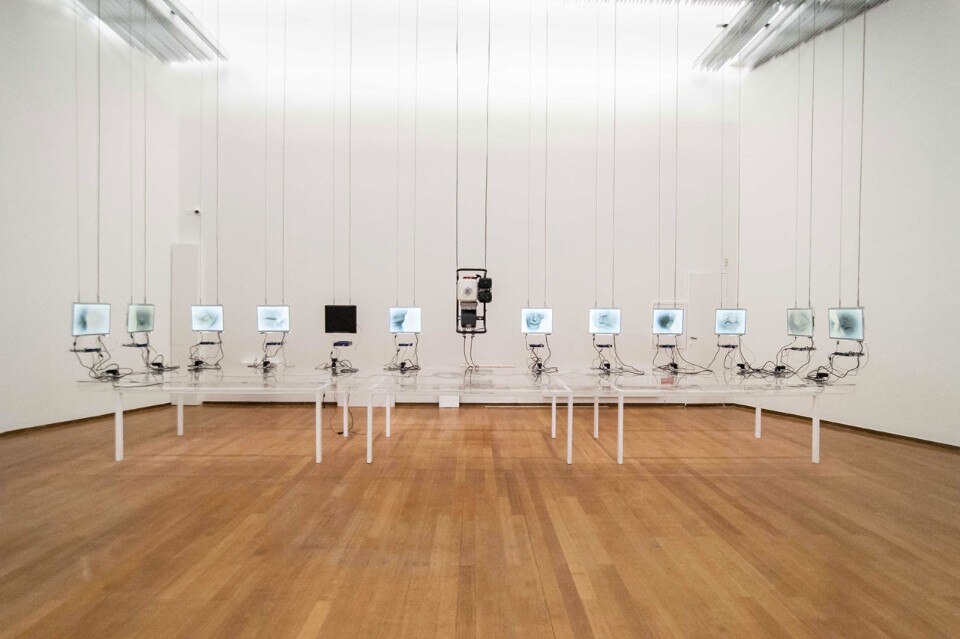
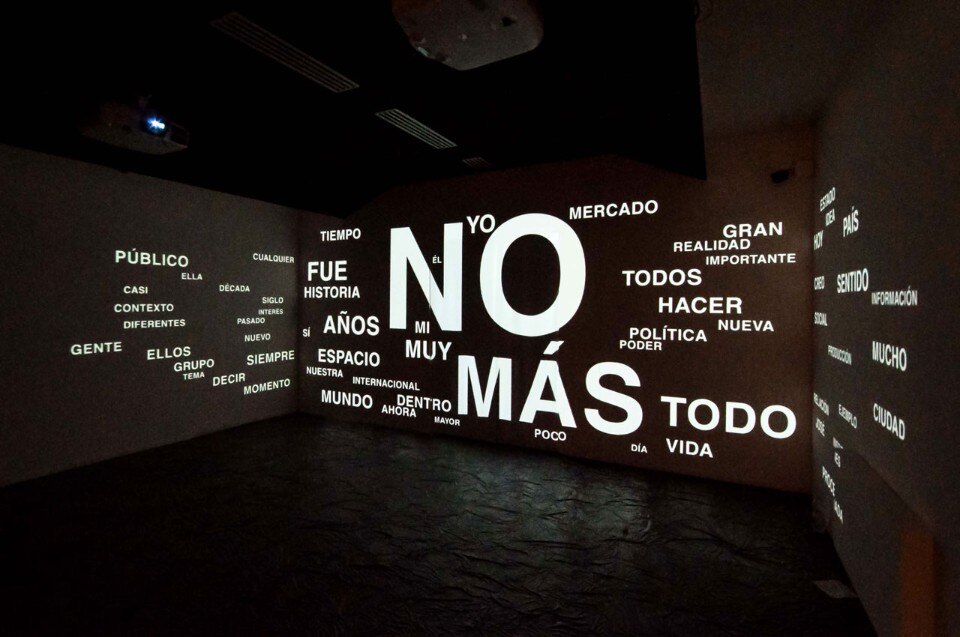
Ernesto Leal, Word Cloud: Which are the most repeated words in Cuban art?, 2014, installation view
Today, Cuba much resembles a mythical place: it is an island that for more than five decades has survived and resisted hostility and strife. This small piece of land situated in between North and South America has brought to life the “mirage” of a utopian world, albeit an intrinsically contradictory one. Cuba, with its politics, and official and unofficial procedures, together with a complex network of overlapping codes, has developed a history on which art “brands” an incongruent and fragmented representation, the perfect reverberation of the country’s polyphonic reality.
Humberto Diaz, Aliento, installation view
“Tatuare la storia” (Tattooing History) means leaving a mark on a shared identity: a mark on history’s “skin”, on the body of racial and identity issues, on the whole inheritance of revolutions, evolutions, and involutions. It is a sign that brings with it cultural stereotypes, primary needs, scars and rootedness in both the personal and the social, the physical and the psychological.
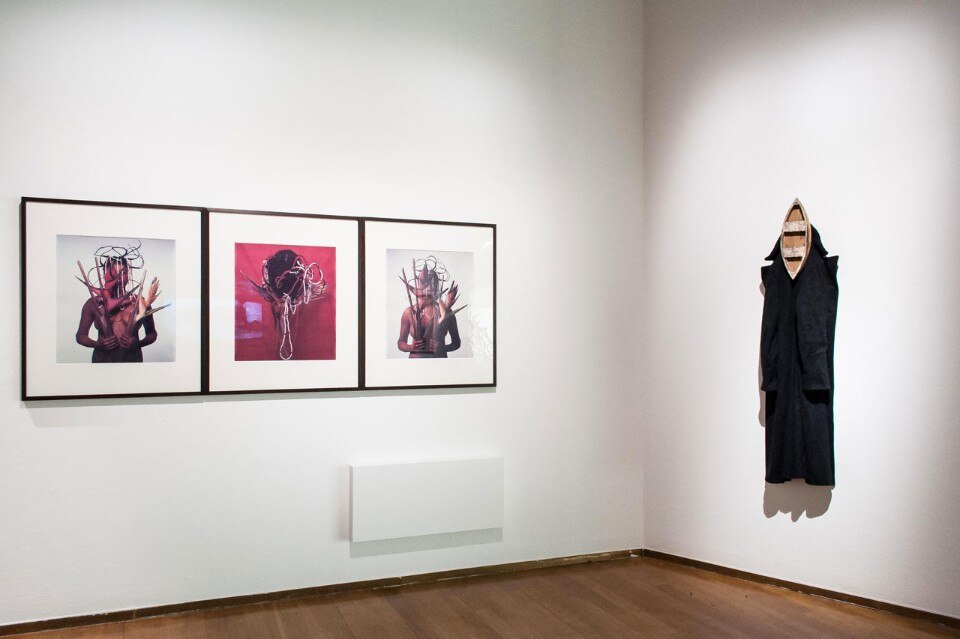
Left: Untitled, 1995.
Right: Kcho, Estelas en el mar mi abrigo y mi sosten
Cuba historically also represents a place of intersections and mutations: it is the metaphor of the encounter between cultures that merged on a Creole and tropical horizon. Each individual artist showcased at PAC will recount, through his or her works, the stages in a journey towards the island’s anthropological and ontological environment, with its magnificence and its poverty, its noise and its furore, its cultural, linguistic and mythical sides, its ideological currents and ethno-centric blindness.
View gallery
SHARE
PIN IT
SHARE
PIN IT
SHARE
PIN IT
SHARE
PIN IT
SHARE
PIN IT
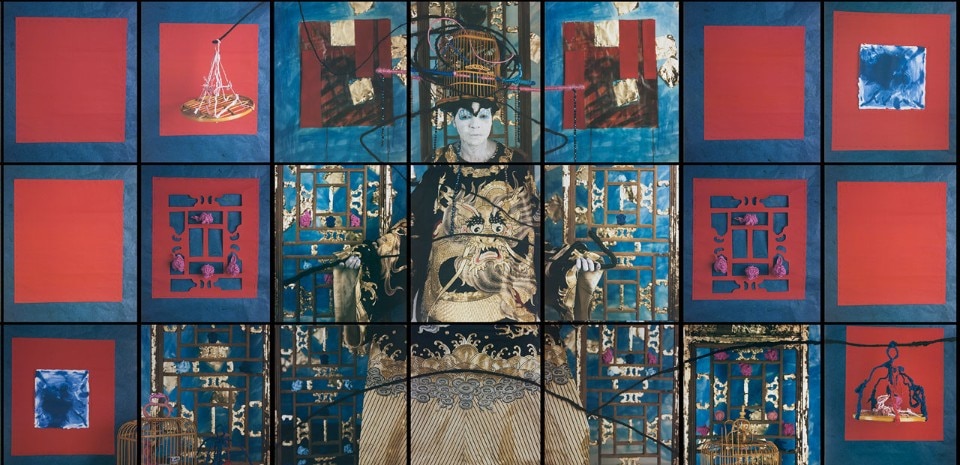
Maria Magdalena Carlos Pons.
Left: Red Composition, 1997.
Right: Finding Balance, 2015 (in centro),
Untitled, 1995
SHARE
PIN IT
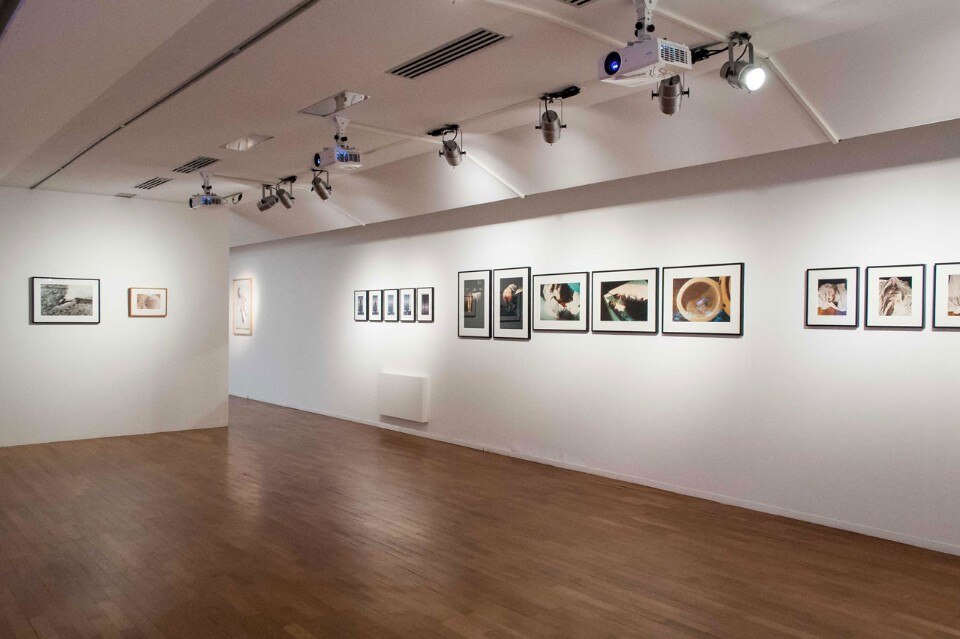
Ana Mendieta (from left to right): Mirage, 1974; Sweating Blood, 1973; Volcano, Silueta Series, 1978
SHARE
PIN IT
Ana Mendieta, Body Print, 1974 (Estate print 1997); Body Tracks, 1974 (Estate print 2012); Rape Scene, 1973 (Estate print 2001)
SHARE
PIN IT
Lazaro Saavedra, La ùltima Cena, 2016, installation view
SHARE
PIN IT
Los Carpinteros, Clavo siete, 2015, installation view
SHARE
PIN IT
until 12 September 2016 Cuba. Tattooing History curated by Diego Sileo and Giacomo Zaza PAC Padiglione d’Arte Contemporanea via Palestro 14, Milan