
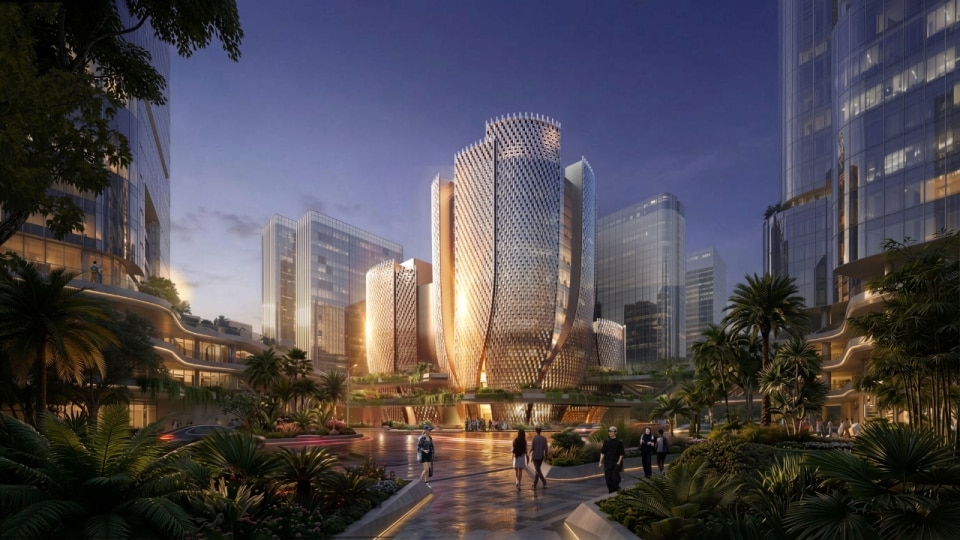
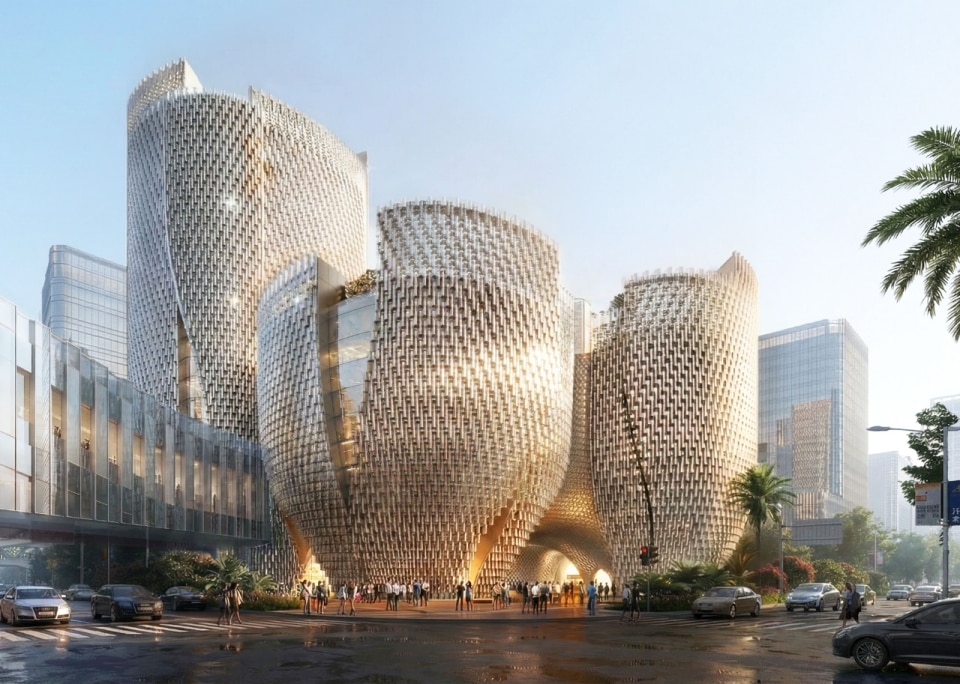
In the Mecca of China’s Silicon Valley, Büro Ole Scheeren has designed the Róng Museum of Art, dedicated to 20th- and 21st-century visual and digital arts. Taking its name from the Chinese character meaning "symbiosis" and "integration", the museum embodies the concept of symbiosis between technology and culture as the driving force behind urban design.
Commissioned by the tech giant Tenova, the museum follows in the footsteps of recent initiatives aimed at enhancing the city’s global prominence from a cultural as well as economic and technological perspective and highlights the growing commitment of entrepreneurial patronage to transforming private capital into quality public space, boosting cultural and social opportunities. As Ole Scheeren states: “what is significant is that the founder of Tencent, one of China’s most successful innovation businesses, is using his company’s position at the forefront of China’s tech industry to open new ground for culture and urban development (…) “Around the world, most tech environments are relentlessly self‑focused. Here, the ambition is to chart a different path by investing in public space, cultural venues and education, and to use economic success to underwrite a deeper, more generous engagement with the city and wider society”.
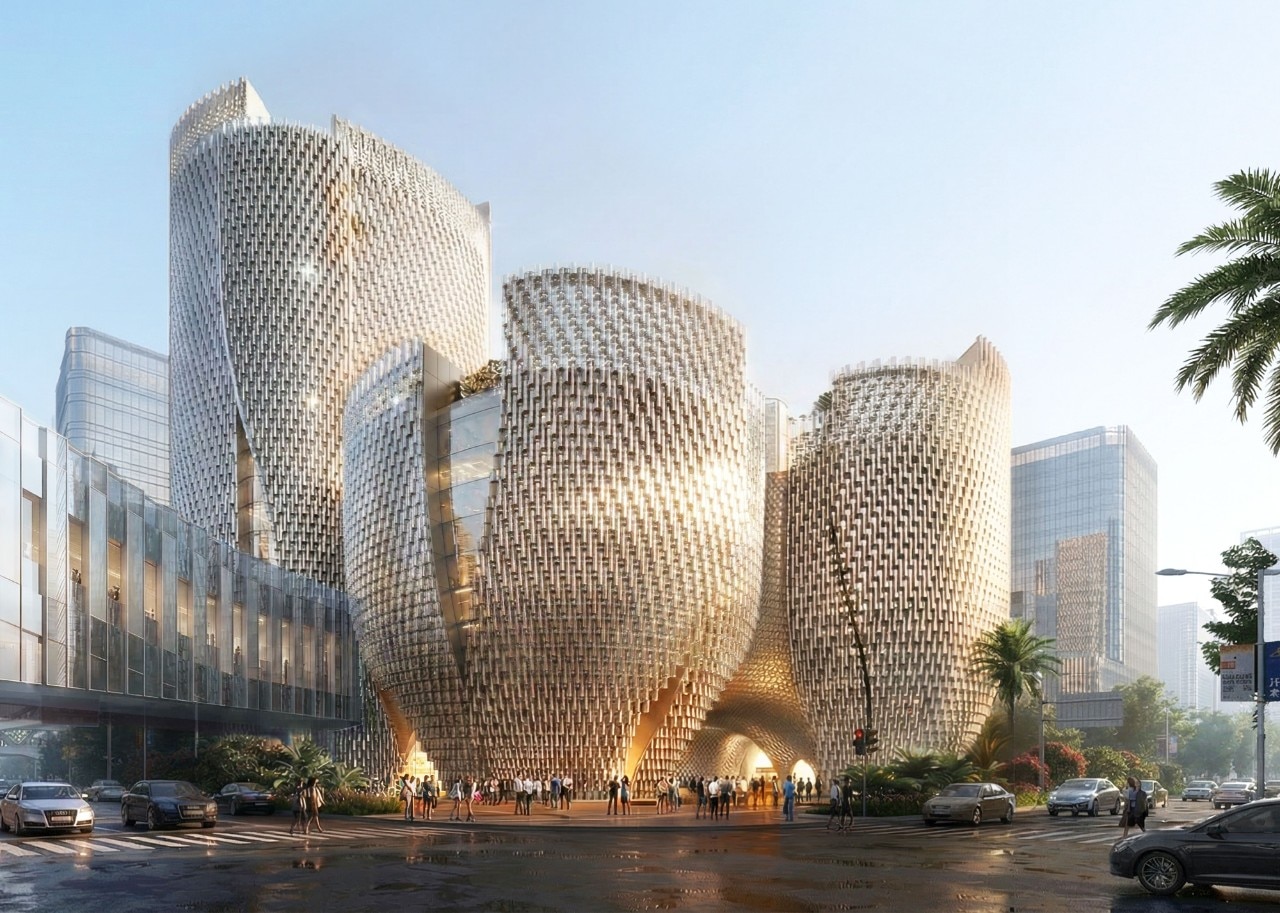
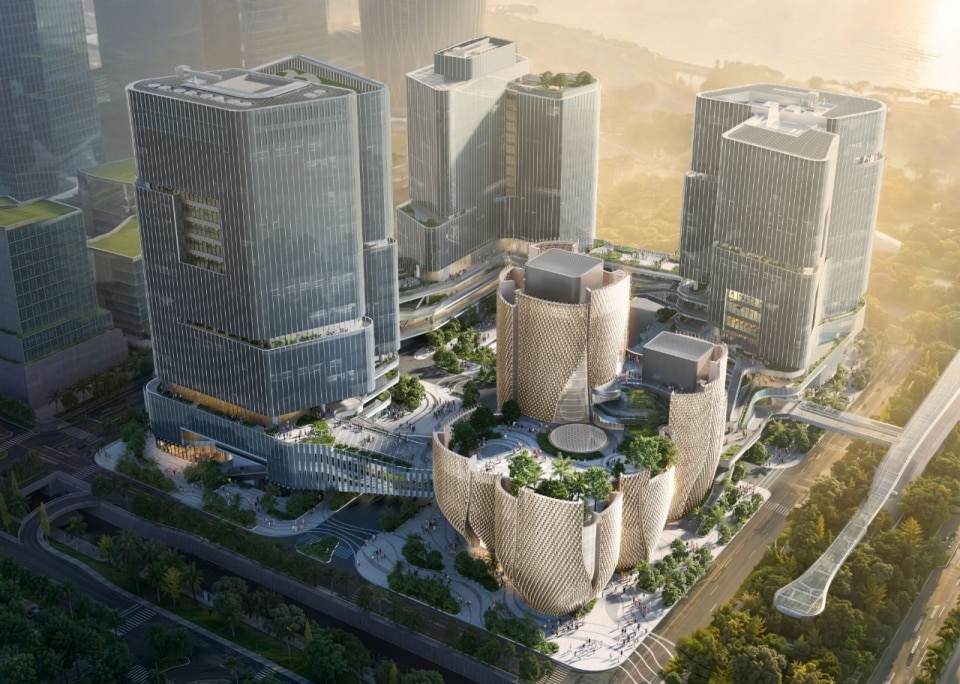
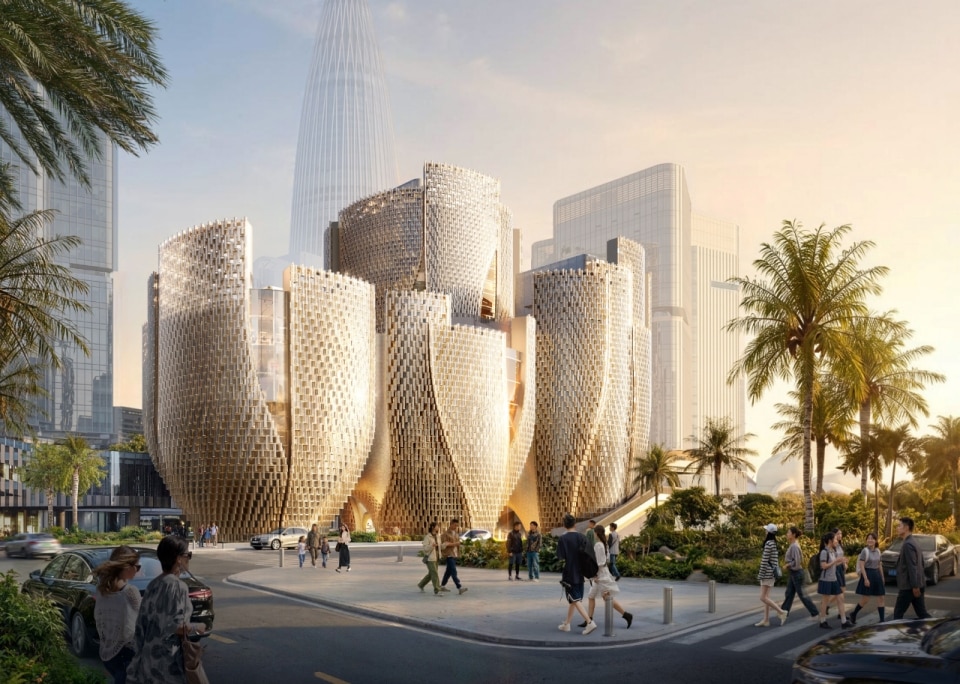
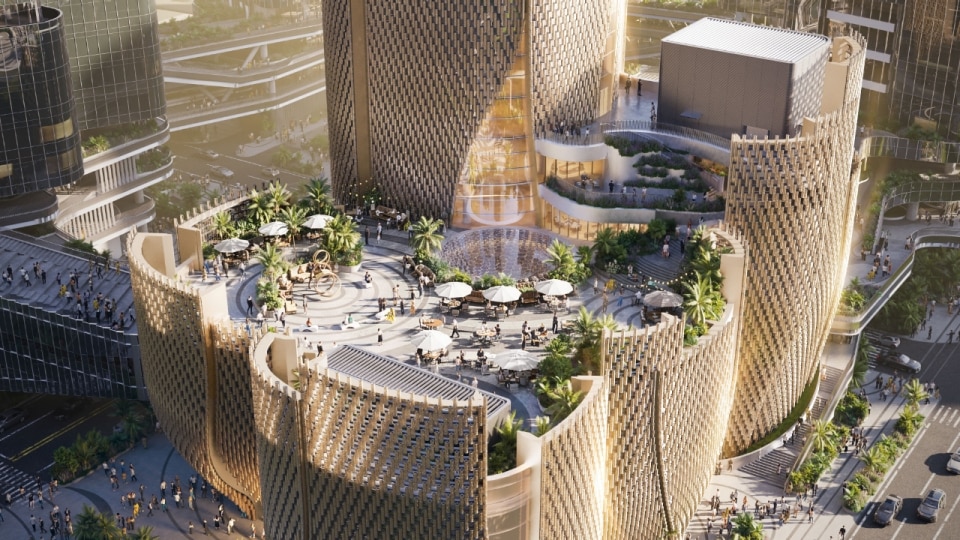
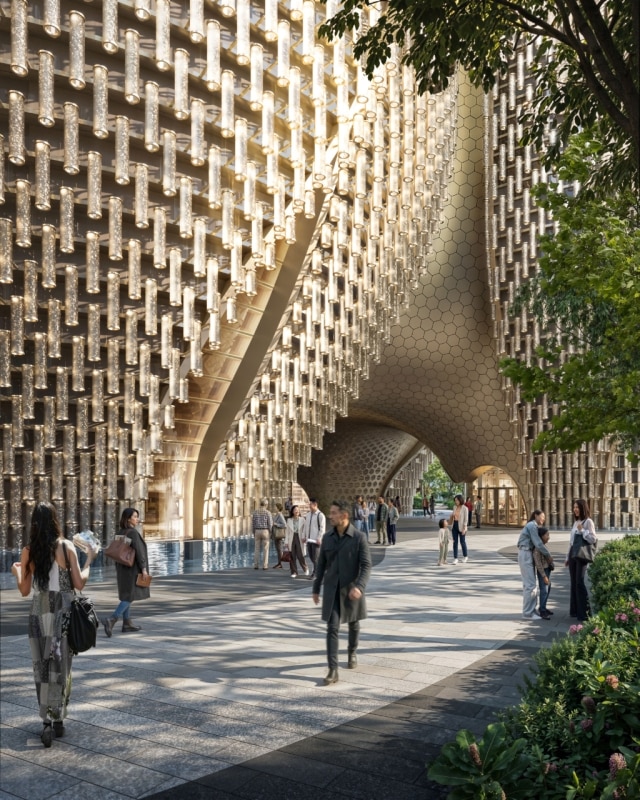
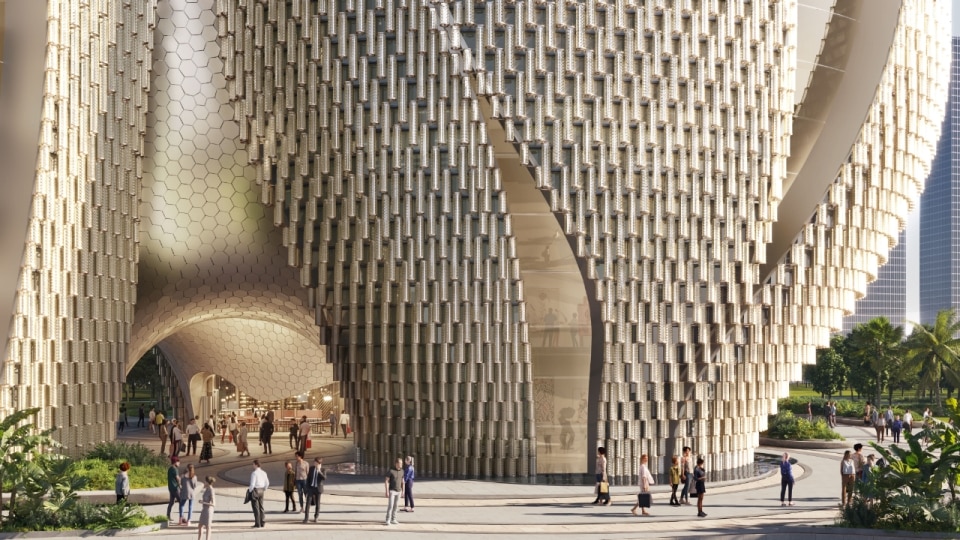
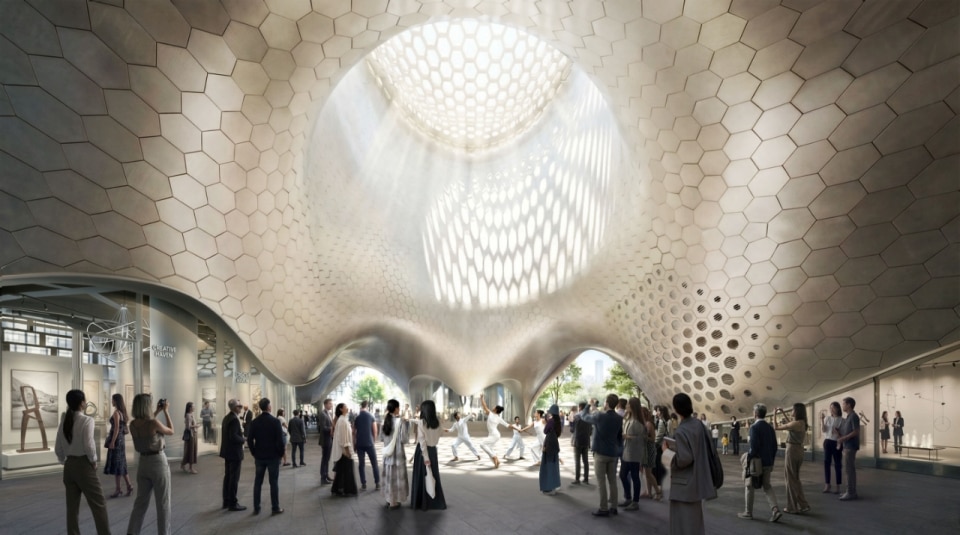
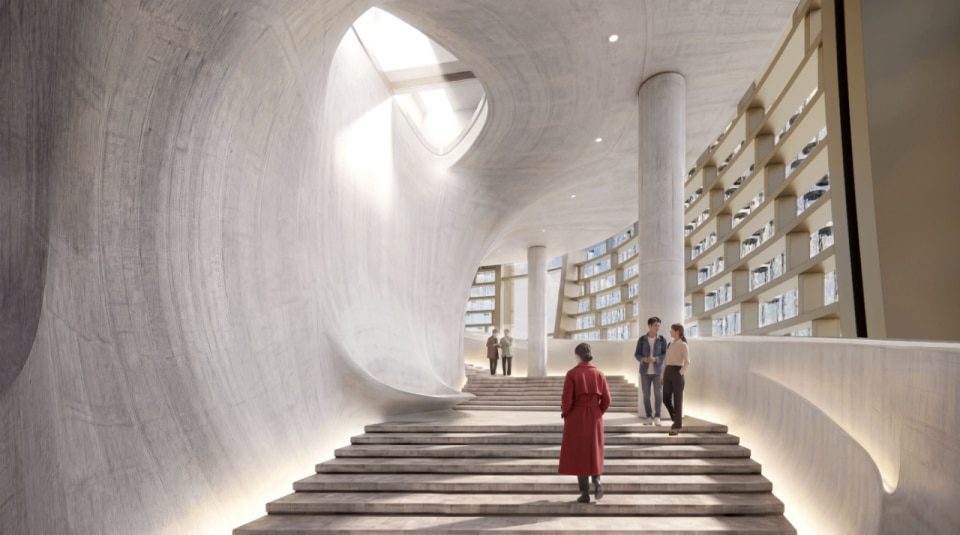
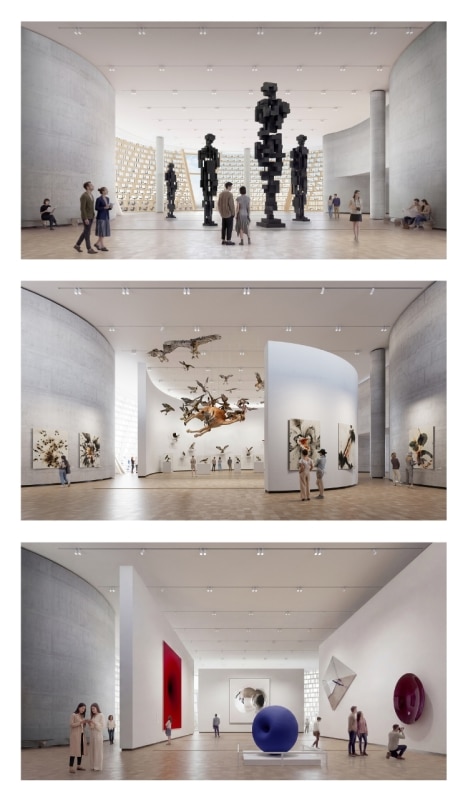
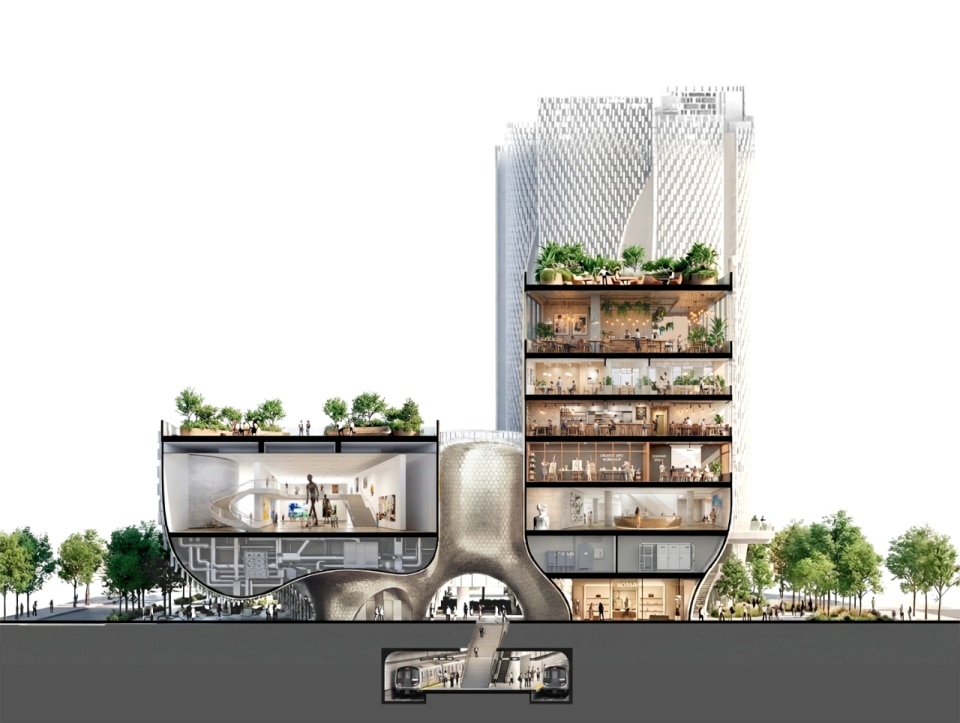
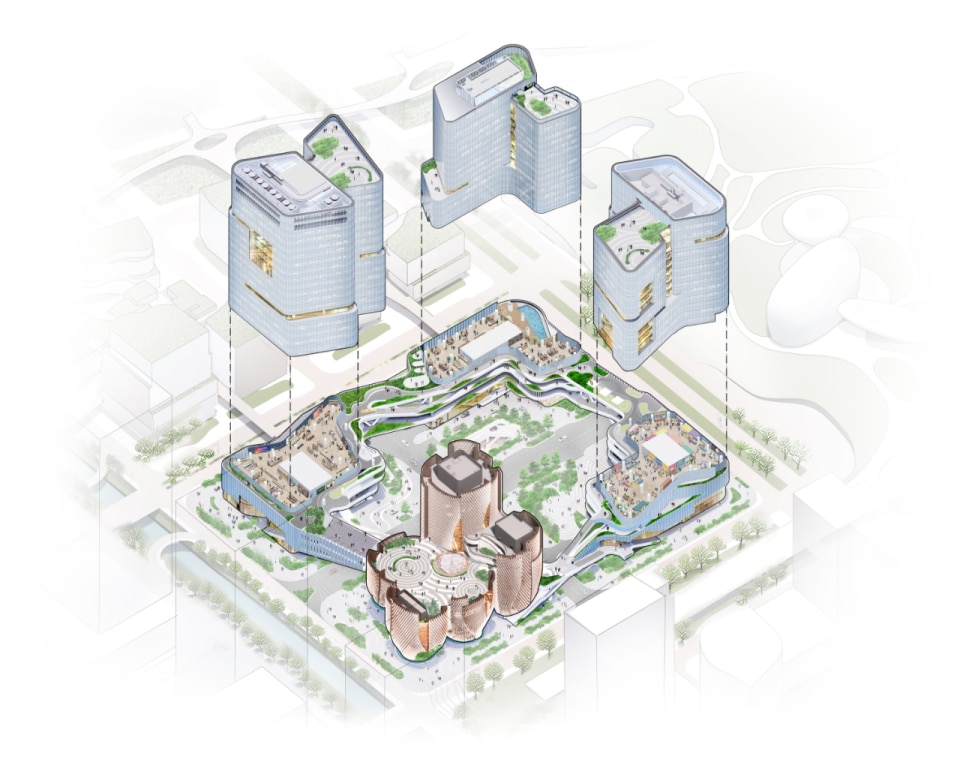
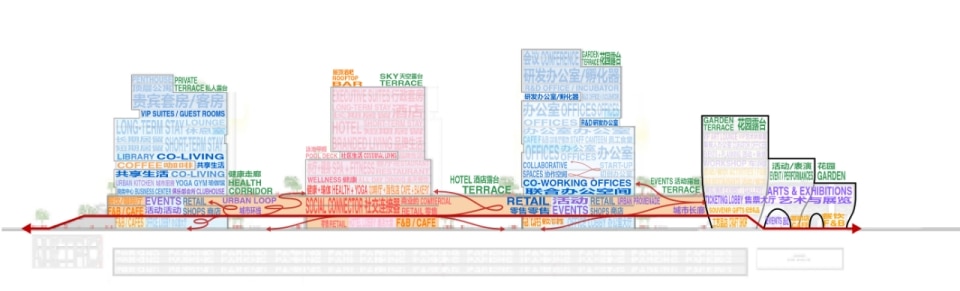
Located in the Nanshan district within the mixed-use Houhai Hybrid Campus (also designed by Ole Scheeren) and covering a total area of 4,500 square metres comprising exhibition galleries, a public art library, workshops, conference rooms, shops, cafés and restaurants, the complex is visually striking, as befits Shenzhen’s cinematographic skyline: five sinuous pavilions (like blossoming buds or melting icebergs?) rise upwards and are connected at the base by a covered public square, continuously accessible for events and social interaction, naturally lit and ventilated, and topped by roof gardens.
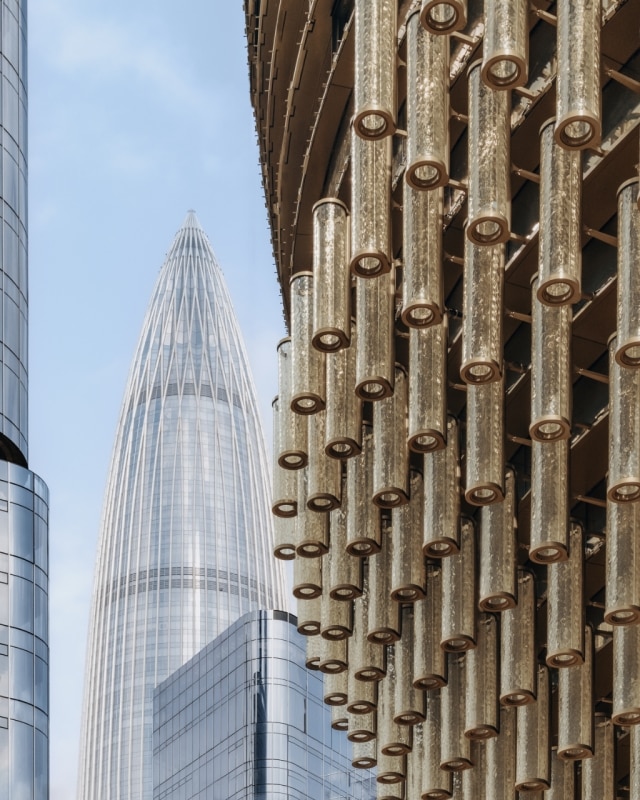
The shell, composed of staggered horizontal layers and wrapped in a pattern of suspended, parametrically designed glass tubes, creates a translucent veil that produces vibrant plays of light and shadow, modulating daylight and transforming at night the complex into a beacon (of culture and social life) proudly illuminated amidst the city’s “cyberpunk” lights.
The opening to the public is scheduled for June 2027.