

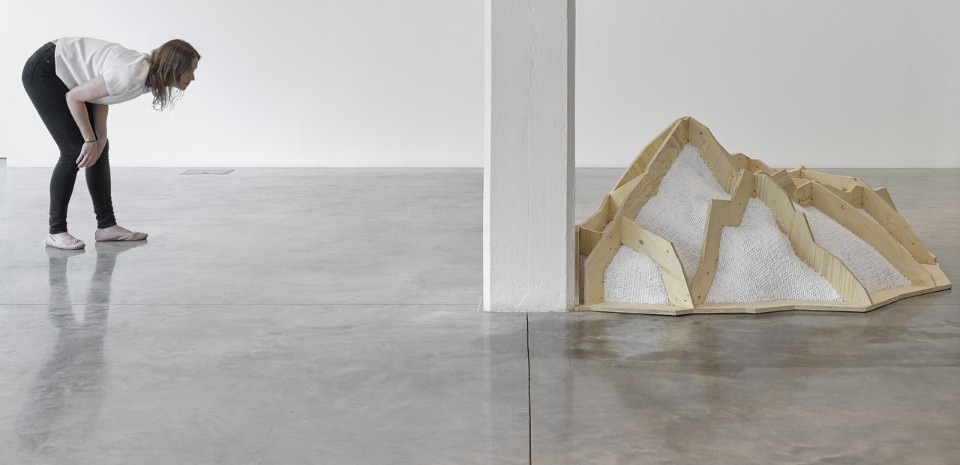
The ceiling/floor between the foundation’s lower and upper galleries seems to slice horizontally through the sculpture.
Although influenced by the artist’s fascination with folly architecture, the work itself is inspired by Sigurðardóttir’s interest in the dichotomies of perception present in nearly all matters of life. Such binaries have been at the core of most of her works, from Boiserie, 2010–2011, an installation she created for an exhibition at the Metropolitan Museum of Art in New York, to Foundation, 2013, which she built for the Icelandic pavilion at the Venice Biennale.
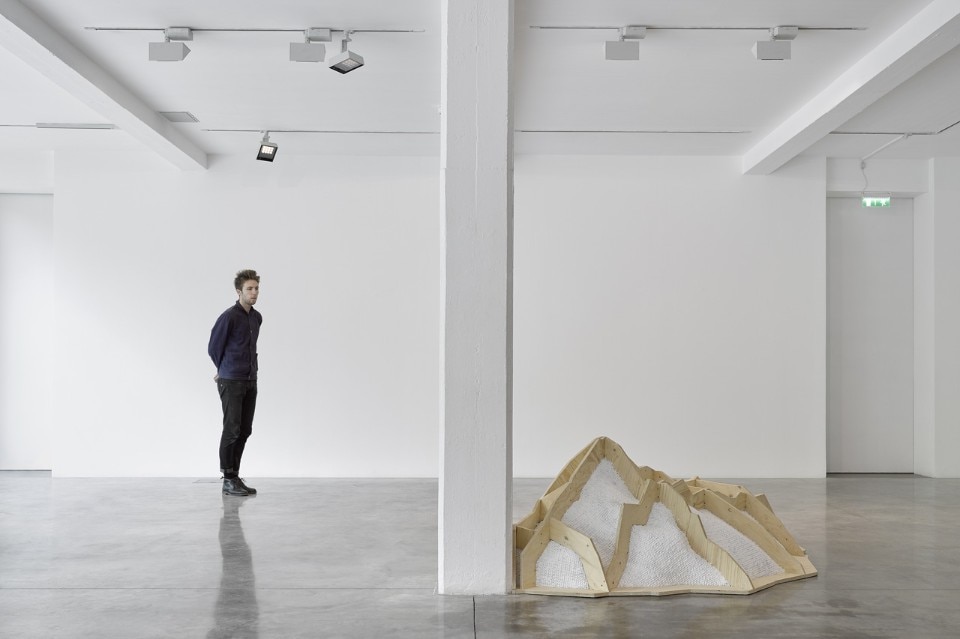
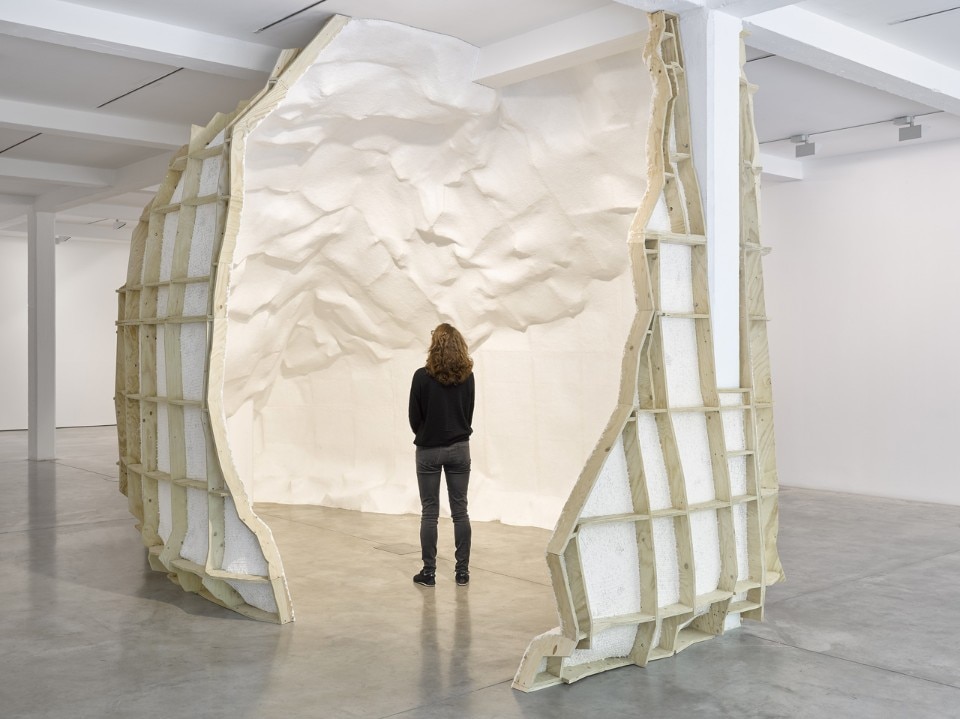
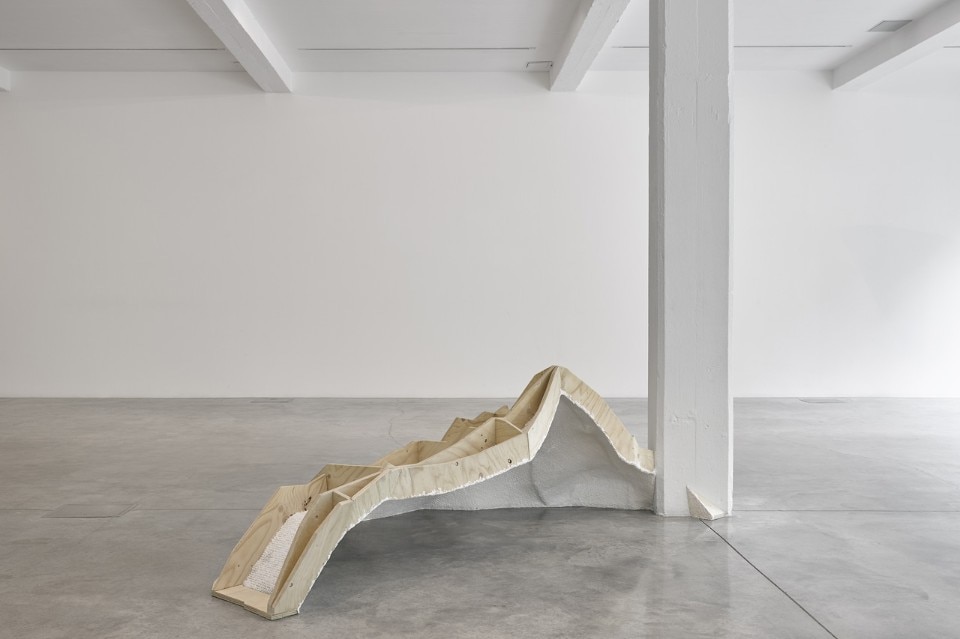
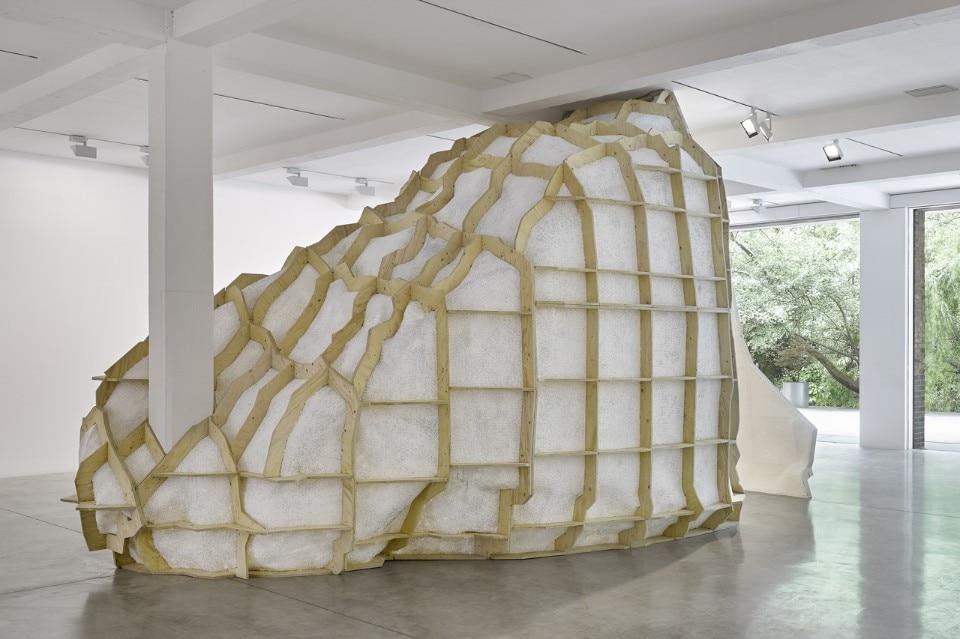
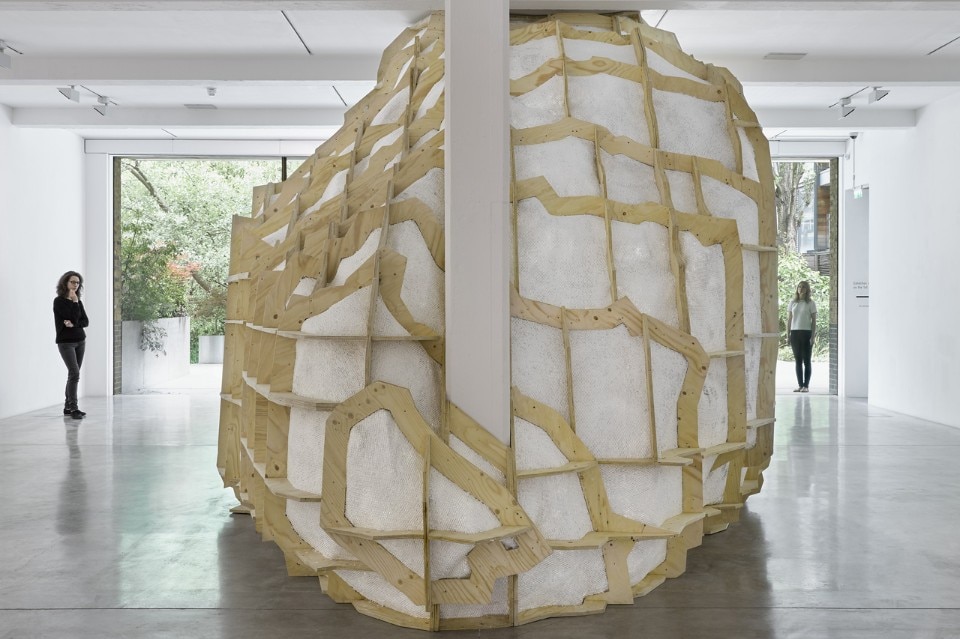
From the Latin term for “going above ground”, Supra Terram resembles a natural subterranean cave and a man-made grotto. This site-specific work is the artist’s response to the two floors of exhibition space at Parasol unit, where visitors must move between the lower and upper galleries to fully discover and mentally unify the two parts of the sculpture. A sequence of experiences unravel as visitors encounter a disorientating shift in scale, from being somewhat overwhelmed by the cavernous structure in the lower gallery to being in a position to look down at the tip of it emerging through the floor of the upper gallery.
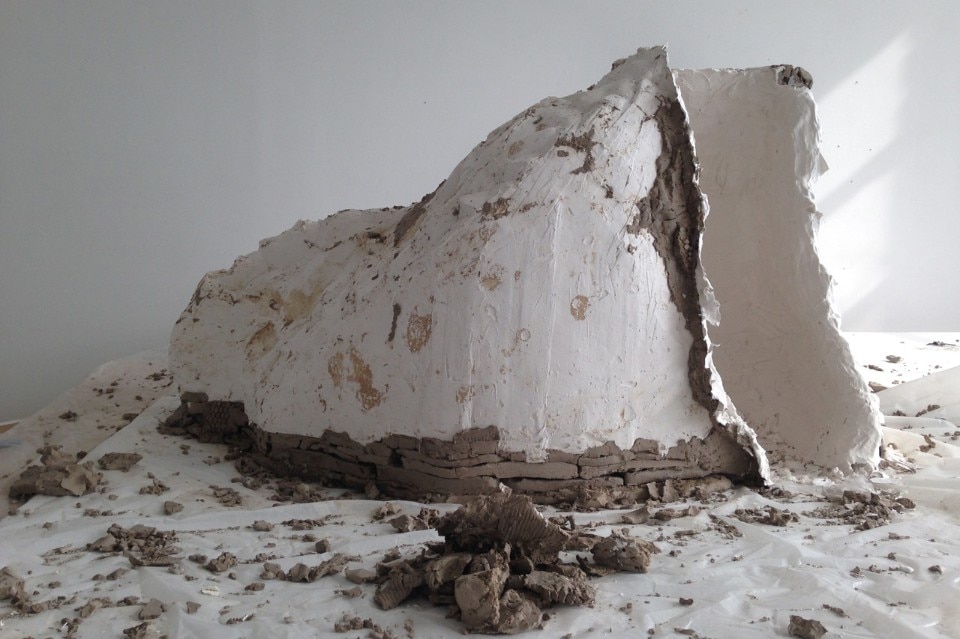
Structurally, Supra Terram was developed by the application of paper pulp over a wire-form supported on a wooden framework. As daylight passes into the cavity space through the translucent membrane it gives the work a lightness that contradicts its apparent mass. The outer skin, thin as a line, defines the huge structure. This ghostly, ethereal piece exists more as a thought than a real space – a transient rendering of a dislocated place.
 View gallery


until August 8, 2015
Katrín Sigurðardóttir
Supra Terram
curated by Ziba Ardalan
Parasol unit
foundation for contemporary art
14 Wharf Road, London