Materia Litica: Galiotto and Lithos

The new challenge for Lithos Design is getting design to cater to the needs of architecture.

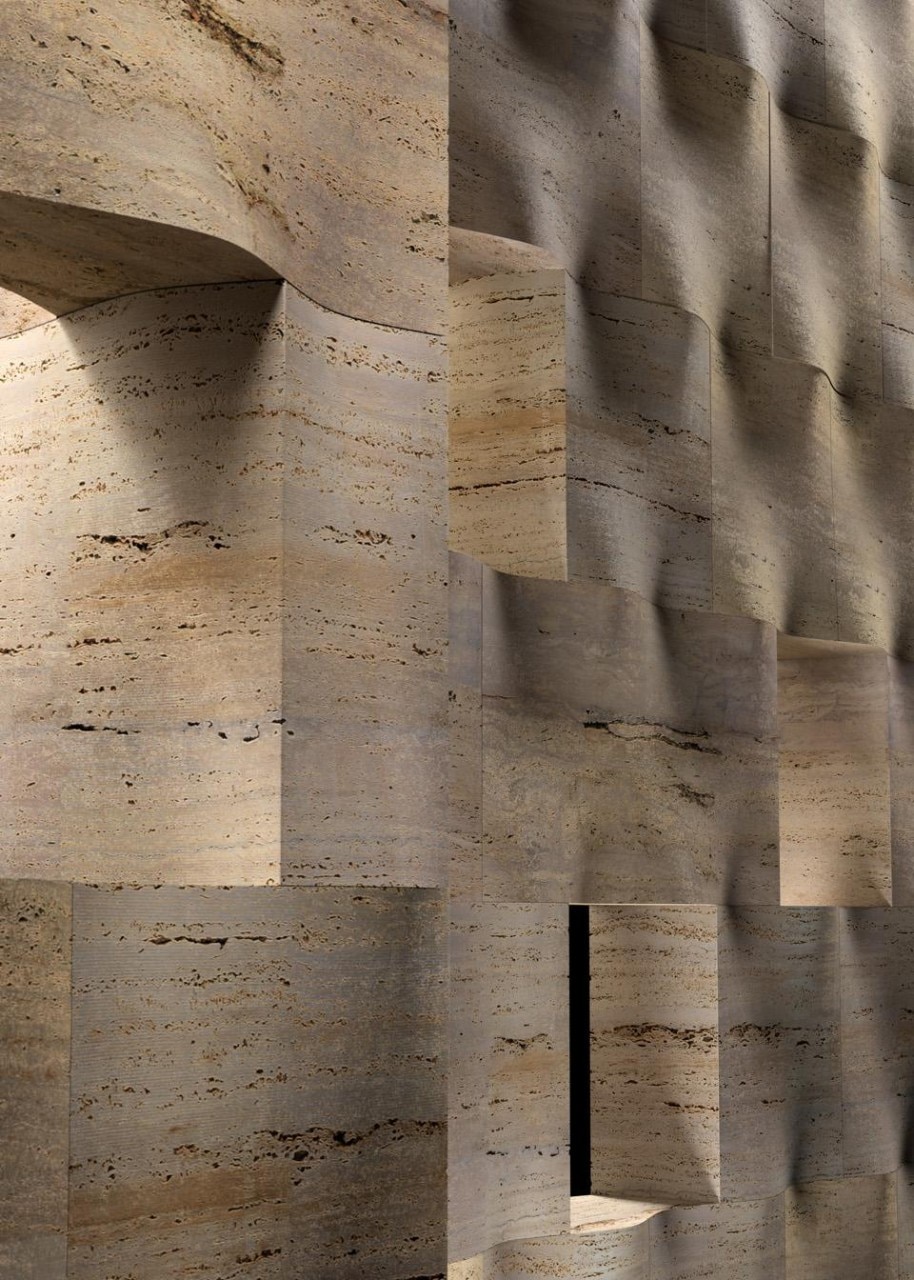
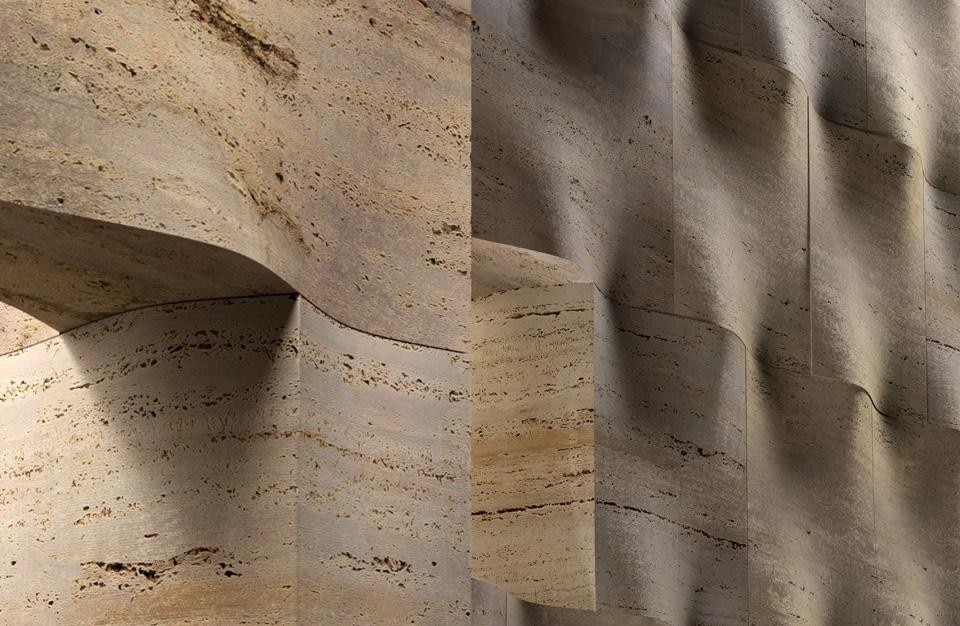
On the occasion of Marmomacc, Lithos Design is presenting a genuine architectural project at the cutting edge, offering a charming composition of modular stone elements (hewn stones) which are produced in series and can be arranged together in a variety of solutions to build walls, corners, openings and architraves.

The planning and production of the hewn stone encapsulate all the major features of design: originality, styling, functionality and industrialization. The sinuous plied shape of the stone is suited to all architectural requirements and makes a multitude of constructions possible: designers can create their building according to their own creativity. A complex and challenging project where the company and the designer went through a lengthy process of studying the cutting possibilities, checking the technical requirements and testing the technological limits to make sure that marble could be split, that the modular and specular surfaces would match and could be put back together to allow the material to be recomposed in an architectural shape.
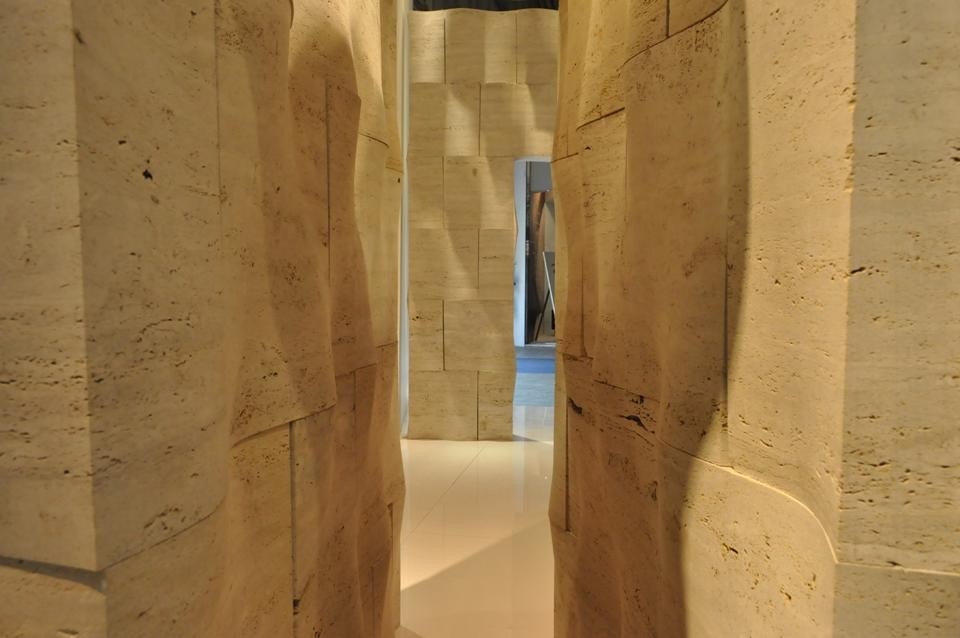
The installation spans 90 sq.m. and shows the construction of a "sample" building which can be achieved through the serial use of these hewn stones.
Materia Litica also shows how stone, a material which is considered to be difficult to change and consequently of limited flexibility for current architectural requirements, in actual fact has a mutable spirit which can be expressed in full through a clever design planning. The installation spans 90 sq.m. and shows the construction of a "sample" building which can be achieved through the serial use of these hewn stones. The resulting mood is marked by a strong sense of naturalness and matter, guaranteed thanks to the use of a material such as Travertine, a porous, stratified and solid marble, which is especially suited to external use as well.
Materia Litica also shows how stone, a material which is con-sidered to be difficult to change and consequently of limited flexibility for current architectural requirements, in actual fact has a mutable spirit which can be expressed in full through a clever design planning.
The project is also a challenge to the sustainability of marble: the shape is designed to afford minimum production waste and, thanks to their solidity, these hewn stones are also pro-duced to be dismantled, reused and rebuilt like those used in ancient buildings. Materia Litica is an all-Italian design initiative, from the con-cept to the planning of each production phase. Italians are also behind the study and implementation of the cutting-edge technologies which were indispensable to the success of the project, providing an additional guarantee of the original creativity and quality. Travertine is Italian: a staple stone in ancient constructions, used for the Colosseum and Ancient Rome.
The project is also a challenge to the sustainability of marble: the shape is designed to afford minimum production waste and, thanks to their solidity, these hewn stones are also pro-duced to be dismantled, re-used and re-built like those used in ancient buildings.
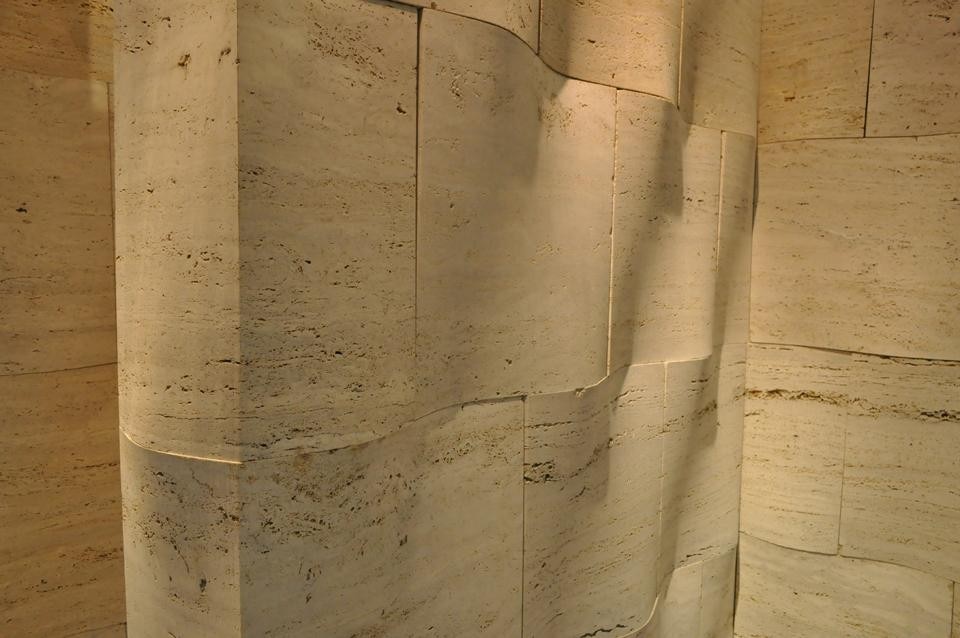
The shape is designed to afford minimum production waste and, thanks to their solidity, these hewn stones are also produced to be dismantled, re-used and re-built.
Partner of the installation
: Travertino Sant'Andrea – Giganti Renato s.r.l. The Tuscan supplier of Travertine, an ancient material, the stone used to build the Colosseum. In addition, Travertino Sant'Andrea devised a special treatment using Titanium dioxide to make the surfaces self-sanitising and avoid unsightly stains.
Raffaello Galiotto studied painting at the 'Accademia di Belle Arti' in Venice. During his training he entered the world of industry and started collaborating on design projects which soon led to business relationships, and eventually gave him the possibility to set up his own activity and his industrial design practice in 1993. At first he worked for companies belonging to the furniture industry, designing outdoor furniture, thus becoming highly experienced in the design of big plastic products produced in large-scale quantities. He expanded his horizons by applying his knowledge to different, additional sectors, from furniture, to kitchens, to items for pets, to stone products, learning more about materials and technologies used for different types of production. In the stone sector, in particular, he creates innovative products characterized by a surprising work on surfaces, gaining him many national and international awards. He cooperates with some eminent Italian Universities giving lectures and conferences, with the involvement of international architects. In the last years he produced some important events dedicated to stone design, and with the collaboration of the CMC (Consorzio Marmisti Chiampo) he edited and planned two important projects: "Palladio e il Design Litico" and "I Marmi del Doge", shown at Marmomacc fair and in several European cities. In 2011, the board of directors of Stonetech fair in Beijing invited him to hold a one-man exhibition dedicated to his stone design projects, with the aim of promoting the value of lithic design in China.

Latest on News

Latest on Domus

China Germany India Mexico, Central America and Caribbean Sri Lanka Korea icon-camera close icon-comments icon-down-sm icon-download icon-facebook icon-heart icon-heart icon-next-sm icon-next icon-pinterest icon-play icon-plus icon-prev-sm icon-prev Search icon-twitter icon-views icon-instagram