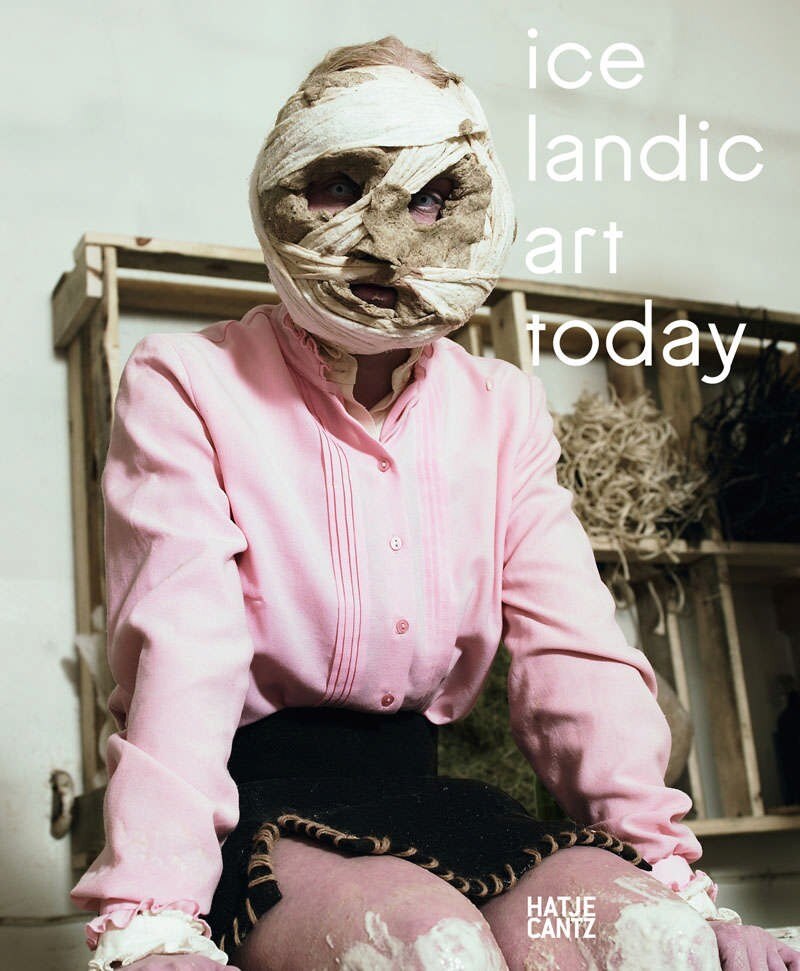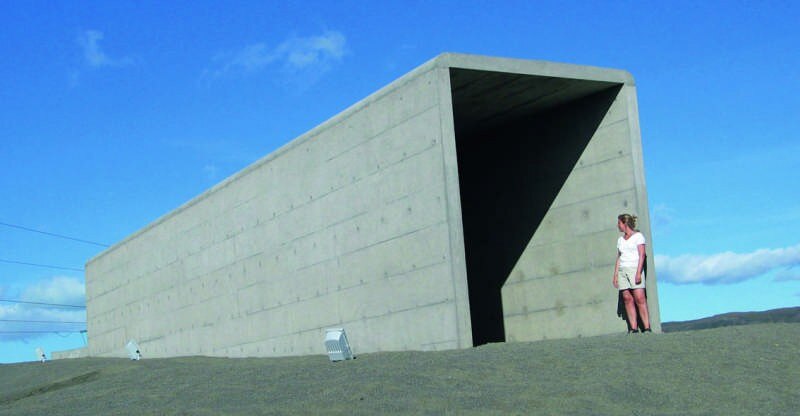
Icelandic Art Today has informative texts on each of the fifty artists and an extensive introduction to contemporary art in Iceland, which can be traced back to the late fifties and early sixties when a growing discontent with modernism and formalism was being felt by a generation of artists born in the twenties and the early thirties. With the advent of numerous artists born in the early fourties Contemporary art became the dominant trait of Icelandic art in the late sixties and early seventies, paving the way for Conceptual and Minimal Art in the seventies and the eighties, before evolving along postmodernistic lines in the late eighties.
Despite its kinship with international trends and movements Icelandic art has a logic of its own, which is not easy to decipher although it is quite easy to detect. Compared with art from other Nordic countries Icelandic contemporary art is perhaps less sociological or psychological than either its Danish or Swedish counterparts and has less to do with the search and loss of identity, which often characterizes Norwegian and Finnish art.
If one is to sum up recent contemporary art in Iceland, which is not a rewarding task, it is rather based on a playful attitude towards tradition and the absurdity of being situated halfway between western culture and a striking nature, which is perfectly othewise than anything found in the rest of Europe. Isolation, conditioned by a difficult notion of time and space, may be a common denominator of Icelandic contemporary art although Icelandic Art Today shows it to be anything but obvious.
While we thank Hatje Cantz for their patience and encouragement, and all those who helped realize this wonderful project we hope that this book may reveal the variety of Icelandic art, which still benefits from the spectrum of different countries and cities where these 50 artists drew their postgraduate formation before blending it with the background of their origin.