


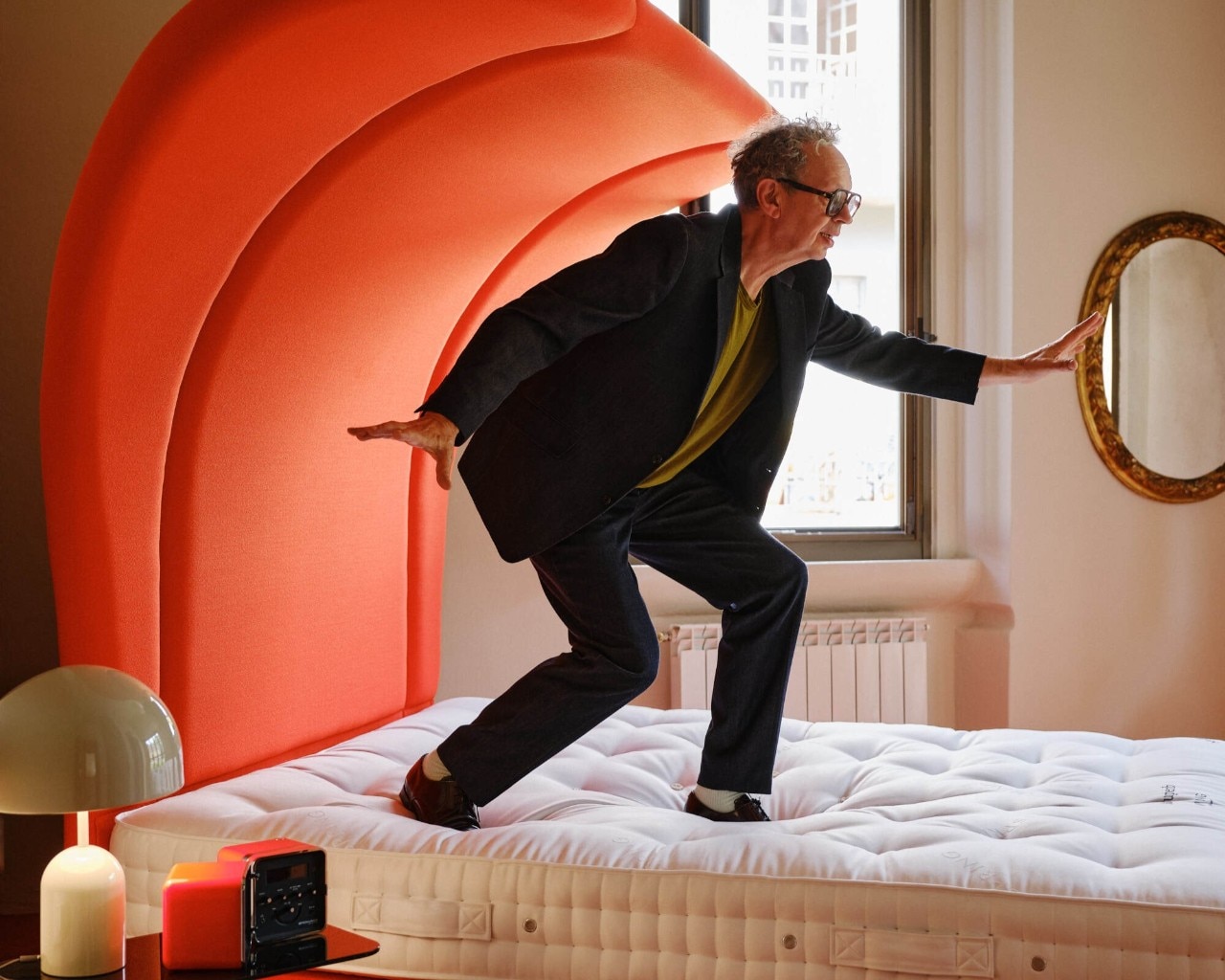

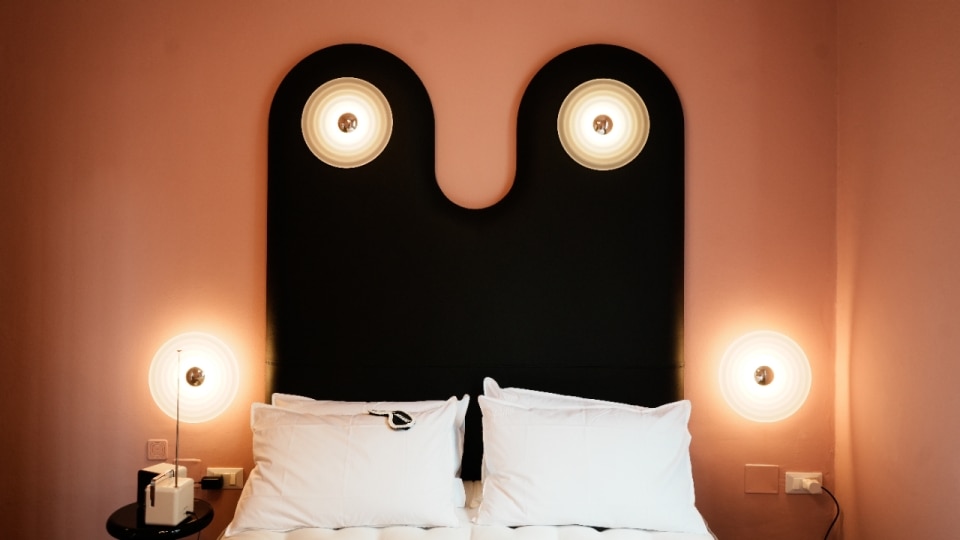
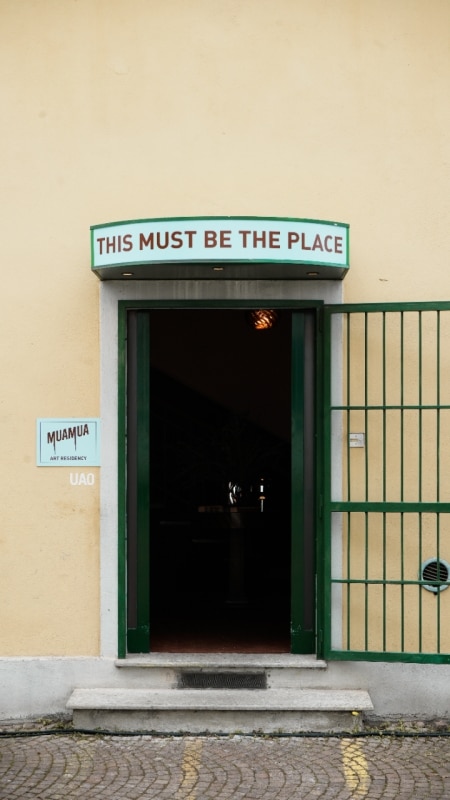
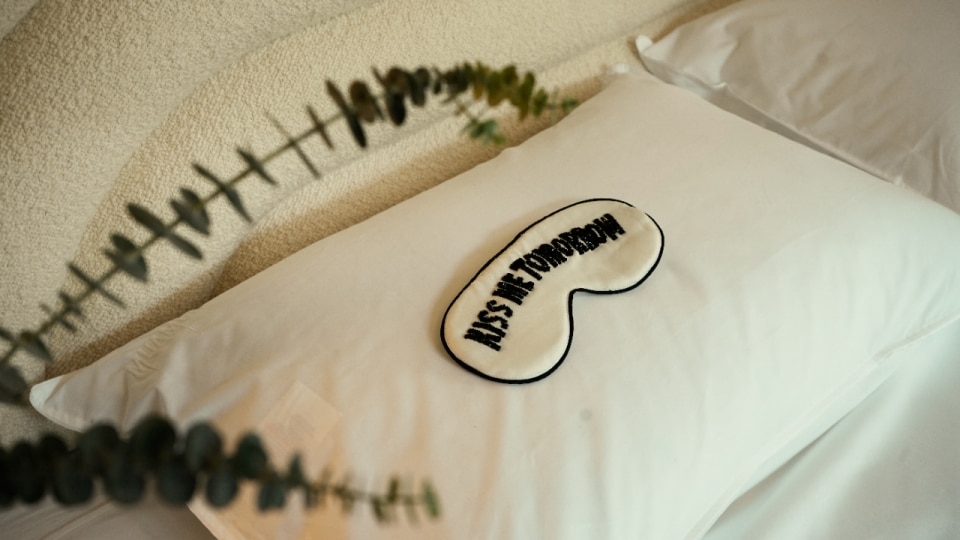
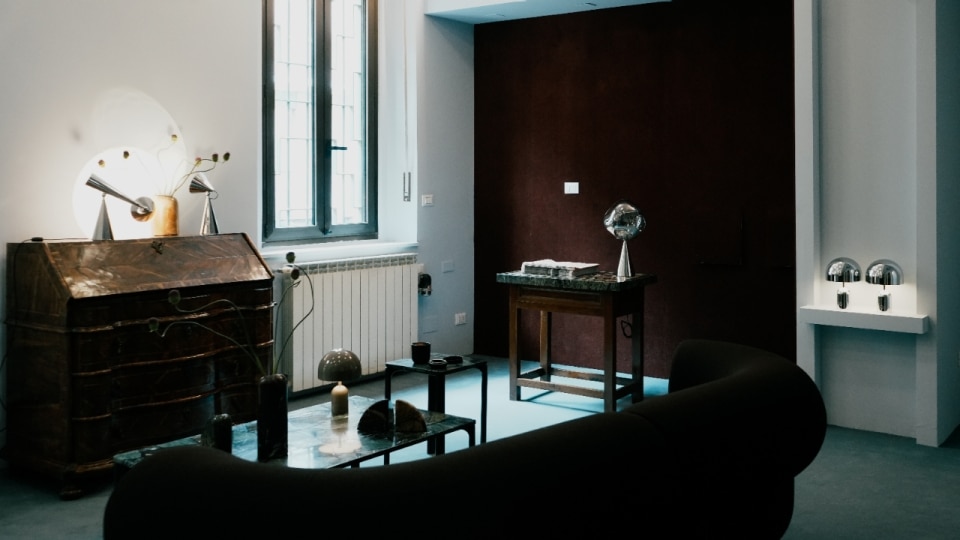
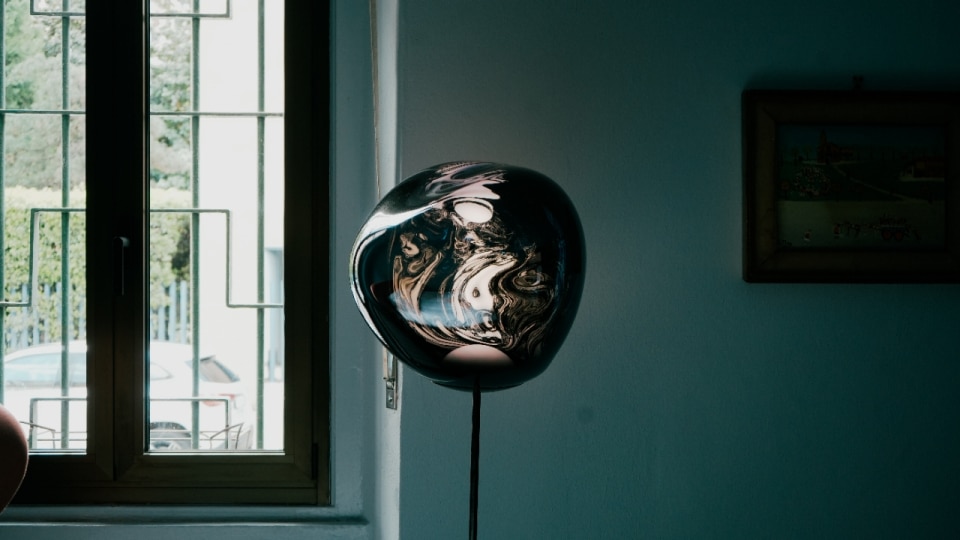
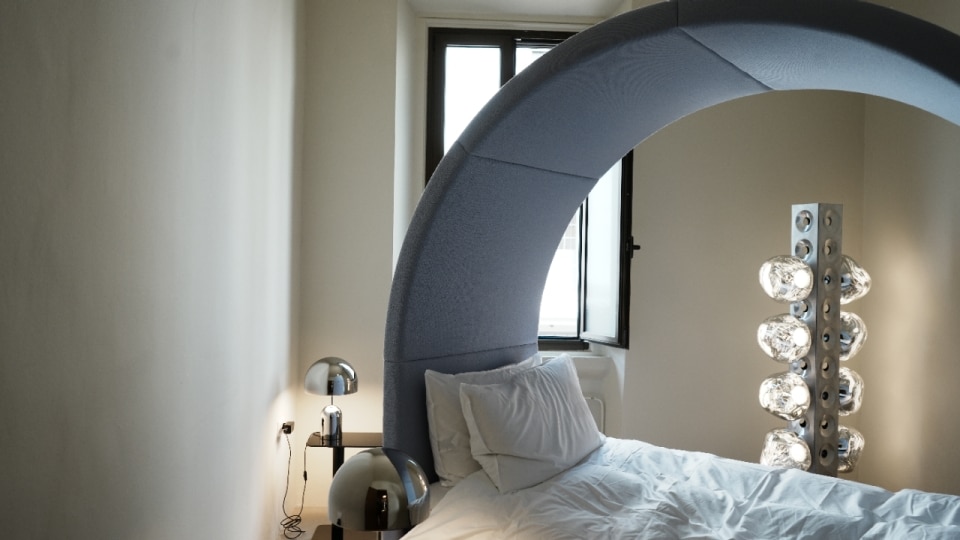
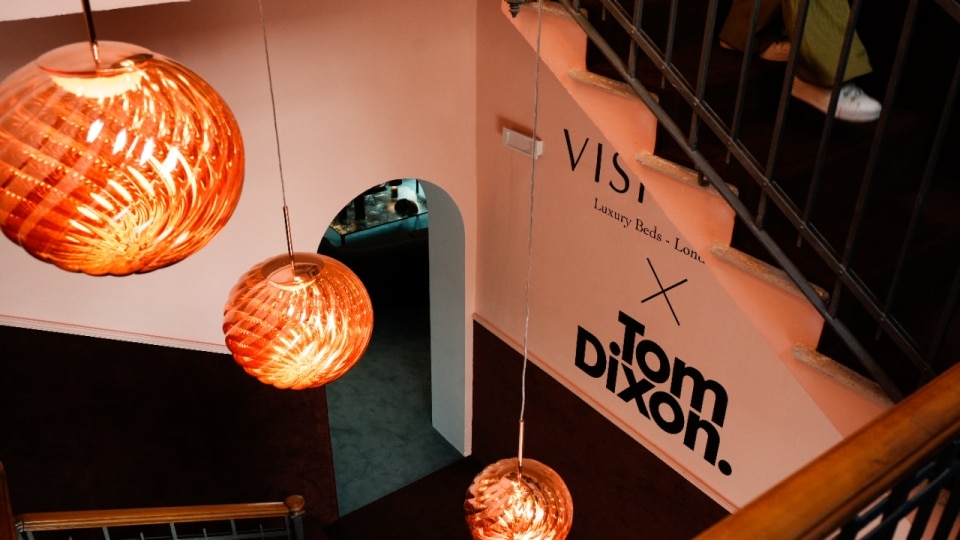
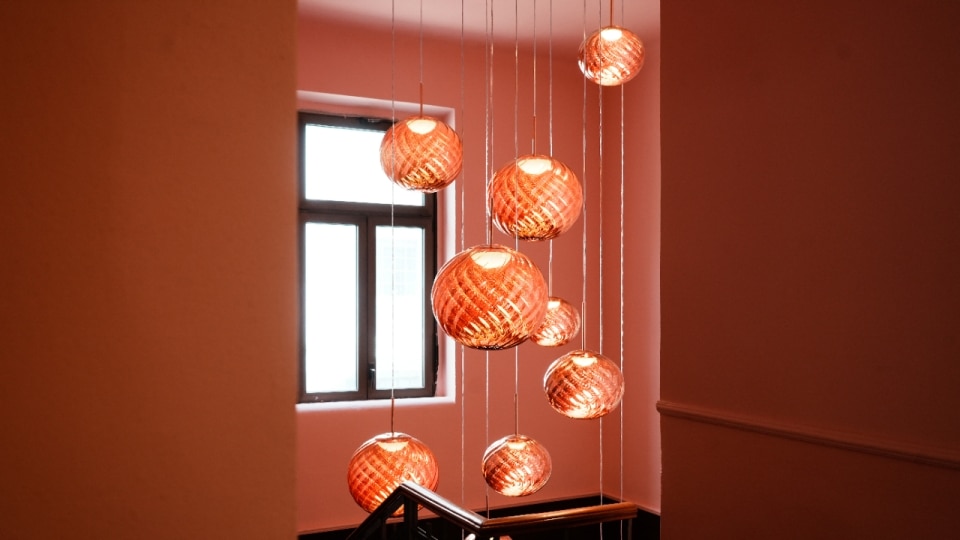
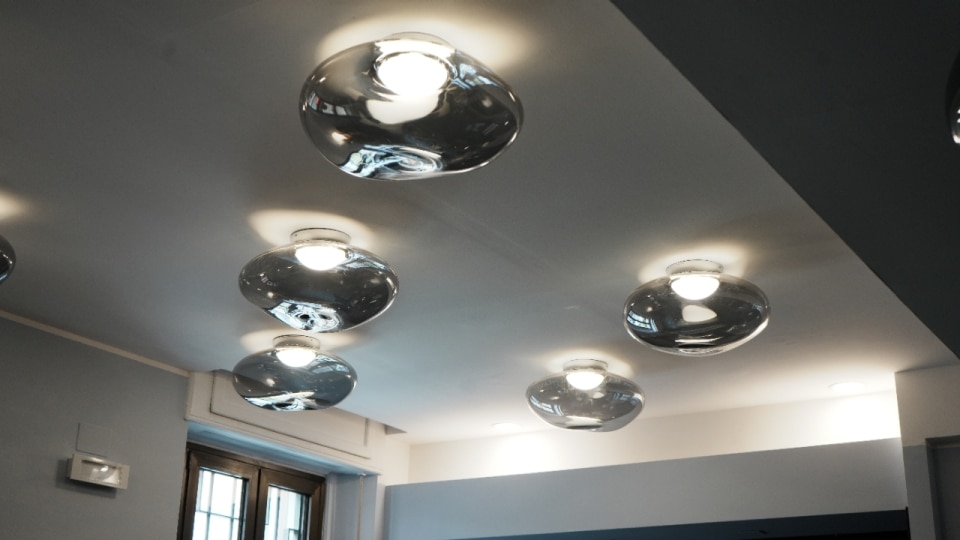
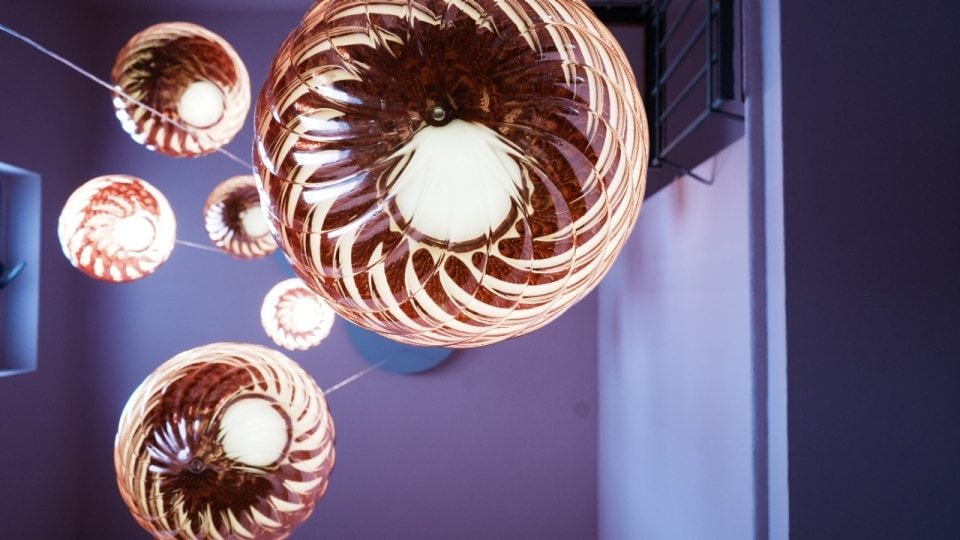
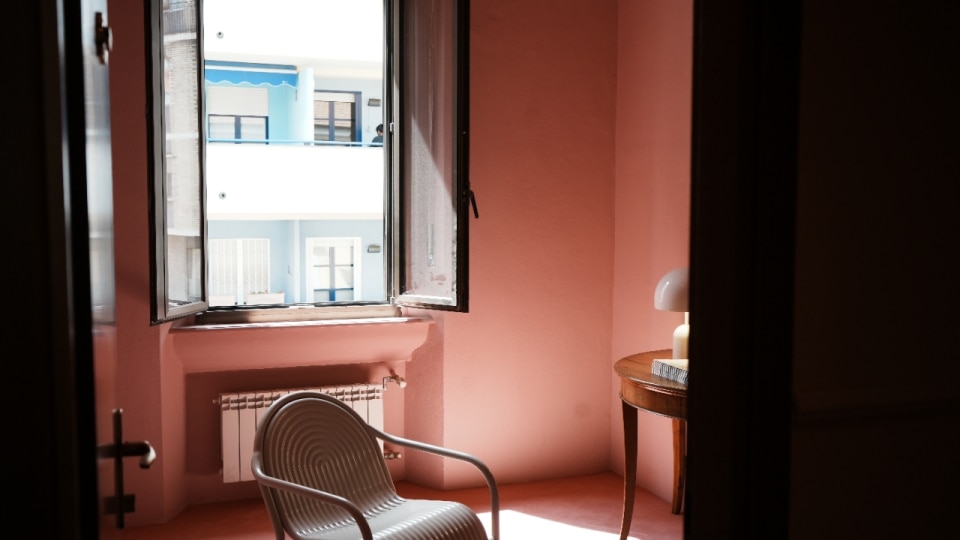
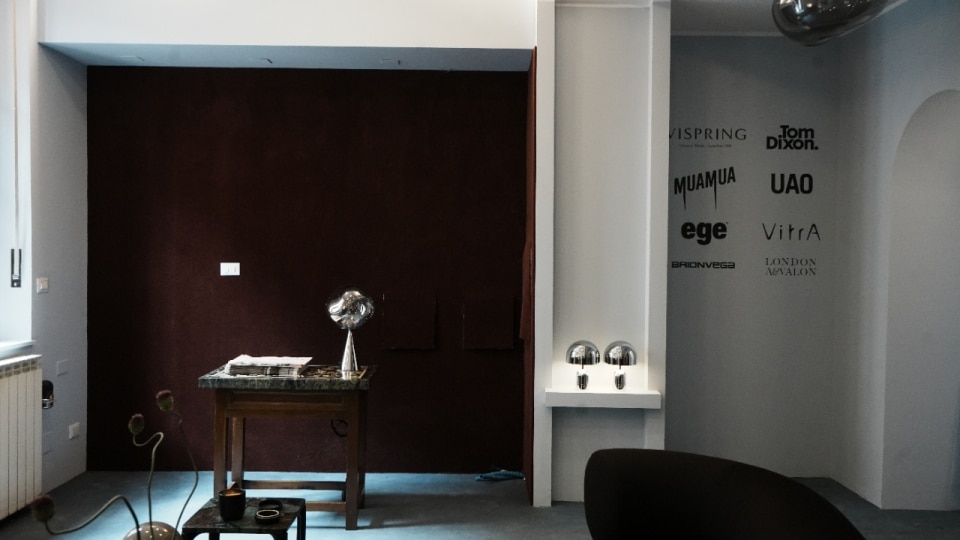
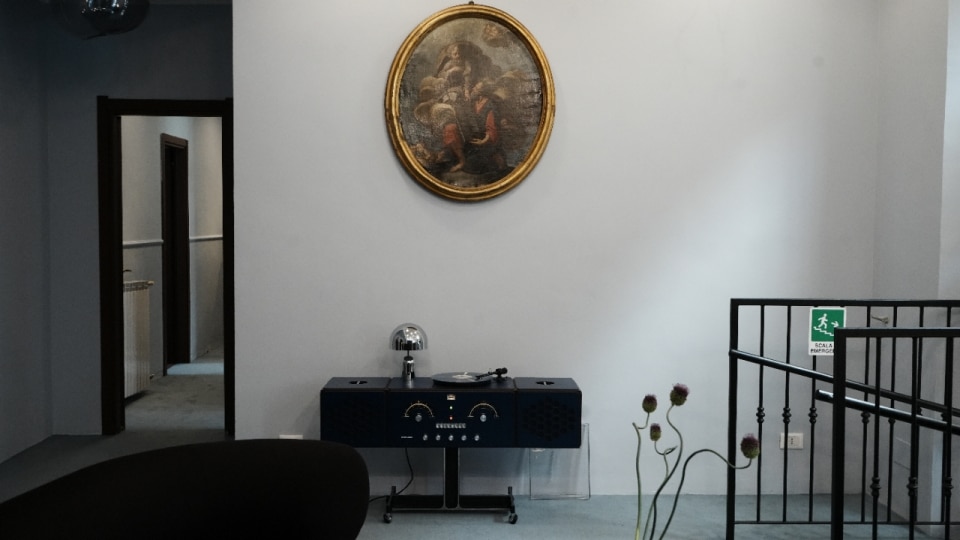
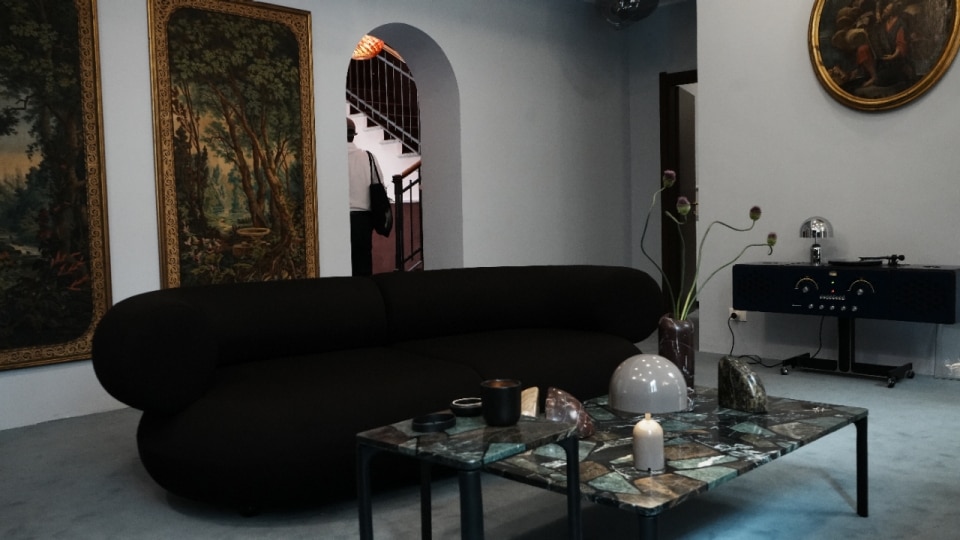
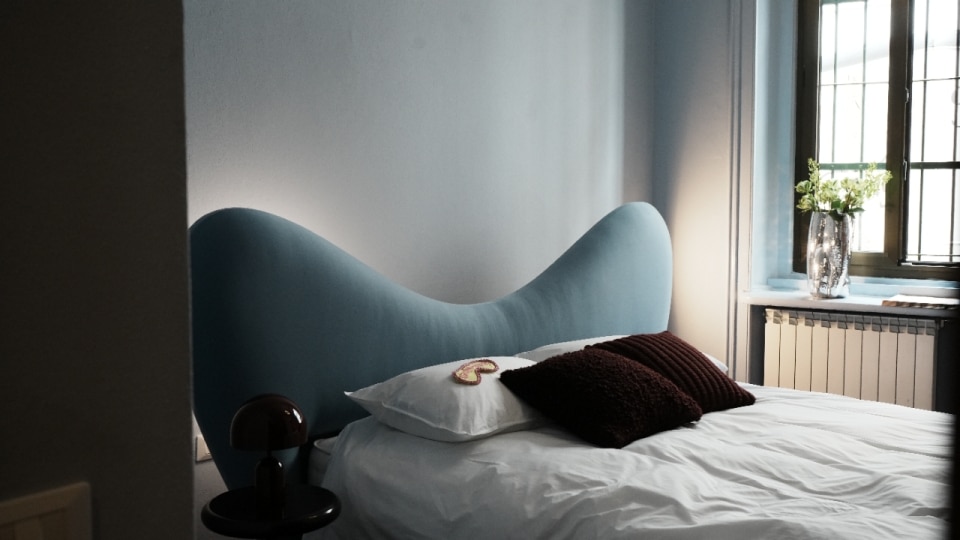
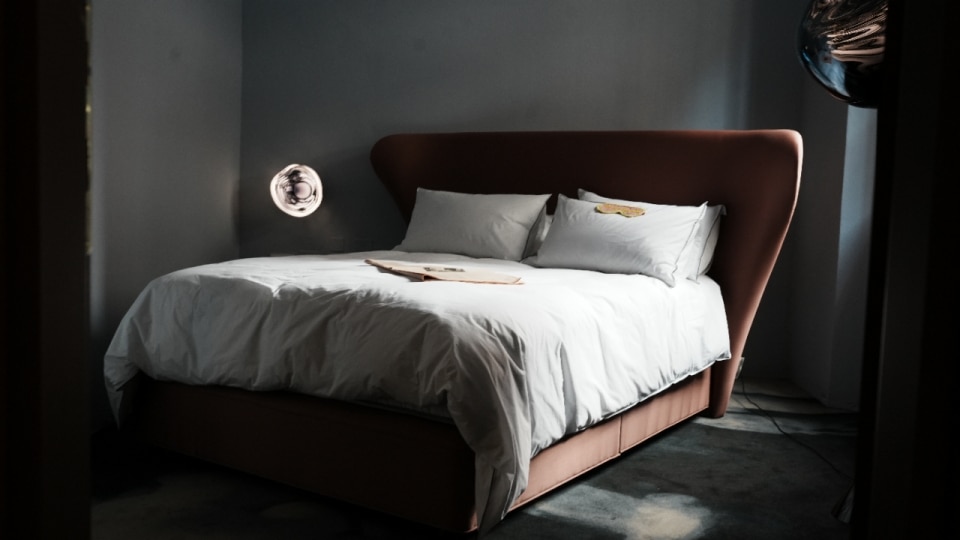
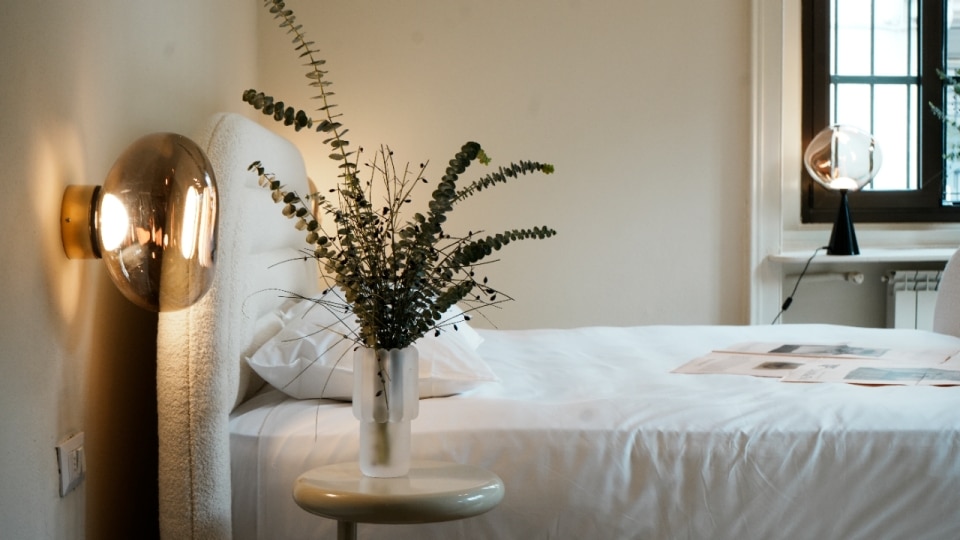
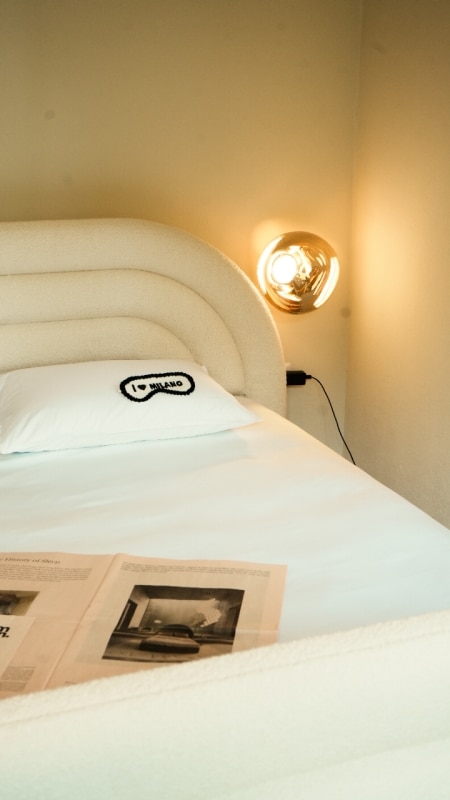
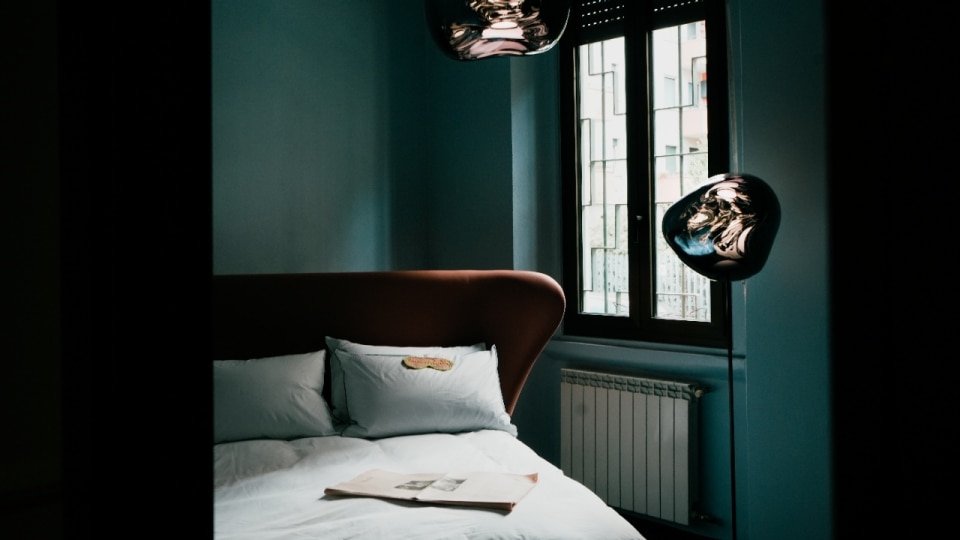

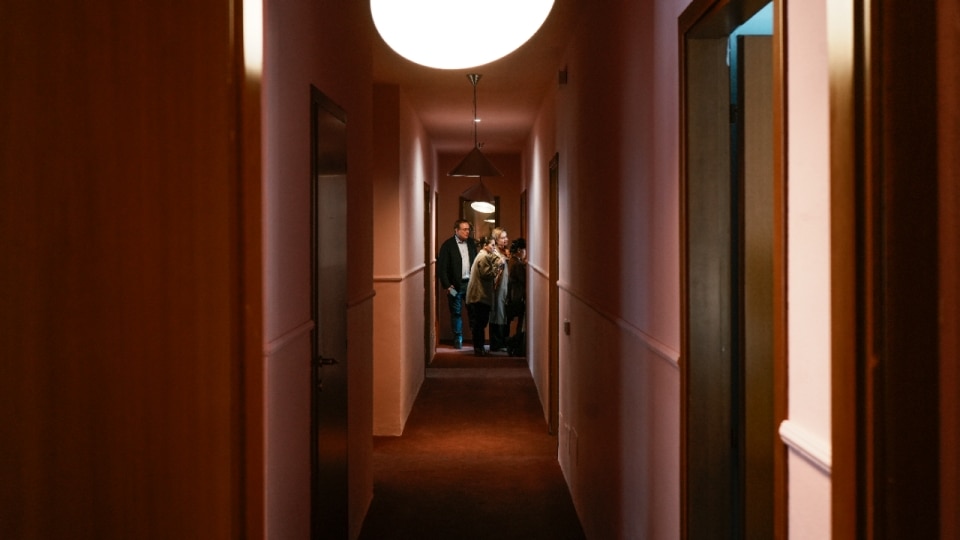

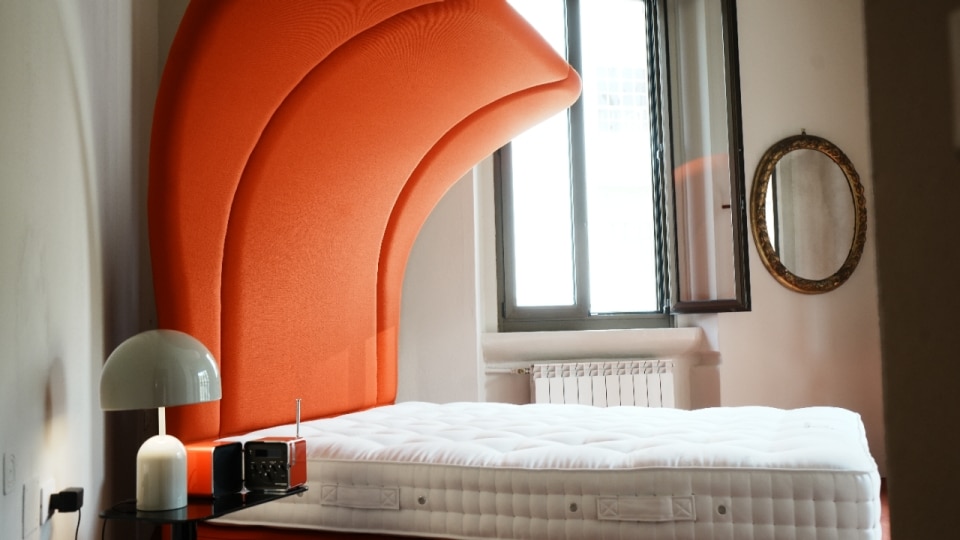
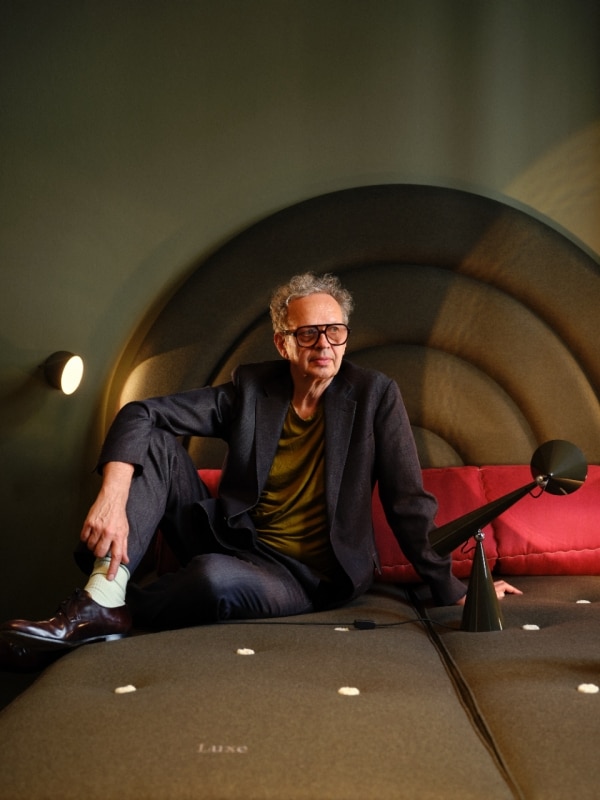
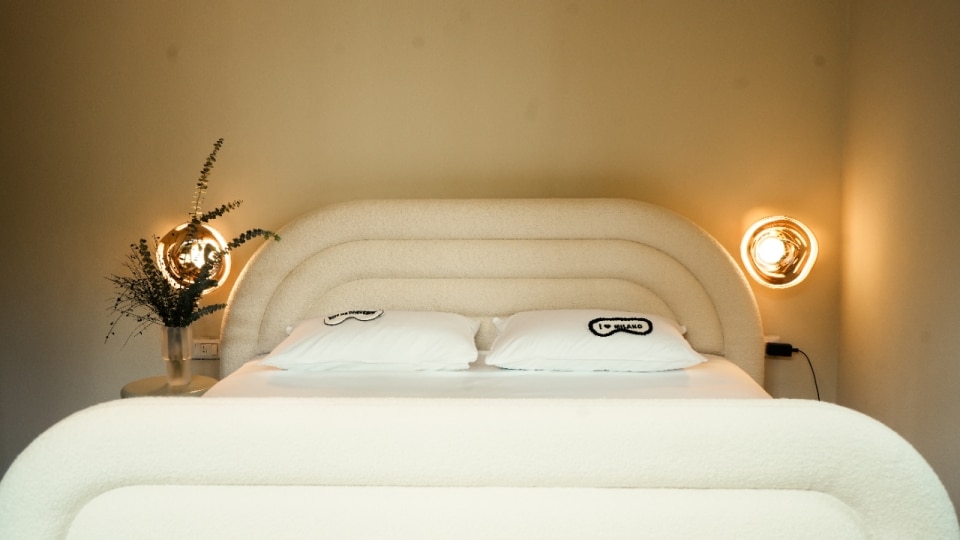
There is a bed that looks like an arch. Another that resembles a wave. Or the shell in Botticelli’s Primavera, Tom Dixon suggests, as he opens one door after another inside the Mua Mua Hotel — pronounced muamuà, like two kisses. It quickly becomes clear that he is not really showing a hotel, but a way of thinking about design itself. He doesn’t walk straight in. He steps back first, as if letting each room explain itself, then moves forward again, pointing, adjusting, framing the space with his hands.
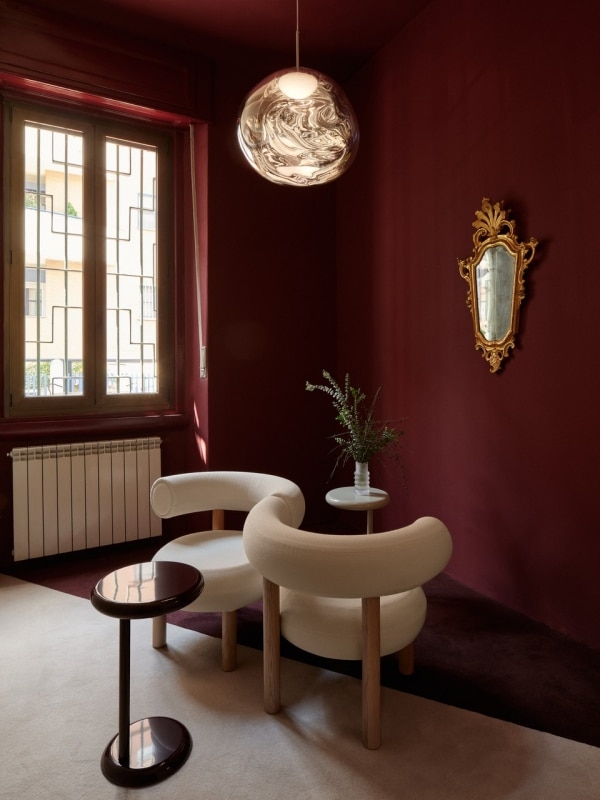
The project is temporary, but only in part. It will become a real hotel. “Some things will stay,” he says. Milan, then, will get a hotel by Tom Dixon, inside a building created about a century ago by the technical office of Gio Ponti — or at least, that’s the premise.
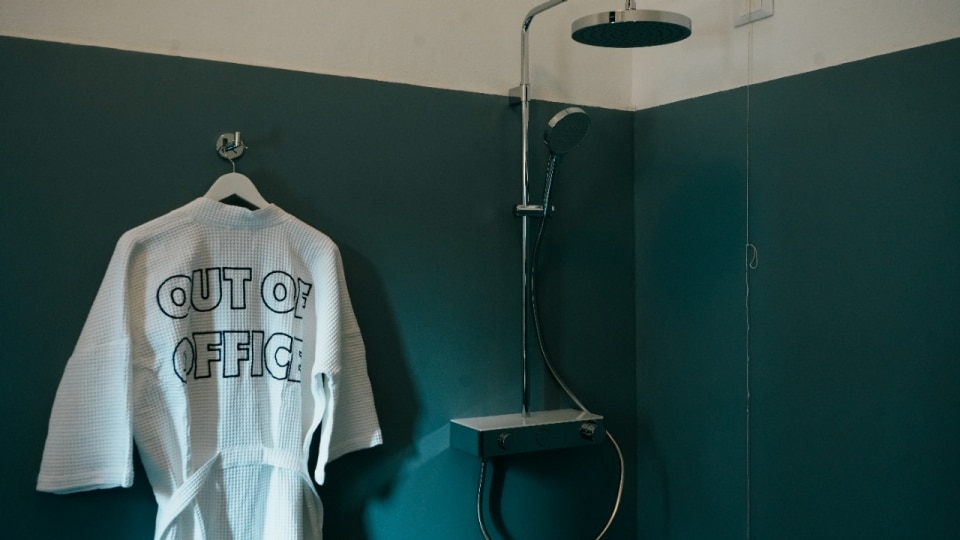
The beds are developed in collaboration with Vispring, the British luxury mattress manufacturer, while the bathrooms are produced by the Turkish company VitrA. Brionvega radios and electronic devices appear throughout the hotel, and even the robes were designed by Dixon himself. What matters, though, is the way he has taken over the building entirely — not inserting objects into rooms, but redefining the rooms themselves. Each space is treated as a controlled environment, where colour, texture and material are pushed just beyond comfort, toward something closer to staging than decoration.
Some of the most creative minds have moved away from interior design objects to the intangible digital sphere.
Tom Dixion
Some references are deliberately loose, almost cinematic. One room becomes, half-jokingly, “Amsterdam’s porn room”: less a theme than a shift in atmosphere. In the lobby, he says, they wanted to bring back “a bit of old Milan.”
Tom Dixon is perhaps the most British of designers. And yet, without Milan, he wouldn’t be the designer he is today. He traces it back to childhood — long car journeys, summers spent between France and Italy, camping in places that came long before design entered the picture. His parents, he recalls, “loved Italy,” and those early trips — “we used to drive to the south of France and then spend two weeks camping in Italy” — left a mark before he even knew what design was.
What’s less expected is that he didn’t enjoy them at all. “I kind of hated it,” he says, smiling behind tinted glasses. It was uncomfortable, he had to share a tent with his sister, they fought constantly. And yet, looking back, something remains: the idea of “making do,” of adapting, of working with what you have at hand.
And yes, Milan. Through Cappellini and the Salone, he says, he “discovered [he] was a designer rather than just a maker,” at a time when, in the UK, “there was no real culture of design”. Italy arrives first as landscape, then as system.
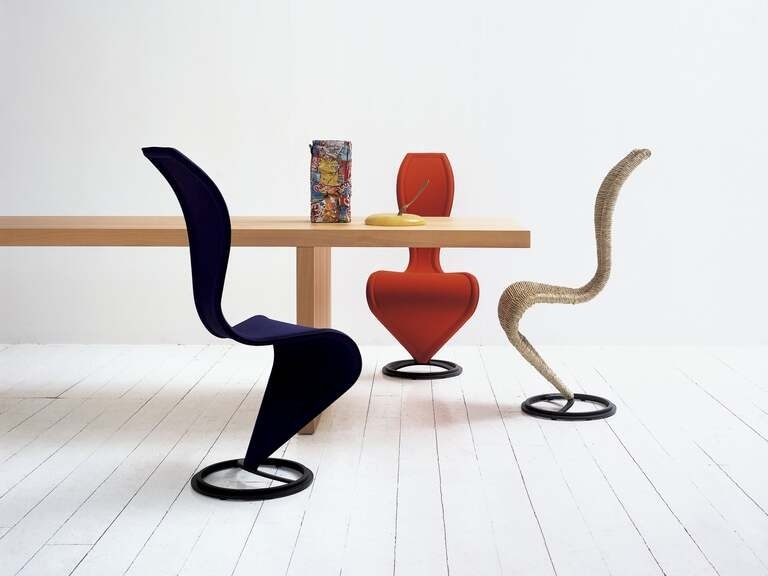
The object that changes everything is the S Chair. Dixon first builds it himself, using salvaged materials and improvised forms, then produces it in small series before Cappellini turns it into an industrial object in 1991. Looking back, he describes it less as a breakthrough than as something that followed him through different phases of his life — studio experiment, production piece, museum object. A chair constantly changing status.
It’s fine to have two languages, two senses of humour, two food cultures, two ways of seeing the world.
Tom Dixion
Born in Tunisia, raised in London, moving across languages and geographies, Dixon’s trajectory has little to do with formal education and everything to do with exposure. “It’s fine to have two languages,” he notes, “two senses of humour, two food cultures, two ways of seeing the world”.
We speak sitting on two FAT Lounge Chairs with timber legs, facing slightly away from each other rather than directly across. The geometry creates an odd intimacy: you never fully look at the other person, and yet the conversation feels strangely aligned. It becomes, in a way, a conversation with Tom Dixon’s left side.
At some point he gets up to plug in his iPhone; the screen lights up briefly with what look like family photos, two kids smiling. Then he sits back down, and we return to the question that keeps resurfacing: what does design actually mean today?
What design still means
At one point he calls it “an elastic, floppy word,” stretched to cover too many different activities. And yet, when pressed, the definition becomes unexpectedly precise. “Ultimately design should be in the business of improving things,” he says — whether that means “improving the colour,” or “improving the price by being more efficient”. In any case, “it always needs to have some degree of improvement to be called design”.
In a moment when the word is used to describe almost anything, this becomes a kind of baseline condition: without improvement, there is no design. The complication is that designing has never been more accessible. He compares the current moment to the arrival of camera phones, when “suddenly everybody became a photographer”. At one dinner, he recalls, he counted “half a million photographs on ten people’s phones”. The same dynamic, he suggests, is now unfolding in design.
The question, then, is what happens when the tools themselves begin to change.
“AI is a fantastic tool,” he says, “to speed up all kinds of processes”. But “the only problem with AI for design is that it’s going to end up with lots of people doing bad designs”. At the same time, “it might also make designers more special”.
Even this conversation, he adds, risks becoming obsolete as it unfolds. The speed of development is such that “this conversation is already out of date before we finish it”. Interestingly, the resistance doesn’t come from outside. Within his own studio, he has tried to push for a deeper engagement with these tools, but “even the young people” seem hesitant — not afraid, but still unable to grasp their full transformational potential.
Where design is moving
The more radical shift, however, is not about who designs, but where the discipline itself is moving. Dixon notes that “some of the most creative minds have moved away from interior design objects to the intangible digital sphere”. A significant part of innovation now takes place in spaces that are not immediately visible — “inside the screen, inside the chip”.
You can’t keep on doing the same thing and expect a different outcome if the technology doesn’t change.
Tom Dixion
In that sense, continuing to design chairs risks becoming a formal exercise. “You can’t keep on doing the same thing and expect a different outcome if the technology doesn’t change”. This is not, for him, a nostalgic argument. It is structural. “Design is only one hundred years old as a word,” he points out — before that it was “decorative arts or engineering”.
If there is one field where the practice still feels open, he suggests, it is lighting. The shift from electrical to electronic systems has created new possibilities. When technology changes, designers can “design again”. Otherwise, the risk is repetition.
When I ask him to choose between objects, in a design version of the tower game, reducing decades of design history to a quick sequence of eliminations, the game briefly reveals something else. For a while, everything seems to lose against the Sacco. It keeps coming back, beating objects that, on paper, should be untouchable.
What matters, he suggests, is not just the object itself, but the moment that made it possible — the late 1960s, when “people wanted to challenge how we live”. The idea that you could sit low, without structure, without hierarchy, belongs to that shift. It is exactly the kind of design Dixon responds to: objects that emerge from changes in behaviour rather than from purely formal invention.
Only later does the Vespa win. “I think it represents liberty,” he says. “Mobility and democracy and fun all fit within that Vespa thing”. It is adaptable, layered with references, immediately legible. If Sacco marks a rupture, the Vespa consolidates a way of living. Both show that design is never just form — it is always embedded in its time.
The problem of scale
And yet, that kind of clarity feels increasingly rare. At one point, almost in passing, Dixon remarks that “designers should stop making ridiculous objects for rich people”. The issue, as he frames it, is not a lack of creativity but a question of scale
Faced with the complexity of the present, many retreat into smaller, more manageable domains. “People feel overwhelmed by what’s going on in the world,” he says, “and hide in a smaller, more manageable personal world”. The discipline shrinks. It becomes object, gesture, limited series. It becomes manageable. But in doing so, it risks losing relevance.
Creativity, he suggests, has not disappeared — it has simply relocated. Sometimes in unexpected places, sometimes in uncomfortable ones, emerging where new problems demand new solutions. And yet the direction, for him, is clear. “There are a lot of things to improve right now”. Design needs to become “more regenerative,” more capable of addressing systems rather than objects. Even AI, in this sense, is not just a tool of acceleration, but something that “gives people the opportunity to think bigger”.
A few minutes later, the conversation comes to a stop. Not because it has reached a conclusion, but because it has to end. Dixon stands up, goes to pick up his phone, checks something on the screen.
“This has become too intense,” he says before leaving the room, smiling in a way that makes it difficult to tell how seriously he means it.
Just before that, he had said that design, for him, is about improving things — and that there are a lot of things to improve right now. It is a simple statement, but it lingers, as if everything else — everything else — still needs to be designed.