



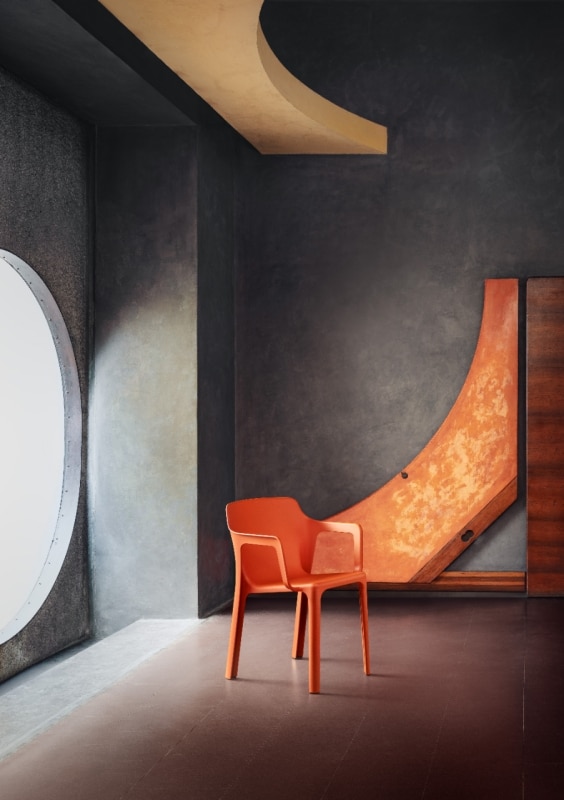
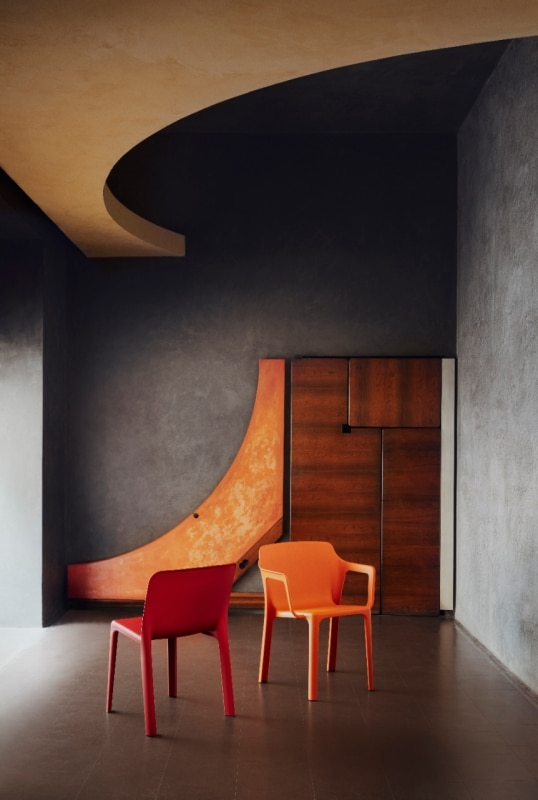
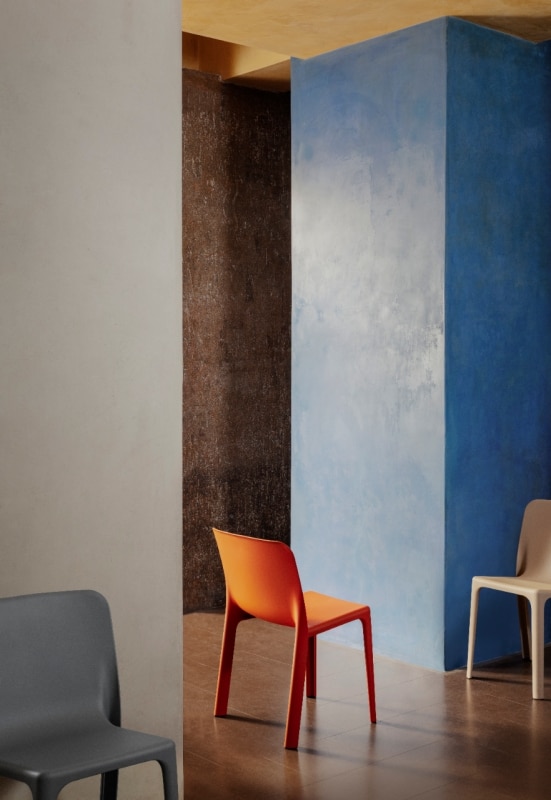
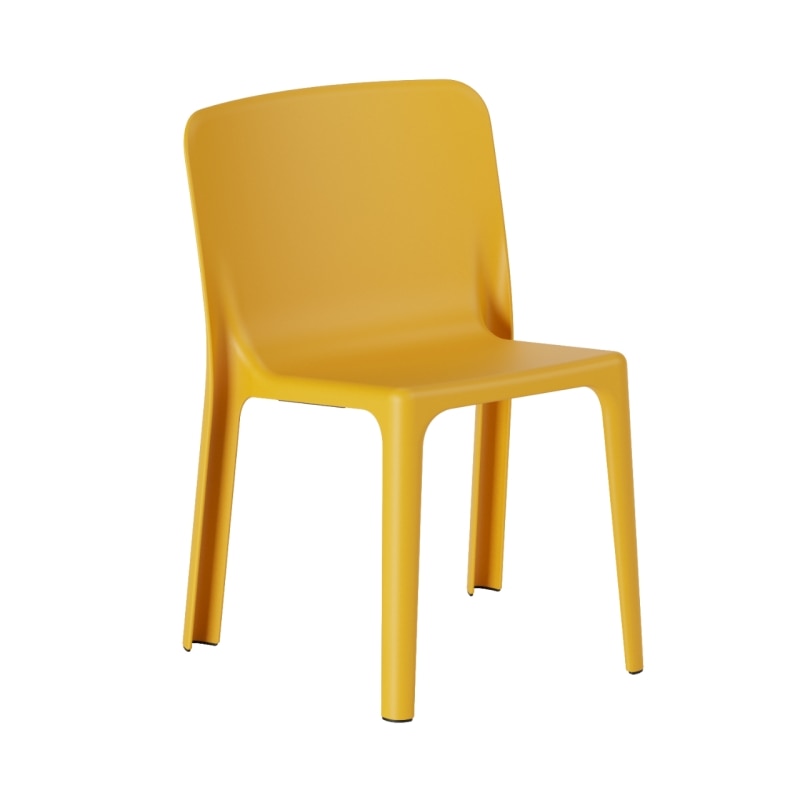
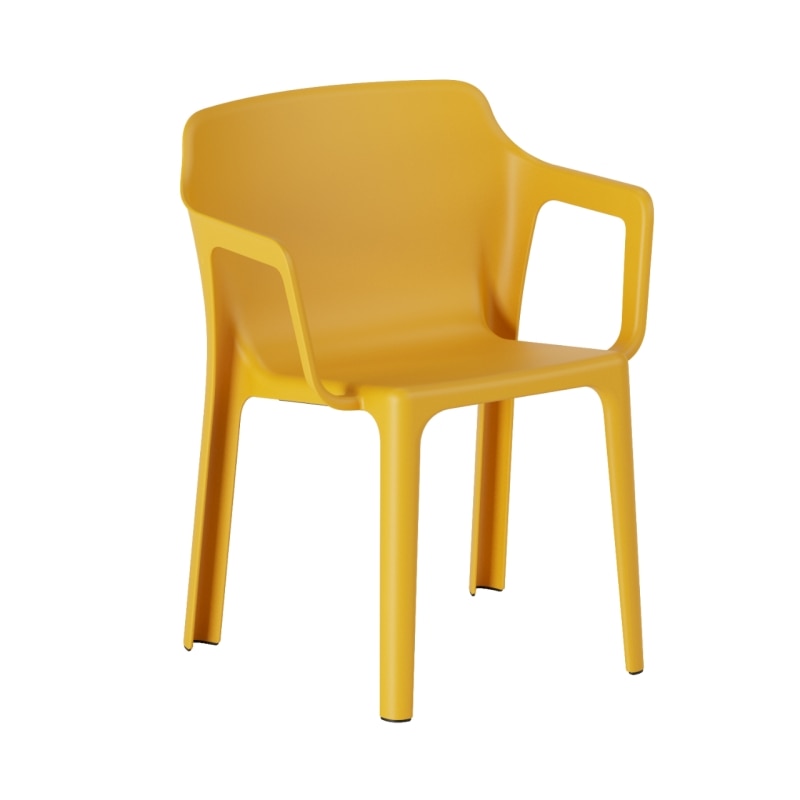
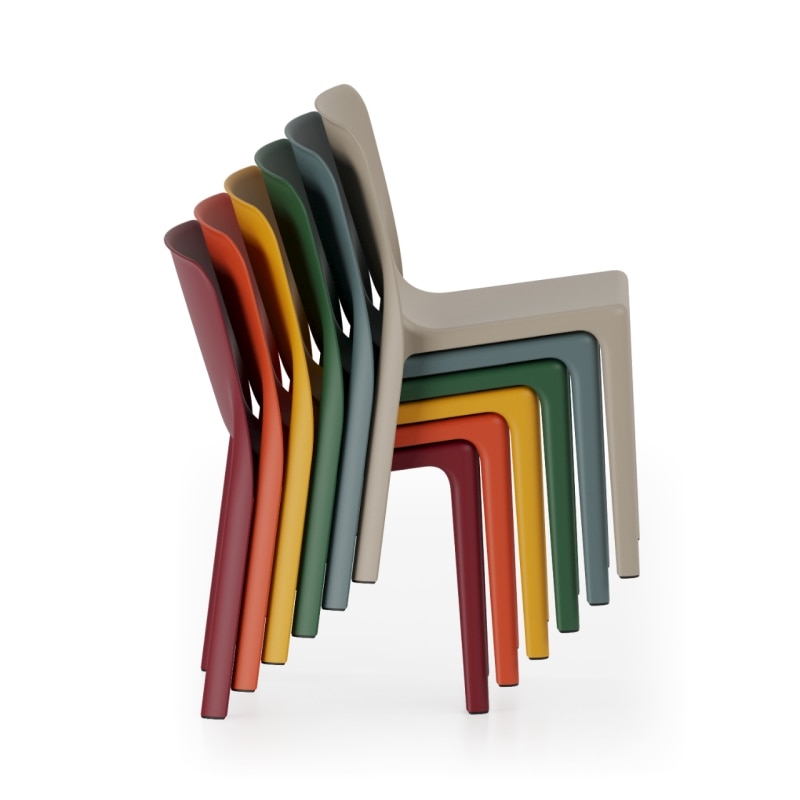
A reconsideration of the monobloc at a moment when it has become one of the most significant cultural phenomena on a global scale: Infiniti’s collaboration with Nichetto, the Venice-founded studio with an international outlook, is called Linnéa, a stackable plastic chair defined by its open profiles. More than a product, it is a design investigation into the very nature of one of the most ubiquitous, and paradoxically least questioned, typologies in contemporary furniture.
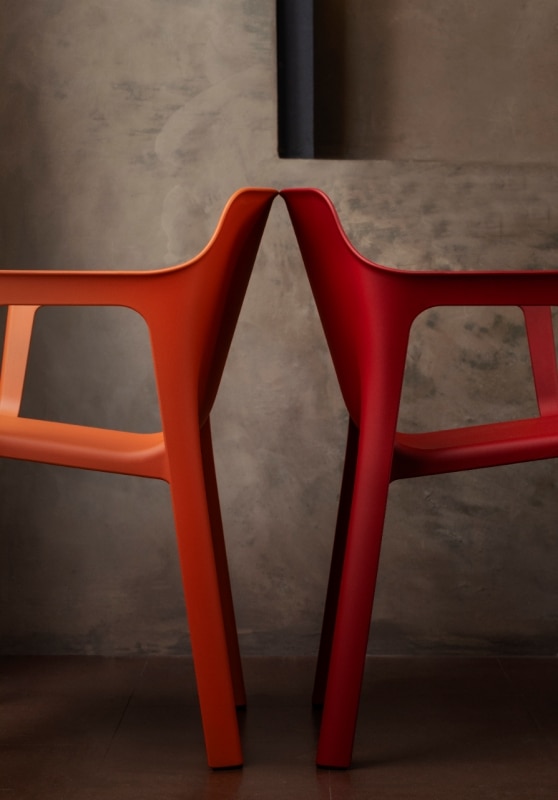
The question behind the project is a shared one: what remains essential in the monobloc chair when returning to its origins, before manufacturing technologies shifted attention towards complexity? The answer lies in the “line”, the “linea”, both the generative principle and the source of the chair’s name, where form and structure coincide. A language shaped by the same necessity that informed the earliest monobloc chairs, yet updated through a contemporary formal awareness.
Without these two specific protagonists, such an outcome would have been difficult to achieve. Infiniti draws on extensive expertise in furniture components and, since 2008, has produced furniture across three in-house manufacturing plants dedicated to metal, plastic and wood. Operating across corporate, workplace and hospitality sectors, the company serves nearly 90 countries worldwide. Nichetto – founded in Venice by Luca Nichetto – moves between narrative sensibility and precision, deeply rooted in the culture of Italian design.
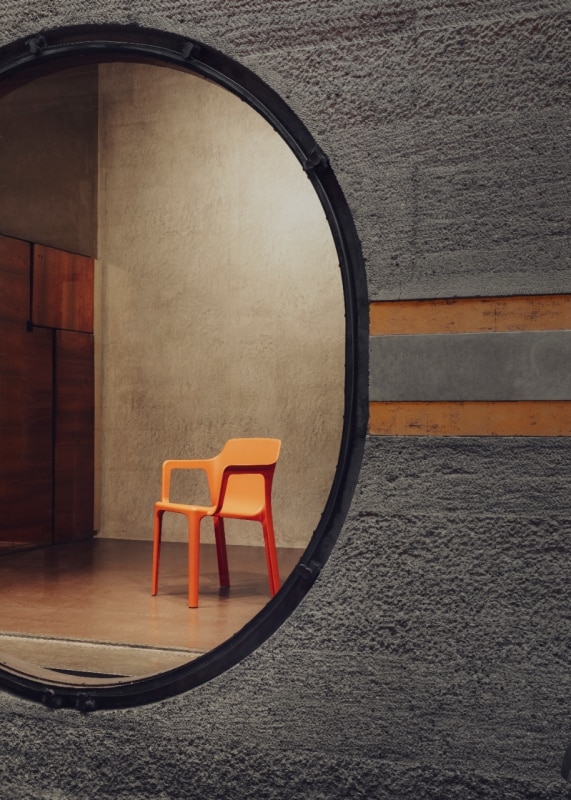
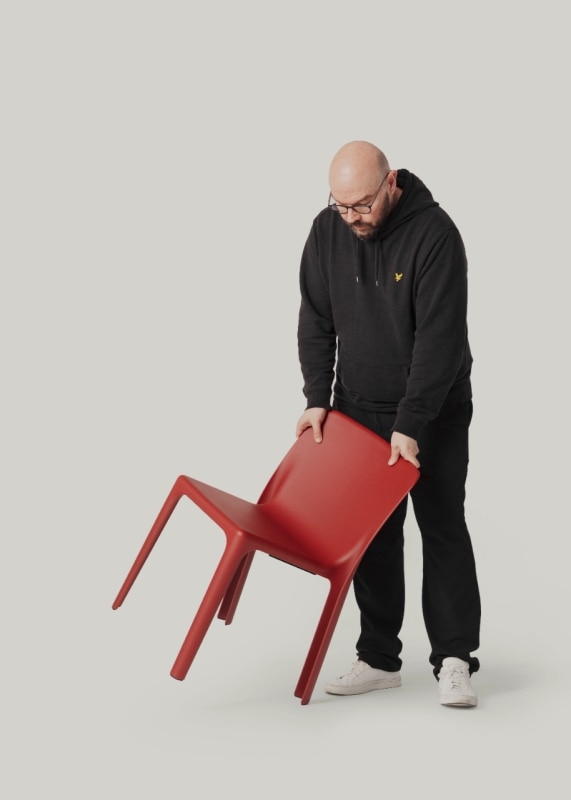
“A fresh start. A return to the essence of industrial design,” Nichetto described it. “A very clear brief, the kind we hadn’t received in years”. The intended market, catalogue positioning, price range and references were all clearly defined. Most importantly, the brief also carried with it a transfer of culture: the history of the monobloc itself became the project’s point of departure. “The only other company that had given us something similar was Hermès.”
Many of the references included in the brief were iconic pieces, though not always in plastic. It was the early 2000s, in fact, when Jasper Morrison introduced hollow closed sections produced through gas-assisted moulding, and soon everyone followed. The question became: how do you move beyond that?
By returning to the origins of the monobloc itself – “the ice-cream parlour chair,” as Nichetto describes it – where minimal plastic sections, driven by cost constraints, relied on precisely engineered ribbing for structural support. “The idea was not to use a gram of plastic more, nor less, than what was necessary to create a quality product.”
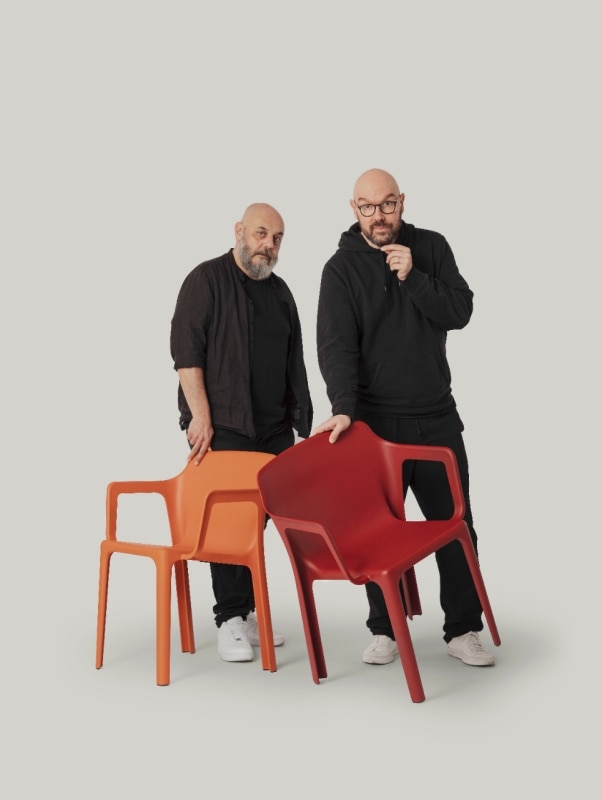
In the words of both company and designer, the project marked a return to industrial drawing as a design discipline intrinsically linked to production: the very approach that built the legend of Italian design from the postwar years onward, reaching its peak in the 1960s. It is no coincidence that the brief included references such as Vico Magistretti’s Selene chair: although originally produced in fiberglass, it represented a paradigm in terms of concept, process and the role of the designer.
And according to Nichetto, that was precisely the turning point: “Now that design has become ‘styling’, designers risk becoming mere suppliers of drawings. You stop growing. The transfer of know-how is interrupted. So, returning to what my profession was originally supposed to be, actually came as a shock.”
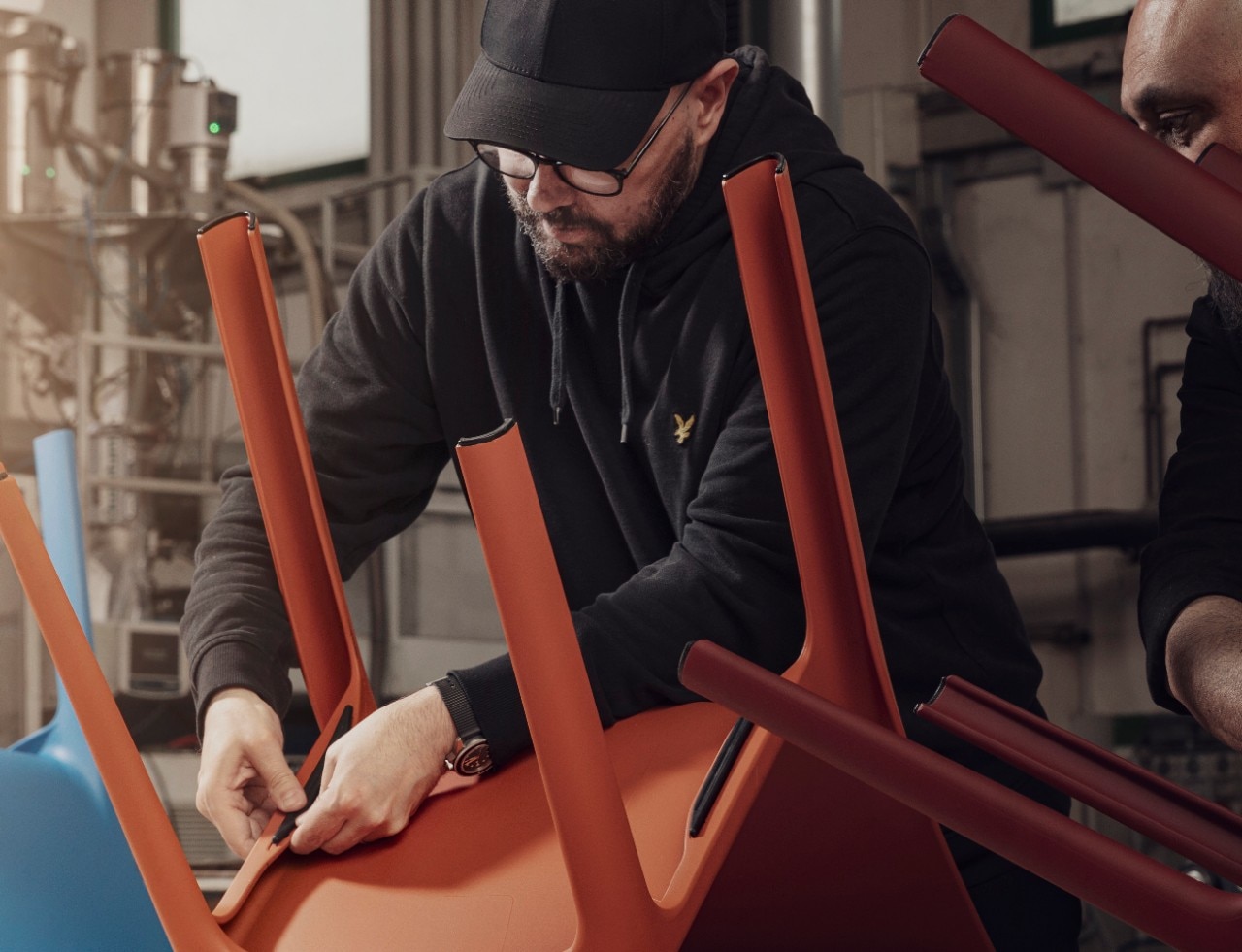
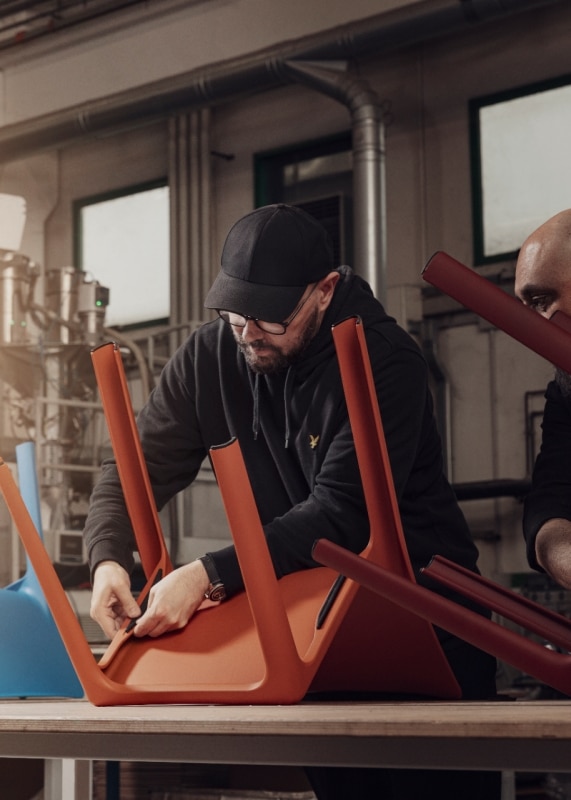
The development process lasted around eight months, beginning at the end of 2024. Two months were dedicated to identifying the concept to pursue – at Infiniti, the selection process involves everyone within the company – followed by another two or three months of collaborative development, before prototyping, refinements and the crucial work on tooling. Linnéa is injection-moulded, and almost everything depends on the milled steel mould, including the surface textures defined through photo-engraving.
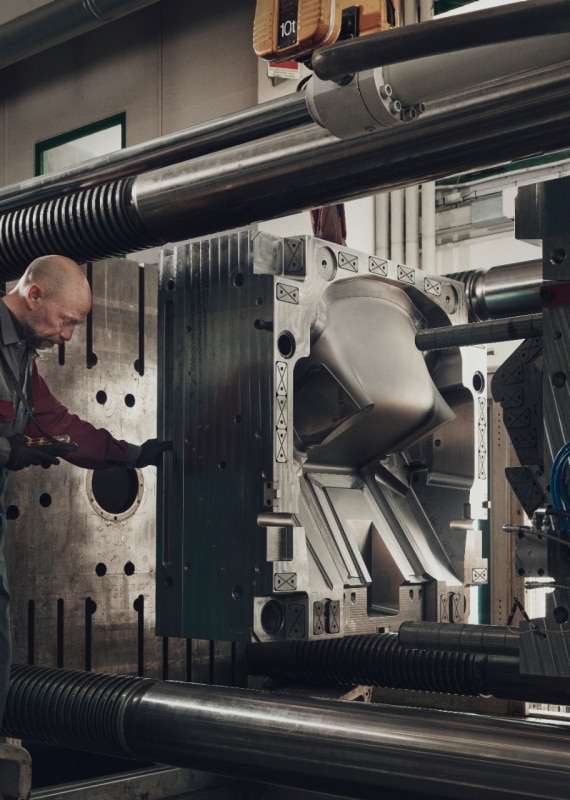
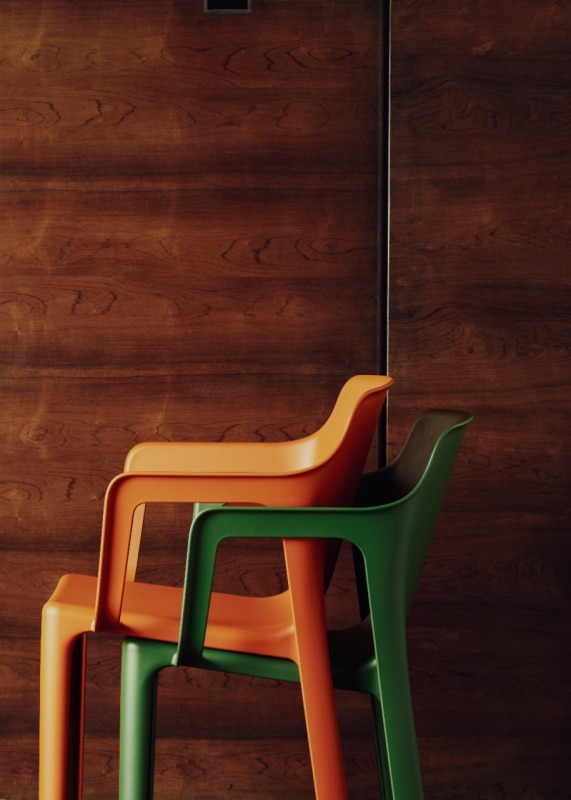
In the finished product, quality emerges precisely through these details: the constant thickness of the sections, the continuity between legs, seat and backrest, the carefully calibrated seat angle and backrest opening designed to accommodate the widest possible range of users. Linnéa was conceived both with and without armrests – always stackable – to meet the demands of intensive contract use without sacrificing a broader readability that also extends into residential settings. The colour palette combines warm, cool and neutral tones intended to engage with a wide variety of architectural contexts. The same attention extends to a version produced with at least 30% post-industrial recycled plastic (PIR), where the choice of a shade named Dove Grey deliberately reveals and embraces the material’s intrinsic character.
The “Linnéa case”, then, is compelling not only for the product itself, but also for the light it sheds on the current state of design – on the relationship between designer and industry, and on the way typologies themselves are reconsidered. By rethinking a category long taken for granted, the project reasserts how design operates through the bond between a product and its time, its ability to respond to the present while, whenever possible, anticipating what comes next.
Opening image: Di Bon photo, courtesy infiniti