


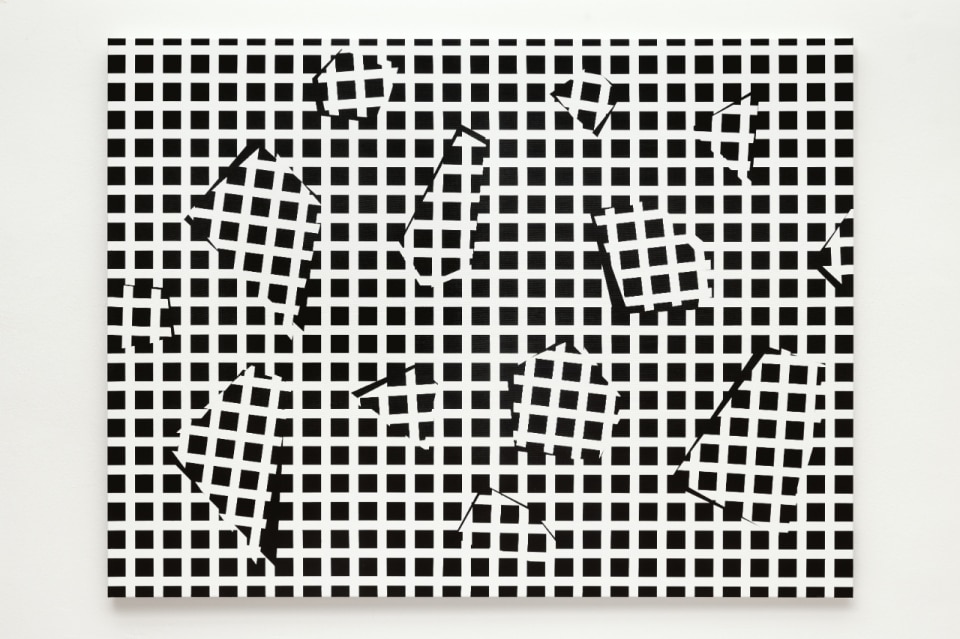
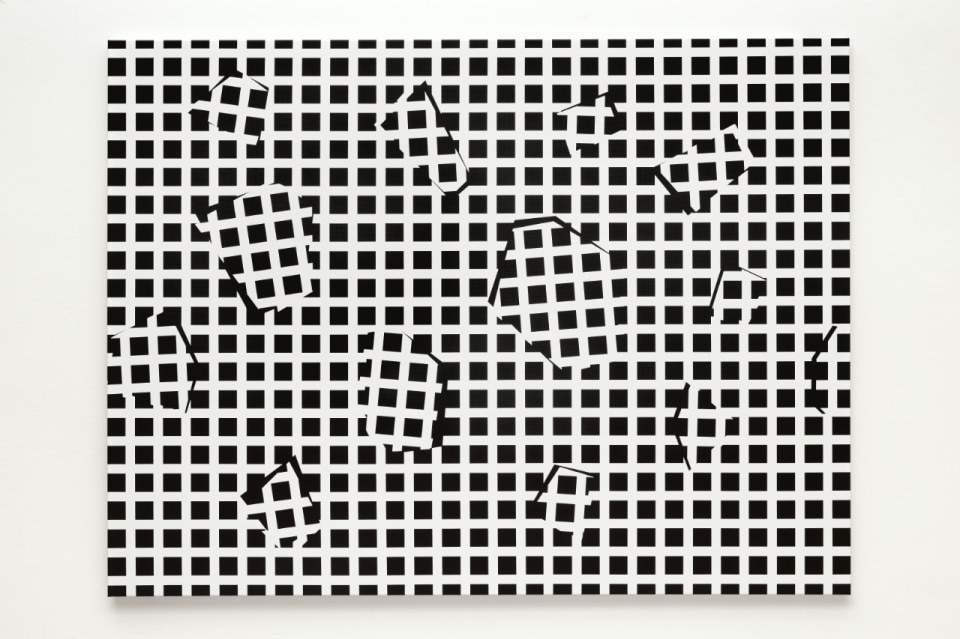
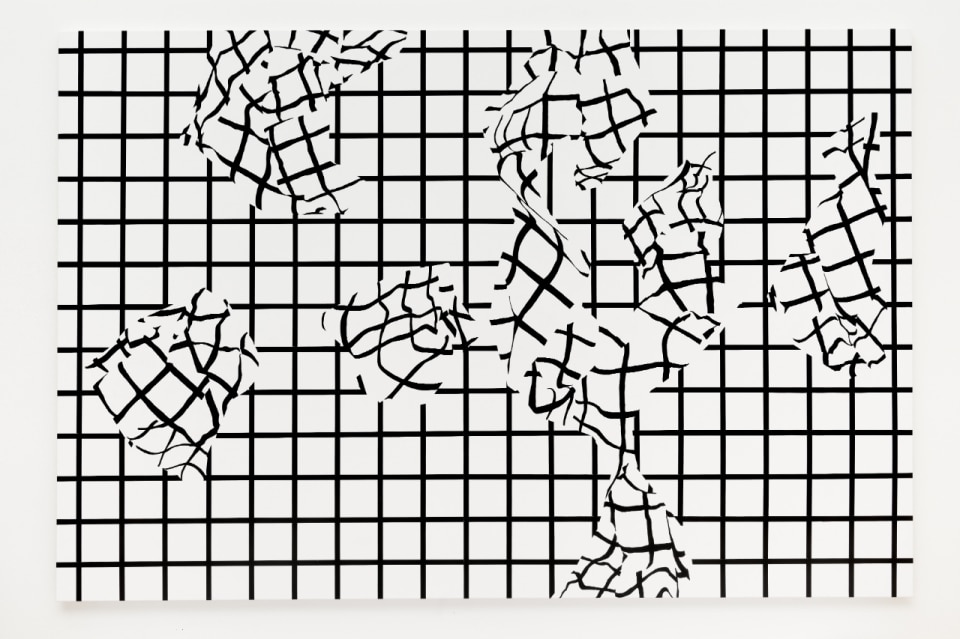
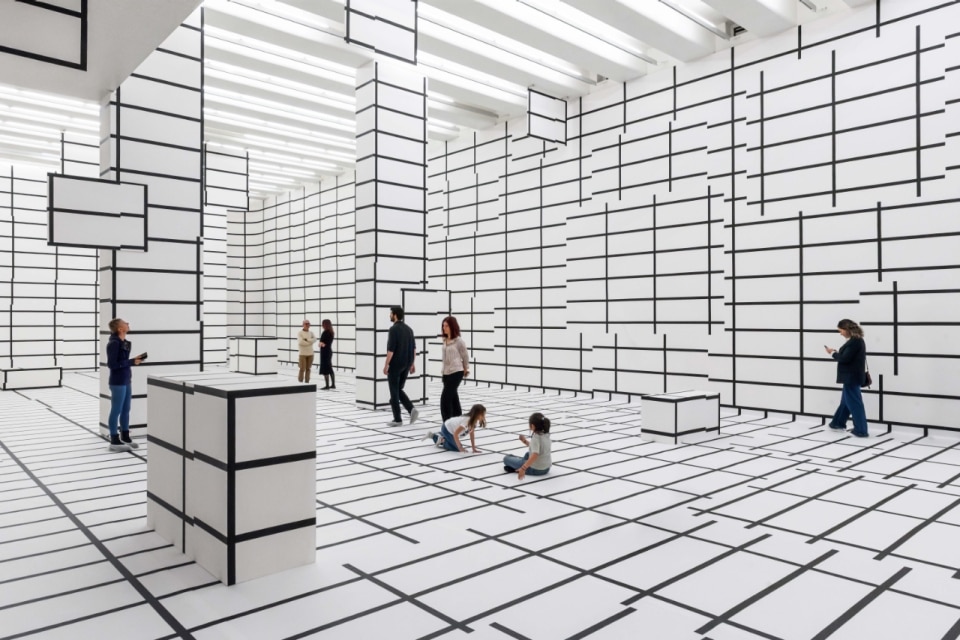
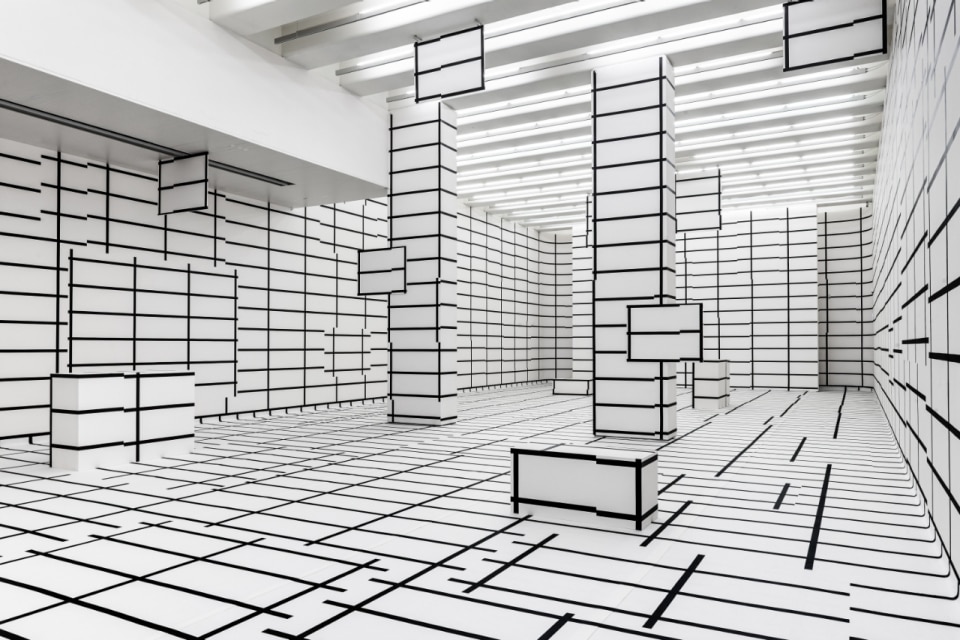
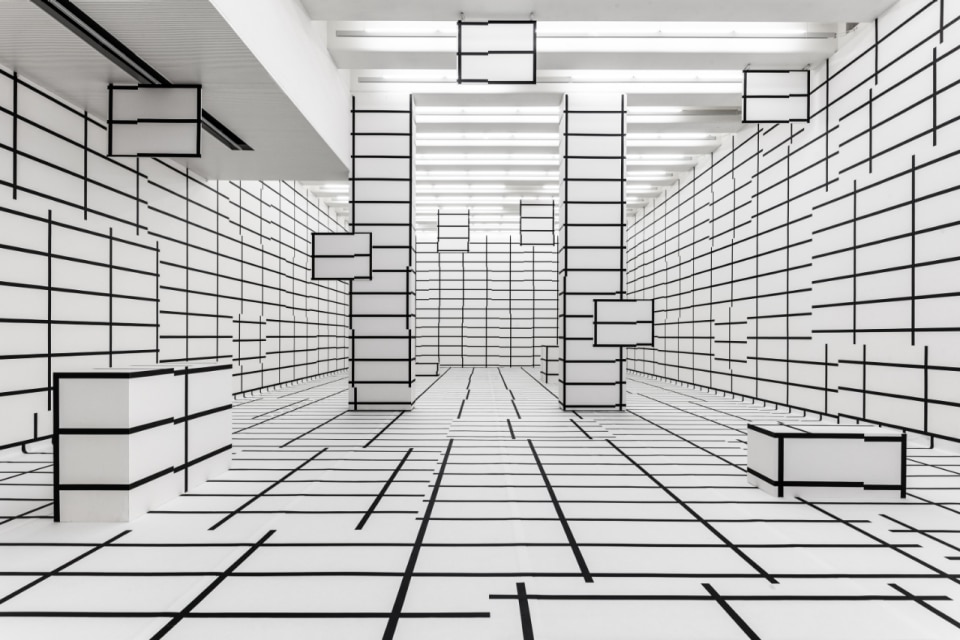
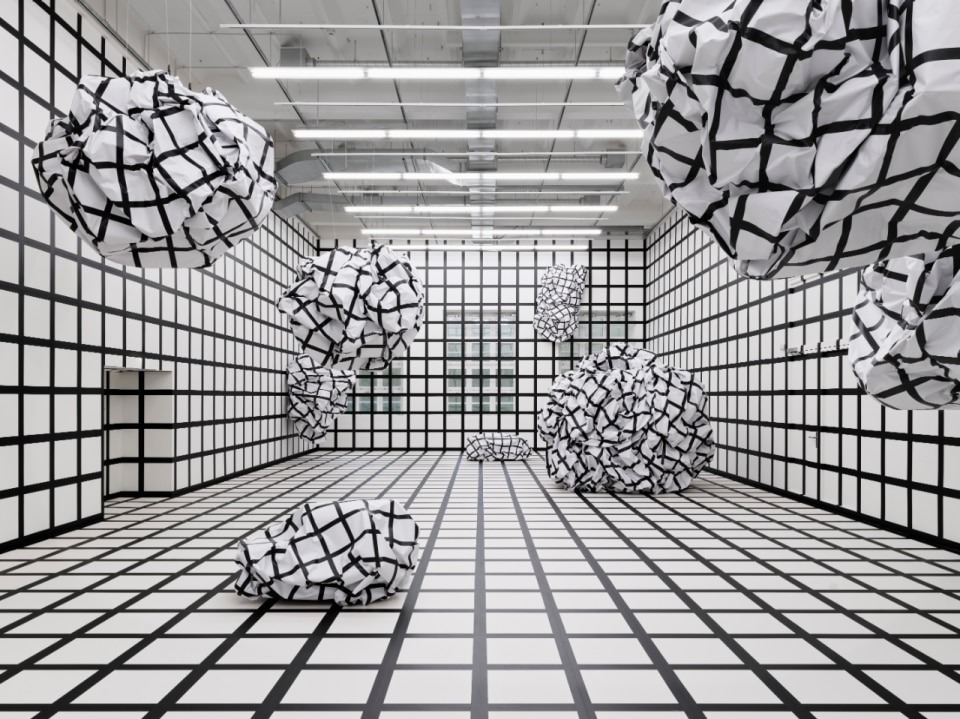
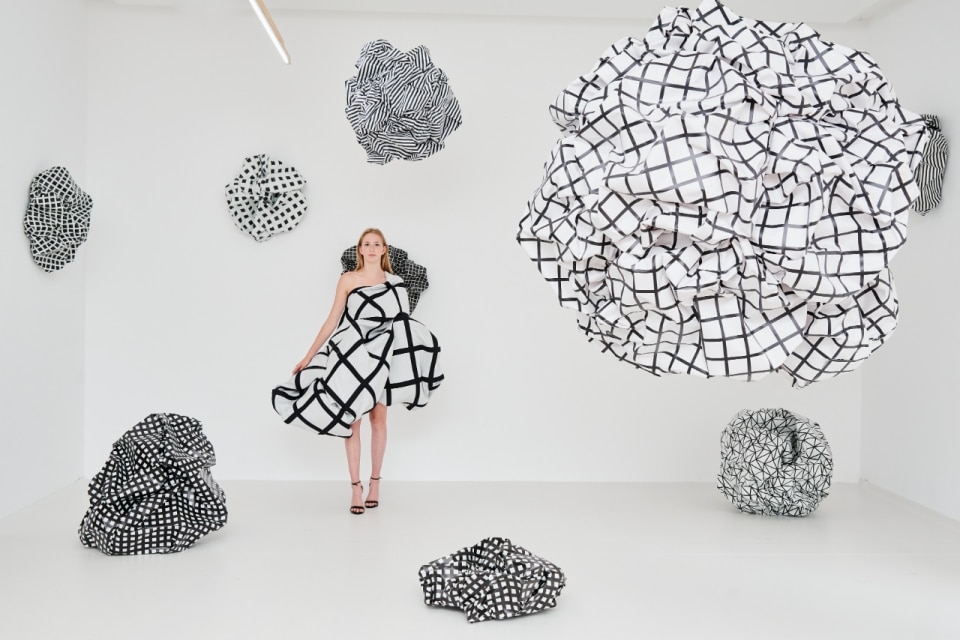
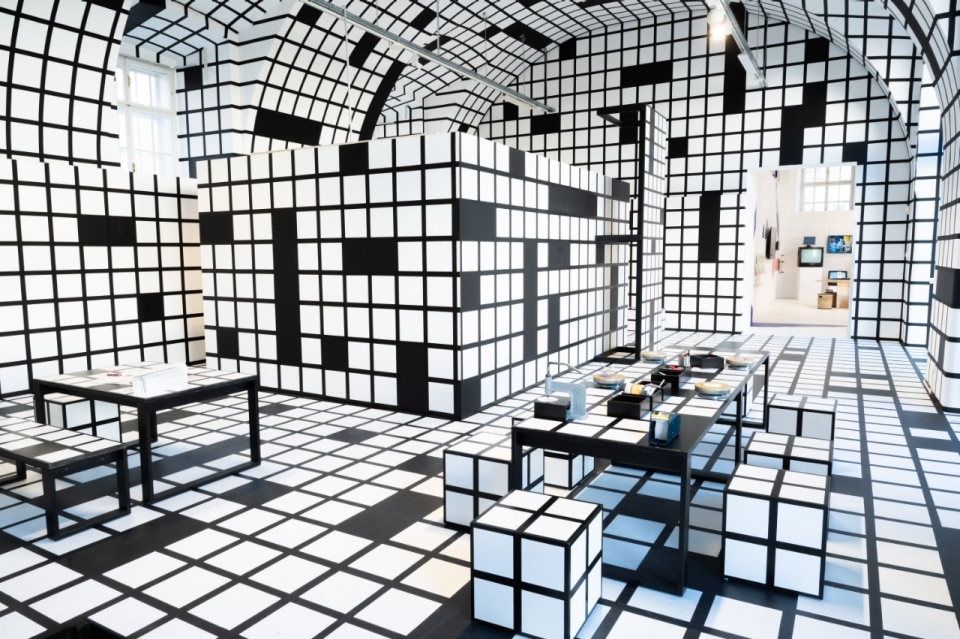
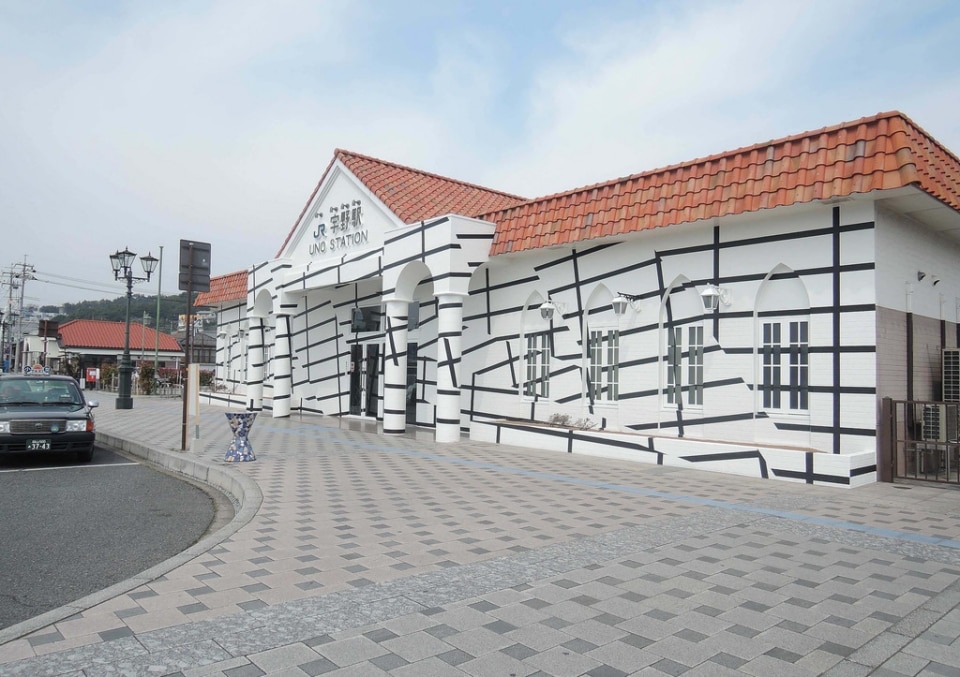
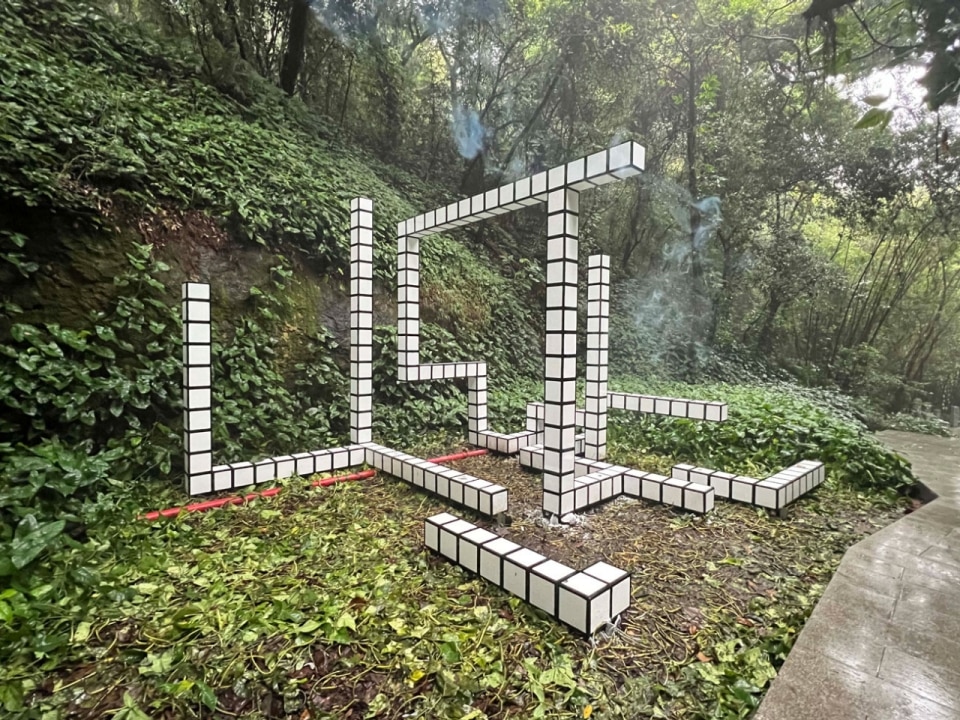
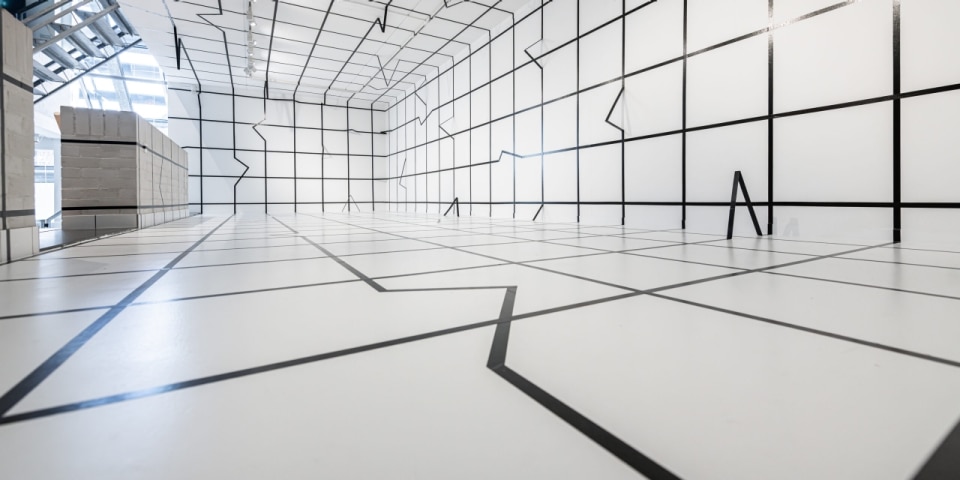
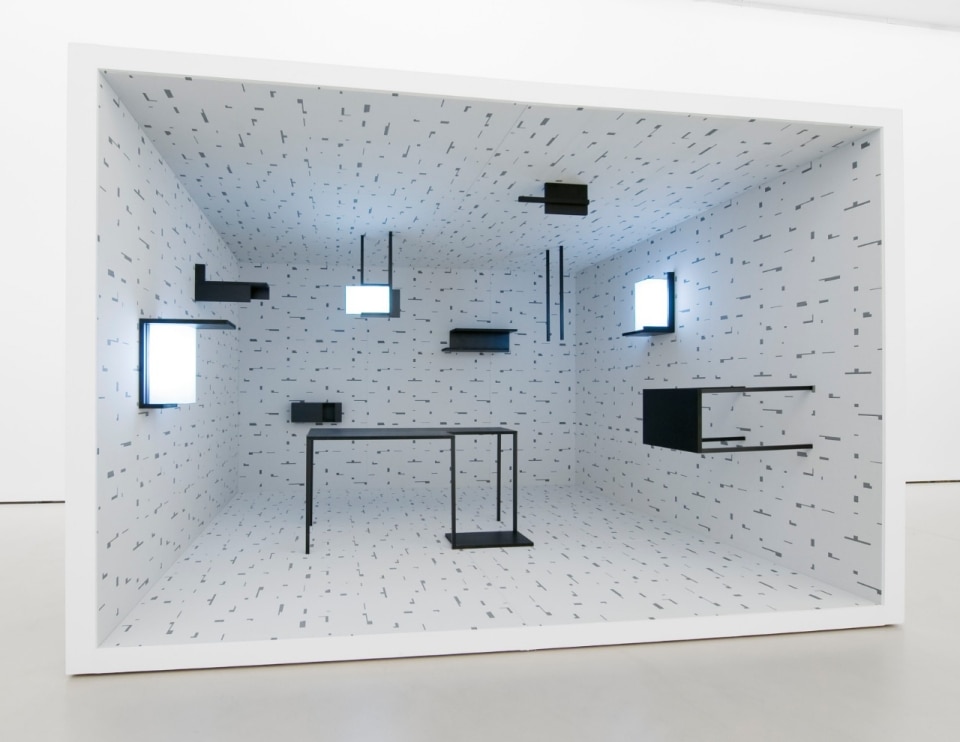
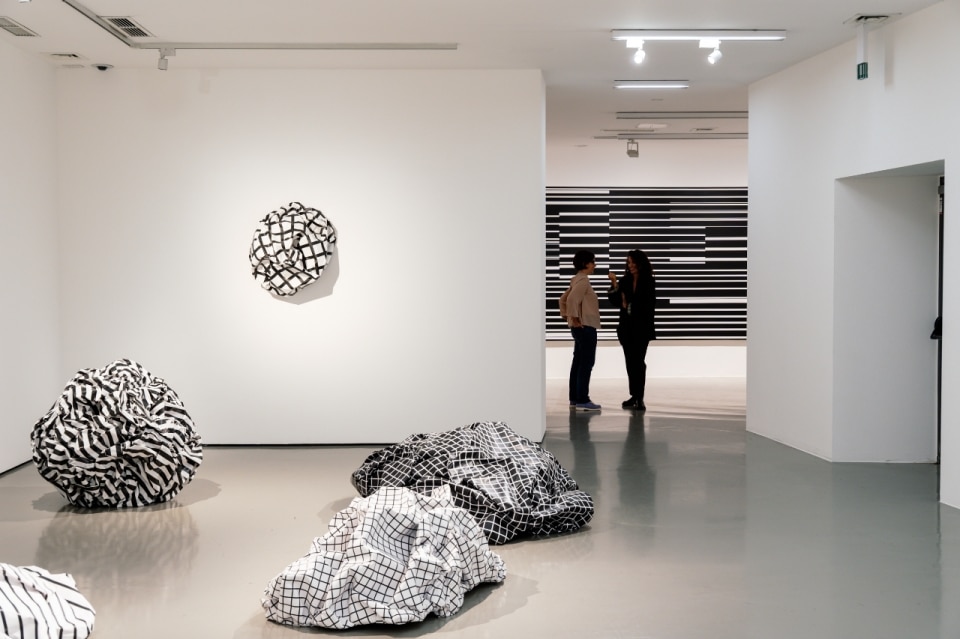
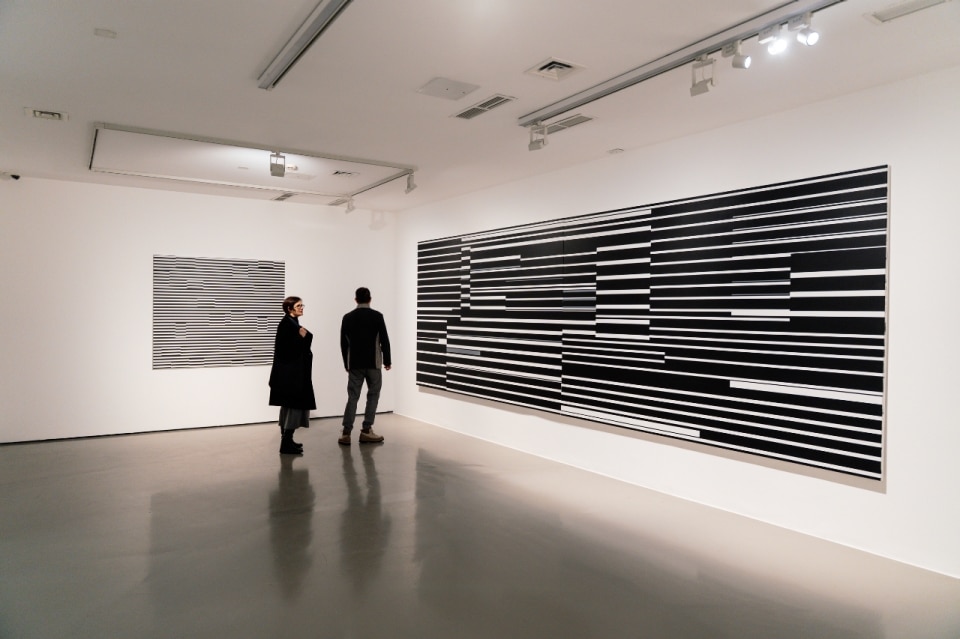
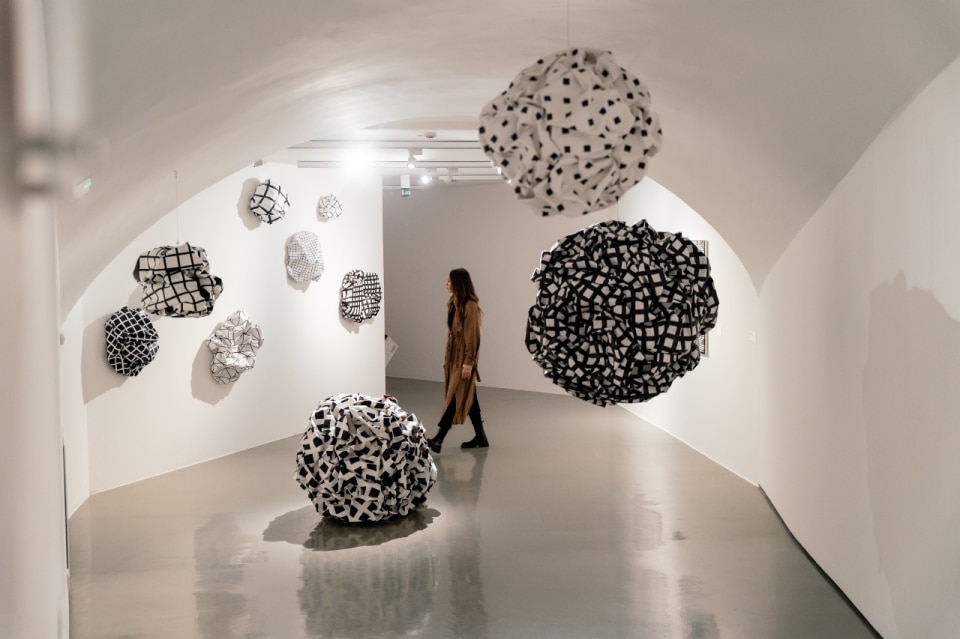
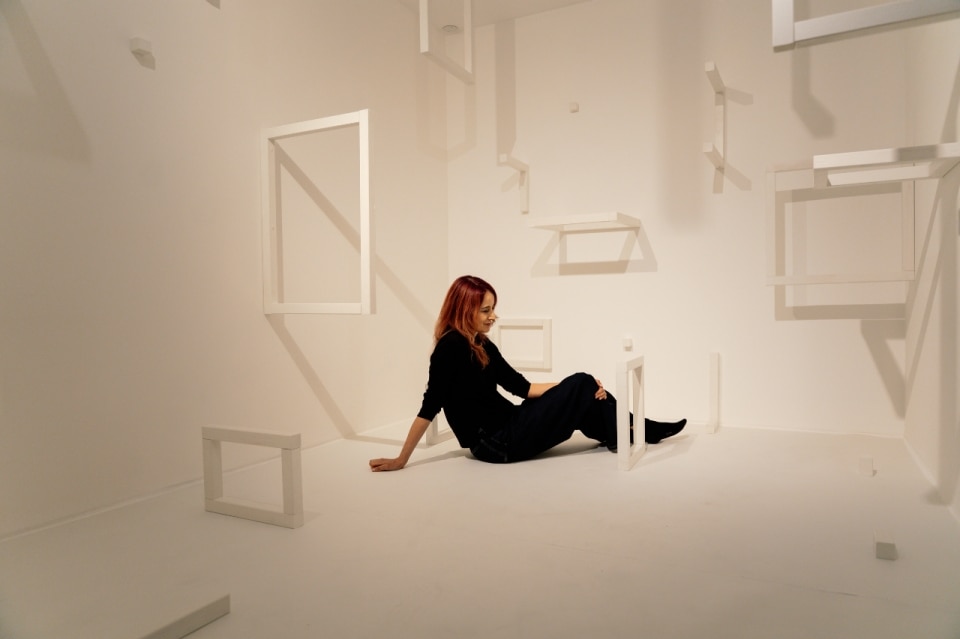
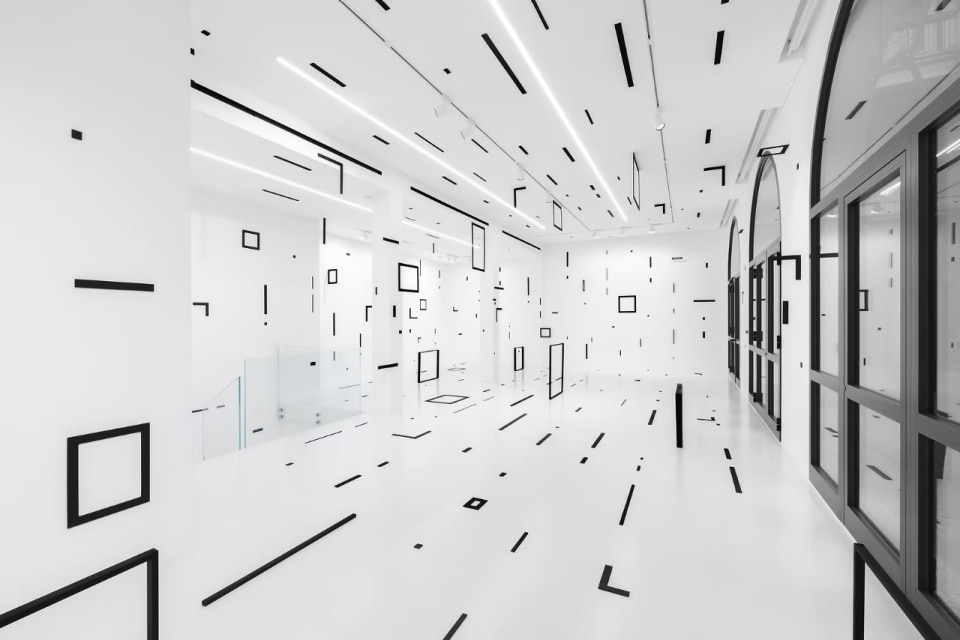
Lines that traverse space, grids that alter perception, surfaces that extend beyond the picture plane to transform entire rooms. In Esther Stocker’s work, everything appears to speak of rigor and control — a rigor that recalls minimalism as much as optical art, yet ultimately challenges their claim to absolute neutrality.
I wanted to show the strength of the pure line, as a will to move forward.
Esther Stocker
After all, for Stocker, art was never the result of a programmatic decision.
“I have always loved drawing and painting. Painting just seemed like such a beautiful invitation to travel to imaginary places.”
As a teenager, she recalls seeing a Fluxus sculpture — “a sort of trash sculpture on a wall” — and being fascinated by it. “It was something like a sublime experience, but also my realization that it is possible to immediately give shape to ideas, that art doesn’t ask permission.”
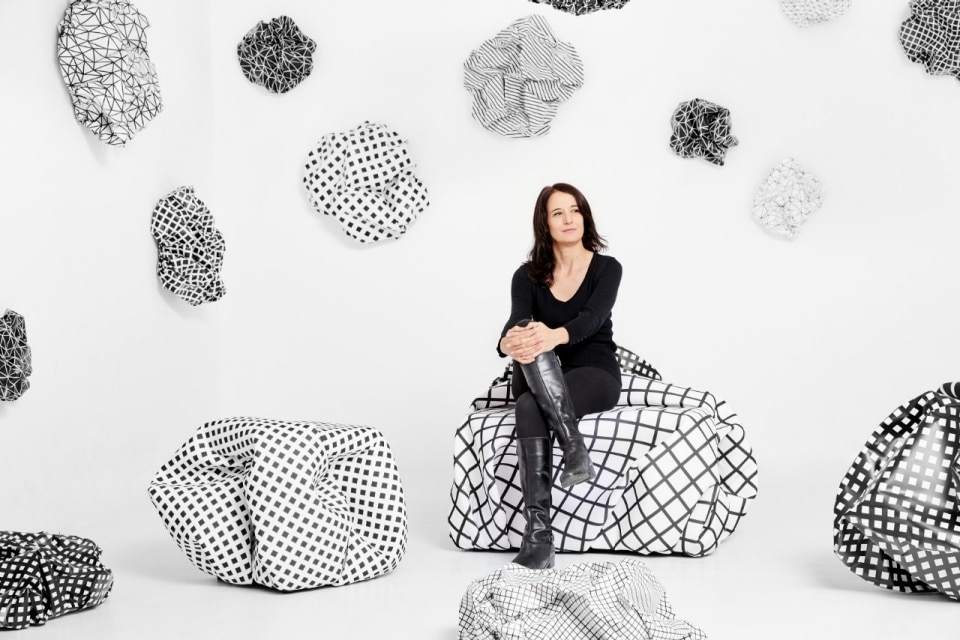
Born in Italy in 1974 and raised between Vienna, Milan and California, Stocker lives in Vienna and works wherever her practice takes her. Her works have transformed galleries, museums and public spaces around the world.
For her, context is always the starting point. Each project develops in relation to the space that hosts it. Yet whether it unfolds on a canvas, in a station or in an underpass, the underlying system remains the same: a geometric structure that enters into dialogue with architecture and alters the way we perceive space.
A language that has taken shape over time, beginning with a debut rooted in painting.
From Painting to the Logic of the Grid
Stocker’s early work was marked by gestural painting, which gradually evolved during her studies into a process of reduction. “It was a way of reducing my more expressionistic way of painting, but also a way of trying to get rid of hierarchies. The realisation that there are always some forms of hierarchy in visual systems highly annoyed me.”
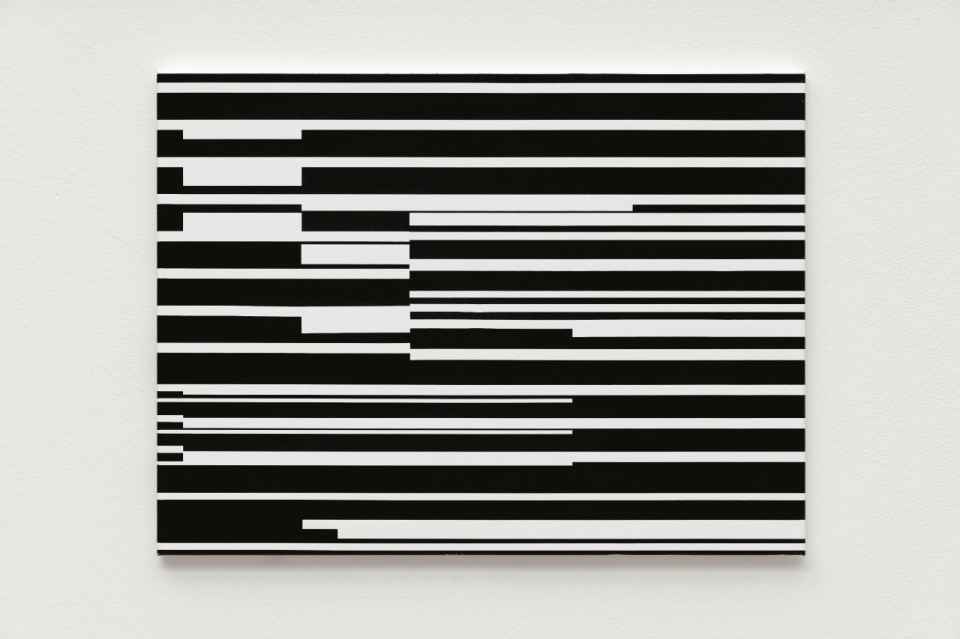
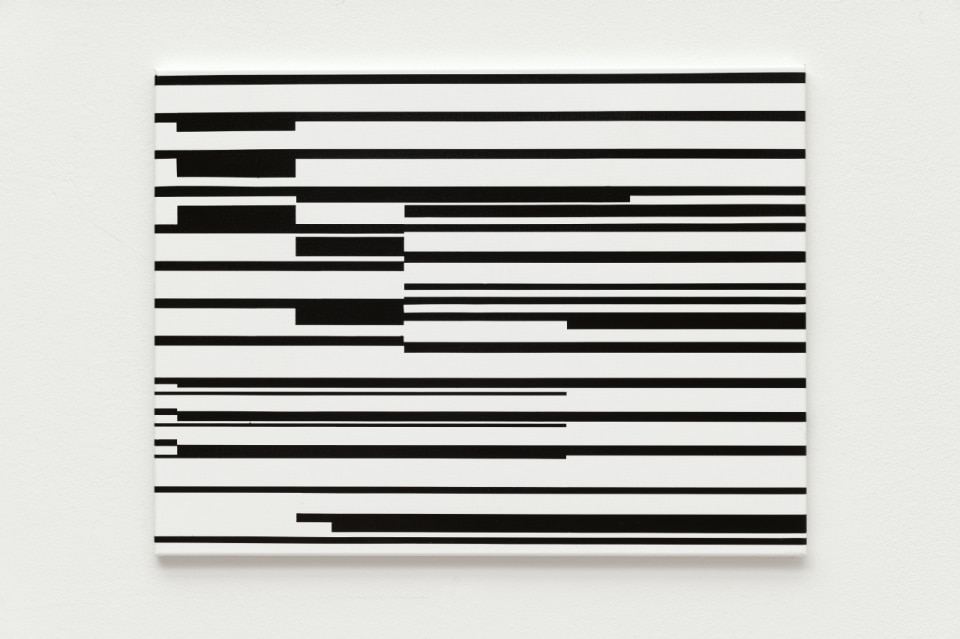
The grid then became a concrete solution. She began making paintings based on grid structures, “trying to portion the visual information in equal parts,” looking for ways to escape hierarchical systems.
I love the fact that we can describe imprecise concepts with the instruments of precision.
Esther Stocker
The grid inevitably recalls its role in many movements in art history, from modernism onward, where it was often associated with neutrality and control. For Stocker, however, it does not erase conflict but makes it visible, turning order into a condition of tension. If minimalism tended to present form as self-sufficient, she uses it instead as a structure exposed to context and its interferences.
The system does not eliminate the problem; it exposes it. “We can think anti-hierarchically, but by the very fact that we exist in time and space we cannot live in a completely anti-hierarchical way.”
In this sense, objectivity does not create distance but activates perception. Precision is not cold; rather, it reveals its limits. Even optical illusion, when it appears, is never an end in itself. It depends on the position of the body and on movement through space.
In painting, she explains, hierarchy is not only visual but also physical. “We cannot give our attention to more things at the same time, nor give our bodies to more things at the same time.” From this comes, she says, “a longing to overcome gravitation, time and space.”
The hierarchies of time and space feel limiting, and “we as humans like to fight them sometimes. At least that’s what artistic attempt often does.”
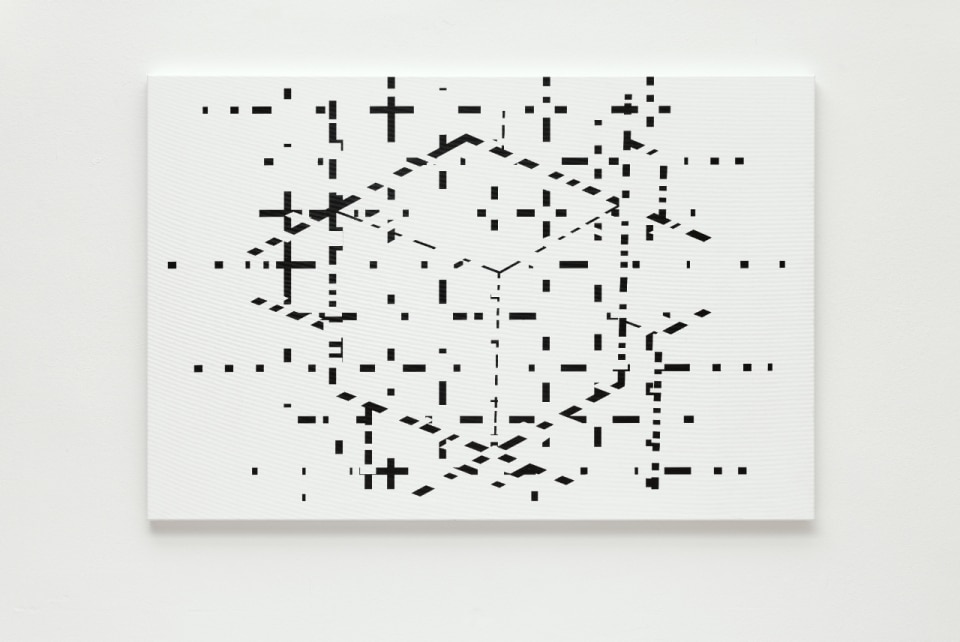
In this sense, she speaks of what she calls “existential geometry.” “For me geometry is a way to see and think and also to interact.” It also includes, she suggests, a certain irony: “I see also humor in geometry. For me geometry perfectly connects our desire to measure existence logically through time and space, but also to surrender to the beauty of contradiction.”
You could say that it wasn’t me who became interested in space, but that space became interested in me.
Esther Stocker
Precision, Instability and Space
If the grid was born as a way to eliminate hierarchies, it was precisely by studying precision that Stocker encountered instability. “Precisely by studying precision I ran into the theme of uncertainty, and it is in precision that I saw it most clearly.”
The more controlled the system becomes, the more its limits appear. “I love the fact that we can describe imprecise concepts with the instruments of precision. The closer you look into precision and try to understand it, the more vague it becomes.”
“Ambiguity lies at the heart of many artworks. It’s something that always captures our attention — not just because it activates our brain, but because we recognize ourselves in it. I think that has a lot to do with our desires.”
“In the end, I think it is important to integrate imprecision into our lives, and hopefully to find truth and beauty in it.”
I also see humor in geometry. For me, geometry perfectly connects our desire to measure existence logically through time and space, but also to surrender to the beauty of contradiction.
Esther Stocker
Recalling the moment when her works began to extend into space, she says, “At first I thought it was simply the addition of another dimension. I liked the idea of a literal accessibility of abstract thought.”
“And you could say that it wasn’t me who became interested in space — space became interested in me.”
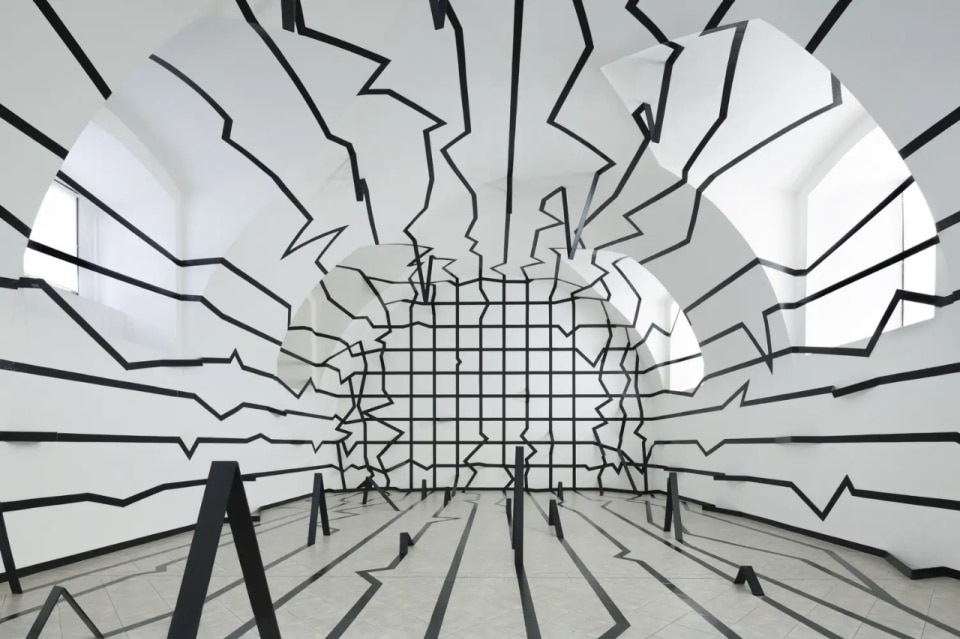
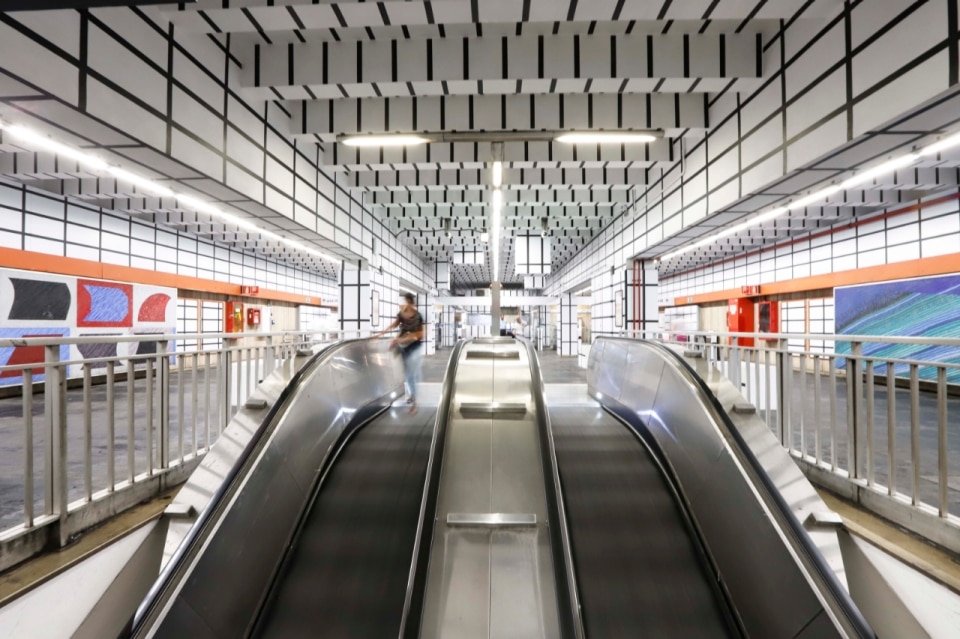
That “accessibility” becomes central in her installation projects. In TONSUR_passage (Vienna, 2006), lines transform a pedestrian walkway into an unstable perceptual field. In Parkhaus in Metz (2013), the geometric pattern spreads across a parking structure, following the architecture while subtly altering it. At Wien Mitte station (Vienna, 2015), walls and ceilings merge into a continuous plane.
Many of these interventions take place in transitional spaces, from the Setouchi Triennale (2016) to the Gare d’Austerlitz in Paris (2017), and Prospettiva comune at MAXXI in Rome (2018).
In more recent years, her work has also entered institutional contexts. At Haus Konstruktiv in Zurich (2024), she engages with complex volumes; at Marta Herford (2024), she responds to the interior architecture; at the Johanneum in Graz (2025), she constructs visual pathways through the exhibition space; and in her solo exhibition at Dello Scompiglio (2025), she rethinks the relationship between surface and environment.
Ambiguity lies in the heart of many artworks, it’s something that always captures our attention.
Esther Stocker
The New Underpass in Trento
The last of these interventions comes with the exhibition Caos calmo (2025–2026), curated by Lorenzo Gabrielloni at the Galleria Civica di Trento – MART, which brought together more than fifty works, most of them previously unseen, spanning the last five years of her practice, including paintings, sculptures and environmental installations.
At the end of the exhibition, Stocker created a work that will remain in the city: the underpass on Via Canestrini.
"I have always been interested in transitional spaces. There is great potential in creating new aesthetic experiences in these spaces."
The underpass connects the city center to Trento’s new intermodal hub. It is an everyday space, constantly traversed by people.
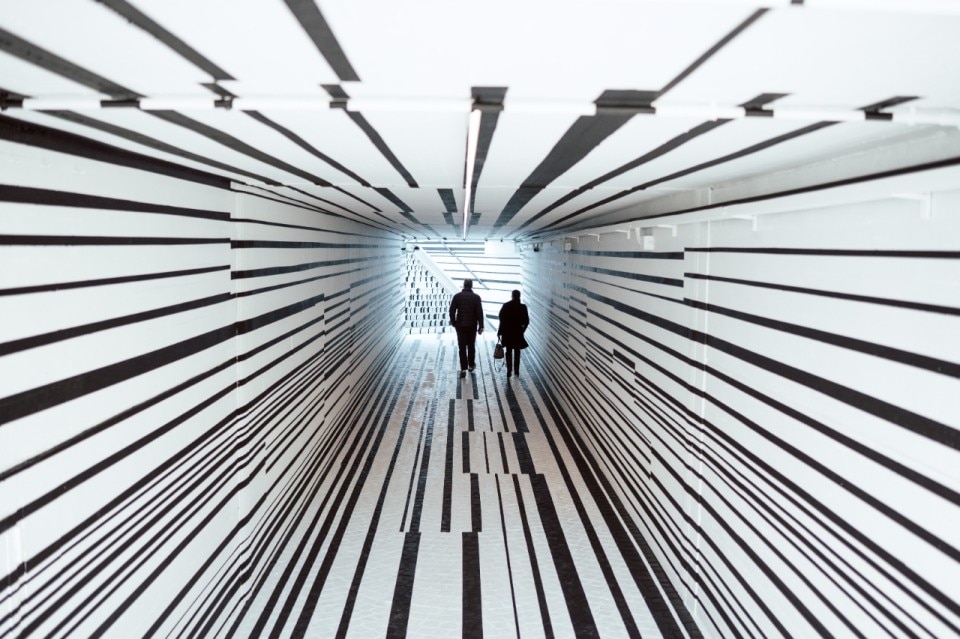
The intervention engages the entire space, from the walls to the ceiling and the floor, treating it as a single visual field. Black lines extend seamlessly and envelop the environment, dissolving the distinction between vertical and horizontal surfaces.
“For the underpass work, I worked on several graphic ideas, which were discussed with Gabriele Lorenzoni and the Comune di Trento. We chose a linear graphic design that emphasizes the direction of the underpass itself.”
“I wanted to show the power of the pure line, like the will to go somewhere. I wanted to transform the place by giving it a strong sense of direction and a reduced formal language.”
All surfaces are treated in the same way. “Floor, ceiling and the sides of the wall are treated in the same way, to remind everyone that artistic thought must not be limited by gravitation.”
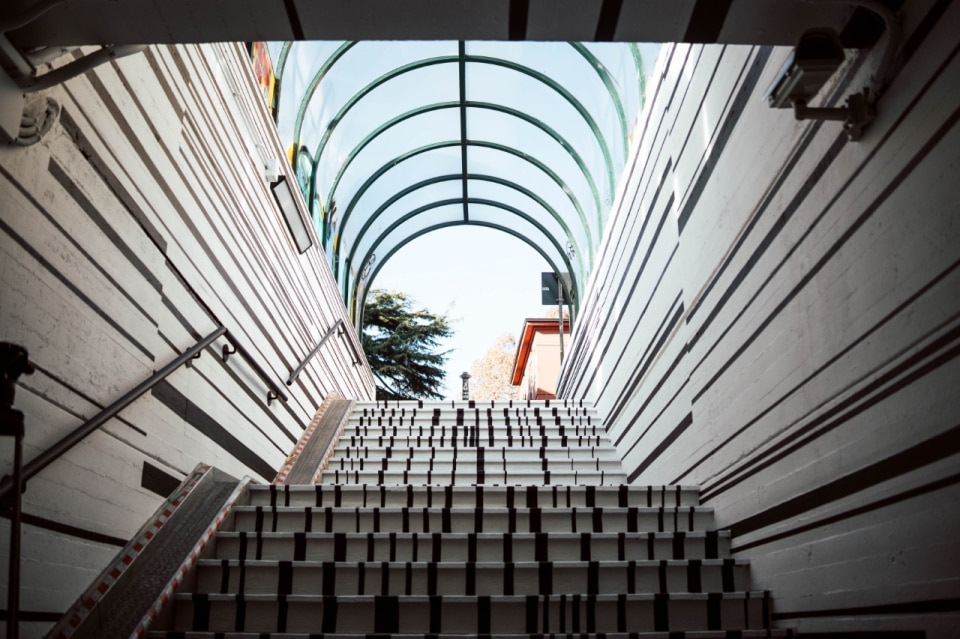
At first glance, the impact recalls an optical illusion. Yet the lines are not perfect. They follow the concrete, meet the tiles, and adapt to the joints and irregularities of the existing surfaces. “They are sometimes interrupted by small deviations, to give them a rhythm and structure.”
They do not attempt to erase what the underpass was before. On the contrary, it is precisely the contact with the material — the marked concrete, the worn tiles — that prevents the image from becoming a purely optical effect. The continuity of the drawing builds and breaks along with the actual structure of the space.
The intervention has generated different reactions, as often happens when a work enters public space permanently. For years the underpass had been shaped by spontaneous interventions and informal stratifications, which had become part of its visual habit. The introduction of a unified design altered that balance, giving the space a radically different appearance.
The shortest path between A and B is a line, but “it could also be the small disturbances that make life more interesting.”
“It is an underpass. It connects two sides of the city, and hopefully also people.”
Opening image: View of Esther Stocker, installation for the Via Canestrini underpass, Trento. Courtesy the artist and the City of Trento. Photo: Emma Bonvecchio, 2026