

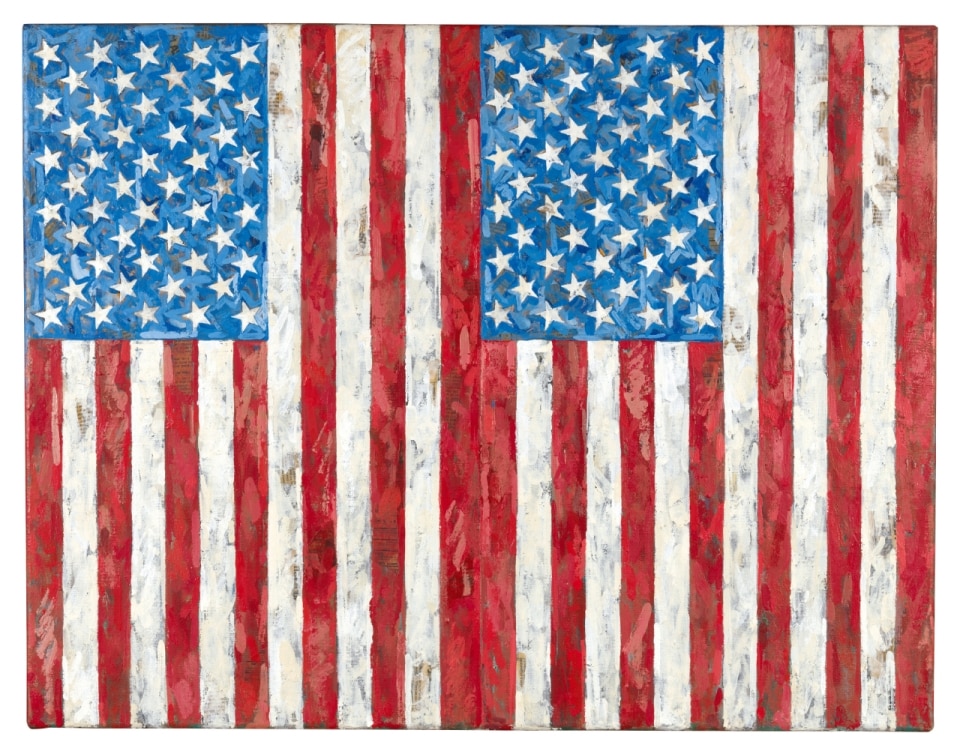
Jasper Johns is undoubtedly one of the greatest artists of the 20th century: having recently turned 96, he has helped shape some of the most significant chapters in the history of contemporary American art over the course of his seven-decade career. After moving to New York from South Carolina in 1953, he held his first exhibition at Leo Castelli’s gallery in 1958, featuring his “Flags.”
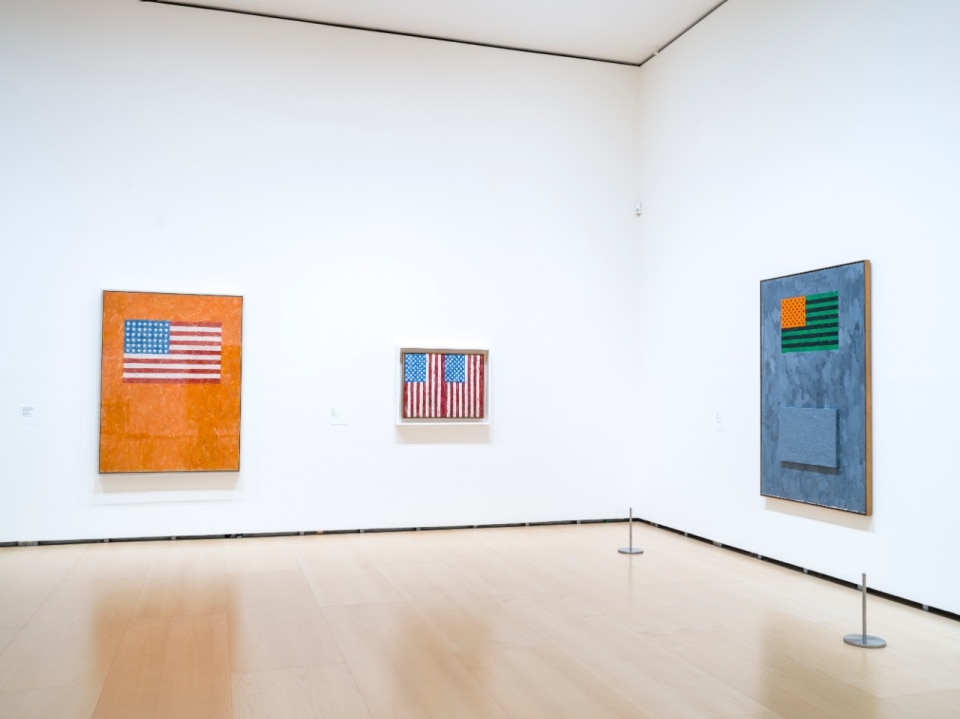
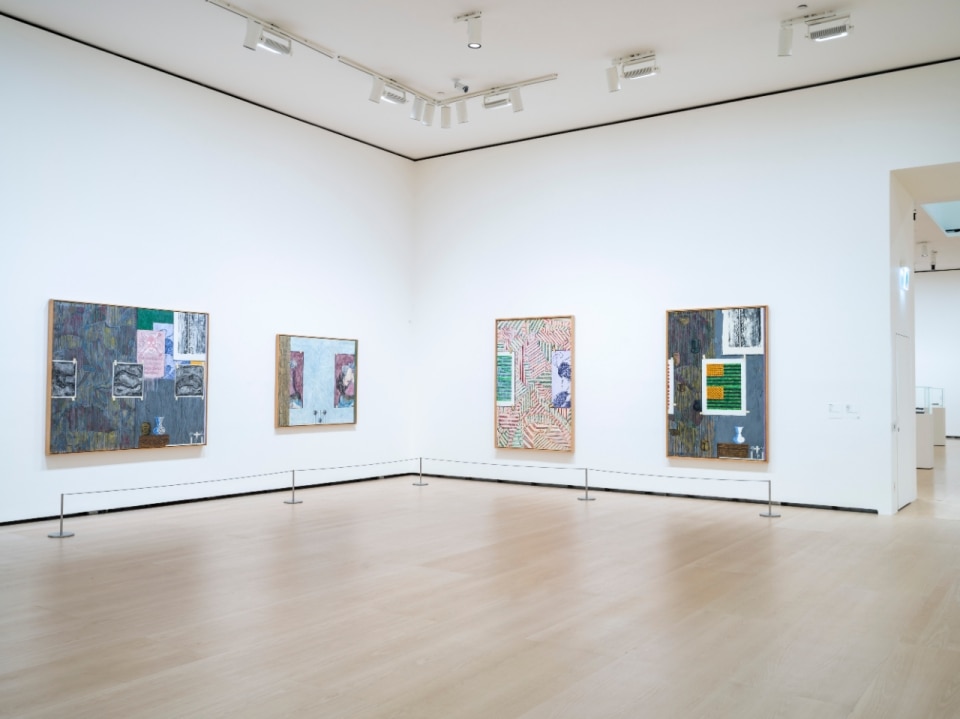
And it is precisely from the flags and famous targets that the exhibition itinerary of the major retrospective that the Guggenheim in Bilbao dedicates to him, entitled "Jasper Johns: Night Driver," curated by Enrique Juncosa and open until October 12, 2026, begins. In the six rooms on the second floor of the building designed by Frank Gehry, Johns' career is presented in a chronological path that allows visitors to follow the evolution of the American artist's work.
Jasper Johns, enigmatic and reclusive artist
On the occasion of the monumental monograph presented at the MoMA in New York City now thirty years ago, Pierre Restany wrote in Domus 791 (March 1997) about Jasper Johns as a “lonely heart of talent,” emphasizing how the exhibition, curated at the time by Kirk Varnedoe, had succeeded in presenting to visitors not “the figure consecrated as the indispensable cornerstone of American art between Abstract Expressionism and Pop Art,” but the artist in his entirety, with the lights and shadows of personal memory, the paradoxes and ambiguities of a complex figure, delving into the “dizzying depths of the inner world of a great loner.”
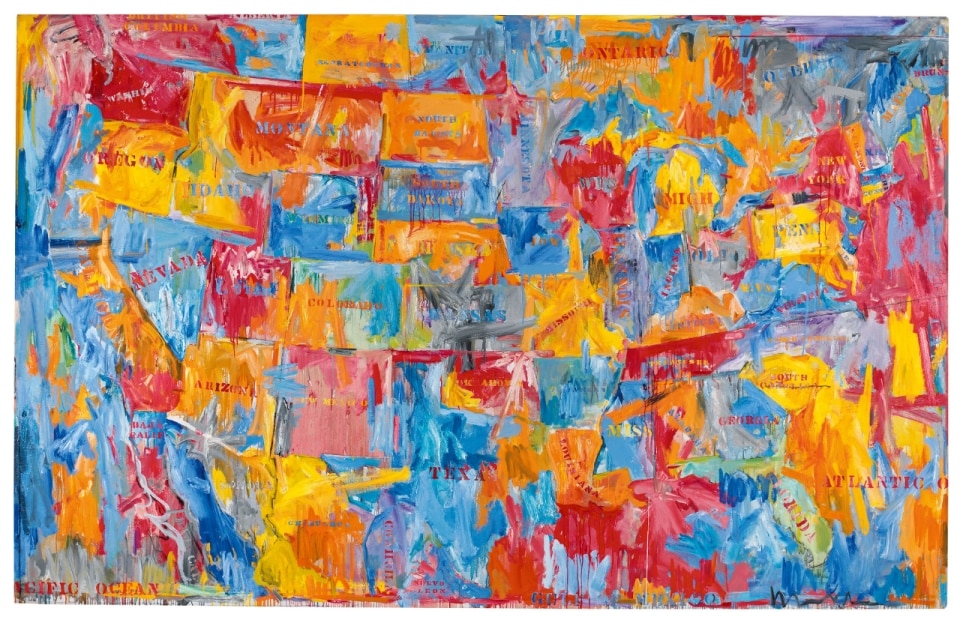
This is an intention that the Guggenheim exhibition also fulfills with great thoroughness. There are approximately 140 works on display, including paintings, sculptures, drawings, and prints, brought together thanks to close collaboration with the artist, who has loaned numerous works from his personal collection, as stated by museum director Miren Arzalluz during the press conference.
The title of the exhibition, “Night Driver” – which is also the title of a 1960 work on paper – evokes the sense of solitude and inner concentration associated with the experience of driving at night, conjuring up the idea of travel, freedom, and transformation, as well as a state of alertness and mystery that makes the drawing a kind of emotional self-portrait of the artist.
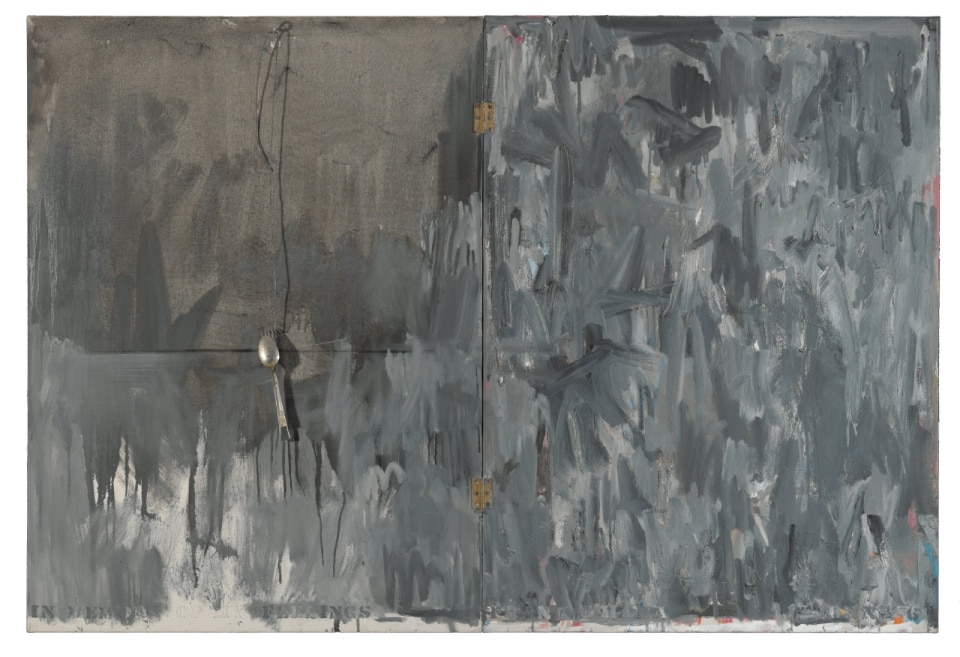
In the first room, amid flags, targets, and maps, the 1961 work “In Memory of my Feelings – Frank O’Hara” immediately catches the eye; in this piece, the artist’s emotionality takes precedence over the impersonality of his earlier subjects. But the work is also significant because it introduces another central element in Johns’s practice: the layering of references and connections to both past and contemporary artists.
From Leonardo to Duchamp
Roberta Bernstein, one of the leading scholars of Jasper Johns, discusses in the 1996 MoMA catalogue the “trigger” effect that other artists’ works have on the American artist’s output. His practice features references to works of a wide variety of styles: from Leonardo da Vinci to Munch, including Cézanne, Picasso, Magritte, and above all Marcel Duchamp.
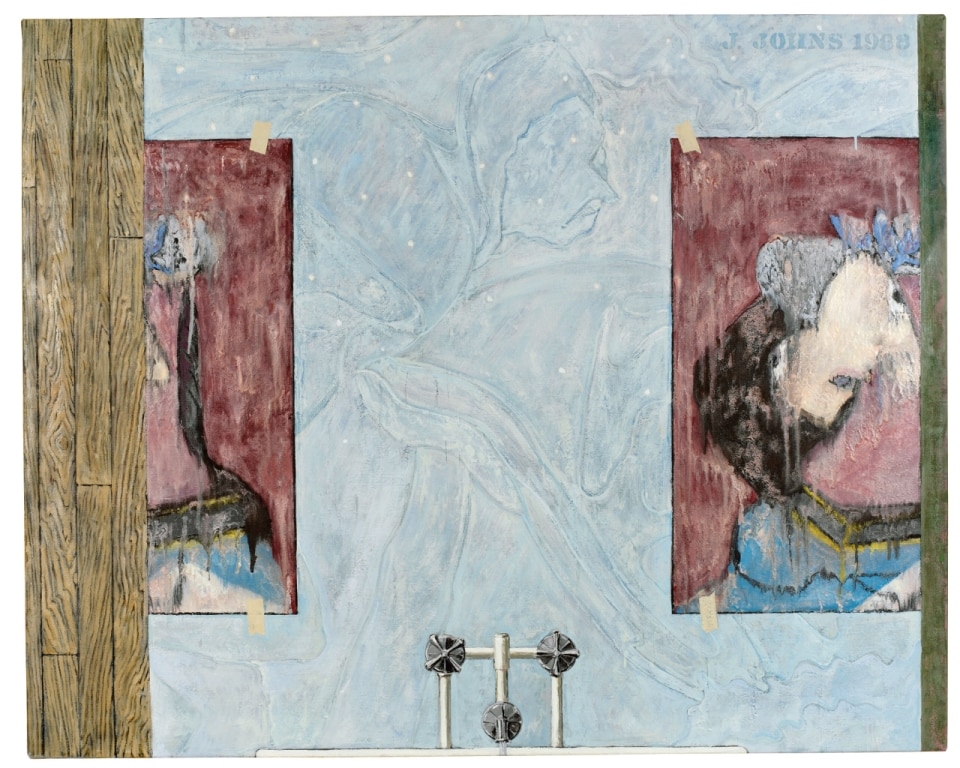
The influence of artists such as Leonardo, Cézanne, and Picasso is particularly evident in terms of composition and form. In a work such as “Montez Singing” (1989–90), inspired by Picasso’s “Woman in a Straw Hat” (1936), Johns retains, for example, the portrait’s vertical orientation and the eyes’ different height on the face, but expands the original’s proportions to the point of transforming the canvas into the very surface of the face.
For Jasper Johns, “Cubism is one of the two great ‘-isms’ for those of my generation. The other is Surrealism, of course. Cubism and Surrealism were clear indicators of the directions one could take. They were liberating and, in a sense, instructive.”
Among the artists who influenced Johns conceptually—and through a shared artistic approach—are René Magritte—the American flag as well as the pipe in “Ceci n’est pas une pipe”—but above all Duchamp.
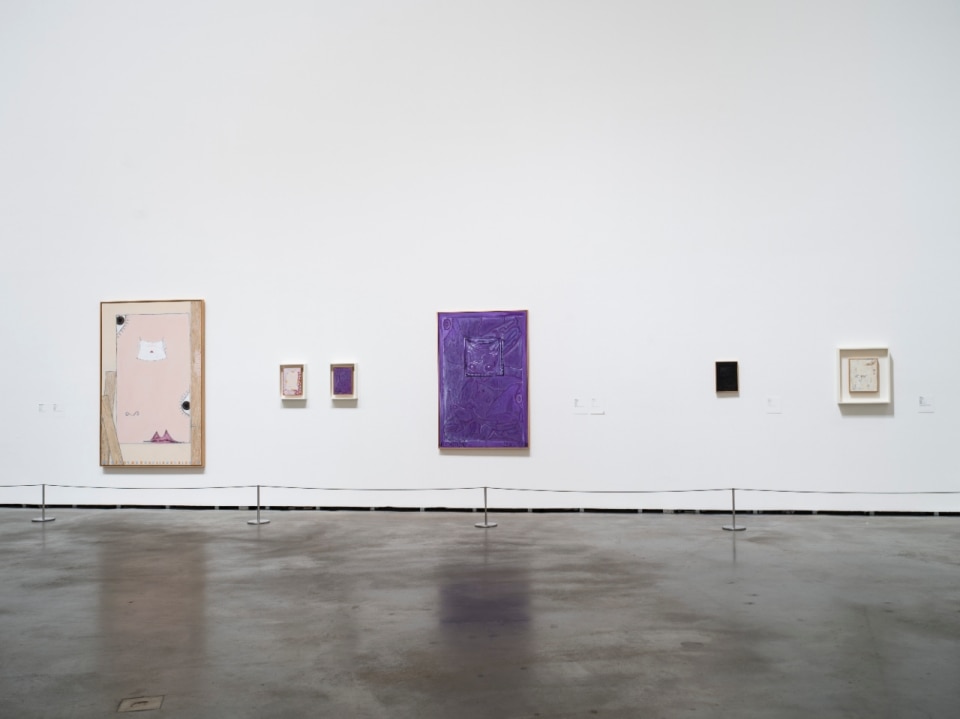
In 1957, critics described Johns’s works as “neo-Dadaist” due to their affinity with Duchamp’s ready-mades. Driven by curiosity, the artist delved deeper into Dada and, together with Robert Rauschenberg, visited the Philadelphia Museum of Art’s collection dedicated to Duchamp. In 1959, Duchamp himself visited their studios on Front Street, accompanied by the critic Nicolas Calas.
Starting in 1960, Johns began collecting Duchamp’s works and delving deeper into his thought by reading the first English translation of the notes for “The Large Glass.” For Johns, Duchamp was “one of the pioneering artists of this century” who had taken his art “into a realm where language, thought, and vision interact with one another.”
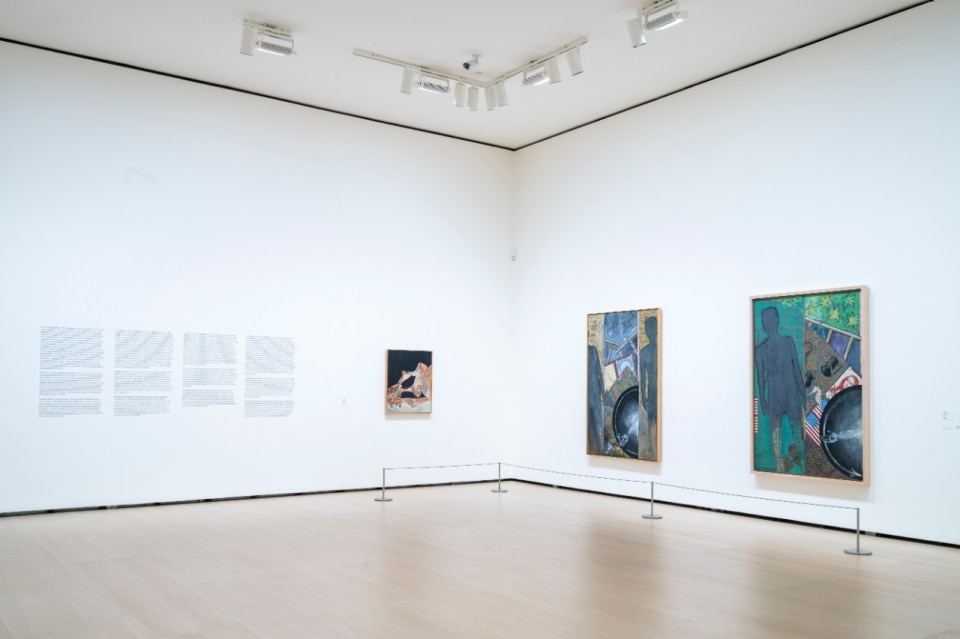
In the works on display, it is impossible not to notice the Duchampian references that tie the canvases together – the well-known self-portrait in profile that recurs throughout the exhibition, as well as the metal sculptures and everyday objects –such as flashlights, which, from tools used to illuminate something to be looked at, become objects of observation in their own right.
In his collaboration with Merce Cunningham’s dance company – Cunningham being a close friend of Johns, along with John Cage and Robert Rauschenberg – for the performance “Walkaround Time” (1968), the artist designed costumes and sets based on Duchamp’s “Large Glass,” and the exhibition features the original replicas of these designs.
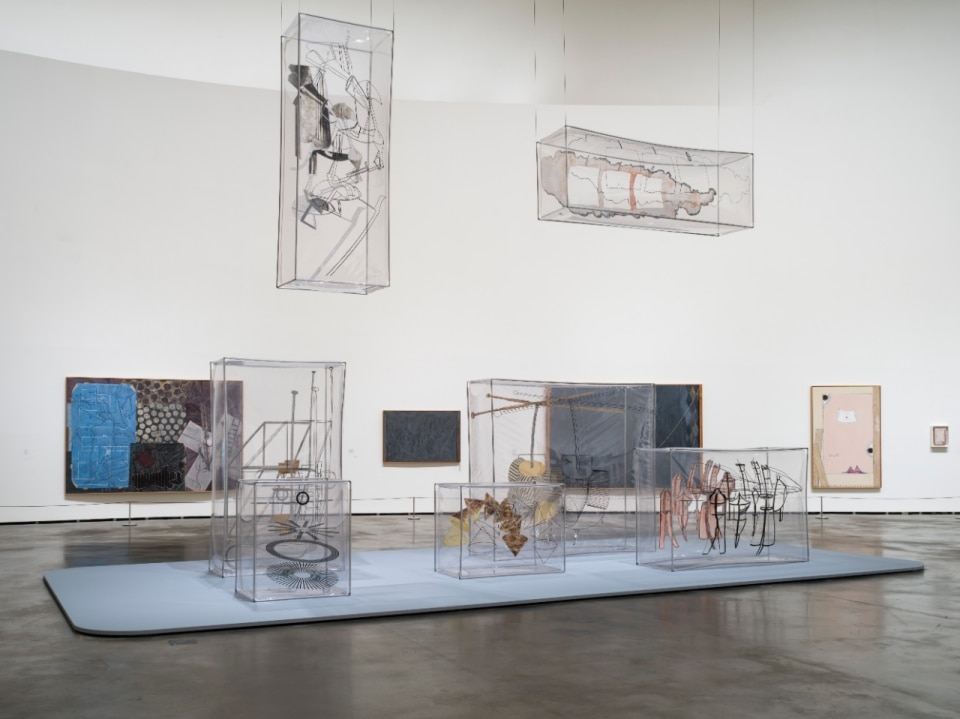
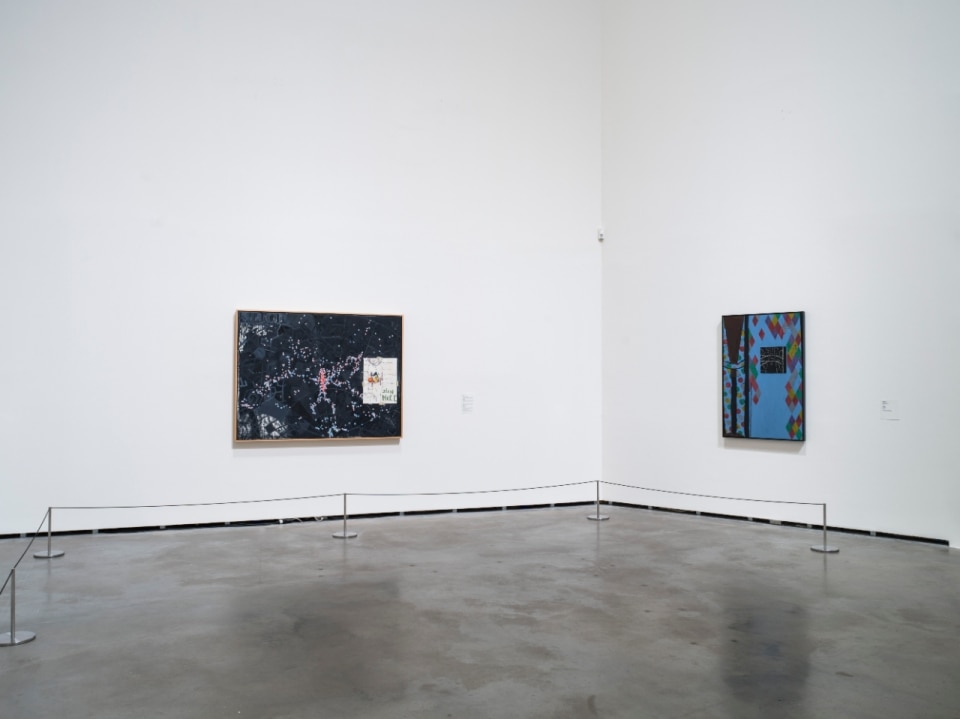
Closing the path is the production from the 1990s onward, characterized by increasingly complex spatial layering and a growing number of references to his own childhood. The "conversations" with earlier works gain increasing intensity in the development of an inquiry into perception as a means of addressing larger questions of existence, as in the "Catenary" series and the work "Slice" of 2020.
Drawings, Engravings and Beckett
The last two rooms deserve special mention, as they are entirely devoted to a vast selection of drawings and works on paper: pencil, charcoal, pastel, chalk, ink, watercolor, collages of paper and objects, metallic pigments, and drawings on paper as well as on plastic.
In an interview published in March 1965 in Artforum, Johns explained that most of the drawings had been created “simply for the pleasure of drawing,” often taking an existing painting as a starting point.
Finally, special mention should be made of the collaboration with Samuel Beckett on the 1976 artist’s book "Fizzles (Foirades)", which brings together five short prose pieces by Beckett and thirty-three original engravings by Johns.
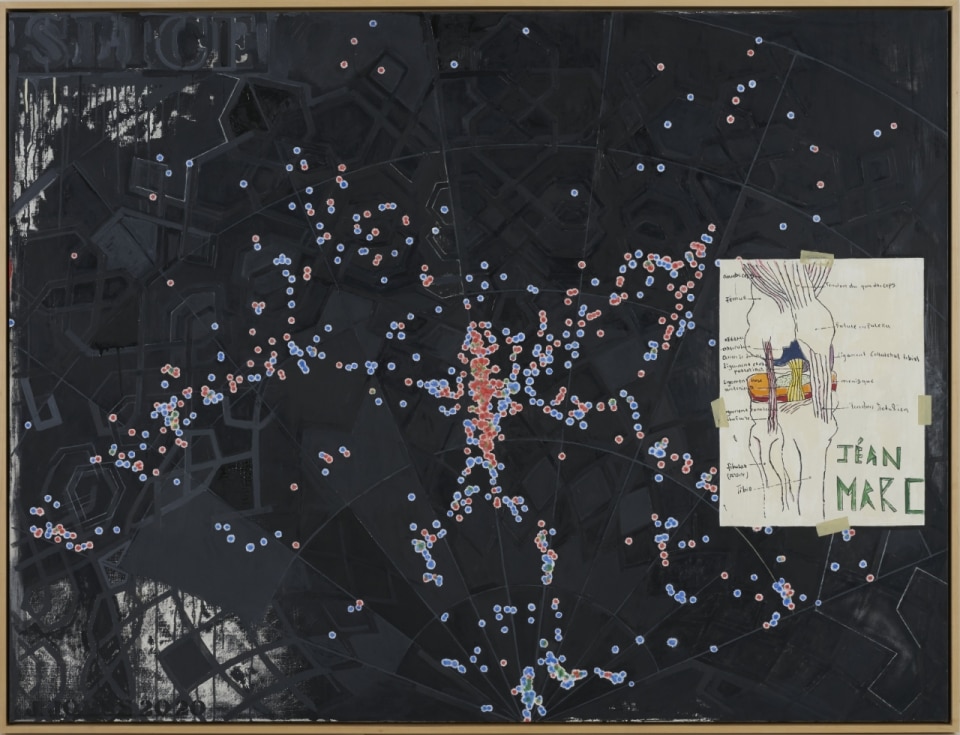
Jasper Johns’s vast and multifaceted body of work, the full complexity of which is captured in this exhibition, reflects a vision of art that evolves alongside the artist’s private life and which, as the curator explains in the introduction to the exhibition, regards painting as essential, just like food: something that cannot be suppressed.
Cover image: Flags, 1987. Encaustic and collage on canvas
.
65.5 x 83.8 cm Collection of the artist © Jasper Johns, VEGAP, Bilbao, 2026