



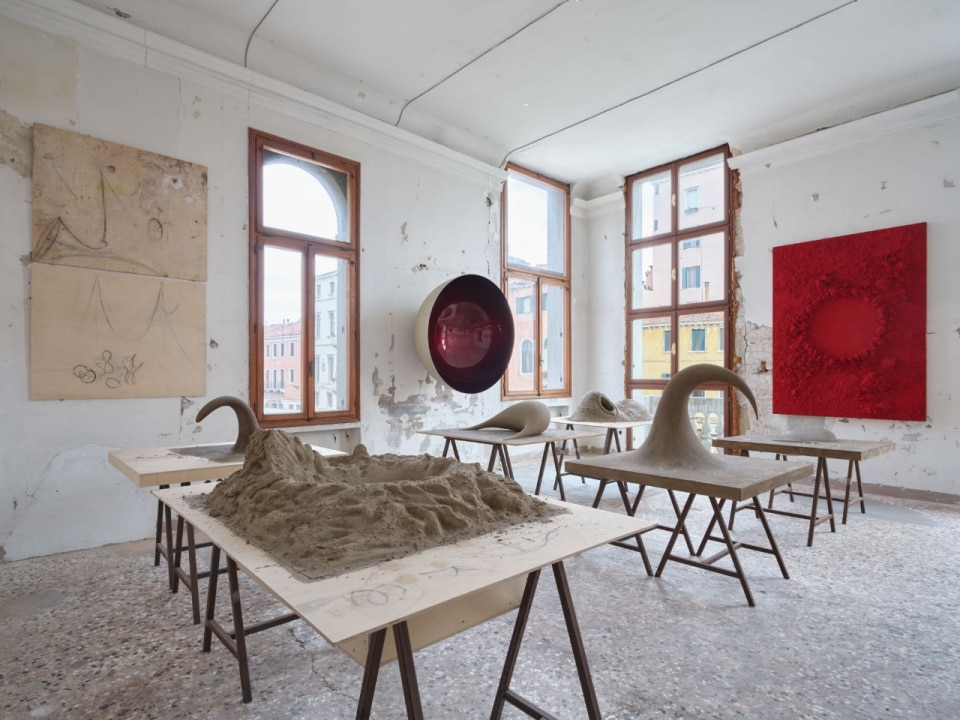
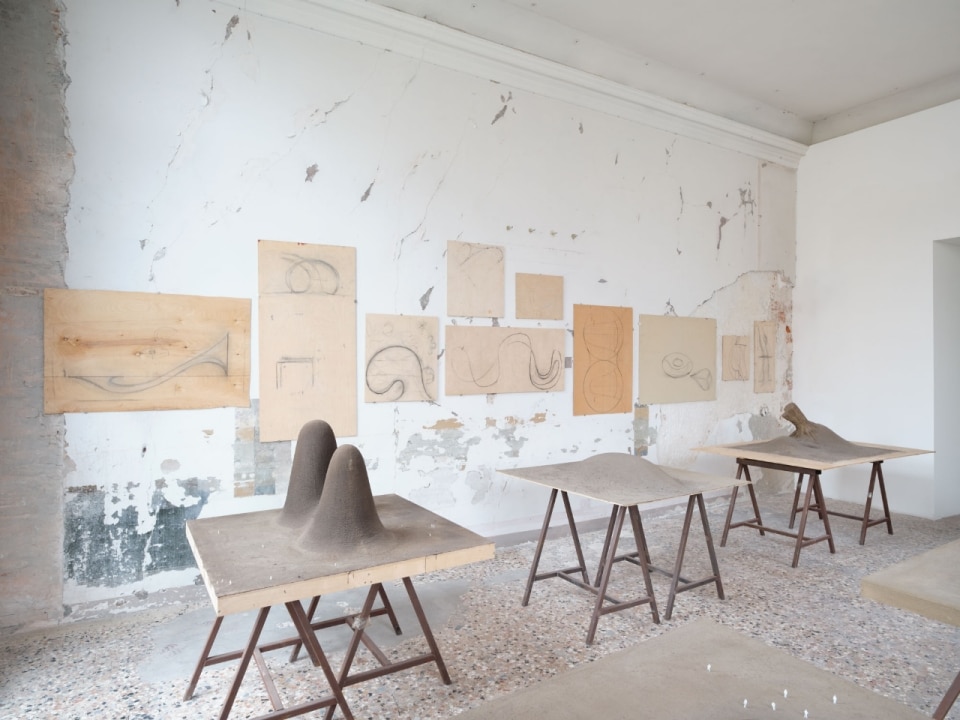
When Anish Kapoor bought Palazzo Manfrin in Venice, he found more than a home for his studio, foundation, and future museum. He solved a problem that has always accompanied his work: where to place works that often resist coexistence with anything else.
Kapoor’s sculptures demand, almost by definition, space, emptiness, distance.
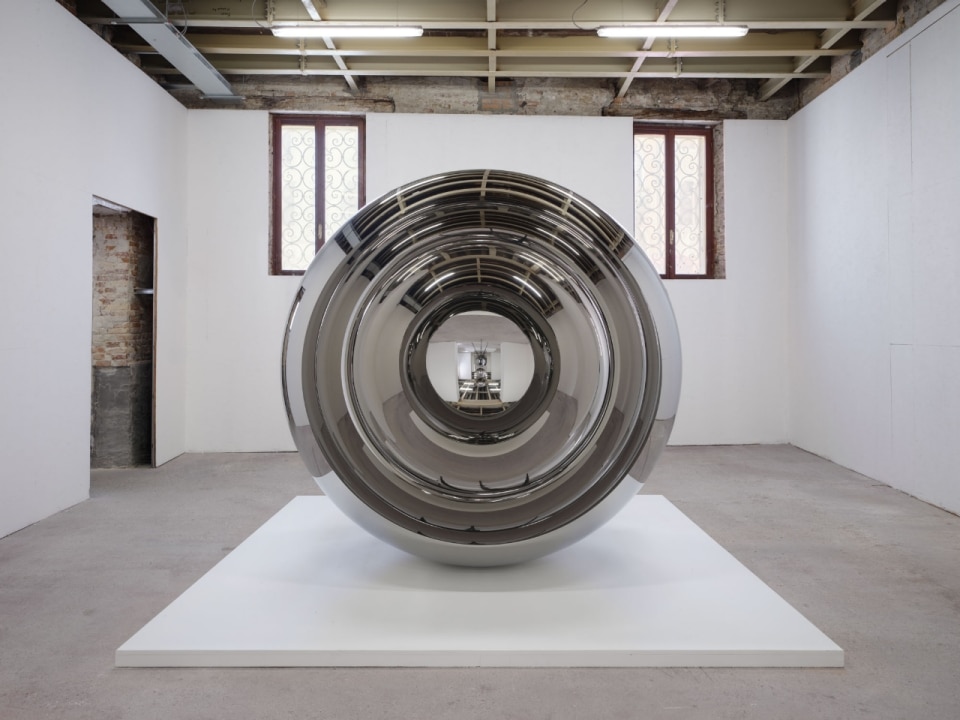
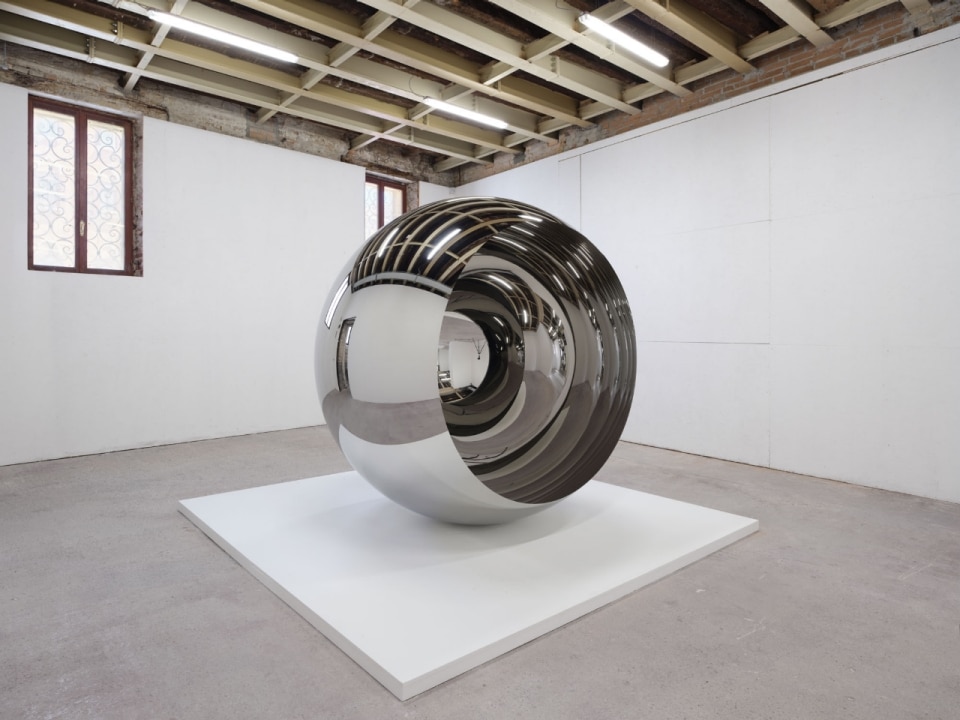
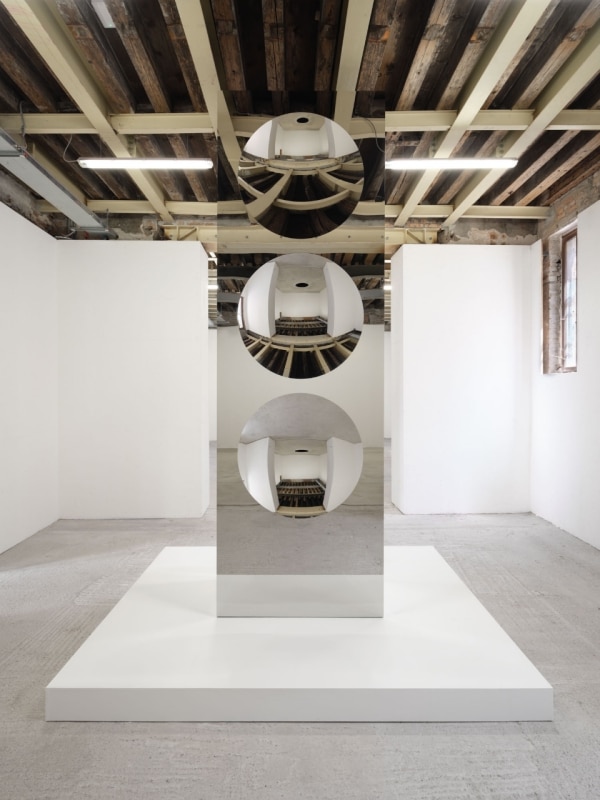
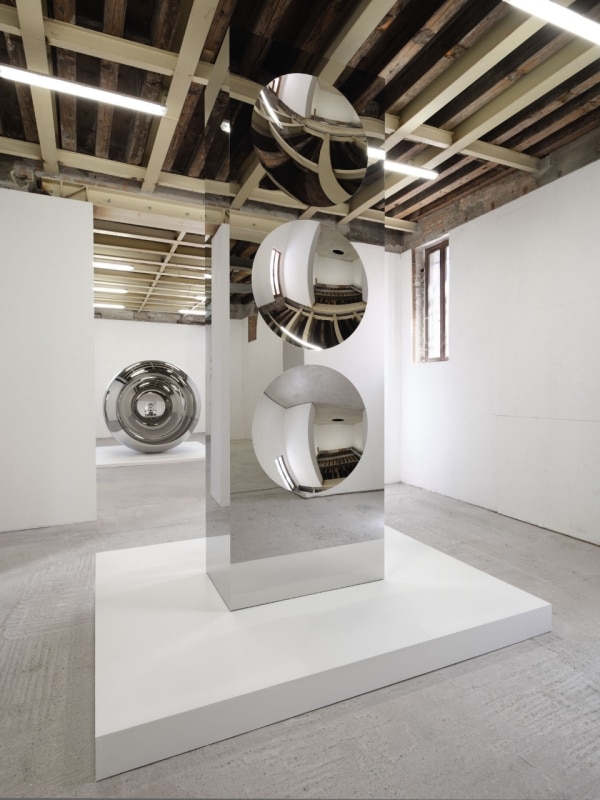
And it is not simply a matter of scale. Even when they avoid monumentality, they continue to operate through absorption, reflection, and deformation of the surrounding space: a concave surface alters the reflection of an entire room; deep black erases the edges and curves of the object to which it is applied; reflective steel overturns the viewer’s body and draws it into the work.
It is therefore easy to see how, placed beside other works, this perceptual precision can lose force — or take it away from what surrounds it.
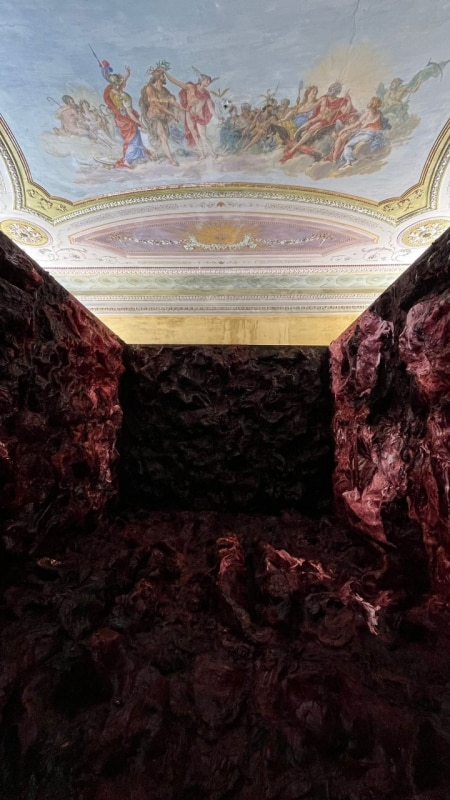
Palazzo Manfrin appears, then, first of all as a practical response to a concrete problem: a historic Venetian building transformed into a place where the work can dictate its own terms.
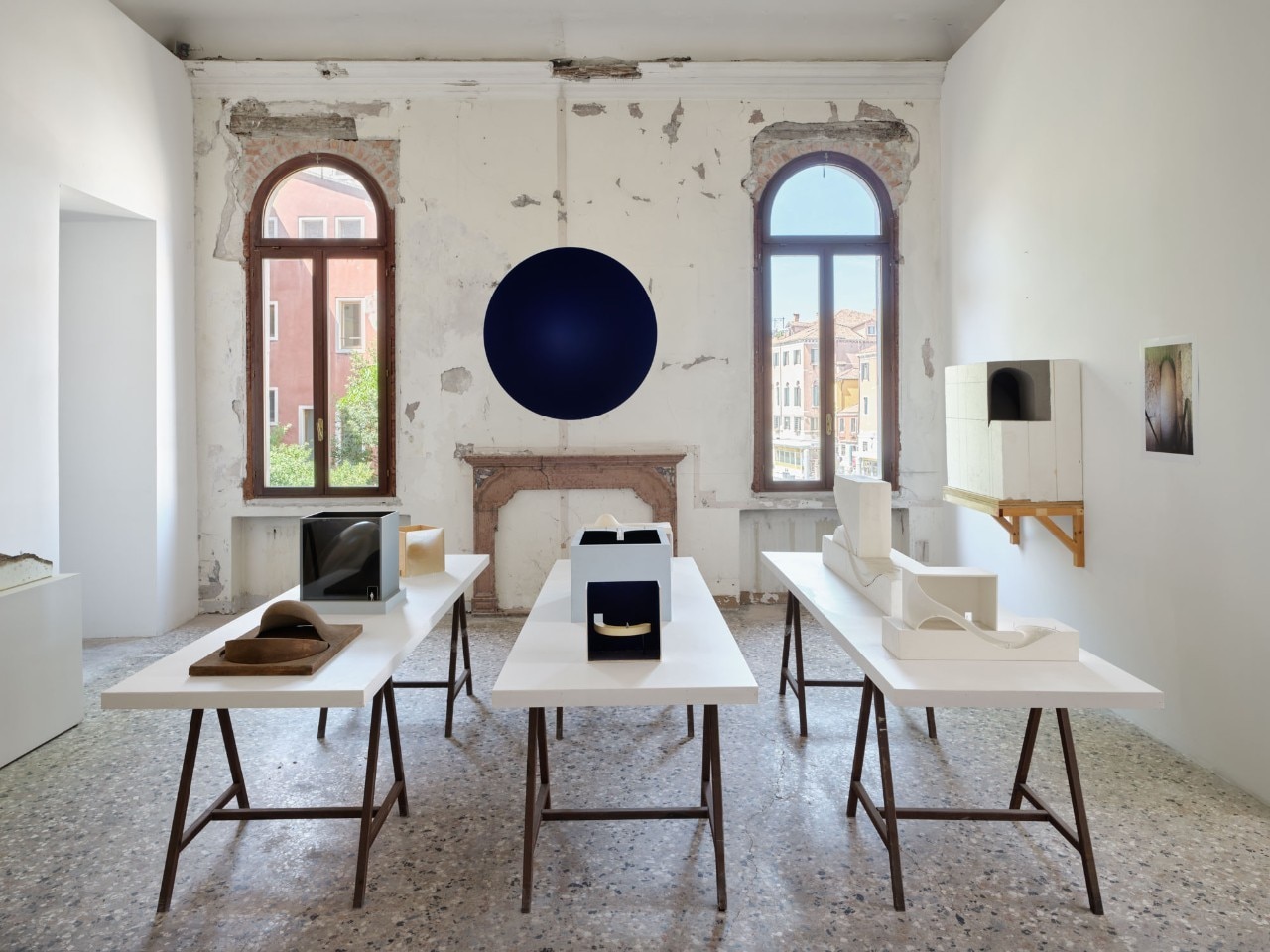
Not a white cube, not a collection to be neatly traversed, but a palace still rough, irregular, partly bare — where sculpture can once again become architecture, and architecture becomes a material to be pushed to its limits.
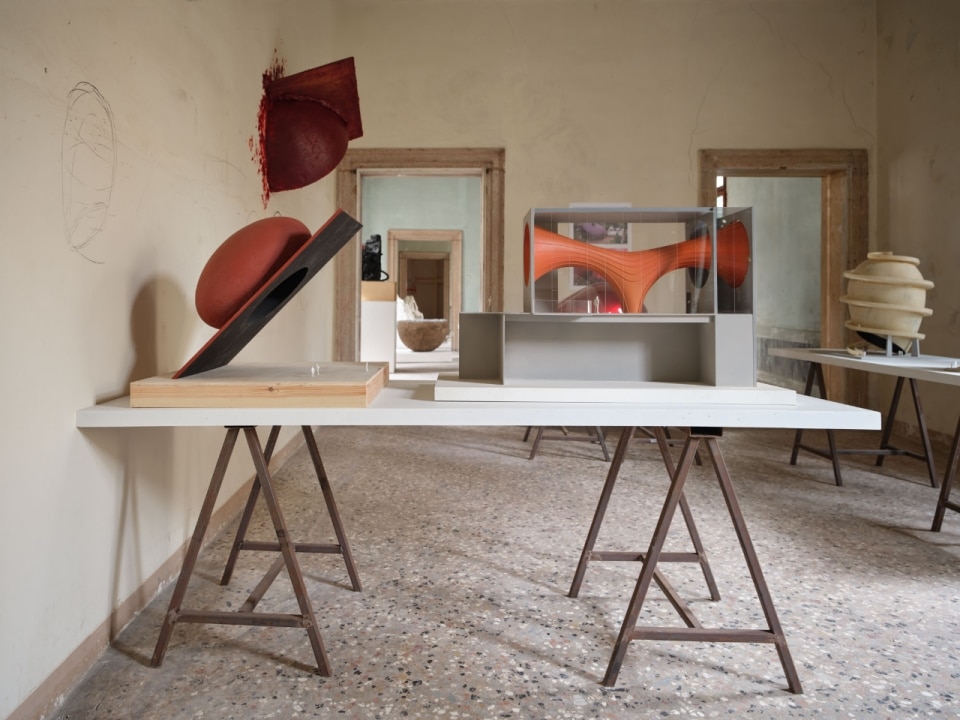
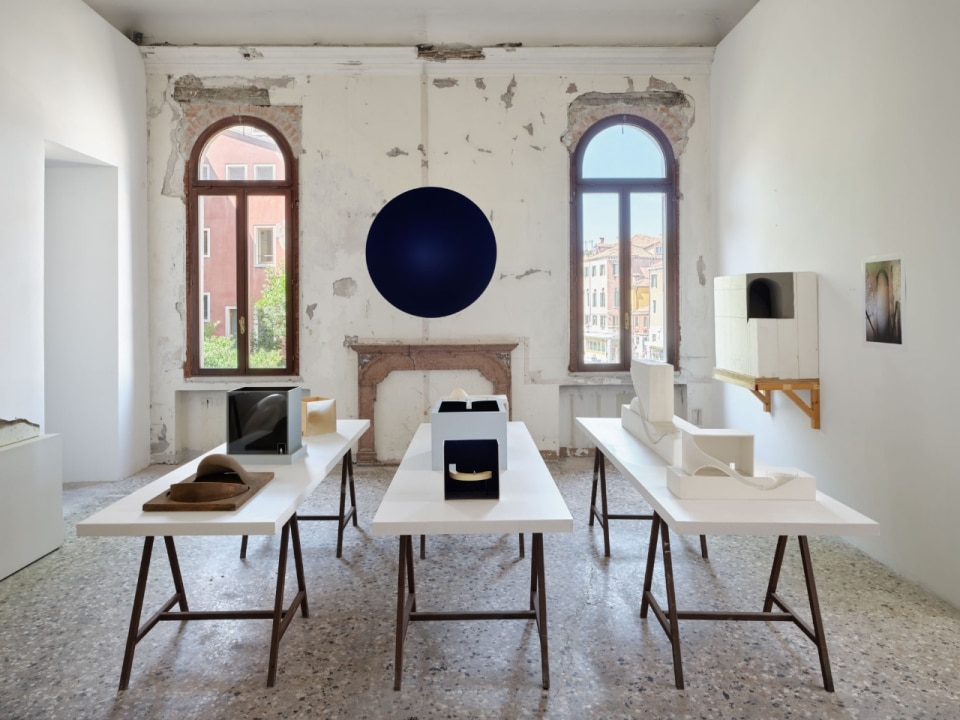
The exhibition staged on the occasion of the 2026 Art Biennale seems to begin from this conviction: around one hundred architectural models from the past fifty years — some of which became actual works, many of which remained hypotheses — are displayed alongside large-scale installations and works in stainless steel, pigment, cement, silicone, paint, and Vantablack.
The first surprise is that the exhibition does not seem designed to impress — or at least not in the most predictable way.
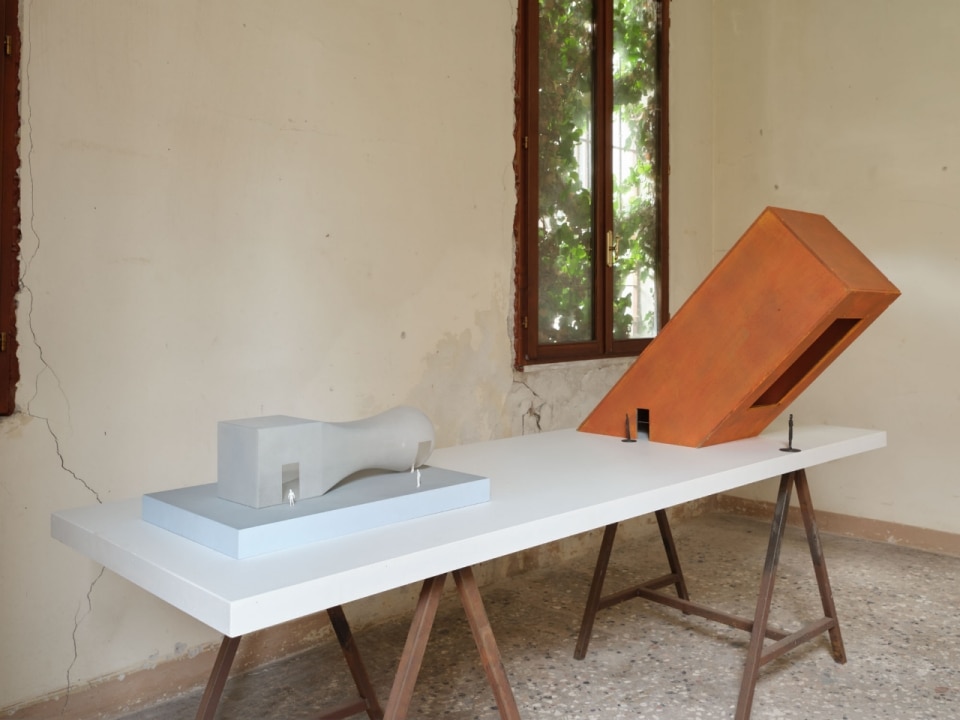
The works and optical effects that made Kapoor famous are there, but generous space is given to the architectural models: small, often fragile, made from raw materials and populated by tiny human figures that measure their scale.
Not a white cube, not a collection to be neatly traversed, but a palace still rough, irregular, partly bare — where sculpture can once again become architecture, and architecture becomes a material to be pushed to its limits.
Some of these projects have entered the world: Ark Nova, the first inflatable concert hall; the Sant’Angelo metro station in Naples, due to open in 2025. Others remain suspended. It is not always clear whether they are still waiting for someone brave enough to build them, whether they are technical fantasies, or simply provocations.
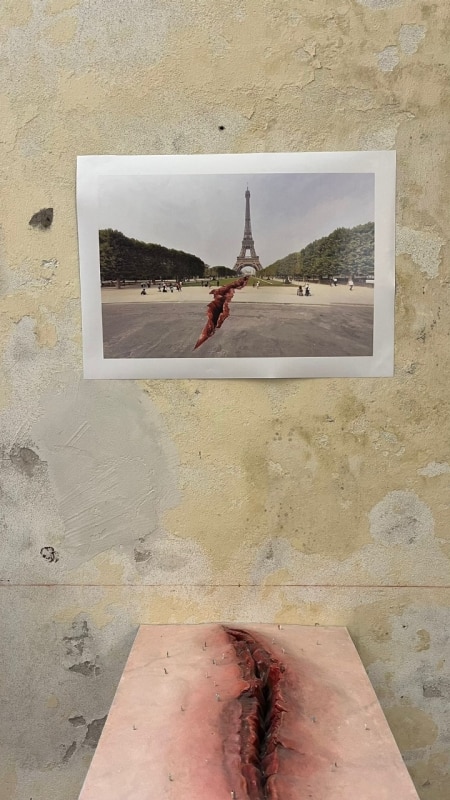
The cavity, the cut, the crater, the fissure — and then the crack, which in some models becomes an almost violent urban gesture: a line that incises space without asking permission, opening Paris towards the Eiffel Tower.
What they share is an urban intrusiveness: they treat the city fabric as matter to be forced, as a threshold to be crossed and contradicted. As though this were the necessary cost of producing epiphany in the viewer.
Kapoor works within a tradition in which form precedes its structural justification: one begins with a plastic gesture and then asks technique to follow.
The result is never a building-object so much as an object that behaves like a building. And not without consequences.
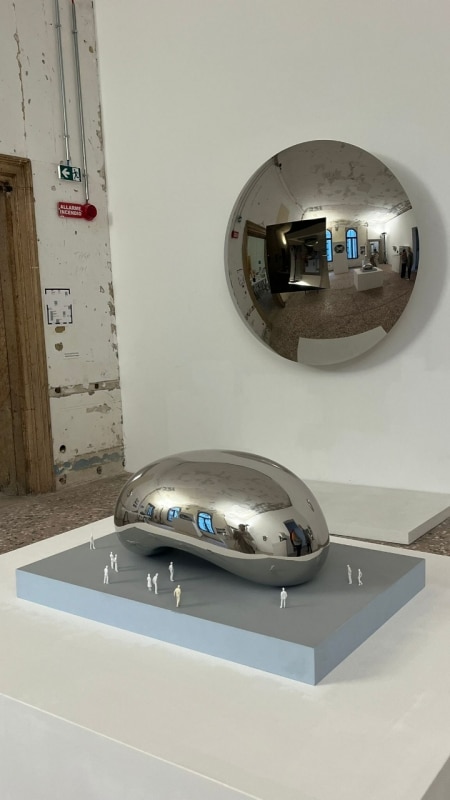
Cloud Gate, the large bean-shaped mirror installed in Chicago in 2006, whose maquette is on display at Palazzo Manfrin, has had a rather turbulent public life. In 2018, Kapoor won a lawsuit against the NRA for the unauthorized use of its image in a propaganda video. In November 2025, Border Patrol agents photographed themselves in front of the sculpture after a series of raids in the Latino neighborhood of Little Village: Kapoor compared them to the Nazi SS and is considering another lawsuit. Meanwhile, groups have appeared on Reddit convinced that the sculpture’s reflective surface was being used by the Secret Service to monitor visitors to the park, or that someone is locked inside it.
The Bean — conceived as the collective mirror of a metropolis — has become, despite itself, a political battlefield. And it is only the most emblematic case.
Something similar happened with Vantablack. In 2016, Kapoor acquired the exclusive rights to the artistic use of a military-derived nanotechnology that absorbs 99.96 percent of light, making any surface visually flat, depthless, almost nonexistent. The move provoked a response from the British artist Stuart Semple, who in turn created and put on sale the brightest pink ever produced, with the explicit condition that it could be purchased by anyone except Anish Kapoor.
Palazzo Manfrin was acquired in 2018 and has opened to the public only twice in eight years — always during the Biennale.
Here, the works can remain without having to fight the world. At least until they decide to go outside.
- Show:
- Anish Kapoor at Manfrin Palace
- Dates:
- May 6-August 8, 2026
- Where:
- Manfrin Palace, Cannareggio, Venice