

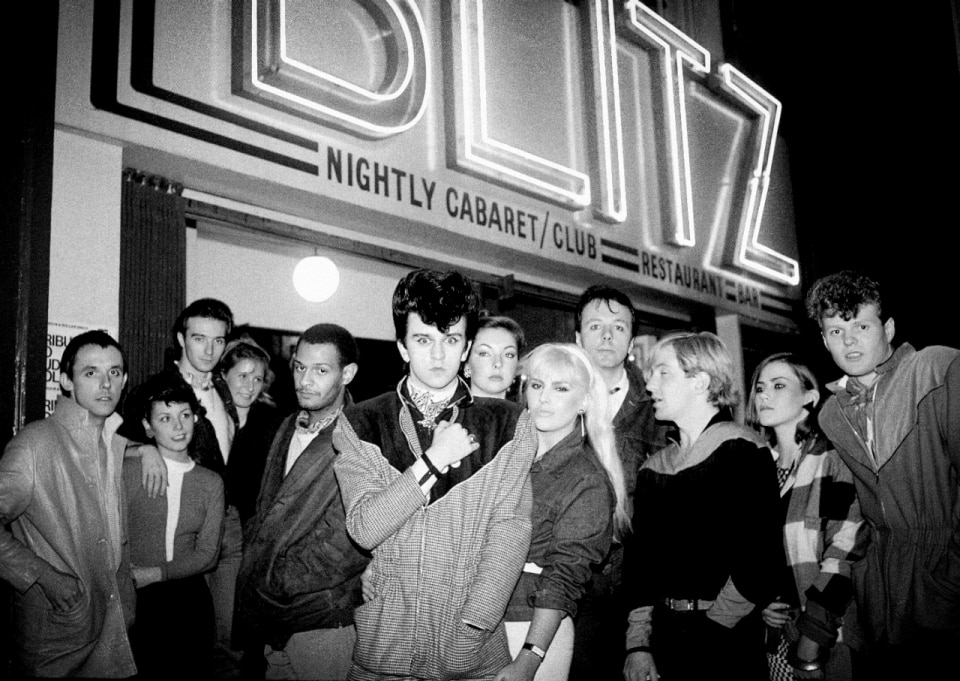
Gone are the days when anything to do with nightlife was dismissed as some sort of moral decline. Discos, clubs and performative spaces that once belonged to outcasts and social clusters on the fringes of society, now stand firm as a cornerstone of culture. Heaven forbid you miss a concrete music concert in a church, a festival inside some stern old Soviet building, or – needless to say – exhibition about nightclubs.
At London’s Design Museum, the exhibition “Blitz. The Club That Shaped the '80s” reconstructs the legacy of one of the capital’s most visionary and influential venues, tracing how club culture became a shared cultural heritage.
When club culture becomes an Institution
As more and more clubs shut down, club culture is being institutionalised – and museumified. Torn flyers, scratched vinyls and faded promotional T-shirts have overtaken coats of arms, bas-reliefs and oil paintings as artefacts of historical value.
A trend sparked by the Vitra Design Museum back in 2018 with Night Fever, the exhibition that reignited the spotlight on nightclubs as nostalgic fetishes – unrepeatable spaces where music, design and collective ecstasy met among glorious plastic designer chairs and less amusing sweat.
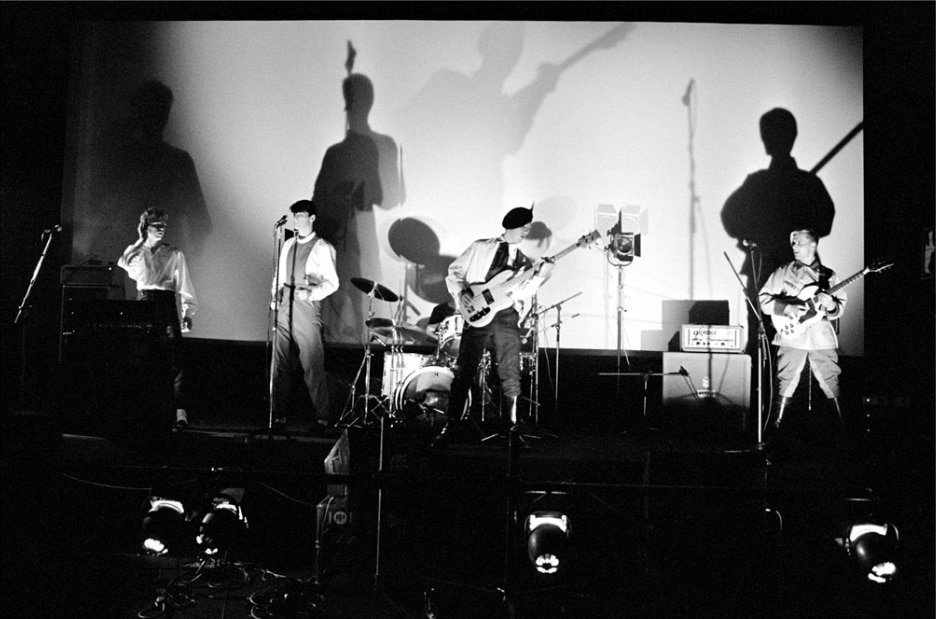
One of the latest casualties in the recent wave of club closures was Plastic, an institution of the Milanese nightlife, which shut down unexpectedly just months before turning 45. The club had been a temple for that Milan which, beneath the moral austerity of Italy’s business capital, discovered its libertine and queer dancing side, with its flyers advertising nights in honour of Derek Jarman and Jean Cocteau.
Less known is that the inspiration for its founder, mastermind and resident DJ of over four decades, Nicola Guiducci, came from a far shorter-lived London club: Blitz.
Blitz: a creative laboratory
Open for barely eighteen months – from February 1979 to October 1980 – Blitz left behind a legacy that would fragment and flourish across a multitude of London clubs and club nights, extending its influence far beyond: into music charts, publishing (i-D, The Face), and fashion. That story is now being told in a show aptly titled “Blitz. The Club That Shaped the ’80s”, which has recently opened at the Design Museum in London.
While Italians knew Blitz as a prime time talk show hosted by Gianni Minà’s – all thick ’70s moustaches and wool jumpers – London’s working-class and lower-middle-class teenagers found their escape from a grey, suffocating Britain at Covent Garden’s Blitz, a former furniture warehouse. As Margaret Thatcher stepped into N10 Downing Street, Blitz, therefore, became an invitation to (metaphorically) dance under the bombs of a grim city that resembled that of WWII.
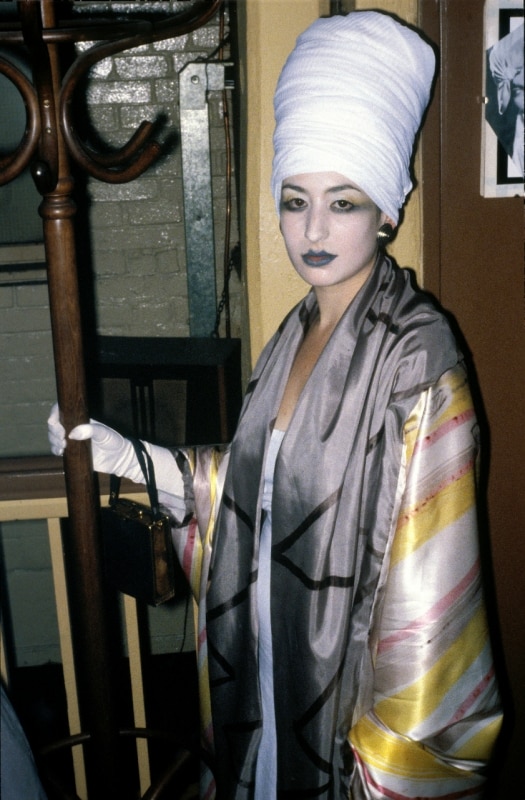
As curator Danielle Thom explains: “Although, for the most part, they [the Blitz Kids] didn’t see themselves as especially political in the sense of being politically active, they were undoubtedly influenced by the political context of the day – rising unemployment, literally bin bags piled high in the streets.”
Fashion, art and the new romantics
Among the founding myths of the Blitz, David Bowie’s sartorial flair cannot be left out—along with an overtly cosmopolitan taste nourished by European influences: Berlin cabaret, the song Lili Marlene, and a certain decadence evoking the imagery of the Second World War.
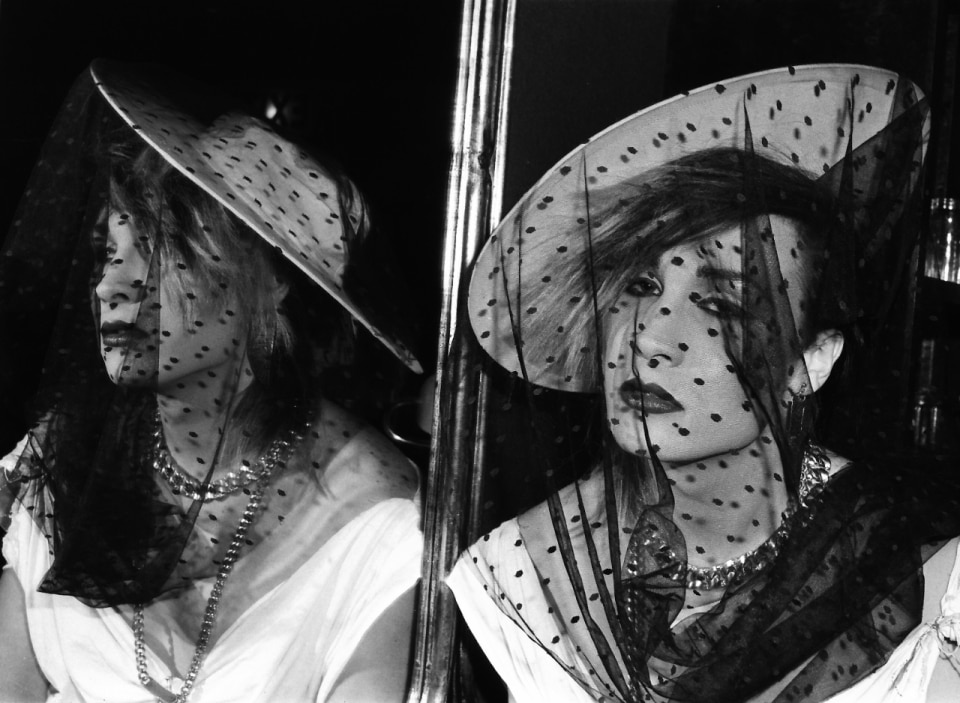
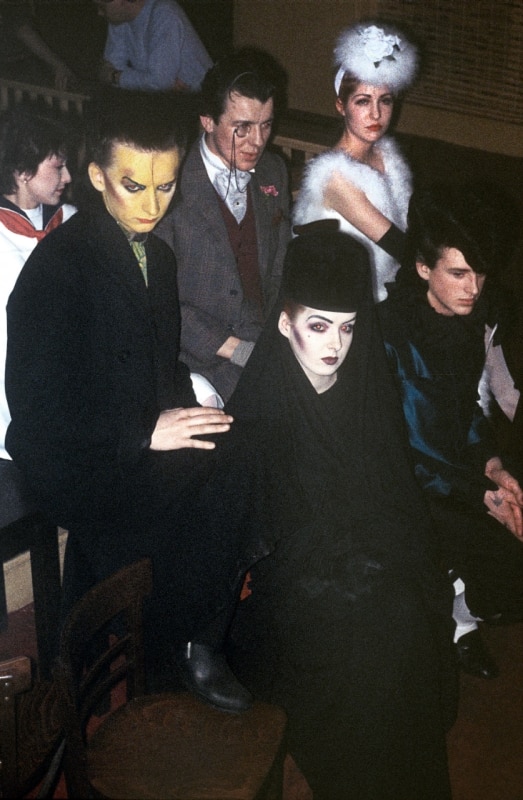
1940s zoot suits and clothes salvaged from charity shops, architectures of makeup and leather: the Blitz built its own iconography by mixing cinematic references — from Buñuel to Pasolini to Salon Kitty, the film set in a brothel (and espionage center) during the Nazi era — discovered in the darkness of the Scala, the legendary King’s Cross cinema that introduced the punk world to B movies. In the end, the Blitz was an invitation to dance under the (metaphorical) bombs of a London that seemed to have regressed, culturally and chromatically, to the wartime years.
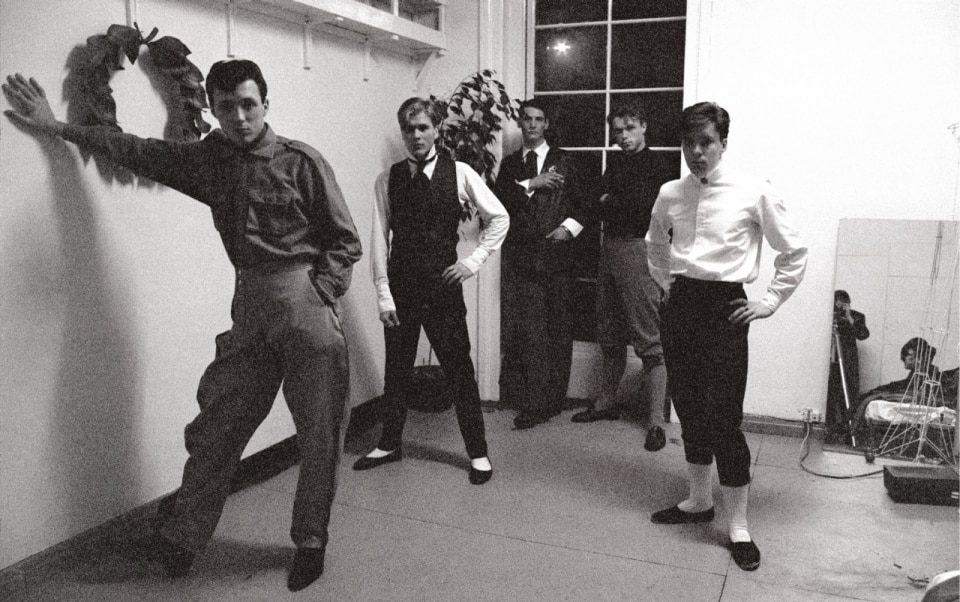
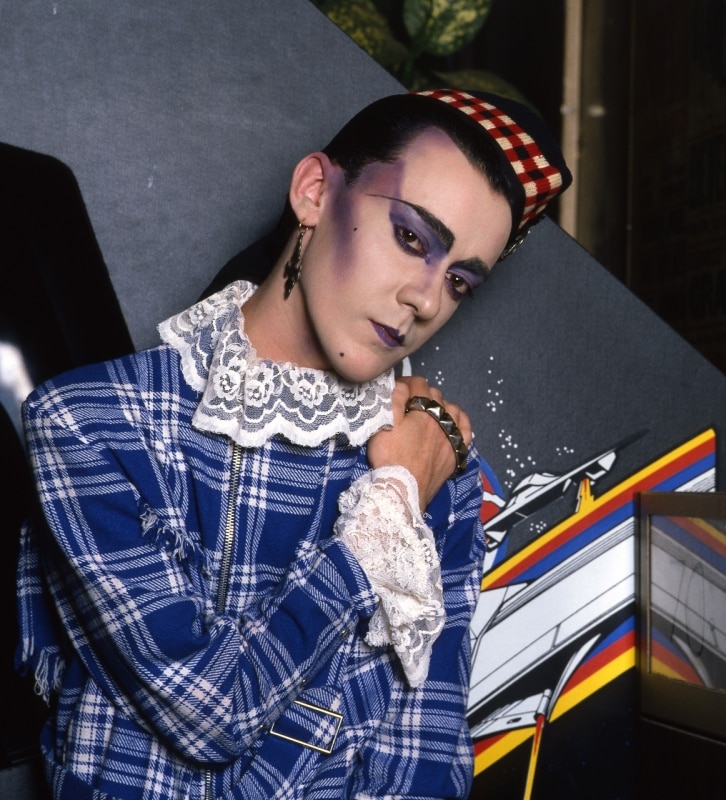
This was the London of Them (never was the name more prophetic), a scene-movement poised between the glam that was and postmodernism to come, with boundaries dictated more by attitude than style, in which artists such as Derek Jarman and Duggie Fields could be found drinking and dancing alongside fashion designer Zandra Rhodes and Brian Ferry. A cocktail that at the Blitz deflagrated into what would later be named the New Romantic scene-an overly narrow and stereotypical concept that the London exhibition restores in its layered pastiche, rather than punctuating with the dry science of subcultural theories. The founders of the nightclub are Steve Strange (later leader of Visage) and Rusty Egan, 'face' of underground London at the time. At the checkroom one can meet a very young Boy George and - legend has it - at the door Mick Jagger happens to be bounced for being an embodiment of the past.
Although the Blitz Kids didn’t see themselves as especially political (...) they were undoubtedly influenced by the political context of the day – rising unemployment, literally bin bags piled high in the streets.
Danielle Thom
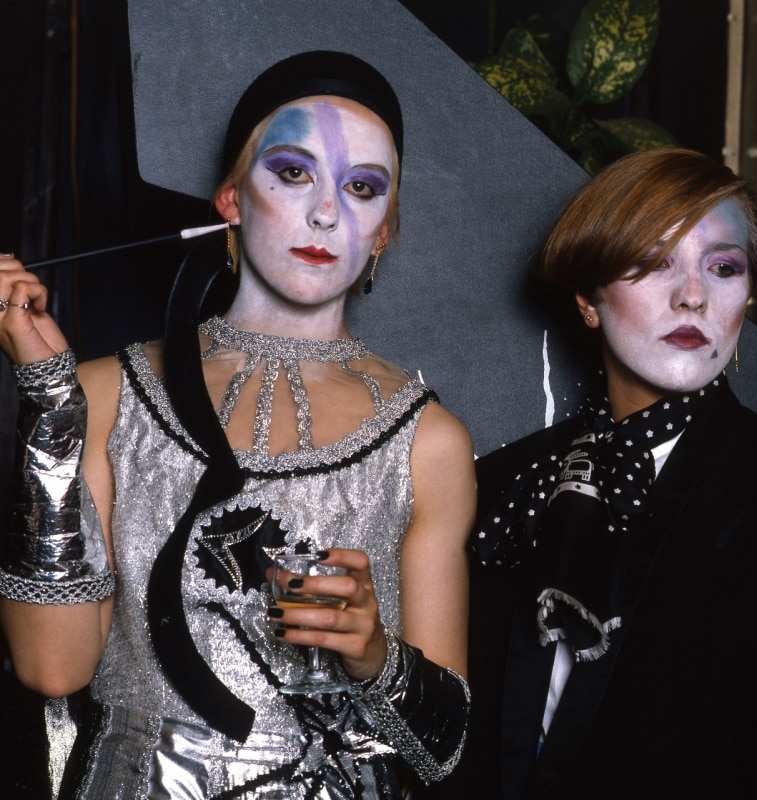
As a BBC reporter sardonically remarked: “Anyone who looks normal is refused entry.” Another journalist instead noted that its patrons “drink piña coladas and pose for hours.” One regular confessed it could take him up to three hours to get ready for a night at Blitz.
The honesty of this "design-driven" reinterpretation of nightlife
The real meaning of “Blitz. The Club That Shaped the ’80s” lies precisely in its setting: a museum context that invites us to re-read nightlife beyond nostalgia and its sanitising clichés. The kind of attitude that airbrushes away the acrid smell of club toilets, the bouncers, and the shirts sacrificed to cigarette burns.
Beyond the quality of the ephemera on display, what emerges most powerfully is the idea of Blitz as a broader lifestyle, one that extended well beyond its walls to encompass design, fashion, publishing and architecture. A perpetual creative laboratory – as all the most vital youth scenes tend to be – in furious evolution and symbiosis with Central Saint Martins.
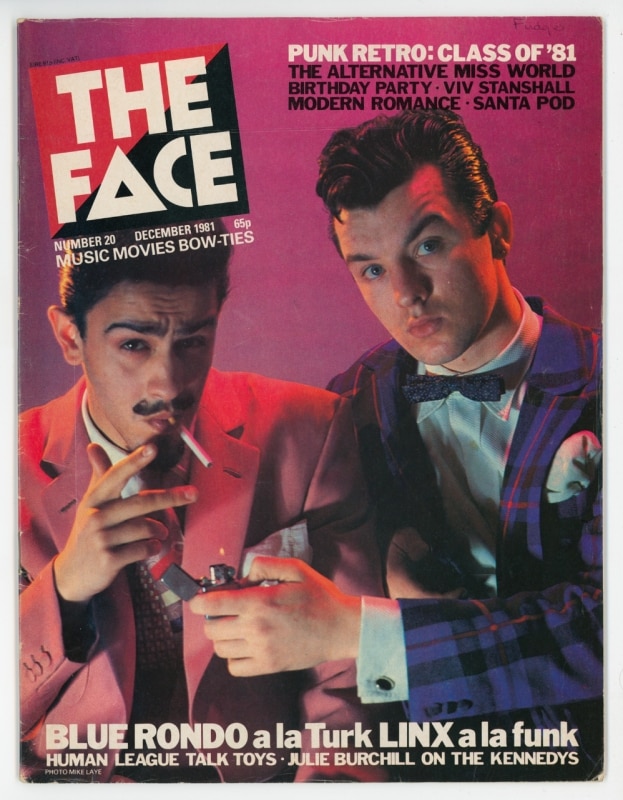
Alongside Xeroxed flyers, countless snapshots and magazines, the show includes garments created by fashion students and modelled directly on the dance floor, transforming it into a catwalk for a handful of initiates who understood its codes. Bowie himself dropped by, reportedly so smitten by the fashion scene that he invited designer Darla-Jane Gilroy and a few friends (including Steve Strange) to feature in his video for “Ashes to Ashes”. Willie Brown’s designs were also among the Thin White Duke’s favourites.
Brown’s label, Modern Classics – then based in a pre-gentrified Shoreditch – produced one-off garments inspired by Russian Constructivism and Le Corbusier silhouettes in full 1930s revival mode. Then you had Melissa Caplan, fitting costumes in London squats for the up-and-coming Visage and Spandau Ballet (both Blitz regulars), and Sue Clowes, who designed vests for Culture Club featuring a St George’s Cross overlaid with warplanes. Once again, the present intrudes – insistent, political, and ironic.
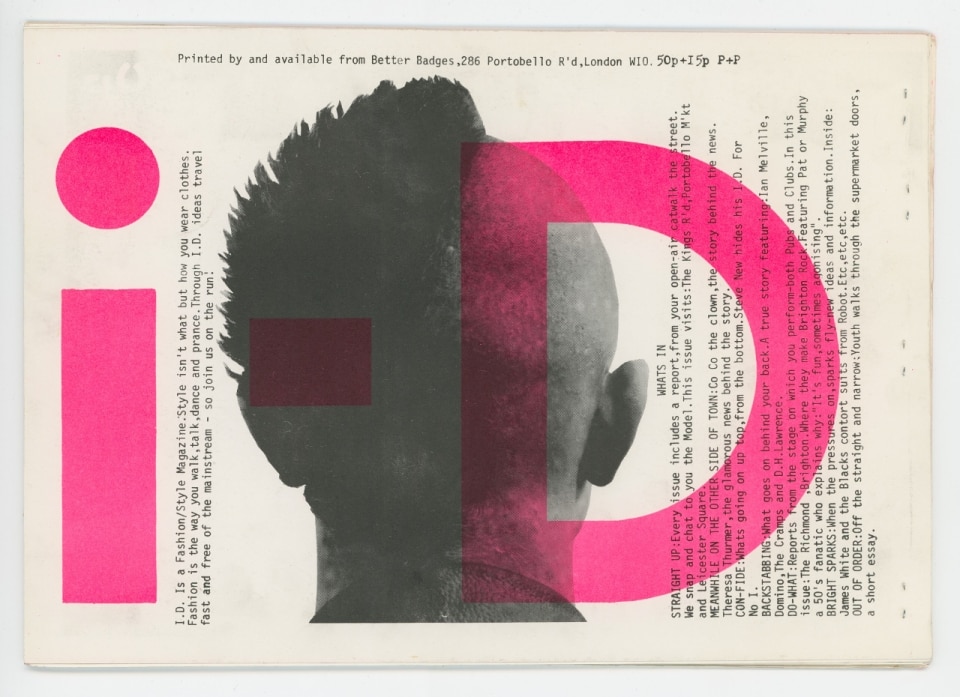
That same impulse echoed through NATØ (Narrative Architecture Today), the collective led by Nigel Coates – an Architectural Association tutor and Blitz habitué. Their speculative projects, with their layouts sitting at the crossroads of a punk fanzine and an issue of The Face, questioned the property speculation reshaping Thatcherite London. Meanwhile, PX Clothing’s ads merged Constructivist and new-wave aesthetics, featuring the Southbank Centre looming like a Soviet fortress behind models in medal-pinned shirts and leather corsets.
From the Blitz to Today
If the risk of indulging in nostalgia for times when the underground felt more militant, dance music more elegant, and London more authentic is ever-present, the exhibition reminds us how British society has excelled at institutionalising – for better or worse – its outcasts and underground impulses, transforming them into Culture. Few scenes have contributed to that transition quite like Blitz, with its multidisciplinary, postmodern vision mixing high and low with ease. After all, as Jacopo Bedussi wrote in Il Giornale dell’Arte this October, speaking of Plastic (and thus of Blitz too): “Those who make the history of the night, inevitably make the history of the world.”
The show keeps bringing us back to the present – from its influence on fashion’s fluid identities to the subcultural pastiches that now make TikTok a digital (if superficial) heir to Blitz. If we dance less today, at least let us do it in style.
Opening image: Outside the Blitz club in 1979. Photograph: Sheila Rock
- Exhibition:
- Blitz: the club that shaped the 80s
- Curated by:
- Danielle Thom
- Where:
- the Design Museum
- Dates:
- 20 September 2025 – 29 March 2026
- Sustained by:
- The Blavatnik Family Foundation