



In Venice, during the Biennale, Marina Abramović opens a new exhibition at the Gallerie dell’Accademia. Yet another one, one might think, by an artist who has long seemed to be everywhere, recognized before she is even looked at. And yet Transforming Energy — curated by Shai Baitel and installed across the museum’s permanent collection and temporary exhibition spaces — finds its strongest point precisely in this tension: how can time, the body and attention be restored to a work that is now preceded by its own icon?
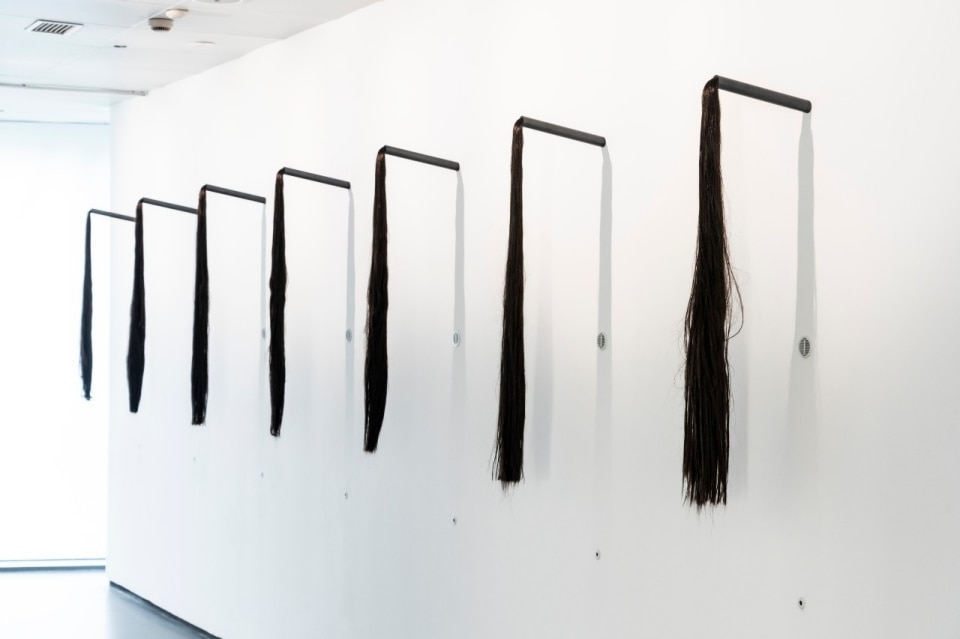
At the entrance, a timeline traces Abramović’s personal and artistic biography, crossed by a video of her walking figure, again and again. Just beyond it, almost hidden, a sign warns: “The artist should not be an icon.”
It sounds strange to read this, especially in one of her own exhibitions.
Abramović has spent a lifetime using the body as a form of resistance to representation: an act that could not be reduced to photography, the market, or the object. And yet she has now become an image herself. If the body was once the means of escaping the icon, the icon is what remains.
This exhibition at the Gallerie dell’Accademia is a show of firsts. Abramović is the first living woman artist to whom the museum has dedicated a major solo exhibition, and the first to occupy both the permanent collection galleries and the temporary exhibition spaces. For an artist who won the Golden Lion in Venice in 1997 with Balkan Baroque — sitting among 1,500 bones, scrubbing away the flesh of the Balkan wars — it is also a return weighted with recognition.
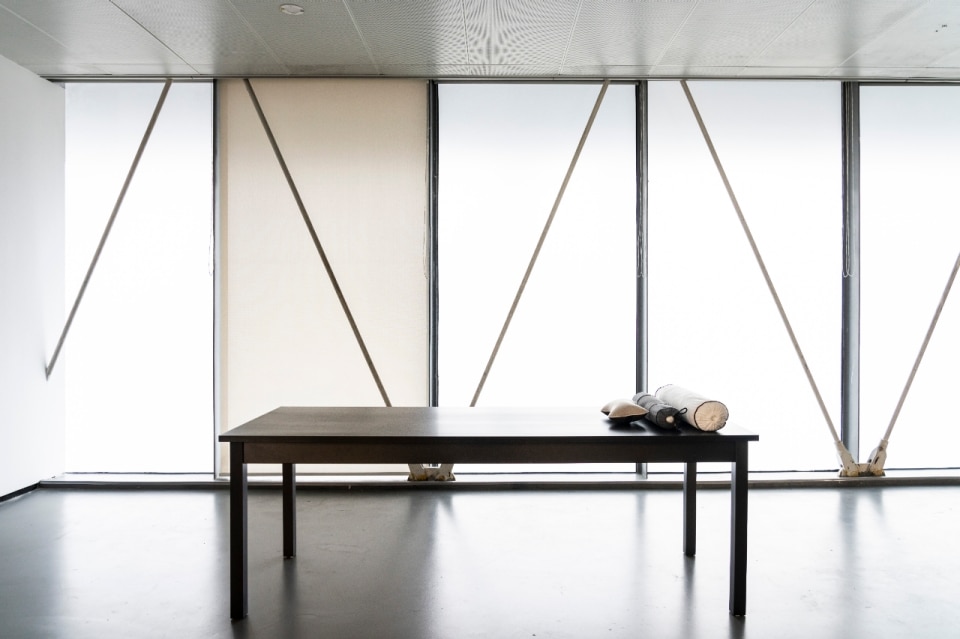
As director Giulio Manieri Elia stated, the spaces have been rethought “to create an atmosphere that brings us closer to meditation and away from everyday life.” And this is where the exhibition is at its strongest: when it stops celebrating Abramović and asks the audience to slow down.
This exhibition brings us closer to meditation and away from daily life
Giulio Manieri Elia. Director Gallerie dell'Accademia, Venice
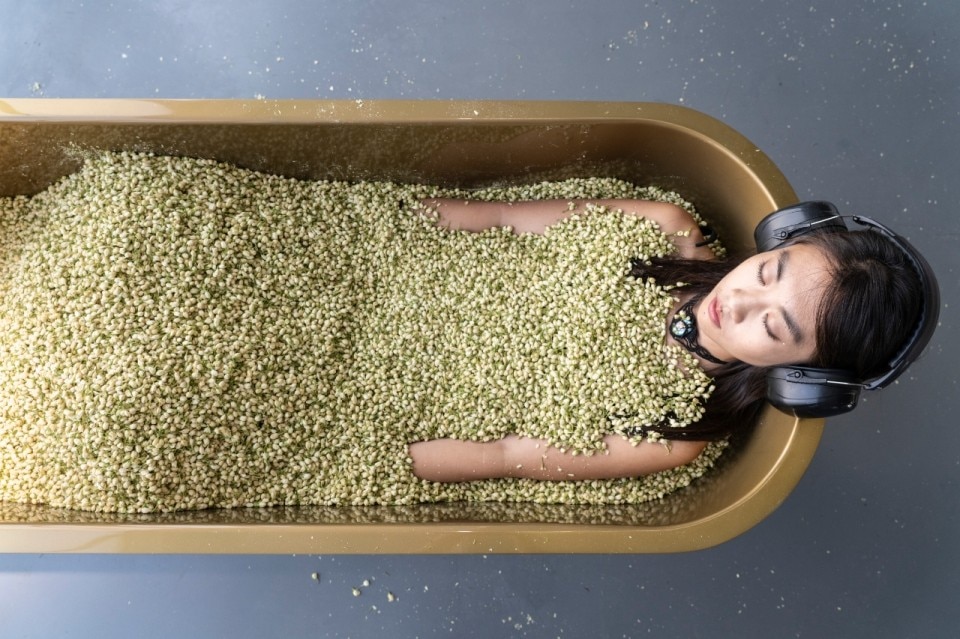
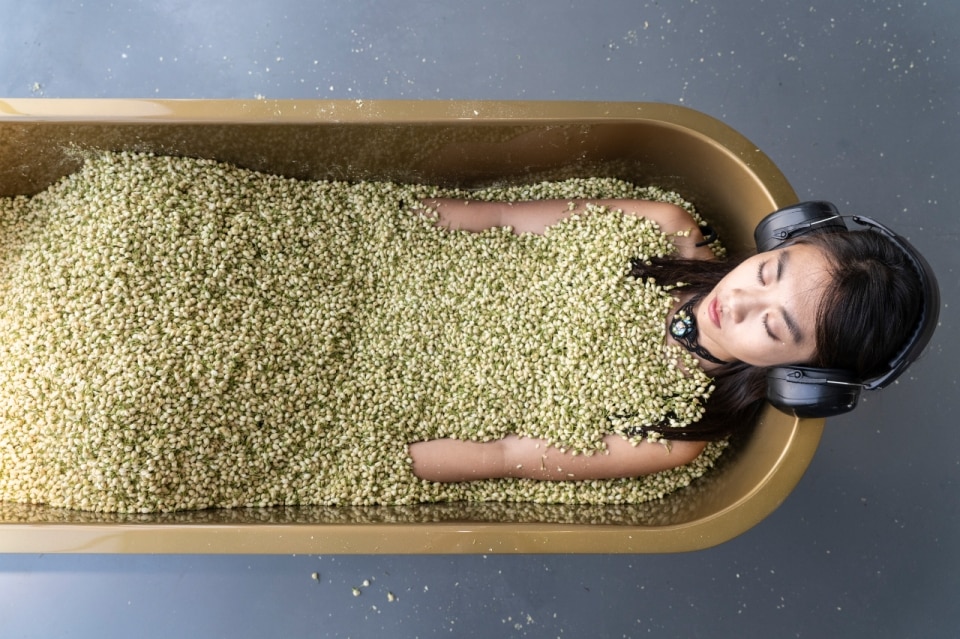
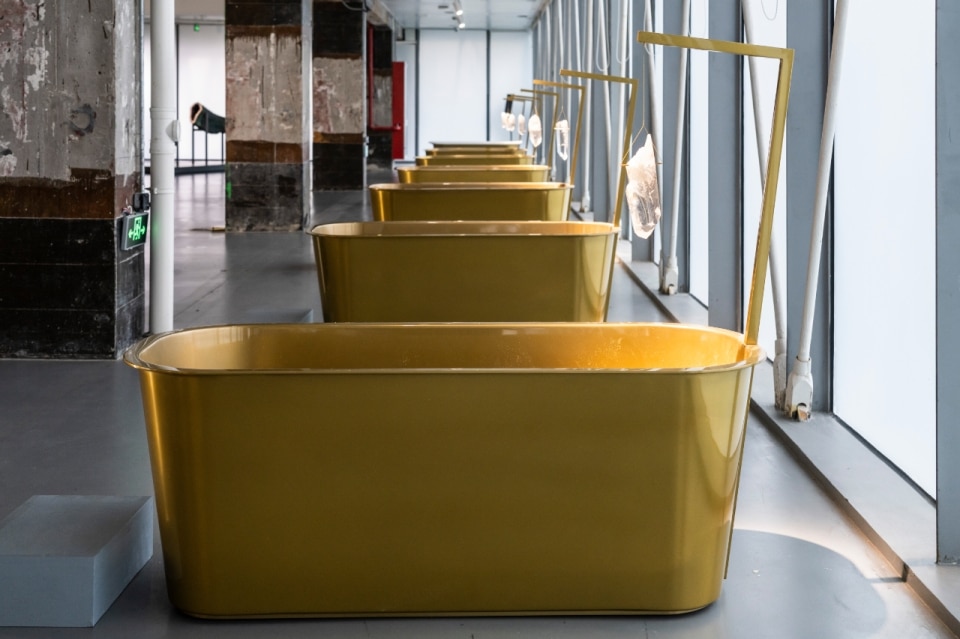
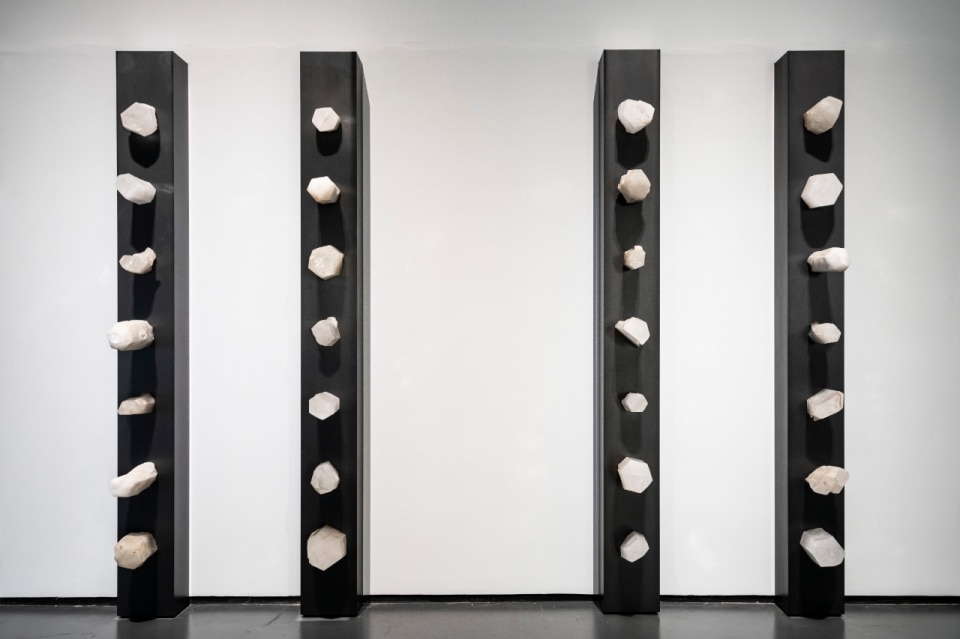
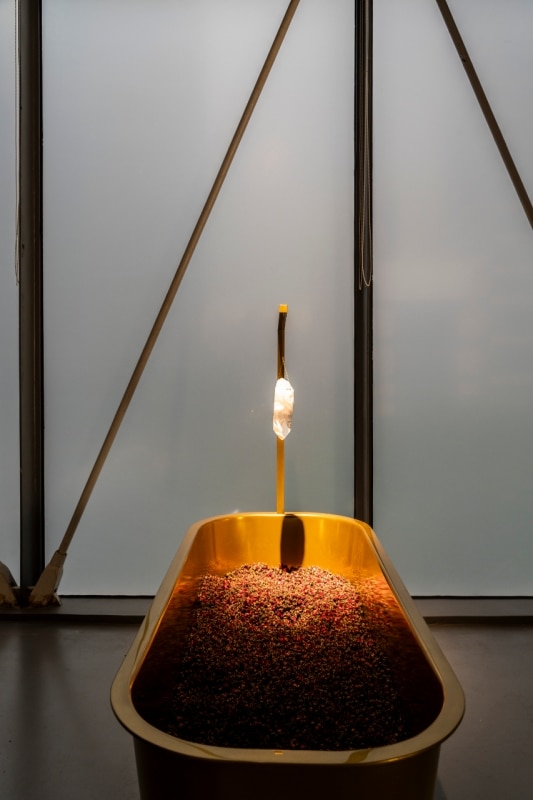
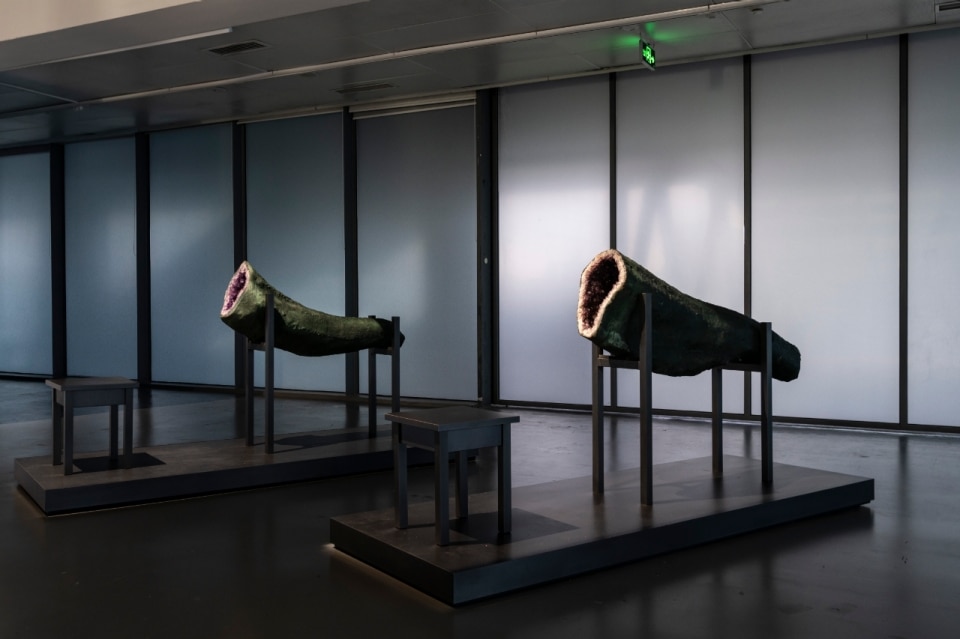
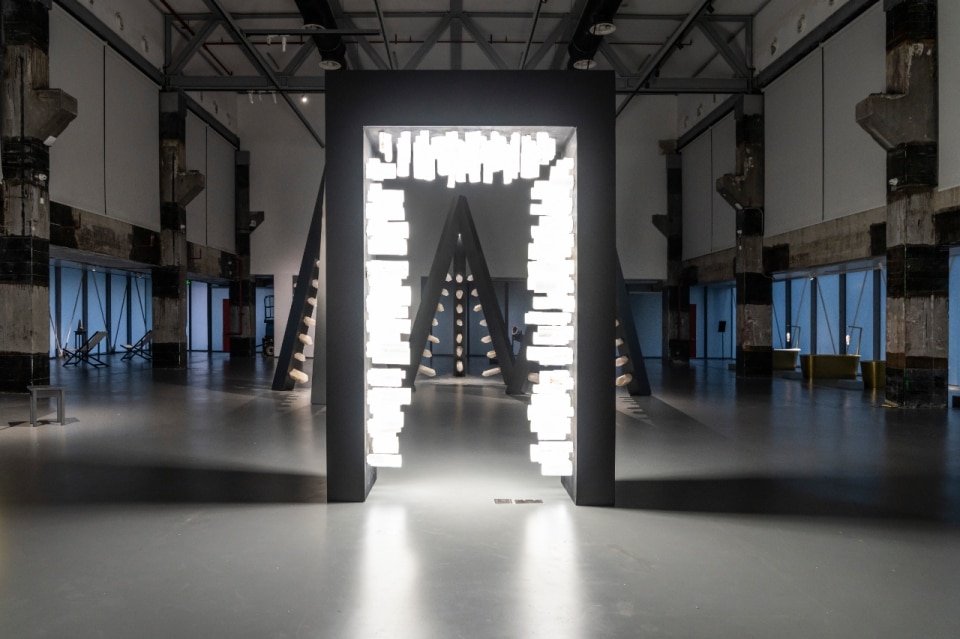
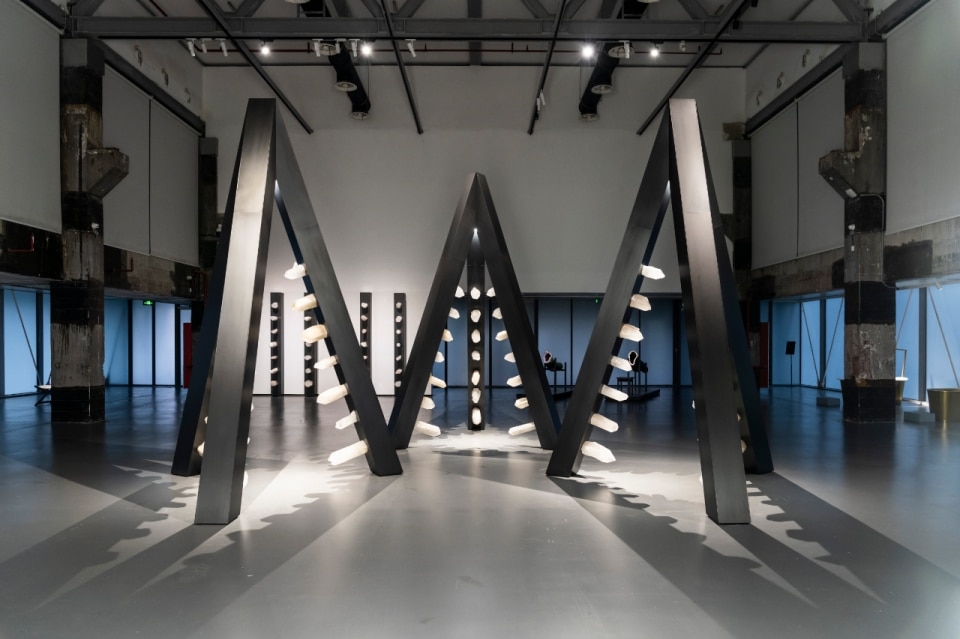
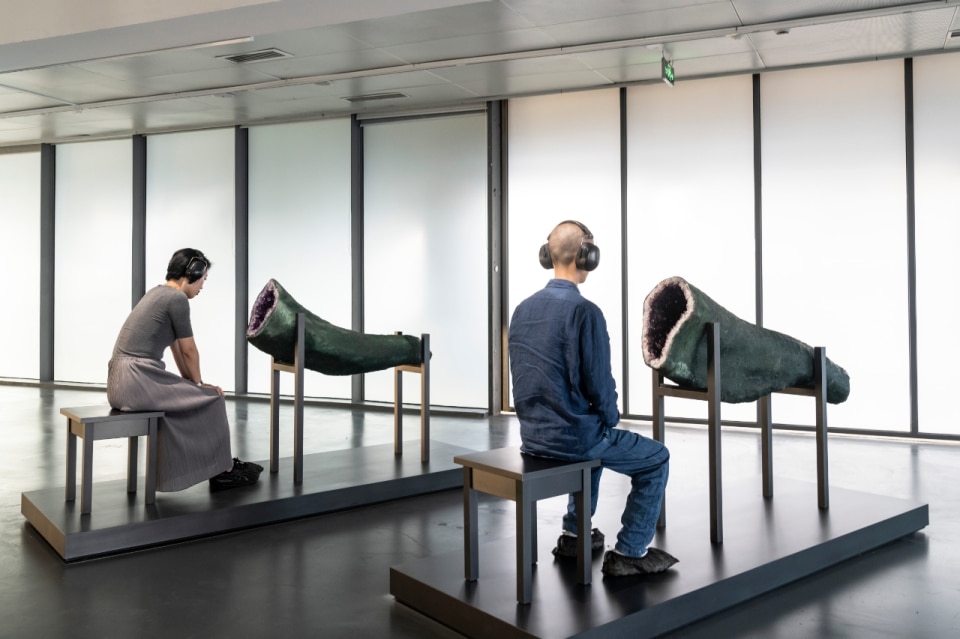
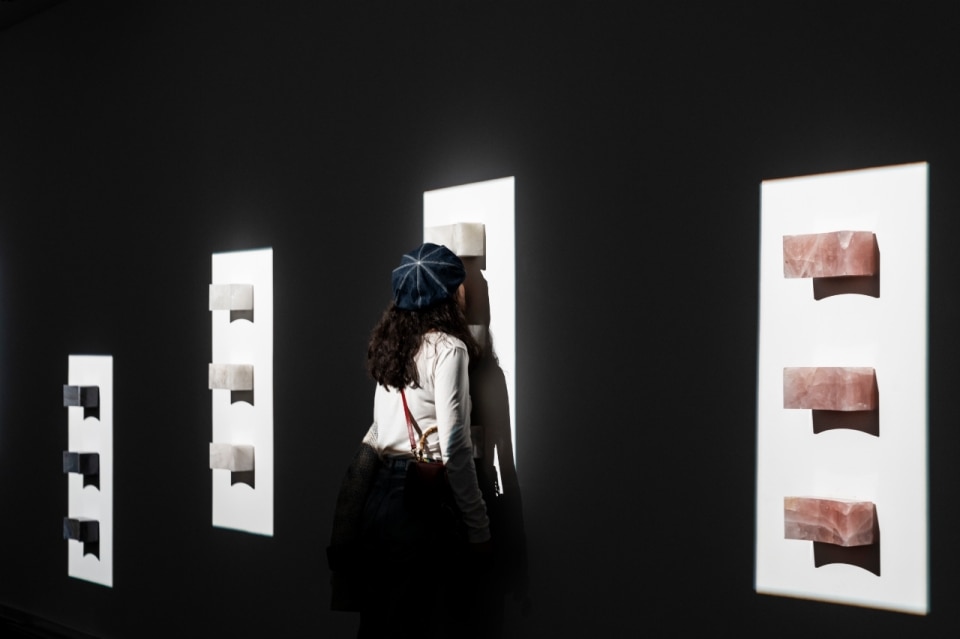
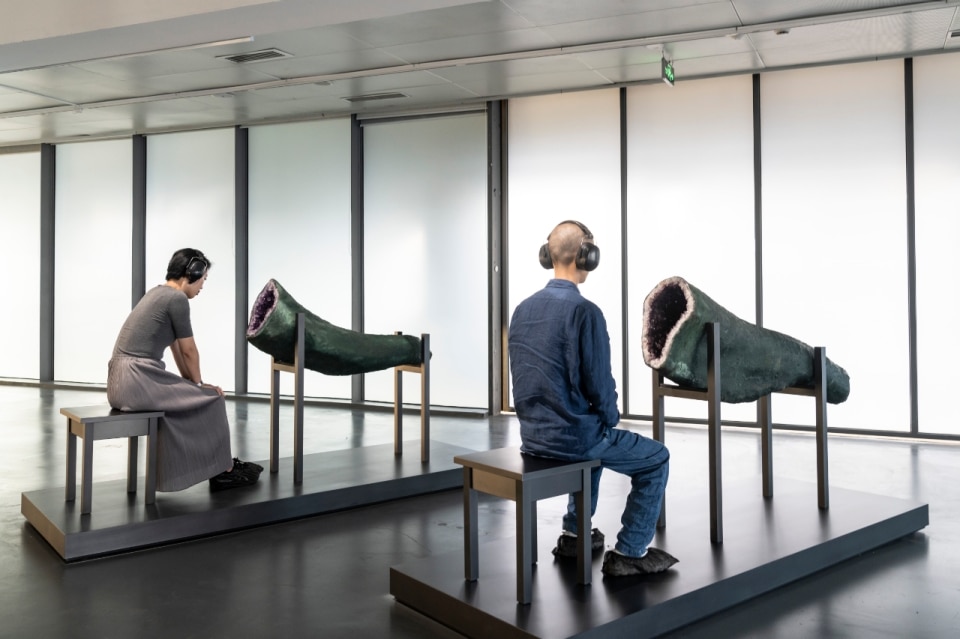
Transforming Energy brings together past and present, the material and the immaterial, body and spirit. Once again, the audience is invited to lie down, sit, pause, and move through transitory objects made of stone and crystals — quartz, amethyst, minerals — activating what Abramović calls a “transmission of energy.” As Baitel explains, this energy belongs neither to the materials alone nor to the viewer alone, but emerges from the relationship between them. The work is what happens between body, matter, and duration.
The strongest dialogue is with Tiziano’s Pietà, the master’s final work, left unfinished and completed by Palma the Younger. For its 450th anniversary, Abramović presents Pietà (with Ulay), from 1983, in direct relation to the painting: the supported body, pain, dependence on another, the possibility of suffering becoming elevation.
Alongside historical works — from Rhythm 0 to Imponderabilia, from Light/Dark to Balkan Baroque and Carrying the Skeleton — new works and digital devices linked to the Abramović Method appear. The avatar developed by TAEX opens a further short circuit: the artist who made the living body her medium becomes a synthetic image, a digital guide, a potentially infinite presence. How much of performance survives when the body becomes a simulacrum?
You give me time, I give you experience
Marina Abramović
Opening image: Photo Yu Jieyu. Courtesy Marina Abramović; Karla Otto, New York.
- Show:
- Marina Abramović: Transforming Energy
- Where:
- Gallerie dell'Accademia, Venice
- Dates:
- May 6 - October 19, 2026