


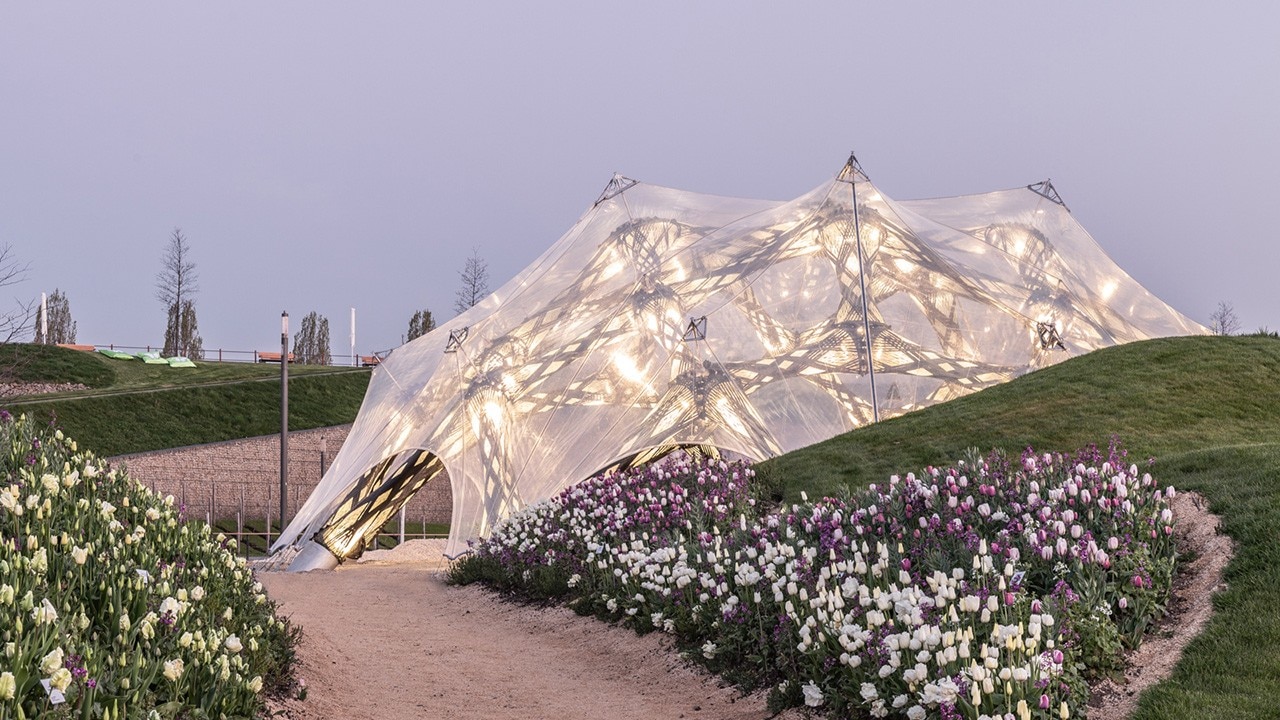

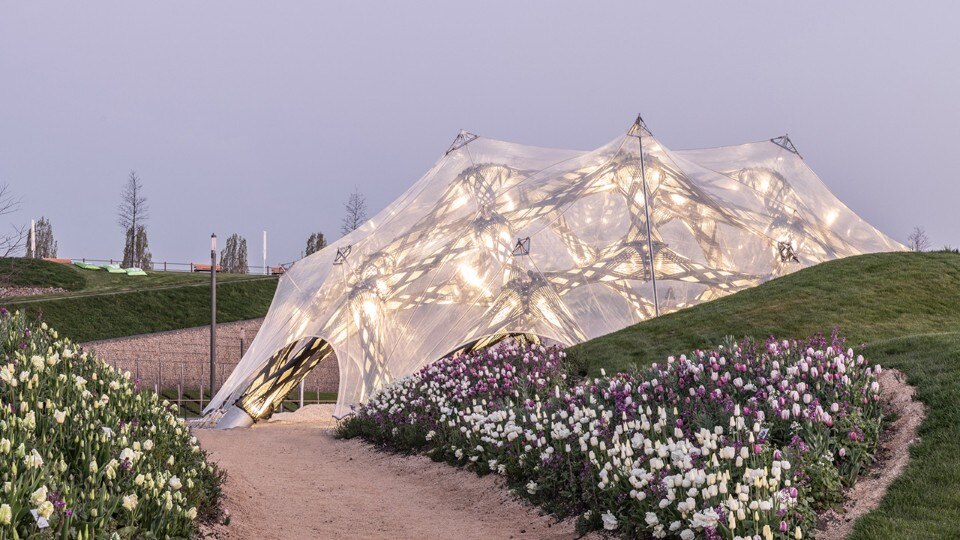
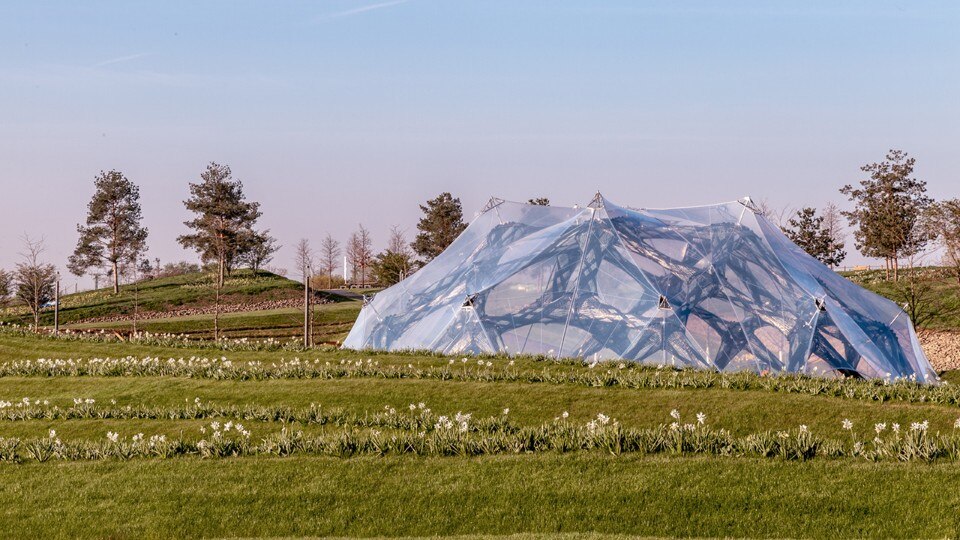
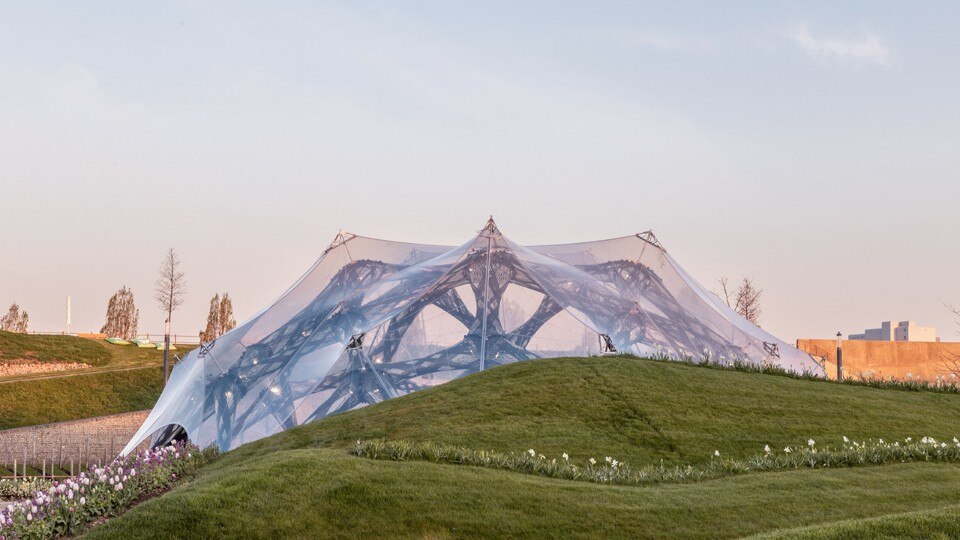
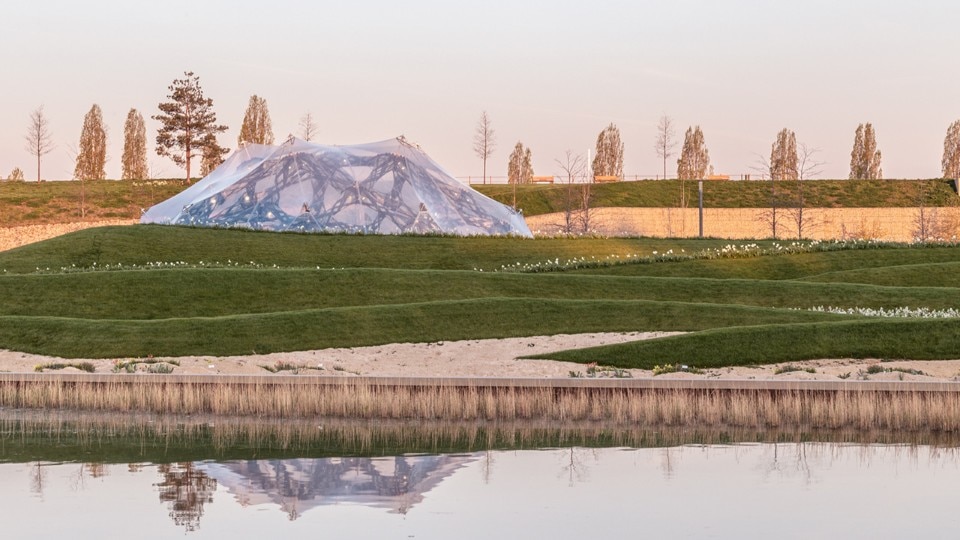
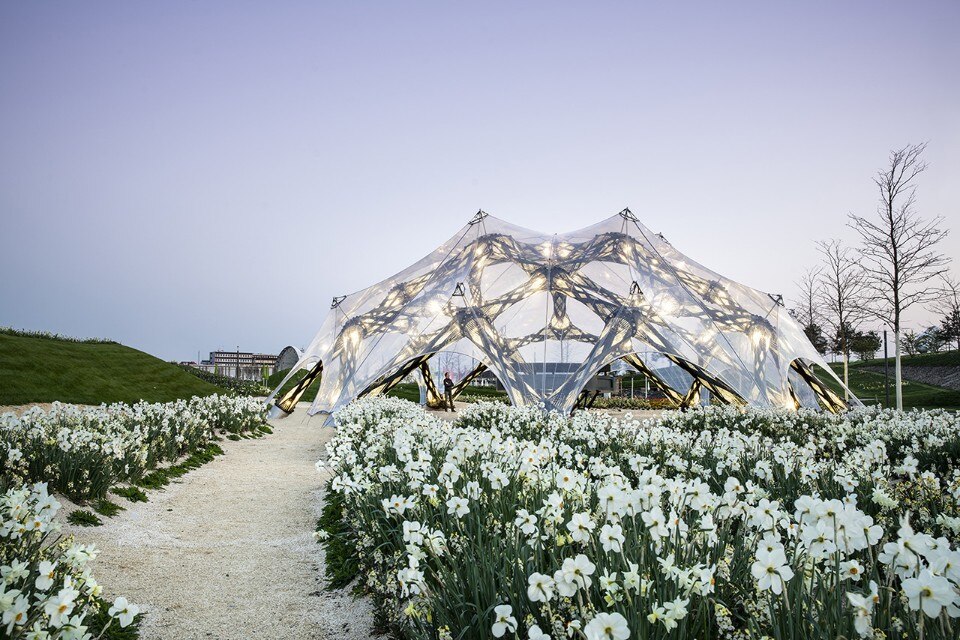

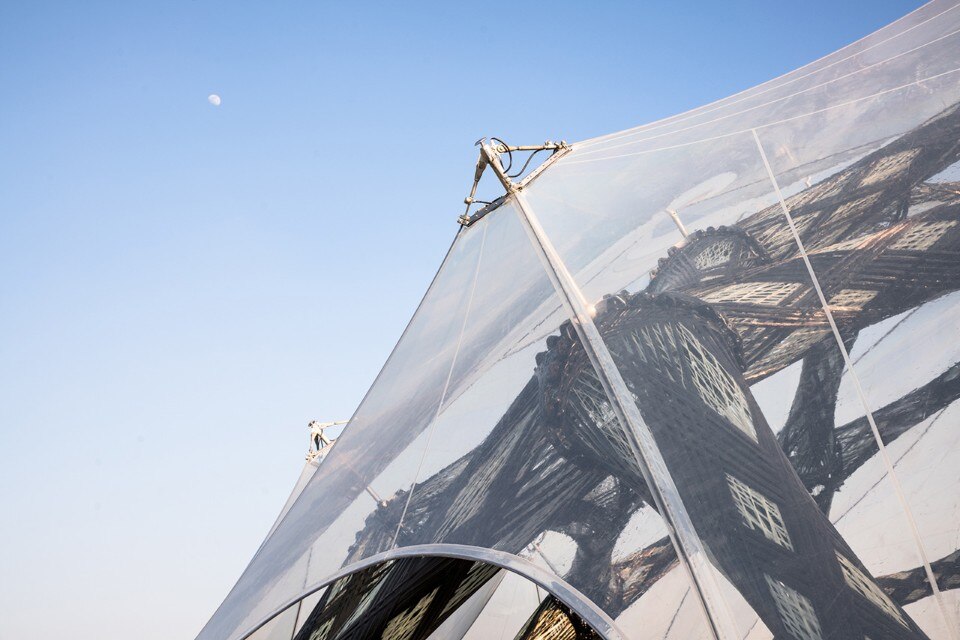
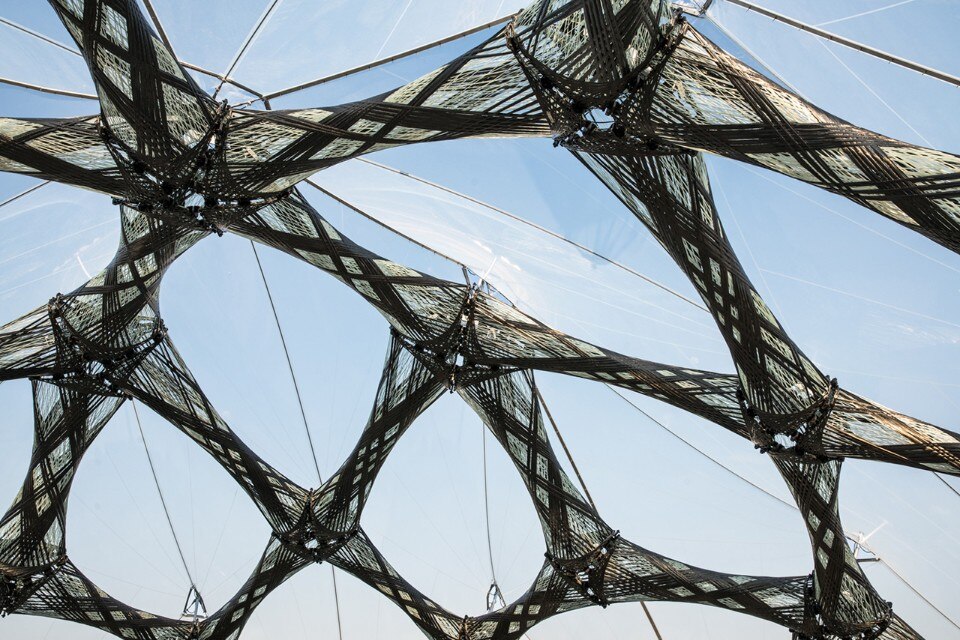
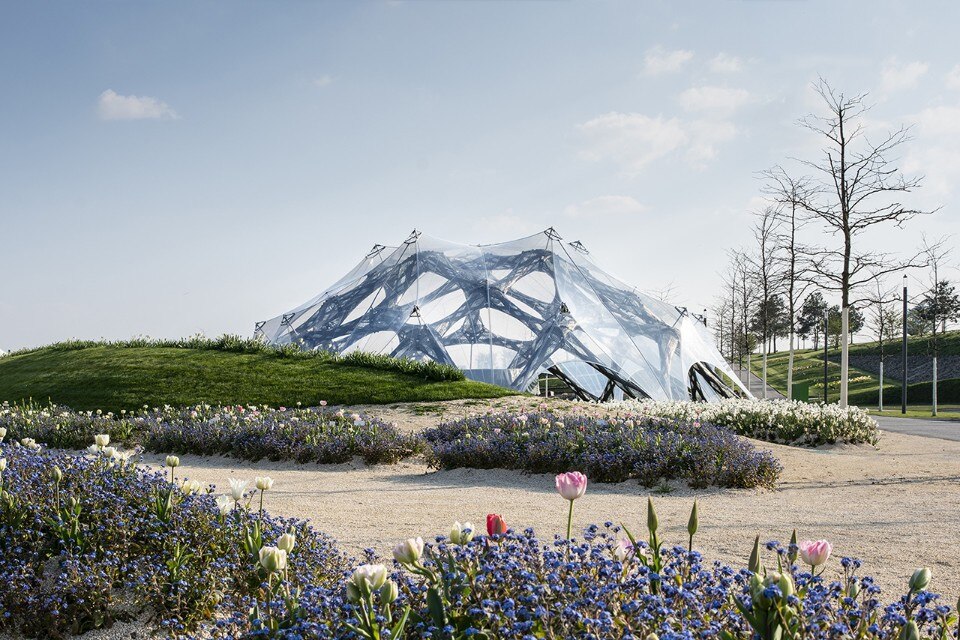
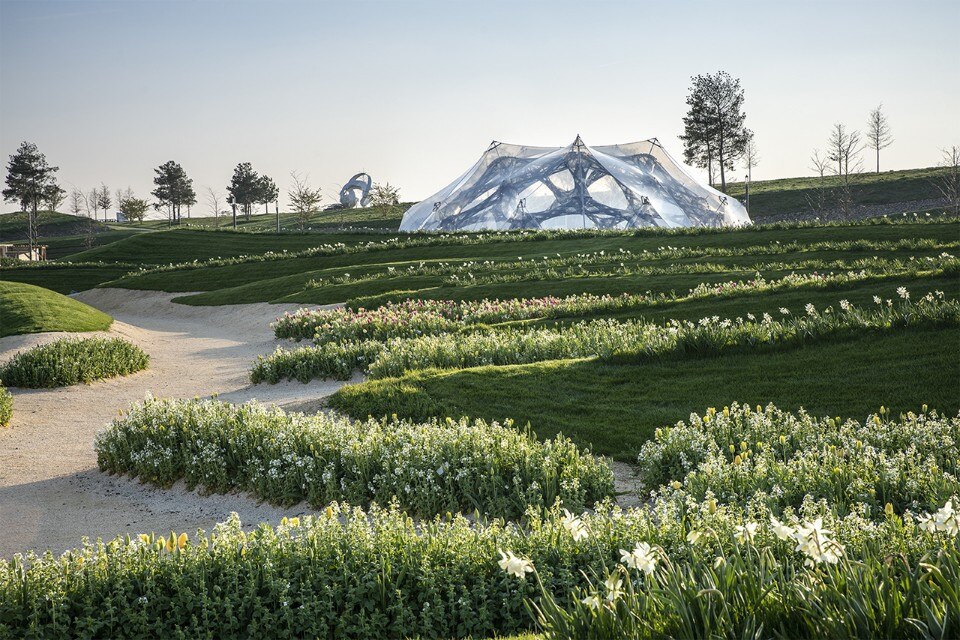
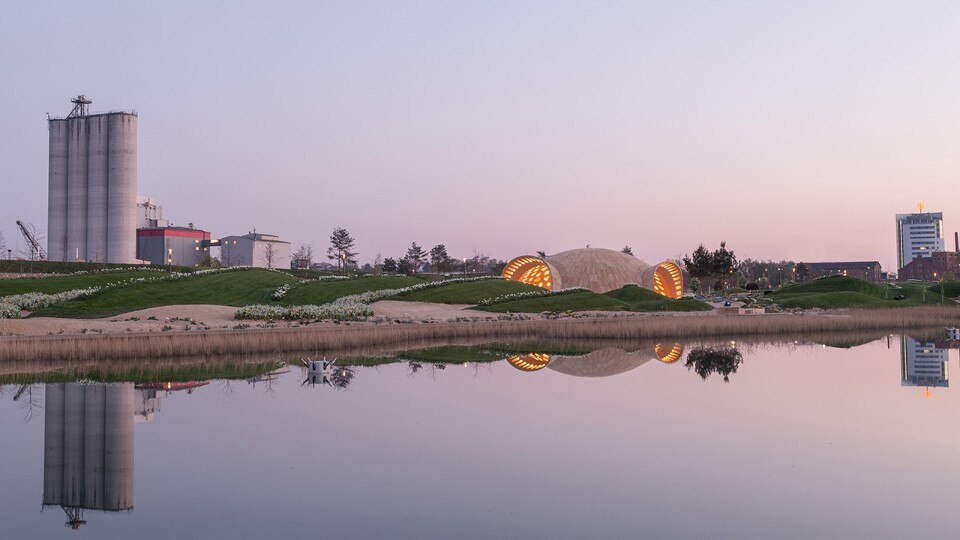
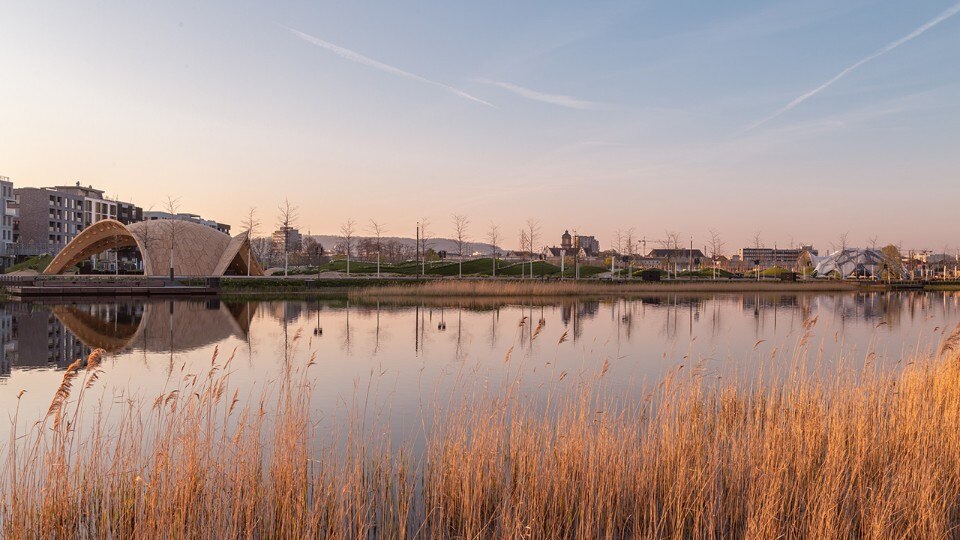
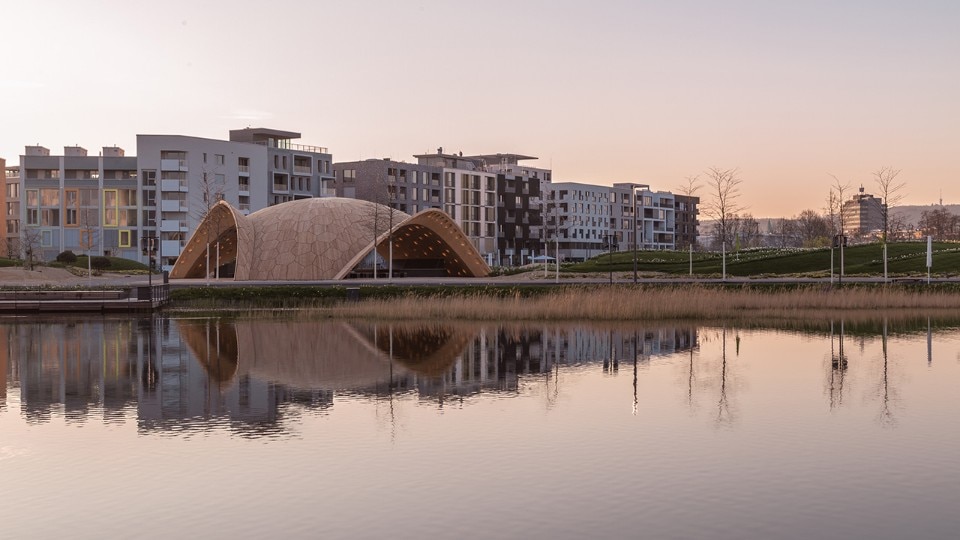
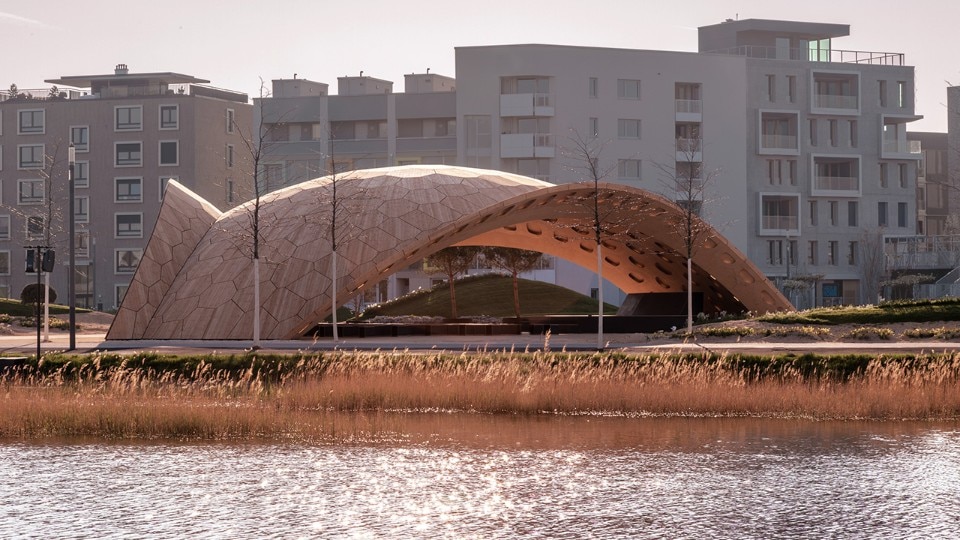
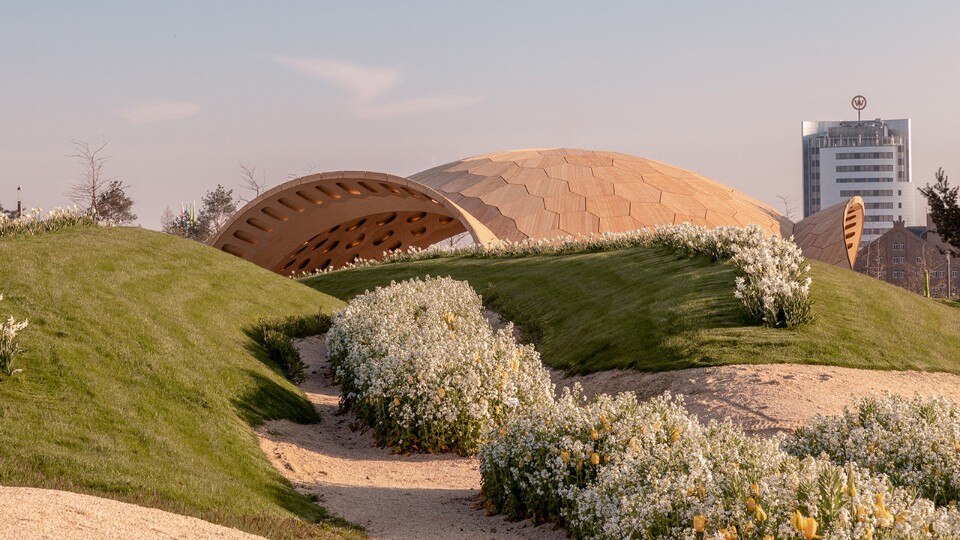
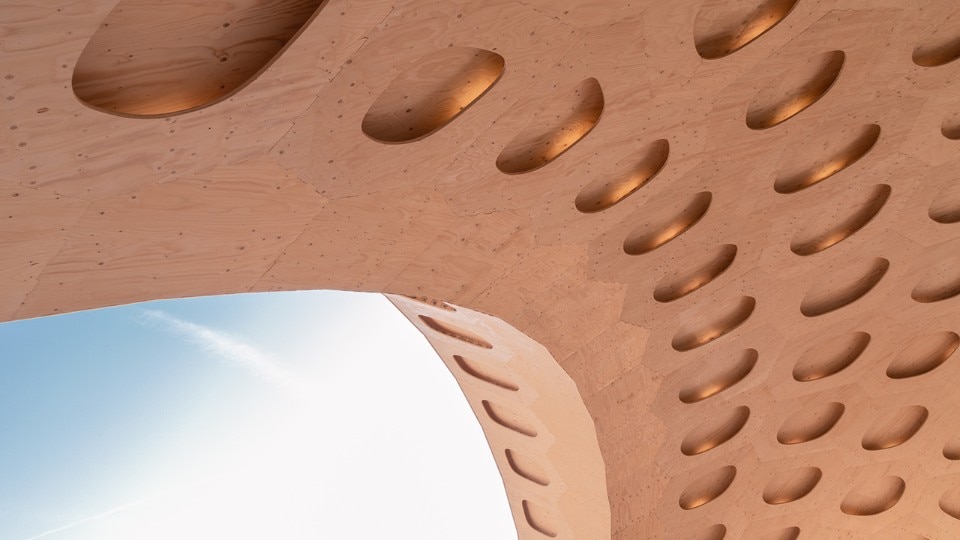
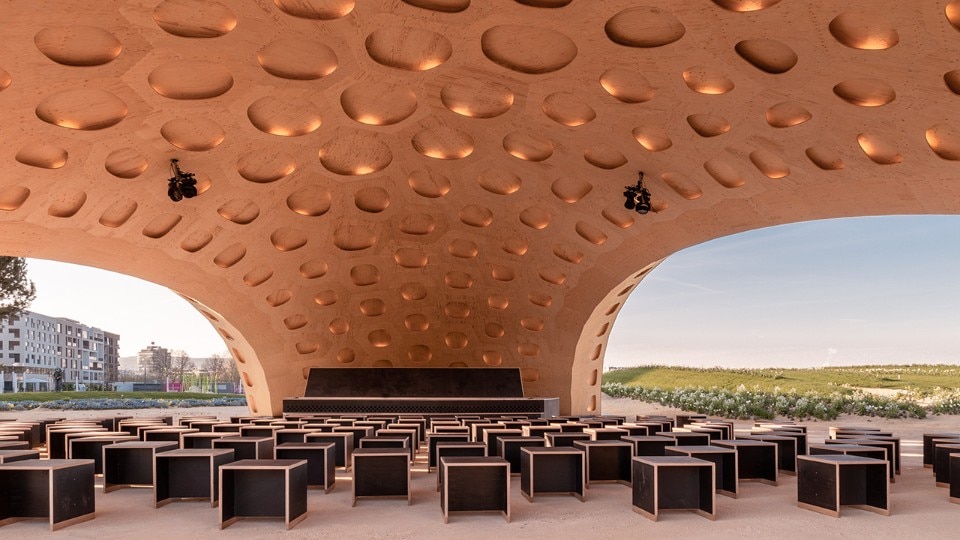
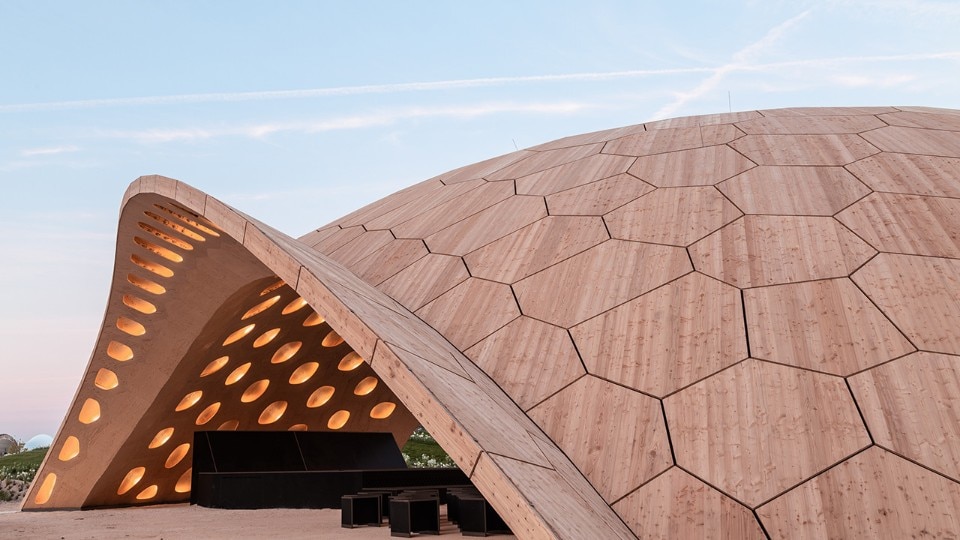
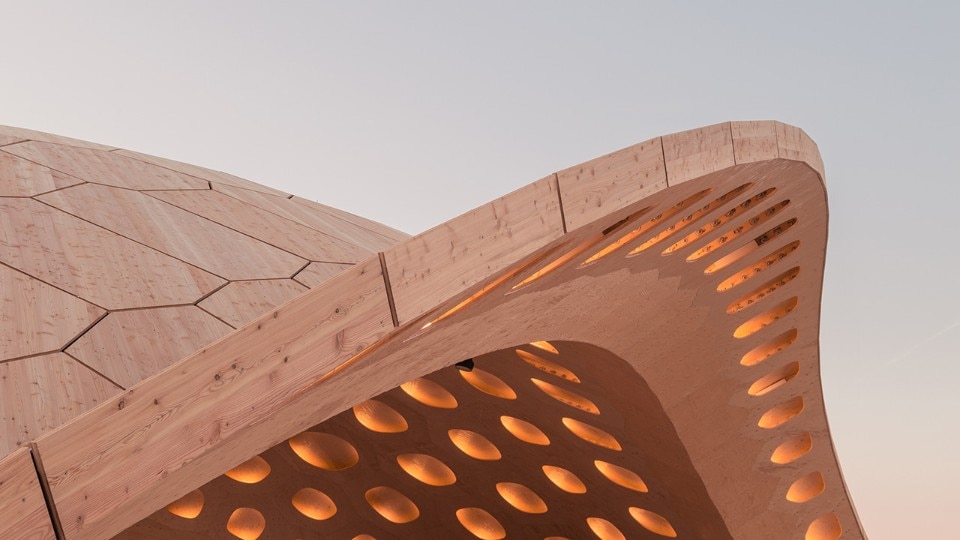
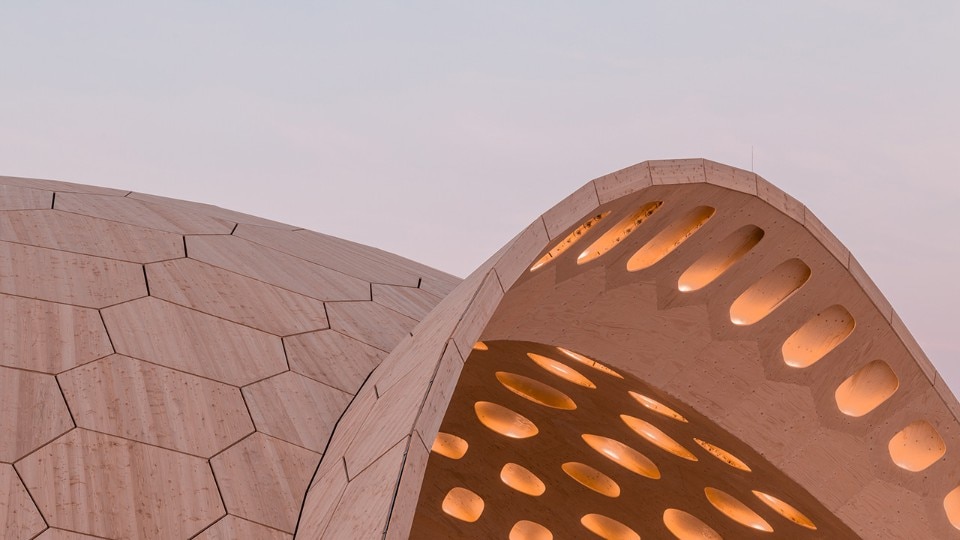
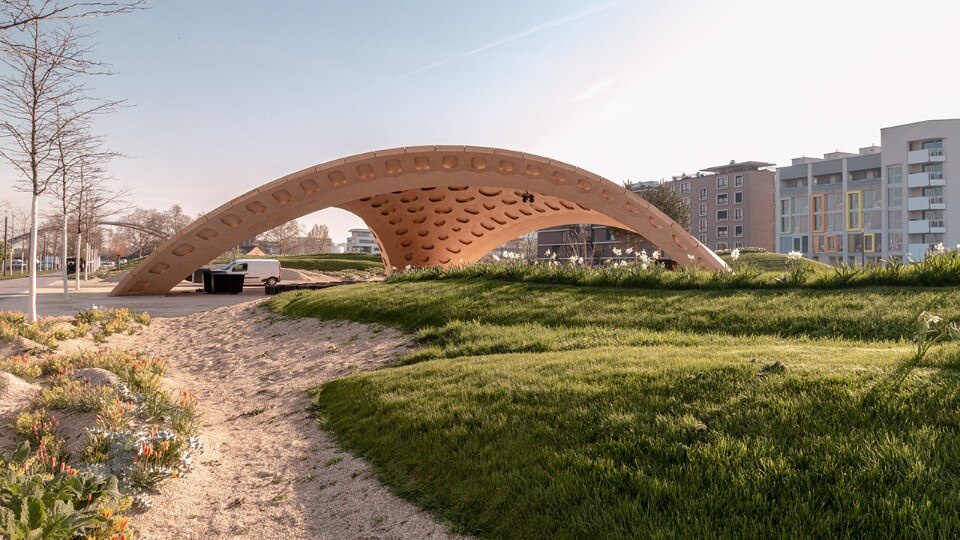
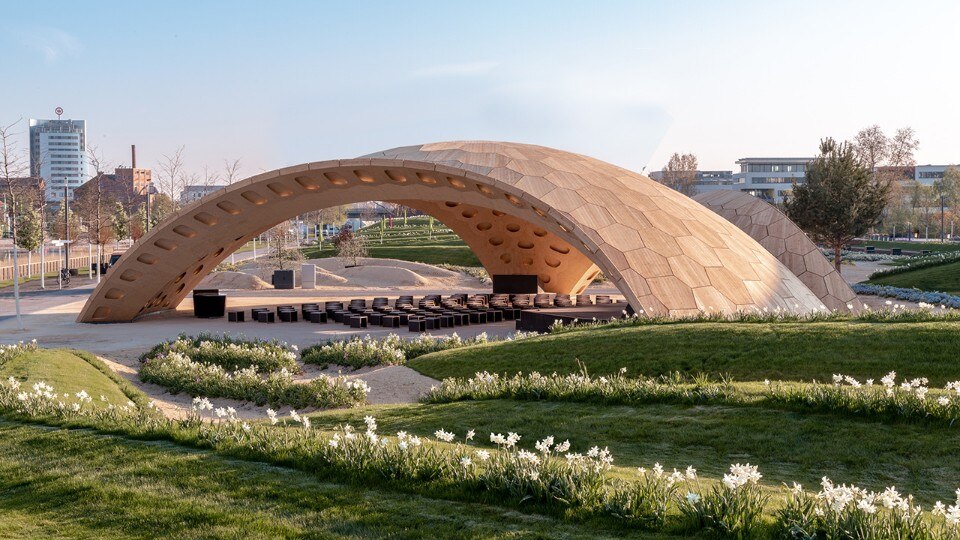
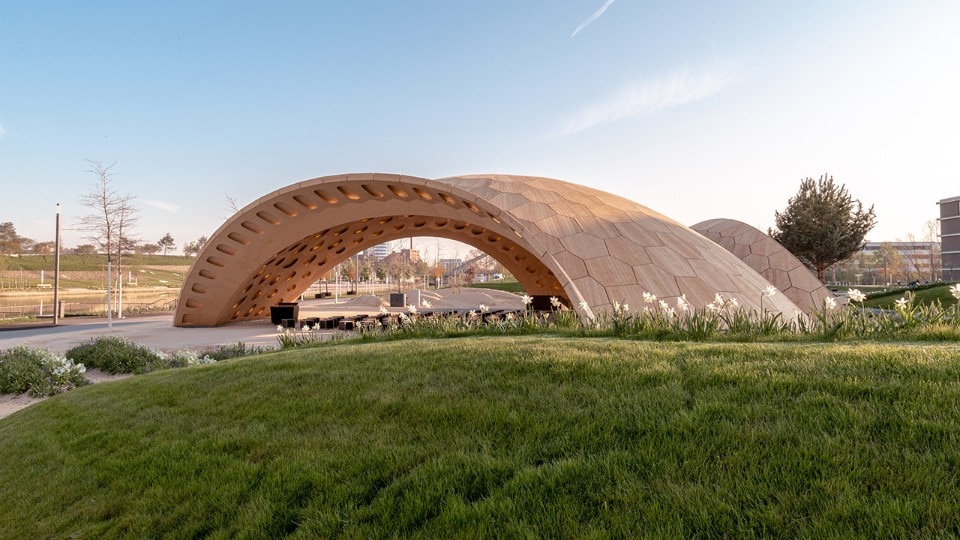
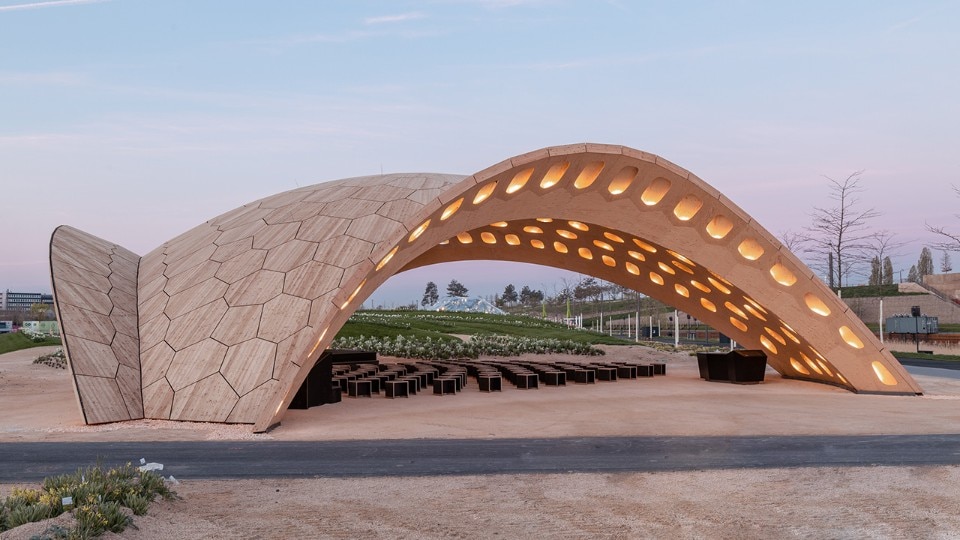
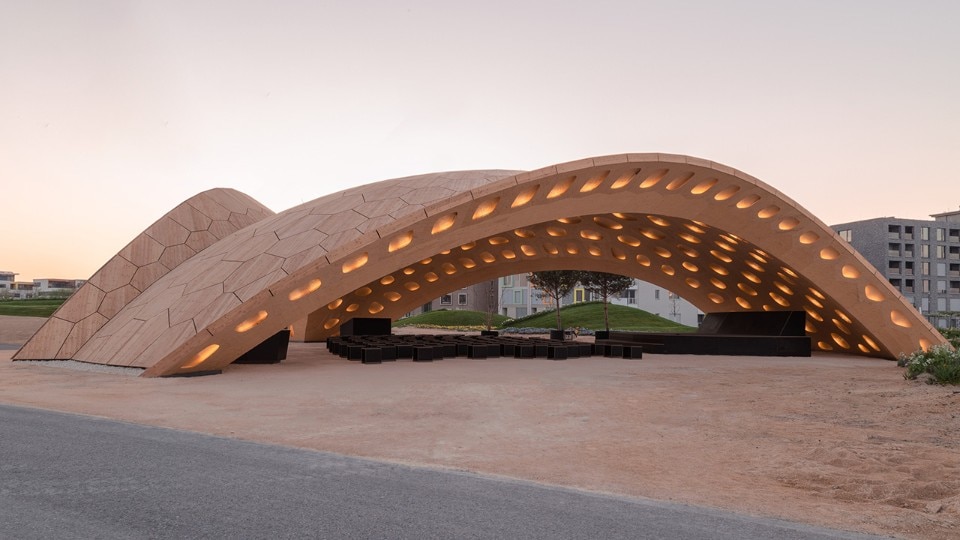
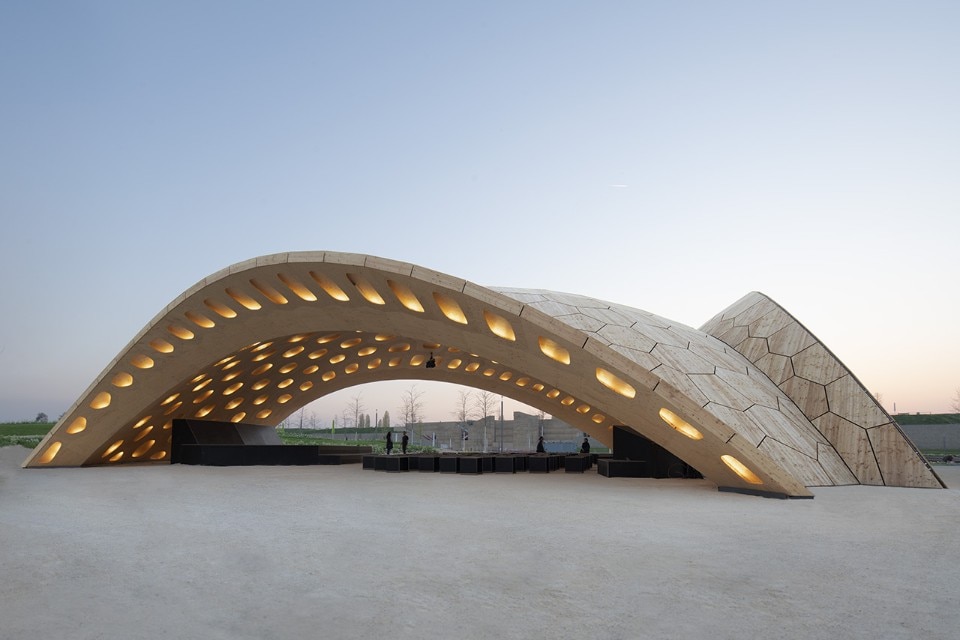
Two light-weight wood and carbon-fibre pavilions – Buga Wood Pavilion and Buga Fiber Pavilion – installed at the Bundesgartenschau Heilbronn horticultural show in Germany represent the first step in taking robotic and digital fabrication techniques developed at the University of Stuttgart off campus.
“Buga is a federal horticultural exhibition, which sounds a bit boring but this is one of the few moments in Germany where you get architectural experiments that happen on a larger scale,” says architect Achim Menges, noting that both Zaha Hadid and Frei Otto had been given career-breaking commissions in the state of Baden-Württemberg.
Menges and Jan Knippers, who respectively head up the University of Stuttgart's Institute for Computational Design and Construction (ICD) and the institute for Building Structures and Structural Design (ITKE), have been working on this moment for quite some time. For almost a decade they've been working with their students to build an annual pavilion in the grounds of the university based on their research into long-spanning light-weight structures, alternating between carbon fibre and wood and employing robots and drones in the fabrication process.
Taking this year's pair of computationally designed and robotically fabricated pavilions off campus gives the chance to expose their research to a much larger audience – and come to grips with building codes that will allow the digital and robotic techniques to be used for larger scale and more permanent interventions by the end of the year.
“We were keen on showcasing our research on a much larger scale than we usually do. This is not just another pavilion that we usually do but it’s of a substantially larger scale,” says Menges.
“It’s also really challenging ourselves to take on all the issues that come with that, where the full approval procedure of a Germany building application is required. This is one of the less visible innovations – that both of these pavilions have been approved by the authorities, which, especially for the carbon fibre pavilion, is actually quite a breakthrough for us because that is a truly novel building system, no such thing like it exists.”
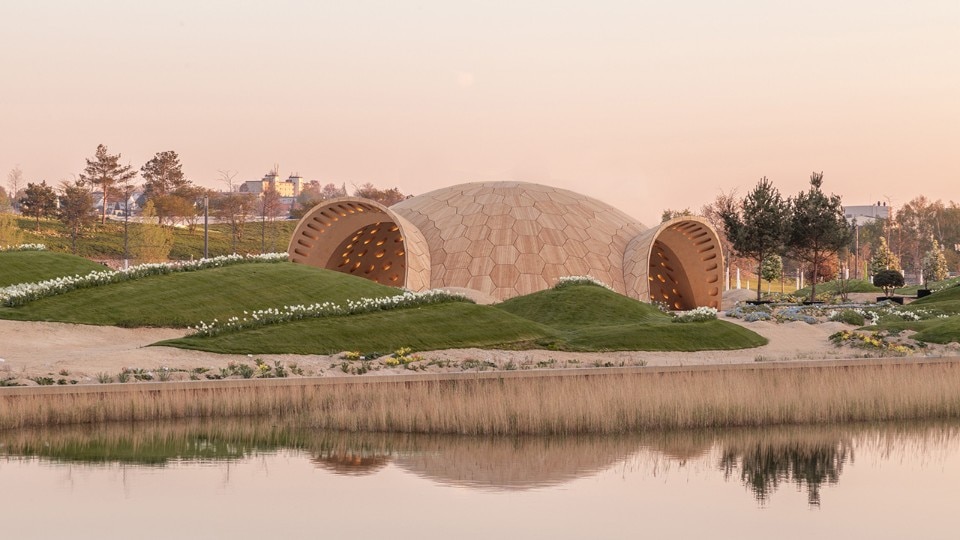
As well as reducing material waste through offcuts, the structures are designed to be as lightweight as possible – 7.8kg/sqm for the carbon fibre structure and 38kg/sqm for the wood. The latter will be put into action transforming the rooftops of two inner-city carparks in Germany into sports and events venues at the end of 2019.
The process offers reduced construction time and noise pollution compared to traditional building techniques and mitigates the need for scaffolding, offering a solution to the problem of reusing defunct mutli-storey carparks. “This is one of the few building systems with which you can really tackle that challenge, and you can actually make a use in a city space that is difficult to capitalise on or use with any other building system,” says Menges.
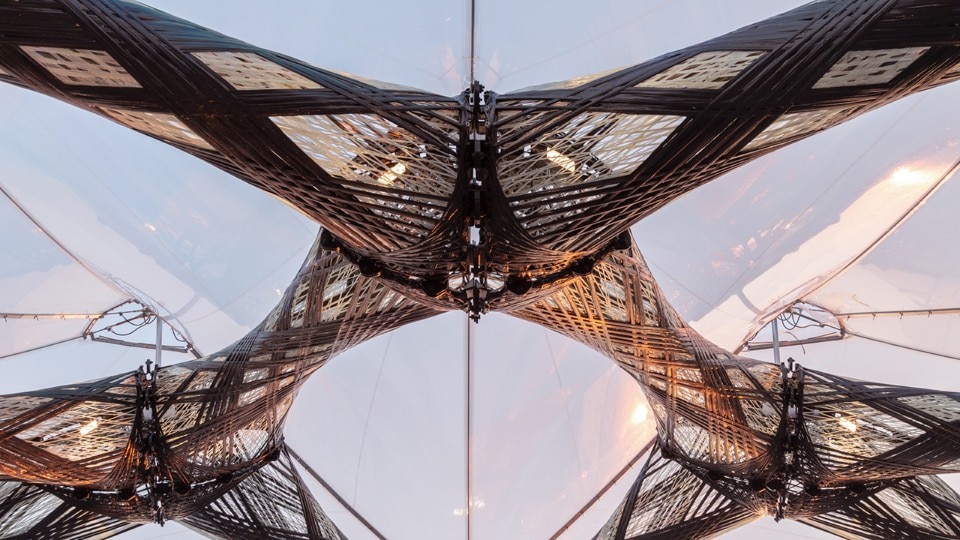
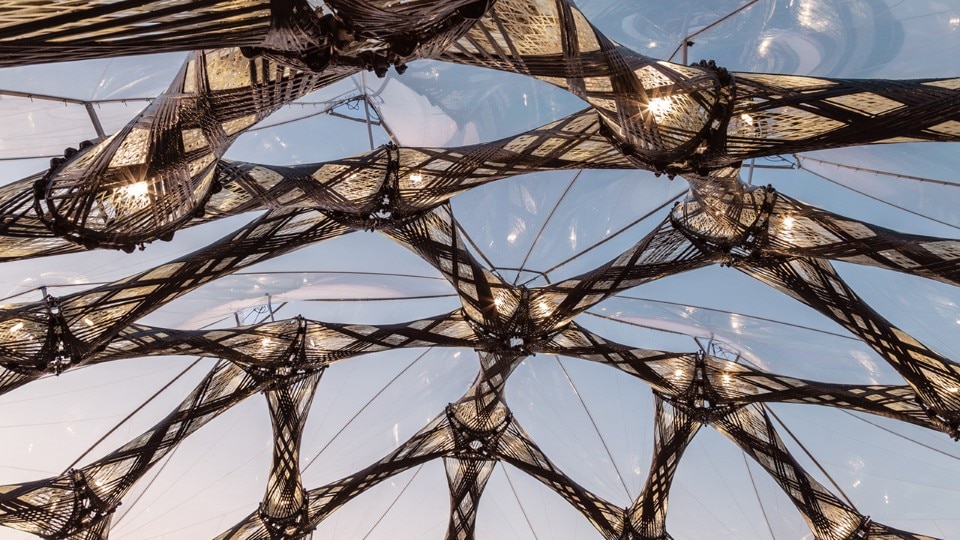
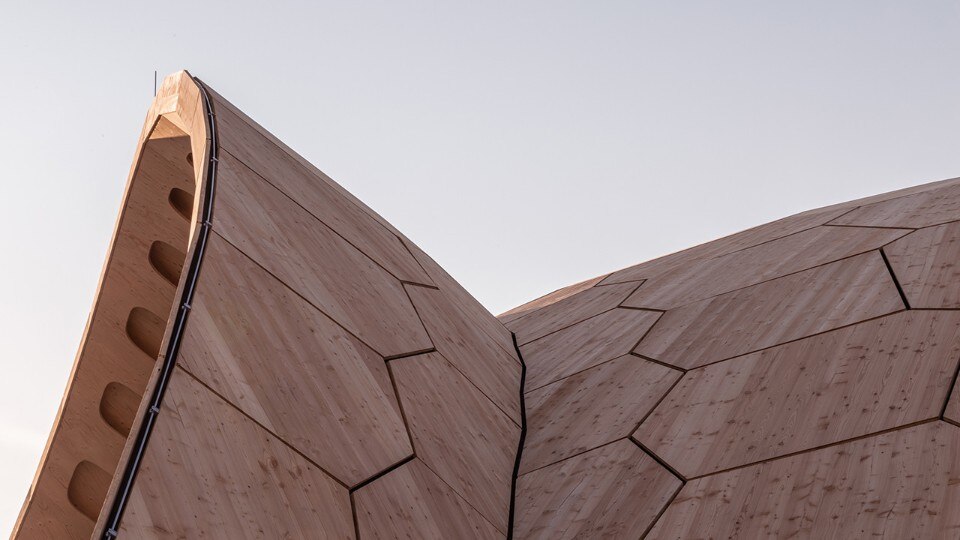
Both forms have a fragmented surface composed of plates, based on the formation of a Sand Dollar sea urchin– continuing the institutes’
research into biomimicry in architecture. The fibre pavilion is woven around a framework, while the wooden structure is made from glued sheet, rather than CNC-milled, material.
“There is an important conceptual change from the accepted way of building, in substructures they usually use more material than you really need because it’s just simpler,” explains Menges. “Of course the fabrication of these elements is very complicated, but this complexity is something we can now afford because we can tap into the potential of the robotic assembly and by that we actually save resources. So for us it’s also an expression of how a knowledge society would operate.”
“This is something that couldn’t have been done 10 years ago. If you look at digital technologies nowadays, it’s a very much a digitalised and automated version of how they built before, but here is actually is one of the moments were you really have a new material building system that would not be possible without the use of digital technologies and in that sense, I think I would call it a genuinely digital building system.”
The pavilions will remain on show at the Bundesgartenschau Heilbronn until 6 October 2019, when they will be disassembled and transported to another location.