


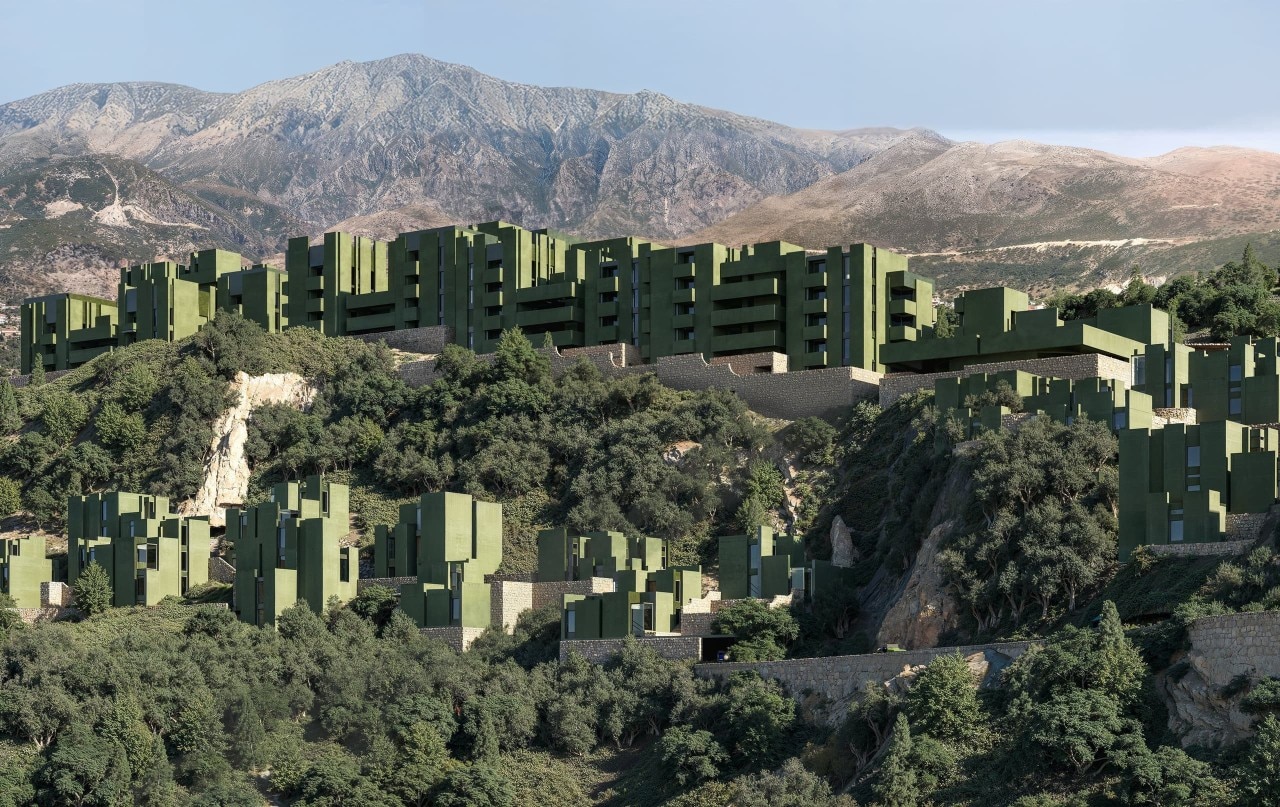

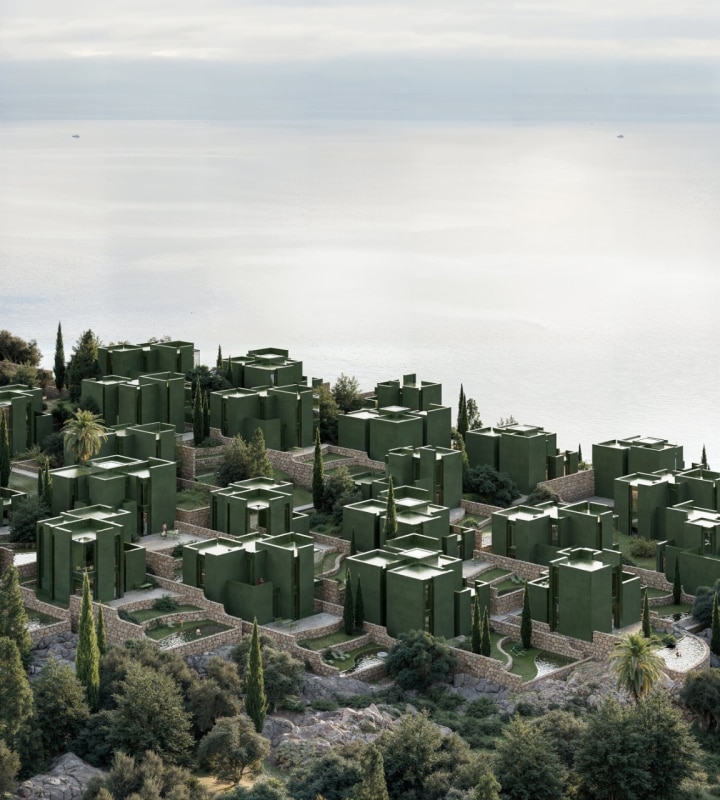
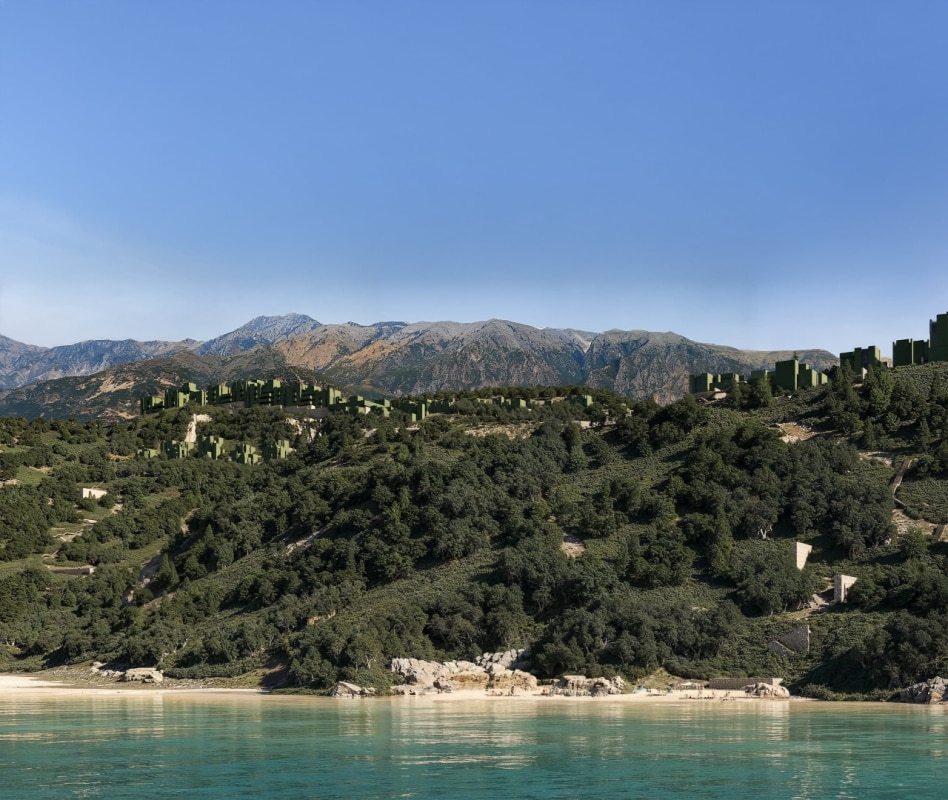
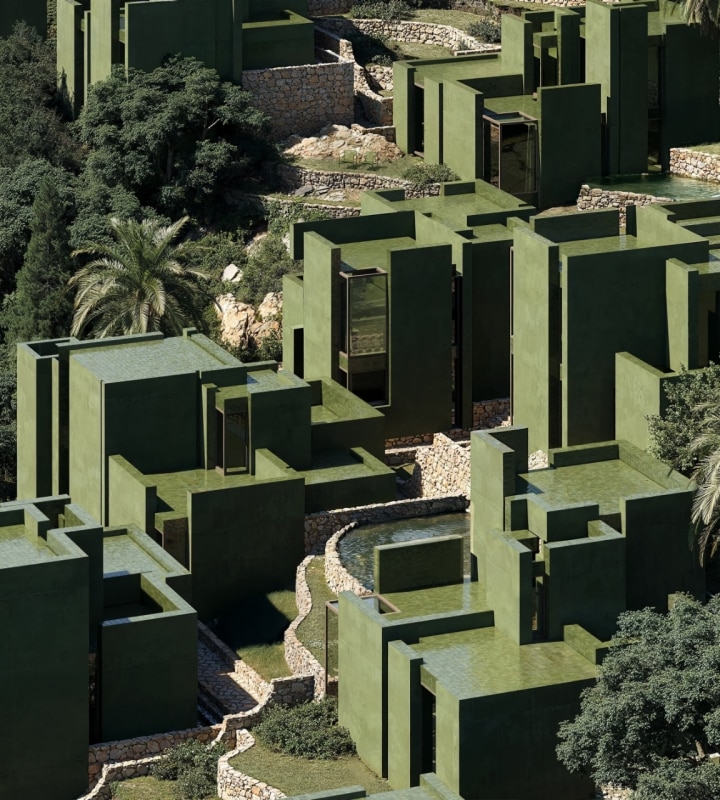
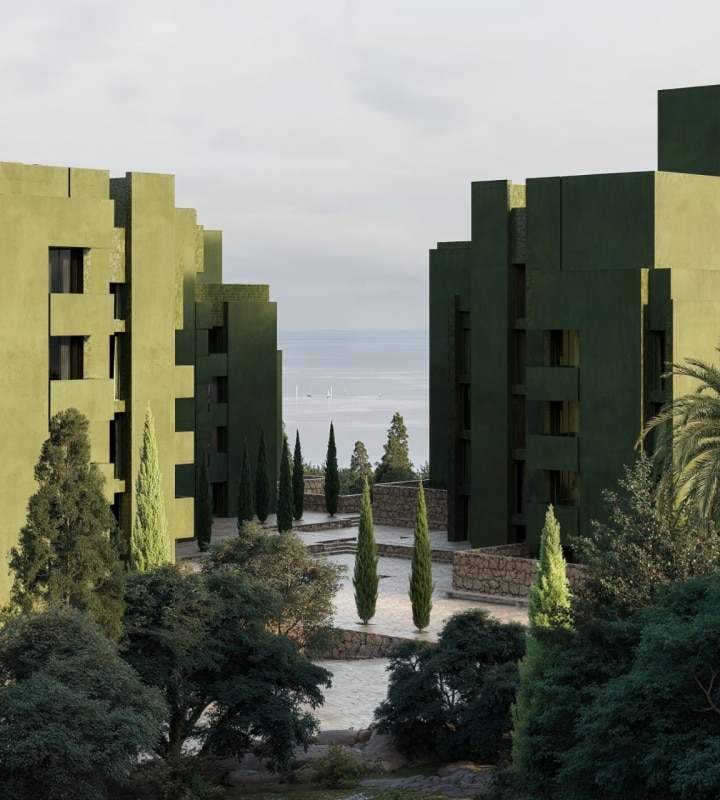
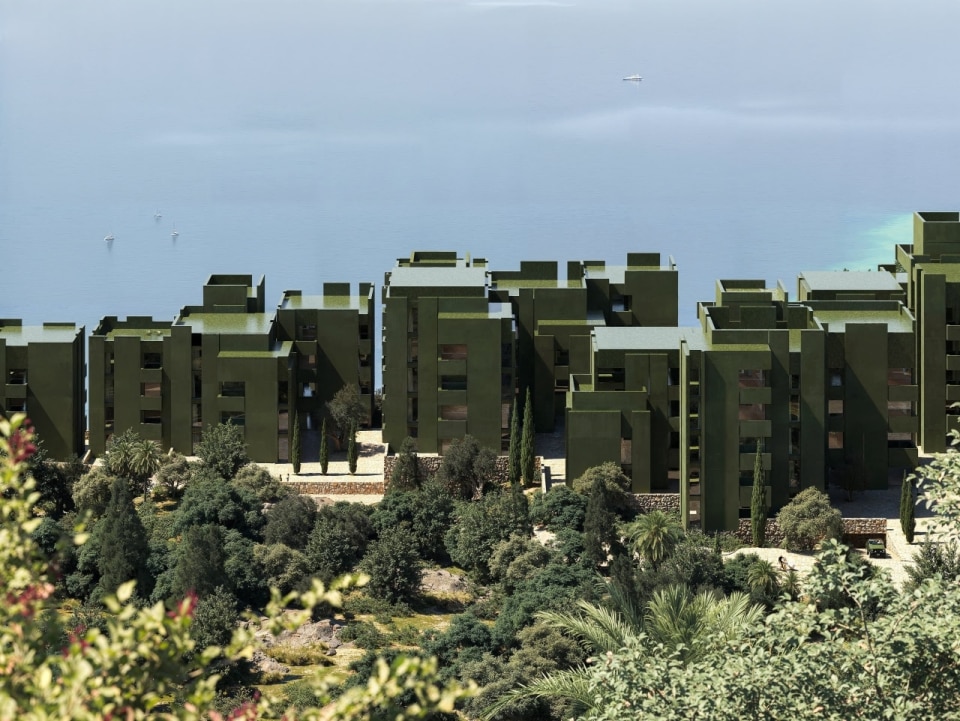
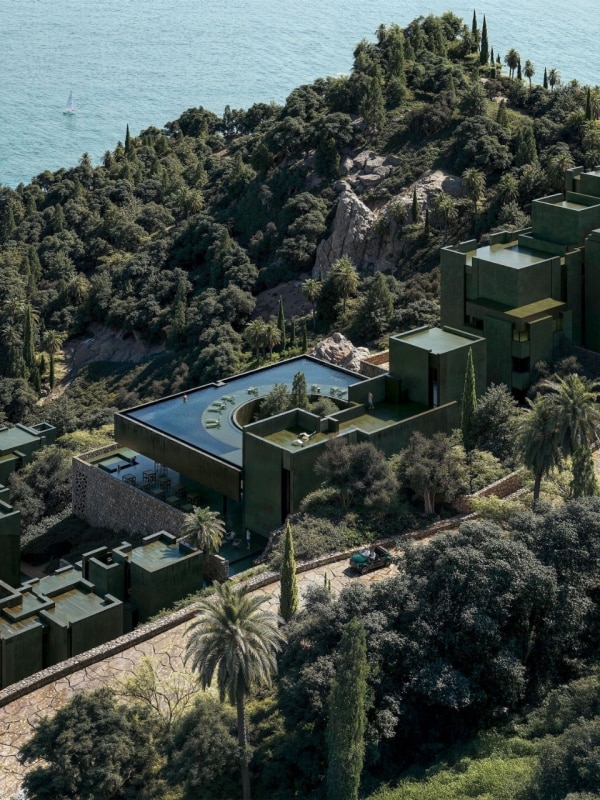
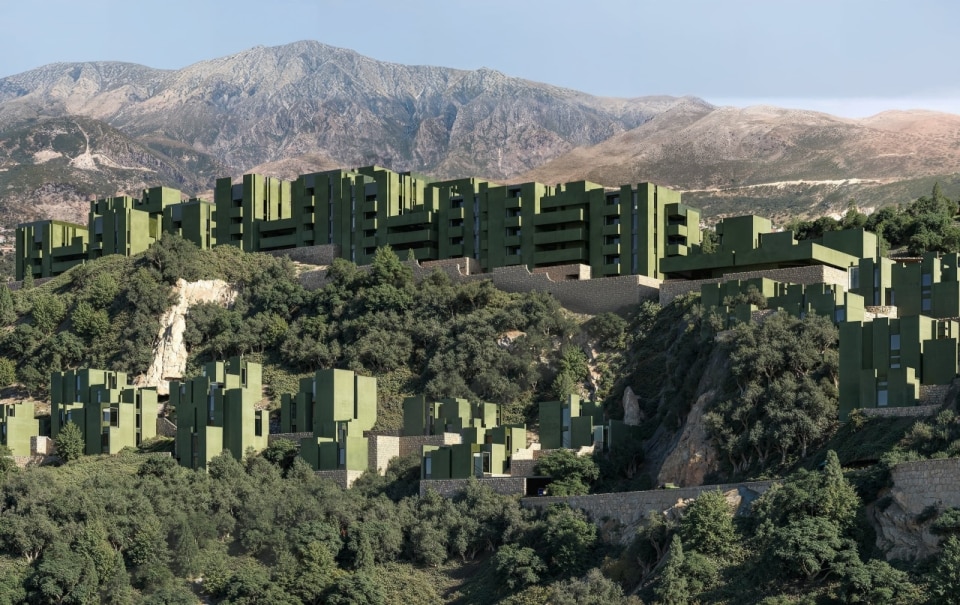
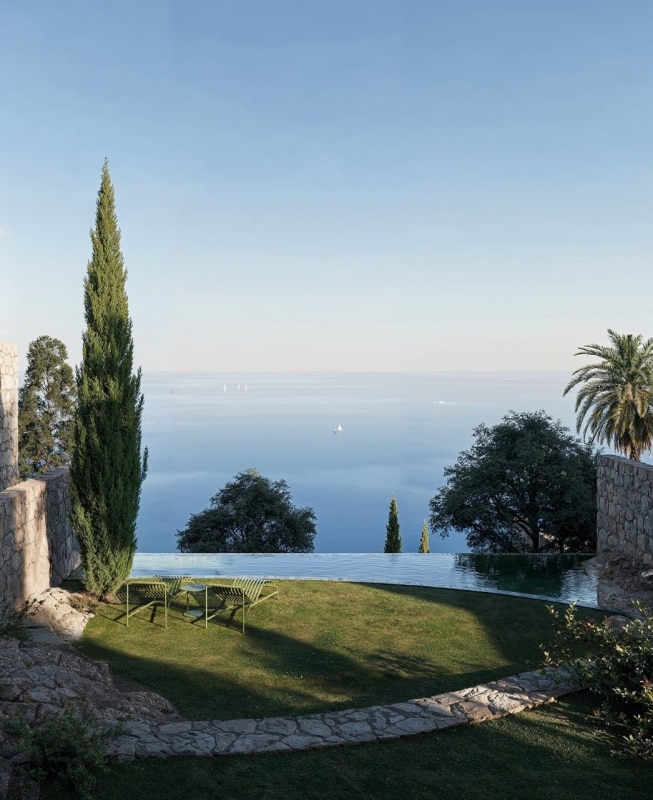
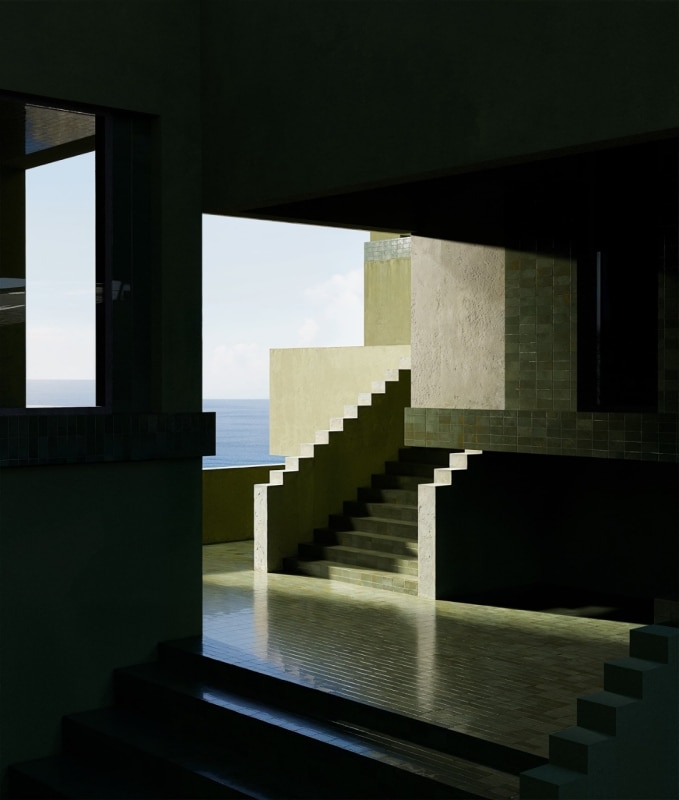
The Veil, the new residential project by Bofill Taller de Arquitectura in the village of Dhërmi, Albania, both follows and resists the dense forest into which it settles — a forest that covers the mountainous landscape before dropping sharply into the sea. It is hard to say whether this architectural intervention belongs to the category of buildings that seek to blend into their surroundings or, on the contrary, to emerge from the natural landscape and assert their presence.
The volumes seem to climb over one another like the native vegetation, reaching for the light.
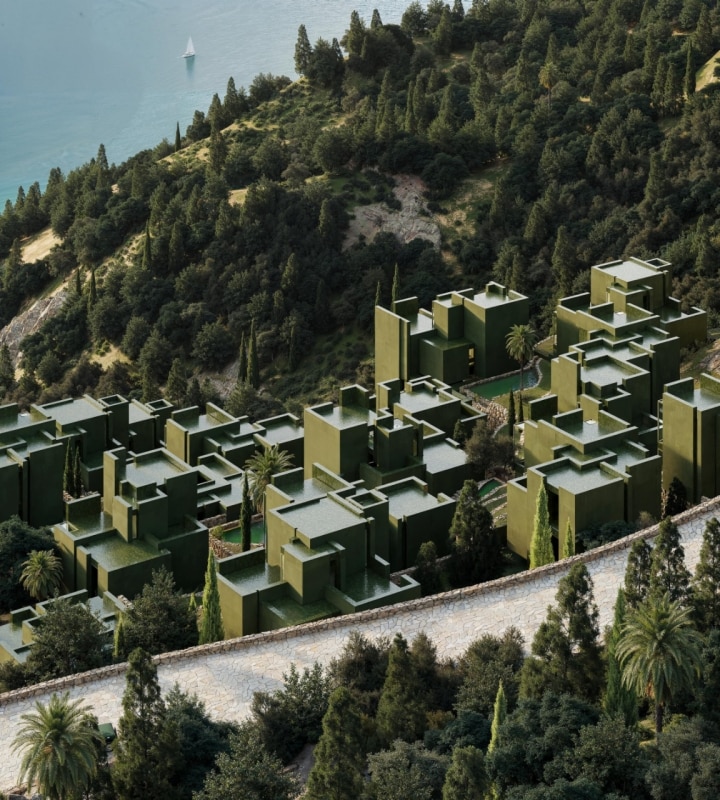
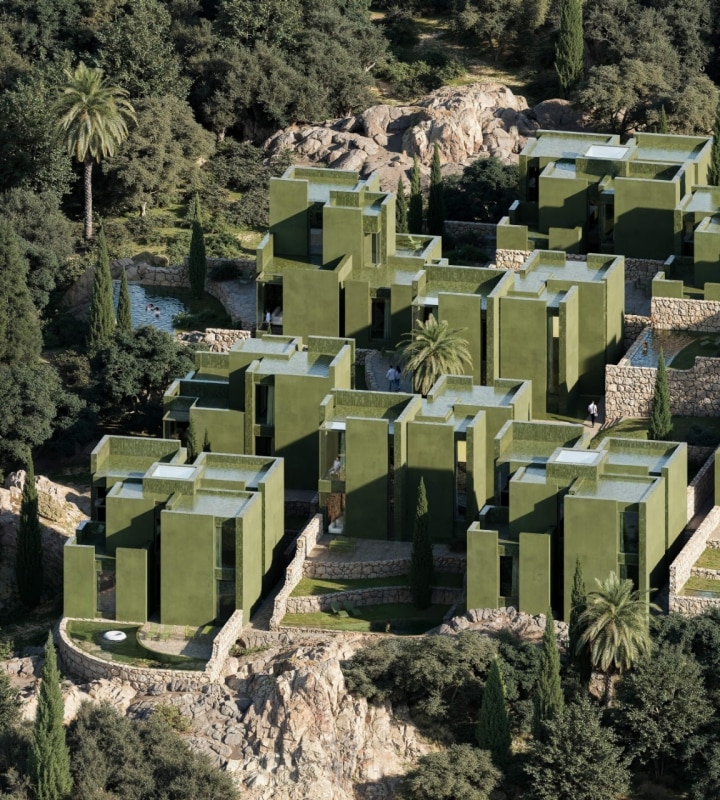
From one side, the sharp geometries of the dense grid of steps and edges — a recognisable signature of the studio — forgo the softness of time-worn rocks and tree canopies; from the other, the colour of the plaster and ceramic tiles that clad them is drawn from the surroundings themselves, returning to the ground a monochromatic stain that the soil seems to reabsorb.
This is not the studio's first project in the region: the Hotel Verne and the Red Sol Resort are two other "walls" that, unlike The Veil, are visible from miles away thanks to their vermilion surfaces. This time, though, the intention shifts. The residential complex — as the name suggests — attempts a gentler gesture, at least in spirit. The great veil spreads across two plots, for a total of 366 apartments and 77 villas, varying in typology and layout, rising in height as the rocky terrain rises and falls. Alongside the residential units, The Veil includes a communal building open to all residents, housing a club, restaurant, gym and a series of pools.
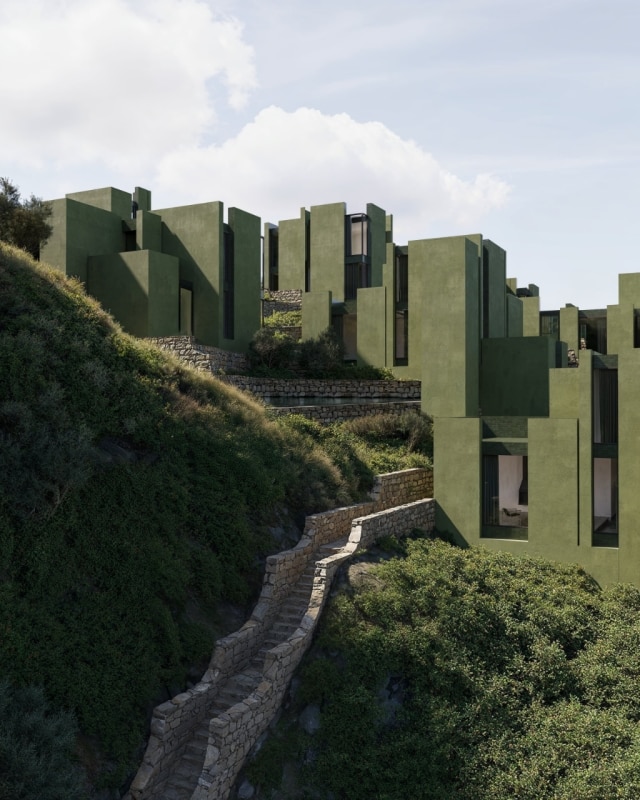
The volumes seem to climb over one another like the native vegetation, reaching for the light. The forest is not merely a source of inspiration — it is an active presence in the design: the compositional layout was defined around the existing trees, spared from felling and absorbed into the complex. The result is a series of fragmentations, cloisters and gardens inhabited by these ancient specimens.
The Muralla Roja of Calpe, completed in 1973, is recognisable in many elements of The Veil — in the geometries, the compositional logic, the way the volumes accumulate and face one another. And yet it is equally clear that this project marks a shift from the studio's more recent output. The red architectures of Bofill Taller de Arquitectura, scattered across Spain and Albania, had drawn criticism for the way they impose themselves on the landscape: chromatically aggressive presences, perceived as an act of force on fragile territories. The Veil seems to answer those criticisms through colour, adopting a palette that seeks assimilation rather than contrast, attuning itself to the tones of the forest, the rock and the earth. The question remains open, however, whether this integration is substantial or merely visual — a veil, after all, that softens the impact without truly erasing it.